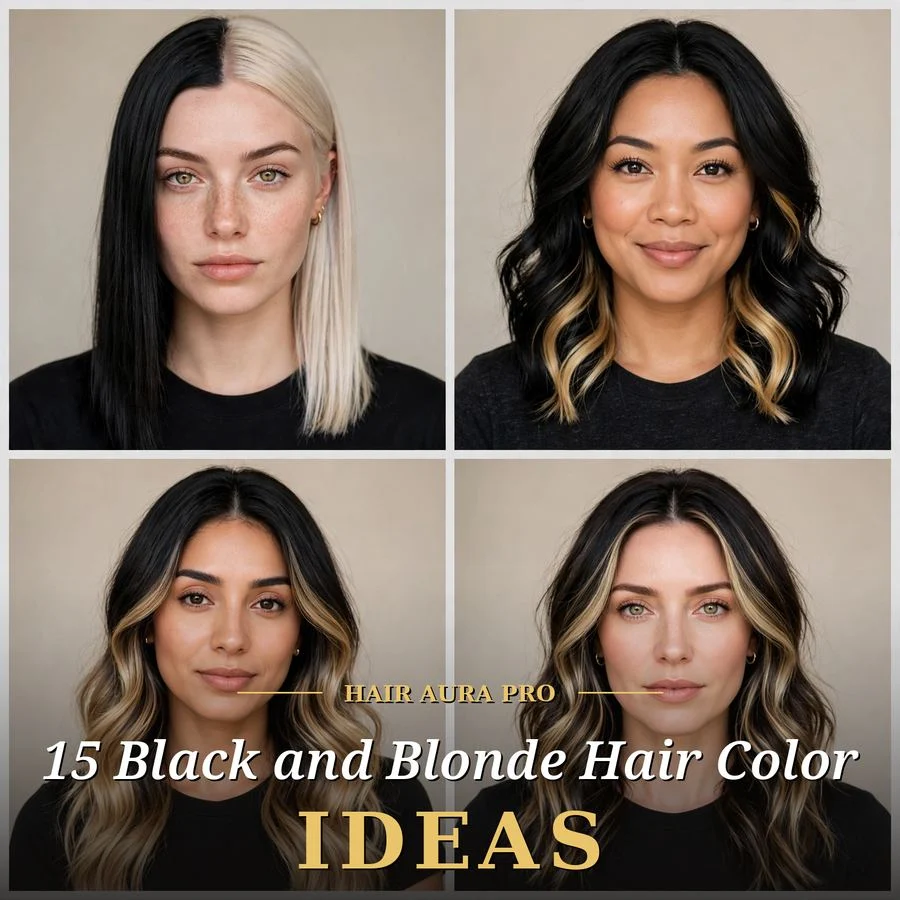
15 Black and Blonde Hair Color Ideas Worth Stealing

Black and blonde hair color is a two-tone coloring method that sets the deepest shade on the chart, a level 1 or 2 black, directly beside a level 9 or 10 blonde, in sections placed with intention. Instead of melting the two together, the colorist keeps the boundary deliberate: halves, panels, ribbons, or face-framing pieces. The contrast is not a side effect of the service; it is the entire design.
There is a reason this pairing photographs so well. Blonde reflects light while black absorbs it, so every wave, braid, and twist reads with unusual clarity, the pale sections glow and the dark sections carve out shadow. In motion it looks even better, with flashes of brightness appearing and disappearing as the hair moves. It is graphic without being loud, precise without feeling stiff.
The fifteen ideas below cover the full range, from the dramatic split dye to quiet peekaboo panels that only show when you want them to. Each one explains how the color is actually built, what to ask for at the salon, and the maintenance it will ask of you, so you can choose with your eyes open.
In This Guide
- Why Black and Blonde Hair Color Works So Well
- 15 Ways to Wear Black and Blonde Hair Color
- 1. The Classic Split Dye
- 2. Peekaboo Blonde Panels
- 3. Smoked Honey Ombre
- 4. Hand-Painted Contrast Balayage
- 5. The Skunk Stripe Revival
- 6. Shadow-Rooted Platinum
- 7. Reverse Ombre Flip
- 8. High-Contrast Money Piece
- 9. Block-Color Fringe
- 10. Hidden Underlayer Blonde
- 11. Chunky Y2K Highlights
- 12. Dip-Dyed Blonde Tips
- 13. Tortoiseshell Two-Tone Blend
- 14. Icy Melt with Smudged Roots
- 15. Ribbon Balayage Streaks
- How to Start Your Black and Blonde Hair Transformation
- Frequently Asked Questions About Black and Blonde Hair Color
- Ready to Wear Black and Blonde?
- Related Reads
Why Black and Blonde Hair Color Works So Well
The pairing works because extreme contrast manufactures dimension. When a colorist places platinum beside jet black, the eye cannot help but read depth into the hair, the dark recedes, the light advances, and even a simple blowout looks sculpted. Stylists use this the way photographers use side lighting: the color does the shaping, so the cut itself can stay simple.
It is also unusually adaptable. The same two shades can read soft or severe depending purely on placement. A fine ribbon balayage gives a sun-through-the-trees effect that suits an office; a hard split dye reads editorial and unapologetic. The formula stays constant while the attitude changes, which means there is a version of this trend for nearly every comfort level.
Maintenance has a logic worth understanding before you book. Dark sections are forgiving, regrowth blends into black with almost no visible line. Blonde sections are the opposite: they ask for toner every four to six weeks and purple shampoo at home to stay clear instead of brassy. Knowing which half of your head will demand attention keeps the upkeep from surprising you.
Skin tone matters less than undertone matching. Cool, icy blondes sit best against black on cool or neutral skin; honey and golden blondes warm up the whole combination for warm undertones. Bring photos of both the color and the placement you want, the consultation goes twice as fast when your colorist can see the exact boundary you have in mind.
| Style at a Glance | Details |
|---|---|
| Philosophy | Contrast as design, two extreme levels, placed deliberately |
| Key Colors | Level 1, 2 black; level 9, 10 blonde (platinum, honey, or ash) |
| Best For | Medium to long hair; straight to wavy textures show the boundary best |
| Maintenance | Toner every 4, 6 weeks; sulfate-free washing; weekly mask |
| Grow-Out | Dark sections grow out invisibly; blonde sections show regrowth |
15 Ways to Wear Black and Blonde Hair Color
1. The Classic Split Dye
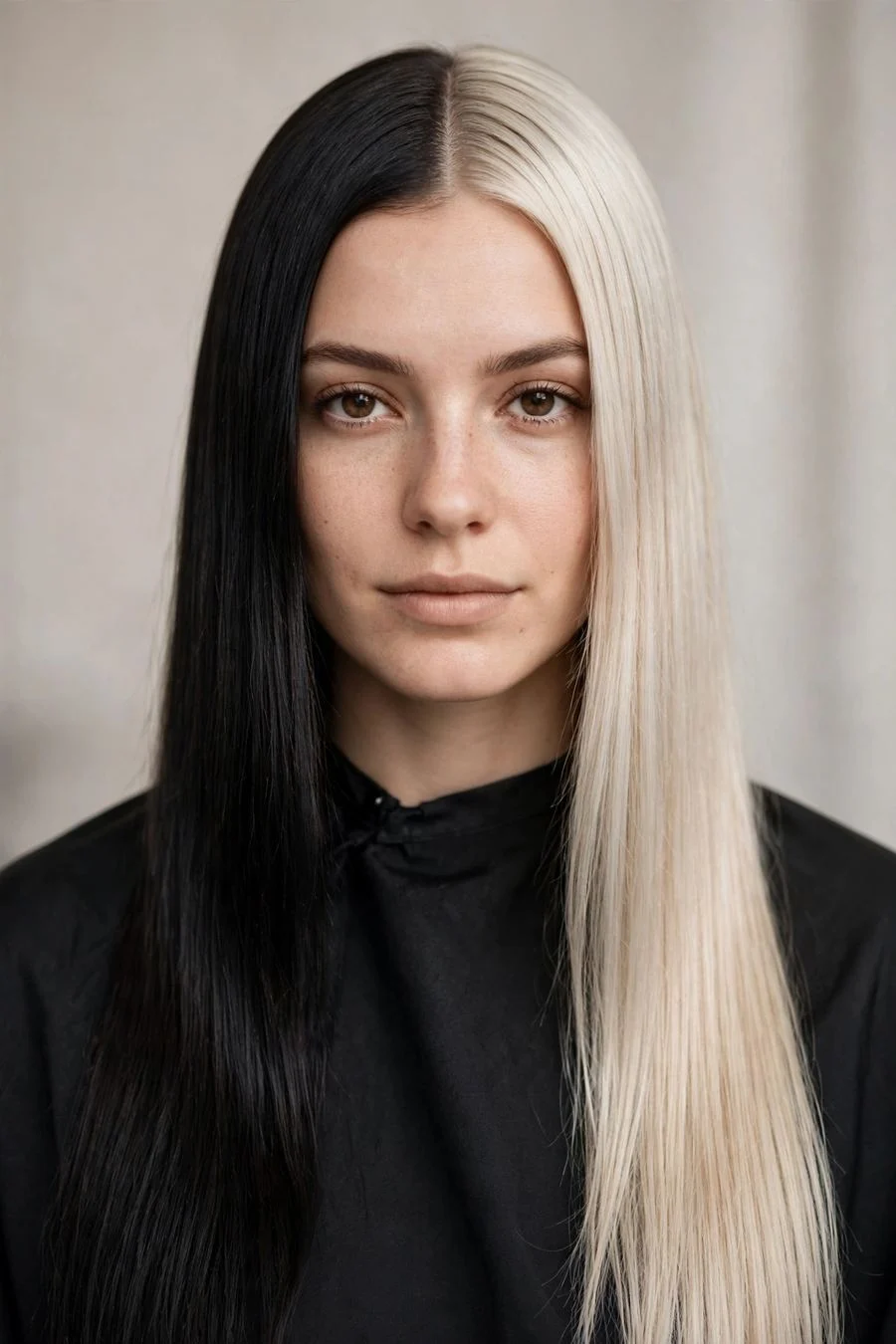
Vibe: Half midnight, half moonlight, worn with total conviction.
Why it works: The split dye parts the hair down the center and colors one side black, the other blonde, with a razor-sharp boundary at the part. Nothing else in this guide delivers contrast this directly, and that directness is the point. It frames the face symmetrically, photographs from every angle, and turns even a plain ponytail into a graphic statement because each half behaves differently in the light.
How to get it: Ask your colorist for a center-part split dye with a foil barrier along the parting for a clean line. The blonde side usually needs two lifting sessions to reach level 10 without breakage, so expect the first appointment to run three to four hours. Keep the part consistent at home, switching it to the side blurs the line the whole look depends on.
💡 Quick Win: Refresh the blonde side with a purple toning mask once a week and the black side stays rich for months with almost no effort.
Shop the Look
- Purple toning mask for weekly brass control on the blonde half
- Sulfate-free color-safe shampoo gentle on lifted hair
- Bond-repair leave-in treatment to protect bleached sections
- Fine-tooth tail comb for keeping the center part razor sharp
- Heat protectant spray with UV filters for color longevity
2. Peekaboo Blonde Panels
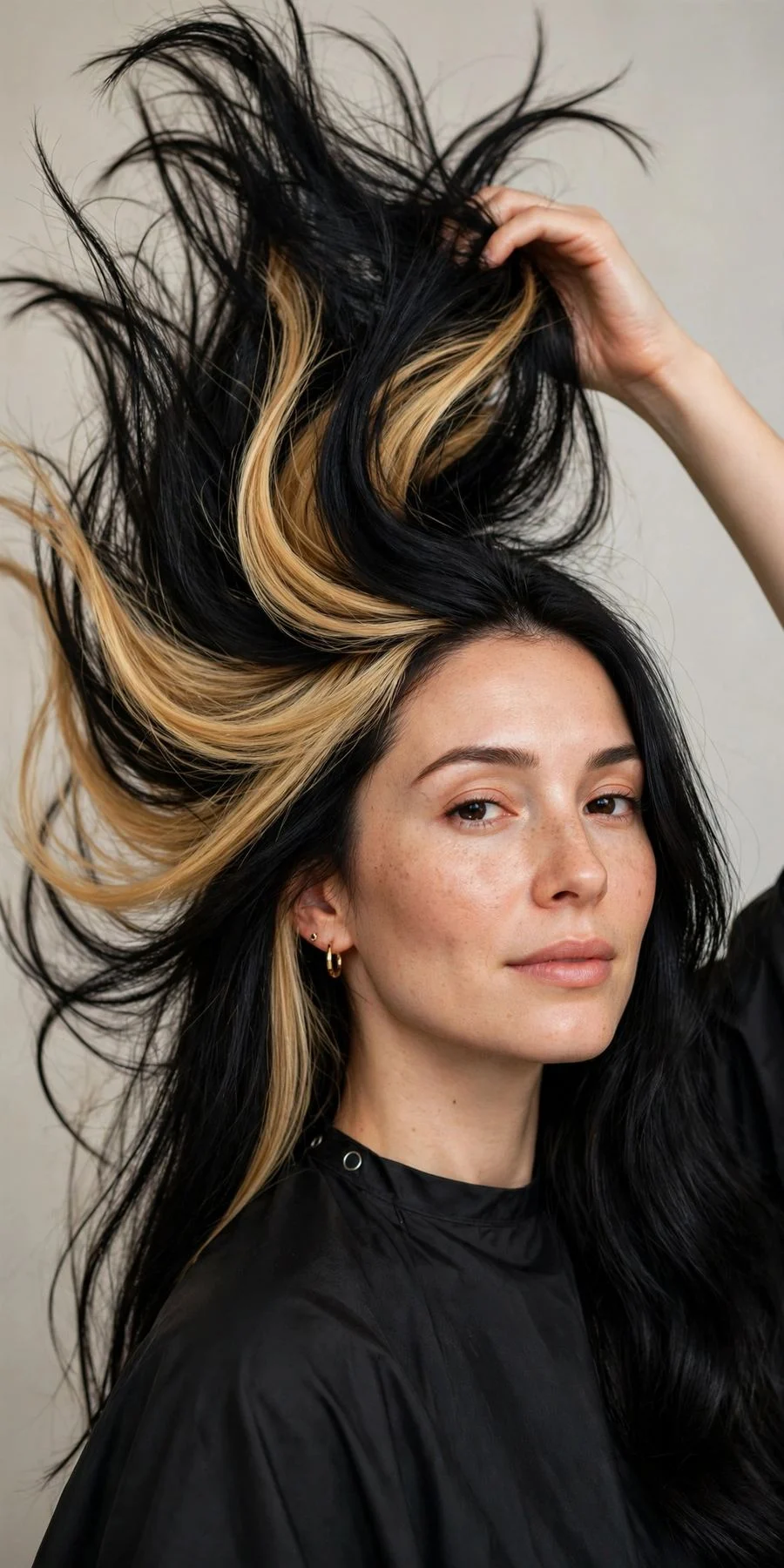
Vibe: A secret the hair keeps until it moves.
Why it works: Peekaboo panels hide wide sections of blonde underneath a top layer of black, so the brightness only appears when the hair swings, flips, or gets pinned up. It is the lowest-commitment way to wear this contrast, from the front you read as a brunette, and the blonde becomes a surprise detail. The effect is especially striking in braids and half-up styles, where the underlayer surfaces in ribbons.
How to get it: Ask your colorist for two to three wide peekaboo panels placed in the underlayer, from temple to nape, kept one inch below the part so the top layer fully covers them. Because the blonde sits underneath, regrowth stays hidden for eight to ten weeks. Style with loose waves to make the panels flash as you move.
Shop the Look
- Color-safe conditioner to keep hidden blonde soft and bright
- Lightweight hair oil to seal the ends of bleached panels
- Wide-tooth detangling comb for gentle wet-hair handling
- Silk pillowcase to reduce friction on color-treated hair
- Flexible-hold texturizing spray for touchable waves
3. Smoked Honey Ombre
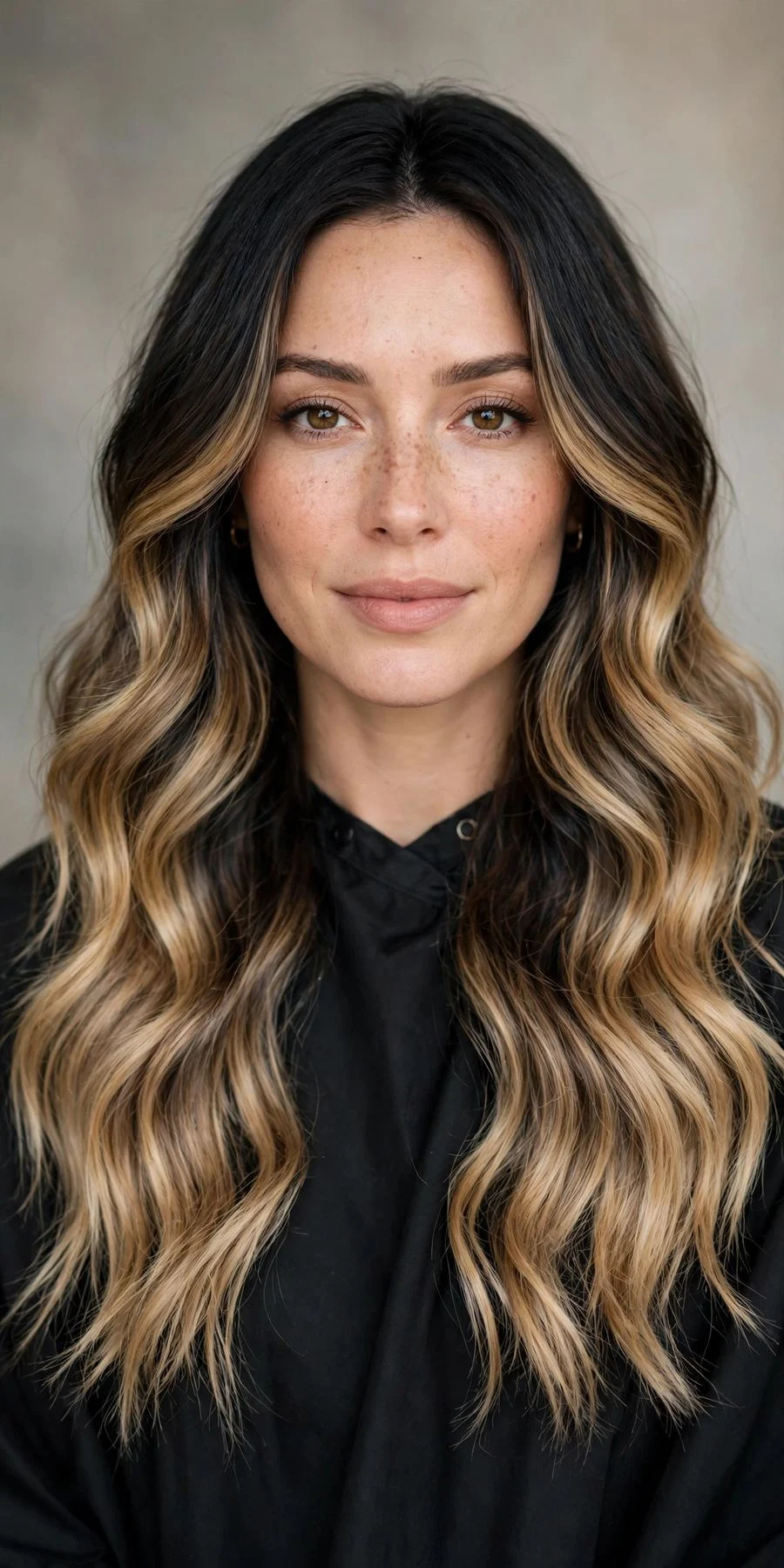
Vibe: Ember fading to candlelight down the length.
Why it works: This ombre keeps the roots near-black and melts them into honey blonde through the mid-lengths and ends, with a long, smoky transition zone where the two shades trade places. The smoked blend softens the contrast that makes this trend intimidating, so it suits anyone who wants the pairing without a hard line anywhere. On wavy hair the gradient looks almost liquid, with the warm blonde catching light at every turn.
How to get it: Ask your colorist for a high-contrast ombre with a long blend zone, the melt should start around cheekbone level and finish fully blonde by the ends. Honey (level 8 gold) lifts faster and holds better than platinum on most hair, so this is a kinder first step into contrast color. A gloss service every six weeks keeps the transition seamless.
Also view: https://hairaurapro.com/ash-blonde-balayage/
Shop the Look
- Color-depositing conditioner in golden honey to refresh the ends
- Deep conditioning hair mask with ceramides for bleached lengths
- Sulfate-free shampoo to slow fading of the blonde
- Leave-in heat protectant cream for blowout days
- Microfiber hair towel to reduce breakage on fragile ends
4. Hand-Painted Contrast Balayage
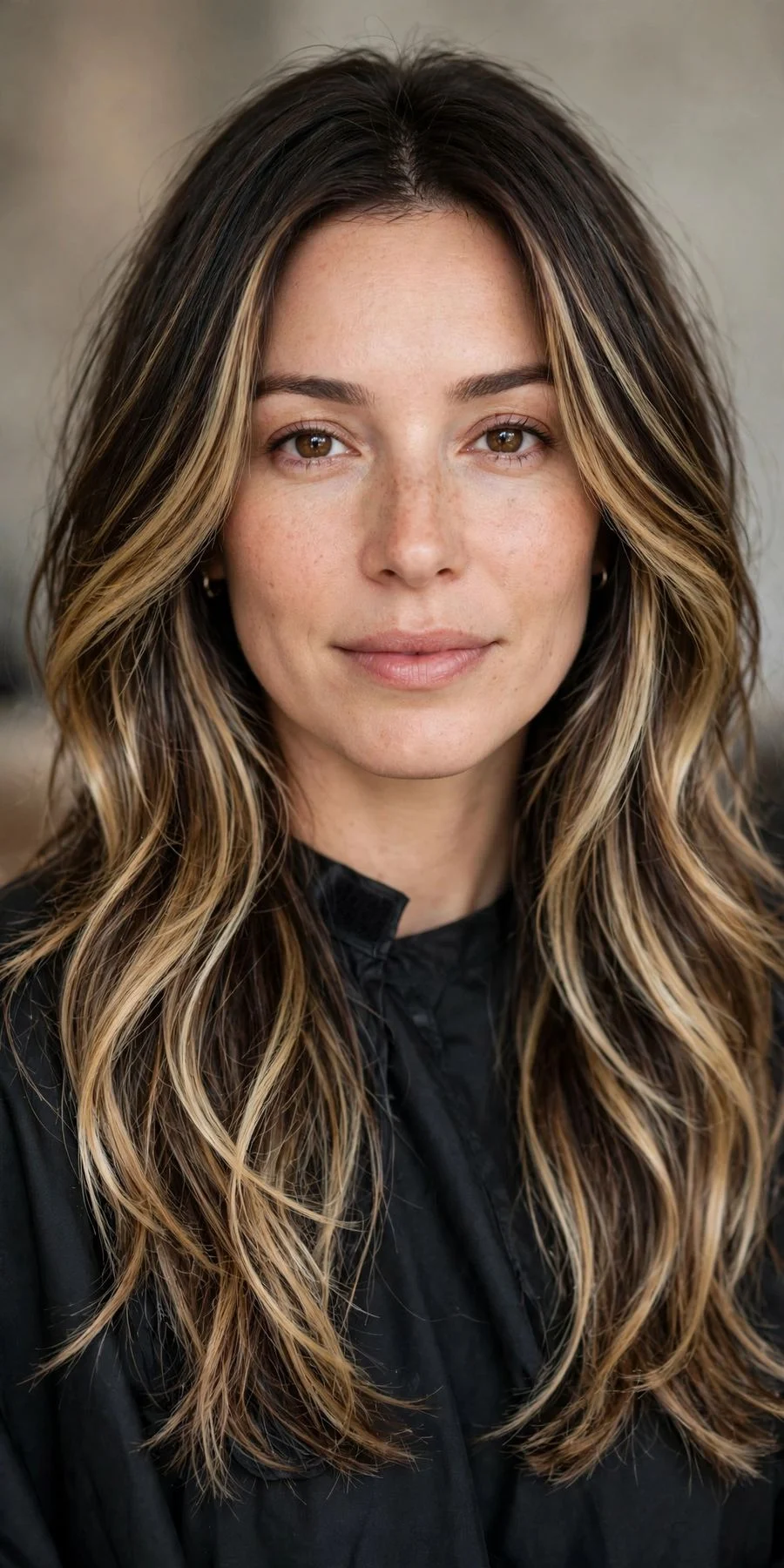
Vibe: Sunlight trapped in dark hair, one brushstroke at a time.
Why it works: Contrast balayage paints blonde ribbons onto a black base freehand, so the brightness follows the hair's natural fall instead of a foil pattern. The result reads organic, like sun did the work, even though the shade gap is dramatic. Because the top of each ribbon starts softly, regrowth arrives as a gentle shadow rather than a line, which stretches appointments to three or four months apart.
How to get it: Ask your colorist for high-contrast balayage with ribbons concentrated through the mid-lengths, leaving the root area mostly dark. Bring a photo showing how bold you want the ribbons, 'balayage' alone can mean anything from subtle to striking. The service takes two to three hours, and a toner refresh between full appointments keeps the blonde clean.
💡 Quick Win: Sleep with the lengths in a loose topknot to preserve the ribbon pattern and skip morning restyling.
Shop the Look
- Purple shampoo used once weekly to keep ribbons bright
- Bond-building hair mask for post-lightening repair
- Detangling brush with flexible bristles for long hair
- Anti-frizz smoothing serum for polished ribbon definition
- Claw clip for protective loose updos overnight
5. The Skunk Stripe Revival
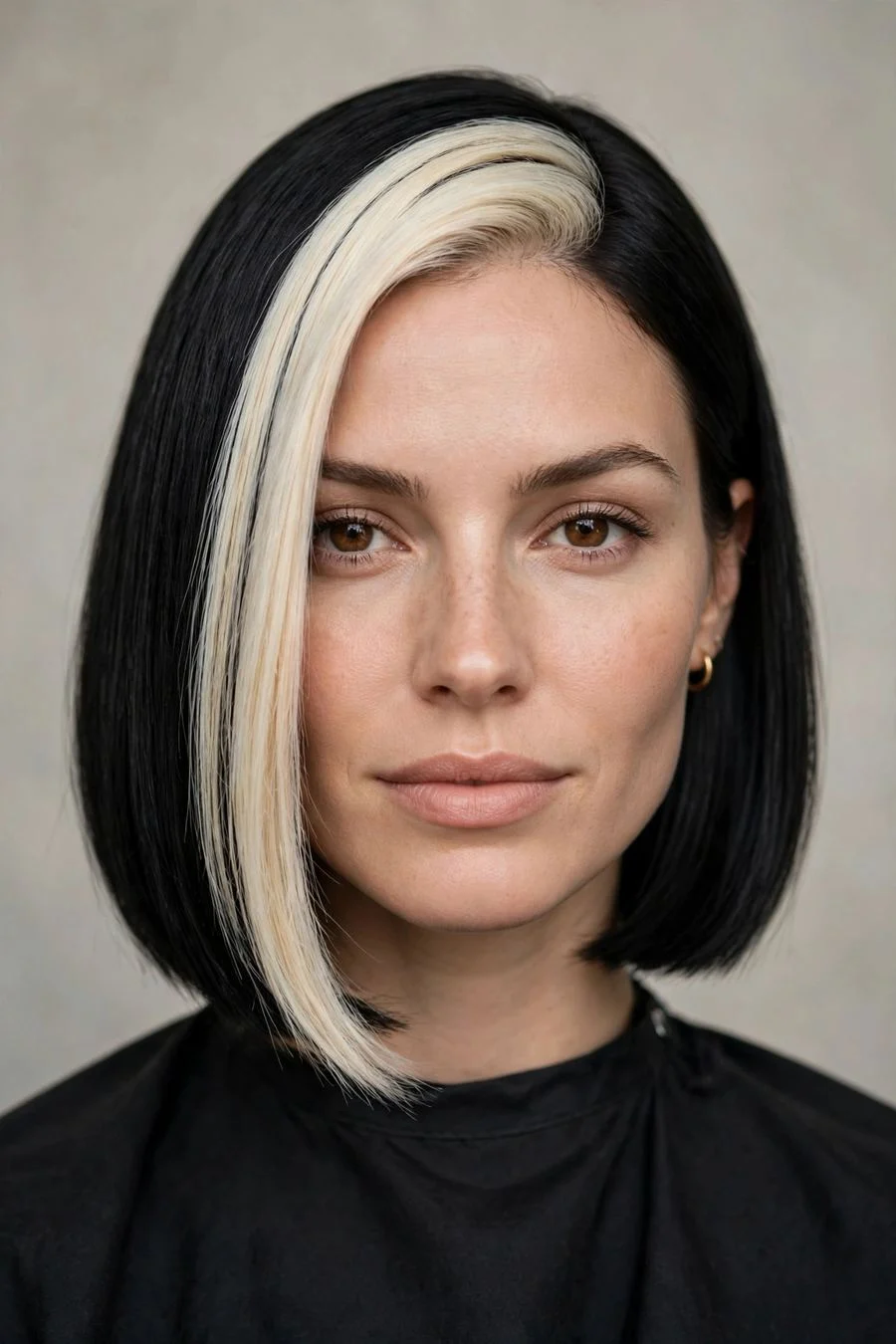
Vibe: One bold stripe, zero apologies.
Why it works: A single thick platinum stripe, usually at the front hairline, sometimes trailing down one side, against otherwise black hair. The skunk stripe concentrates all the contrast into one deliberate gesture, which makes it bolder than scattered highlights but easier to maintain than a full blonde service. It draws the eye straight to the face, brightens the complexion, and grows out as a visible but intentional-looking root.
How to get it: Ask your colorist for a two-inch face-framing stripe lifted to level 10 and toned icy. Placement is everything: the stripe should start right at the hairline so it reads from the front. Touch-ups every five to six weeks keep the root clean; in between, a root concealer powder in blonde hides the line on busy weeks.
Shop the Look
- Blonde root touch-up powder for between-appointment coverage
- Purple toning drops to mix into conditioner for the stripe
- Precision flat iron for a glass-straight stripe finish
- Color-safe dry shampoo to extend washes on bleached hair
- Silk scarf for wrapping hair at night
6. Shadow-Rooted Platinum
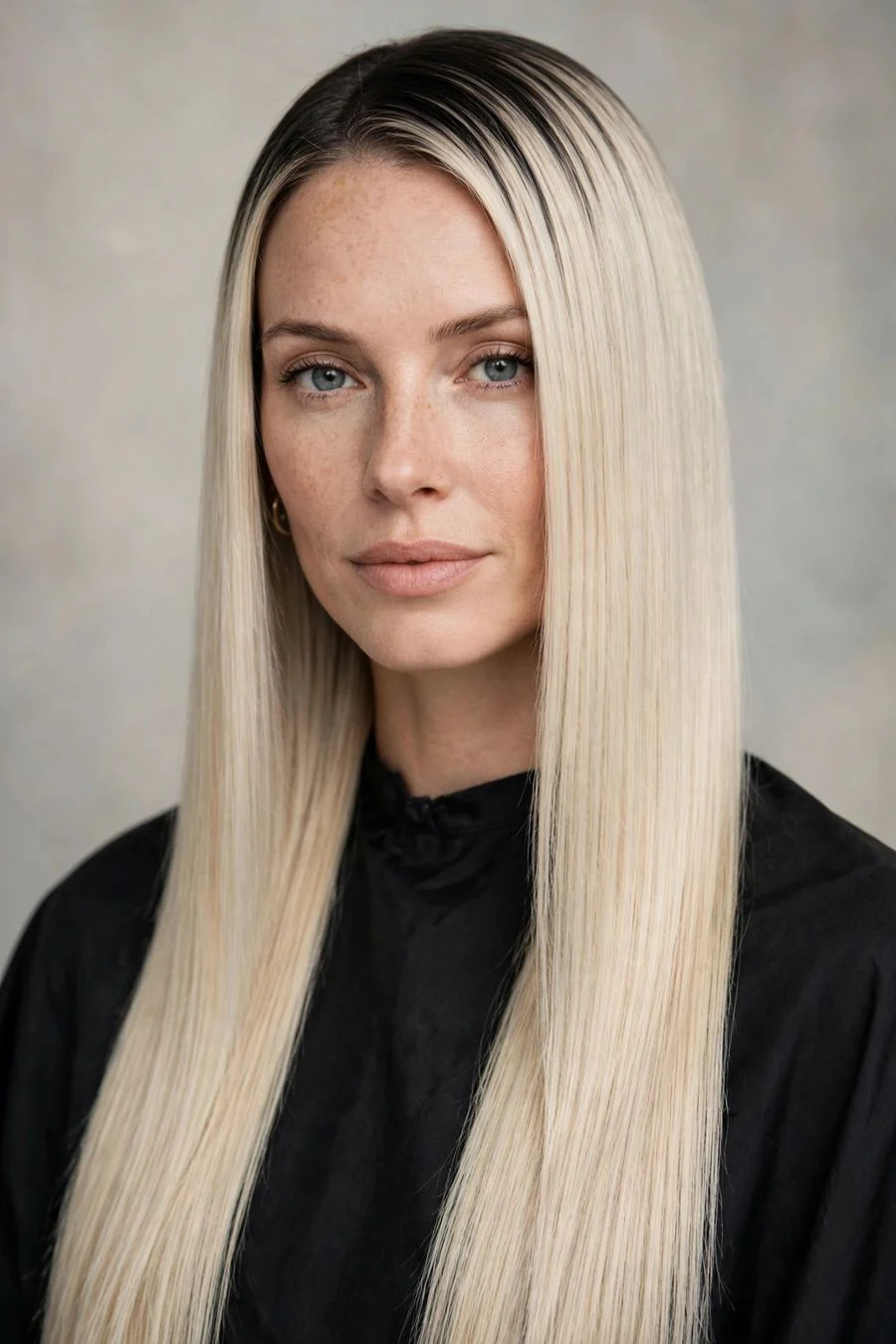
Vibe: Platinum with its roots showing, on purpose.
Why it works: Here the hair is blonde from mid-lengths down, but the first two to three inches stay black in a soft, diffused shadow root. The dark crown adds depth that all-over platinum lacks, and it solves the biggest annoyance of going blonde: the harsh regrowth line. The shadow blurs new growth into the design, so you can stretch salon visits to ten or twelve weeks while the color still looks deliberate.
How to get it: Ask your colorist for a full platinum lift with a black shadow root melted two to three inches down, blended, not a hard line. The melt is usually done with a demi-permanent shade so it fades softly rather than lifting warm. Book a toner and root smudge every eight weeks to keep the transition seamless as it grows.
💡 Quick Win: A tinted dry shampoo in dark brown sprayed at the crown deepens the shadow root between appointments.
Also view: https://hairaurapro.com/brown-pixie-bob-money-piece/
Shop the Look
- Dark-tinted dry shampoo to deepen the shadow root at home
- Intensive repair mask for platinum-maintained hair
- Purple conditioner for twice-weekly tone maintenance
- Wide paddle brush for smooth blowouts on long blonde
- UV-protectant hair mist to prevent sun yellowing
7. Reverse Ombre Flip
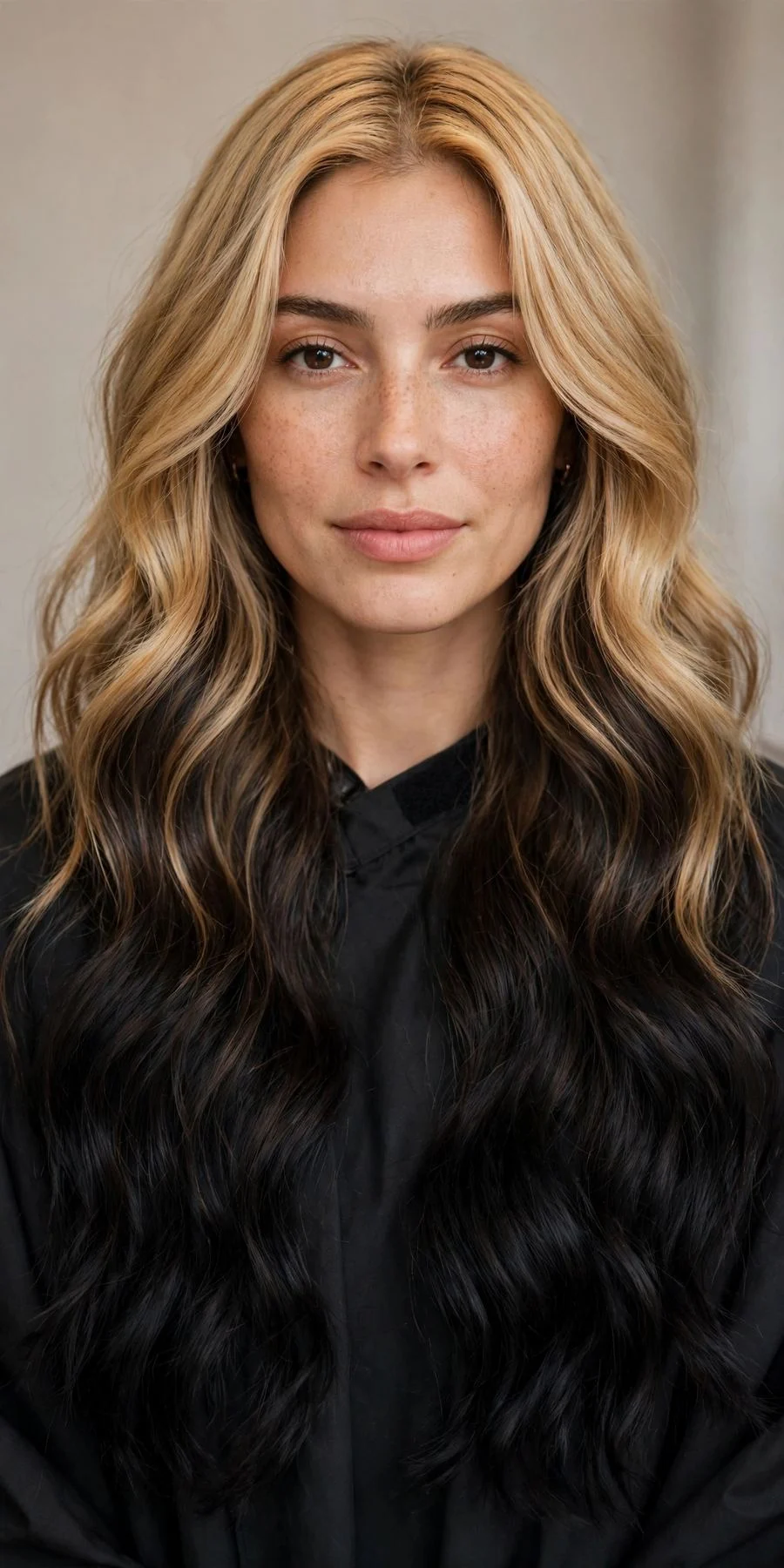
Vibe: Everything you know about ombre, turned upside down.
Why it works: The reverse ombre starts blonde at the roots and deepens to black at the ends, the mirror image of the classic fade. It is rare enough to stop people mid-sentence, and it flatters because the brightness sits near the face where it lifts the complexion. The dark ends also behave beautifully: they look thicker and glossier than blonde ends, which tend to show damage first.
How to get it: Ask your colorist for blonde roots melted into black ends, with the transition beginning below the ears so the brightness frames your face. This is a color-correction-level service if your hair is currently dark all over, since the roots must be lifted first, budget three to four hours. The dark ends need glossing every couple of months to stay inky.
Shop the Look
- Black color-depositing conditioner to keep ends inky
- Purple shampoo for the blonde root area
- Split-end sealing serum for the darker lengths
- Gentle clarifying shampoo used monthly to prevent buildup
- Heat protectant oil for styling the two textures evenly
8. High-Contrast Money Piece
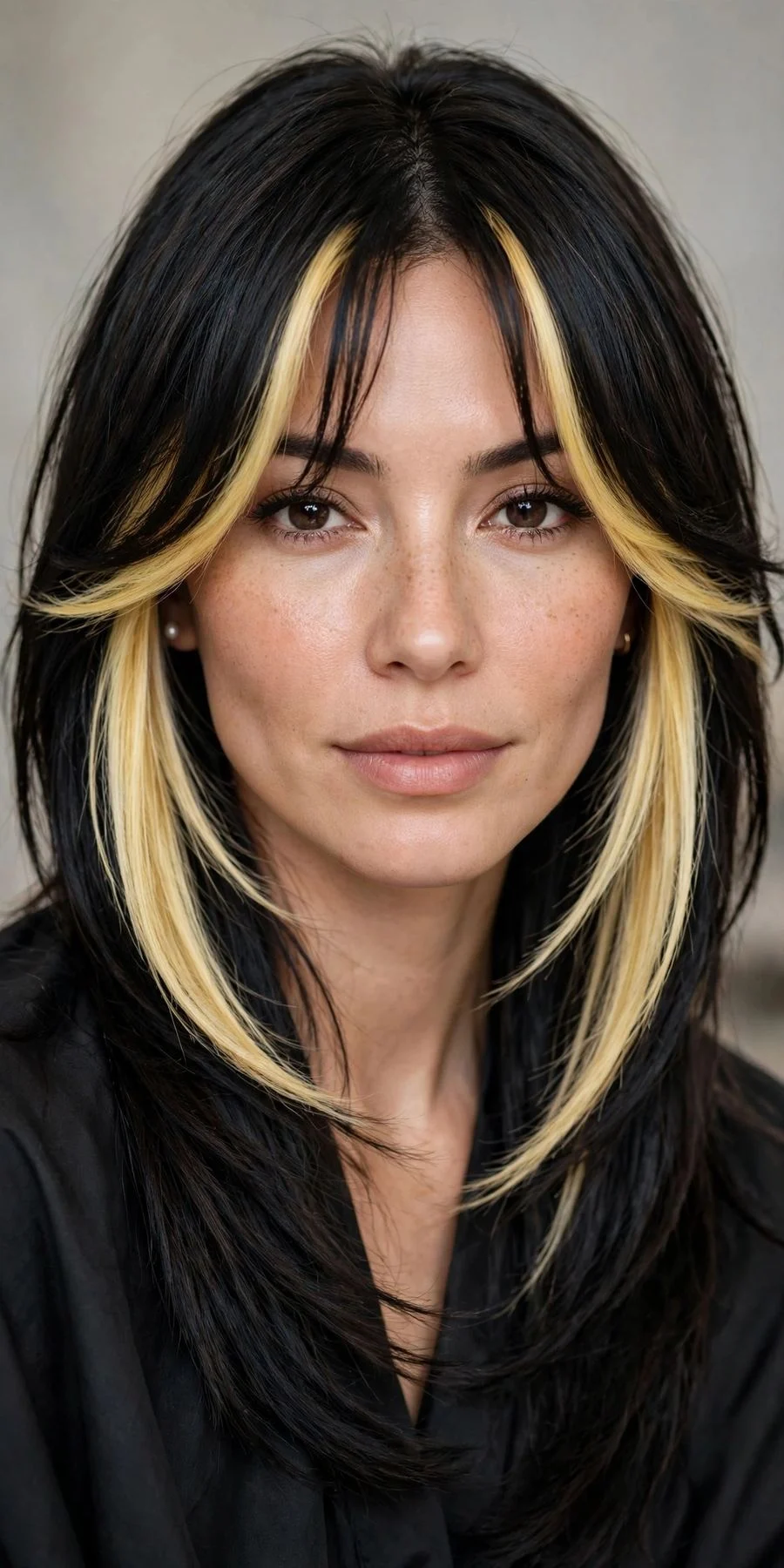
Vibe: The brightest frame your face has ever worn.
Why it works: The money piece lightens just the front sections, roughly an inch on each side of the part, to bright blonde against a black base. It delivers the face-brightening effect of a full highlight service in a fraction of the foils, and it grows out gracefully because the brightness lives where hair moves most. On dark hair the contrast is striking; it reads intentional and polished rather than grown-out, even at week eight.
How to get it: Ask your colorist for a bold money piece: two front sections lifted to level 9 or 10, blended half an inch back so there is no stripe edge. Pair it with curtain bangs and the blonde falls exactly where it flatters most. Touch-ups every six to eight weeks; the rest of the hair can go months untouched.
💡 Quick Win: Curl just the money piece sections away from your face for five minutes, the whole style looks freshly done.
Shop the Look
- Small-barrel curling iron for styling face-framing pieces
- Purple toning conditioner for the blonde front sections
- Flexible-hold hairspray that brushes out cleanly
- Sectioning clips for styling the money piece separately
- Shine spray to make the blonde catch the light
9. Block-Color Fringe
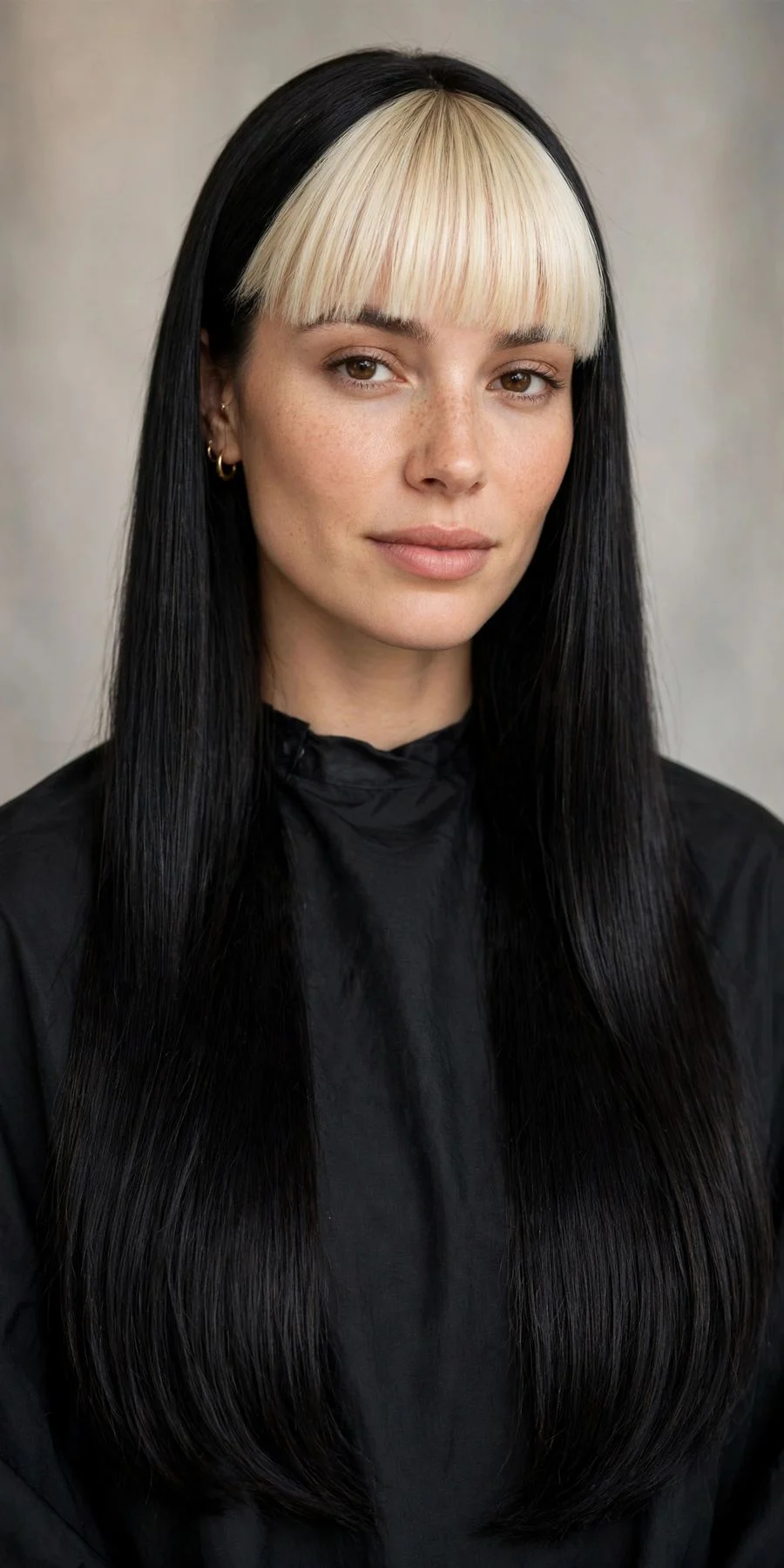
Vibe: A blonde curtain cut straight across dark hair.
Why it works: Block-color fringe dyes the entire bang section platinum while the lengths stay black. It is a small surface area with outsized impact, the eye goes straight to the fringe, and the straight blunt edge of the color block looks graphic and modern. Because bangs grow fast, this is also a fun low-risk experiment: a few trims and the blonde is gone if you change your mind.
How to get it: Ask your colorist to isolate the fringe section and lift it to your chosen blonde, keeping the boundary crisp along the fringe parting. Blunt-cut bangs show the block best; wispy bangs soften it. Toner every four weeks keeps the small section bright, and trims every three to four weeks maintain the shape that sells the look.
Also view: https://hairaurapro.com/dark-hair-color-ideas/
Shop the Look
- Mini flat iron for daily fringe smoothing
- Purple shampoo in a small bottle, a little goes far on bangs
- Lightweight dry shampoo for second-day fringe freshness
- Fringe-trimming scissors for at-home maintenance trims
- Anti-humidity spray to keep the block edge sleek
10. Hidden Underlayer Blonde
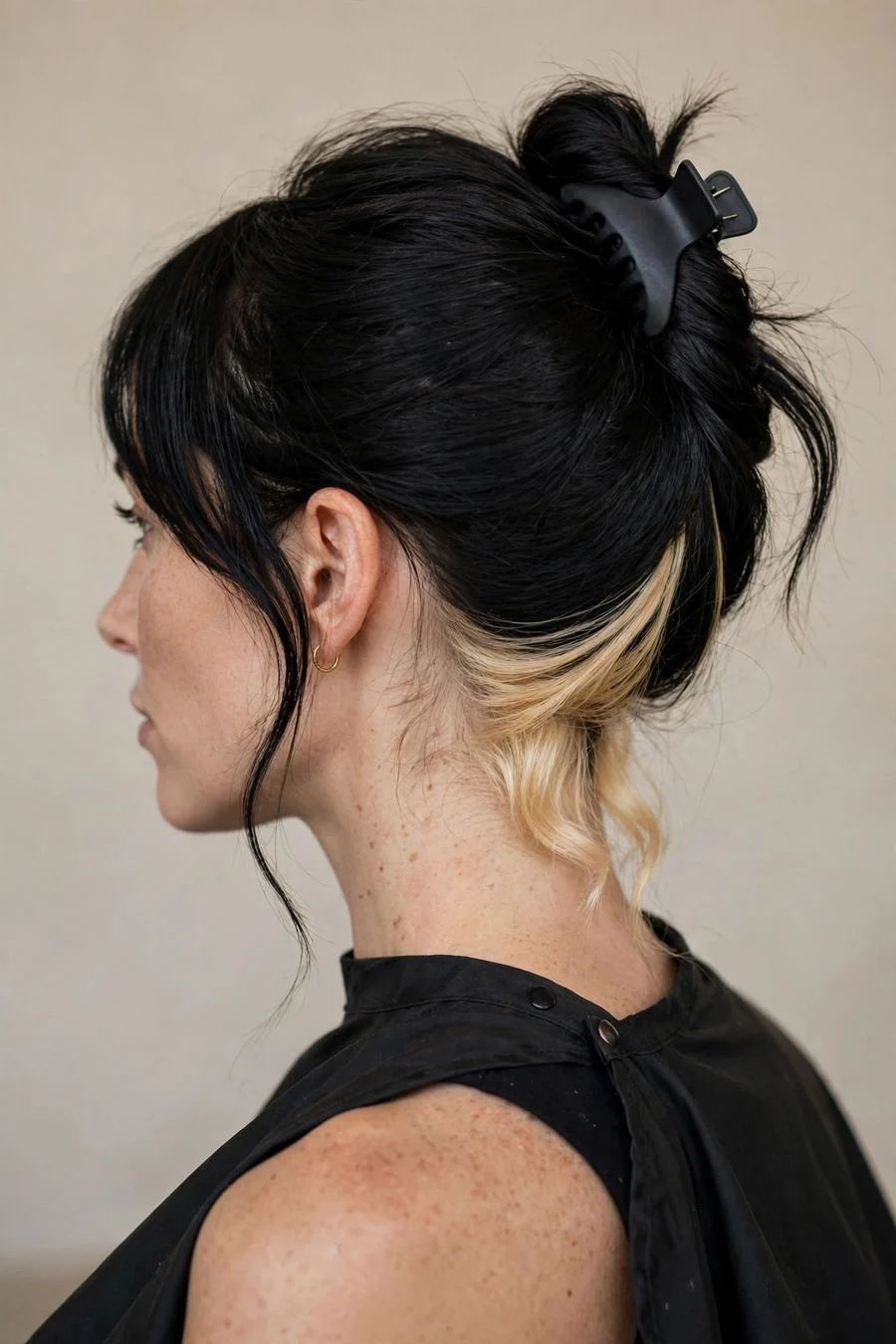
Vibe: Business in the front, blonde underneath.
Why it works: The entire underlayer, everything beneath the crown section, goes blonde while the top stays black. Worn down, you look like a classic brunette; tie it half-up and the blonde floods out. It is the most transformative option here because the reveal is total, yet day-to-day it asks nothing of you. The top layer also shields the bleached hair from sun and heat, so the blonde stays brighter longer.
How to get it: Ask your colorist for a full underlayer blonde, sectioned horizontally from temple to temple, with the top layer left completely dark. The underlayer takes bleach well since it is virgin hair on most people. Wear it down for work, half-up for the reveal, the contrast does the rest. Touch-ups every eight to ten weeks.
💡 Quick Win: A high half-ponytail is the fastest way to show the underlayer, the blonde cascades underneath the dark top.
Shop the Look
- Scrunchies that will not dent color-treated hair
- Leave-in conditioner spray for the bleached underlayer
- Boar-bristle brush for smoothing the dark top layer
- Color-safe hair ties without metal parts
- Nourishing hair butter for the blonde ends
11. Chunky Y2K Highlights
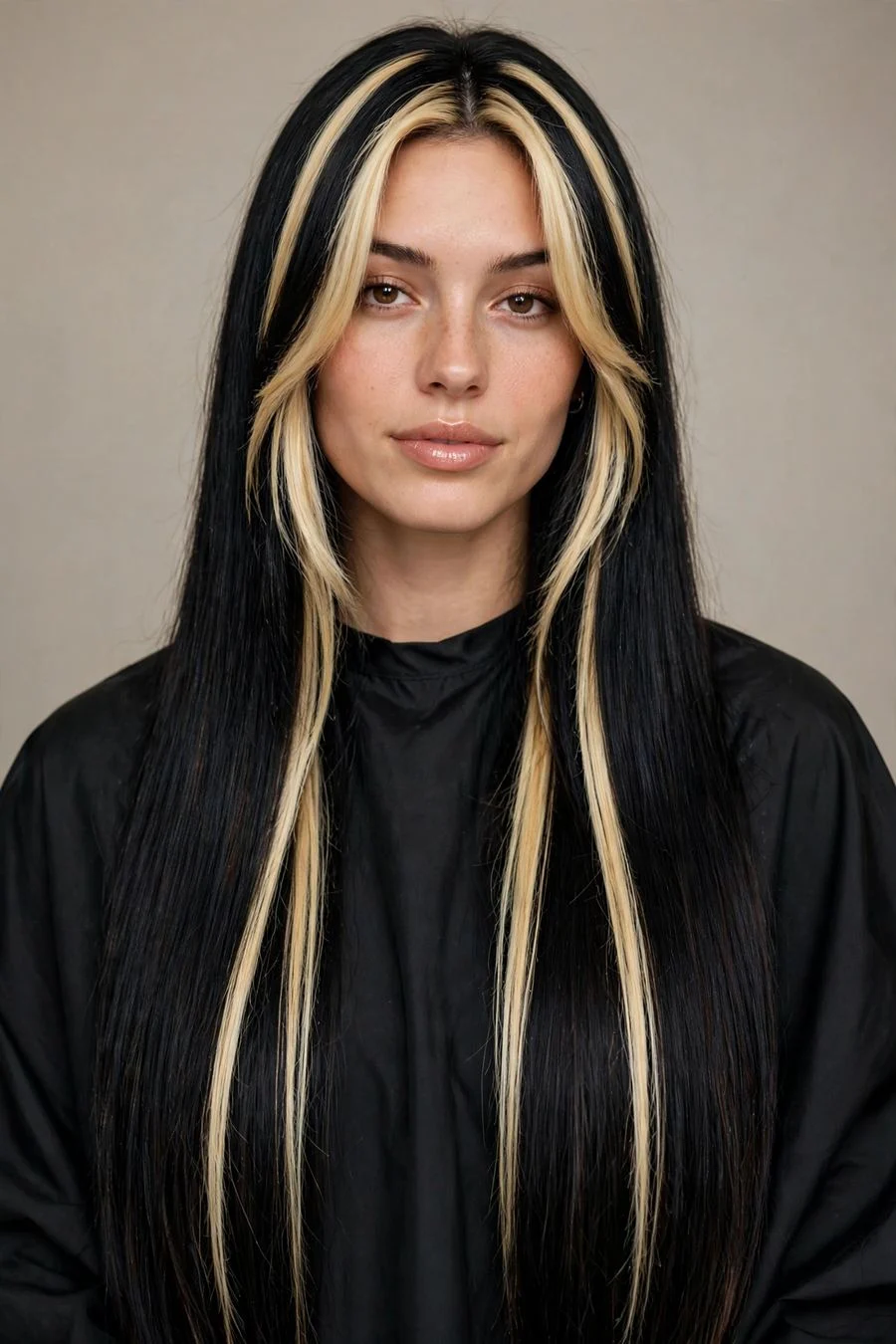
Vibe: Thick stripes, zero subtlety, pure nostalgia.
Why it works: Wide, chunky blonde stripes woven through black hair, the early-2000s placement that has come fully back around. Unlike fine babylights, these are meant to be seen: each stripe is a quarter to half inch wide, creating bold rhythm down the lengths. On straight hair the geometry is razor precise; on waves it softens into something more relaxed. Either way, it is the most playful entry on this list.
How to get it: Ask your colorist for chunky woven highlights, not sliced, weaving gives the stripe soft edges instead of a harsh line. Specify the width you want; 'chunky' means different things to different stylists. Space them an inch apart for balance. Because the stripes are wide, regrowth shows faster, plan touch-ups every six weeks.
Shop the Look
- Highlighting-safe shampoo that will not dull the stripes
- Purple mask for keeping wide blonde sections icy
- Straightening brush for the glass-hair finish this look loves
- Heat protectant serum for daily hot-tool use
- Color-safe elastic bands for high ponytails that show the pattern
12. Dip-Dyed Blonde Tips
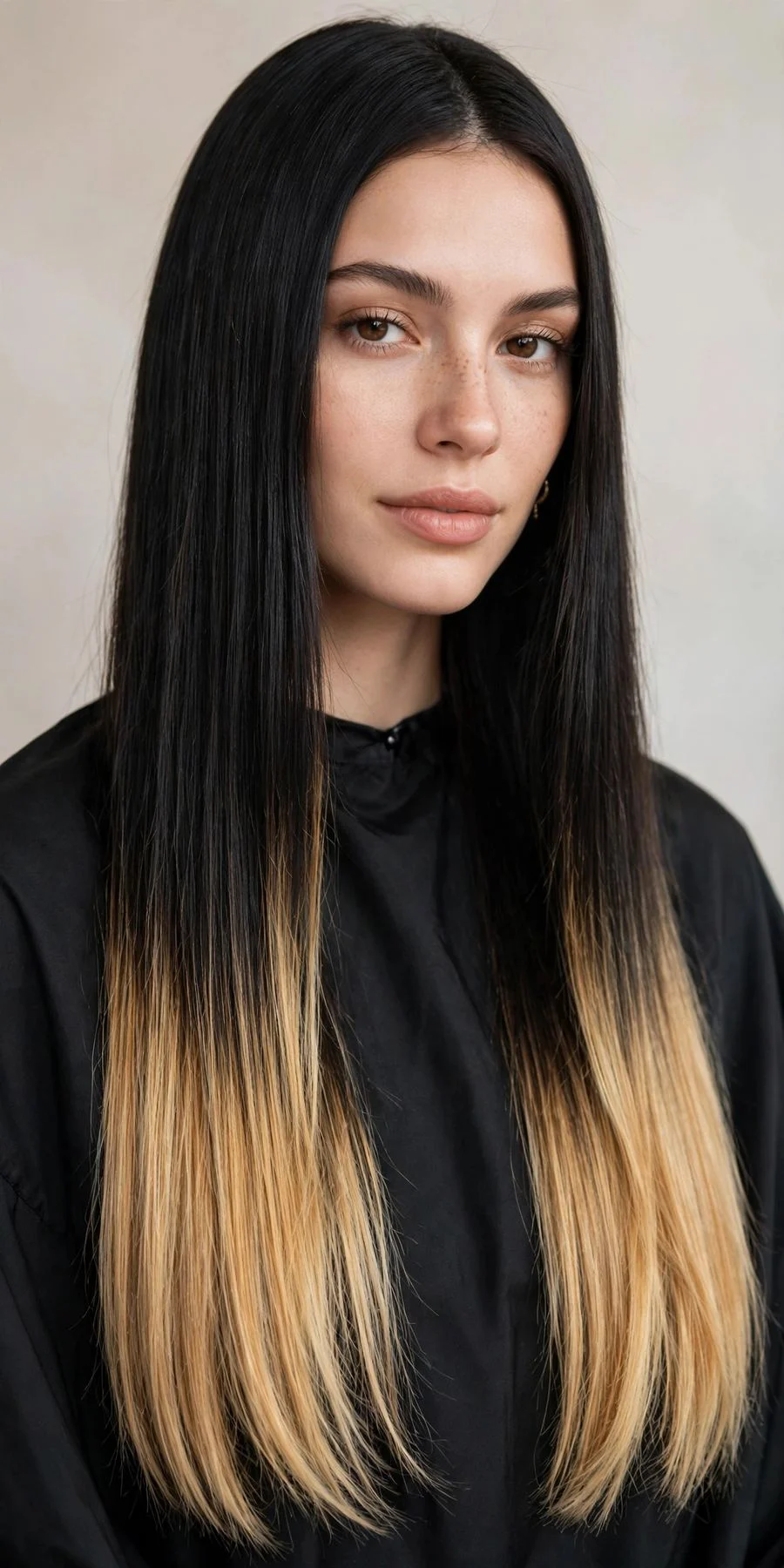
Vibe: As if the ends took a quick swim in sunlight.
Why it works: Only the last two to three inches go blonde, like the hair was dipped. It is the gentlest introduction to contrast color: the bleach touches the oldest, most expendable hair, and if you hate it, a trim erases the experiment entirely. On long straight hair the dipped line looks graphic and cool; on curls the blonde tips outline every coil and the effect is genuinely beautiful.
How to get it: Ask your colorist for dip-dyed ends with a slightly diffused top edge rather than a hard line, a soft edge grows out without a shelf. Honey or golden blonde is more forgiving than platinum at the tips, where hair is most fragile. Since only the ends are processed, this is also the most affordable service on the list.
💡 Quick Win: Braid the lengths before bed and the blonde tips peek through the black in the morning, no heat needed.
Also view: https://hairaurapro.com/summer-highlights-for-blondes/
Shop the Look
- Extra-rich hair mask, tips need the most moisture
- Blonde-tinted gloss to refresh dipped ends at home
- Satin scrunchie set for protective braids overnight
- Ends-only hair oil to prevent splitting
- Gentle sulfate-free shampoo to protect the lightened tips
13. Tortoiseshell Two-Tone Blend
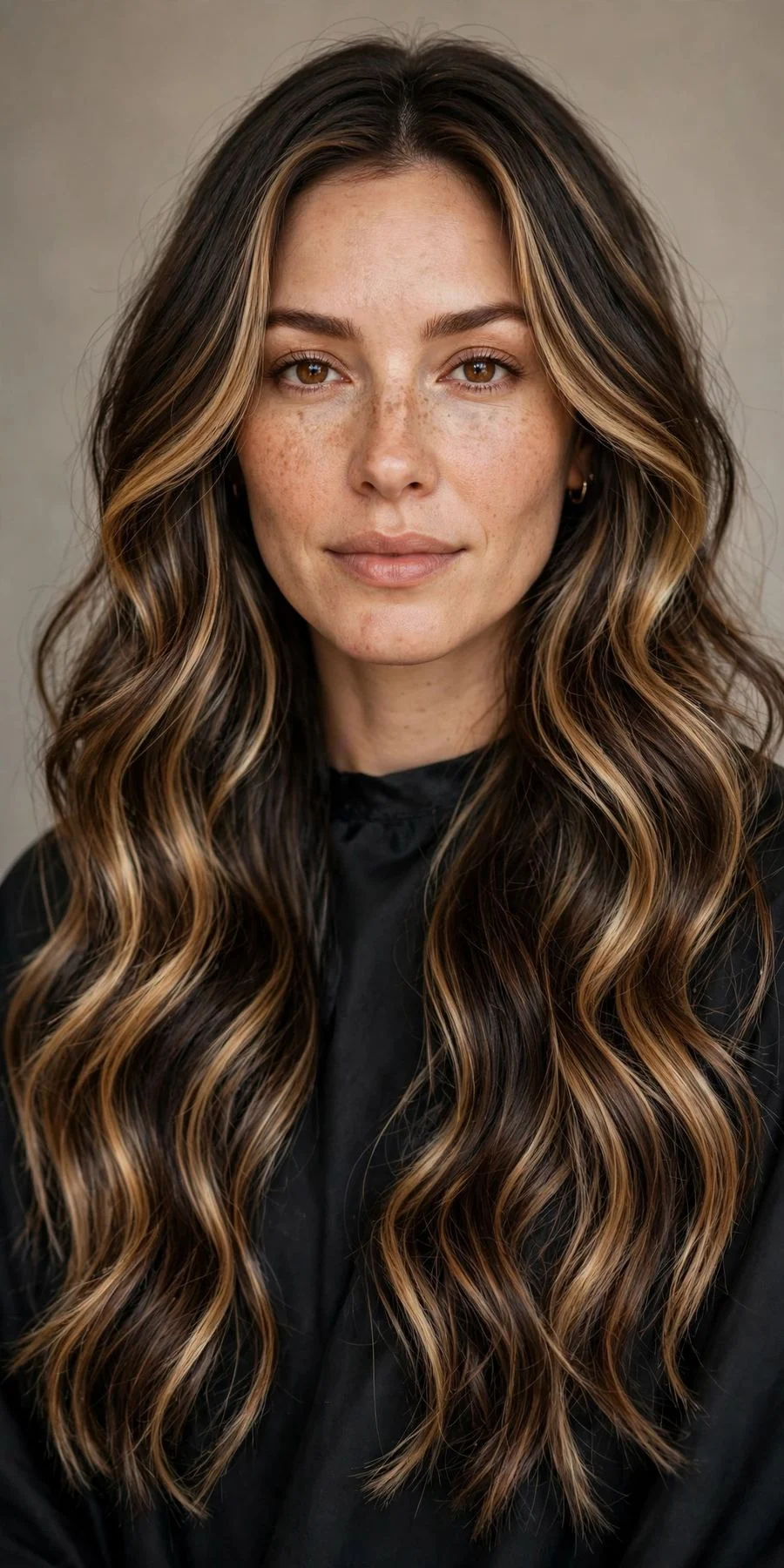
Vibe: Dark depth with caramel light moving through it.
Why it works: Tortoiseshell layering places caramel and honey blonde ribbons at varying depths over an espresso base, so the blonde appears and disappears as the hair moves. It borrows the dimension of tortoiseshell color but pushes the contrast harder, the base stays near-black instead of brown. The multi-depth placement means no two sections look alike, which keeps the color interesting for months as it grows.
How to get it: Ask your colorist for tortoiseshell placement, ribbons at three different depths, over a near-black base, in caramel and honey tones rather than ash. The variation in ribbon depth is what creates the signature movement, so photos help enormously here. A clear gloss every eight weeks revives the ribbons without a full re-lighten.
Shop the Look
- Caramel color-depositing mask to enrich the ribbons
- Sulfate-free shampoo for multi-processed hair
- Lightweight shine oil to emphasize the color movement
- Large round brush for bouncy blowouts that show dimension
- Heat protectant mist with argan oil
14. Icy Melt with Smudged Roots
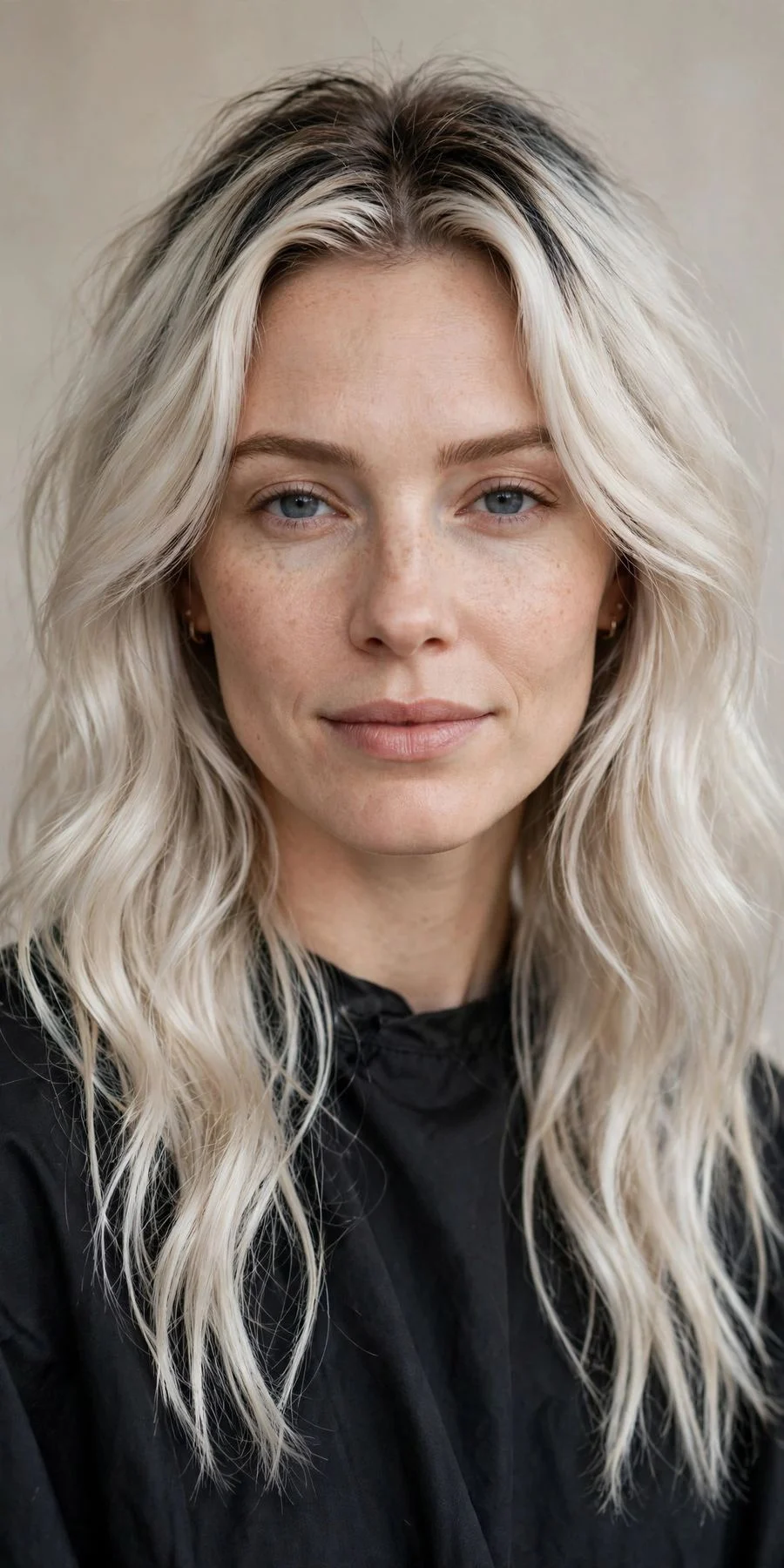
Vibe: Glacier water over dark stone.
Why it works: Near-white icy blonde lengths melt out of a softly smudged black root, no line, just a gradient from dark to palest blonde. The smudge is what makes this wearable: it erases the regrowth line that usually makes icy blonde a high-maintenance commitment. The overall read is cool and striking, especially on straight hair where the melt runs uninterrupted from crown to ends.
How to get it: Ask your colorist for an icy blonde melt with a black root smudge blended four to five inches down. The blonde must be lifted to a true level 10 and toned to remove all gold, or the 'icy' reads yellow against the black. This is the most bleach-intensive look here, bond builders are non-negotiable, and trims every eight weeks keep the fragile ends honest.
💡 Quick Win: An icy toner applied at home every third wash keeps the melt frosty between salon visits.
Shop the Look
- Icy-white toner for at-home maintenance
- Bond-builder treatment used weekly on fragile lengths
- Silver shampoo for the palest sections
- Protein-moisture balancing mask duo
- Cool-blonde root concealer for the smudge zone
15. Ribbon Balayage Streaks
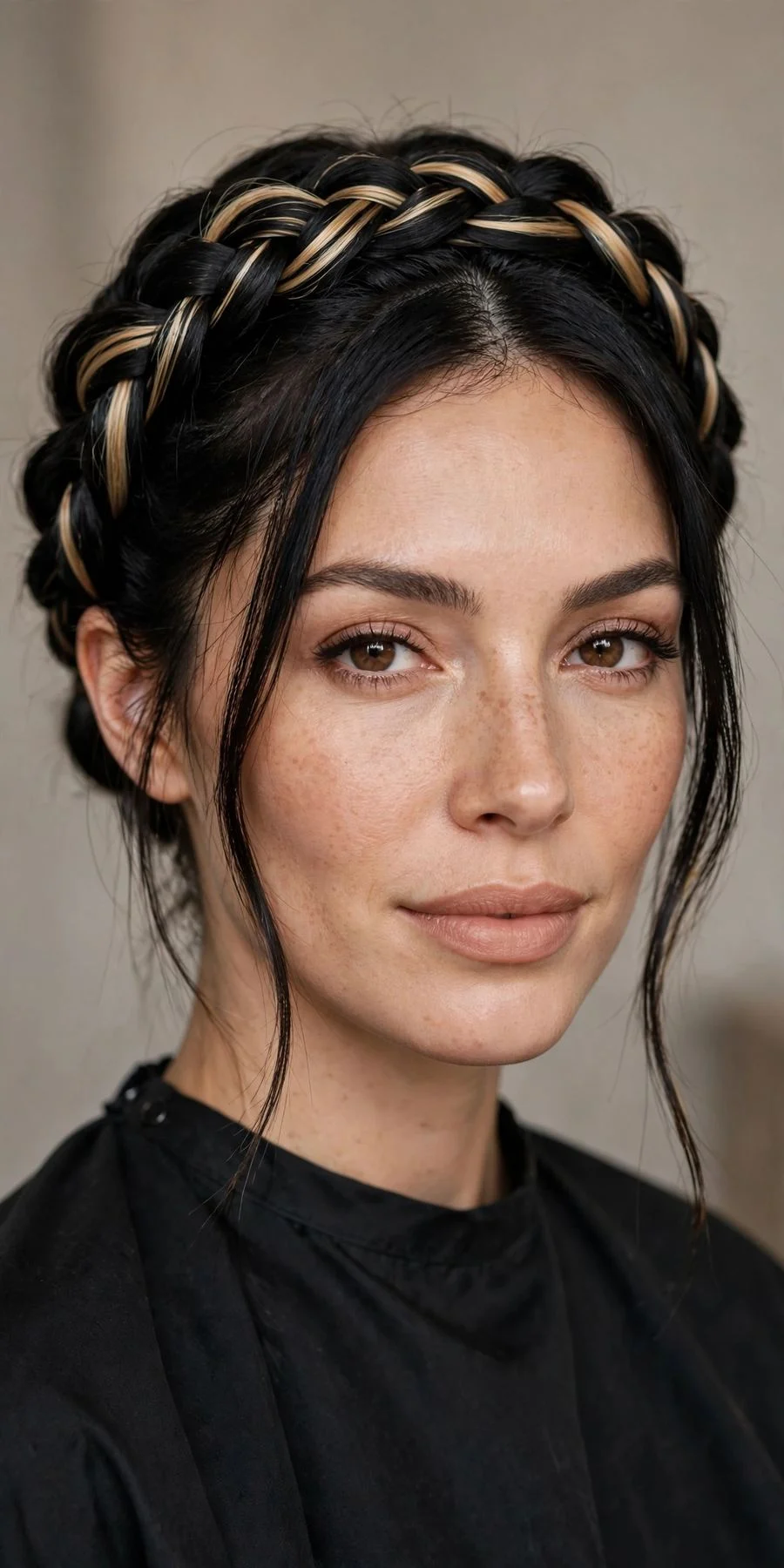
Vibe: Thin ribbons of light, braided into the dark.
Why it works: Fine, deliberate ribbons of blonde are painted through black hair and then showcased in braided or twisted styles, where each ribbon surfaces like a stripe in fabric. This is contrast color designed to be styled, worn straight it whispers, worn braided it sings. The thin ribbons also mean less bleach overall, so hair health stays strong and appointments stay shorter than full balayage.
How to get it: Ask your colorist for fine ribbon balayage, thin painted sections, more numerous than classic balayage, and learn one braided style to show them off. A Dutch braid or fishtail displays the ribbons best. Refresh with a toner every six weeks; the thin sections process quickly, so touch-up appointments run under two hours.
Also view: https://hairaurapro.com/red-hair-color-ideas-for-black-hair/
Shop the Look
- Texturizing powder for grip before braiding
- Clear elastic bands that disappear into braids
- Braid finishing serum for sleek ribbon definition
- Purple conditioner for the fine blonde ribbons
- Satin-lined beanie for winter color protection
How to Start Your Black and Blonde Hair Transformation
Start with a consultation, and bring two or three reference photos that show both the shade of blonde and the exact placement you want. Photos of the boundary, where black stops and blonde starts, matter more than photos of the blonde alone, because placement is what your colorist must engineer. Be honest about your hair history: previous box dye, keratin treatments, and old bleach all change what is safely possible in one session.
The most common mistake is bleaching over old black box dye and expecting even blonde. Box dye contains metallic salts and dense pigments that lift unpredictably, often revealing orange bands or refusing to budge past gold. A strand test takes fifteen minutes and tells your colorist exactly how your hair will respond, insist on one if your hair has any dye history. The second mistake is overlapping bleach onto already-lightened hair at touch-ups, which causes breakage; a good colorist lightens only the regrowth.
On a budget, the at-home kit is small but specific: a quality purple shampoo, a bond-repair mask, a sulfate-free cleanser, and a heat protectant. That combination, roughly the cost of one salon toner, carries most of the maintenance between appointments. What you cannot do cheaply is the initial lift; bleach to level 10 is chemistry, and uneven DIY lifting is the fastest route to a correction bill.
Salon pricing follows the bleach time. Partial services like a money piece or peekaboo panels typically run $120 to $200; full-head contrast work such as split dye or icy melts runs $250 to $450, more in major cities. Toner refreshes between appointments cost $60 to $100. Ask for the full quote including toner at the consultation, the lift is only half the service, and the tone is what you actually see in the mirror.
Frequently Asked Questions About Black and Blonde Hair Color
Does black and blonde hair color damage your hair?
Only the blonde half undergoes real chemical stress, since black is usually deposited, not lifted. Reaching level 10 blonde removes significant pigment and some structural protein, which is why bond-building treatments are now standard during lifting. Hair that was previously box-dyed or chemically straightened is at higher risk and may need two gentler sessions instead of one aggressive one. With proper technique, scheduled trims, and at-home protein-moisture care, the blonde sections stay healthy, the black sections are barely affected at all.
How do you keep the blonde from turning brassy?
Brassiness is oxidation plus mineral buildup, and it is managed on a schedule, not with a single product. Use purple shampoo once a week, more often dulls the blonde to gray. Book a professional toner every four to six weeks, because toner fades faster than the underlying lift. Wash in lukewarm water, since hot water opens the cuticle and releases tone faster. If your water is hard, a monthly chelating wash removes the mineral film that makes blonde look yellow no matter how fresh the toner is.
Which blonde shade looks best against black?
Match the blonde's undertone to your skin, not to the black. Cool and neutral skin tones take platinum, ash, and icy blondes beautifully, the cool-on-cool harmony keeps the contrast crisp. Warm undertones glow with honey, caramel, and golden blondes, which soften the pairing into something sunnier. When in doubt, honey blonde is the universal diplomat: it flatters most skin tones, lifts faster with less damage than platinum, and forgives regrowth. Your colorist can hold swatches to your face in natural light to confirm.
Can you wear black and blonde on short hair?
Absolutely, some placements work better short than long. A skunk stripe or block-color fringe on a bob or pixie is arguably the strongest version of those looks, because the color boundary stays visible instead of getting lost in length. Split dye works on bobs with a clean center part. What short hair cannot do well is long-gradient work like ombre, which needs length for the melt. If your hair is above the shoulders, choose placements that live near the face rather than down the lengths.
How often will you need salon touch-ups?
It depends entirely on placement. High-contrast, root-touching work like split dye or skunk stripes needs attention every five to six weeks as regrowth draws a visible line. Root-shadowed and balayage placements stretch to ten or twelve weeks because the grow-out is designed into the look. Peekaboo and underlayer blonde hide regrowth longest, up to three months. Toner-only refreshes fall in between at four to six weeks and cost far less than re-lightening, so many people alternate full appointments with quick tone refreshes.
Ready to Wear Black and Blonde?
Fifteen placements, one constant: this pairing rewards precision. Choose the version that matches your maintenance appetite, hidden panels if you want ease, split dye if you want impact, and bring your reference photos to a consultation this week. Ask for a strand test, get the full quote including toner, and leave with a plan, not just a wish.
Pin your favorite look now so you have it ready at the appointment, and share this guide with the friend who has been talking about going blonde for a year. The contrast is waiting.
Related Reads
- https://hairaurapro.com/honey-blonde-balayage-dark-hair/
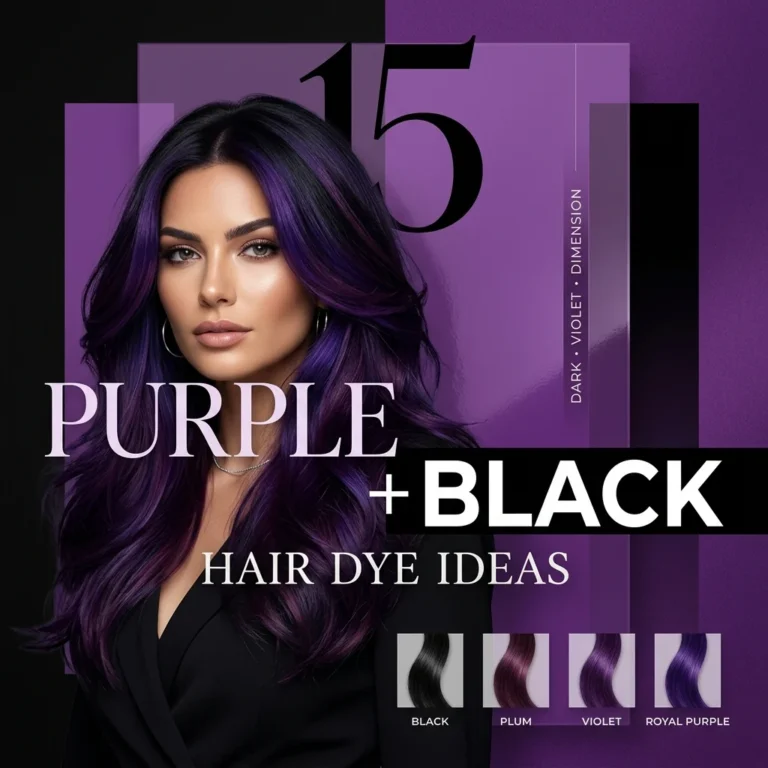
- https://hairaurapro.com/two-tone-hair-color-ideas/
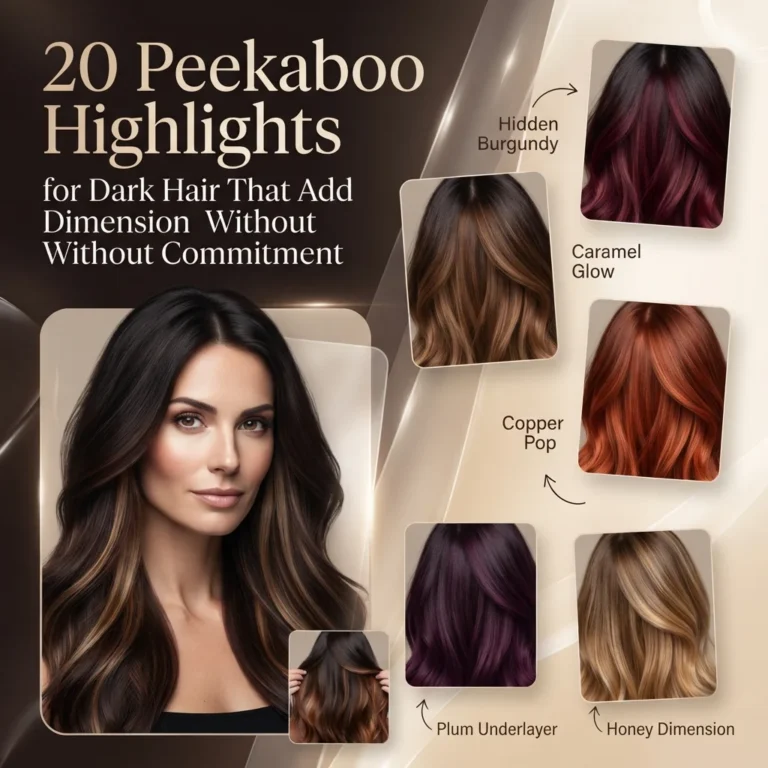
- https://hairaurapro.com/peekaboo-highlights-for-dark-hair/
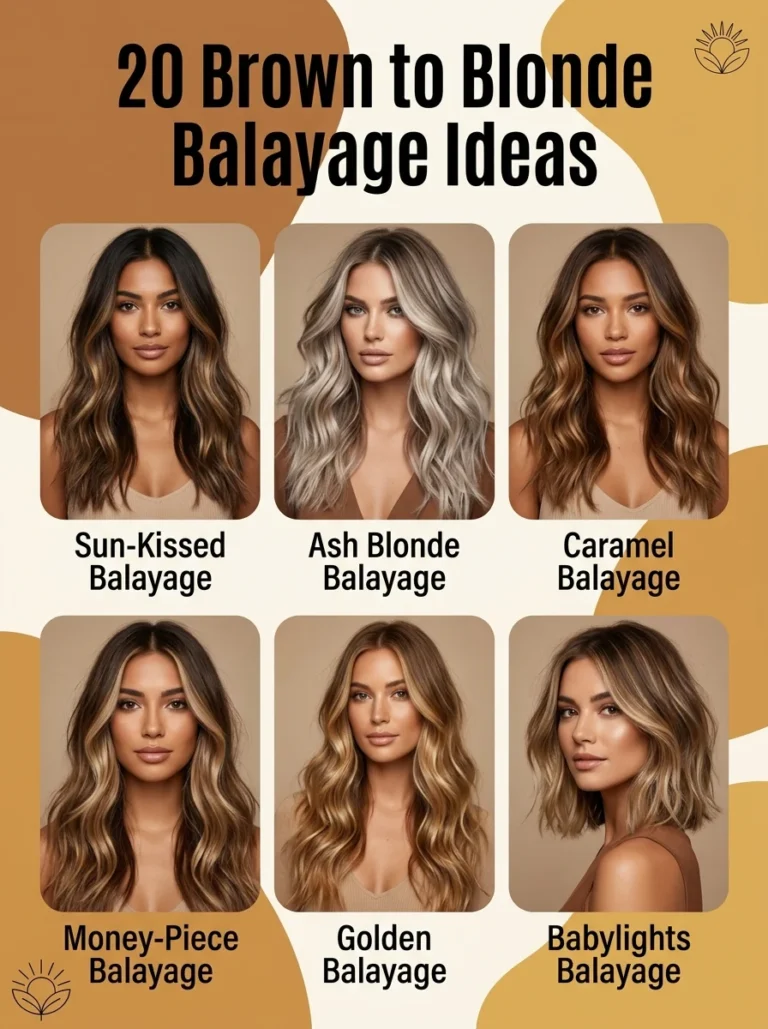
- https://hairaurapro.com/brown-to-blonde-balayage-ideas/