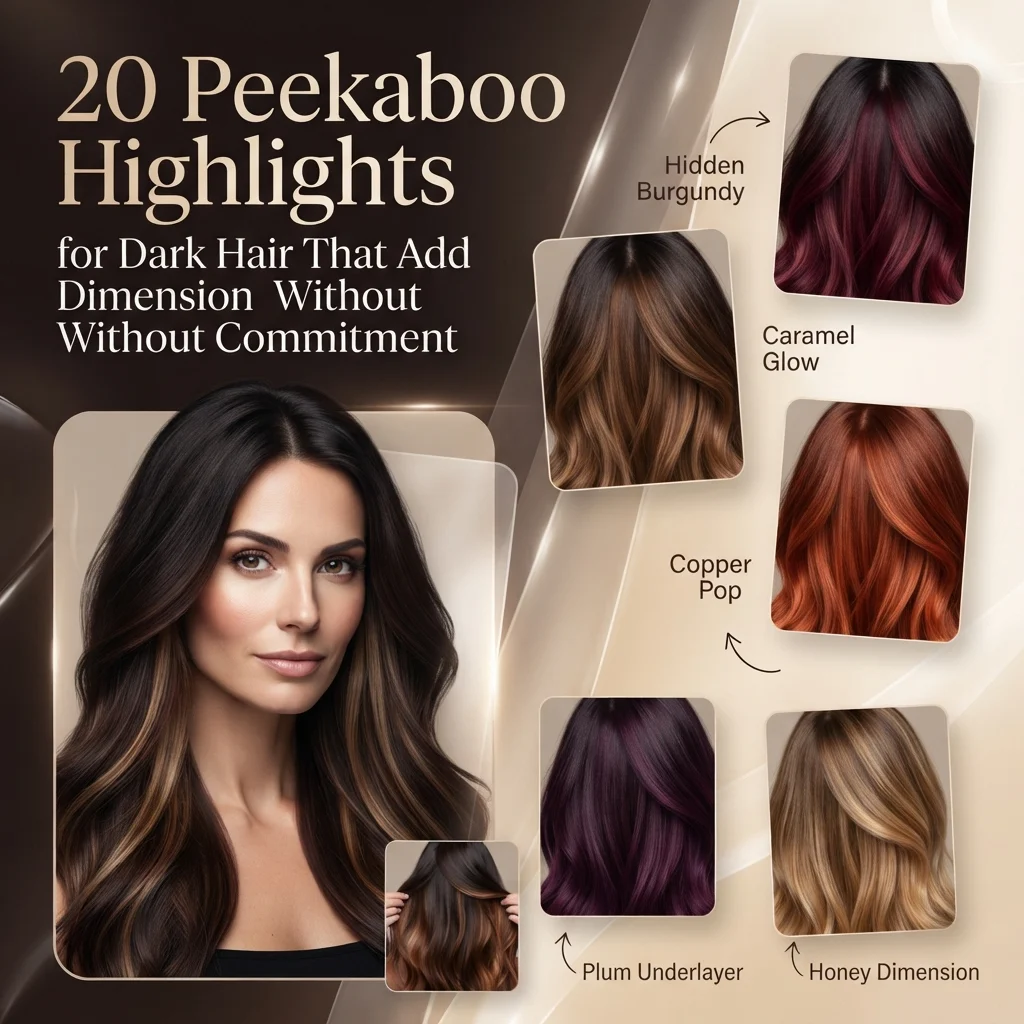
20 Peekaboo Highlights for Dark Hair That Add Dimension Without Commitment

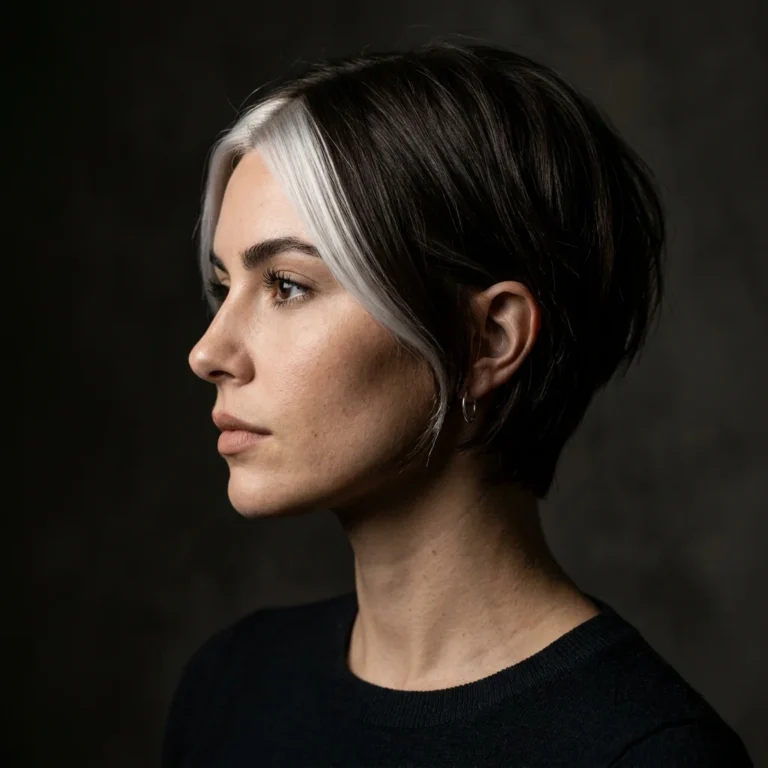
Peekaboo highlights are a color technique where lighter or contrasting pieces are placed underneath the top layer of dark hair, staying hidden when hair falls naturally and only showing up in a ponytail, braid, half-up style, or when the hair is tucked or flipped. This article gives you 20 peekaboo highlight ideas for dark hair, each built around a different color placement, technique, or styling reveal.
Dark hair holds color differently than blonde hair. The contrast reads sharper, the reveal feels more deliberate, and the option to hide the color entirely for work or family events is what makes this technique different from every other highlighting method. There’s a controlled, in-on-the-secret feeling to peekaboo color that all-over highlights don’t have. Hair that looks entirely one color until you move, and then it isn’t. Here are 20 ideas worth saving, and stealing.
Why Peekaboo Highlights Work So Well on Dark Hair
Peekaboo highlighting descends from the weave-foiling techniques colorists have used since the 1990s to add subtle dimension without a full head of color, refined through the 2010s “hidden rainbow hair” trend where vivid dye was placed underneath natural hair specifically to be concealed at will, and sharpened further by the “money piece” face-framing technique that TikTok popularized starting around 2021. What makes peekaboo highlighting distinct from balayage or full foils is placement logic rather than color choice. The lightened sections sit specifically in the under-layers, chosen for where they’ll show during a reveal rather than for even, all-over distribution.
The materials that make this technique work on dark, especially black, hair are lift-focused and bond-focused rather than tone-focused. A colorist lifting from a level 2-4 base typically needs Wella’s Blondor or a similar high-lift powder bleach, applied in sections and processed to a level 8-9 before toning, with a bond-builder like Olaplex No. 1 mixed into the lightener and Olaplex No. 3 used as an at-home follow-up. Skipping the bond step on hair this dark is the single fastest way to end up with breakage at the lightened panels. For color, colorists reach for warm coppers and caramels (Redken Shades EQ 08CC) for a natural-looking peekaboo and vivid semi-permanents like Pulp Riot or Arctic Fox for the color-reveal versions.
Peekaboo highlights are trending specifically because they solve a real conflict: many workplaces and family settings still expect conservative hair, but the same person wants access to bold color on their own terms. Pinterest and TikTok search data has tracked rising interest in “hidden highlights” and “money piece” queries since 2022, largely driven by exactly this tension between professional expectations and personal color expression, plus a broader shift toward lower-commitment color that doesn’t require a full re-dye when trends shift.
Does the technique work on very short or very fine dark hair? Yes, but with a caveat. There needs to be enough length and layering for a genuine “under” layer to exist. On a very short pixie or an extremely fine, low-density cut, the peekaboo pieces are far more likely to show constantly rather than stay hidden, so the honest fix is placing fewer, smaller panels lower at the nape rather than attempting a full underneath section.
Style at a Glance
| Element | Natural-Toned Peekaboo | Vivid-Color Peekaboo |
| Philosophy | Subtle, workplace-safe hidden dimension | Bold color revealed only on your terms |
| Best base | Level 2-5 dark brown to black | Level 2-5 dark brown to black |
| Key products | High-lift bleach, warm demi-permanent toner | High-lift bleach, semi-permanent vivid dye, bond builder |
20 Peekaboo Highlights for Dark Hair
1. Copper Peekaboo on Espresso Brown Hair
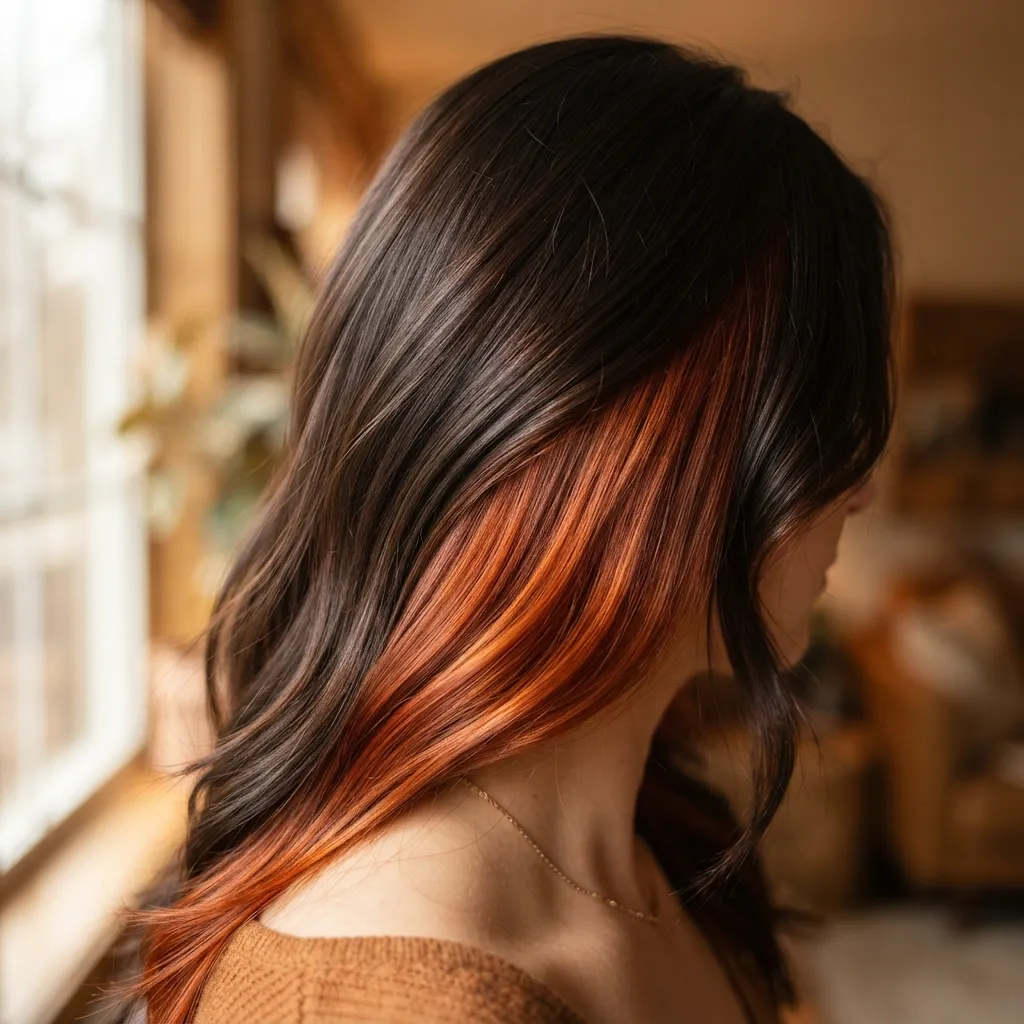
Category: Color
Vibe: Warm.
Why it works: Copper sits close enough to brown on the color wheel that it reads as a natural undertone rather than a color clash, so even when the peekaboo panels are fully visible in a ponytail, they look like the hair’s own warmth rather than an obvious dye job. That subtlety is what makes copper the most requested first-time peekaboo color for dark hair specifically.
How to get it: Ask your colorist to lift the underneath panels to a level 8 and tone with a coppery-red demi-permanent like Redken Shades EQ 07CR, which holds warmth without drifting orange the way some drugstore copper glazes do on lightened dark hair.
Shop the Look
- Copper-toned color-depositing conditioner for at-home refresh
- Bond-repair leave-in treatment for lightened underlayer panels
- Wide-tooth detangling comb for color-treated sections
- Heat-protectant spray for styling over lightened panels
- Auburn-toned glossing gloss treatment
2. Chunky Panel Peekaboo at the Nape
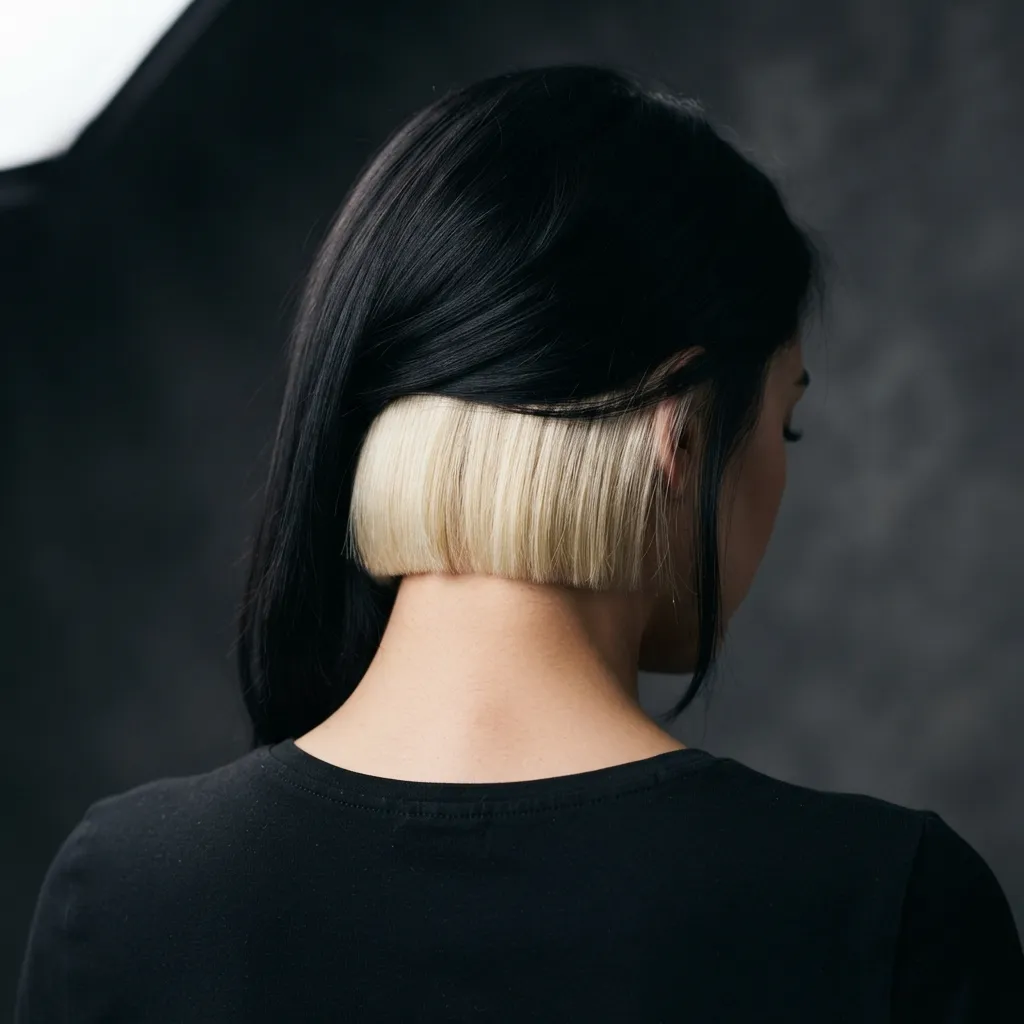
Category: Placement
Vibe: Concentrated.
Why it works: Placing one wide panel (roughly 1.5-2 inches) at the nape rather than several thin streaks throughout the underlayer keeps the maintenance and processing time contained to a single small zone, while still delivering maximum visual payoff whenever hair is worn up. This is a design-efficiency choice as much as a style one.
How to get it: Request a single foil section at the nape, sectioned off before the rest of the hair is styled, so your colorist can process it independently without lightener touching the surrounding dark hair.
Shop the Look
- Sectioning clips for isolating the nape panel
- Purple-toning shampoo for platinum panel maintenance
- Small paddle brush for nape-area detangling
- Bond-building hair mask, weekly use
- Satin scrunchie for gentle updos over the panel
3. High Ponytail Peekaboo Reveal
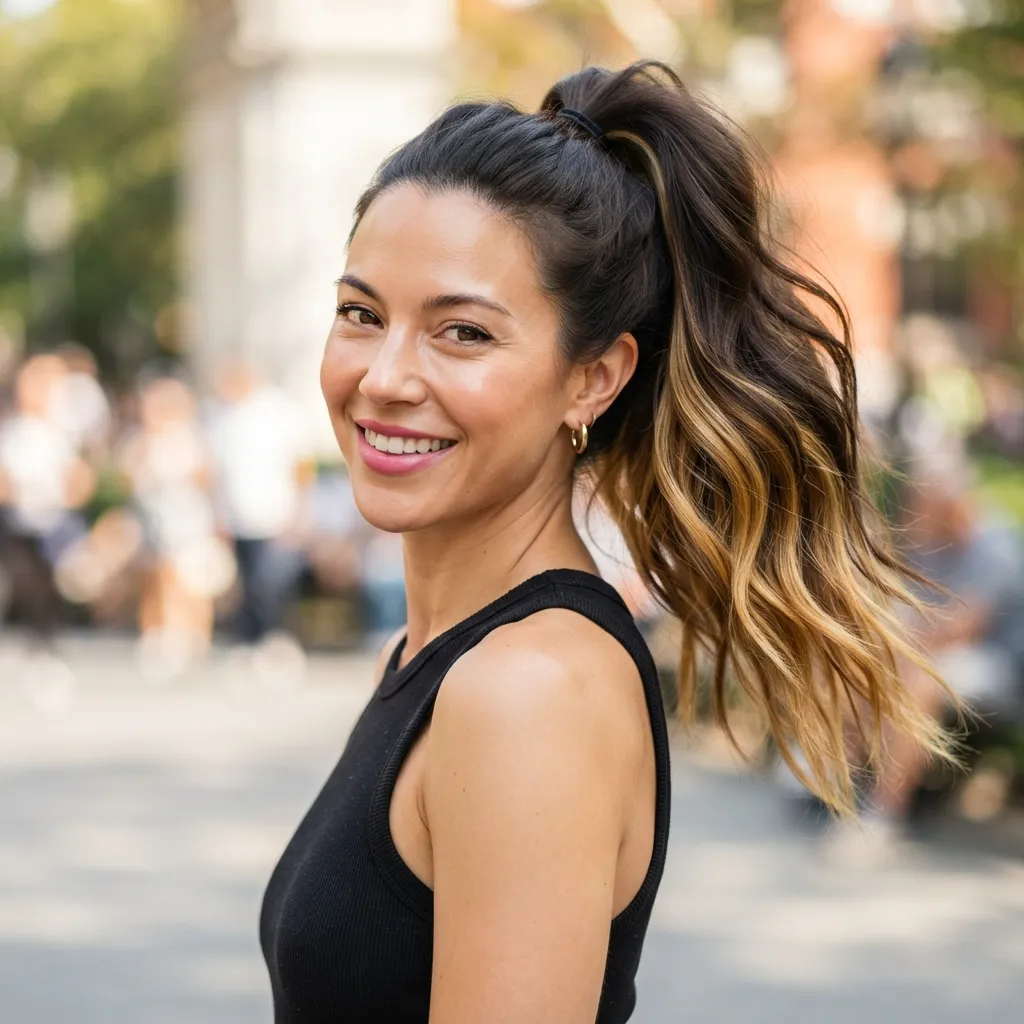
Category: Styling Technique
Vibe: Revealed.
Why it works: A high ponytail gathers the underlayer and the top layer at the same point and lets them fall together, which is the single styling method that displays the maximum surface area of peekaboo color at once. It’s the reveal the placement technique is specifically designed around, more than any other updo.
How to get it: Gather hair at the crown before brushing it fully smooth, so the underneath panels naturally rotate to the front and sides of the ponytail’s fall rather than staying hidden at the back.
💡 Quick Win: A slim, clear elastic instead of a thick scrunchie keeps the base of the ponytail from covering the topmost peekaboo panel closest to the crown.
Shop the Look
- Slim clear hair elastics, multi-pack
- Boar-bristle brush for smooth ponytail styling
- Edge control gel for a clean ponytail base
- Lightweight shine spray for the ponytail’s fall
- Small teasing comb for volume at the crown before gathering
4. Peekaboo Highlights on Curly Dark Hair
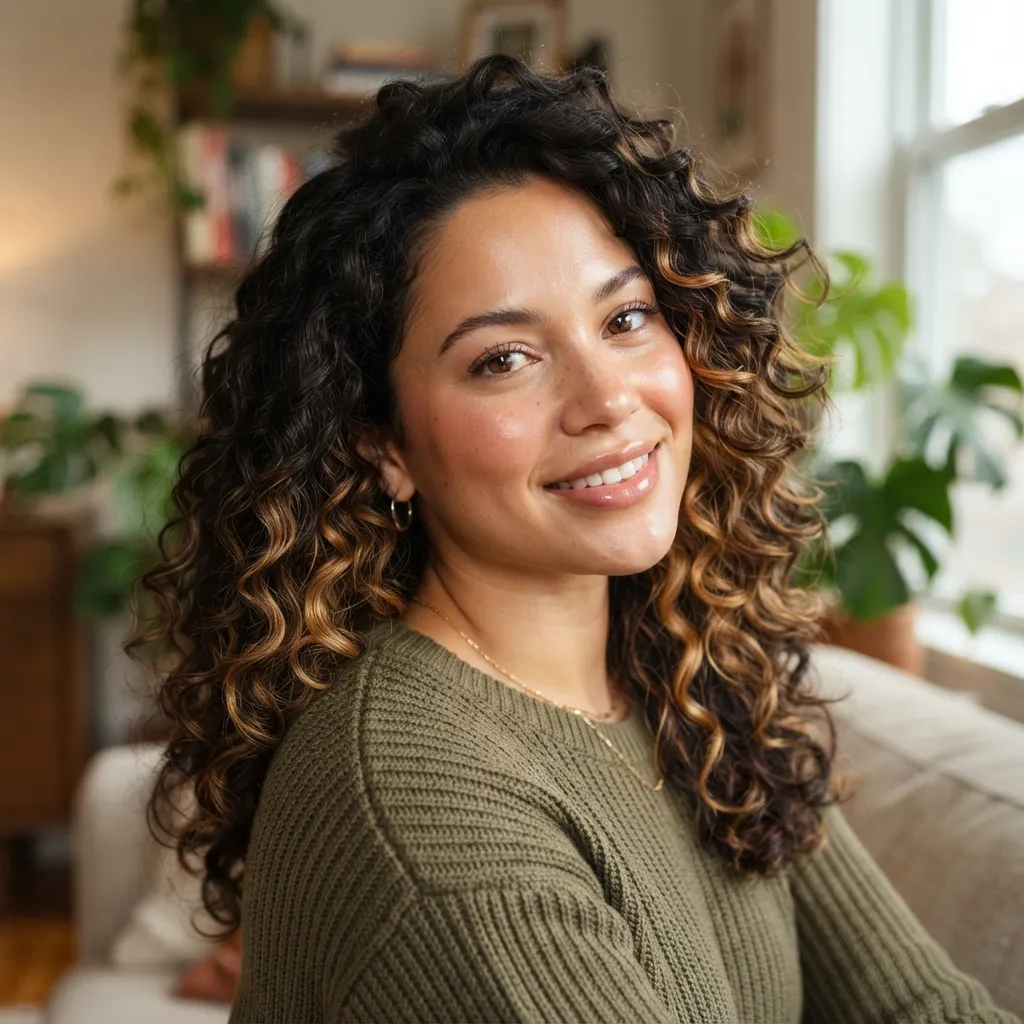
Category: Texture Compatibility
Vibe: Dimensional.
Why it works: Curl pattern naturally rotates individual strands in and out of view as the curl coils, so peekaboo panels on curly hair show up in scattered glimpses throughout the day rather than only during a specific updo, curly hair essentially performs its own ongoing reveal without any deliberate styling required.
How to get it: Ask for peekaboo panels placed slightly more densely than you would on straight hair, since curl shrinkage means a single thin foil section reads as far smaller once the hair springs up and dries.
Shop the Look
- Curl-defining cream, sulfate-free formula
- Diffuser attachment for enhancing natural curl pattern
- Leave-in conditioner for curly, color-treated hair
- Wide-tooth comb for detangling curls without disrupting pattern
- Curl-refreshing spray for second and third-day styling
5. Claw Clip Peekaboo Styling
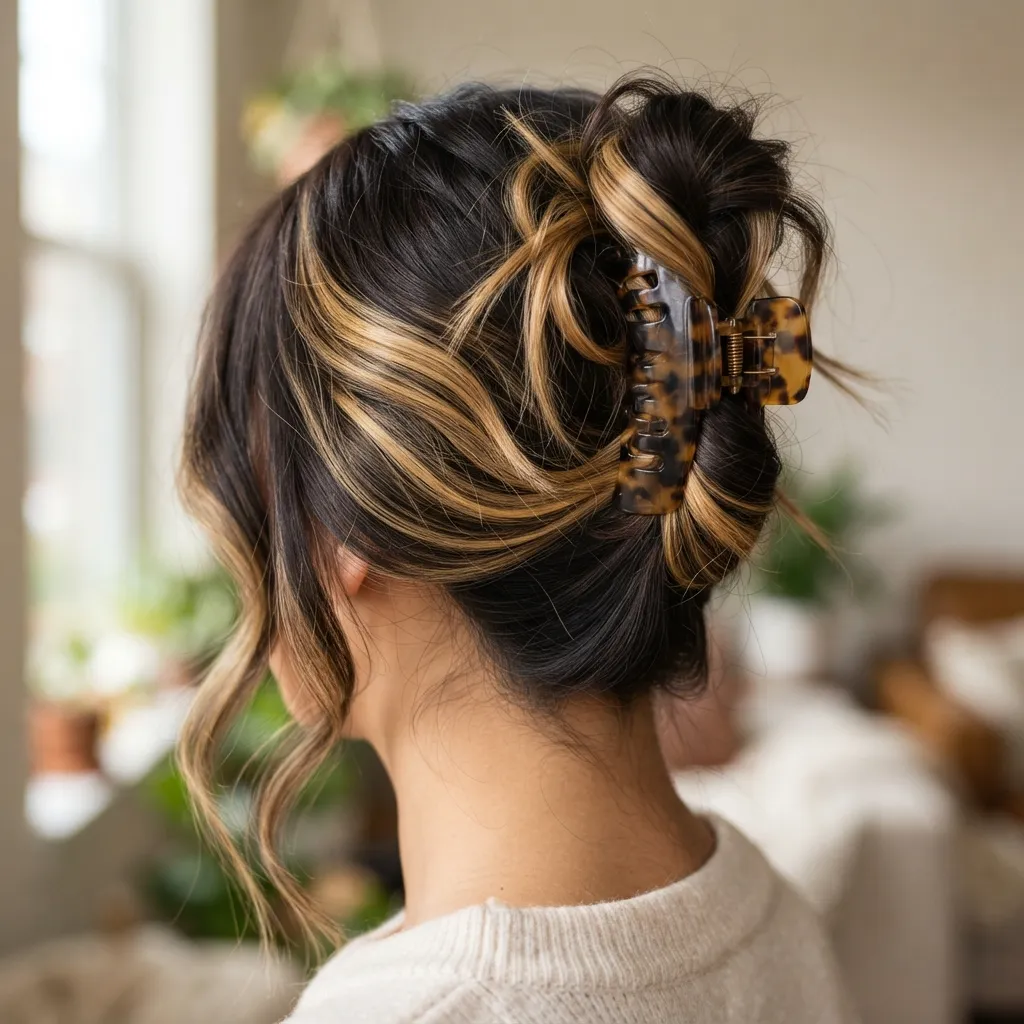
Category: Accessories
Vibe: Effortless.
Why it works: A claw clip gathers hair loosely rather than pulling it fully smooth the way an elastic does, which means sections of the underlayer stay slightly separated from the top layer instead of blending fully into it. That separation is what keeps the peekaboo panels visible in irregular glimpses rather than one uniform reveal.
How to get it: Twist the hair once before clamping the claw clip rather than gathering it straight up, since the twist naturally rotates a portion of the underlayer to the surface.
Shop the Look
- Large matte claw clip, neutral tone
- Texturizing spray for grip before clipping
- Small round brush for face-framing pieces left out
- Lightweight hair oil for polished ends
- Bobby pins for securing loose pieces around the clip
6. Deep Side Part Peekaboo Placement

Category: Layout
Vibe: Angled.
Why it works: A deep side part physically exposes a strip of the scalp-adjacent underlayer that a center part never reveals, so placing peekaboo panels specifically along the heavier side of a deep part guarantees the color shows every single day the hair is worn down, without needing a ponytail or braid to reveal it.
How to get it: Tell your colorist exactly where you part your hair before the panels are placed, so the foils land along that specific line rather than being distributed generically through the underlayer.
Shop the Look
- Rat-tail comb for precise deep parting
- Root-touch powder for scalp coverage along the part
- Flexible-hold hairspray for keeping the deep part in place
- Small flat iron for smoothing hair along the part line
- Shine serum for the exposed panel
7. Underneath Ombré Peekaboo (Dark to Honey Blonde)

Category: Color
Vibe: Gradual.
Why it works: Confining an ombré gradient to the underlayer alone, rather than running it through the whole head, means the top-layer hair keeps its natural dark color and low maintenance while the hidden gradient still delivers the visual complexity of a full ombré whenever the hair is lifted or tied up.
How to get it: Ask for the ombré transition to begin roughly at ear level within the underneath sections only, so the top-layer roots and mid-lengths stay entirely undisturbed by lightener.
Shop the Look
- Bond-repair mask for gradient-lightened underlayer
- Golden blonde toning gloss for the honey-toned ends
- Heat-protectant spray for styling over the gradient
- Wide-tooth comb for gentle detangling on lightened sections
- Color-safe deep conditioner, weekly treatment
8. Face-Framing Peekaboo Under a Center Part
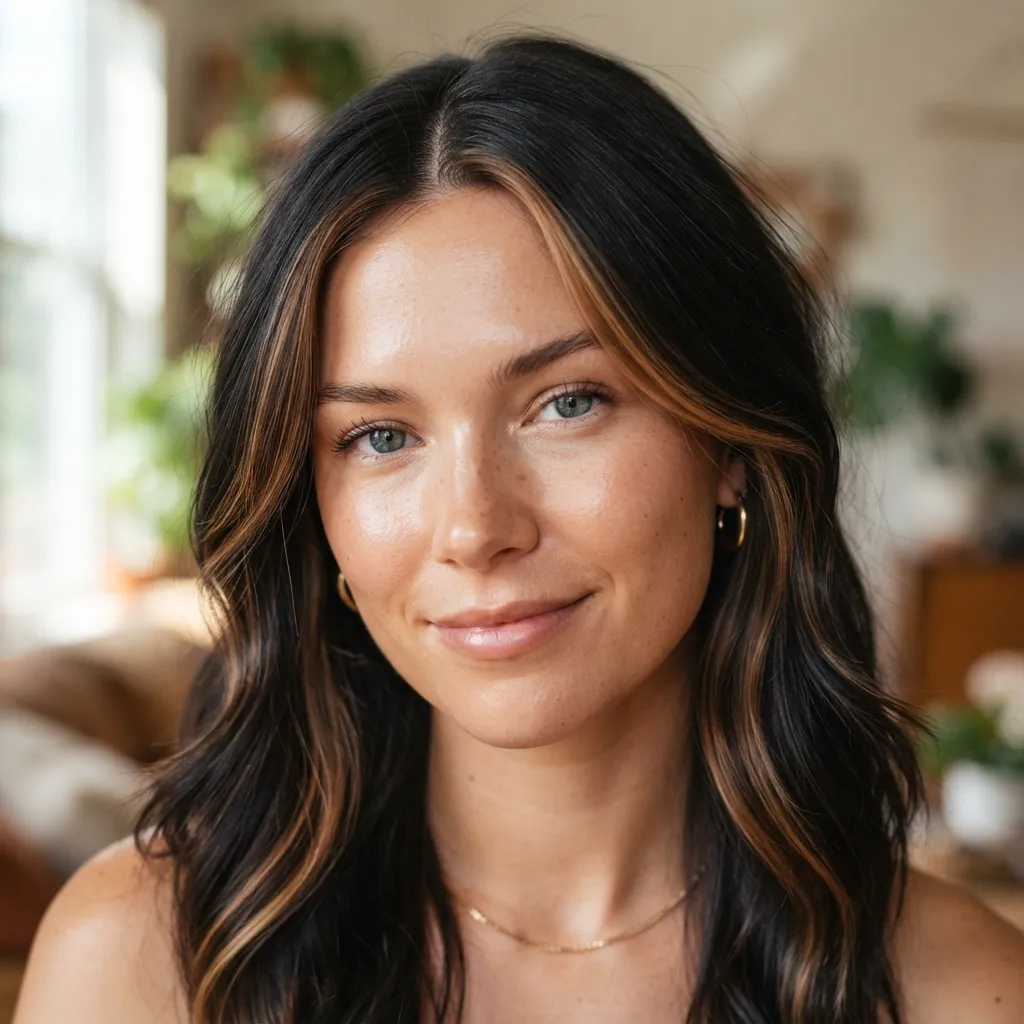
Category: Placement
Vibe: Soft.
Why it works: Placing the peekaboo panels specifically in the two sections that frame the face on either side of a center part means the color catches light and shows movement during normal conversation and turning of the head, without requiring an updo. It’s a placement choice that trades full concealment for partial, everyday visibility.
How to get it: Ask for panels placed one inch back from the center part on both sides, angled to sit just beneath the top layer that naturally falls forward around the face.
Shop the Look
- Small round brush for face-framing section styling
- Lightweight curling wand for soft face-framing waves
- Texturizing paste for defining framing pieces
- Heat-protectant serum, fine mist
- Glossing hair oil for shine on framing panels
9. Braided Peekaboo Reveal
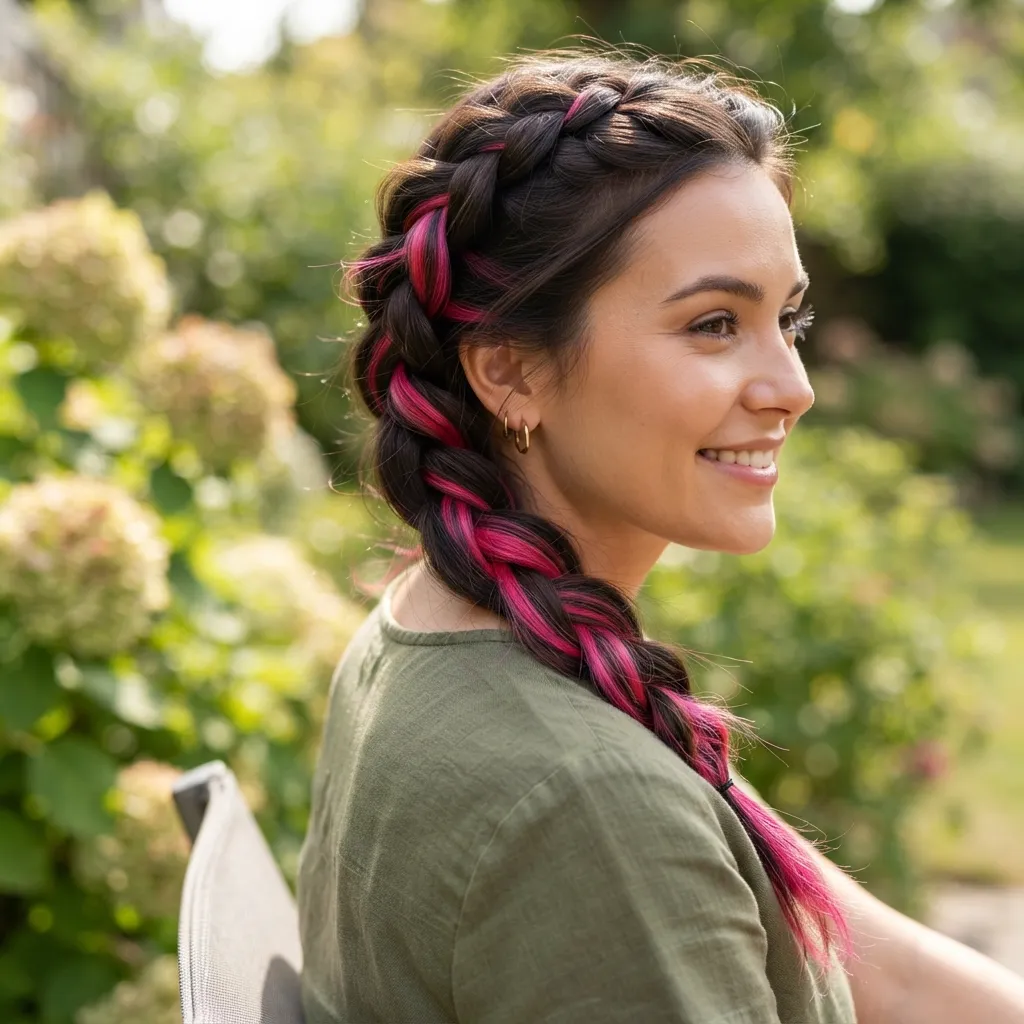
Category: Styling Technique
Vibe: Intricate.
Why it works: Braiding physically interlaces the underlayer and top layer at regular, repeating intervals, so peekaboo panels appear as a rhythmic pattern running the length of the braid rather than a single reveal in one spot. This is the styling method that shows the most consistent, evenly distributed glimpses of the hidden color.
How to get it: Start the braid slightly looser than usual at the crown, since a tight braid pulls the underlayer fully flush with the top layer and can hide more of the peekaboo color than a relaxed plait does.
💡 Quick Win: A three-strand French braid started at the very top of the head incorporates more of the underlayer into the pattern than a braid started lower down.
Shop the Look
- Fine-tooth comb for clean braid sectioning
- Texturizing spray for grip during braiding
- Small clear elastics for securing braid ends
- Smoothing serum for flyaway control along the braid
- Bobby pins for pinning loose pieces back
10. Peekaboo Highlights on Long Layered Dark Hair
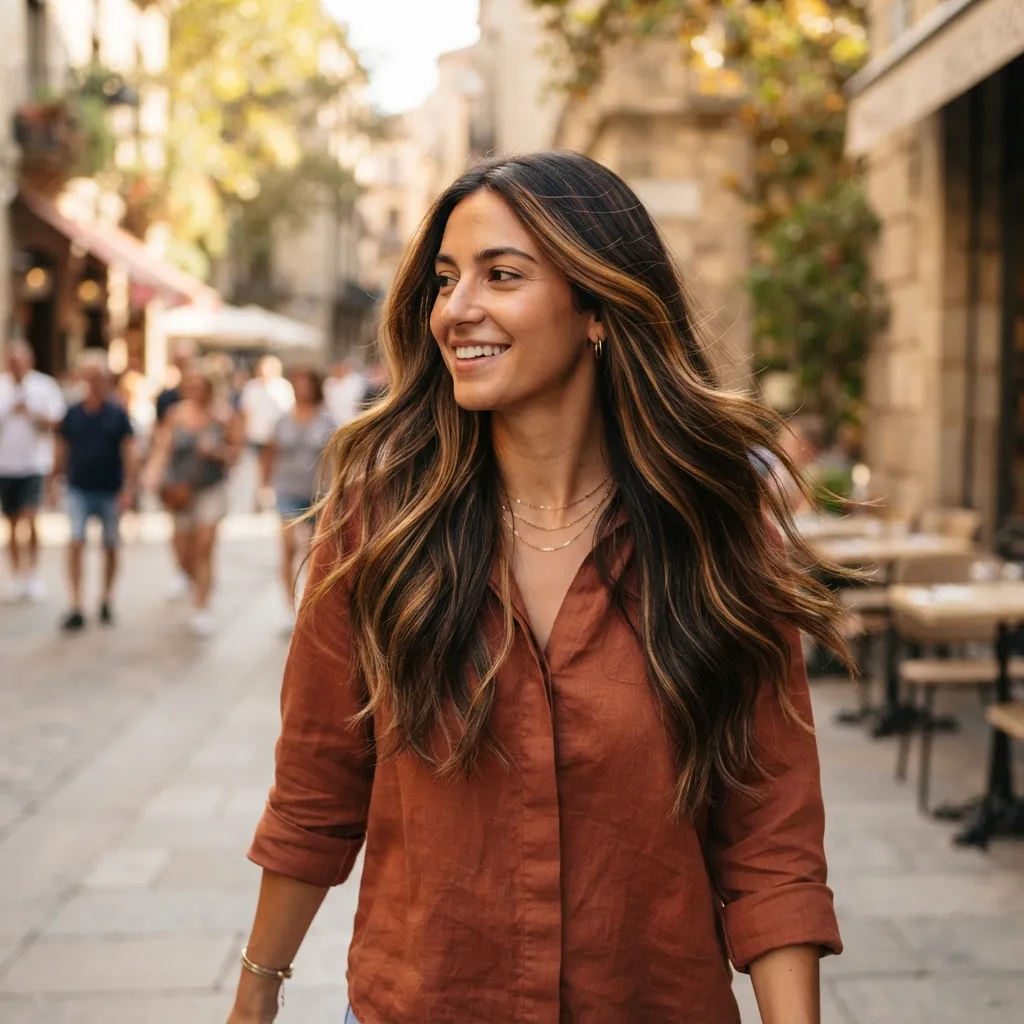
Category: Texture Compatibility
Vibe: Flowing.
Why it works: Long layers create natural movement and separation as hair swings while walking or turning, and that ongoing motion means peekaboo panels placed within the layers catch light in flashes throughout the day, functioning almost like the ombré or face-framing versions but activated by movement rather than a fixed style.
How to get it: Have the peekaboo panels placed within the mid-length layers specifically, rather than only at the very ends, since layered hair’s shortest pieces move the most and will show the highlights most frequently.
Shop the Look
- Lightweight shine spray for layered movement
- Large-barrel curling iron for loose waves that expose layers
- Volumizing mousse for lift at the layered crown
- Heat-protectant spray for daily styling
- Wide-tooth detangling comb for long layered hair
11. Headband Tuck Peekaboo Reveal
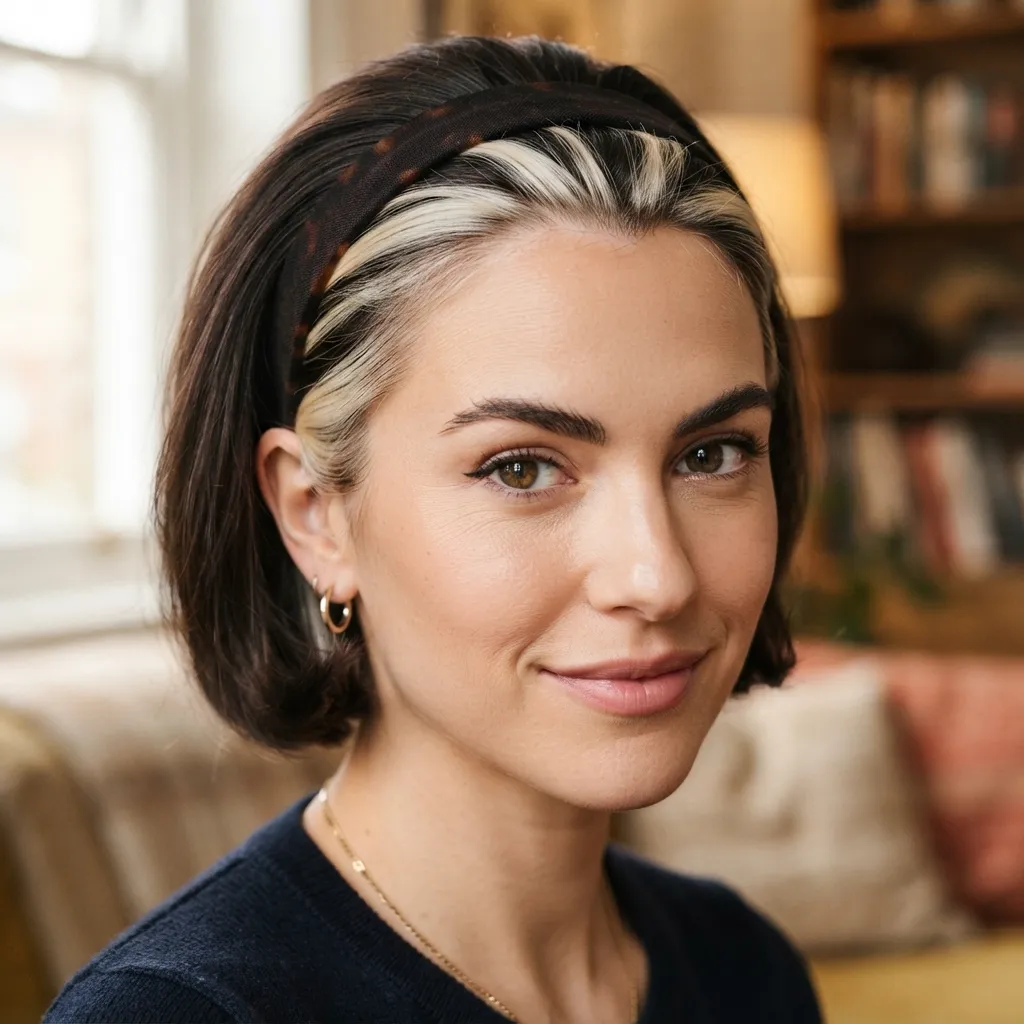
Category: Accessories
Vibe: Polished.
Why it works: Tucking hair behind a headband physically folds the top layer under itself along the hairline, which exposes a thin strip of whatever color sits just beneath the surface at that specific point. It’s a controlled, symmetrical reveal that shows a consistent amount of color every time, unlike a ponytail or braid where the reveal varies with how the hair falls.
How to get it: Have peekaboo panels placed specifically at the hairline, one to two inches back, so they land exactly where a headband tuck would expose them rather than somewhere lower that a tuck won’t reach.
Shop the Look
- Slim fabric headband, neutral tone
- Edge control gel for a smooth tucked hairline
- Small bobby pins for securing tucked sections
- Shine spray for the exposed hairline panel
- Texturizing pomade for a polished finish
12. Symmetrical Double-Panel Peekaboo Part
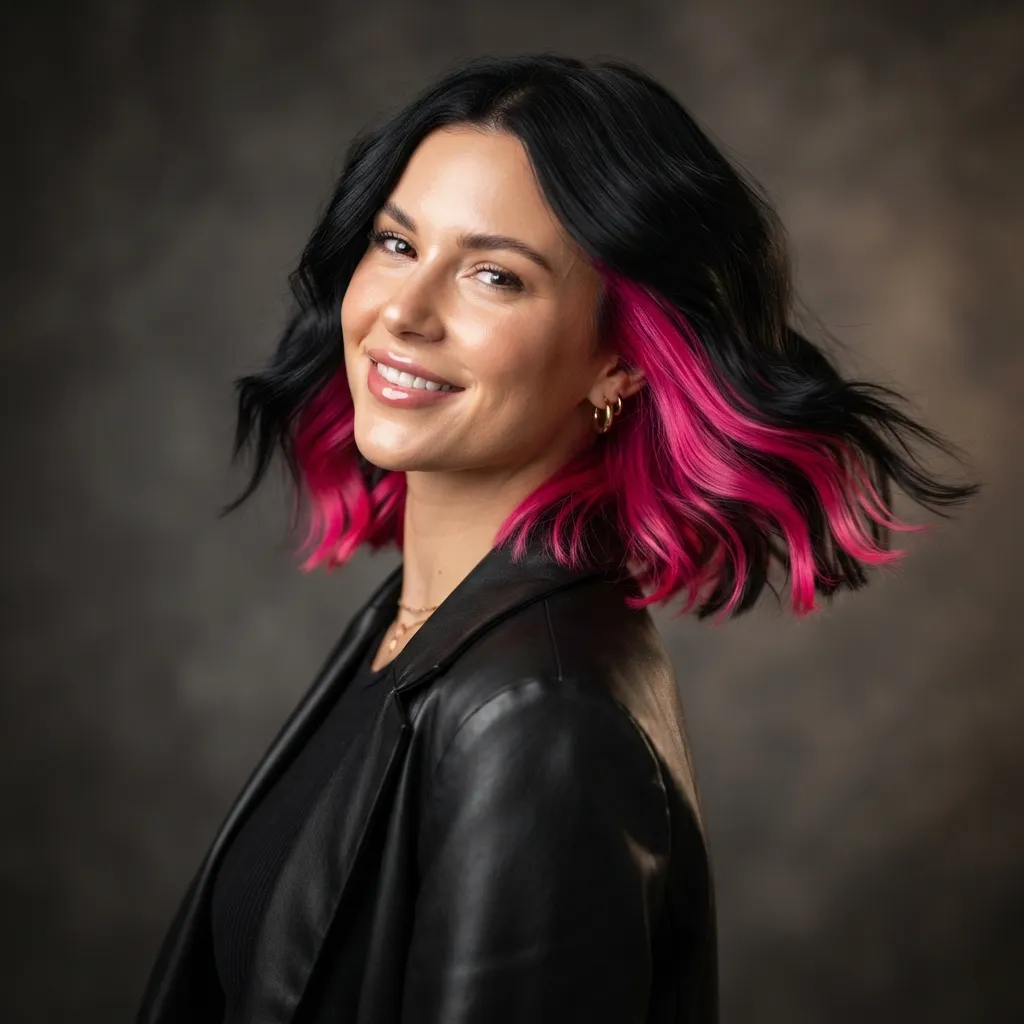
Category: Layout
Vibe: Balanced.
Why it works: Mirroring the peekaboo panels on both sides of a center part creates visual symmetry that reads as more deliberate and salon-designed than a single asymmetric panel, particularly in photographs taken straight-on, where an uneven placement is far more noticeable than it is in profile.
How to get it: Measure and mark the panel placement on one side first, then replicate the exact same section width and distance from the part on the opposite side before foiling either one.
Shop the Look
- Sectioning clips for matching bilateral placement
- Fine-tooth comb for precise center parting
- Root-lift spray for volume along the part
- Heat-protectant spray for even styling on both panels
- Glossing treatment for consistent shine across both sides
13. Vivid Pink Peekaboo Panels Hidden Underneath
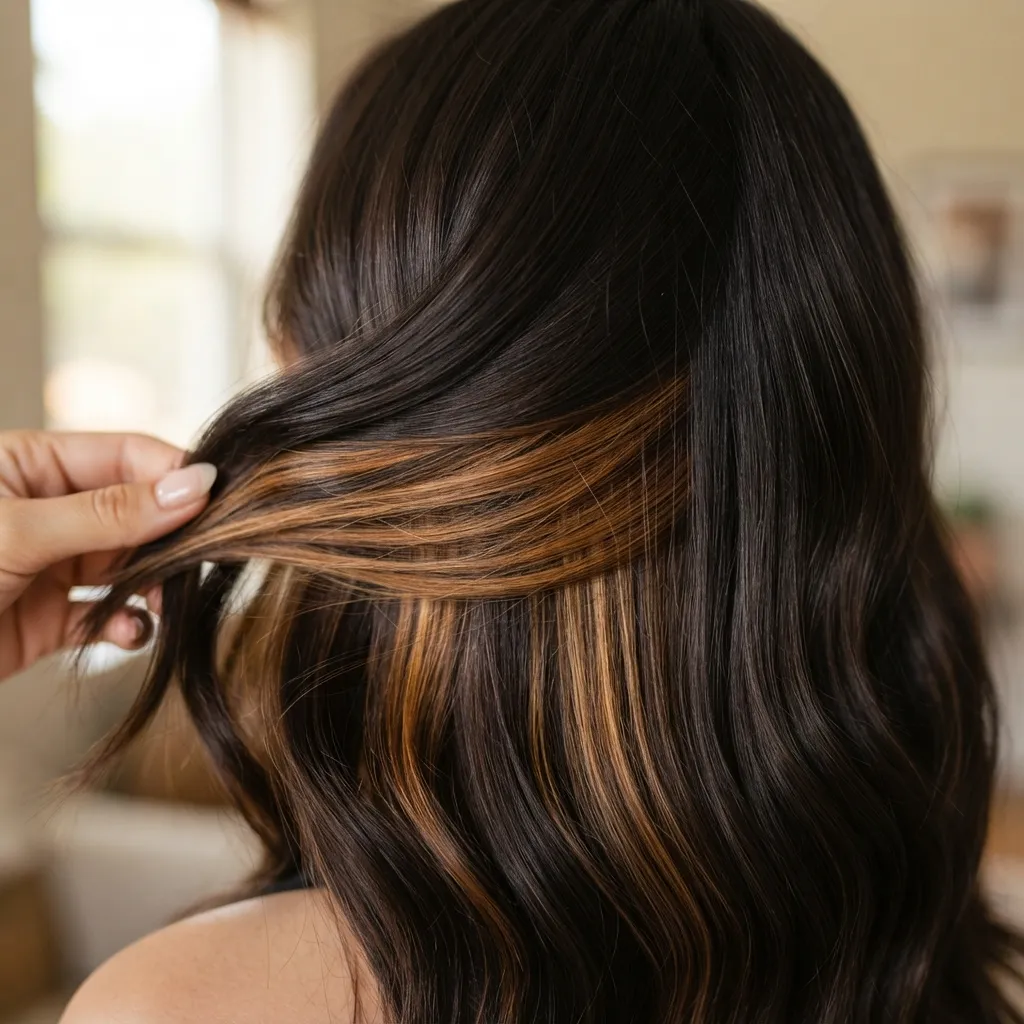
Category: Color
Vibe: Playful.
Why it works: Vivid semi-permanent color needs a fully lightened, near-white base to show true and saturated, so hidden pink panels specifically require pre-lightening to level 9-10 before the color is applied. This is the version of peekaboo highlighting with the most processing involved, but also the one with the widest, most workplace-adaptable range of visible-versus-hidden control.
How to get it: Ask your colorist to pre-lighten only the panels intended for vivid color to a pale yellow base, then apply a direct-dye vivid like Arctic Fox’s Virgin Pink, which deposits more true-to-bottle on a fully lightened base than on any level of natural or brown-toned hair.
Shop the Look
- Color-safe purple shampoo for pre-toning yellow undertones
- Vivid color-depositing conditioner for touch-ups between salon visits
- Bond-repair treatment for pre-lightened panels
- Color-protecting cool-water rinse cap or shower filter
- Silk pillowcase to reduce vivid color transfer and fade
14. Interior Panel Peekaboo (Mid-Layer Placement)
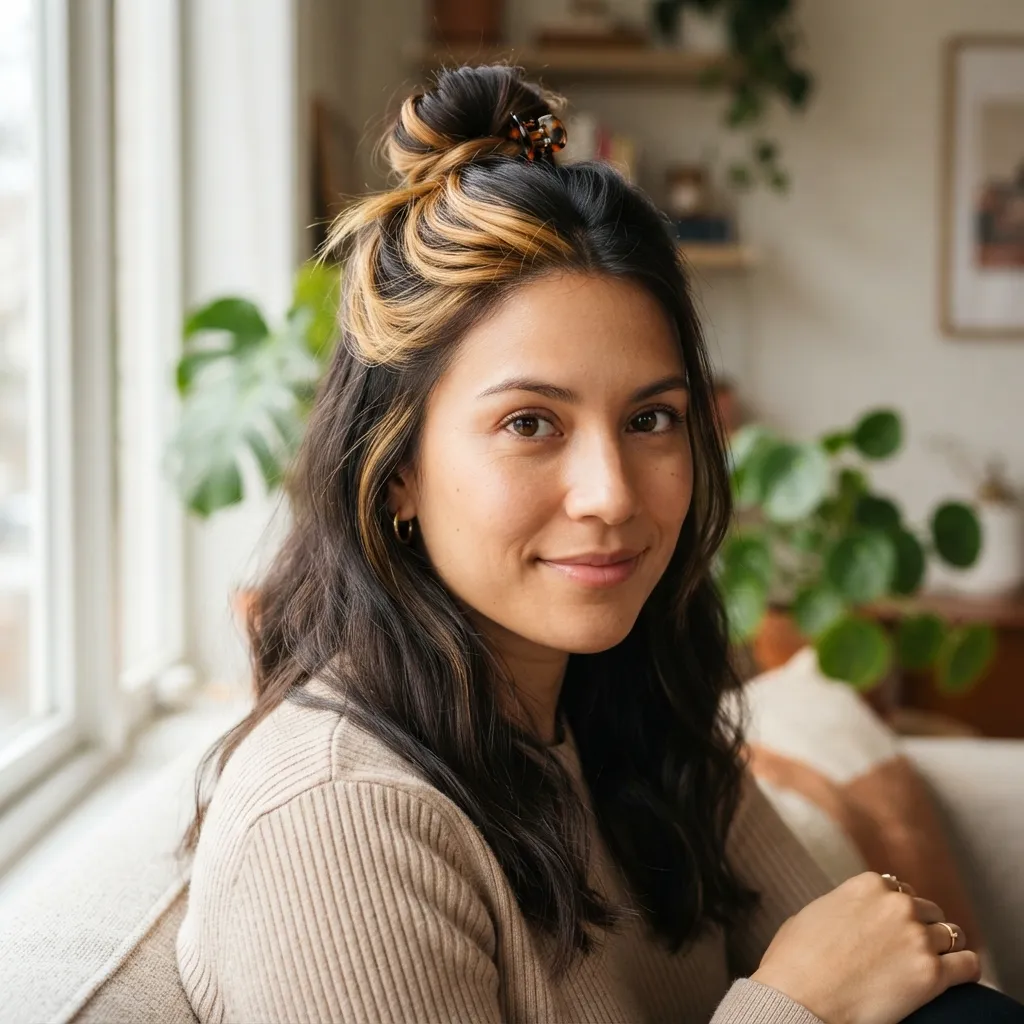
Category: Placement
Vibe: Subtle.
Why it works: Placing a panel in the mid-layer, between the outermost top layer and the innermost underlayer, creates the most concealed version of peekaboo highlighting available. The color only becomes visible when hair is deliberately lifted or sectioned apart by hand, which suits people who want the option to show it off selectively rather than have it exposed by any routine styling.
How to get it: Ask your colorist to section the hair into three horizontal layers rather than the usual two before foiling, placing the lightened panel specifically in the middle layer.
Shop the Look
- Fine-tooth sectioning comb for three-layer parting
- Lightweight leave-in conditioner for mid-layer color care
- Small clips for holding sections apart during styling
- Heat-protectant spray for occasional reveal styling
- Glossing serum for the concealed panel’s shine
15. Half-Up Peekaboo Reveal
Category: Styling Technique
Vibe: Everyday.
Why it works: A half-up style gathers only the crown section, which is a smaller and more targeted reveal than a full ponytail. It shows a controlled glimpse of the peekaboo color rather than the full underneath layer, making it the most work-appropriate styling option for someone who wants a subtle hint rather than a complete reveal.
How to get it: Gather slightly more hair than a typical half-up pulls in, about a third of the total volume instead of a fifth, so more of the underneath panel gets caught in the gathered section.
Shop the Look
- Small clear elastic for the half-up gather
- Teasing comb for volume at the crown before gathering
- Bobby pins for securing loose face-framing pieces
- Shine spray for the visible gathered section
- Flexible-hold hairspray for all-day hold
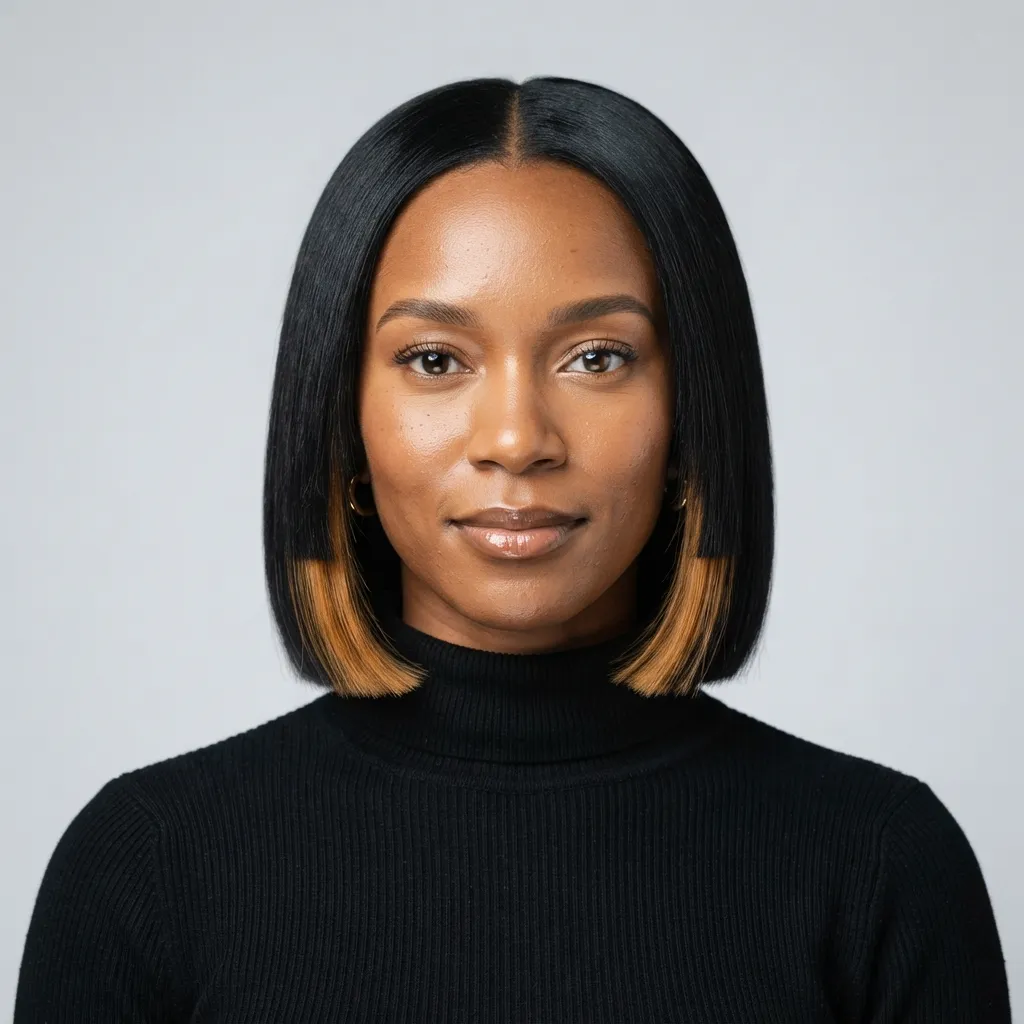
16. Peekaboo Highlights on a Blunt Dark Bob

Category: Texture Compatibility
Vibe: Crisp.
Why it works: A blunt bob‘s short length means the underlayer sits much closer to the surface than it does on long hair, so peekaboo panels show through more readily even without a specific updo, the shorter the cut, the less “hidden” the peekaboo effect naturally stays, which is worth knowing before committing to this combination.
How to get it: Ask for the panels placed slightly lower, closer to the nape, on a bob than you would on longer hair, since that’s the one zone on a short cut where the top layer reliably covers the section underneath.
Shop the Look
- Ceramic round brush for blunt bob blowouts
- Precision flat iron for smooth, sleek ends
- Lightweight glossing oil for shine along the blunt line
- Heat-protectant spray for daily bob styling
- Texturizing spray for subtle undone movement
17. Silk Scarf Peekaboo Styling
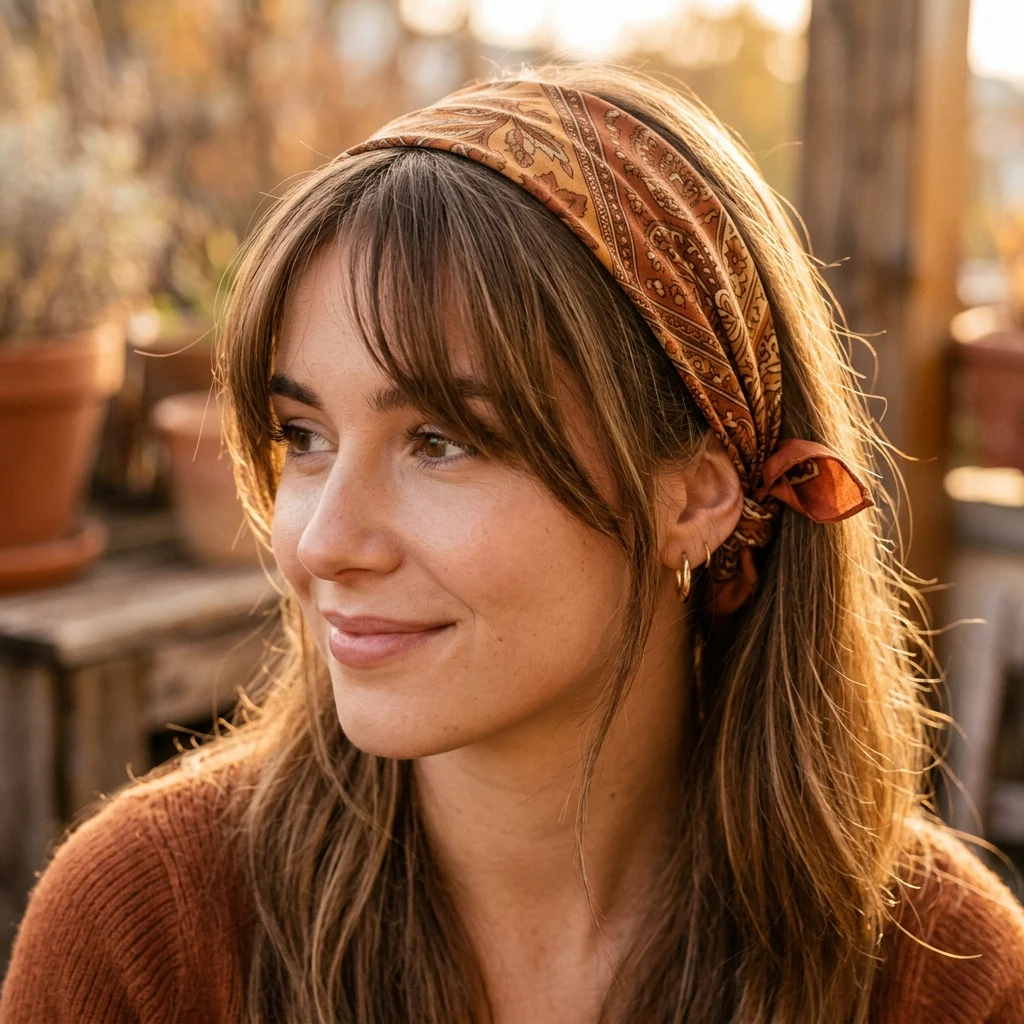
Category: Accessories
Vibe: Romantic.
Why it works: A silk scarf tied and tucked along the hairline functions similarly to a headband tuck but with a softer, less structured line, which suits peekaboo panels placed asymmetrically rather than in a matched, symmetrical pattern. The fabric’s flexibility means it reveals slightly different amounts of the underlayer each time it’s tied.
How to get it: Tie the scarf so the knot sits just above where the peekaboo panel is placed, then gently pull a few strands from the layer beneath the scarf’s edge to expose the color intentionally.
Shop the Look
- Silk hair scarf, neutral solid color
- Bobby pins for securing the scarf ends
- Texturizing spray for grip when tucking strands
- Lightweight hair oil for polished loose pieces
- Small round brush for smoothing hair before tying
18. Low-Maintenance Root-Safe Peekaboo for First-Timers
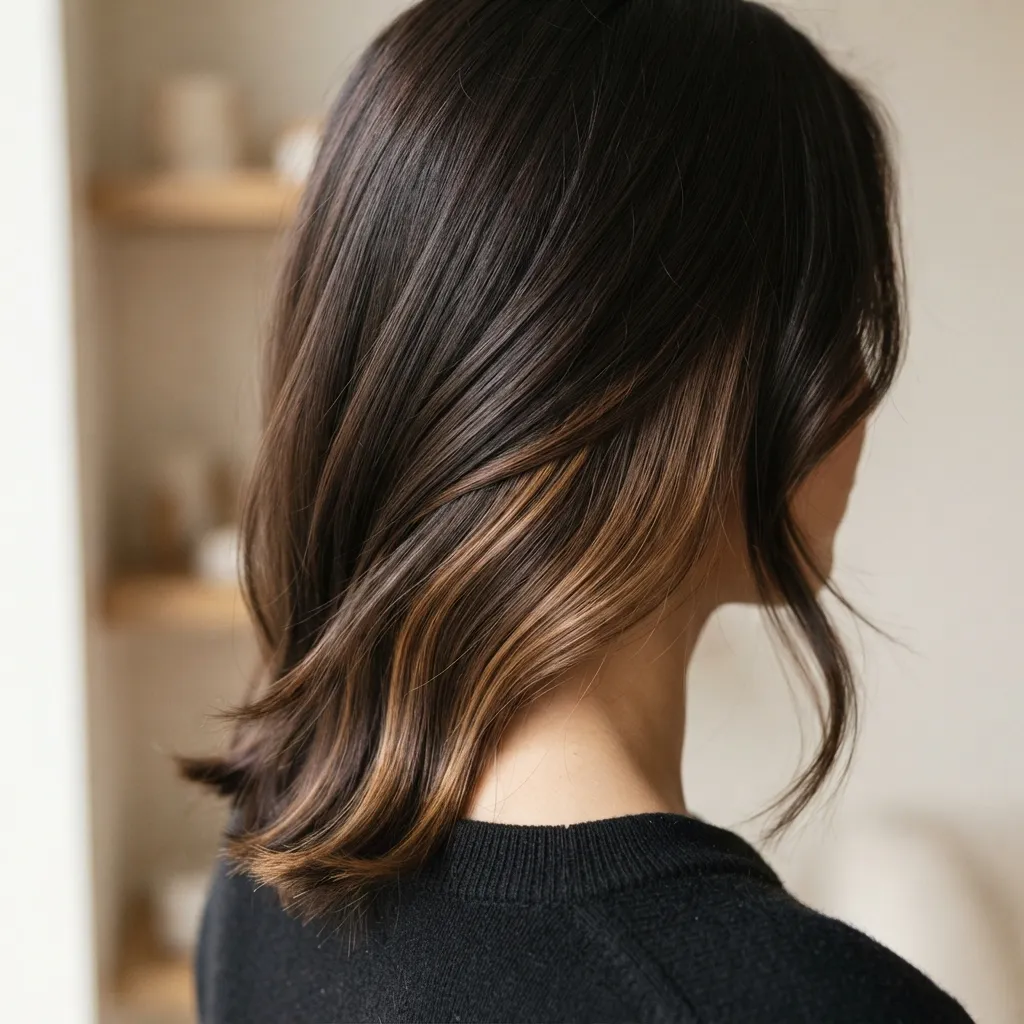
Category: Low-Maintenance Adaptation
Vibe: Considered.
Why it works: Placing a single small panel two to three inches away from the root, rather than starting the lightened section at the scalp, means new growth is far less noticeable over time. A root-adjacent peekaboo panel needs a touch-up every 6-8 weeks to avoid a visible line, while a panel started lower can go three to four months between appointments.
How to get it: Ask your colorist specifically for a “root-safe” or “grown-out-friendly” panel start point, which most colorists will place 2-3 inches down from the scalp rather than at the root by default.
Shop the Look
- Root-touch-up powder in a matching dark shade
- Color-safe shampoo for extending time between salon visits
- Bond-building leave-in spray for panel maintenance
- Wide-tooth comb for gentle detangling
- Heat-protectant spray for occasional styling
19. Money-Piece Balayage Peekaboo Blend
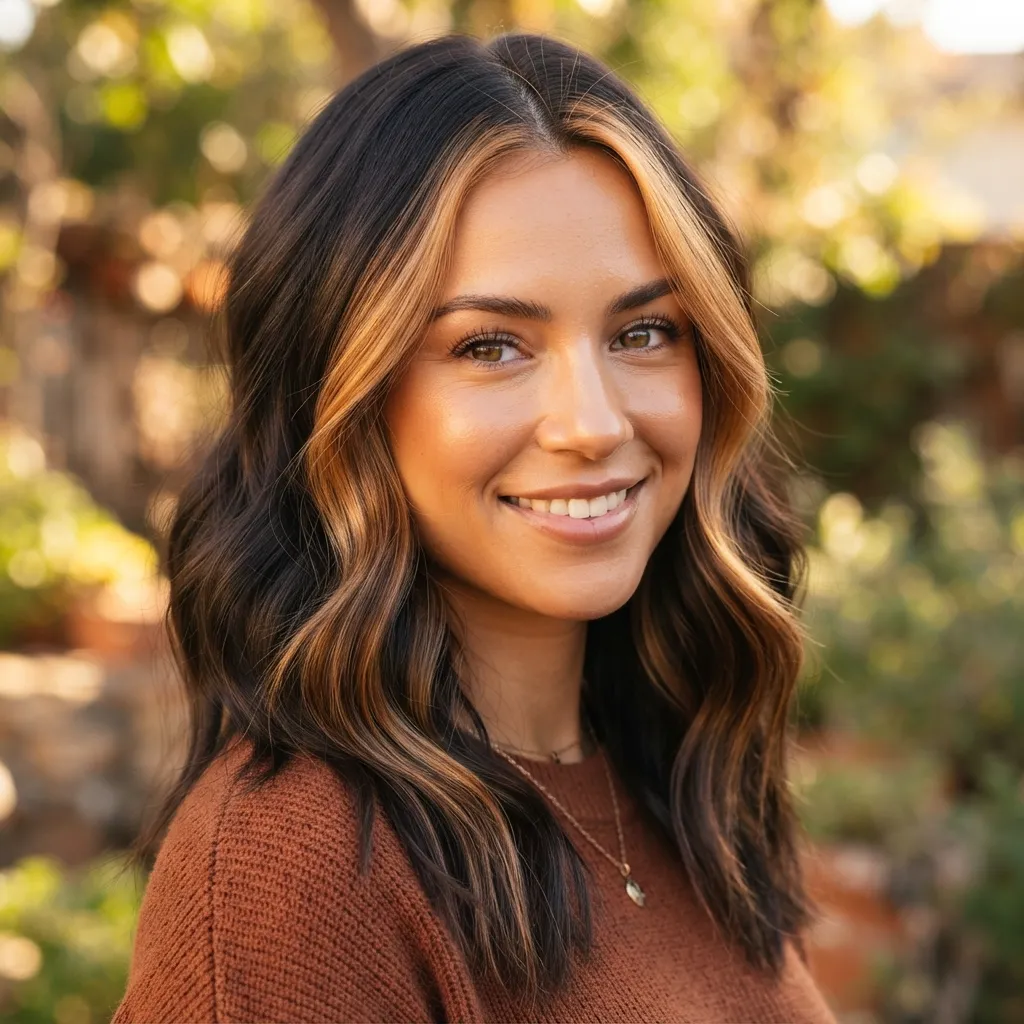
Category: Color
Vibe: Blended.
Why it works: Hand-painting the peekaboo panel with a balayage technique rather than foiling it with a hard line creates a soft transition from dark root to lighter mid-panel, which means the color still looks intentional and grown-in even as new dark regrowth appears at the very top of the section, a genuine low-maintenance advantage over a sharply foiled panel.
How to get it: Request that the peekaboo panel specifically be hand-painted rather than foiled, using a balayage brush to soften the line where the natural dark hair meets the lightened section.
Shop the Look
- Balayage-friendly bond-building treatment
- Golden caramel toning gloss for the blended panel
- Wide-tooth comb for gentle detangling on painted sections
- Heat-protectant spray for daily styling
- Color-safe deep conditioning mask, weekly use
20. Peekaboo Streaks Woven Through the Underlayer
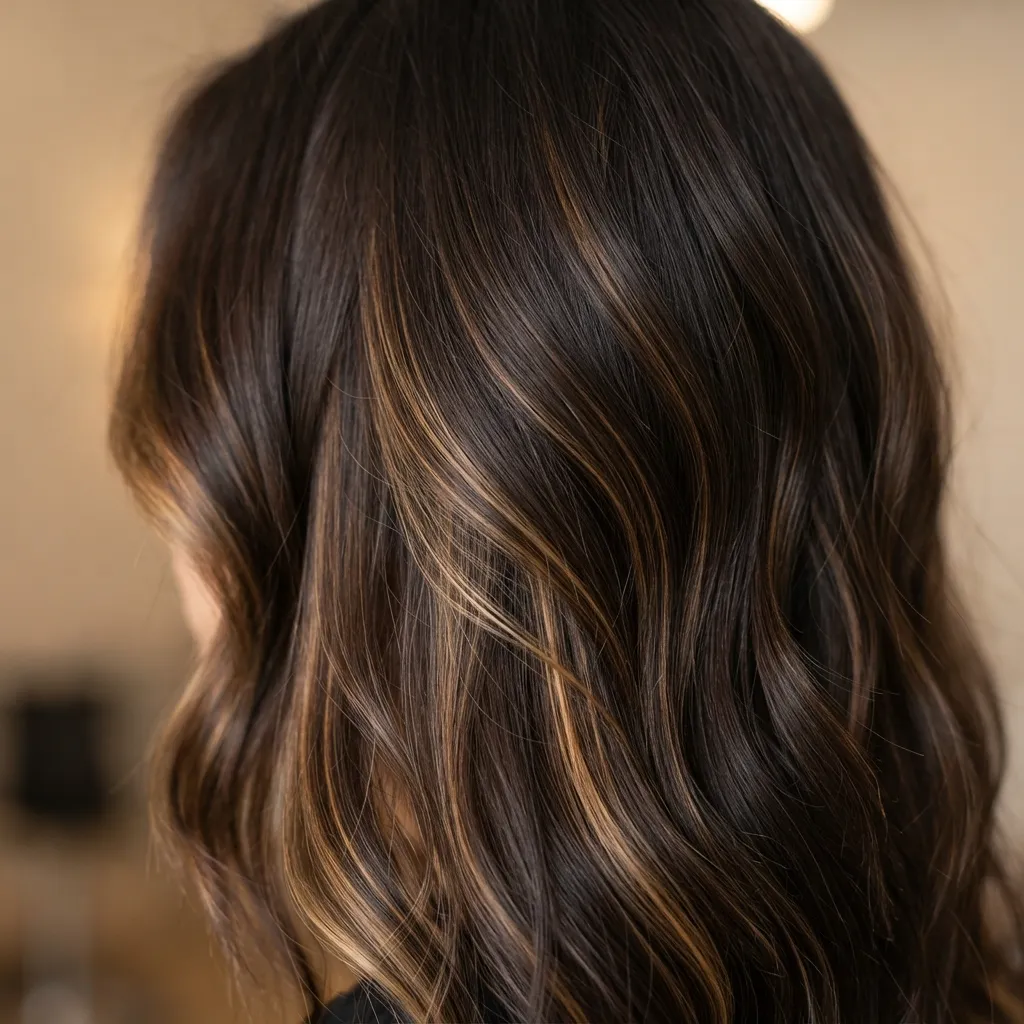
Category: Placement
Vibe: Scattered.
Why it works: Distributing several thin streaks throughout the underlayer, rather than one or two wide panels, creates a more textured, natural-dimension reveal when hair is lifted. Thin streaks mimic the look of natural sun-lightened pieces more convincingly than a single wide panel does, at the cost of a longer foiling appointment.
How to get it: Ask for a “weaving” foiling technique rather than a “slicing” one. Weaving pulls fine, alternating strands into each foil, which is what produces the multiple-thin-streak effect instead of one solid block of color.
Shop the Look
- Fine-tooth weaving comb for at-home touch-up sectioning
- Bond-repair spray for multiple lightened streaks
- Lightweight leave-in conditioner for the woven underlayer
- Glossing serum for scattered shine throughout the panel
- Wide-tooth detangling comb for gentle daily brushing
How to Start Your Peekaboo Highlights Transformation
Your single first move is booking a consultation and bringing a reference photo that shows the underlayer, not just the reveal, many colorists misjudge peekaboo placement when they only see a styled photo of hair up, because the placement decision depends entirely on where the panels sit within the layers, which a reveal photo alone doesn’t show clearly.
The most common mistake is choosing panels that are too small and too few, expecting a subtle two-streak placement to read the way a fuller reference photo did. Thin, sparse panels on very dark or very dense hair often get visually swallowed by the surrounding dark layer even when lifted, so the fix is asking for slightly wider panels or one additional panel than you think you need, since dark hair absorbs contrast more than lighter bases do.
Three items under $50 that support the look immediately: a bond-building leave-in spray for the lightened panels, a set of slim clear hair elastics for reveal styling, and a small silk scarf for tuck-and-reveal days.
A full peekaboo highlighting session typically takes 2-4 hours depending on how many panels and how much lift is needed from a dark base, and costs $100-$300 at a mid-range salon. Vivid-color versions requiring full pre-lightening run toward the higher end and may need two separate sessions on very dark, previously untouched hair to protect against breakage.
Frequently Asked Questions About Peekaboo Highlights for Dark Hair
What’s the difference between peekaboo highlights and a money piece?
A money piece refers specifically to face-framing highlights placed at the front of the hair, visible whenever the hair is down, while peekaboo highlights are placed within the underlayer specifically to stay hidden until the hair is lifted, tied up, or tucked. Some colorists combine both techniques in one appointment, using a money piece for everyday visibility and additional peekaboo panels underneath for a fuller reveal on styled days.
What color peekaboo highlights work best on dark hair?
Copper and caramel tones tend to work best for a first peekaboo experience because they read as a natural extension of dark brown rather than a stark contrast, while platinum blonde and vivid colors like pink or blue create the most dramatic reveal but require the most lift and upkeep. The right choice generally depends on how subtle or bold a reveal you want. Copper reads as warmth even when fully hidden, while platinum or vivid colors are unmistakably deliberate the moment they show.
How much do peekaboo highlights cost?
A standard peekaboo highlighting session with two to four panels typically costs $100-$200 at a mid-range salon, while a fuller placement with more panels or a full pre-lightening process for vivid color can run $200-$350. Touch-ups are generally needed every 8-12 weeks for natural-toned peekaboo highlights, and slightly more often for vivid colors, which fade faster than demi-permanent tones.
Do peekaboo highlights damage dark hair?
Lightening dark, especially black, hair to a level 8 or higher for peekaboo highlights does involve real chemical processing, and skipping bond-building treatments during that process is what typically leads to breakage rather than the lightening itself. A colorist using a bond-builder like Olaplex No. 1 mixed into the lightener, followed by regular at-home bond maintenance and a protein-focused deep conditioning treatment every two weeks, keeps the lightened panels structurally healthy even on very dark starting hair.
Can peekaboo highlights be done at home?
A single small peekaboo panel is technically possible to do at home with a boxed lightening kit and careful sectioning, but most colorists advise against it for anyone starting from a level 2-4 dark base, since achieving an even, breakage-free lift without professional-strength lightener and bond protection is genuinely difficult to control without training. A more realistic at-home option is a semi-permanent color-depositing gloss applied over hair that’s already been professionally lightened, which refreshes fading panels between salon visits without any lifting involved.
Ready to Create Your Peekaboo Highlights?
Between the copper and vivid color options, the placement choices from nape panels to face-framing pieces, and the ponytail, braid, and scarf reveals covered across these 20 ideas, there’s a version of peekaboo highlighting suited to almost any dark hair base and any comfort level with visibility. You don’t need every panel placed and every reveal style figured out before your first appointment, starting with one or two subtle panels and adding more once you’ve lived with the reveal for a while is a completely reasonable way to ease in.
Today, the easiest concrete step is booking a color consultation and bringing a photo that shows the underlayer clearly, not just the styled reveal, so your colorist can plan placement accurately from the start. Once it’s placed the way it’s meant to be, dark hair stops being one flat color and starts holding a small, deliberate secret that only shows up when you decide to share it. Save your favorites from this list. The copper underlayer and the high-ponytail reveal are consistently the two most repinned starting points, and for good reason.