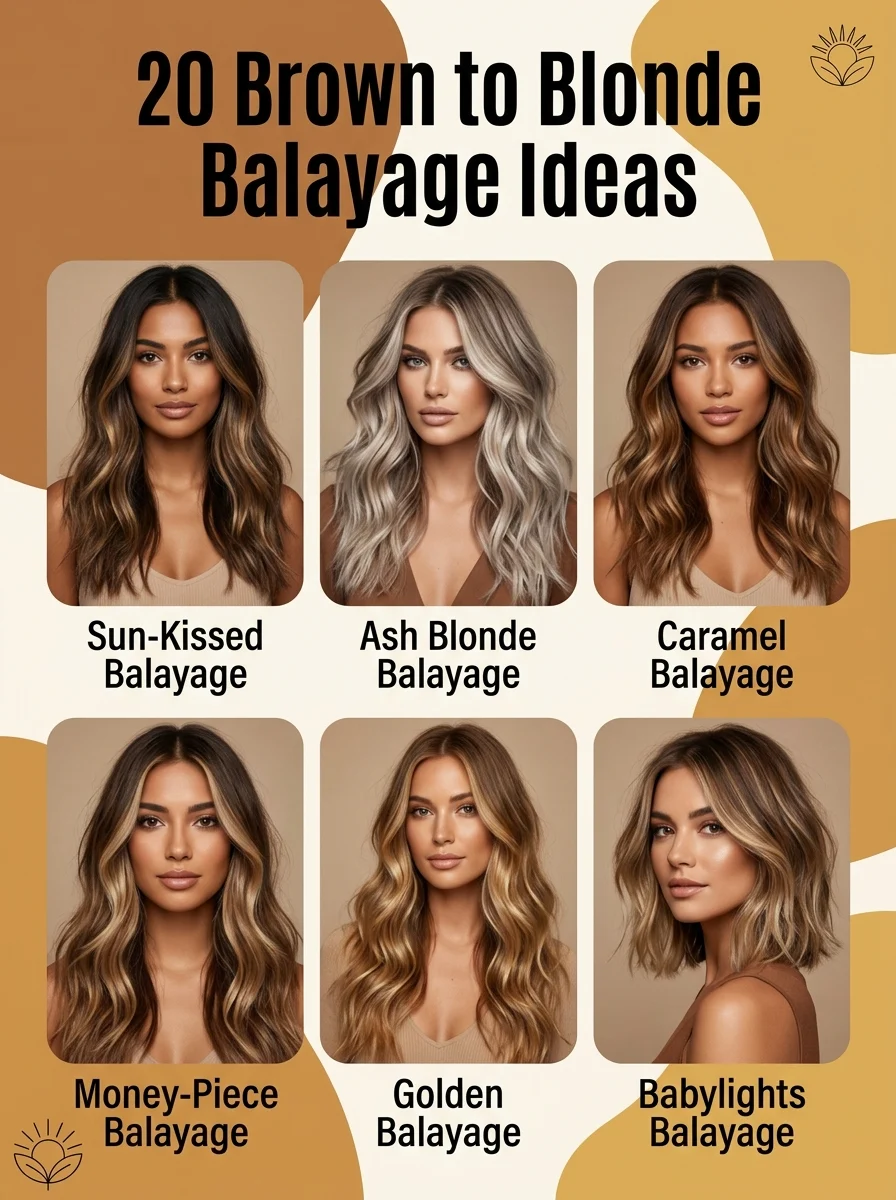
20 Brown to Blonde Balayage Ideas

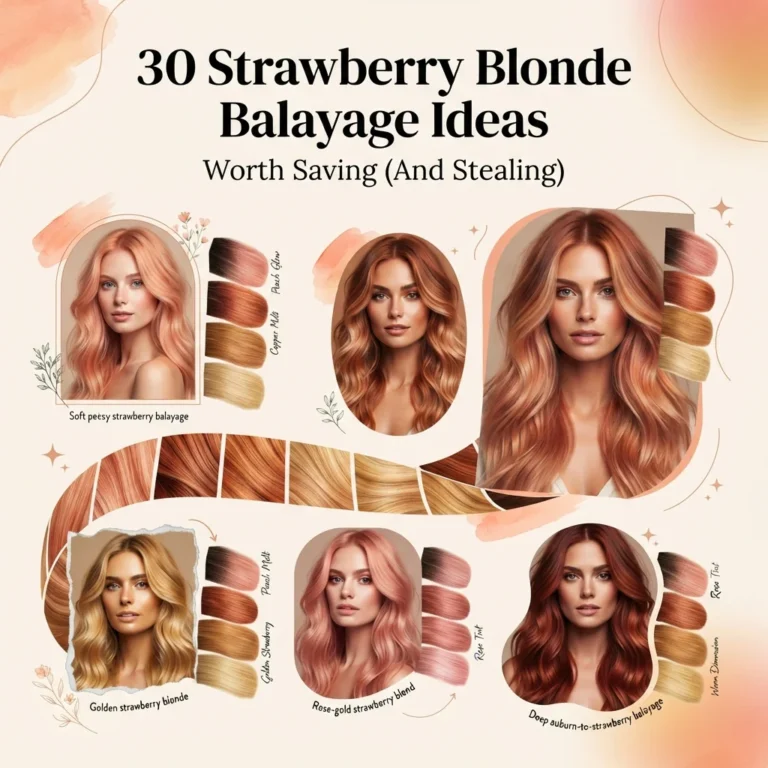
Brown to blonde balayage is a hand-painted lightening technique that lifts brunette hair toward blonde in soft, irregular strokes rather than uniform foil sections, so the transition looks sun-grown instead of processed. This guide covers 20 brown to blonde balayage ideas (shade directions, application techniques, and placement strategies), so you can find the exact version of the transition that suits your undertone and commitment level.
Balayage done well doesn’t look like a color change so much as a color that was always about to happen. Warmth pooling exactly where the sun would hit, depth staying exactly where a shadow would fall. It’s the difference between hair that was dyed and hair that simply looks like it spent a season somewhere brighter, richer at the root and lit up toward the ends.
Here are 20 ideas worth saving, and stealing.
Why Brown to Blonde Balayage Works So Well
Balayage, from the French “to sweep”, is a freehand painting technique developed in 1970s Parisian salons specifically to avoid the harsh, uniform regrowth line that foil highlighting left behind. Its defining difference from foil highlights is placement logic: color is painted onto the surface of sections rather than saturated through them, which naturally concentrates lightness where real sunlight would land and leaves the mid-lengths and roots comparatively undisturbed.
The tones that carry a brown-to-blonde transition well are specific: honey and caramel for warm undertones, champagne and beige blonde for neutral ones, and ash or cool beige for cool undertones, with a root color one to two shades deeper than the natural base to anchor the look. Violet or blue toners manage the brassy orange and yellow that naturally emerge as brown hair lifts.
Balayage remains the most-requested color service industry-wide because it solves a real maintenance problem: growing out with minimal upkeep. Search interest in “low-maintenance balayage” and “grow-out-friendly highlights” has stayed elevated as more people prioritize color that still looks intentional at 12 and 16 weeks, not just on day one.
Shorter hair and finer textures can absolutely carry balayage, though the effect reads more subtly since there’s less length for the gradient to travel across. Prioritizing a smaller number of well-placed face-framing pieces over an all-over sweep keeps the look proportionate on shorter cuts.
Style at a Glance
| Element | Warm Undertone Direction | Cool Undertone Direction |
| Philosophy | Root stays deep, warmth builds toward ends | Root stays deep, coolness builds toward ends |
| Materials | Honey, caramel, gold toner | Ash beige, cool toner, violet shampoo |
| Colors to Avoid | Cool ash on warm base | Warm gold on cool base |
20 Brown to Blonde Balayage Ideas
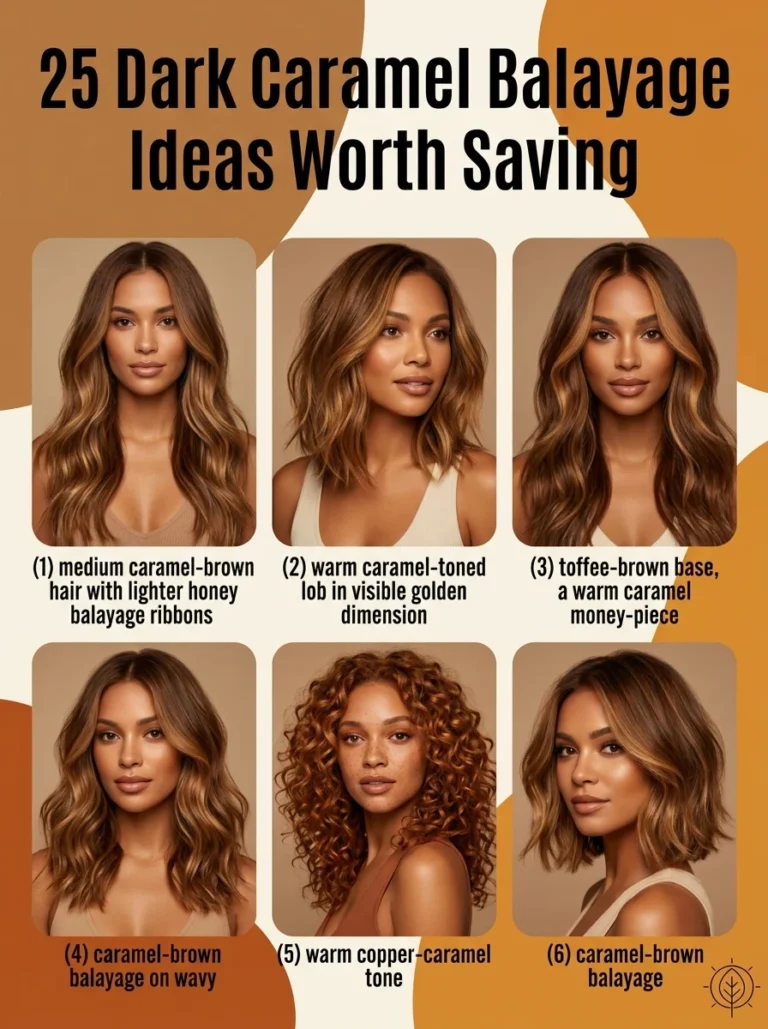
1. Brown to Blonde Balayage in Warm Caramel for a Soft Transition
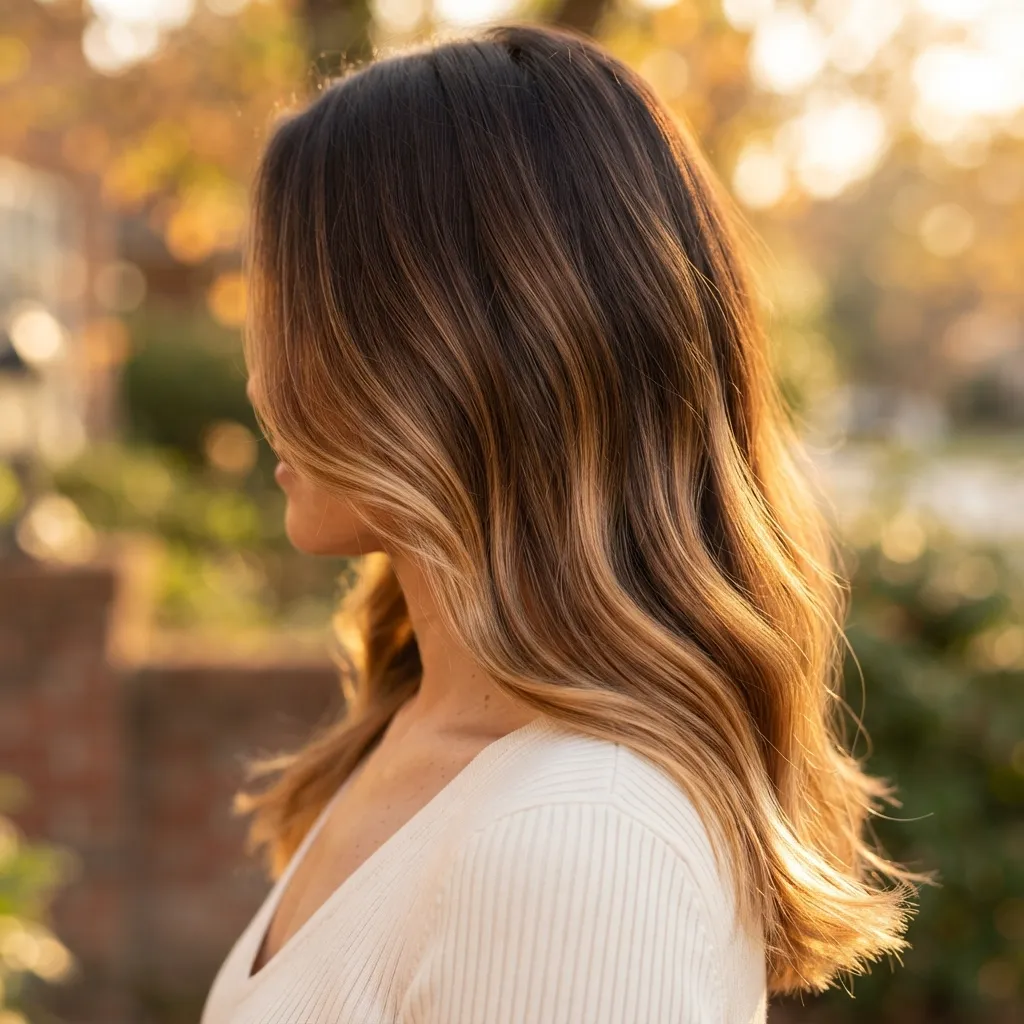
Vibe: Warm. A transition that looks grown, not applied.
Why it works: Caramel sits close enough to a natural brown base that the required lift stays moderate, keeping hair healthier through processing while still reading as a real color change.
How to get it: Ask for caramel balayage lifted to a level 7 or 8 gold base, toned with a warm honey gloss rather than a neutral one, so the caramel doesn’t drift cooler as it fades.
💡 Quick Win: A caramel gloss applied over natural brown hair, with no lightening at all, previews the tone for 6 to 8 washes before committing to the full service.
Shop The Look
| Product |
| Warm honey gloss toner |
| Sulfate-free shampoo for color-treated hair |
| Bond-building treatment for lightened hair |
| Argan oil serum for shine |
| Heat protectant spray |
2. Foilyage Technique for Faster, More Precise Lift
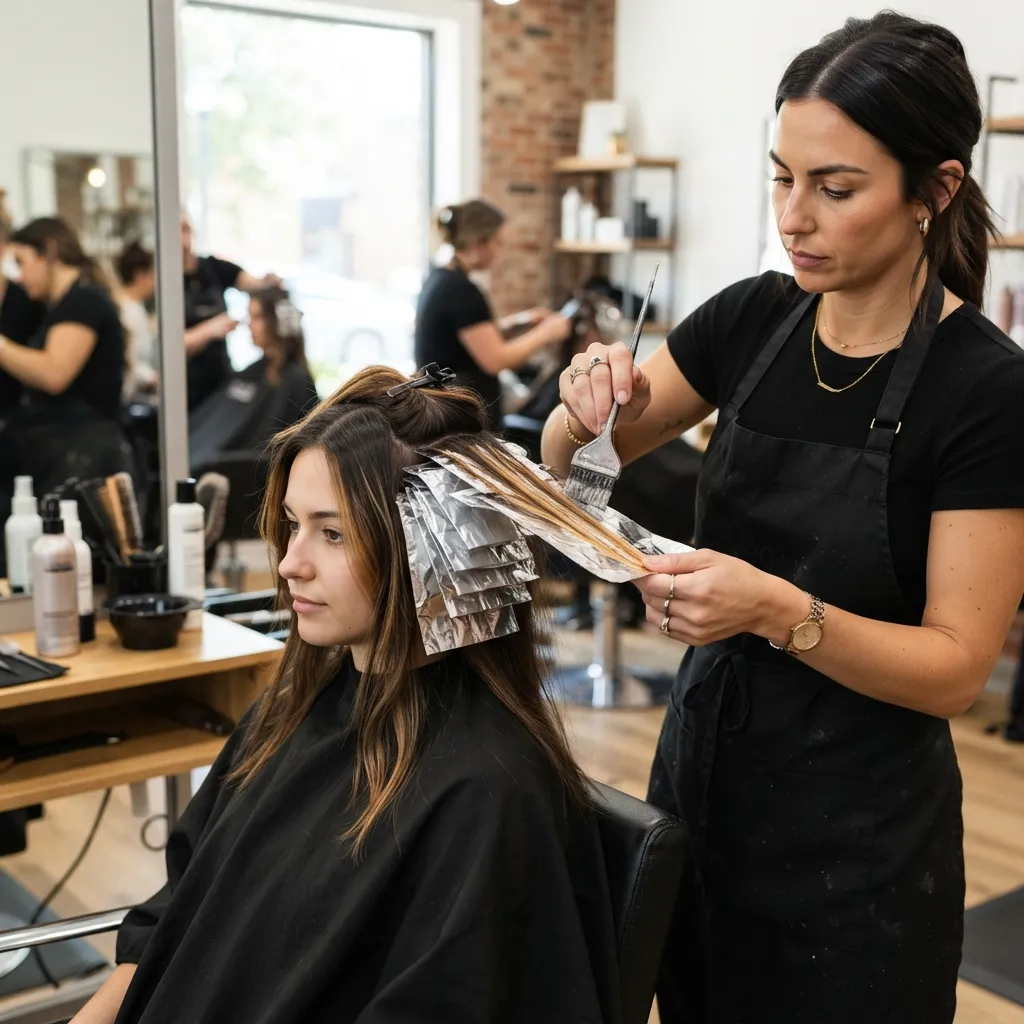
Vibe: Precise, the control of foil with the softness of balayage.
Why it works: Wrapping a hand-painted section in foil traps heat and isolates it from surrounding hair, which lifts color faster and more evenly than open-air balayage while keeping balayage’s soft, freehand edges intact.
How to get it: Request “foilyage” by name specifically if you want faster, more even lift than traditional open-air balayage, especially useful for darker brunette bases that need more processing time to reach blonde.
Shop The Look
| Product |
| Bond repair treatment for lightened hair |
| Purple toning shampoo |
| Wide-tooth detangling comb |
| Leave-in conditioner for lightened ends |
| Silk pillowcase for color protection |
3. Choosing a Blonde Level That Reads Warm, Not Brassy, Indoors
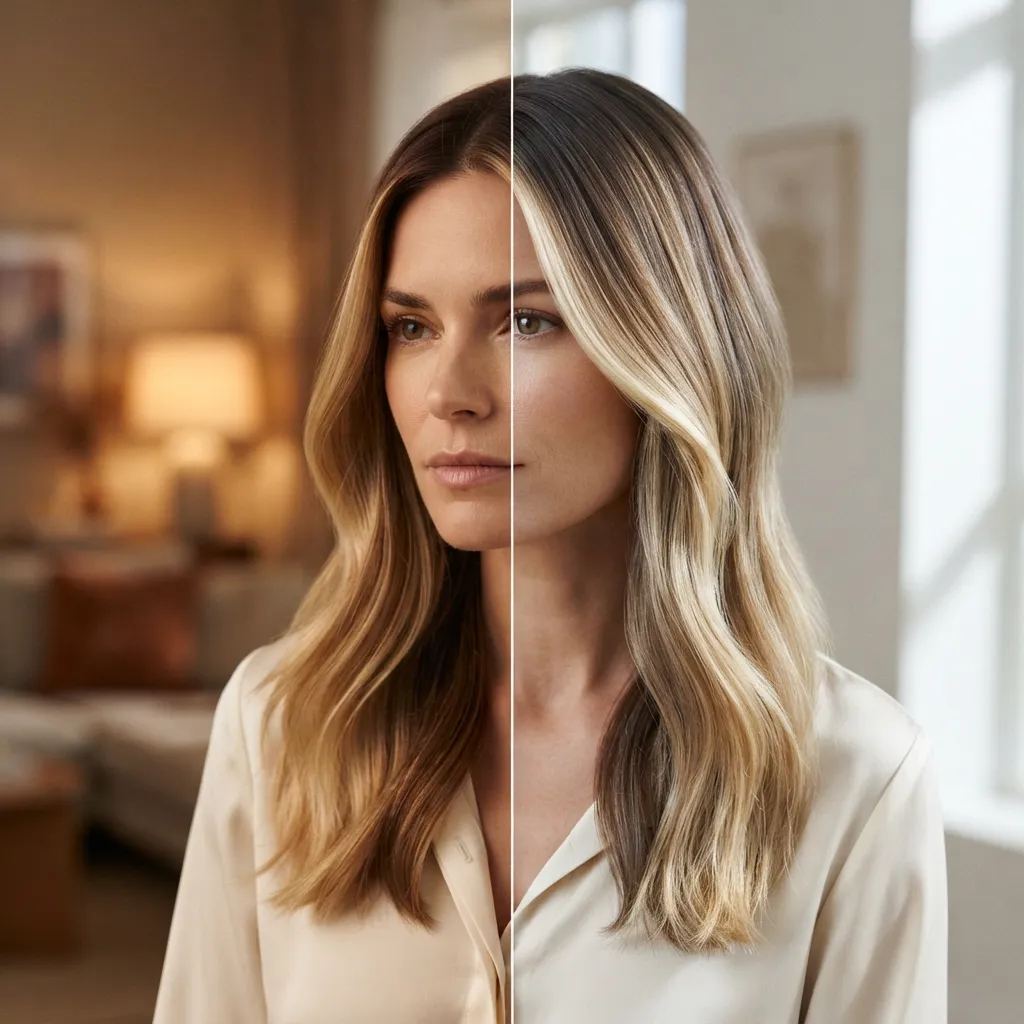
Vibe: Grounded, color chosen for your bathroom mirror, not just the salon’s.
Why it works: Warm indoor bulbs (2700–3000K) amplify gold tones, while daylight or fluorescent light (5000K+) can read flatter or brassier, a light-behavior issue, not a formula mistake.
How to get it: View your toned swatch under both a warm hand mirror and the salon’s daylight mirror before finalizing, since this reveals how the level will look at home.
💡 Quick Win: Swapping one bathroom bulb for a warm 2700K LED changes how every blonde you’ve ever had reads in that mirror.
Shop The Look
| Product |
| Warm 2700K LED vanity bulb pack |
| Portable daylight-balanced mirror |
| Gold-tone boosting shampoo |
| Color swatch ring for testing |
| Root touch-up spray warm blonde |
4. Money Piece Placement to Frame the Face During Grow-Out
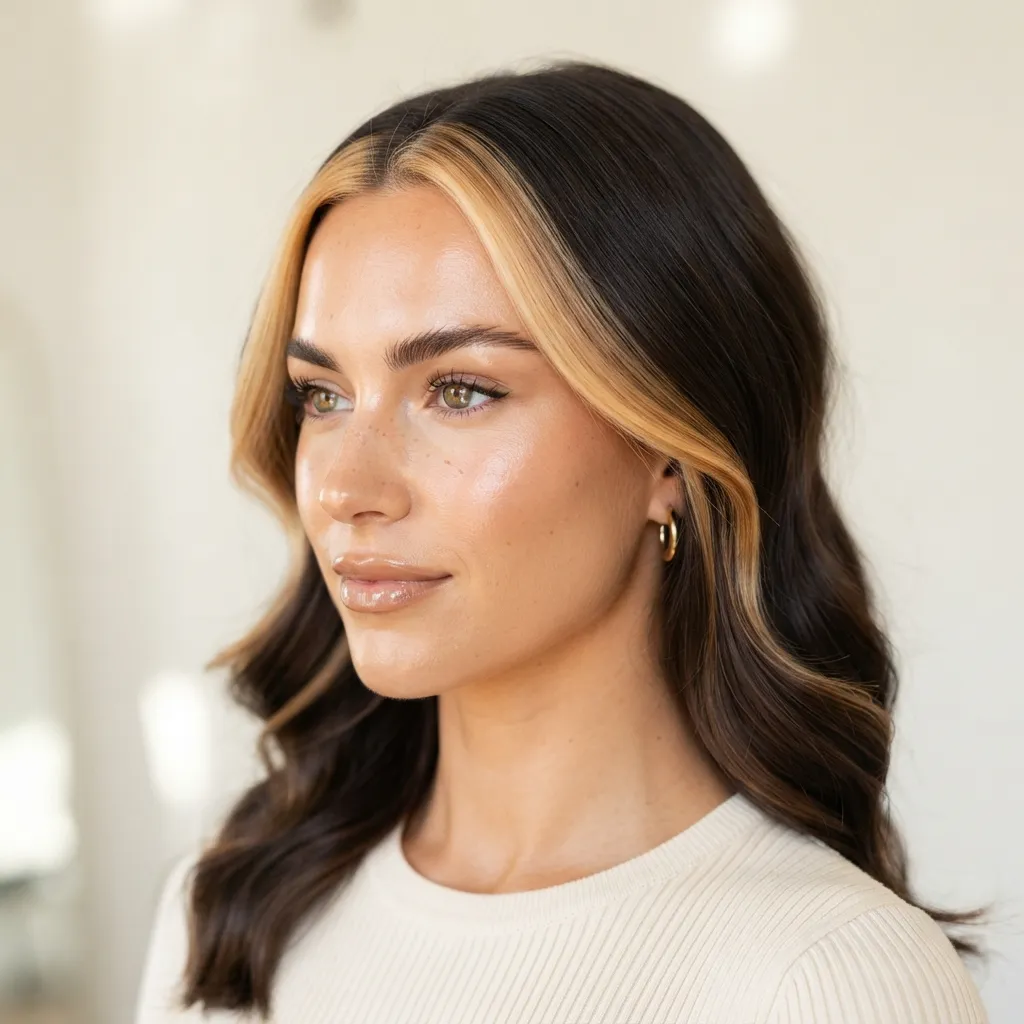
Vibe: Sculpted. Brightness placed exactly where it does the most work.
Why it works: A money piece brightens only the two hairline pieces framing the face, which brightens the complexion and adds dimension without requiring an all-over lightening service, making it the fastest visible upgrade to a brown base.
How to get it: Request pieces roughly a half-inch wide starting right at the part for rounder faces, or thinner, higher pieces starting slightly back from the part for longer faces.
Shop The Look
| Product |
| Highlighting foil sheets |
| Honey blonde toning gloss |
| Sectioning clips for precision placement |
| Edge control gel for hairline styling |
| Color-safe dry shampoo |
5. Pairing Golden Blonde Balayage with Warm Gold Jewelry
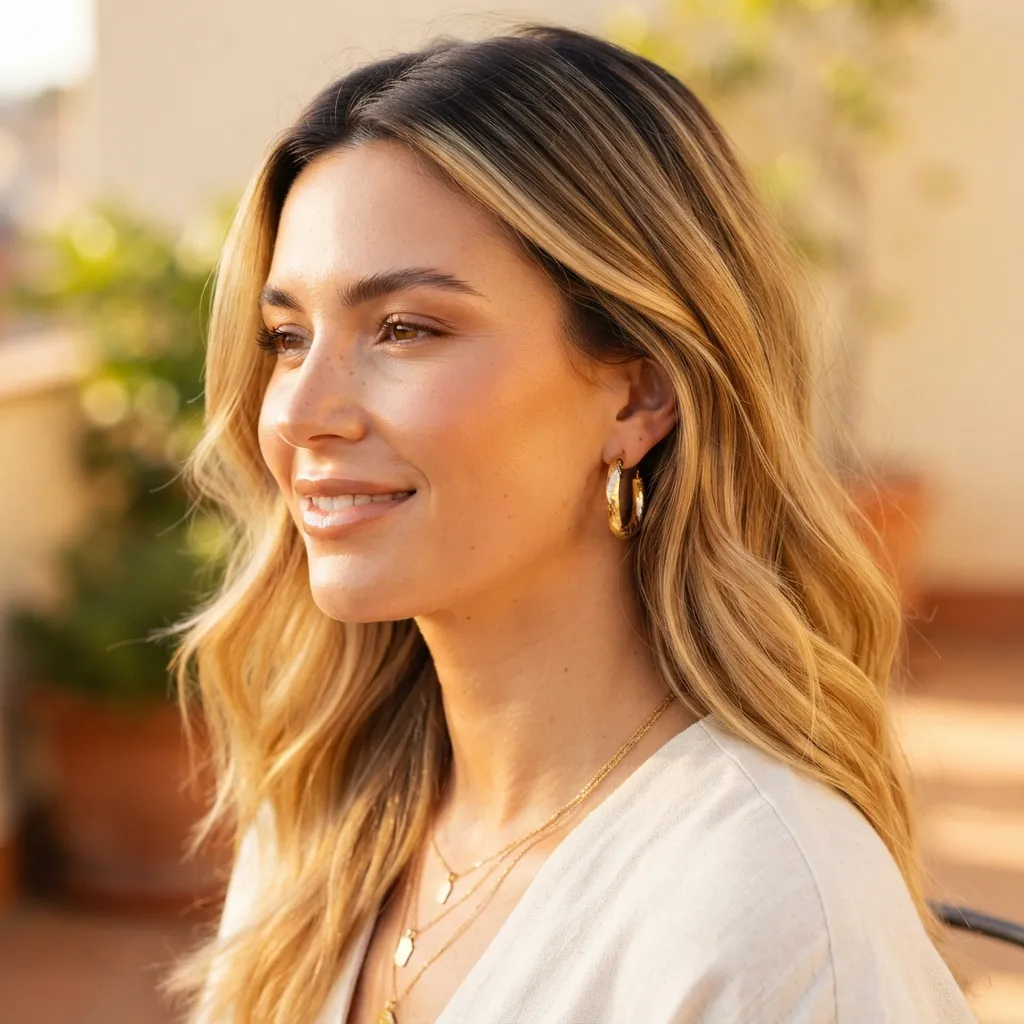
Vibe: Coordinated, hair and metal pulling from the same warm family.
Why it works: Golden blonde carries a strong yellow-gold base, and pairing it with silver jewelry creates a visual mismatch between two competing color temperatures, while gold jewelry echoes and reinforces the hair’s own undertone.
How to get it: Choose warm yellow-gold rather than white gold or silver for everyday jewelry while wearing a golden or honey balayage, saving cooler metals for a future ash or platinum phase.
Shop The Look
| Product |
| Warm gold hoop earrings |
| Golden blonde toning gloss |
| Gold-tone layered necklace |
| Shine serum for blonde ends |
| UV protection spray for color fade |
6. Root Shadow Placement for Seamless Regrowth
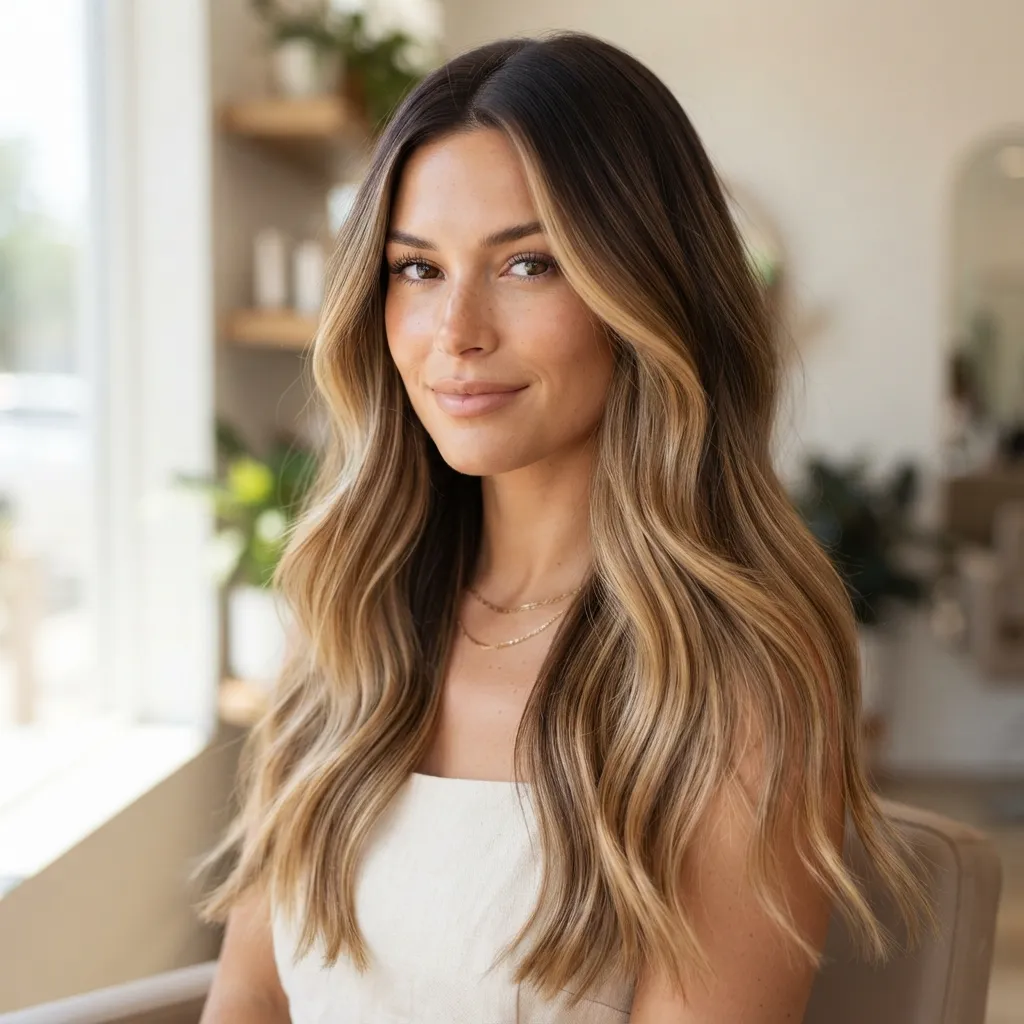
Vibe: Seamless. Color that grows out gracefully instead of announcing a line.
Why it works: A root shadow deliberately darkens the root and blends it a full inch or two into the lightened lengths, disguising the natural transition point so regrowth reads as a design choice rather than a maintenance problem.
How to get it: Ask your colorist to “shadow root” the base one to two levels darker than your lightened lengths, blended with a soft brush at least an inch into the balayage rather than a hard root touch-up line.
Shop The Look
| Product |
| Root smudge brush applicator |
| Root shadow demi-permanent color |
| Blending brush for root touch-ups |
| Color-safe shampoo for gradient upkeep |
| Heat protectant for root blending |
7. Cool Ash Blonde for Brown to Blonde Balayage on Cool Undertones
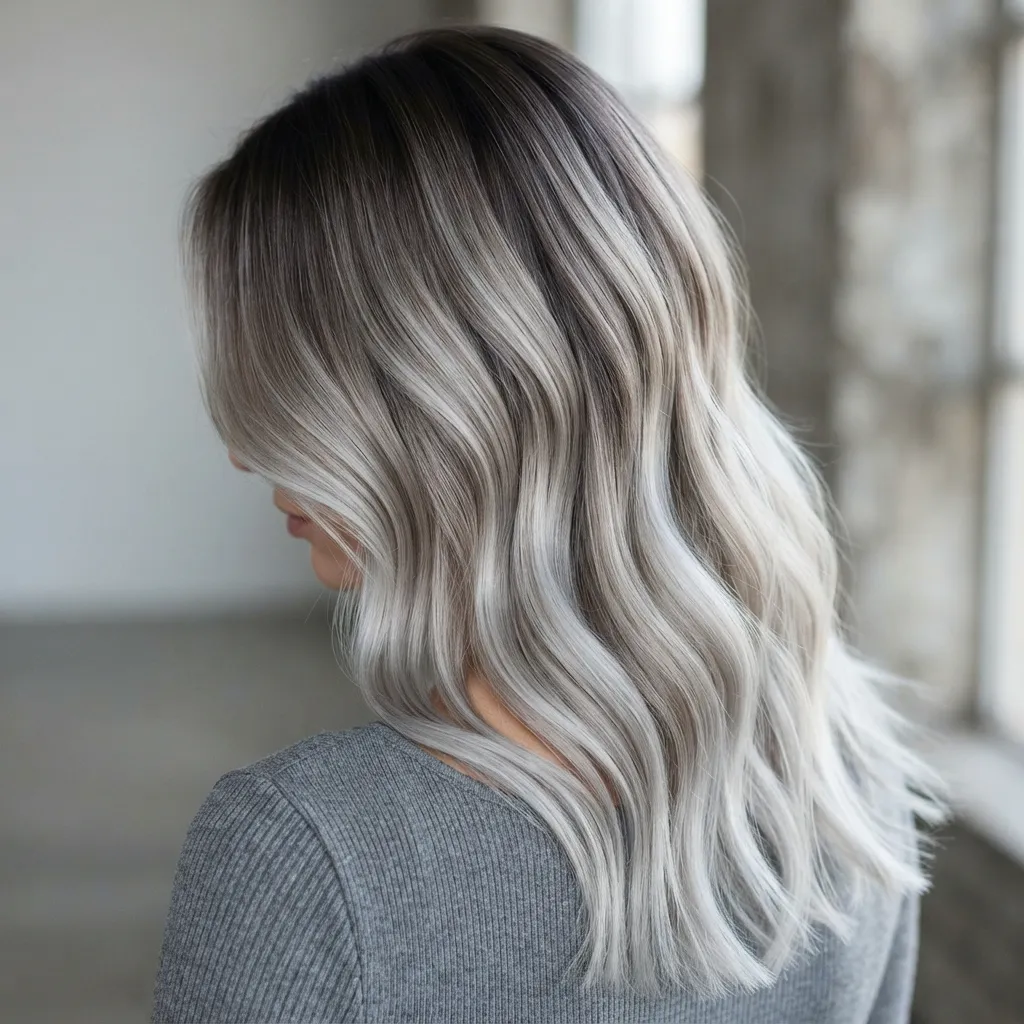
Vibe: Refined, blonde with a cool, quiet edge instead of warmth.
Why it works: Ash tones carry blue-violet pigment that cancels the yellow-orange warmth naturally present in lifted brown hair. Exactly the correction cool-undertone brunettes need.
How to get it: Ask for a lightening service toned with a blue or violet-based glaze rather than a warm gold one, maintained with purple shampoo weekly rather than biweekly.
💡 Quick Win: A purple-tinted conditioning mask, used once, can knock down mild brassiness between full toning appointments.
Shop The Look
| Product |
| Blue-violet ash toning glaze |
| Purple shampoo for ash blonde |
| Purple-tinted conditioning mask |
| Bond repair treatment |
| Cool-tone dry shampoo |
8. Babylights for Ultra-Fine, Natural-Looking Dimension
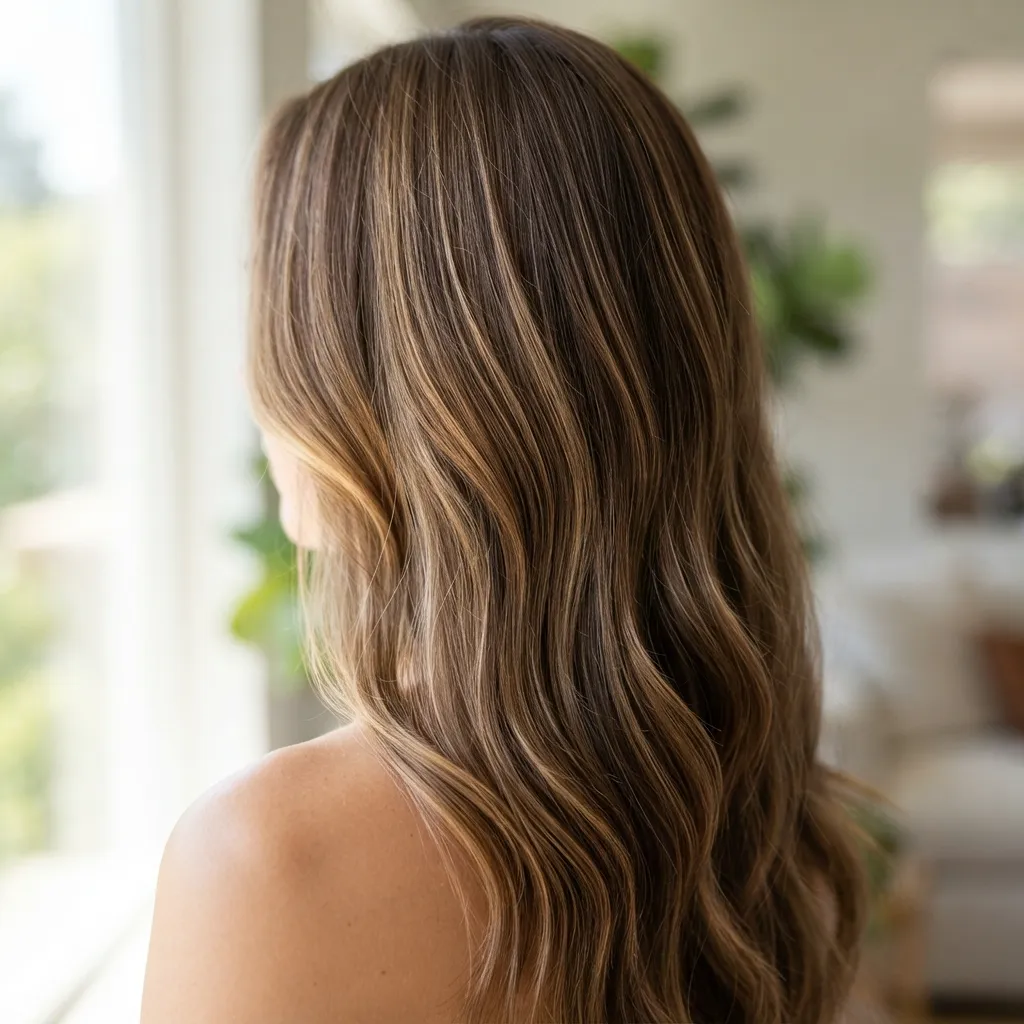
Vibe: Delicate. Brightness so fine it reads as natural rather than dyed.
Why it works: Babylights use extremely thin sections, closer to how a child’s hair naturally lightens in the sun, which distributes lightness broadly across the whole head rather than concentrating it in a few chunkier pieces.
How to get it: Ask for babylights specifically if you want overall brightness with minimal contrast against your base color, since the technique uses noticeably finer sections than standard balayage or foilyage.
Shop The Look
| Product |
| Fine-tooth highlighting comb |
| Lightweight bond-building spray |
| Gentle sulfate-free shampoo |
| Silk hair wrap for overnight protection |
| Leave-in detangler for fine highlights |
9. How Balayage Reads Differently in Sunlight vs. Salon Lighting
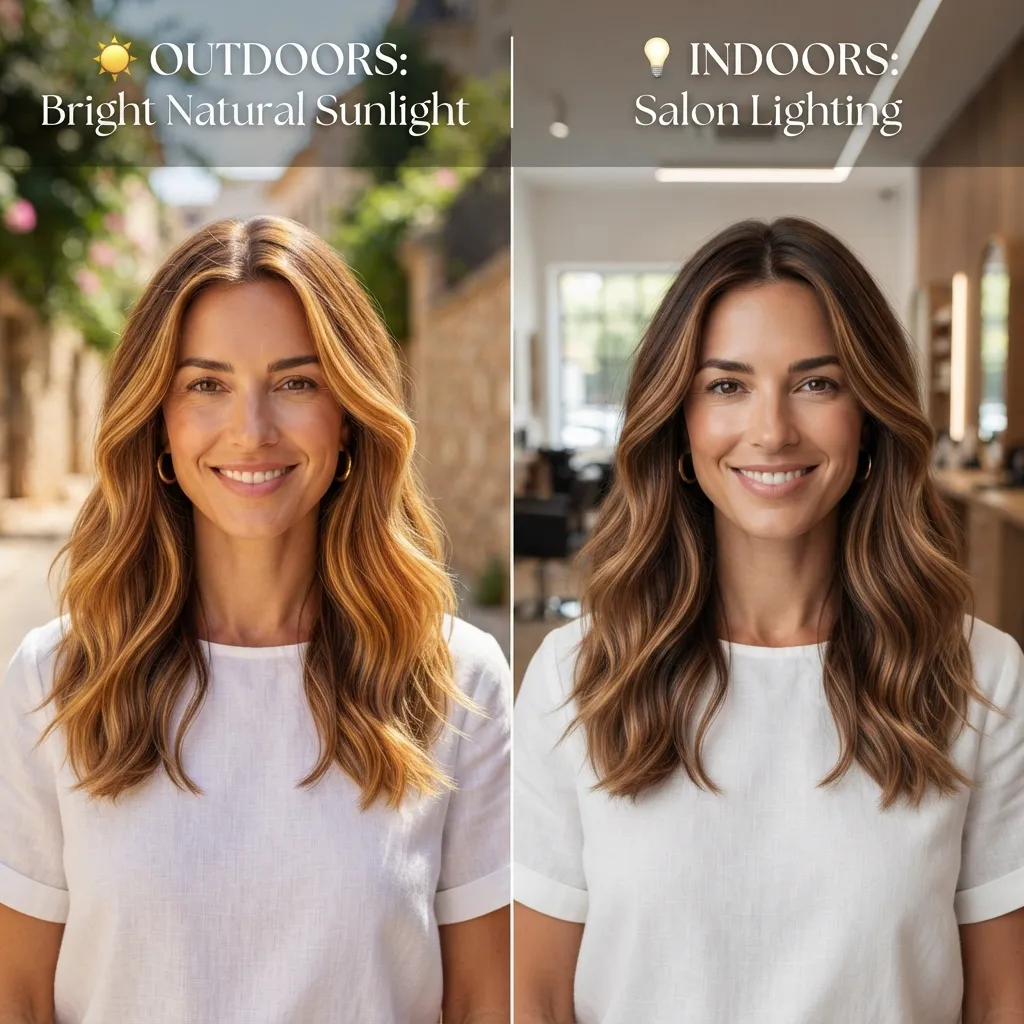
Vibe: Illuminated, color that changes character depending on where you stand.
Why it works: Direct sunlight has a broader, warmer spectrum than most salon lighting, pulling out gold and copper reflects that fluorescent lights simply don’t reveal.
How to get it: Step outside before leaving your appointment to check the result in real daylight, and flag any unexpected warmth or coolness while your colorist can still adjust the toner.
Shop The Look
| Product |
| Portable daylight mirror |
| Color-correcting toner touch-up kit |
| UV-protectant hair spray |
| Gold-tone or cool-tone shampoo as needed |
| Color swatch ring |
10. Face-Framing Panel Placement by Face Shape
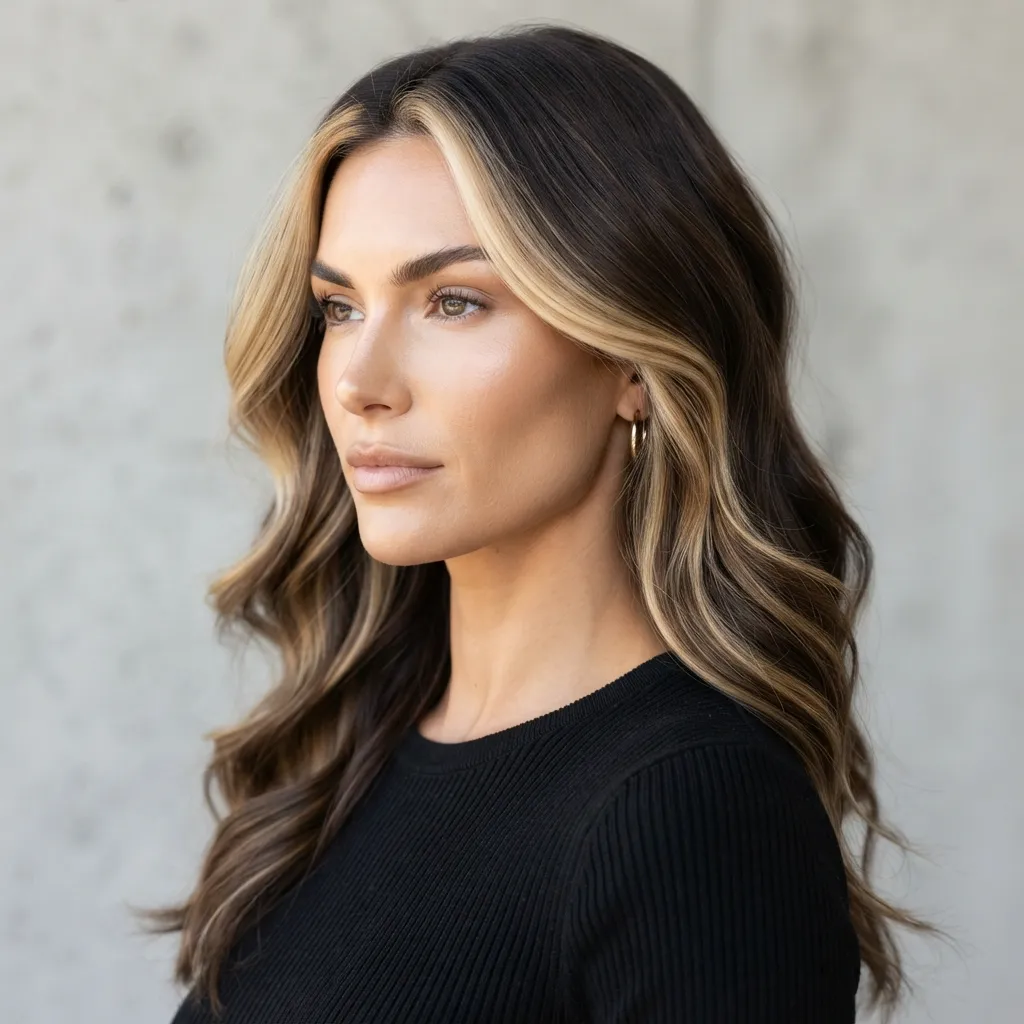
Vibe: Sculpted. Placement doing the work a haircut usually does.
Why it works: Wider panels placed closer to the part add visual width and softness to angular or longer faces, while narrower panels set further back suit rounder faces by adding length rather than width.
How to get it: For round faces, request panels starting further back from the part at about an inch and a half wide; for longer faces, request panels starting right at the part and slightly narrower.
Shop The Look
| Product |
| Sectioning clips for panel placement |
| Honey blonde toning gloss |
| Heat protectant for styling panels |
| Flat iron for face-framing styling |
| Texturizing spray |
11. Coordinating Makeup Tones with Honey Blonde Balayage
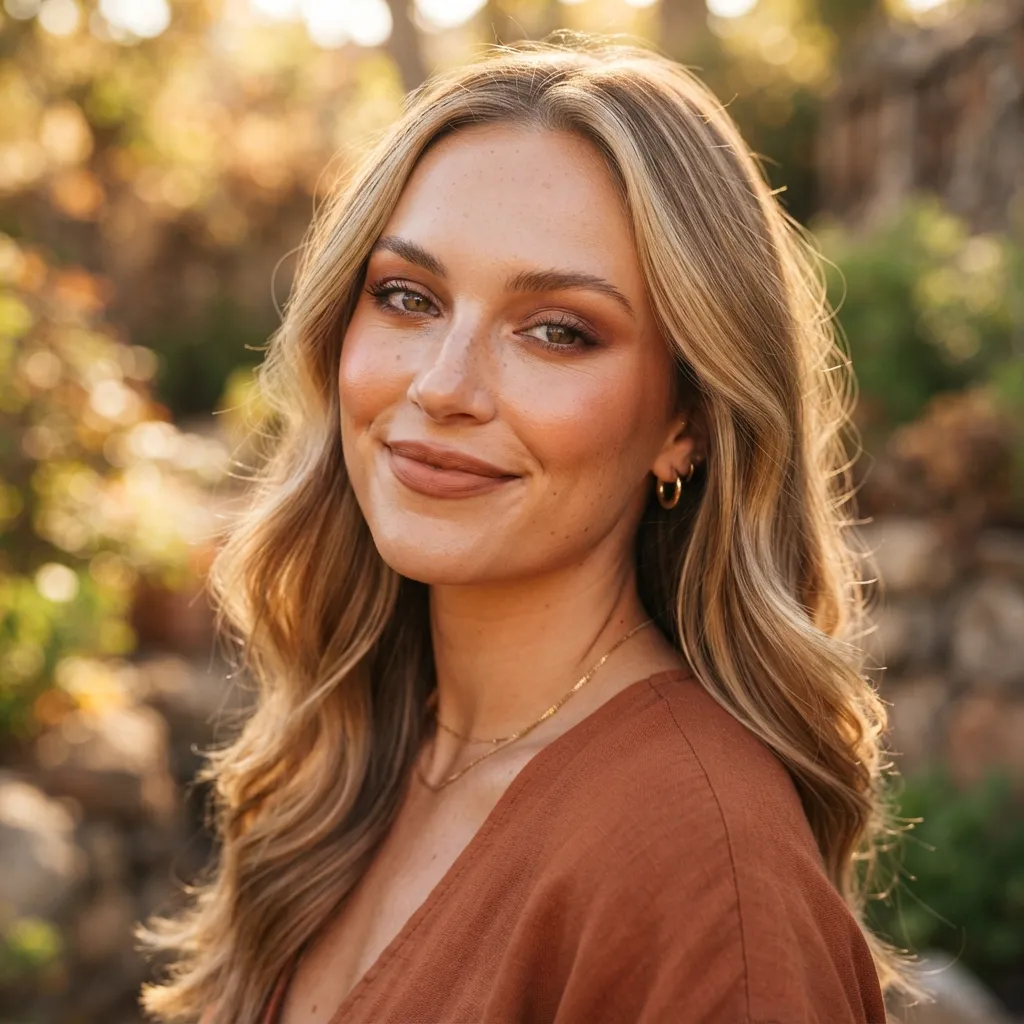
Vibe: Cohesive, hair and makeup pulling from one warm family.
Why it works: Honey blonde carries strong gold pigment, and cool-toned makeup like blue-based pinks creates visual competition, while bronze and terracotta echo the hair’s own warmth.
How to get it: Choose a warm bronzer with gold shimmer and a lip color in terracotta or peach rather than cool mauve to keep the look in one temperature family.
💡 Quick Win: A single warm bronzer swept along the cheekbones pulls honey blonde hair and makeup into the same visual family instantly.
Shop The Look
| Product |
| Warm bronzer palette |
| Terracotta cream blush |
| Bronze eyeshadow palette |
| Honey blonde color-depositing conditioner |
| Warm-tone lip color |
12. Vertical vs. Diagonal Sweep Placement Down the Length
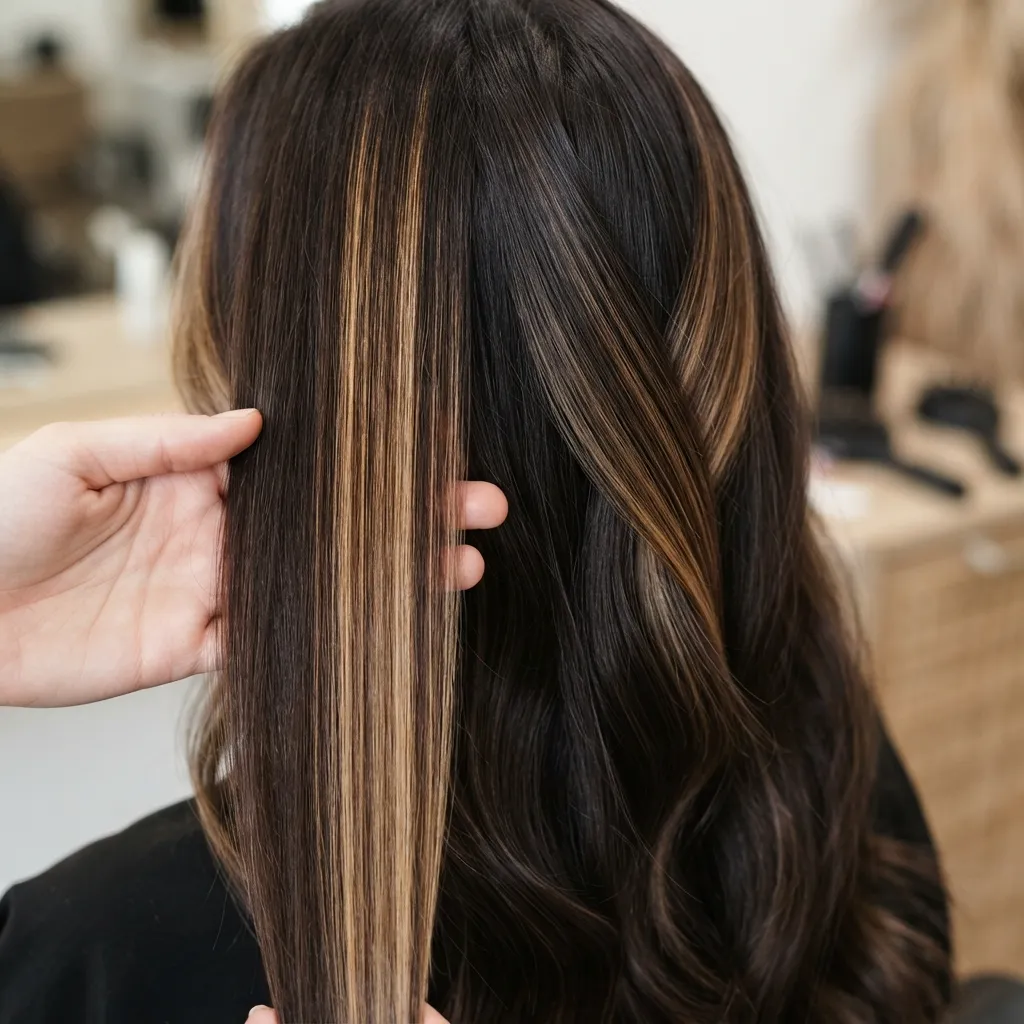
Vibe: Directional, the same paint, applied two different ways, reading completely differently.
Why it works: A vertical sweep concentrates lightness in a straight column, creating bold, graphic pieces, while a diagonal sweep spreads lightness across a wider surface area for a softer, more blended gradient, a placement decision as important as the shade itself.
How to get it: Ask for diagonal sweeping specifically if you want a soft, all-over blend; ask for vertical placement if you want a few bold, more defined pieces instead.
Shop The Look
| Product |
| Bond-building treatment for lightened hair |
| Wide-tooth comb for blended sections |
| Color-safe leave-in conditioner |
| Shine serum for finished look |
| Heat protectant spray |
13. Dimensional Bronde for a Low-Maintenance Middle Ground
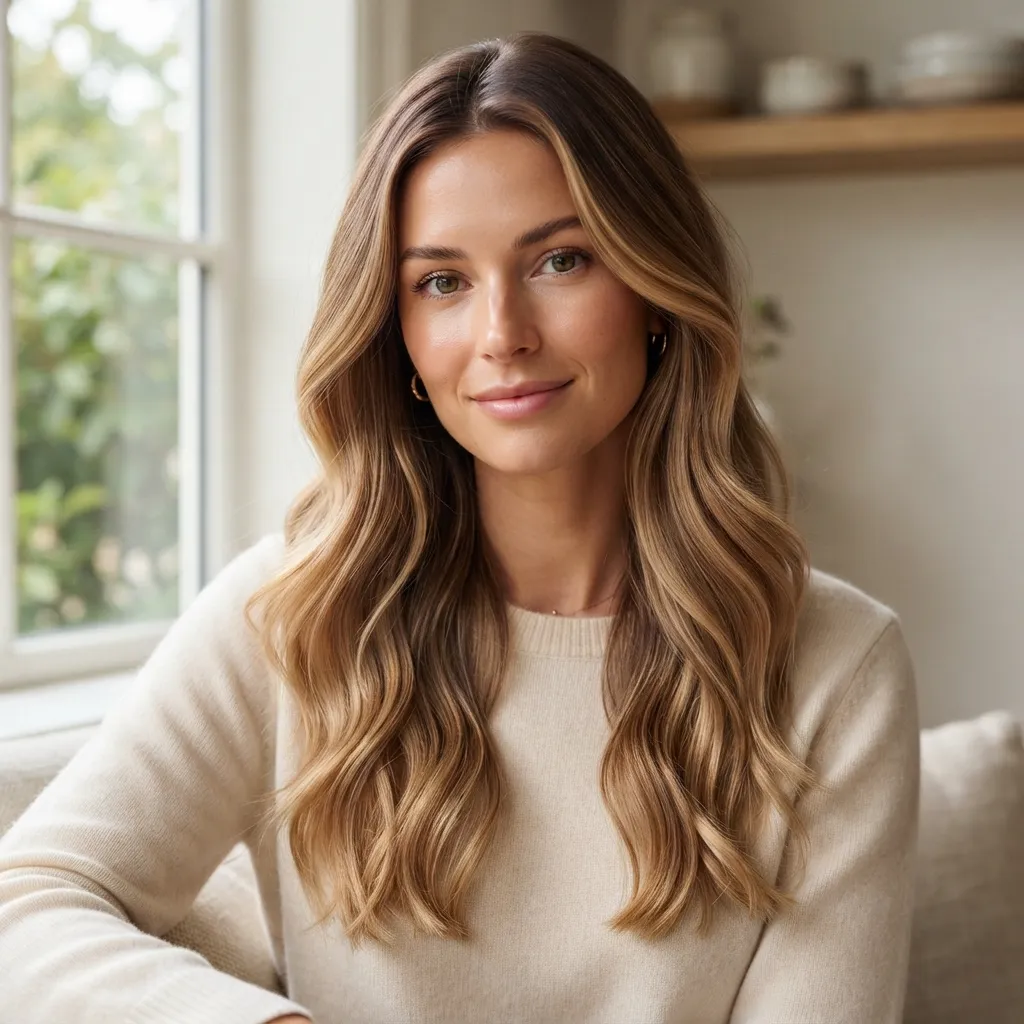
Vibe: Balanced, a color that doesn’t fully commit to brown or blonde.
Why it works: Bronde blends brown and blonde in roughly equal proportion, which keeps regrowth far less noticeable than a full blonde transition, since the base color and the lightened pieces sit closer together in depth.
How to get it: Ask for a bronde formula using a caramel base rather than a beige one, keeping roughly 60 percent of the head at your natural depth and 40 percent lightened.
Shop The Look
| Product |
| Caramel bronde toning gloss |
| Neutral-tone purple shampoo |
| Bond repair spray |
| Heat protectant serum |
| Color-safe hair mask |
14. Toning Treatment Technique to Neutralize Brass Between Visits
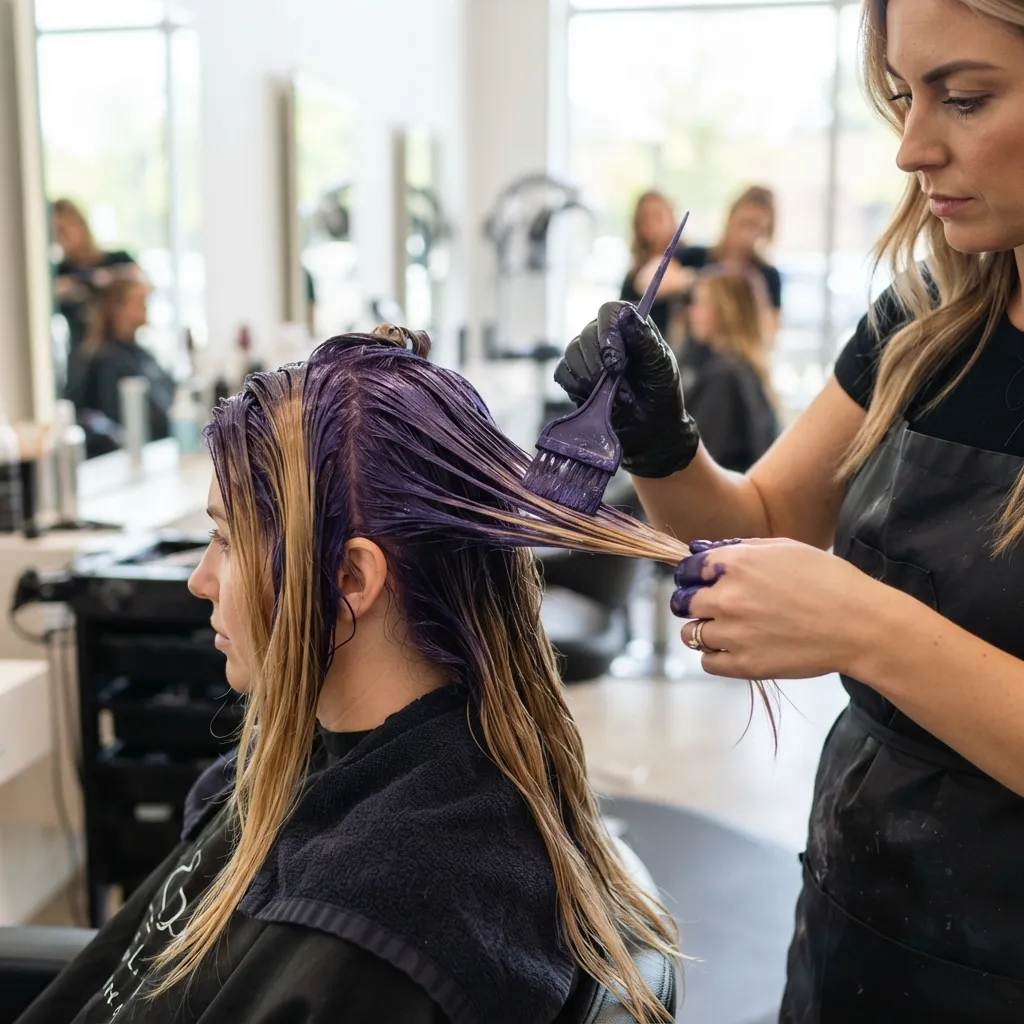
Vibe: Corrected, blonde brought back to its intended tone.
Why it works: Lightened hair naturally warms toward yellow and orange as the color oxidizes and fades between salon visits, and a violet or blue-based toner counteracts that shift on the color wheel, resetting the tone without any additional lifting.
How to get it: Book a stand-alone toning appointment every 4 to 6 weeks between full balayage sessions, since toner fades faster than the underlying lightened color and needs refreshing on its own schedule.
Shop The Look
| Product |
| Purple-based glaze toner |
| Purple shampoo for maintenance |
| Cool-water rinse shower filter |
| Bond-building leave-in treatment |
| Silk hair towel for gentle drying |
15. Gloss Overlay for Shine Without Additional Lift
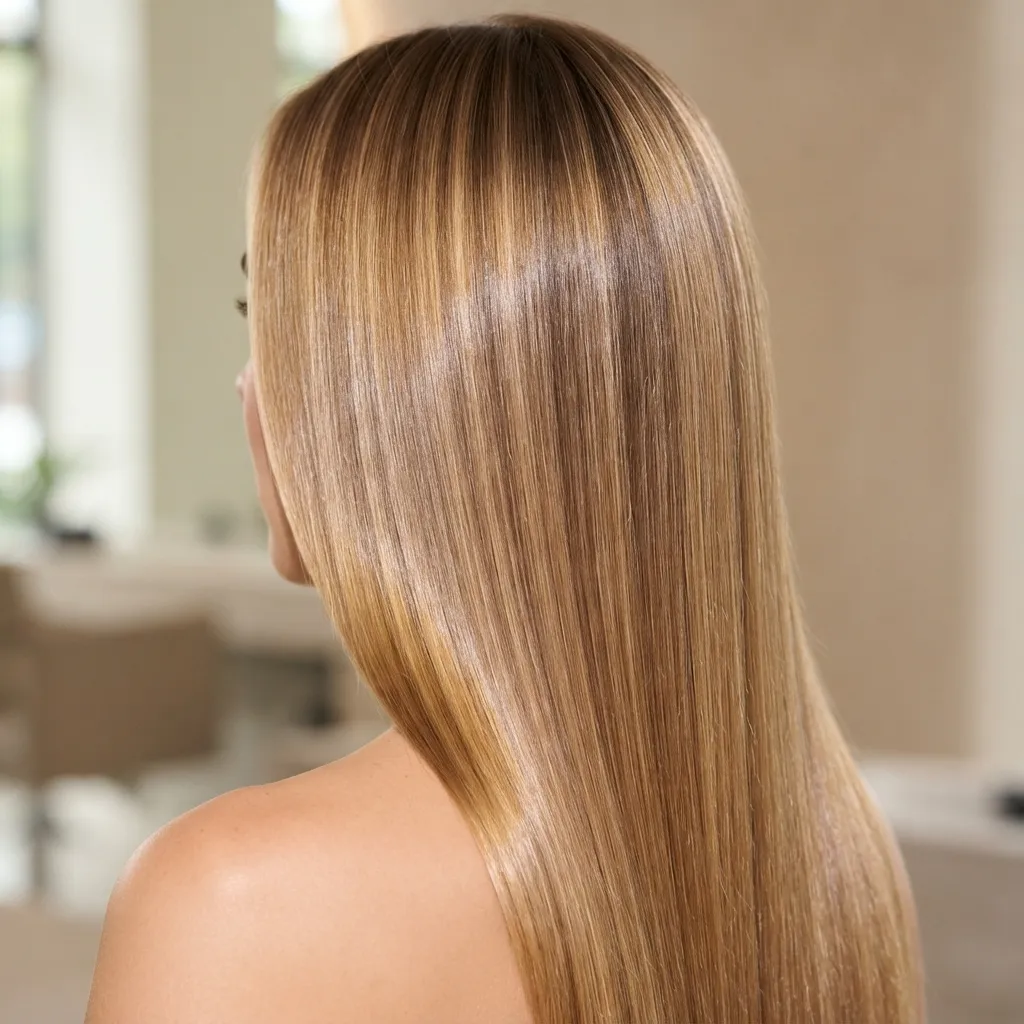
Vibe: Sleek. Hair that catches light the way it did right after cutting.
Why it works: A gloss treatment seals the cuticle with a translucent color layer that adds reflective shine without lifting the hair any further, working through light behavior, smoothed cuticles reflect light in one direction instead of scattering it.
How to get it: Ask for a clear or tone-matching gloss every 4 to 6 weeks between full color services, since gloss fades with washing and needs refreshing more often than the underlying balayage.
Shop The Look
| Product |
| Clear glossing hair treatment |
| Glass hair serum |
| Sulfate-free shampoo for gloss retention |
| Cool-water rinse filter |
| Silk pillowcase for shine protection |
16. Layered Haircut Pairing to Maximize Balayage Movement
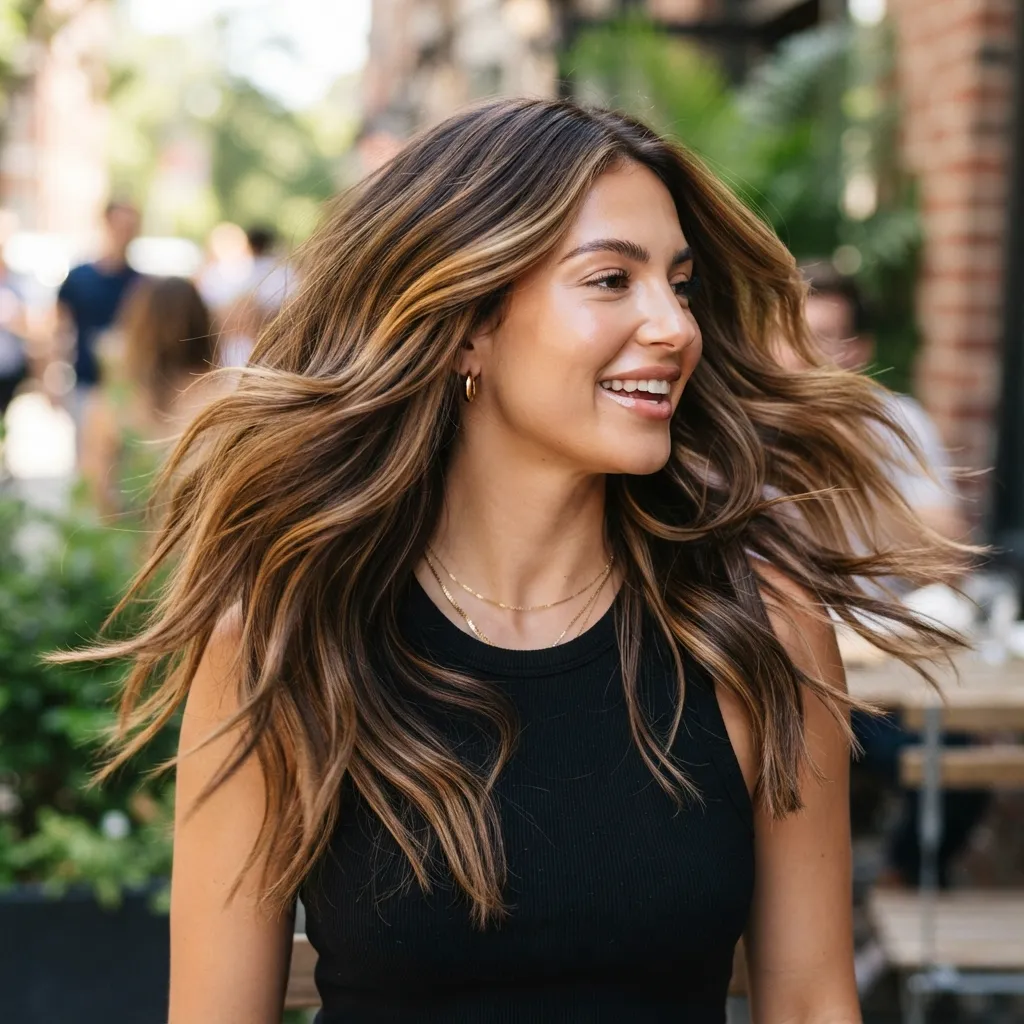
Vibe: Dynamic. Color that moves because the cut gives it somewhere to go.
Why it works: Balayage relies on surface-level color placement, and a layered cut exposes more of that surface area with every layer’s edge, which is why the same color reads as far more dimensional on layered hair than on one-length hair.
How to get it: Request long layers starting around chin length if you want balayage to show the most movement, since shorter or fewer layers leave more of the painted color hidden beneath the top layer.
Shop The Look
| Product |
| Texturizing spray for layered movement |
| Lightweight styling mousse |
| Round brush for layer definition |
| Heat protectant spray |
| Shine serum for finished layers |
17. Silk Scarves and Headbands to Showcase Balayage Placement
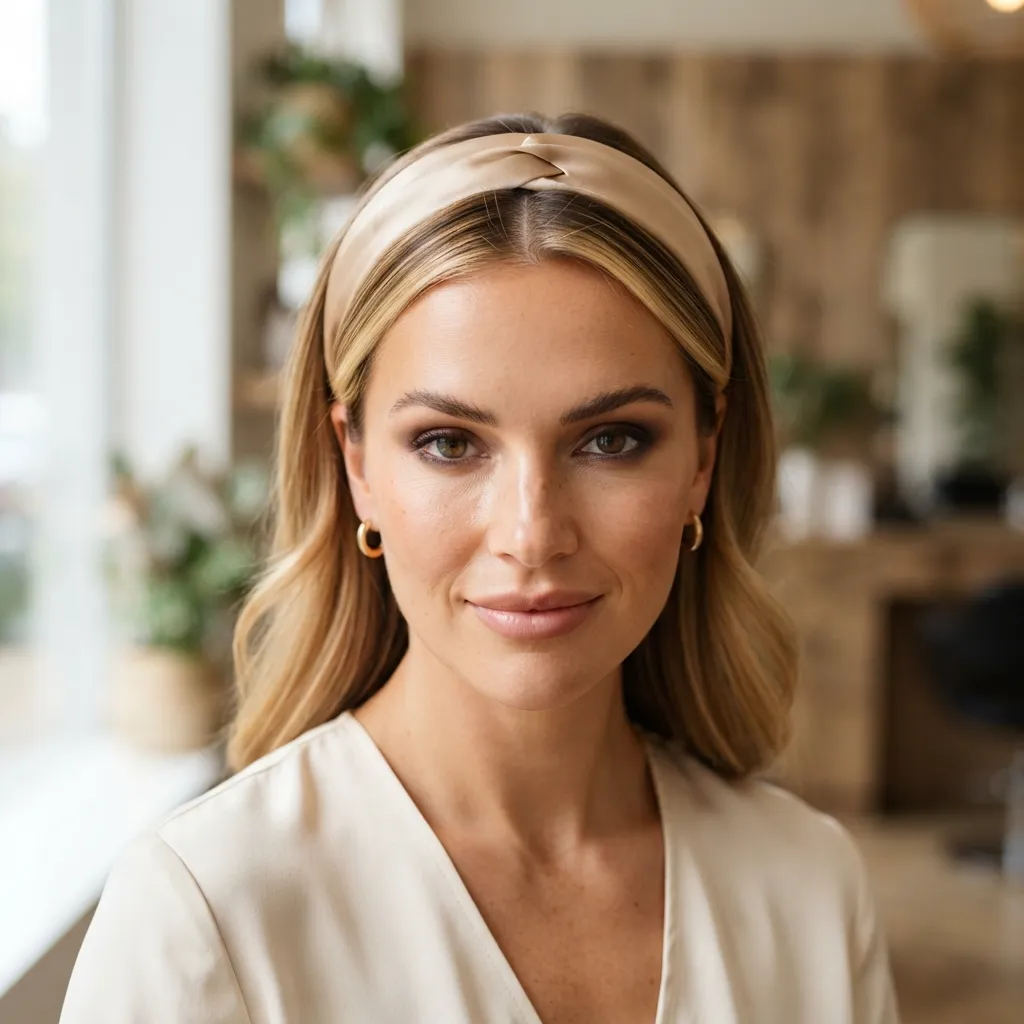
Vibe: Framed. An accessory that shows off the color instead of hiding it.
Why it works: A headband pulling hair back reveals the crown and face-framing pieces that often get covered by loose hair, framing the most expensive part of the service.
How to get it: Choose a silk headband that complements your balayage: warm caramel or cream for warm tones, cool gray or white for ash.
💡 Quick Win: A simple silk scarf tied as a headband takes under a minute and instantly shows off crown highlights that a low ponytail would otherwise hide.
Shop The Look
| Product |
| Silk headband warm neutral tone |
| Silk scarf for hair styling |
| Bobby pins for securing scarf styles |
| Shine serum for framed sections |
| Texturizing spray for soft finish |
18. Low-Commitment Balayage: Face-Framing-Only First Step
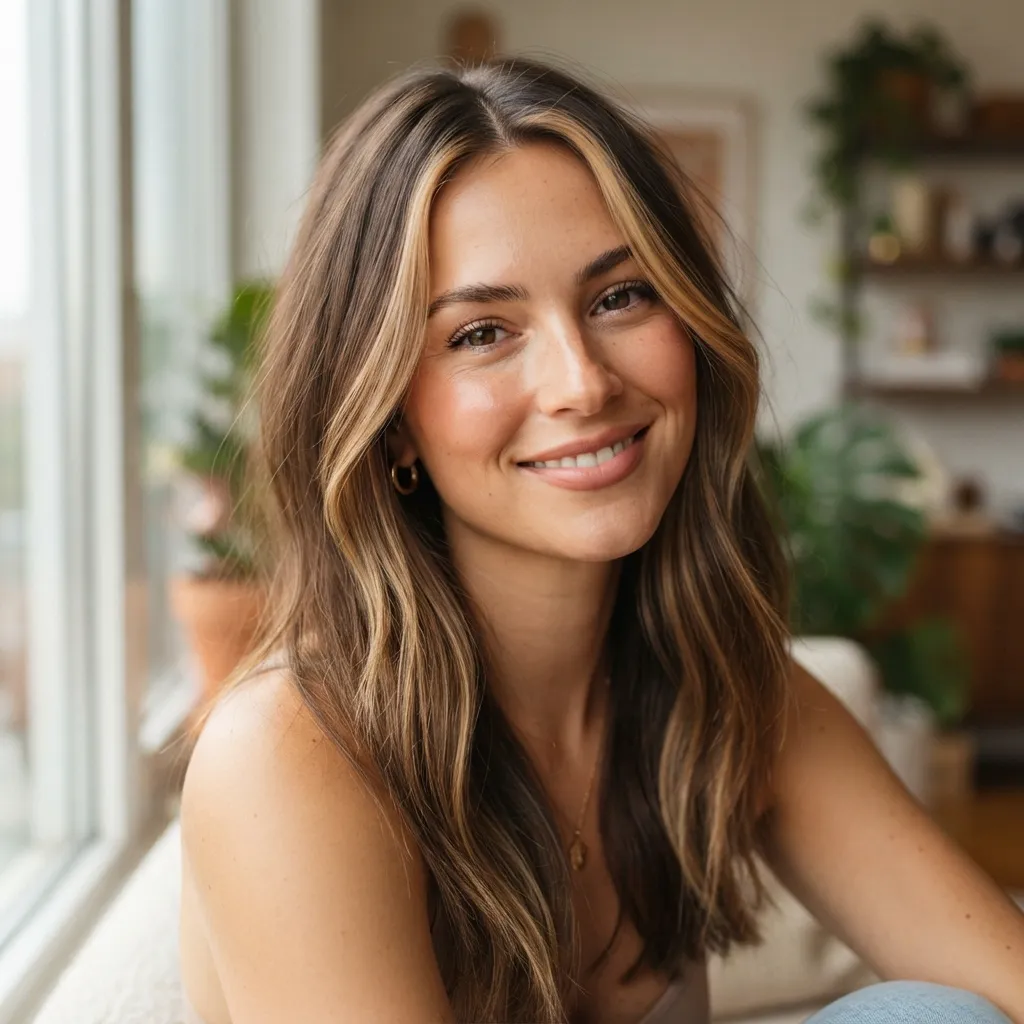
Vibe: Low-pressure. A first step that costs one salon visit instead of a full commitment.
Why it works: Limiting balayage to only the two face-framing pieces keeps the lightening minimal and the maintenance low, letting you test how you feel about lighter hair around your face before deciding on a fuller transition.
How to get it: Ask specifically for “face-framing balayage only,” which typically takes under an hour and requires touch-ups only every 4 to 6 months since regrowth is barely visible on just two pieces.
Shop The Look
| Product |
| Honey blonde toning gloss for face-framing |
| Bond-building spray for lightened pieces |
| Purple shampoo for maintenance |
| Heat protectant spray |
| Shine serum for finishing |
19. Champagne Blonde Balayage for Fair-to-Medium Brown Bases
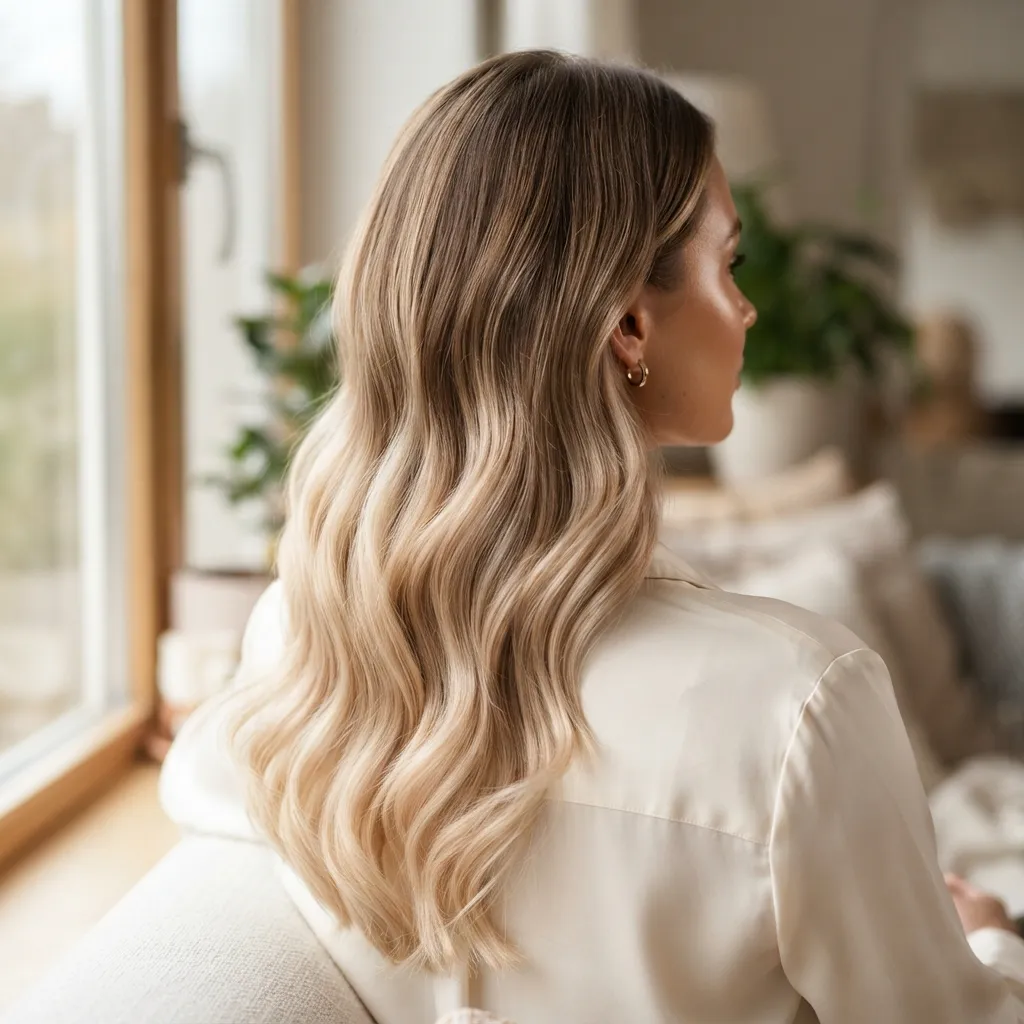
Vibe: Luminous, a pale blonde with just enough warmth to avoid looking cold.
Why it works: Champagne blonde sits between warm gold and cool beige, making it forgiving for medium brown bases that don’t lean strongly warm or cool.
How to get it: Ask for a lightening service toned with a champagne or beige-gold glaze rather than a straight gold or ash one, splitting the difference for a softer result.
Shop The Look
| Product |
| Champagne blonde toning glaze |
| Bond repair treatment for lighter lift |
| Gentle purple shampoo |
| UV protection spray |
| Silk pillowcase for color retention |
20. Glaze-Only Refresh to Extend Time Between Full Sessions
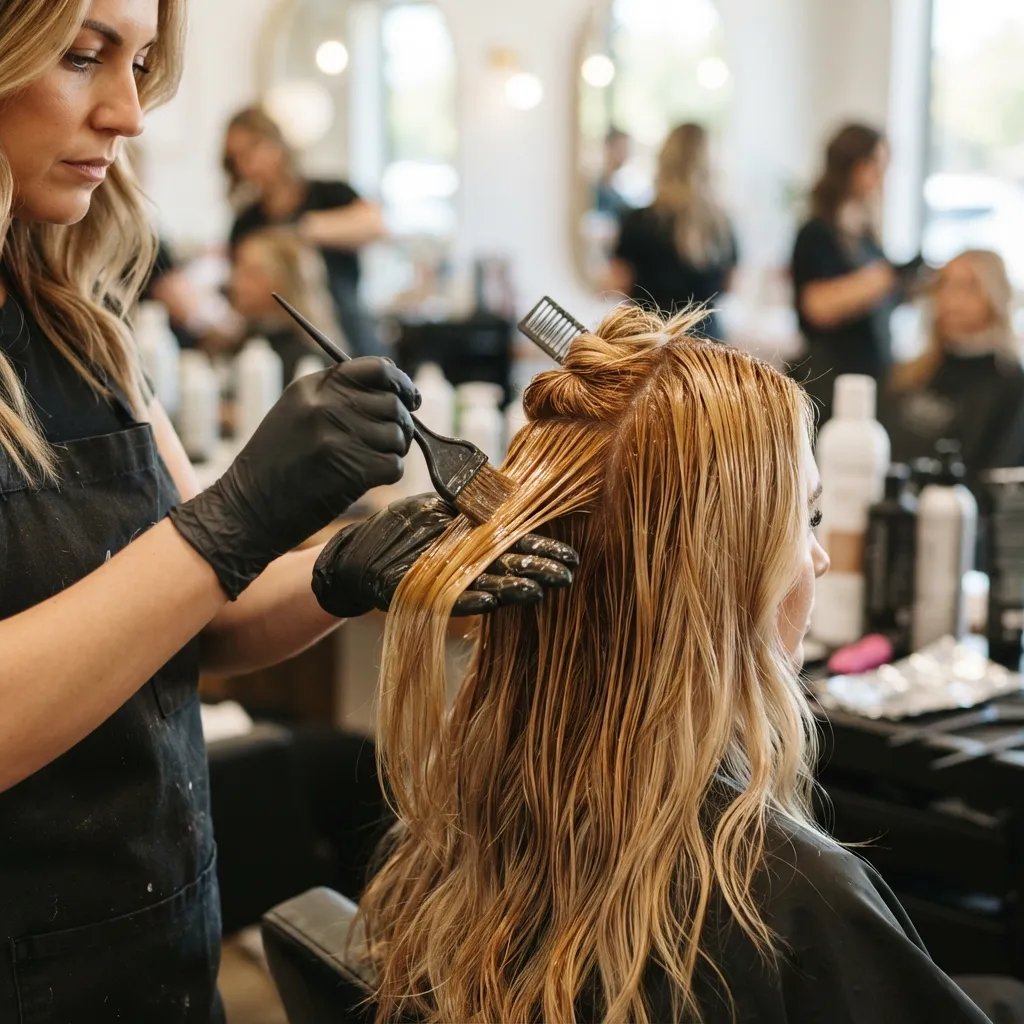
Vibe: Efficient. A shortcut that keeps color looking fresh without a full appointment.
Why it works: A glaze-only service refreshes tone and shine on already-lightened hair with no additional lifting, taking a fraction of the time and cost of a full balayage while extending how long the color looks freshly done.
How to get it: Book a glaze-only appointment at the halfway point between full sessions, around week 8 if due for a refresh at week 16, to keep tone consistent throughout.
💡 Quick Win: Most salons offer glaze-only services at roughly a third of the cost of a full balayage appointment, making it an easy budget-friendly maintenance habit.
Shop The Look
| Product |
| Clear or tone-matching glaze kit |
| Purple shampoo for upkeep |
| Bond-building conditioner |
| Shine serum |
| Silk hair wrap for overnight protection |
How to Start Your Brown to Blonde Balayage Transformation
Start with an undertone check, not a shade from a photo. Compare gold versus silver jewelry against your wrist in natural light, gold looking richer points you toward caramel and honey; silver looking cleaner points you toward ash and champagne, and let that determine your starting formula before any color touches your hair.
The most common mistake is going too light in a single session on virgin brown hair, which over-processes and damages hair rather than achieving the requested blonde. Fix it by planning a multi-session lift spaced 6 to 8 weeks apart for darker bases, rather than demanding one dramatic result in a single visit.
Three ways to test a direction for under $30: a color-depositing purple or gold shampoo for a two-week preview, a semi-permanent gloss for a six-to-eight-week test, and a clip-in extension in your target shade held against your face in natural light before committing.
A full brown-to-blonde transformation on darker hair realistically takes two to three sessions spaced weeks apart, running $400 to $900 total. A single balayage refresh on already-lightened hair takes 2 to 4 hours and runs $150 to $350, making it the realistic single-weekend option once the initial transformation is complete.
Frequently Asked Questions About Brown to Blonde Balayage
What’s the difference between balayage and regular foil highlights when going blonde?
Balayage is a freehand painting technique applied to the surface of hair sections, while foil highlights saturate color through wrapped sections for more uniform, faster lift. Balayage grows out with a softer, sun-kissed line, while foil highlights typically show a more visible root line.
What blonde tone works best for brown to blonde balayage?
Warm undertones are flattered by honey and caramel-based blonde, neutral undertones by champagne or beige-gold, and cool undertones by ash or cool beige. A root color one to two shades deeper than the lightened lengths anchors nearly any of these tones.
How much does a full brown to blonde balayage transformation cost?
A single balayage session on hair that’s already partially lightened typically runs $150 to $350. A full transformation from virgin dark brown hair, which often requires two to three sessions spaced 6 to 8 weeks apart to protect hair health, can total $400 to $900. Maintenance glazes between full sessions usually run $50 to $100 each.
Does brown to blonde balayage work on curly or coily hair?
Yes, though processing takes longer since curly and coily textures have more overlapping cuticle layers per strand, requiring careful, frequent strand checks to lift evenly. Balayage’s freehand placement suits curl patterns well, since irregular painted color mimics how curls naturally catch light.
What’s the most important step before booking a brown to blonde balayage appointment?
Checking your undertone first, using the gold-versus-silver jewelry test in natural light, prevents the most common and expensive correction in balayage: a lovely blonde that simply doesn’t suit your skin’s warmth. Bringing reference photos alongside your undertone information gives your colorist what they need to translate someone else’s blonde into a formula suited to you.
Ready to Start Your Brown to Blonde Balayage?
These 20 ideas span shade families from caramel to ash, techniques from foilyage to babylights, and placement strategies from money pieces to root shadows, so there’s a real starting point whatever your base color or commitment level. You don’t need a full transformation right away testing with a gloss or face-framing-only balayage first is a genuinely smart way to begin.
Today, do the gold-versus-silver jewelry test in natural window light and note which one makes your skin look richer. Once your balayage matches your undertone and grows out on your terms, it stops looking like a color you’re maintaining and starts looking like the blonde your hair was always heading toward. Save whichever shade or placement matched your undertone test, especially the caramel base or the face-framing money piece they tend to be the easiest starting points to build from.

2 Comments