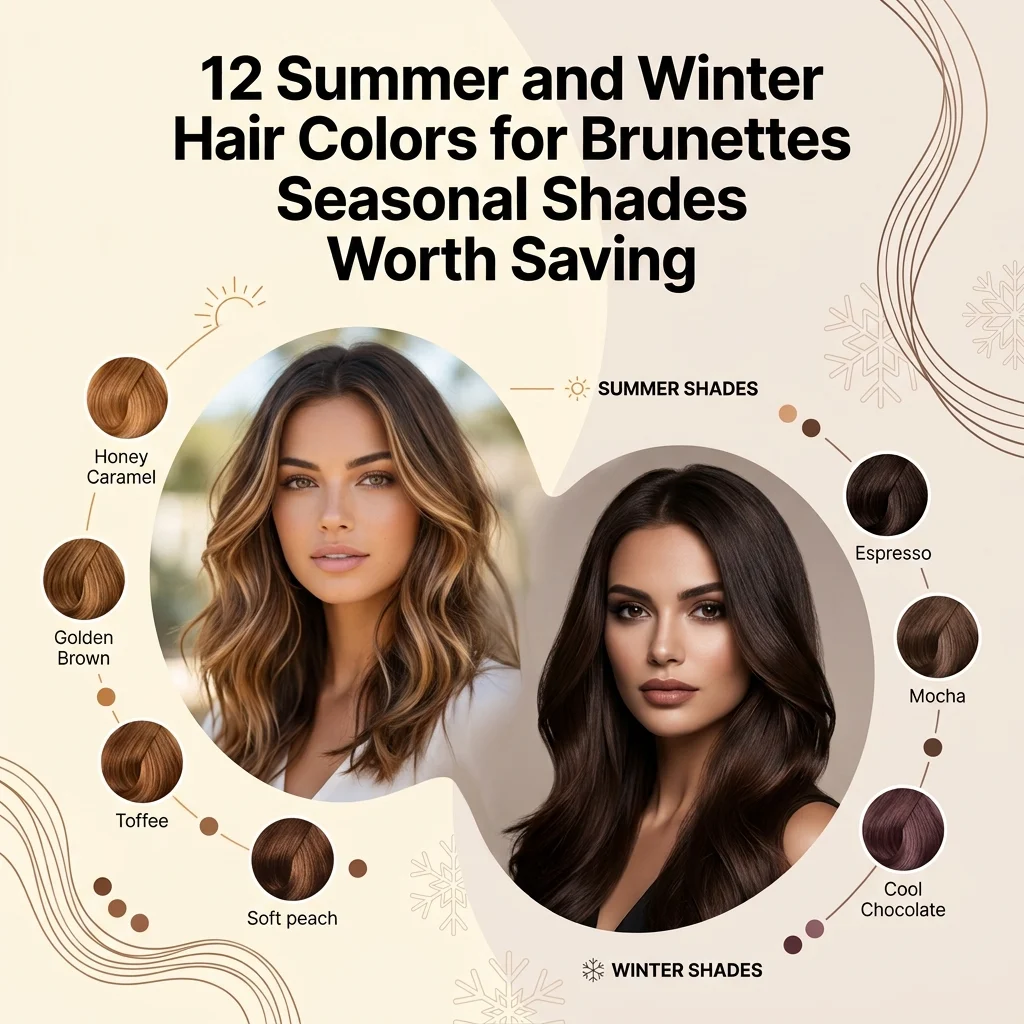
12 Summer and Winter Hair Colors for Brunettes: Seasonal Shades

Seasonal brunette hair color means adjusting the warmth, depth, and highlight placement of a brown base to match the season: sun-warmed caramel and honey dimension for summer, and saturated espresso and cool chocolate depth for winter. This guide walks through 12 summer and winter hair colors for brunettes, covering the exact technique, product, and upkeep detail behind each from balayage placement to the specific gloss formulas colorists use to shift a base tone warmer or cooler without a full re-dye.
Summer brunette color feels loose and sun-grown, the kind of dimension that looks like it happened on its own over a long August. Winter brunette color feels grounded and matte, closer to the color of wet bark or steeped coffee than anything that catches direct light. Both are built on the same underlying principle: a “brunette” is never one flat shade it’s a family of warm and cool tones that a colorist can shift seasonally through toning and placement without lightening the hair from scratch each time. Here are 12 ideas worth saving, and taking to your next appointment.
Why Seasonal Brunette Hair Color Works So Well
Seasonal brunette coloring borrows its two core techniques from two different color traditions. Balayage, the hand-painted, foil-free technique developed in French salons in the 1970s and popularized globally through the 2010s is the foundation of most warm-weather brunette looks, because its freehand application naturally tapers color from mid-shaft to ends, mimicking the way hair lightens gradually from real sun exposure rather than in hard, uniform blocks. Traditional foiling, by contrast, is the foundation of most winter brunette looks, because full or partial foils distribute toner and lightener evenly from root to tip, producing the saturated, uniform depth that reads as rich rather than sun-faded. A seasonal brunette client typically alternates or layers these two approaches rather than committing permanently to one, which is what makes the color feel current across the whole year instead of static.
The materials and formulas that define this category are specific, not generic. Summer tones are built from warm-based glosses and toners like caramel, honey, toffee, and “bronde” (a blended brown-to-blonde base) using formulas like Redken Shades EQ in 07NB (Neutral Brown) or Wella Illumina Color in a warm 7/ base, applied over balayage lightened to a Level 7–8 with 20-volume developer.
Winter tones are built from cool- and neutral-based glosses in espresso, chestnut, mahogany, and “cold brew” brunette, often using ash- or violet-based correctors like Wella Color Charm T18 diluted into the formula to cancel warmth or a straight demi-permanent in a level 3 or 4 base. Olaplex No. 1 or No. 2 bonding additive is standard in both directions when any lightening is involved since repeated seasonal toning without a bond-builder is the single fastest way to compromise mid-shaft strength.
Interest in seasonal hair color has climbed alongside two real shifts in salon behavior: clients are stretching full-color appointments to twice a year for cost reasons, and colorists are leaning into gloss-only “maintenance visits” 30–45 minute appointments that shift tone without re-lightening as a faster, lower-cost service to fill the gap between major color changes.
This has made “your natural brunette, but seasonally adjusted” a more searched and more requested look than dramatic transformation color, in salons and on Pinterest alike.
Style at a Glance
| Element | Detail |
| Philosophy | Same brunette base, shifted warm for summer light and cool/deep for winter light |
| Key Techniques | Balayage and babylights (summer); root smudge, full foil, and gloss (winter) |
| Key Formulas | Redken Shades EQ, Wella Illumina/Color Charm, Olaplex No.1–No.3, Wella T18 corrector |
| Color Range | Caramel, honey, toffee, bronde (summer) → espresso, chestnut, mahogany, cold brew (winter) |
12 Summer and Winter Hair Colors for Brunettes
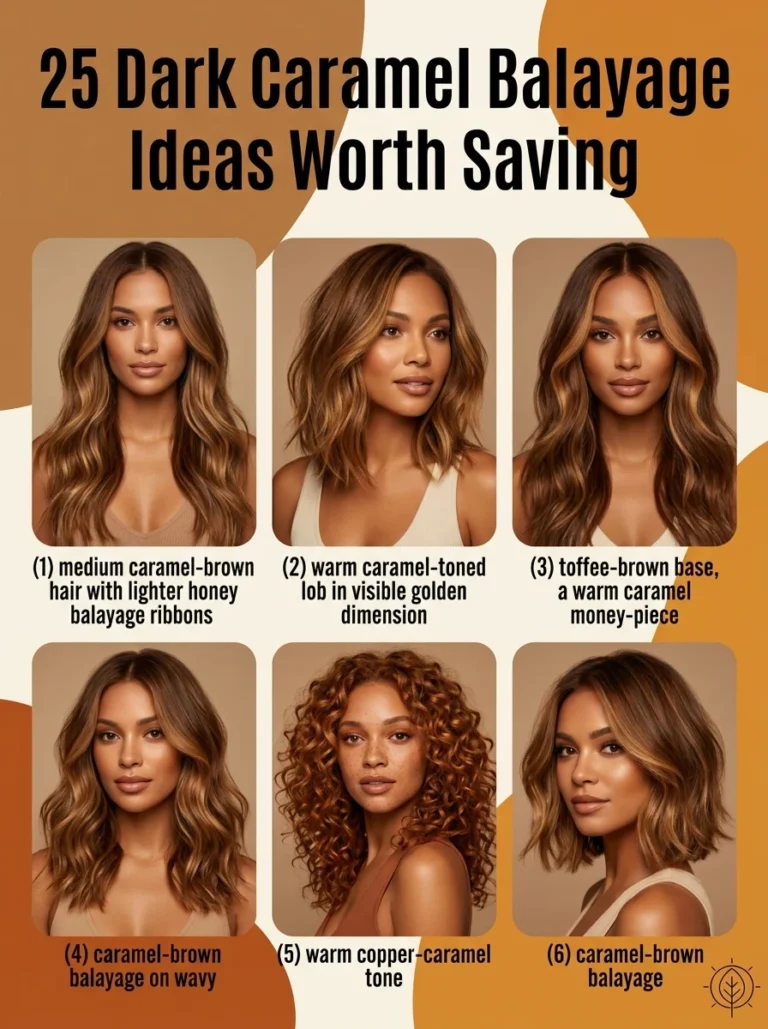
1. Sun-Kissed Caramel Balayage
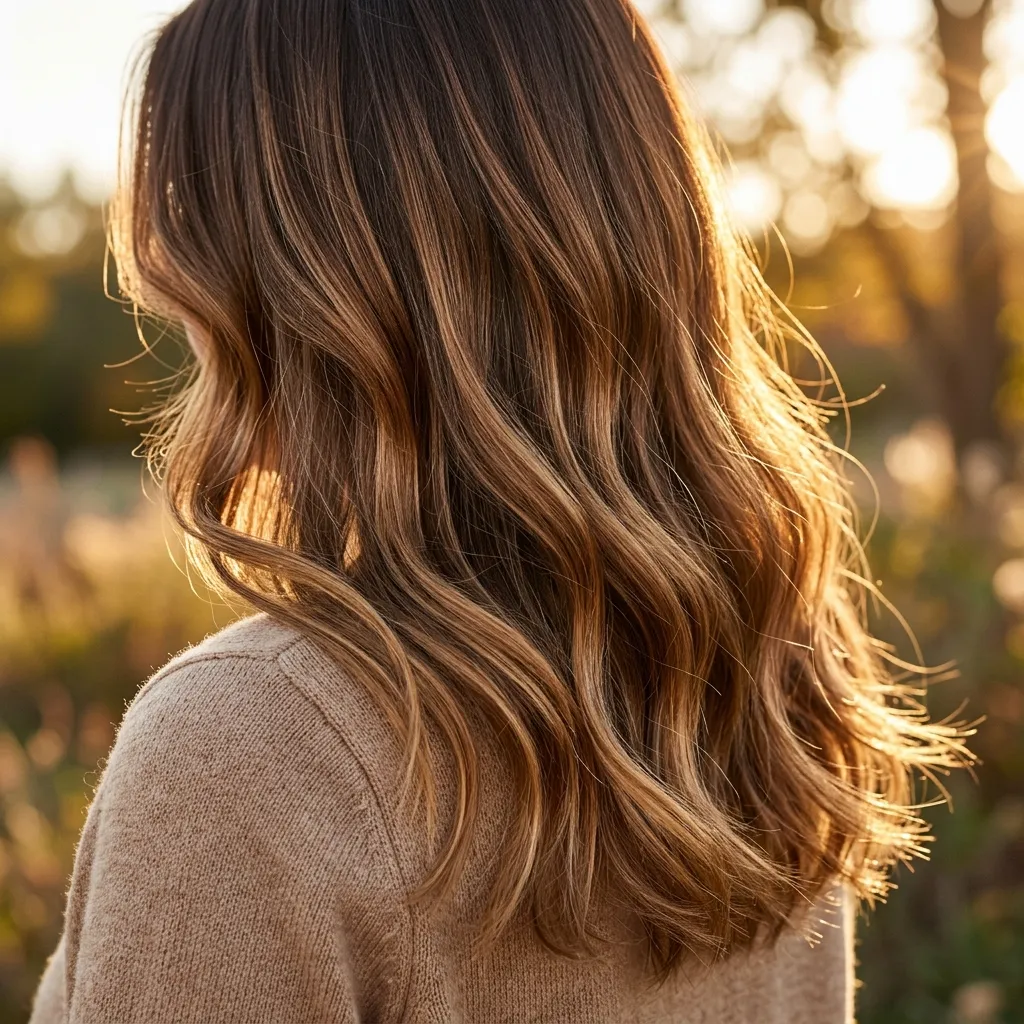
Vibe: Sun-warmed, like hair that spent a whole season outdoors without ever seeing bleach.
Why it works: Balayage is painted freehand rather than sectioned into foils, so the lightener sits heaviest at the ends and tapers to almost nothing near the root. This graduated saturation is what creates the soft, sun-grown look rather than a hard-edged highlight line, and it’s the specific reason balayage regrowth looks intentional at 10–12 weeks instead of obviously grown-out. Caramel toner sits close enough in depth to a natural Level 5–6 brunette base that the color reads as an intensified version of the client’s own hair rather than a foreign tone layered on top of it, which is why it’s consistently the most-requested “low commitment, high impact” summer color in salons.
How to get it: Ask specifically for balayage placed from mid-shaft down rather than a full head. This keeps the root area untouched and stretches the time between appointments. Request a caramel toner one to two levels lighter than your natural base (for a Level 5 base, ask for a Level 6–7 caramel gloss), and confirm your colorist is using a bond-builder like Olaplex No.1 mixed into the lightener if this is your first time going lighter than your natural color.
💡 Quick Win: A caramel-toned color-depositing conditioner (K18 or Kristin Ess in a warm brunette shade) used once a week extends the tone between salon visits at almost no cost.
Shop The Look
| Product |
| Caramel color-depositing conditioner brunette |
| Bond-building leave-in hair treatment |
| Argan oil hair gloss serum shine |
| Wide-tooth detangling comb wood |
| UV protection leave-in spray colored hair |
2. Deep Espresso Root Smudge
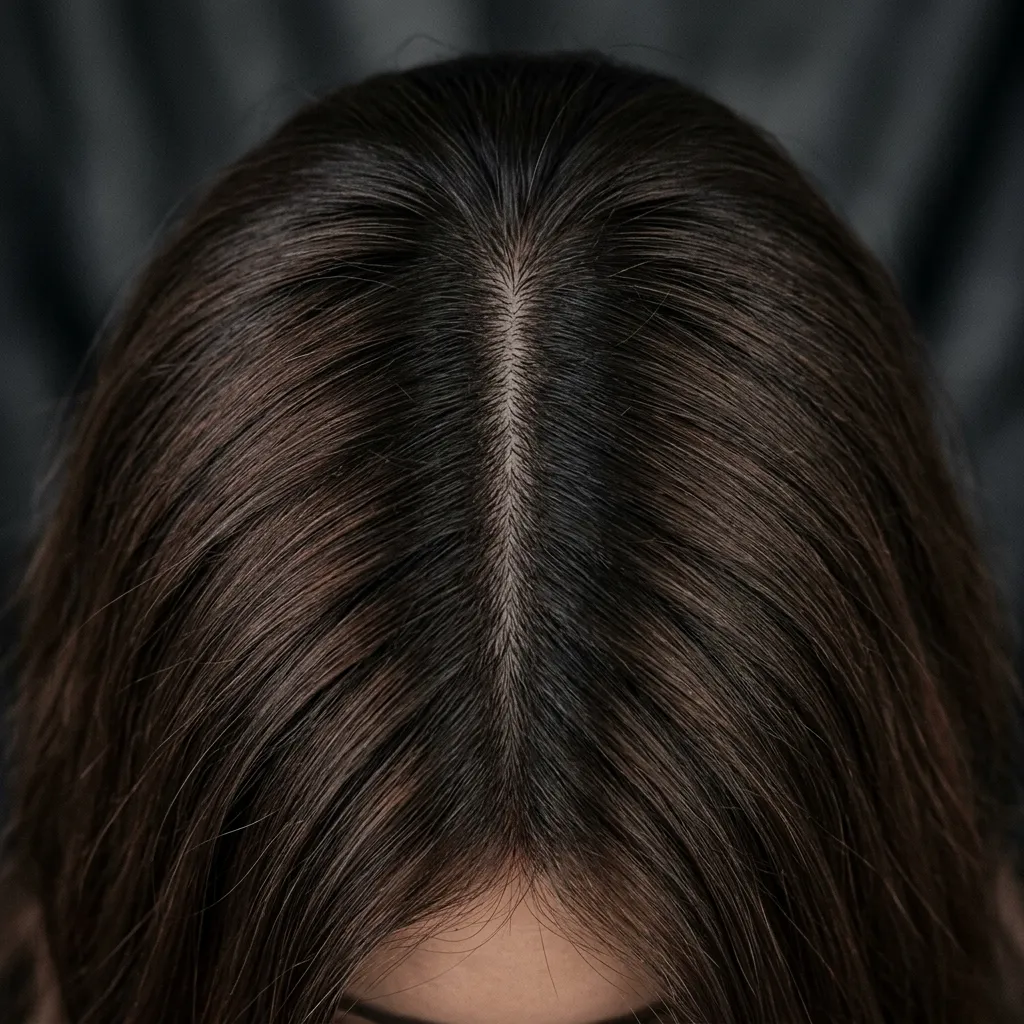
Vibe: Grounded and matte, like coffee steam fogging a cold window.
Why it works: A root smudge diffuses pigment upward from the root into the first inch or two of lightened hair using a soft brush or a teasing technique, which softens the single highest-contrast zone on the head the point where natural regrowth meets lightened hair. This is a straightforward light-behavior principle: hard contrast draws the eye and reads as “needs a touch-up,” while diffused contrast reads as intentional depth. Colorists typically smudge with a Level 4–5 espresso demi-permanent, applied with minimal heat to avoid over-processing hair that’s already been previously lightened at the same root zone.
How to get it: Request a root smudge in espresso or dark cocoa specifically, blended one to two inches past your part line rather than a hard root touch-up. Done correctly, this stretches root maintenance to 10–14 weeks instead of the usual 4–6, which is the main reason clients switch to this technique going into winter, when appointment frequency naturally drops.
Shop The Look
| Product |
| Root touch-up powder dark brown |
| Color-safe purple shampoo brunette |
| Boar bristle hairbrush shine |
| Heatless overnight curling set |
| Dark cocoa root concealer spray |
3. Cool Chocolate Winter Tone
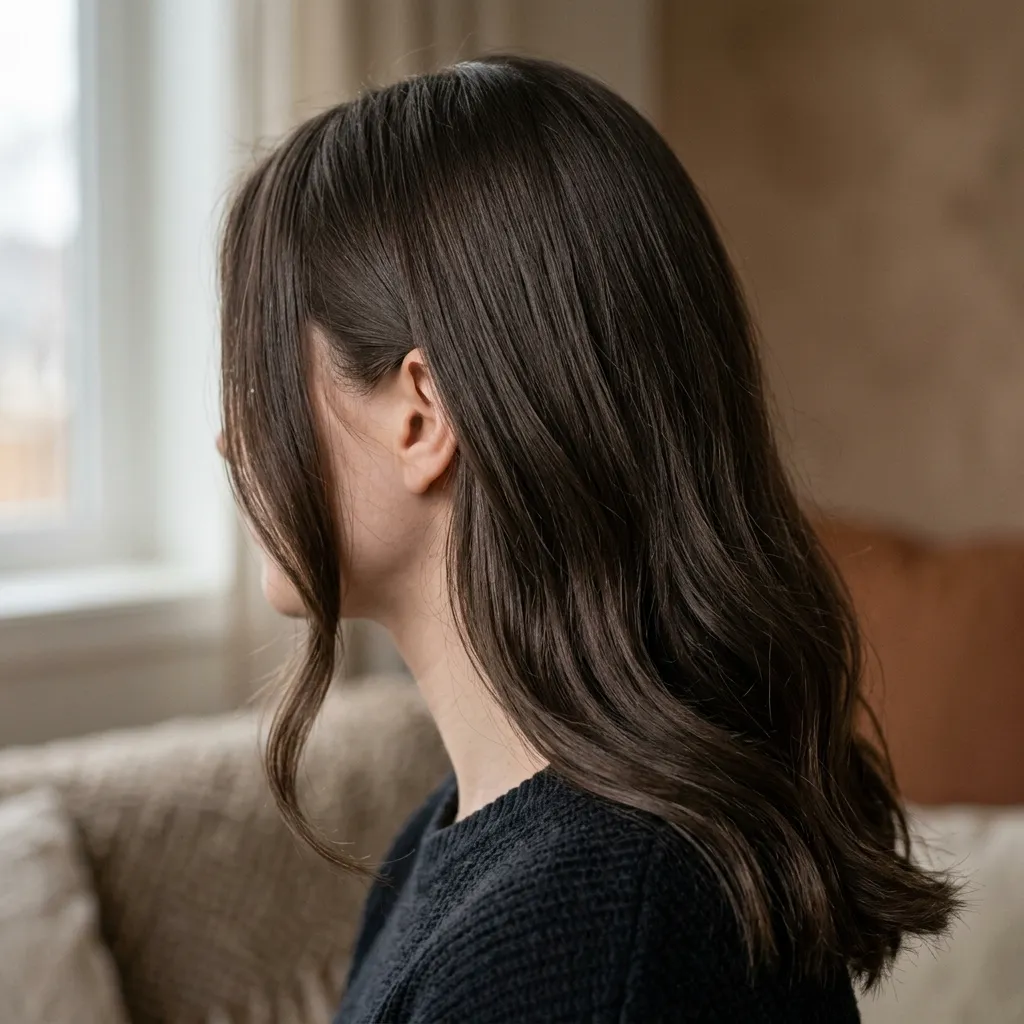
Vibe: Still and matte, with none of the red or gold that warm brunette bases tend to develop.
Why it works: Cool chocolate toning uses a blue- or violet-based corrector to neutralize the orange and gold pigment that naturally surfaces in brunette hair as warm tones fade this is basic color-wheel theory, where a tone and its opposite cancel each other visually. Colorists commonly dilute a small amount of Wella Color Charm T18 or a violet-based additive into a Level 3–4 chocolate demi-permanent base to hold the ash-neutral finish through the drier, duller light of winter months, when warm undertones read as dull rather than rich.
How to get it: Ask for a demi-permanent gloss described as “cool chocolate” or “cold brew brunette” at your next appointment, reapplied every 6–8 weeks. Confirm with your colorist that the formula includes a violet or blue corrector rather than a straight neutral base the corrector is what actually cancels brassiness rather than just adding depth.
💡 Quick Win: A blue-based purple shampoo, used once weekly, holds off warmth between gloss appointments without touching your base color.
Shop The Look
| Product |
| Blue-based purple shampoo brunette |
| Cool-tone demi-permanent gloss kit |
| Anti-frizz smoothing serum |
| Matte finish hair wax brunette |
| Cold-water rinse shower filter |
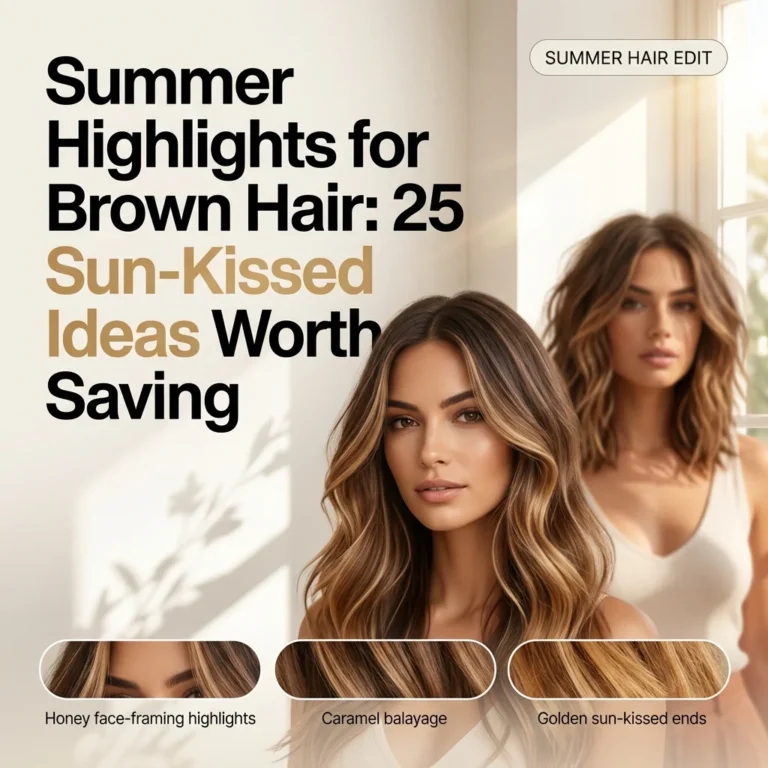
4. Honey Babylights Around the Face
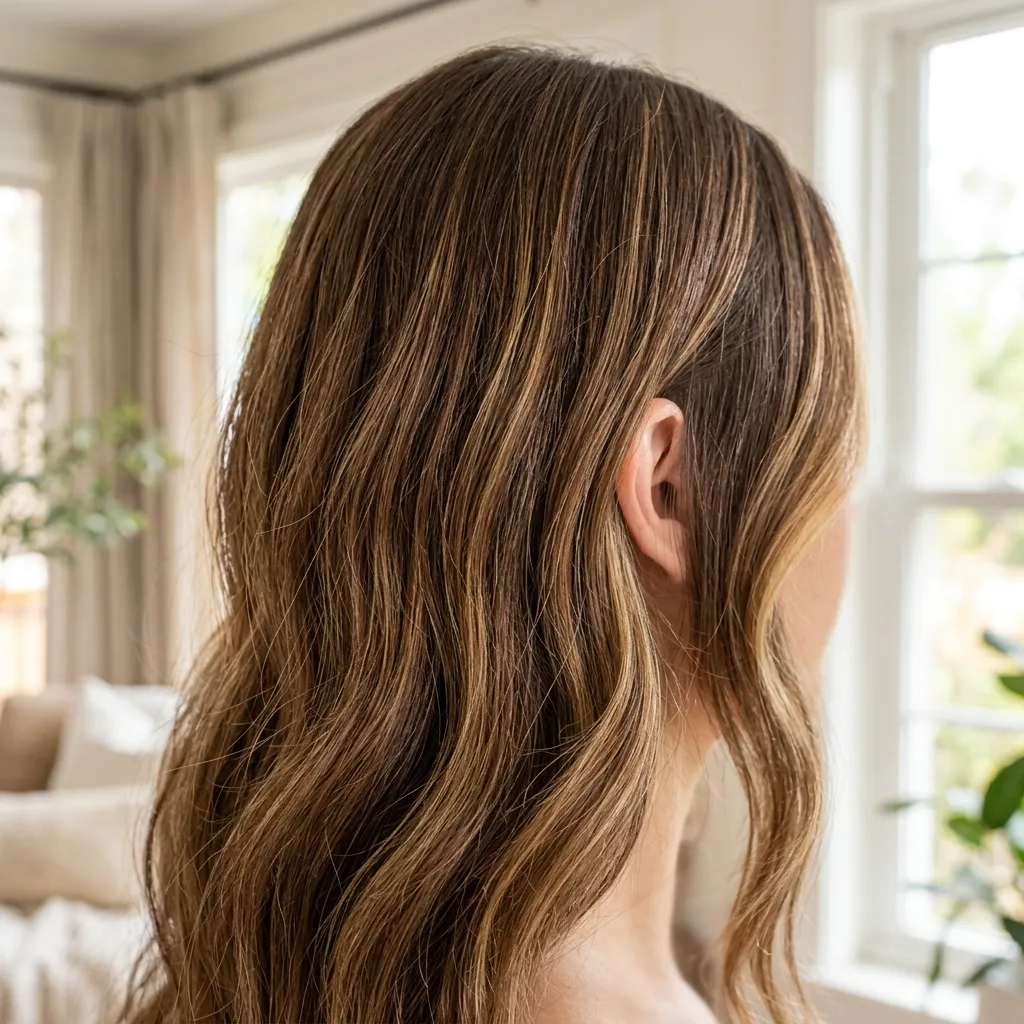
Vibe: Luminous right where it counts, like the sun found the one spot near your face and stayed there.
Why it works: Babylights use foil sections roughly a third the width of a standard highlight foil, placed in a tight perimeter around the hairline the finer the section, the more diffused the light reflection, which is why babylights read as naturally sun-lightened rather than “done,” even at close range. This is purely a scale principle: narrow sections blend into the surrounding base color faster than wide ones, since there’s less total pigment shift per section for the eye to register as a hard line.
How to get it: Ask specifically for babylights confined to a two-inch perimeter around the face rather than throughout the whole head this keeps the service shorter (60–90 minutes versus 2–3 hours for a full head) and cheaper, while delivering most of the brightening effect where it’s visually most noticeable. Request a honey tone one shade lighter than your balayage elsewhere so the two techniques blend rather than compete.
Shop The Look
| Product |
| Honey blonde temporary root spray |
| Fine-tooth rat tail sectioning comb |
| Illuminating hair oil drops shine |
| Face-framing curling wand 1-inch |
| Brass-free honey blonde shampoo |
5. Bronde Melt Ombré
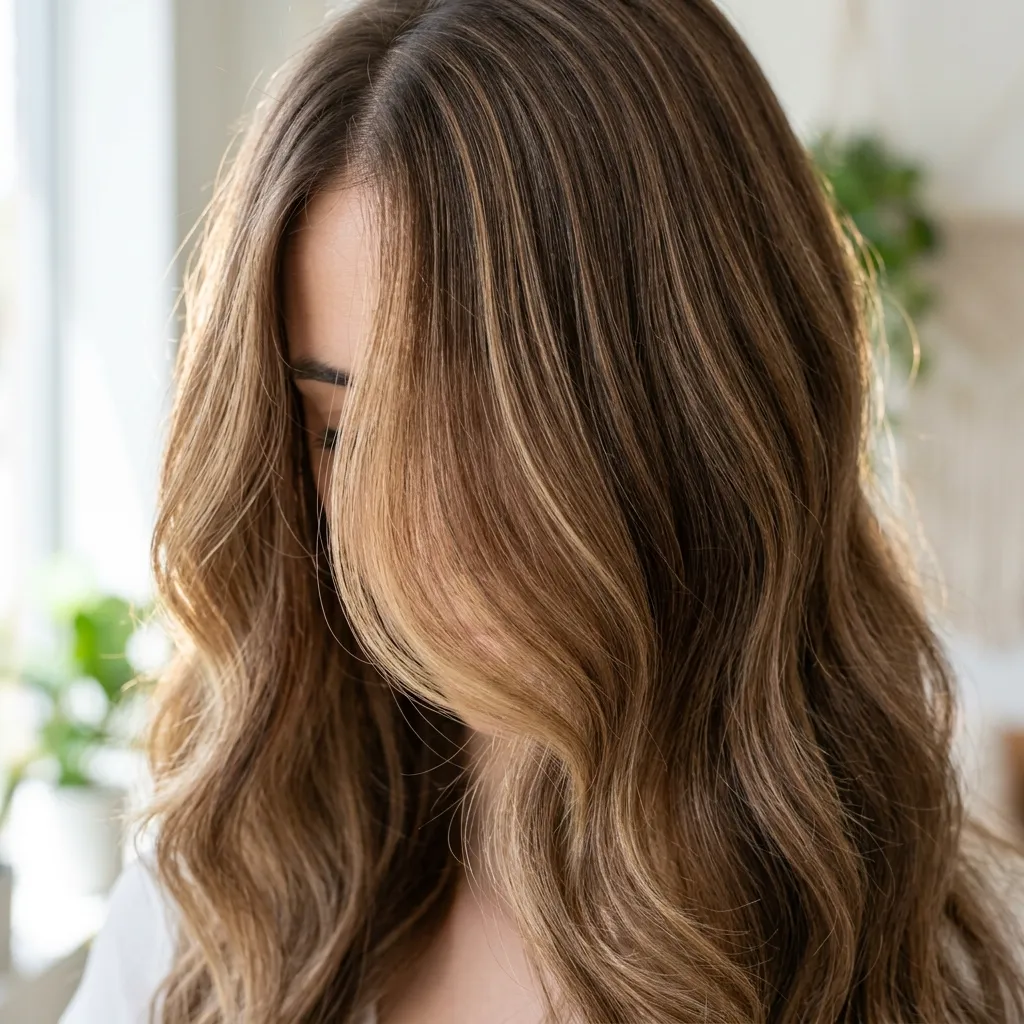
Vibe: Layered and loose, a gradual fade rather than a hard line between two colors.
Why it works: “Bronde” a portmanteau of brown and blonde blends a brunette root into blonde mid-lengths and ends through a graduated “melt,” where a colorist uses three closely-spaced tones between root and end instead of jumping straight from dark to light. This tonal layering is what keeps the transition zone soft-focus rather than banded, and it’s the technical reason a bronde melt looks expensive even when it’s a relatively fast in-chair service.
How to get it: Ask for a bronde melt that starts roughly at ear level, with your colorist using at minimum three graduated tones (not one single jump) between your root color and your lightest end color. This is a technique question worth asking directly. A single-tone jump from dark root to light end is an ombré, not a melt, and it grows out far less gracefully.
💡 Quick Win: A tonal glaze applied at home between salon visits K18 Color Reviving Gloss or Ion Color Brilliance in a bronde-matching shade keeps the melt from separating into visible bands as new growth comes in.
Shop The Look
| Product |
| At-home tonal glaze kit bronde |
| Sulfate-free shampoo color-treated hair |
| Blonde-brown blending brush applicator |
| Leave-in heat protectant spray |
| Satin hair scrunchie set neutral |
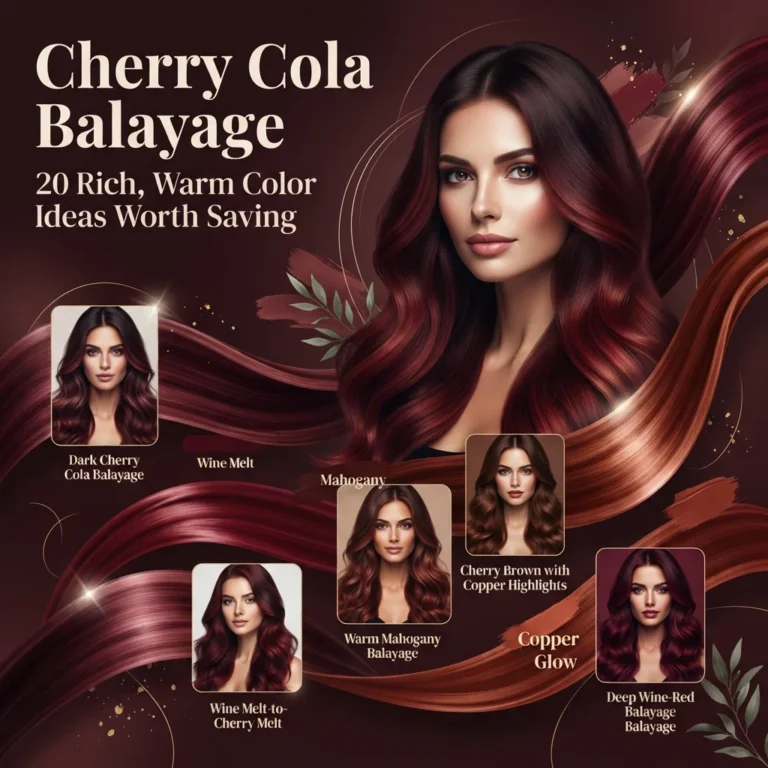
6. Mahogany Winter Depth
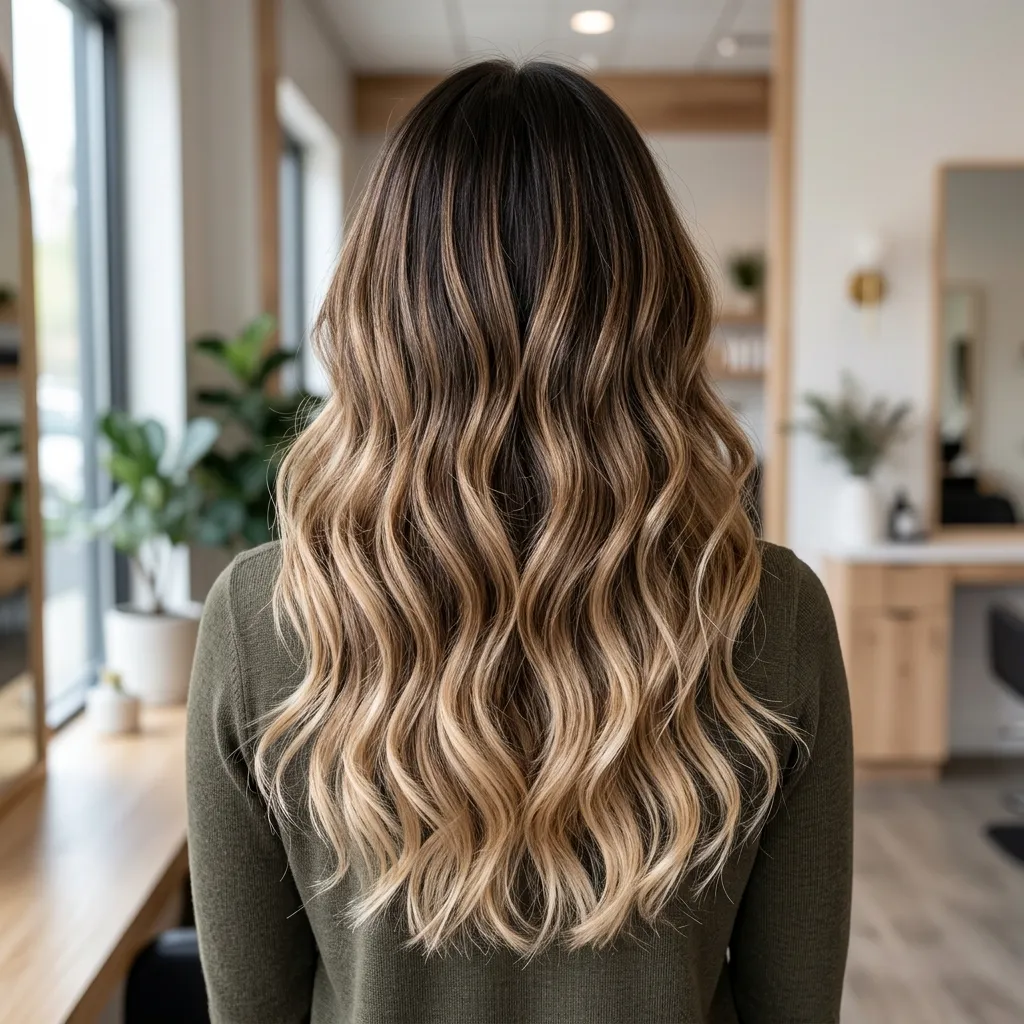
Vibe: Rich and a little dramatic, like polished dark wood catching low light.
Why it works: Mahogany introduces a subtle red-violet pigment into a brunette base rather than lightening the hair at all, which increases visual density and saturation: added pigment (as opposed to lifted, removed pigment) is what makes hair look thicker and more dimensional under the flatter, lower-intensity light of winter months. This is why mahogany reads as a “winter color” specifically: the extra pigment gives hair visual weight exactly when natural daylight is doing the opposite.
How to get it: Ask for a semi-permanent mahogany glaze something in the range of a Redken Shades EQ 6RV or an equivalent red-violet demi layered directly over your existing brunette base. Because it’s a glaze rather than a permanent color, it fades gradually over 4–6 weeks rather than growing out with a visible line, which makes it a low-risk way to test whether you like added warmth before committing to anything permanent.
Shop The Look
| Product |
| Semi-permanent mahogany hair glaze |
| Red-violet color depositing mask |
| Silk hair wrap overnight |
| Deep conditioning hair mask brunette |
| Dark tortoiseshell hair claw clip |
7. Toasted Almond Highlights
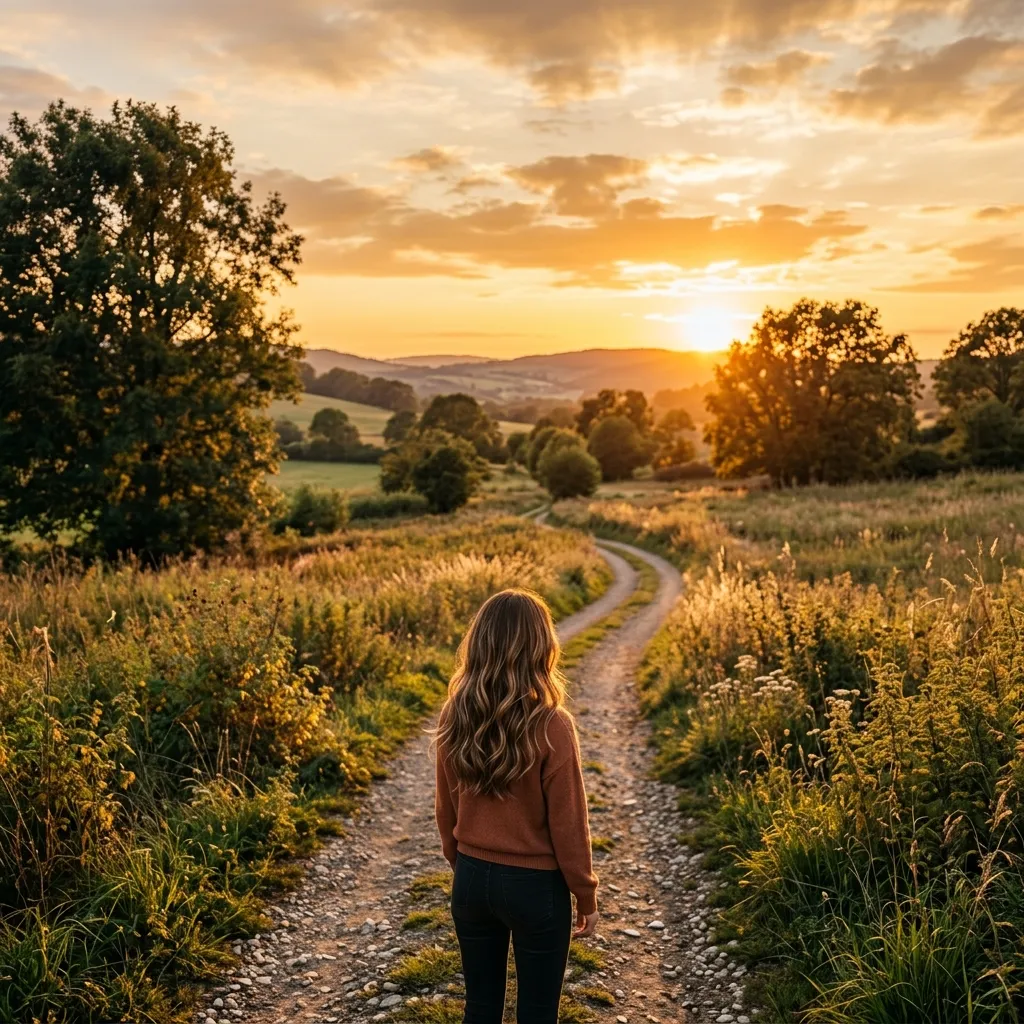
Vibe: Warm and textured, like sun-toasted nuts catching afternoon light.
Why it works: Multi-tonal highlighting mixing two or three closely related warm shades within a single level of each other, rather than one flat highlight color creates texture through variation in reflectivity, since hair strands with slightly different tones bounce and scatter light differently from one another. This is the same principle colorists use for “dimensional” color generally: uniform color reads flat under any lighting, while tonal variation reads as texture even in a still photograph.
How to get it: Request a foilyage technique (foiled balayage, which combines hand-painting with foil processing for more lift) using two toasted-almond shades within one level of each other, concentrated from mid-shaft to ends. Ask your colorist to alternate the two tones section by section rather than blocking them separately that alternation is what produces the multi-tonal effect instead of two distinct highlight zones.
Shop The Look
| Product |
| Multi-tonal highlight foil sheets |
| Amber glass hair oil bottle |
| Texturizing sea salt spray |
| Warm-tone hair gloss almond |
| Wide barrel curling iron 1.5-inch |
8. Cold Brew Brunette Gloss
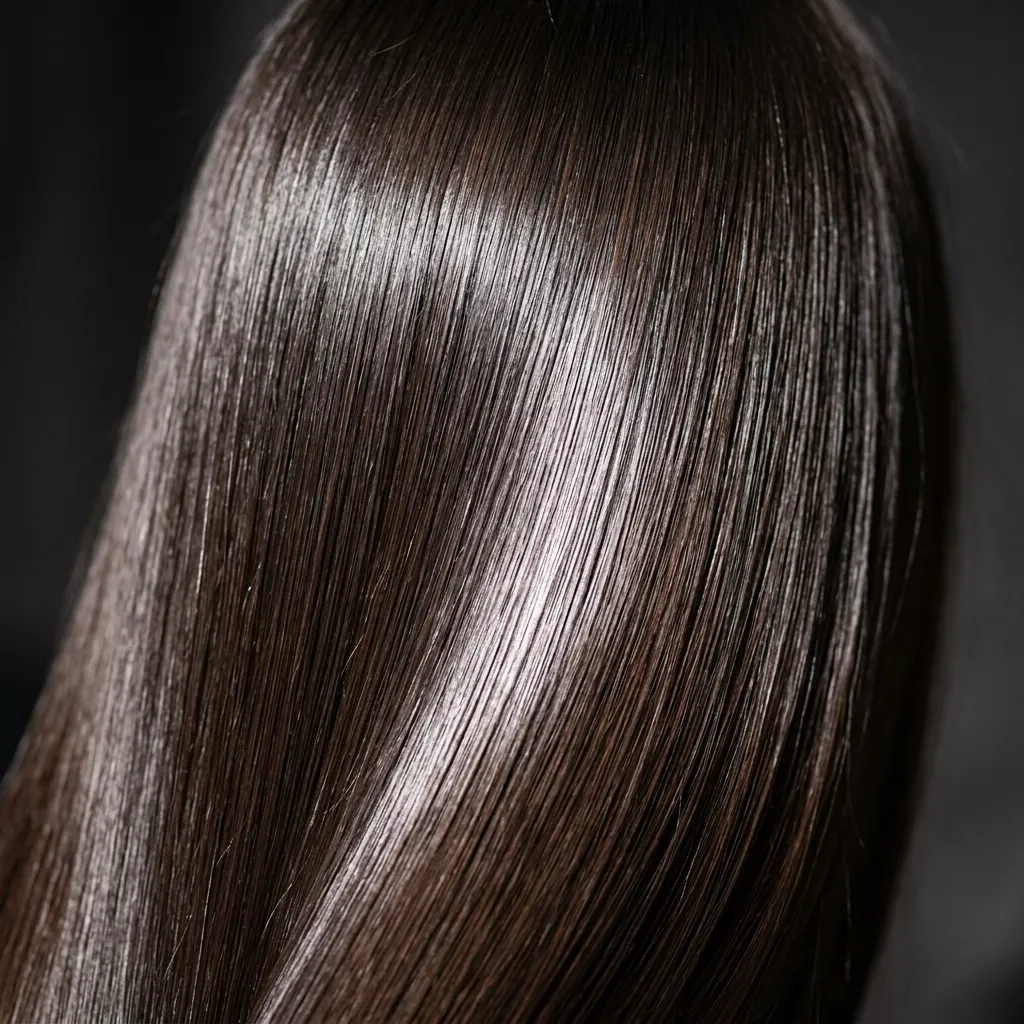
Vibe: Sleek and dark, with a glassy, almost wet-look shine.
Why it works: A clear or near-clear gloss seals the hair cuticle flat against the shaft, which increases light reflection uniformly along each strand this is the mechanism behind “glass hair,” where a smooth, closed cuticle bounces light in one consistent direction instead of scattering it in multiple directions the way a raised, porous cuticle does. Winter air is typically drier, which raises the cuticle further and dulls shine, making a clear gloss more noticeably effective in winter than in humid summer months.
How to get it: Ask for a clear glaze treatment layered over your existing brunette color every 4–6 weeks through winter specifically this is a maintenance service, not a color change, and most salons price it lower than a full gloss because there’s no pigment involved, only a shine-sealing treatment.
💡 Quick Win: A glossing serum Oribe Gold Lust or Moroccanoil Glimmer Shine. Smoothed onto damp ends in a pea-sized amount replicates the salon-glass effect between treatments.
Shop The Look
| Product |
| Clear glossing hair serum shine |
| Glass-hair smoothing balm |
| Ceramic flat iron dark hair |
| Humidity-proof anti-frizz spray |
| High-shine finishing hair spray |
9. Low-Maintenance Root Stretch
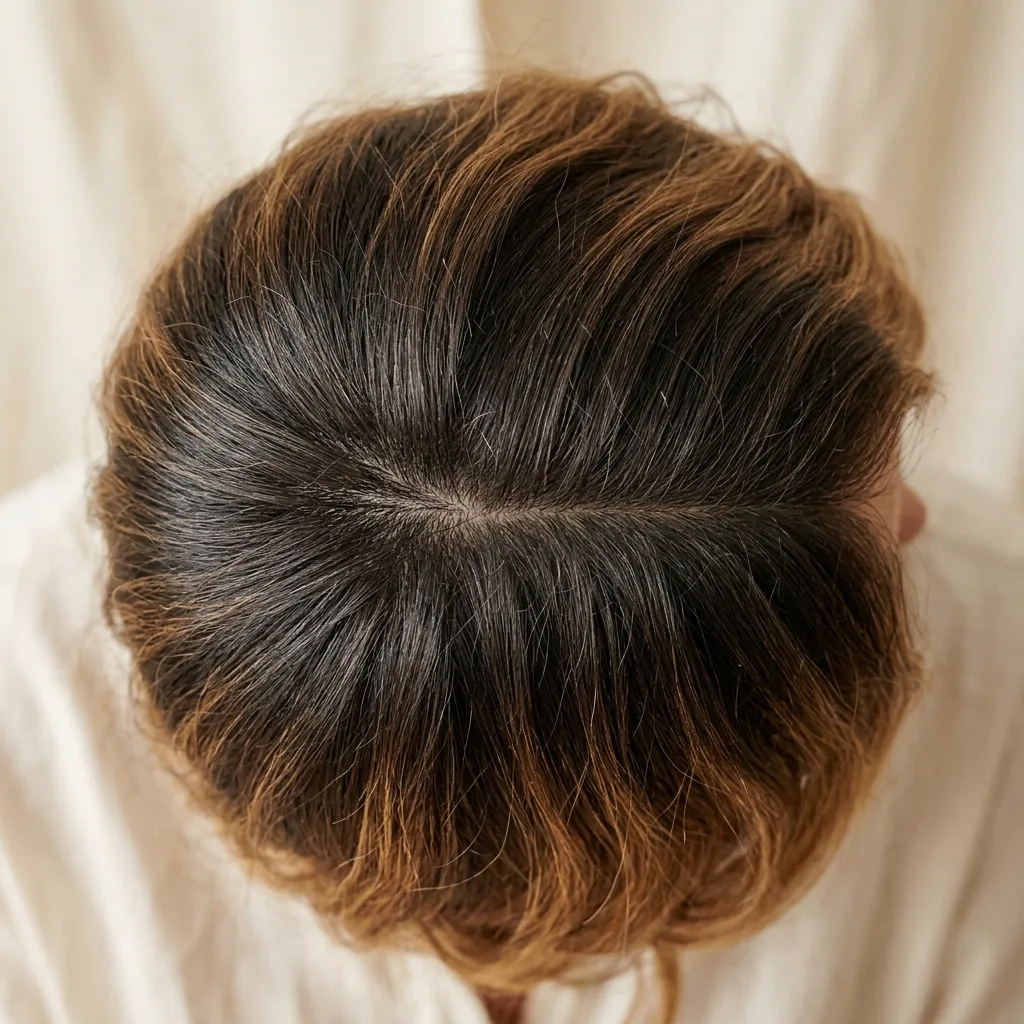
Vibe: Effortless, forgiving of a few missed salon appointments.
Why it works: A root stretch deliberately leaves 2–3 inches of natural root color visible before blending into lighter lengths, which reduces contrast at the single highest-visibility zone on the head, the scalp rather than trying to eliminate that contrast through frequent touch-ups. This is the opposite strategy from a root smudge in degree only: a root stretch tolerates more visible natural color for a longer stretch between appointments, while a smudge softens a shorter zone more frequently.
How to get it: Ask specifically for a “shadow root” stretch, ideal if you’re extending appointments to every 4–5 months rather than every 6–8 weeks. This technique works best on clients whose natural root color is reasonably close in depth to their lightened lengths a Level 5 natural root growing into Level 7–8 lengths blends far more gracefully than a Level 3 root into Level 9 lengths.
Shop The Look
| Product |
| Shadow root touch-up powder |
| Dry shampoo tinted brunette |
| Scalp massaging brush applicator |
| Root cover-up mascara stick |
| Wide-tooth shower detangler comb |
10. Cinnamon Spice Winter Warmth
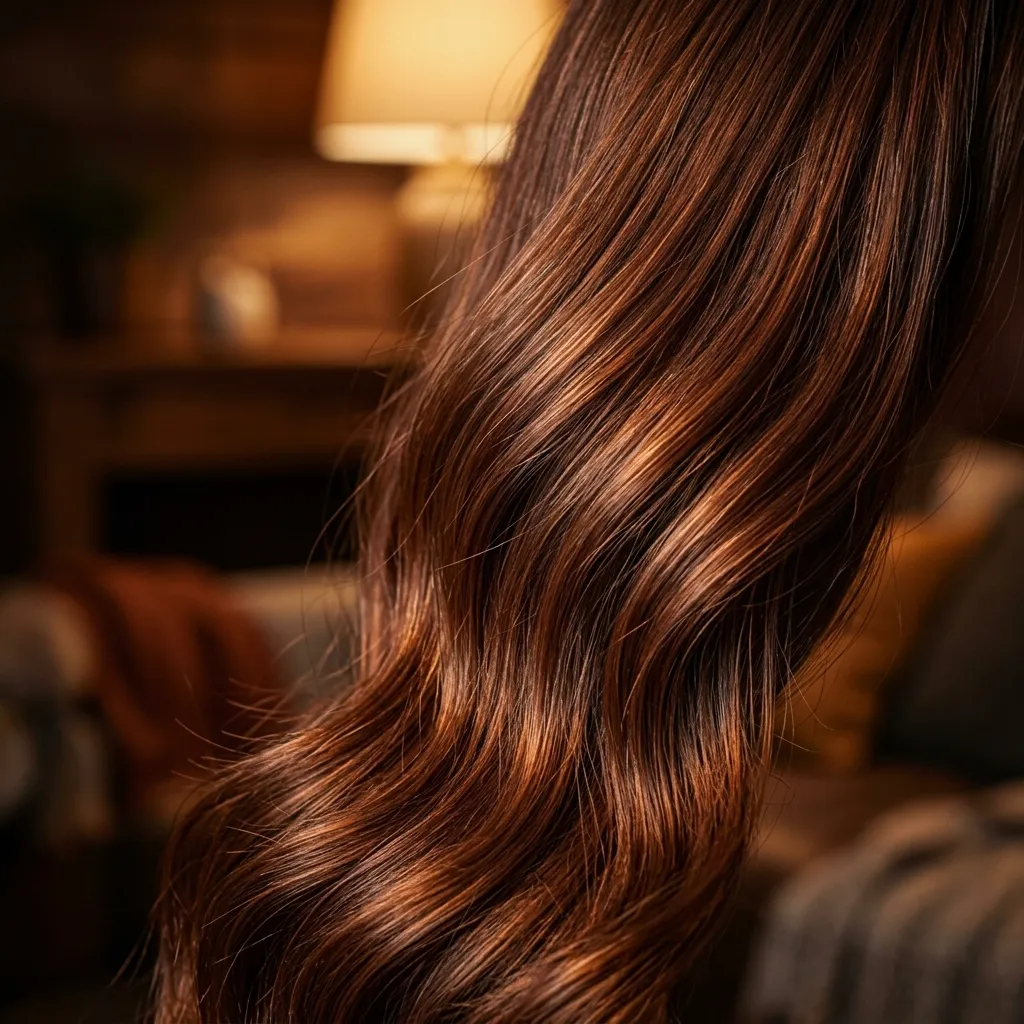
Vibe: Spiced and cozy, a step warmer than a flat cool brunette without tipping into brassy.
Why it works: Cinnamon toning adds red-orange pigment in a controlled, low ratio against a dominant brown base colorists typically mix at roughly a 90/10 ratio of neutral brown to red-gold which is the specific proportion that reads as “warm and spiced” rather than uneven or brassy. Uncontrolled brassiness happens when warm pigment surfaces unevenly as color fades; a true cinnamon formula applies that warmth intentionally and evenly from the start.
How to get it: Ask your colorist for a cinnamon-brown demi-permanent, and specifically request they hold the red-gold ratio low rather than heavy. This is the detail that separates a sophisticated cinnamon tone from an accidental brassy one. It’s a strong option if you already run warm and want to lean into it for winter rather than fight it with a cool corrector.
Shop The Look
| Product |
| Cinnamon brown demi-permanent dye |
| Copper-brown color depositing mask |
| Argan heat protectant leave-in |
| Warm-tone dry oil spray |
| Terracotta hair tie set |
11. Face-Framing Contour Highlights
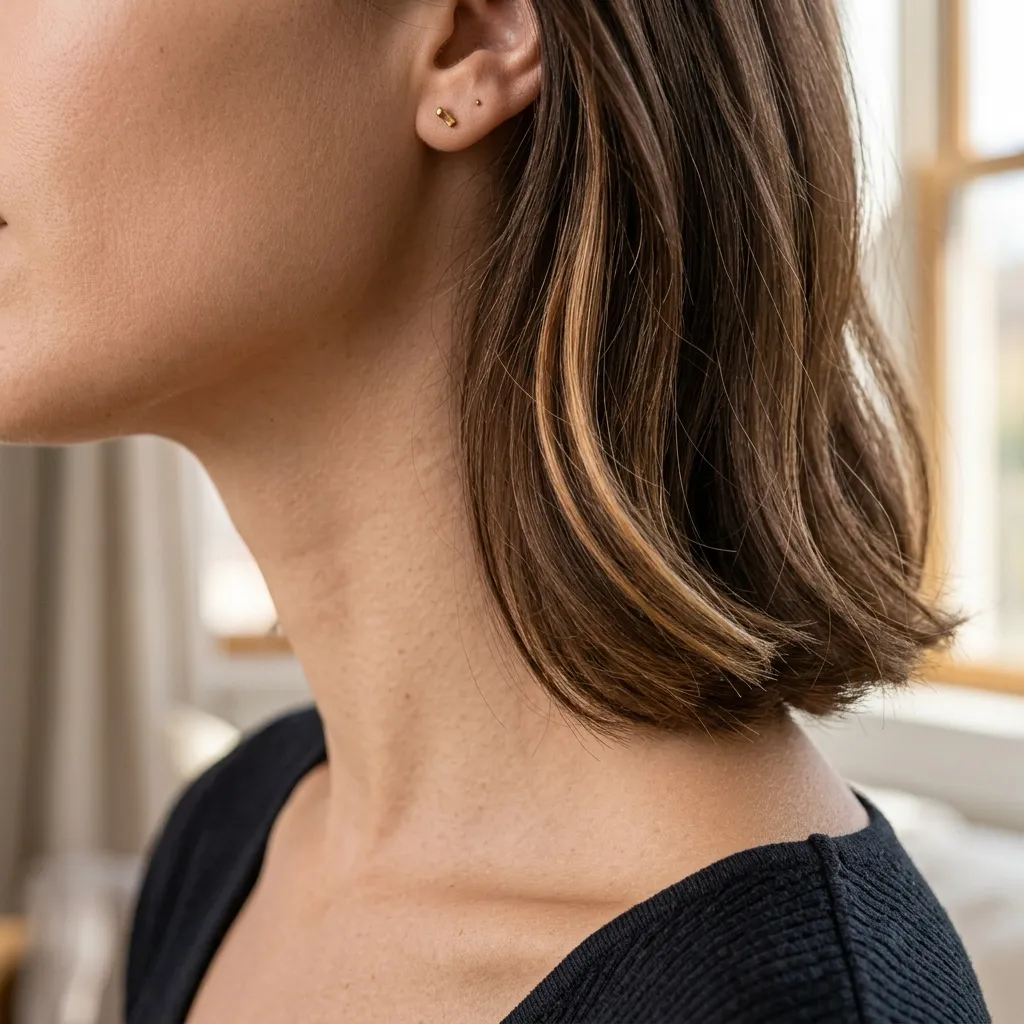
Vibe: Sculpted and intentional, drawing the eye toward the face rather than spreading light evenly across the whole head.
Why it works: Contour highlighting places lighter foils specifically along the jawline and cheekbone area the same visual-weight principle used in makeup contouring, where light draws the eye forward and darker surrounding tone recedes. Placed correctly, two or three well-positioned foils do more for how a face reads in photos than a full head of highlights spread evenly, because the contrast is concentrated exactly where the eye already goes first.
How to get it: Ask for two to three face-framing foils placed specifically along your jawline, toned two shades lighter than your overall base. This is a genuinely low-commitment service. Most colorists can do it as an add-on to an existing appointment in 20–30 minutes.
💡 Quick Win: Clip-in highlight extensions in a matching tone let you test the placement and see how it photographs before committing to it permanently at the salon.
Shop The Look
| Product |
| Clip-in face-framing highlight extensions |
| Small precision foil sheets |
| Jawline curling wand 3/4-inch |
| Brunette-blonde blending toner |
| Edge-smoothing styling gel |
12. Compact Color: One-Process Brunette Refresh
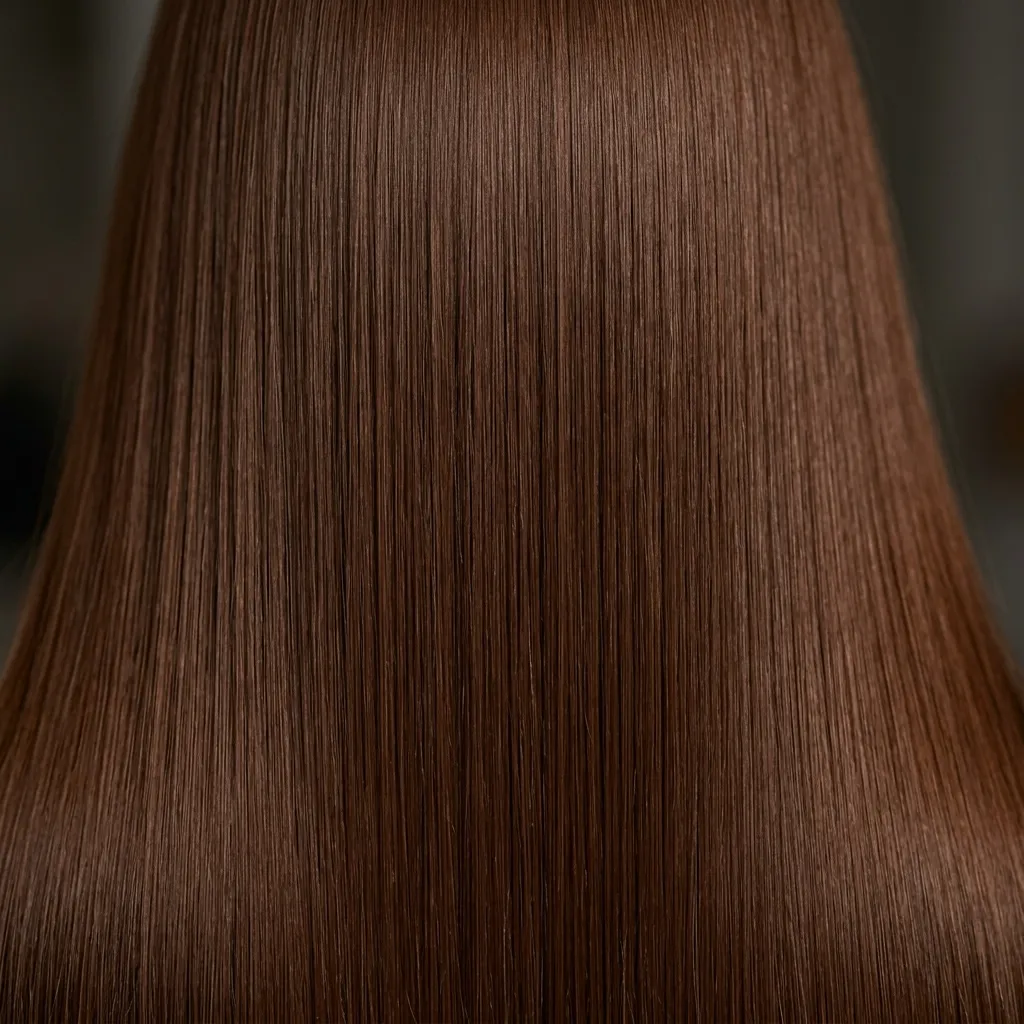
Vibe: Simple and quiet, a single tone rather than dimensional highlight-and-lowlight work.
Why it works: A one-process color a single permanent shade applied all-over with no highlights or lowlights reduces both salon time and visual complexity, which suits shorter cuts and finer hair where multiple competing tones can read as busy rather than dimensional on a smaller total surface of hair. It’s also the lowest-maintenance option on this list by a wide margin, since there’s no blending zone to manage as it grows out.
How to get it: Choose a single permanent shade within one level of your natural color rather than requesting any highlights. This keeps upkeep to a single root touch-up every 6–8 weeks with zero color-blending required in between. It’s a strong default option if you’re coming off a period of heavy highlighting and want a full reset before starting a new dimensional plan later.
Shop The Look
| Product |
| Permanent one-step brunette hair dye |
| Color-safe conditioning mask single-process |
| Root touch-up applicator brush kit |
| Fade-resistant color-lock shampoo |
| Compact travel-size gloss treatment |
How to Start Your Seasonal Brunette Color Transformation
Your single first move should be booking a consultation specifically for a gloss-and-toner test rather than jumping straight into a full color change. A colorist can hold a caramel or cool-chocolate swatch against your natural base and skin undertone in five minutes, which tells you more about whether a shade will actually work on you than any photo reference can, and it anchors every decision that follows, including which technique (balayage versus foiling) makes sense for your starting point.
The most common mistake is choosing a highlight or gloss shade based on the color alone, without accounting for your hair’s existing warmth level. Going cool-toned over hair that already runs warm produces a muddy, sometimes greenish cast; going warm-toned over naturally cool-based hair can look unintentionally brassy within a few weeks. The fix is a strand test (a small, hidden section colored first and checked 24–48 hours later) before any full-head application, which any reputable colorist will do without hesitation if you ask.
Three items under $50 that create real impact before your next salon visit: a caramel or cool-chocolate color-depositing conditioner ($15–28, K18 or Kristin Ess), a single-use clear glossing hair mask ($8–20, Redken or Olaplex No.3-adjacent gloss treatments sold retail), and a root touch-up powder in your closest match shade ($12–24, Color Wow or L’Oréal Root Rescue).
A full balayage or foilyage transformation typically runs 3–5 hours in-salon and costs $150–$400 depending on hair length, region, and salon tier. A simple gloss refresh runs under an hour and costs $40–$90. A weekend is enough time to see the result of a gloss or root smudge; a full dimensional balayage settles into its lowest-maintenance rhythm, meaning regrowth stops looking obvious, after about 3–6 months and two or three follow-up appointments.
Frequently Asked Questions About Summer and Winter Hair Colors for Brunettes
What’s the difference between summer and winter brunette hair color?
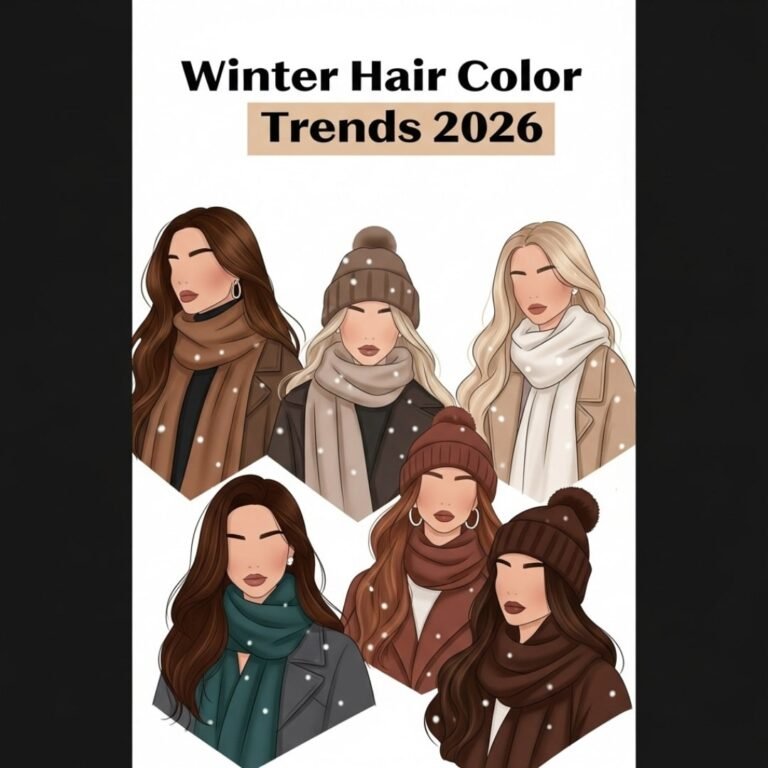
Summer brunette color leans warmer and lighter: caramel, honey, and toffee tones applied through balayage or babylights for sun-grown dimension that tapers from root to end. Winter brunette color leans cooler and deeper: espresso, mahogany, and cold-brew tones applied through root smudging or full foiling for saturated, even depth. The base brunette shade itself can stay identical year-round; only the toner formula and highlight placement shift with the season.
What hair color looks best on brunettes with warm skin undertones?
Caramel, honey, and cinnamon-brown tones typically flatter warm undertones best, because they echo the same golden-red pigment already present in warm-toned skin. A cool chocolate or ash-based tone can read slightly gray or dull against warm skin unless a colorist balances the formula carefully. A simple swatch test against your jawline in natural light, not salon fluorescent light, is the most reliable way to confirm before committing to a full application.
How much does seasonal brunette hair color typically cost?
A single-process root touch-up runs roughly $60–$120. Full balayage or foilyage with toner typically runs $150–$400 depending on length and salon tier. Maintenance glosses between full color appointments usually cost $40–$90 and are recommended every 6–8 weeks. At-home color-depositing conditioners and glosses extend results for $10–$28 per bottle, which is the cheapest way to stretch time between salon visits without letting tone fade flat.
Does seasonal brunette color work with curly or textured hair?
Yes. Balayage and babylights are particularly well-suited to curly and textured hair because hand-painting follows the natural curl pattern directly rather than sectioning against it with foils, producing dimension that reads clearly even when hair is worn curly rather than blown out straight. A root smudge also blends more forgivingly on textured hair, since the natural curl pattern already softens the visual line between root and length. Strand-test porosity before a full head, since color-treated curly hair can grab warm tones unevenly.
What’s the difference between balayage and highlights for brunettes?
Balayage is hand-painted directly onto the hair’s surface, producing a soft, graduated result that grows out with minimal visible line and typically needs touch-ups only every 10–12 weeks. Traditional foiled highlights use sectioned foils for more uniform, saturated color from root to tip, offering more consistent brightness overall but requiring more frequent root touch-ups, usually every 5–7 weeks. Most brunettes choose balayage for a lower-maintenance summer look and a foiled technique or full gloss for the more saturated depth associated with winter color.
Ready to Try Your Next Brunette Shade?
Between warm caramel balayage, cool cold-brew glazing, root smudges, and face-framing contour highlights, these 12 summer and winter hair colors for brunettes cover every technique, tone, and maintenance level on the spectrum, from a 20-minute add-on service to a full dimensional transformation. You don’t need to commit to a full color overhaul in one visit; a single gloss appointment or root touch-up is a legitimate, worthwhile place to start on its own.
Book a consultation this week and bring in a specific photo of the tone that caught your eye, rather than a general style description colorists work far more precisely from a reference image than from a verbal request. Whichever shade you land on, the goal is hair that still looks like you, just warmer through summer light and richer through winter light. Save your favorites now caramel for July, cold brew for January so you’re ready with the exact name of the technique when your next appointment rolls around.