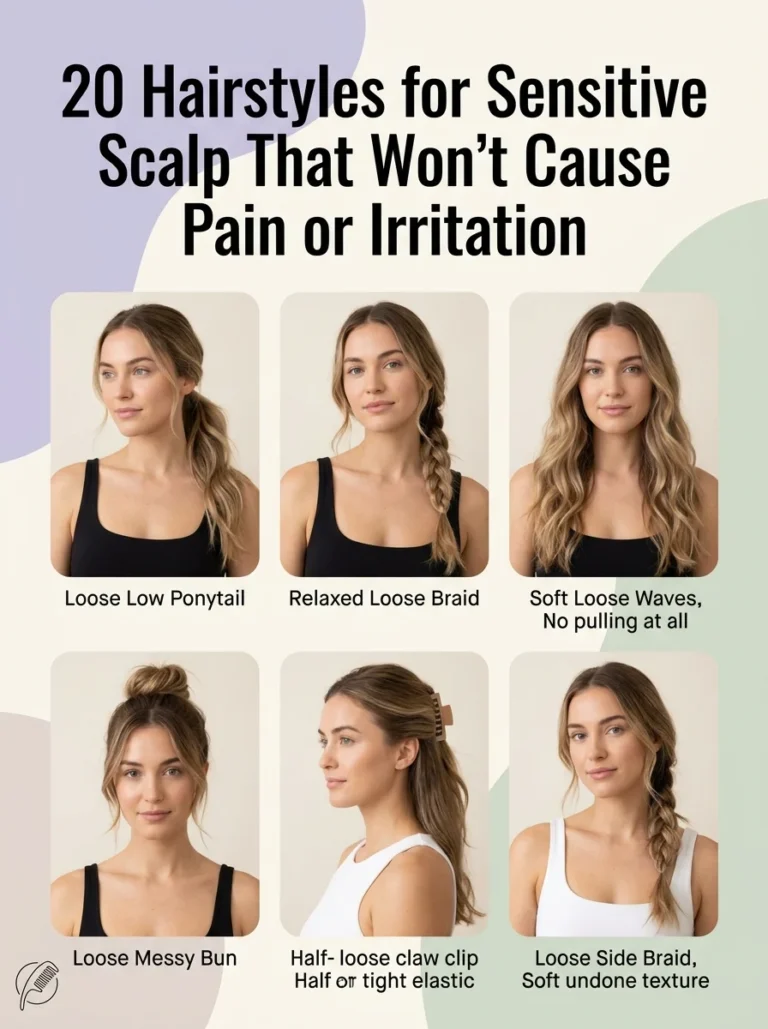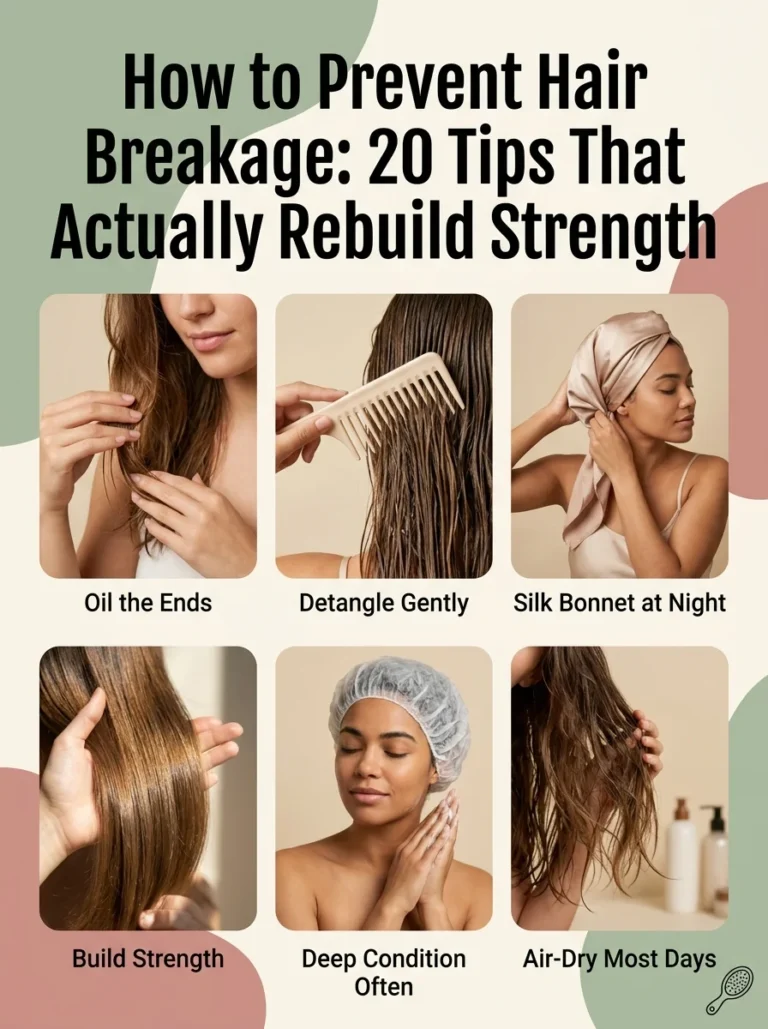
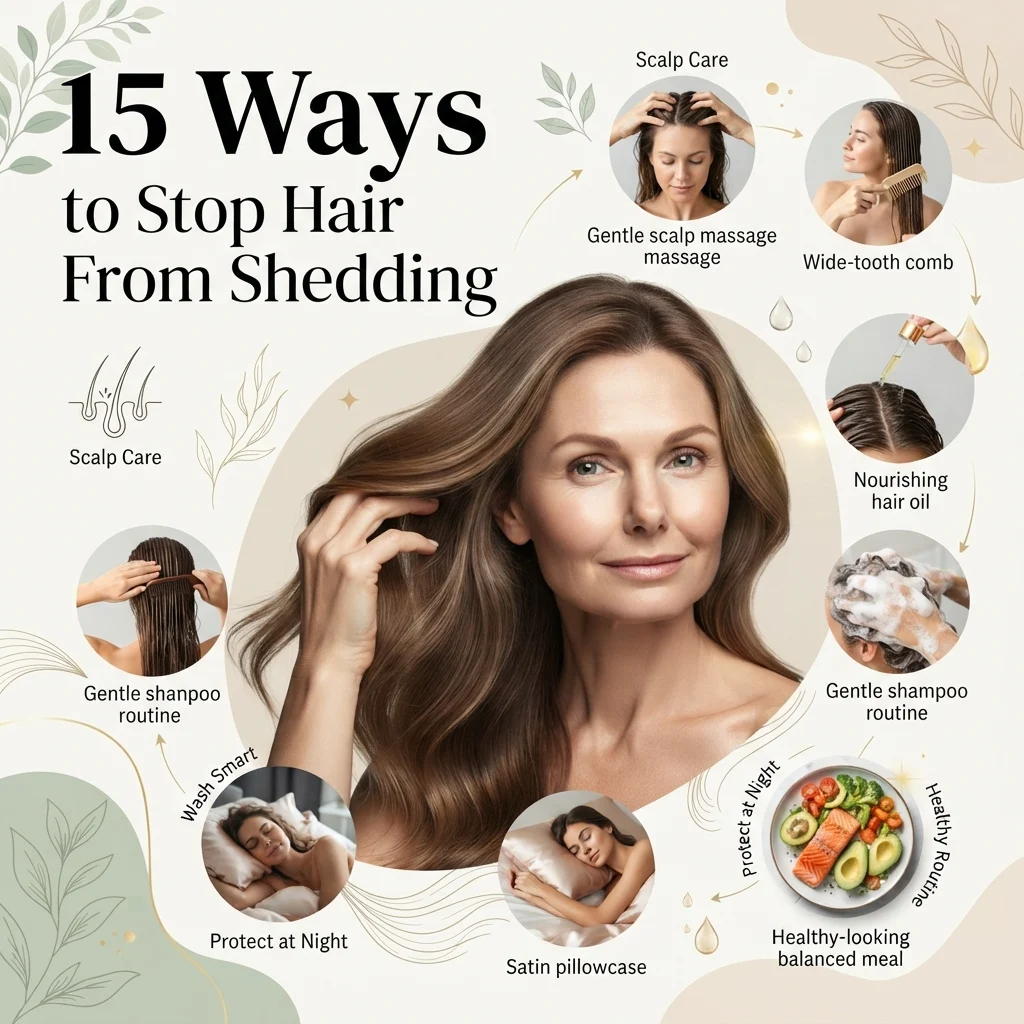
How to Stop Hair From Shedding: 15 Ways That Work

Your single first move is a nightly five-minute scalp massage with castor oil. It’s the one habit on this list that’s free of any waiting period for lab results, works regardless of what’s ultimately driving your shedding, and builds the consistency that every other tip here depends on to actually show results.
The most common mistake is starting minoxidil or an expensive supplement stack before ruling out a reversible cause like low ferritin or a thyroid issue. If the real driver is a nutrient deficiency, treatments aimed at the follicle itself won’t fix the underlying shortage, which means months pass with no real improvement and the cost adds up for nothing. Fix it by getting basic bloodwork done before investing heavily in any single product.
Three items under $50 make a real difference fast: a bottle of cold-pressed castor oil (around $10), a mulberry silk pillowcase (around $25–35), and a wide-tooth detangling comb (under $8). All three address different mechanisms: circulation, friction, and mechanical breakage at once.
Frequently Asked Questions About Hair Shedding
What’s the difference between normal hair shedding and hair loss?
Normal shedding is losing 50–100 hairs a day as part of the natural growth cycle, and it’s usually diffuse and unremarkable day to day. Hair loss, particularly androgenetic alopecia, involves follicles gradually shrinking and producing visibly thinner hair over time rather than a temporary spike in shed hairs. If you’re noticing a widening part or thinning at the crown rather than just more hair in the brush, that pattern points toward loss rather than shedding.
Does hair dye or coloring cause hair shedding?
Coloring itself, especially bleach or repeated processing, weakens the hair shaft and increases breakage, but it doesn’t directly affect the follicle or trigger true telogen shedding the way stress or a nutrient deficiency can. The distinction matters for fixing it: breakage from color damage is addressed with protein treatments and reduced processing frequency, not the scalp-focused approaches used for follicle-driven shedding.
How much does it cost to treat hair shedding?
A basic starter routine (castor oil, a silk pillowcase, and a wide-tooth comb) runs $30–60 total. Adding OTC minoxidil and a supplement like biotin and vitamin D brings a monthly cost to roughly $25–45. A full dermatology workup with bloodwork typically costs $150–400 depending on insurance coverage, though many insurance plans cover it under a general hair loss evaluation.
Do these tips work for postpartum hair shedding specifically?
Yes, postpartum shedding is a textbook case of telogen effluvium triggered by the hormonal drop after delivery, and it typically resolves on its own within six to twelve months without any treatment at all. The scalp massage, gentle detangling, and stress-reduction tips in this list can support the process and reduce breakage in the meantime, but minoxidil generally isn’t necessary for postpartum shedding since it’s expected to self-resolve.
Does minoxidil really stop hair shedding?
Minoxidil has strong clinical trial support for extending the hair growth phase and increasing follicle size, and it works for both pattern thinning and some cases of chronic shedding, though it typically causes a temporary increase in shedding during the first two to six weeks as old hairs get pushed out to make room for new growth. Results generally require at least four months of consistent daily use, and shedding tends to return if the product is stopped.
Ready to Get Your Hair Shedding Under Control?
Across these 15 tips, you’ve got nutrition fixes like checking ferritin and adding protein, scalp-focused habits like massage and exfoliation, and mechanicHair shedding is the normal loss of hairs that have finished their growth cycle, and it becomes a concern only when it exceeds the typical 50–100 strands a day or shows up in visible clumps. This guide gives you 15 ways to stop hair from shedding (covering diet, scalp care, styling habits, and topical treatments) with the exact method, timing, and product behind each one, so you’re working with your hair’s actual growth cycle instead of guessing.
Excess shedding rarely has one single cause, which is why chasing a single miracle shampoo so often falls flat. It’s usually a layered response to stress, nutrient gaps, styling tension, or a hormonal shift working itself out over months, not days. The tips below work together rather than as isolated fixes, and they’re built around what actually happens inside a hair follicle during shedding, not just what sounds good on a label. Here are 15 tips worth saving, and using today.
Why This Approach to Hair Shedding Works
Hair shedding, medically known as telogen effluvium when it spikes noticeably, happens when a larger-than-usual share of follicles shift into the resting (telogen) phase at once and release their hairs two to three months later, which is why a stressful event, illness, or diet change often shows its effect on your hairbrush months after it happened, not immediately. This is distinct from androgenetic alopecia (pattern hair loss), which involves follicles gradually shrinking and producing thinner hair over time rather than a temporary mass release; shedding is usually reversible, thinning from pattern loss is progressive without treatment.
The tools and ingredients that make a real difference are specific rather than general. Nutritionally: ferritin (stored iron), vitamin D, and adequate protein are the three levels most frequently found low in people with active shedding, and biotin only helps in the rare case of an actual biotin deficiency. Topically: minoxidil (2% or 5% solution or foam) is the only OTC ingredient with strong clinical backing for regrowth, while caffeine-infused shampoos and castor oil support scalp circulation with more modest, supportive evidence. Mechanically: silk pillowcases, wide-tooth combs, and low-tension styles reduce breakage that gets miscounted as shedding.
Interest in hair shedding has climbed steadily since 2021, largely driven by widespread postpartum and post-illness shedding documented on TikTok and Reddit’s hair-loss communities, plus a broader wellness shift toward treating hair health as a whole-body issue rather than a purely cosmetic one. Search interest for “why is my hair falling out” consistently spikes three to four months after flu season and after typical postpartum timelines, matching the delayed biology of telogen effluvium almost exactly.
Nearly anyone can start this approach regardless of hair type or budget, with one honest limit: sudden, patchy, or rapidly progressing hair loss (as opposed to gradual, diffuse shedding) needs a dermatologist’s evaluation before home fixes, since it can signal alopecia areata, thyroid dysfunction, or another condition that home care alone won’t resolve.
| Element | Approach to Stopping Hair Shedding |
| Philosophy | Address the layered causes together (nutrition, scalp health, and mechanical stress) rather than chasing one product |
| Core Tools | Silk pillowcase, wide-tooth comb, scalp massage tool, boar bristle brush |
| Key Ingredients | Minoxidil, caffeine, castor oil, ferritin-supporting iron, biotin (only if deficient) |
15 Ways to Stop Hair From Shedding
1. Add a Daily Biotin and Collagen Combo
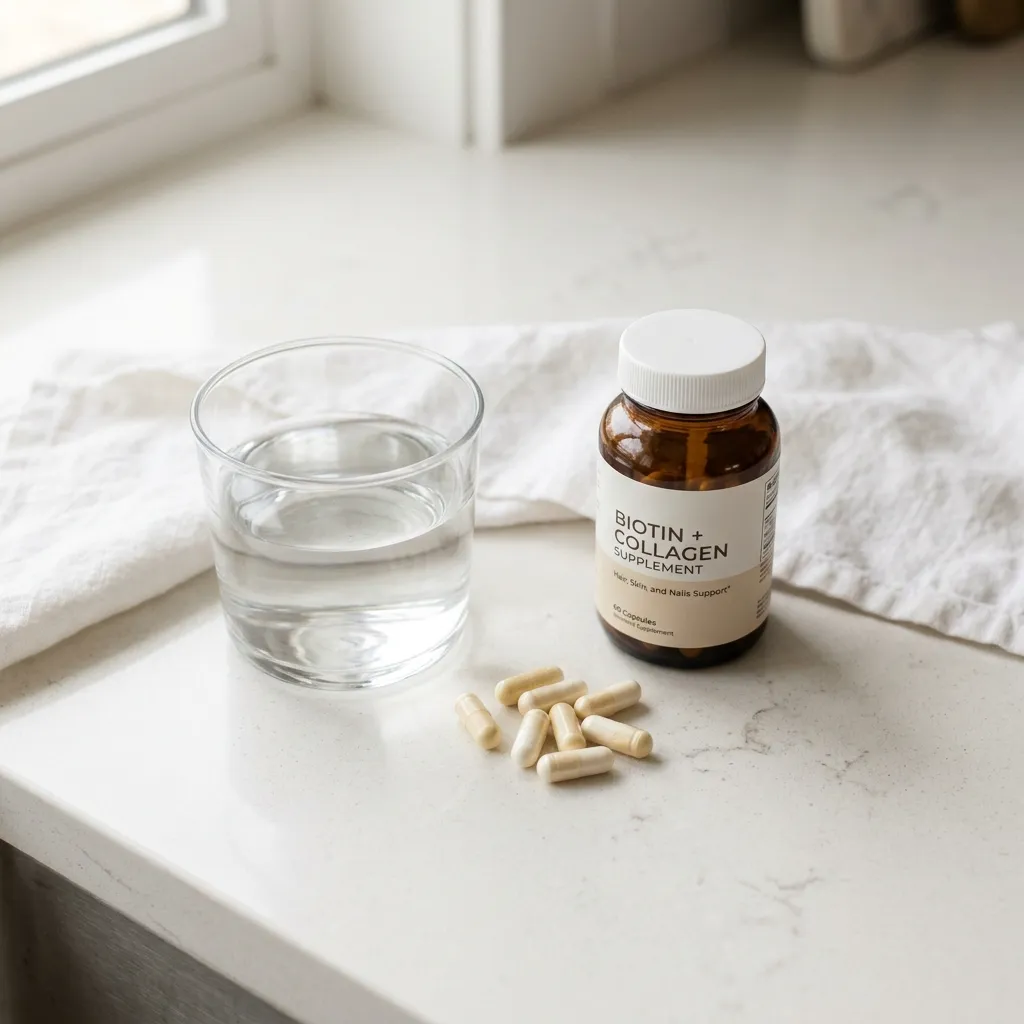
Vibe: Grounded, like a small daily habit doing quiet work.
Why it works: Biotin supports keratin production, the protein hair is largely made of, but it only produces a noticeable difference in shedding when someone has an actual biotin deficiency, which is relatively uncommon outside of specific diets or malabsorption issues. Collagen provides amino acids that overlap with keratin’s building blocks, which is why the two are frequently paired, though collagen’s direct effect on shedding specifically has weaker research support than its effect on skin.
How to get it: Take a combined biotin (2,500–5,000 mcg) and collagen peptide supplement daily with food, and give it a full 3-month cycle before judging results, since that’s roughly how long a hair follicle needs to complete a growth phase and show visible change.
💡 Quick Win: A collagen peptide powder that dissolves in coffee is an easier daily habit to stick with than a second pill to remember.
Shop The Look
| Product |
| Biotin 5000mcg supplement capsules |
| Collagen peptide powder, unflavored |
| Weekly pill organizer |
| Glass water bottle with time markers |
| Supplement tracking journal |
2. Weekly Scalp Massage with Castor Oil
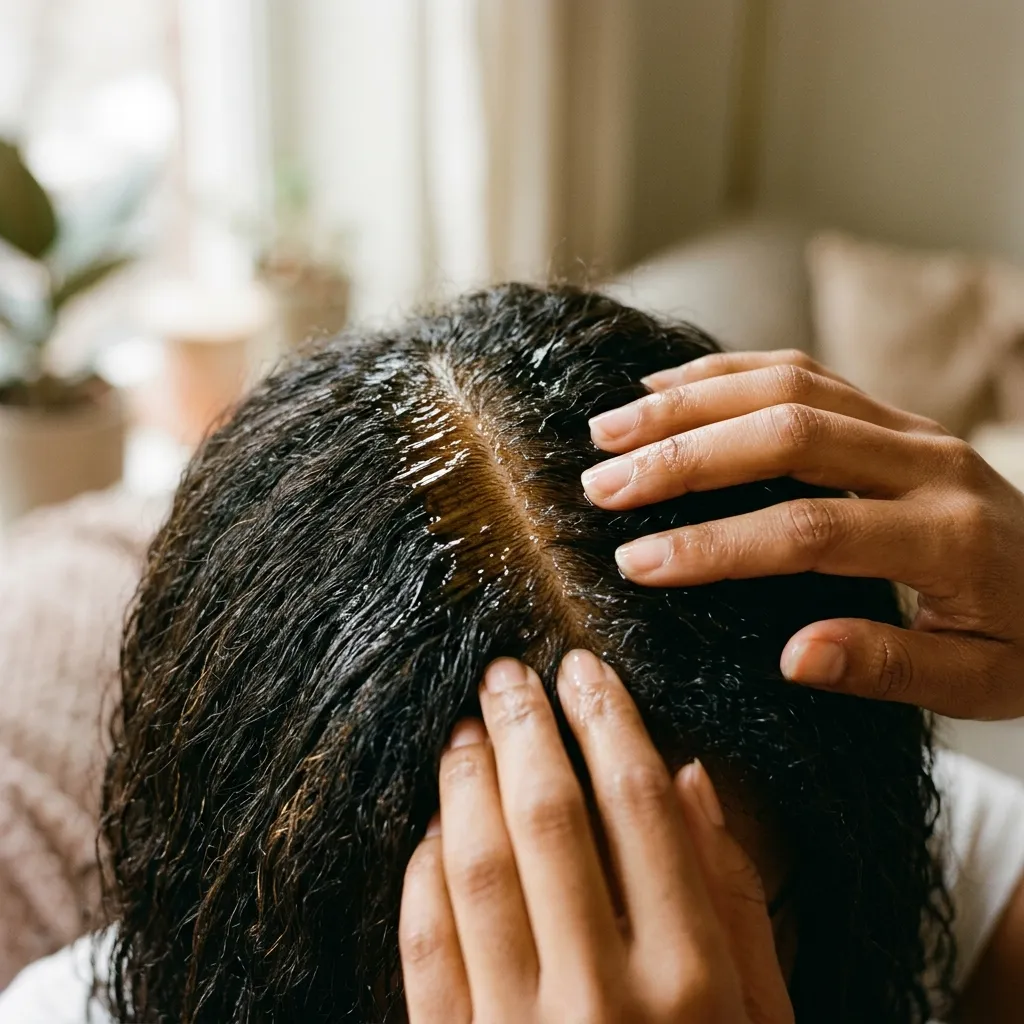
Vibe: Still, like the whole scalp finally gets a moment of attention.
Why it works: Massage increases local blood flow to the scalp, which theoretically delivers more oxygen and nutrients to hair follicles, and small clinical studies have shown modest improvements in hair thickness with regular scalp massage alone, independent of any oil used. Castor oil’s role is more about lubrication for a longer, more thorough massage and its ricinoleic acid content, which has some anti-inflammatory properties, rather than a direct shedding-stopping effect on its own.
How to get it: Warm a tablespoon of castor oil between your palms, apply it to the scalp in sections, and massage in small circular motions with your fingertips (not nails) for five to ten minutes, once or twice a week, leaving it on for at least 30 minutes before washing out.
Shop The Look
| Product |
| Cold-pressed castor oil |
| Silicone scalp massager tool |
| Wide-tooth detangling comb |
| Old towel for oil treatments |
| Clarifying shampoo for oil removal |
3. Switch to a Silk or Satin Pillowcase
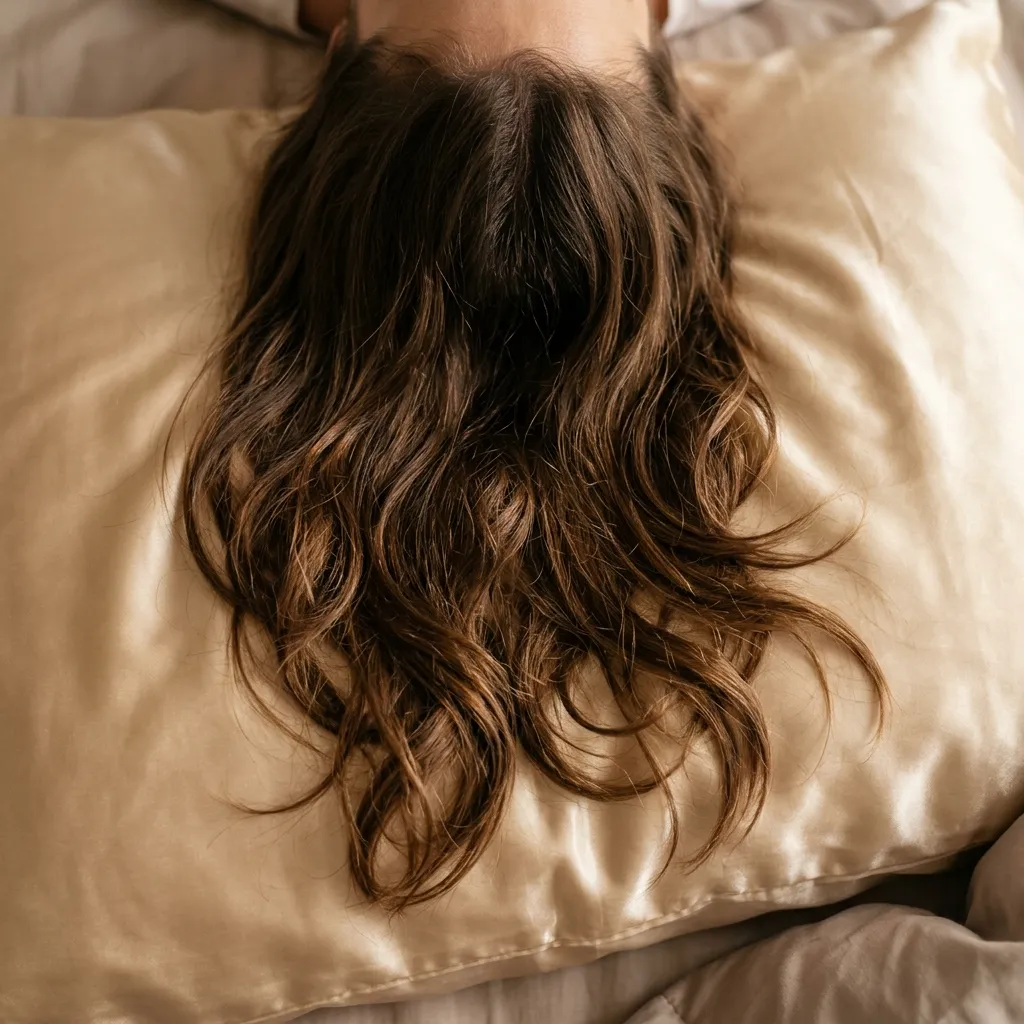
Vibe: Hushed, like the hair gets to rest instead of fight the fabric all night.
Why it works: Cotton pillowcases have a rougher fiber surface that creates friction against hair as you move in your sleep, which increases mechanical breakage. Hair that snaps off due to friction gets counted as “shed” hair even though it’s a different mechanism than follicle-cycle shedding. Silk and satin have a smoother fiber surface, so hair glides rather than catches, which measurably reduces the number of broken strands found on pillows and in hairbrushes over a few weeks of use.
How to get it: Replace a standard cotton pillowcase with a mulberry silk or satin one (19–22 momme silk holds up better through washing than lower-grade options), and wash it weekly on a gentle cycle to keep the fiber smooth.
💡 Quick Win: A silk hair bonnet or scarf works as a cheaper alternative if a full pillowcase isn’t in the budget yet.
Shop The Look
| Product |
| Mulberry silk pillowcase, 19 momme |
| Silk hair bonnet |
| Satin-lined hair scarf |
| Gentle wool dryer laundry bag |
| Silk-safe laundry detergent |
4. Check Your Iron and Vitamin D Levels
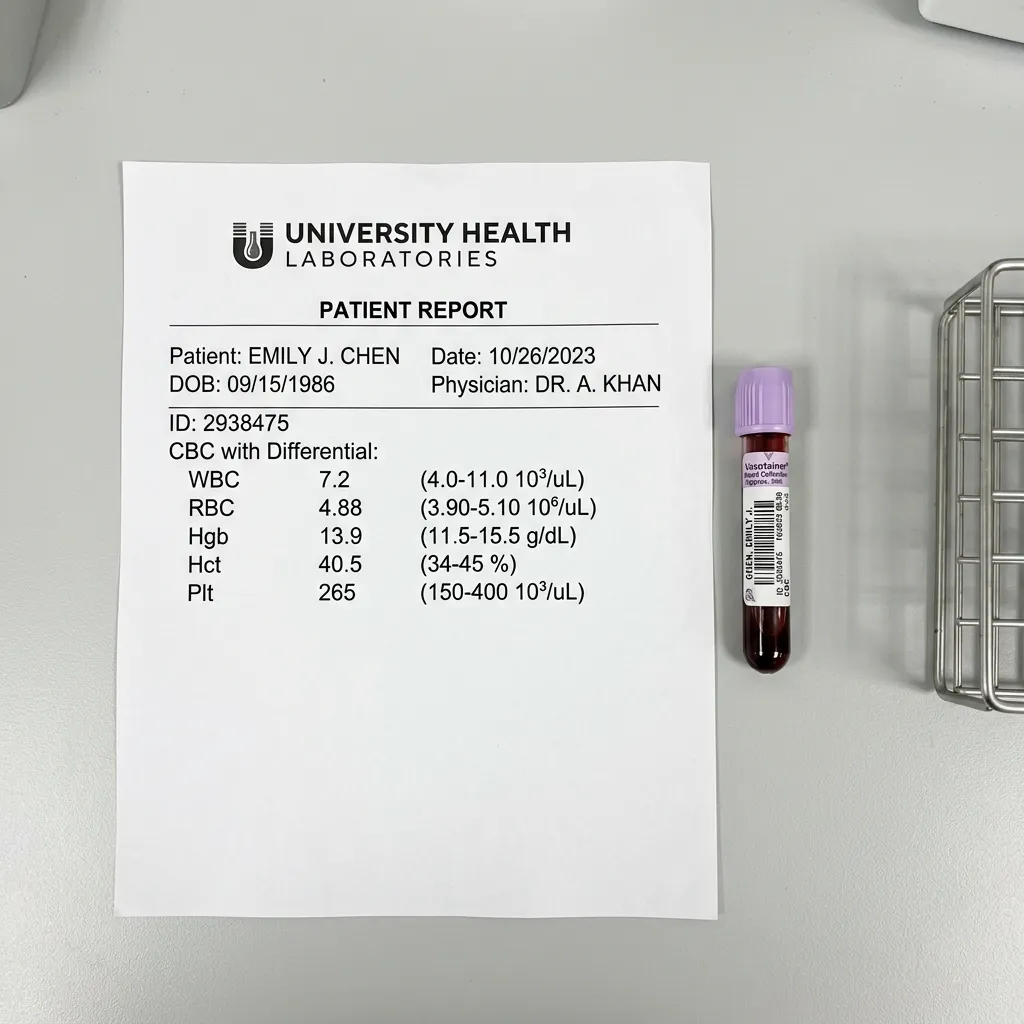
Vibe: Grounded, like finally getting an actual answer instead of a guess.
Why it works: Low ferritin (stored iron) is one of the most common, most overlooked causes of diffuse shedding, particularly in menstruating women, and it can be low enough to affect hair well before it’s low enough to cause standard anemia symptoms, meaning a normal hemoglobin test doesn’t rule it out. Vitamin D deficiency is separately linked to disrupted hair follicle cycling, and both are correctable with the right dose once identified through bloodwork rather than guessed at with an over-the-counter multivitamin.
How to get it: Ask your doctor specifically for a ferritin test (not just standard iron panels, which can miss it) and a 25-hydroxy vitamin D test, then supplement only the ones that come back low, at the dose your doctor recommends based on your actual results.
Shop The Look
| Product |
| At-home ferritin test kit |
| Vitamin D3 supplement (as directed by doctor) |
| Iron supplement with vitamin C (as directed) |
| Symptom and diet tracking journal |
| Reusable water bottle for medication reminders |
5. Try an OTC Minoxidil Treatment
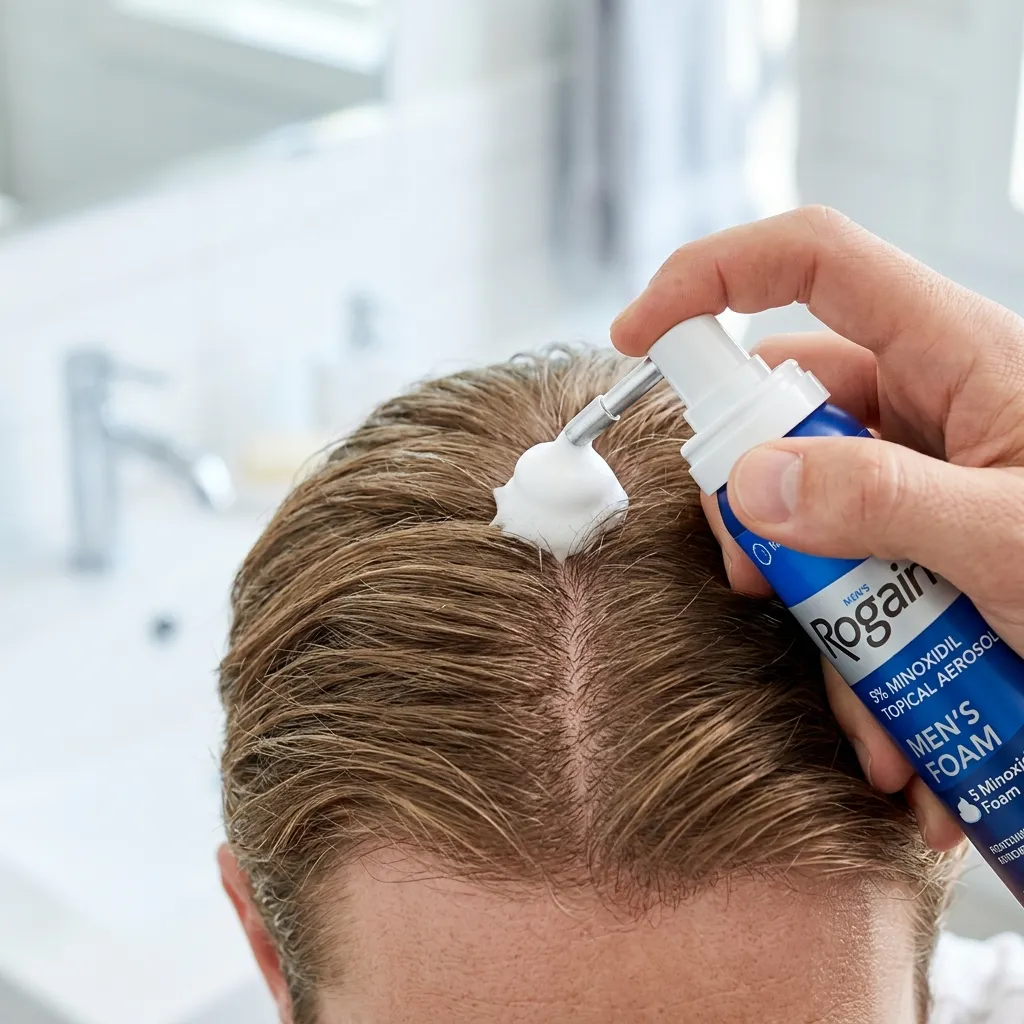
Vibe: Steady, like a routine building toward something measurable.
Why it works: Minoxidil is the only over-the-counter ingredient with strong, repeated clinical trial evidence for extending the hair growth phase and increasing follicle size, and it works regardless of the shedding’s underlying cause, which is why dermatologists recommend it broadly. It typically causes a temporary increase in shedding during the first two to six weeks as resting follicles get pushed out to make room for new growth, an expected, temporary phase, not a sign it’s failing.
How to get it: Apply the 5% foam or solution once daily directly to a dry scalp (not damp hair) in the areas of concern, and commit to at least four months of consistent daily use before evaluating results, since that’s the minimum timeframe clinical trials use to measure meaningful change.
💡 Quick Win: Setting a recurring phone reminder at the same time each day is the single biggest factor in whether people stick with minoxidil long enough to see results.
Shop The Look
| Product |
| Minoxidil 5% foam, unscented |
| Scalp applicator comb for precise application |
| Phone-stand mirror for scalp visibility |
| Daily use tracking calendar |
| Sulfate-free shampoo for sensitive scalp |
6. Exfoliate Your Scalp Monthly
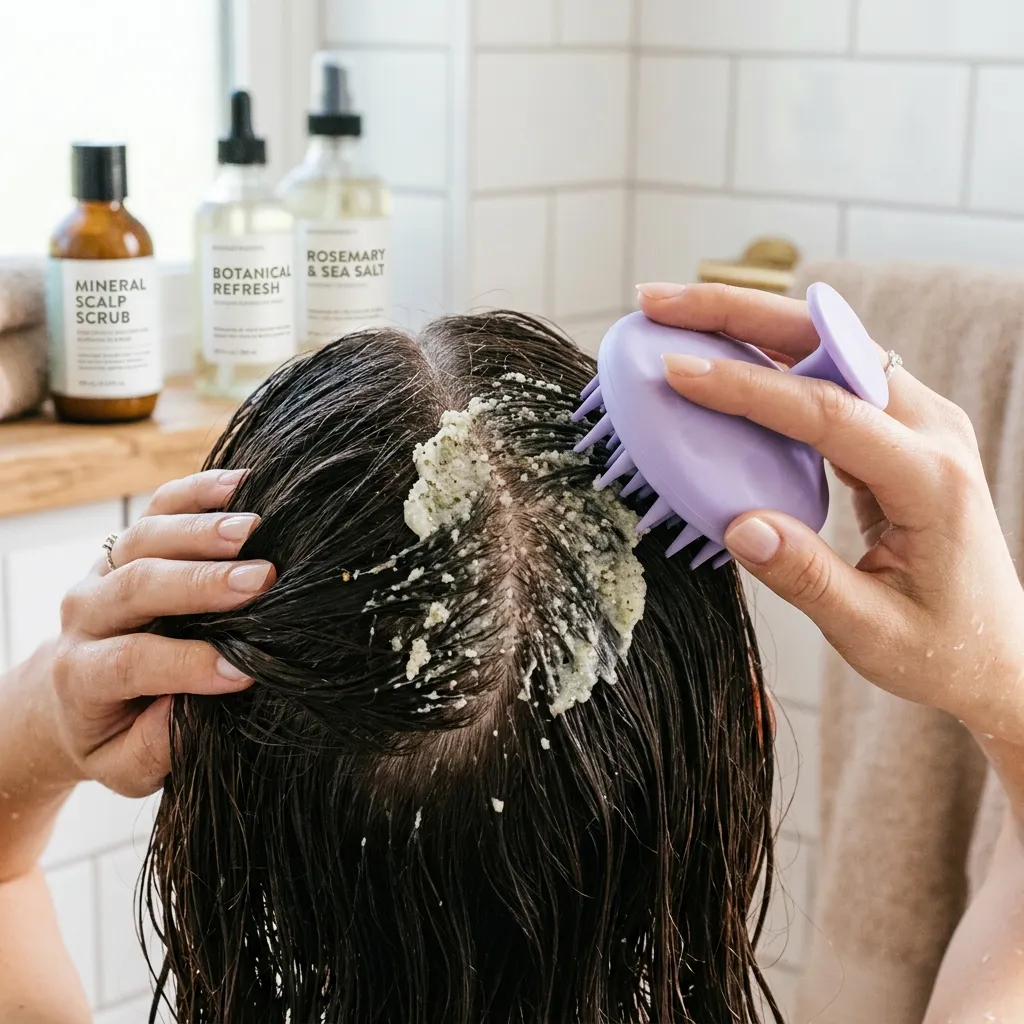
Vibe: Fresh, like clearing space for something new to grow.
Why it works: Product buildup, excess oil, and dead skin can accumulate around the follicle opening over time, and while this doesn’t directly cause shedding, a clogged, inflamed scalp environment is a less favorable one for healthy growth cycling. A gentle exfoliating treatment breaks up that buildup mechanically, similar to how facial exfoliation clears pores, without the daily stripping that harsher clarifying shampoos can cause if overused.
How to get it: Use a scalp scrub with fine, dissolvable exfoliating granules (not sharp physical beads) once every three to four weeks, massaging it in for two to three minutes before rinsing thoroughly, and skip it entirely if your scalp feels irritated or tight afterward.
Shop The Look
| Product |
| Gentle scalp exfoliating scrub |
| Soft-bristle scalp brush |
| Sulfate-free clarifying shampoo |
| Lightweight leave-in scalp serum |
| Microfiber hair towel |
7. Manage Chronic Stress with a Daily Wind-Down Routine

Vibe: Quiet, like the nervous system finally gets permission to slow down.
Why it works: Chronic stress raises cortisol, and elevated cortisol is one of the documented triggers for telogen effluvium, pushing more follicles than usual into the resting phase simultaneously, which shows up as noticeable shedding two to three months later. This is a delayed-effect mechanism, which is exactly why hair shedding often gets misattributed to whatever’s happening in the present moment rather than a stressful period from months earlier.
How to get it: Build one consistent, non-negotiable wind-down habit (10 minutes of journaling, a short walk, or a breathing exercise) done at the same time each evening, since consistency matters more for cortisol regulation than the specific activity chosen.
💡 Quick Win: A basic 4-7-8 breathing pattern (inhale 4 seconds, hold 7, exhale 8) done for five rounds before bed is free and takes under two minutes.
Shop The Look
| Product |
| Guided journal for stress tracking |
| Herbal sleep tea, caffeine-free |
| Dimmable bedside lamp |
| Weighted blanket for evening wind-down |
| Essential oil diffuser, lavender |
8. Loosen Your Ponytails and Braids

Vibe: Relaxed, like the hairline gets a break it didn’t know it needed.
Why it works: Tight, repeated tension at the hairline and temples causes traction alopecia, a specific type of hair loss from mechanical pulling rather than the follicle cycle itself, and it’s frequently mistaken for general shedding since the visible result, more hair coming out, looks similar. Unlike telogen effluvium, traction damage is preventable and often reversible if caught early, but can become permanent if the tension continues for years.
How to get it: Position ponytails and braids at the nape rather than high on the crown, where tension concentrates most on the hairline, and use a snag-free elastic rather than a standard rubber band, which grips and pulls at individual strands during removal.
Shop The Look
| Product |
| Snag-free elastic hair ties |
| Silicone-covered hair elastics |
| Wide-tooth comb for gentle styling |
| Edge-friendly styling gel, lightweight |
| Silk scrunchies, assorted |
9. Increase Protein Intake at Every Meal

Vibe: Grounded, like the body finally has enough raw material to work with.
Why it works: Hair is roughly 90% keratin, a structural protein, and when overall dietary protein intake drops too low, the body prioritizes protein for essential organ function over hair growth, which can trigger a shift into the shedding phase for a larger share of follicles at once. This is a documented cause behind shedding seen with crash diets, sudden vegetarian or vegan transitions without adequate protein planning, and restrictive eating patterns generally.
How to get it: Aim for a palm-sized portion of protein (eggs, fish, legumes, Greek yogurt) at each meal rather than concentrating it all at dinner, since the body uses dietary protein more efficiently when it’s spread across the day instead of one large dose.
💡 Quick Win: Adding a spoonful of Greek yogurt or a boiled egg to breakfast is the easiest single change for people who typically skip protein at that meal.
Shop The Look
| Product |
| Meal prep containers, portioned |
| Unflavored whey or plant protein powder |
| Kitchen food scale |
| Reusable snack containers |
| Simple protein-tracking app subscription card |
10. Use a Caffeine-Infused Shampoo
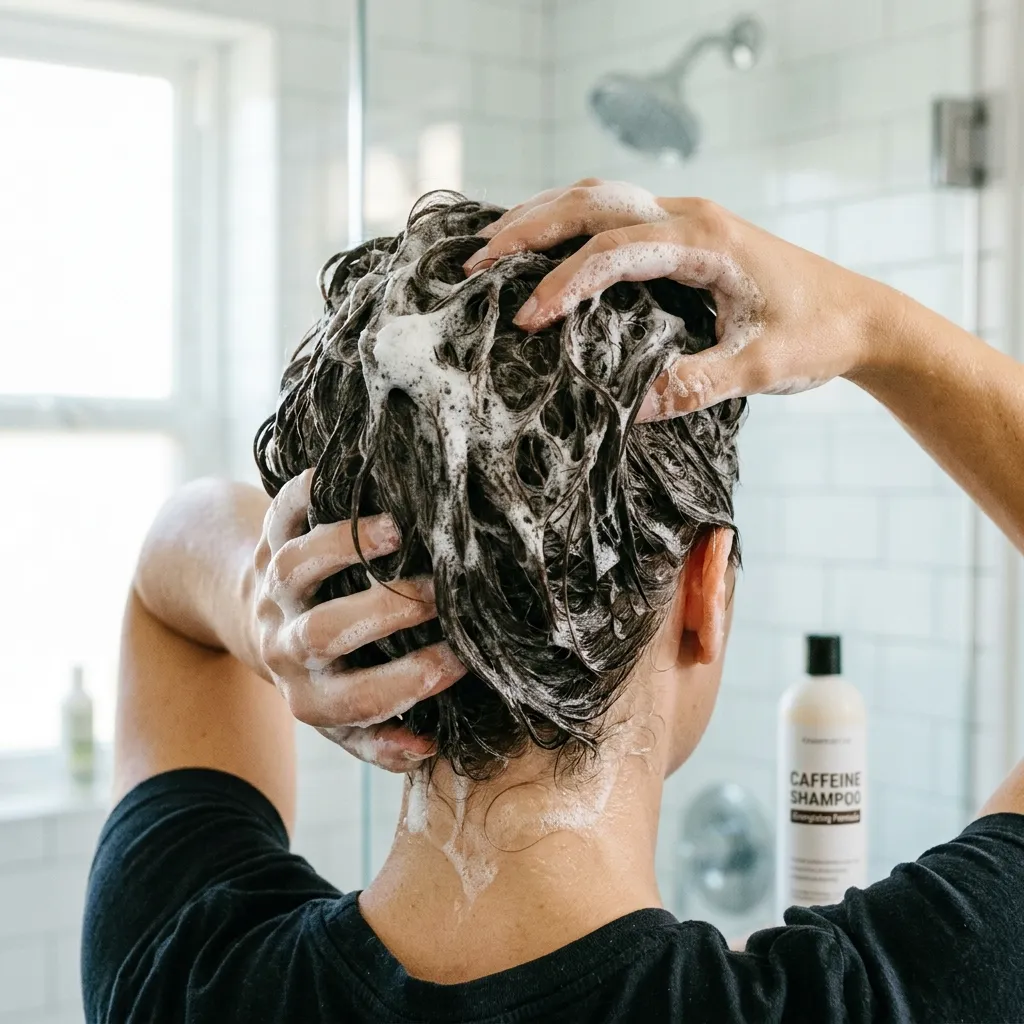
Vibe: Energized, like the roots are getting a small daily wake-up call.
Why it works: Laboratory studies suggest caffeine applied topically can penetrate the hair follicle and counteract some effects of DHT, the hormone linked to pattern thinning, though the evidence is more modest than minoxidil’s and comes largely from lab and small clinical settings rather than large trials. Its main practical value is as a low-effort, low-risk addition layered onto other treatments rather than a standalone fix.
How to get it: Use a caffeine-infused shampoo in place of a regular one, but leave it on the scalp for two to three minutes before rinsing rather than washing it out immediately, since contact time affects how much active ingredient can reach the follicle.
Shop The Look
| Product |
| Caffeine-infused shampoo |
| Caffeine scalp serum, leave-in |
| Wide-tooth comb for even distribution |
| Shower timer or waterproof clock |
| Sulfate-free conditioner, matching line |
11. Brush with a Boar Bristle Brush for Circulation
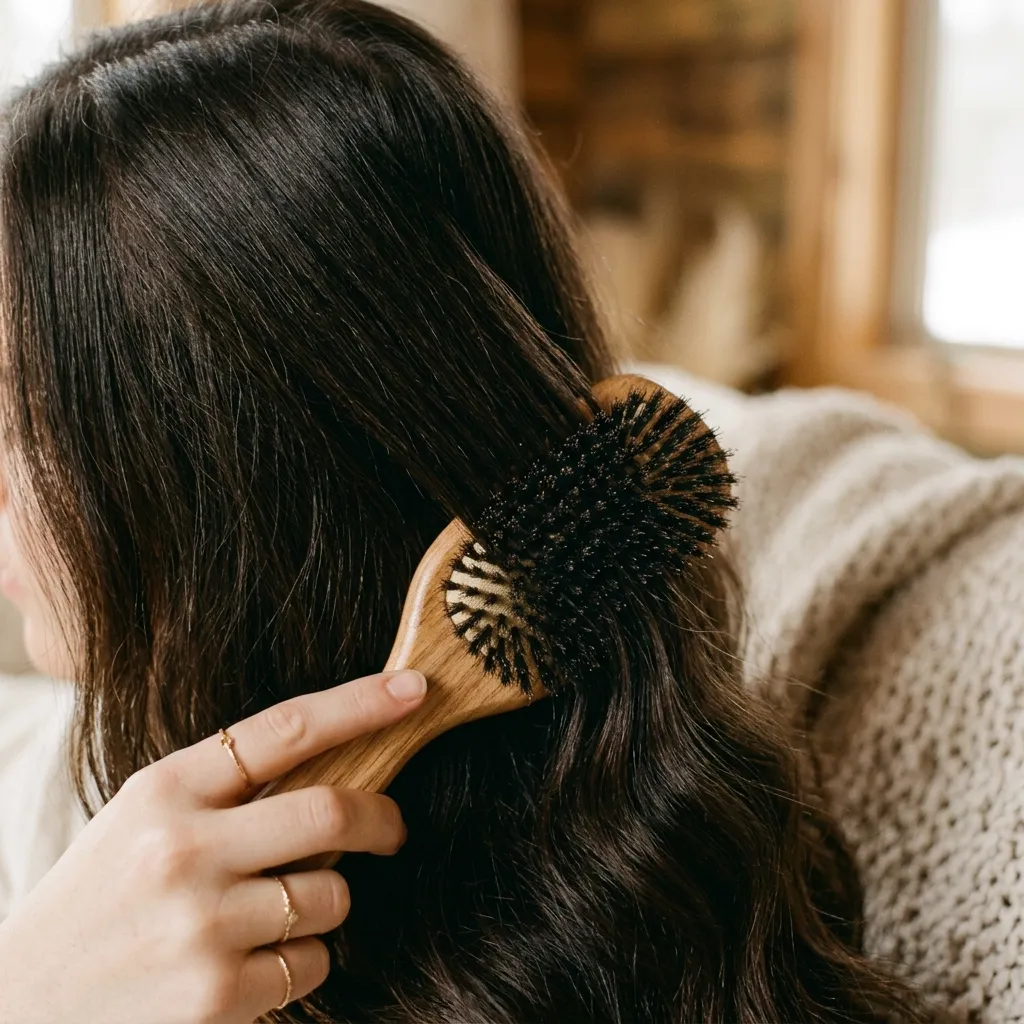
Vibe: Soothing, like a small daily ritual with a real function.
Why it works: Natural boar bristles are finer and more flexible than plastic ones, distributing the scalp’s natural oils down the hair shaft rather than leaving it concentrated at the roots, which is both a light massage action and a way to keep strands better lubricated against breakage. This is a maintenance habit rather than a treatment, but the daily brushing itself adds a small, consistent dose of scalp stimulation similar in mechanism to manual massage.
How to get it: Brush from root to tip in sections once daily, starting at the ends and working upward gradually to avoid pulling through tangles, which is what actually causes hair to snap during brushing rather than the bristle type itself.
Shop The Look
| Product |
| Boar bristle brush, wooden handle |
| Detangling brush for wet hair |
| Brush cleaning tool |
| Hair oil for pre-brush ends |
| Travel-size boar bristle brush |
12. Detangle Wet Hair with a Wide-Tooth Comb Only
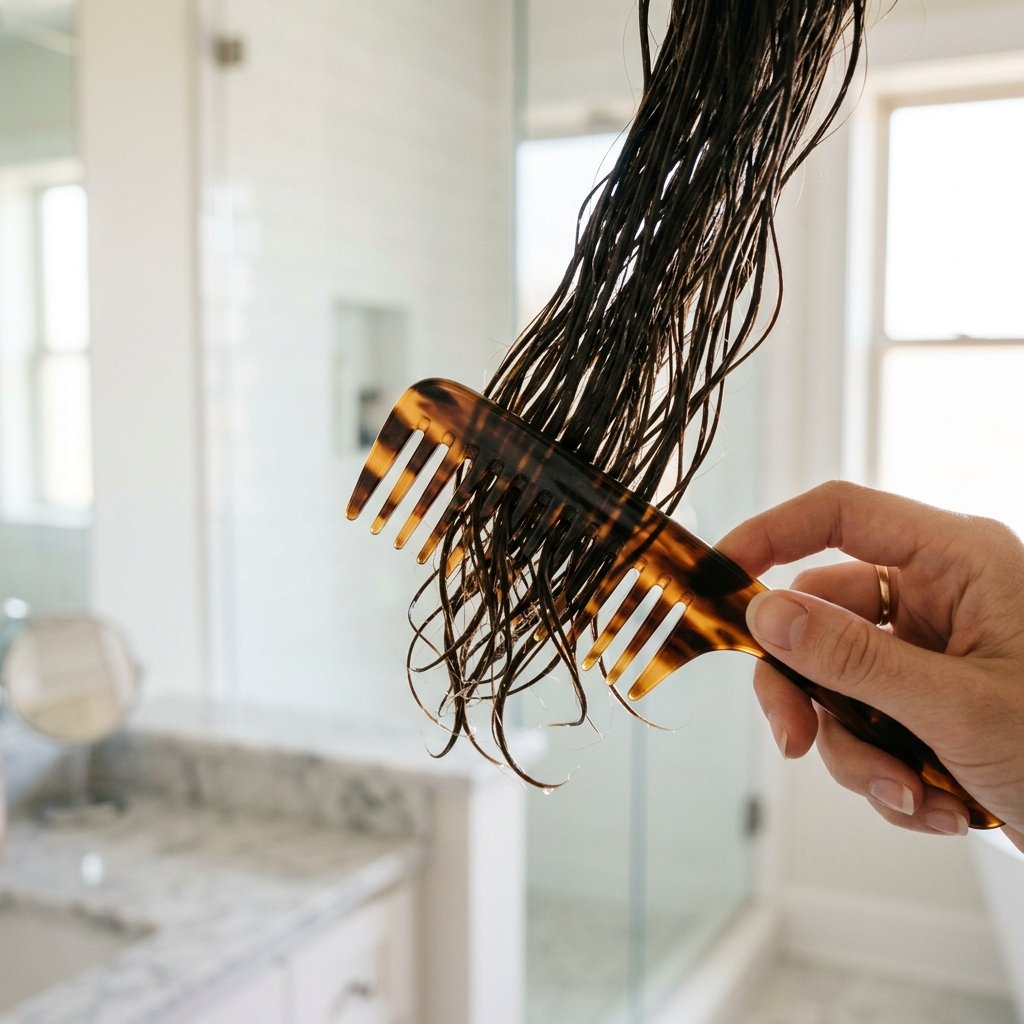
Vibe: Careful, like handling something that’s temporarily more fragile.
Why it works: Wet hair’s protein structure is temporarily weaker and more elastic than dry hair, which makes it significantly more prone to snapping under the tension of a fine-tooth comb or standard brush. Breakage in this state gets miscounted as shedding, even though it’s a separate, avoidable mechanism. A wide-tooth comb applies far less concentrated force per strand, gliding through knots instead of catching and pulling.
How to get it: Apply a leave-in conditioner or detangling spray first, then start detangling at the very ends and work upward in small sections, never starting from the roots and pulling down through a full tangle.
💡 Quick Win: Detangling in the shower with conditioner still in the hair, before rinsing, uses the slip of the product itself to reduce resistance.
Shop The Look
| Product |
| Wide-tooth detangling comb |
| Leave-in detangling spray |
| Silicone-bristle detangling brush |
| Lightweight leave-in conditioner |
| Microfiber towel to reduce frizz before detangling |
13. Prioritize 7–9 Hours of Sleep

Vibe: Still, like the whole system gets to reset overnight.
Why it works: Sleep is when the body carries out the bulk of cellular repair and hormone regulation, including cortisol’s natural overnight decline. Chronic sleep deprivation keeps cortisol elevated in a way that overlaps directly with the stress-driven shedding trigger described earlier in this list. Consistently short sleep also disrupts growth hormone release, which plays a supporting role in tissue repair, hair follicles included.
How to get it: Set a consistent sleep and wake time, even on weekends, since regularity affects cortisol rhythm more than total hours alone, and keep screens out of the last 30 minutes before bed to avoid delaying natural melatonin release.
Shop The Look
| Product |
| Blackout curtains for bedroom |
| Sleep tracking ring or wearable |
| White noise machine |
| Silk sleep mask |
| Blue-light-blocking glasses for evening use |
14. See a Dermatologist for Bloodwork if Shedding Persists
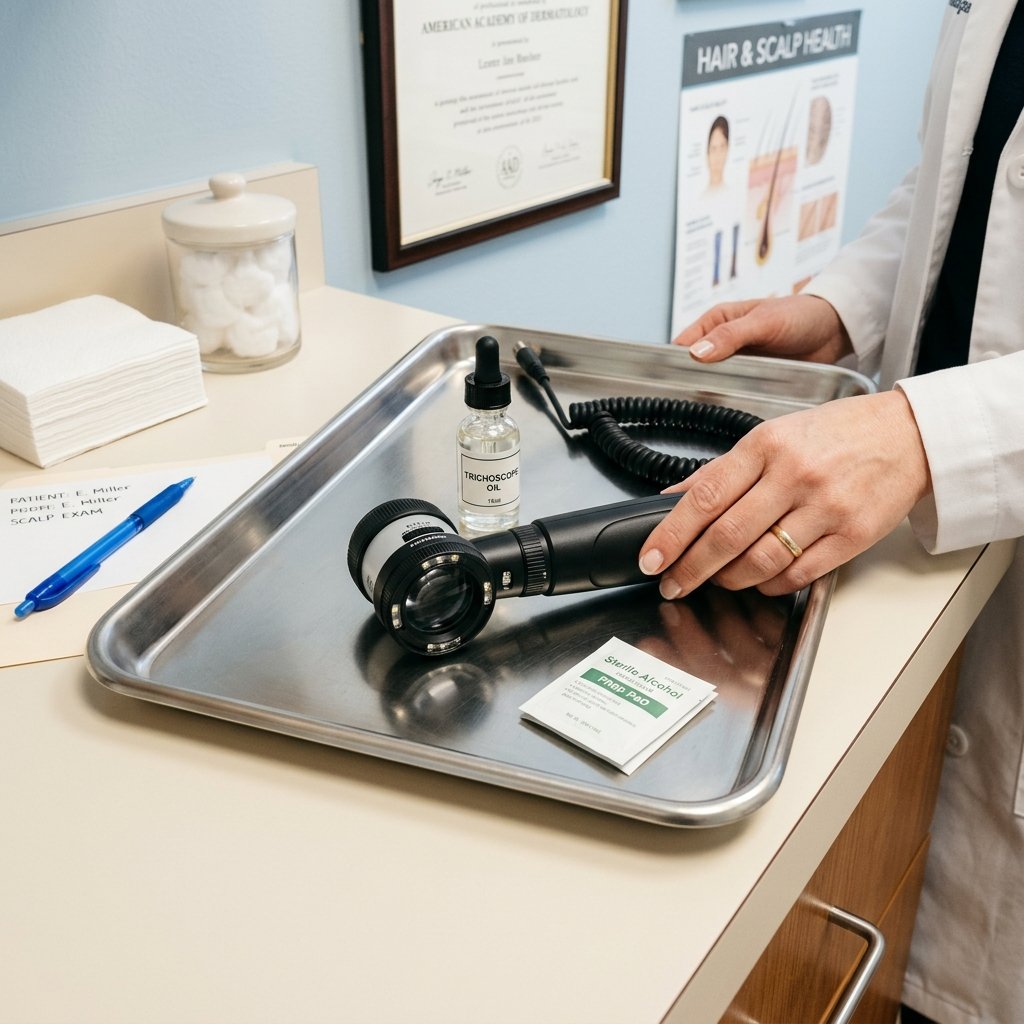
Vibe: Steady, like finally getting a real answer instead of another guess.
Why it works: Shedding that continues past six months, comes in patches rather than diffusely, or is accompanied by scalp pain, redness, or scarring points toward causes home care can’t fix alone (thyroid dysfunction, alopecia areata, or scarring alopecia among them), and a dermatologist can run targeted bloodwork and a scalp exam that identifies the actual driver instead of another round of trial and error.
How to get it: Book a dermatology appointment specifically mentioning “hair shedding evaluation,” and ask for a full thyroid panel, ferritin, and vitamin D test if they aren’t automatically included, since general practitioners sometimes run a narrower panel than a hair-focused workup needs.
Shop The Look
| Product |
| Symptom and shedding tracking journal |
| Scalp magnifying tool for home monitoring |
| Photo-log app or folder for progress tracking |
| Appointment planner |
| Storage folder for lab results |
15. Cut Back on Heat Styling to Twice a Week
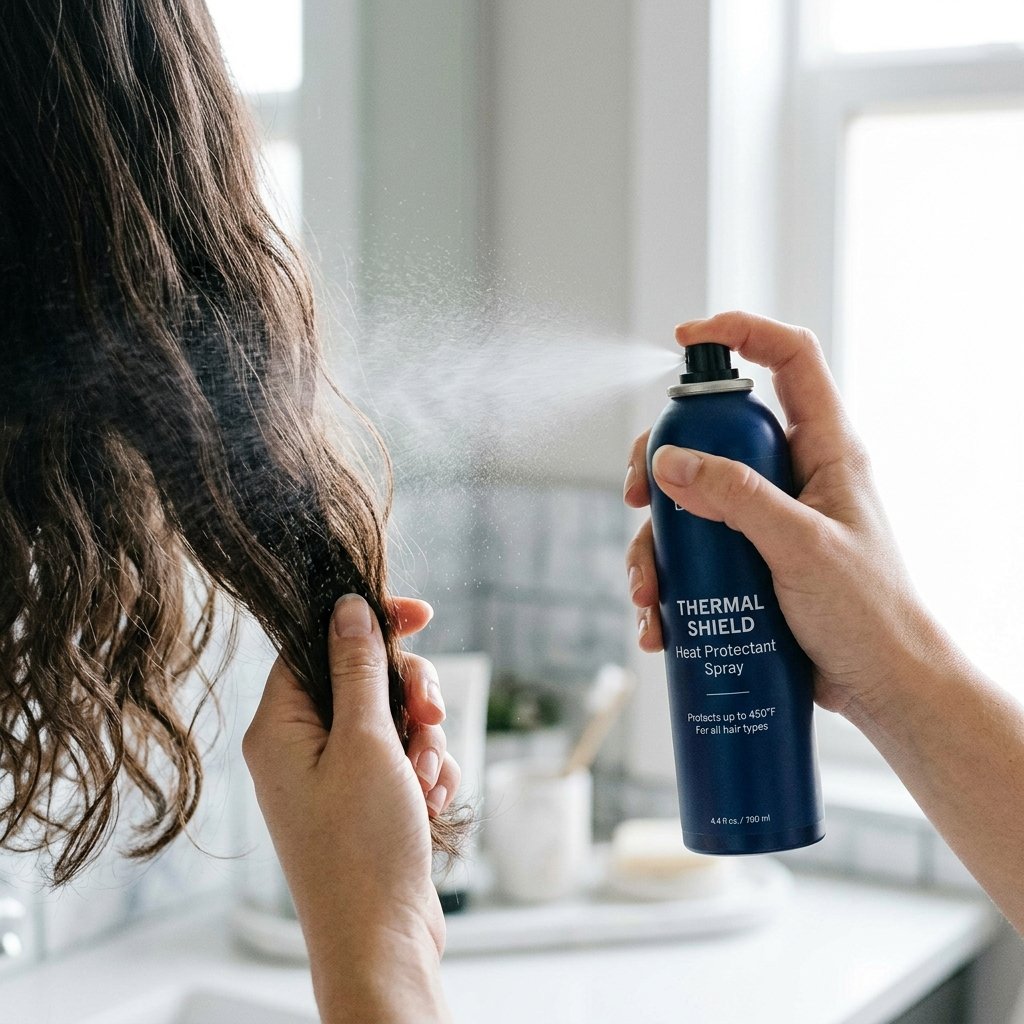
Vibe: Protective, like giving the hair shaft a real break between styling days.
Why it works: Repeated high heat exposure weakens the hair’s outer cuticle layer over time, making strands more porous and prone to snapping under normal daily handling, again, breakage rather than true shedding, but visually indistinguishable to most people counting hairs on a brush. Reducing frequency gives the cuticle time to recover its natural lipid layer between sessions rather than compounding damage daily.
How to get it: Limit blow-drying, flat-ironing, or curling to two sessions a week, always with a heat protectant spray applied first, and set styling tools to the lowest effective temperature for your hair type rather than defaulting to the highest setting.
💡 Quick Win: Air-drying 80% of the way before finishing with a blow dryer cuts direct heat exposure time significantly without sacrificing a smooth finish.
Shop The Look
| Product |
| Heat protectant spray |
| Ceramic flat iron with adjustable temperature |
| Microfiber hair towel for pre-dry |
| Cooling shot attachment for blow dryer |
| Silk hair wrap for air-drying |
Final Thoughts:
al changes like a silk pillowcase and gentler detangling, all working on the different layers that drive shedding at once. None of this needs to happen all at once, and picking just one or two tips to start with, consistently, is genuinely the better approach than trying all 15 this week. Today, pick up a bottle of castor oil or swap in a silk pillowcase and give it a real three-month trial before judging results. Once your routine is dialed in, the payoff isn’t just fewer hairs on the pillow. It’s the quiet relief of brushing your hair without bracing for what falls out. Save the tips that match what bloodwork or your own pattern points to, since those are the ones actually worth building into a lasting routine.