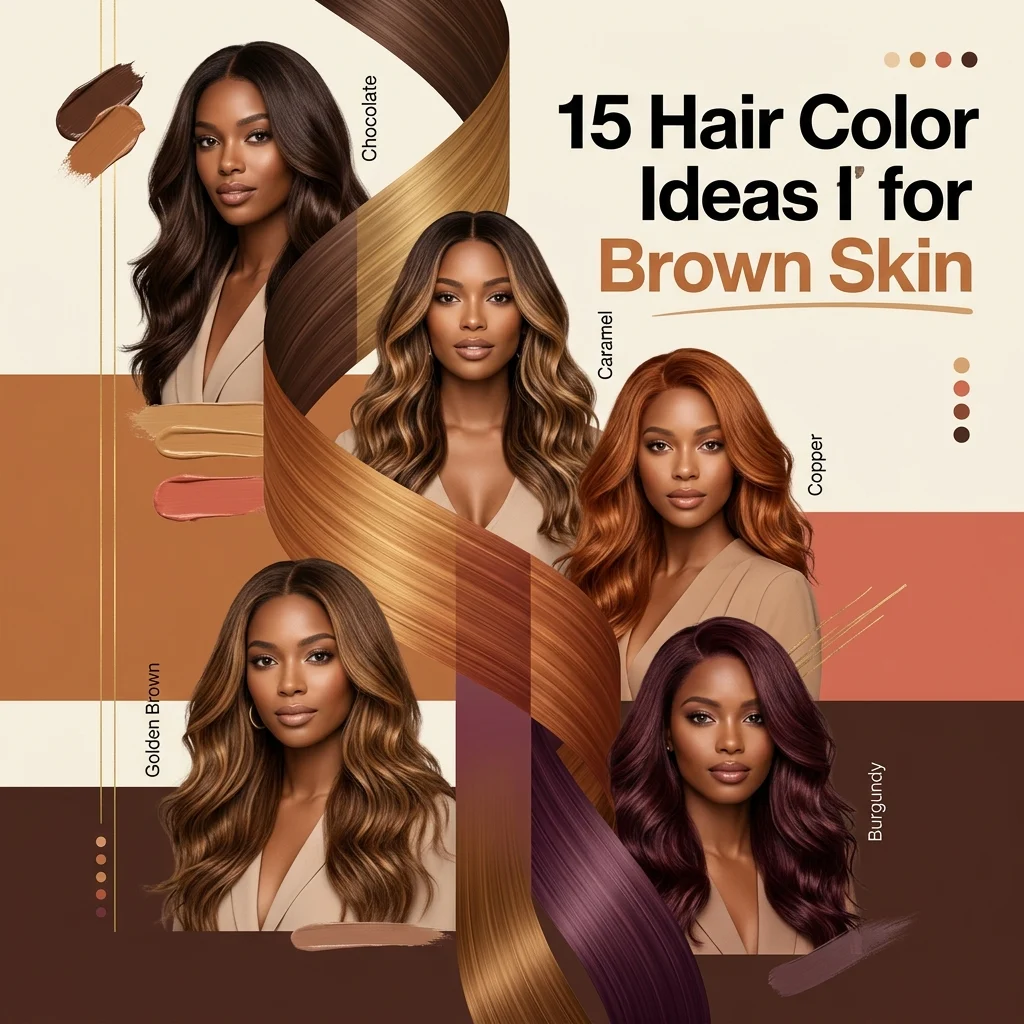
15 Hair Color Ideas for Brown Skin That Actually Flatter

Hair color for brown skin is about matching a shade’s warmth and depth to your skin’s undertone (warm, cool, olive, or neutral) rather than picking a color because it looked good on someone else. This guide covers 15 hair color ideas for brown skin, spanning shade families, application techniques, and placement strategies, so you can find the version that actually complements your undertone.
The right hair color doesn’t just sit on top of brown skin. It works with it, the way a warm gold pulls warmth forward in an olive undertone, or a cool wine deepens contrast against a neutral one. Done well, it feels less like a dye job and more like your skin finally has the right frame around it, warmer where you’re warm, richer where you’re deep, brighter exactly where your face wants light.
Here are 15 ideas worth saving, and stealing.
Why Hair Color for Brown Skin Works So Well
Hair color reads correctly on brown skin when it’s matched to undertone rather than to skin depth alone two people with the same medium-brown skin can have opposite undertones (warm/golden, cool/pink, olive, or neutral), and the same caramel balayage that looks luminous on a warm undertone can look flat against a cool one. Colorists check this the way makeup artists do: whether gold or silver jewelry looks better against the skin.
The shade families that consistently work across most brown skin undertones are specific: warm chocolate and espresso browns, honey and caramel blondes with gold rather than ash bases, deep burgundy and wine tones, and copper or auburn reds. Ash, cool platinum, and muted taupe tones are the ones most likely to clash, since they pull the exact warmth out of the hair that brown skin’s undertone usually needs reflected back.
This is trending now because color consultations have shifted from “what’s fashionable” to “what actually suits you,” driven largely by TikTok’s “color analysis” and “your color season” trend cycles, which pushed undertone-matching from a professional colorist’s private knowledge into mainstream, searchable advice almost overnight.
Every hair length and texture can achieve well-matched color, including natural curl patterns and coily textures. The main honest limitation is processing time and hair health, since lifting very dark, tightly coiled hair to a lighter shade takes longer and requires more conditioning care than the same lift on looser textures.
Style at a Glance
| Element | Warm Undertone Direction | Cool Undertone Direction |
|---|---|---|
| Philosophy | Match gold, not silver | Match silver, not gold |
| Best Shades | Honey, caramel, copper, chocolate | Espresso, burgundy, cool brunette |
| Colors to Approach Carefully | Ash blonde, cool platinum | Warm copper, golden blonde |
15 Hair Color Ideas for Brown Skin
1. Hair Color for Brown Skin: Warm Chocolate Brown Base
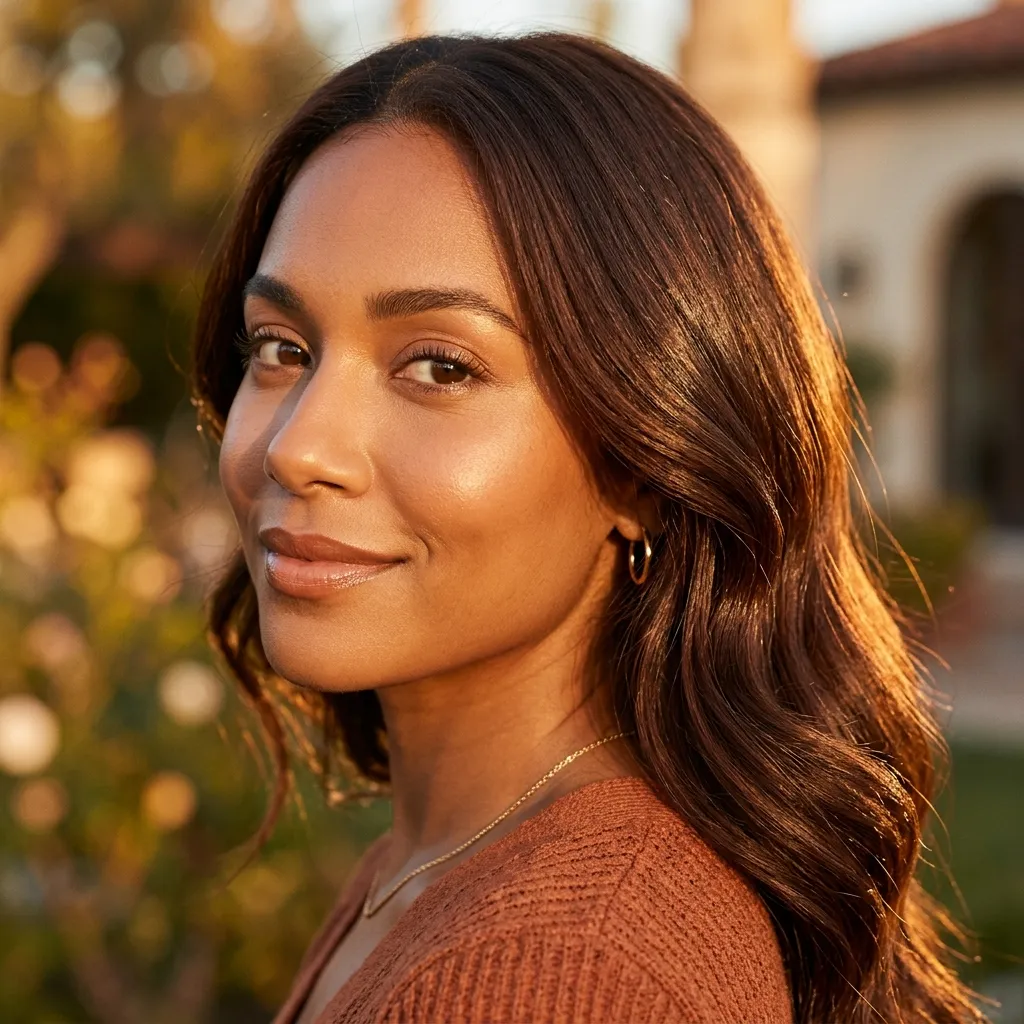
Vibe: Warm. Hair that looks like it belongs to the skin underneath it, not layered on top.
Why it works: A warm chocolate base with visible mahogany or red-brown undertones reflects warmth back into golden or olive skin instead of flattening it the way a cool, ashy brown does. This is reflection matching: warm hair bounces warm light onto the face, which is why the same “brown” can look alive on one person and muddy on another.
How to get it: Ask your colorist for a formula built on a 5 or 6 base with a .4 (copper) or .5 (mahogany) modifier rather than a flat, ash-based brown, then request a matching gloss toner to seal in shine.
💡 Quick Win: A semi-permanent warm chocolate gloss, applied over your natural color, tests the look for 6 to 8 weeks before committing to permanent color.
Shop The Look
| Product |
|---|
| Warm chocolate brown semi-permanent hair gloss |
| Color-safe sulfate-free shampoo warm brunette |
| Deep conditioning hair mask for color-treated hair |
| Argan oil hair serum shine finish |
| Wide-tooth detangling comb for wet hair |
2. Balayage for Soft, Sun-Kissed Dimension
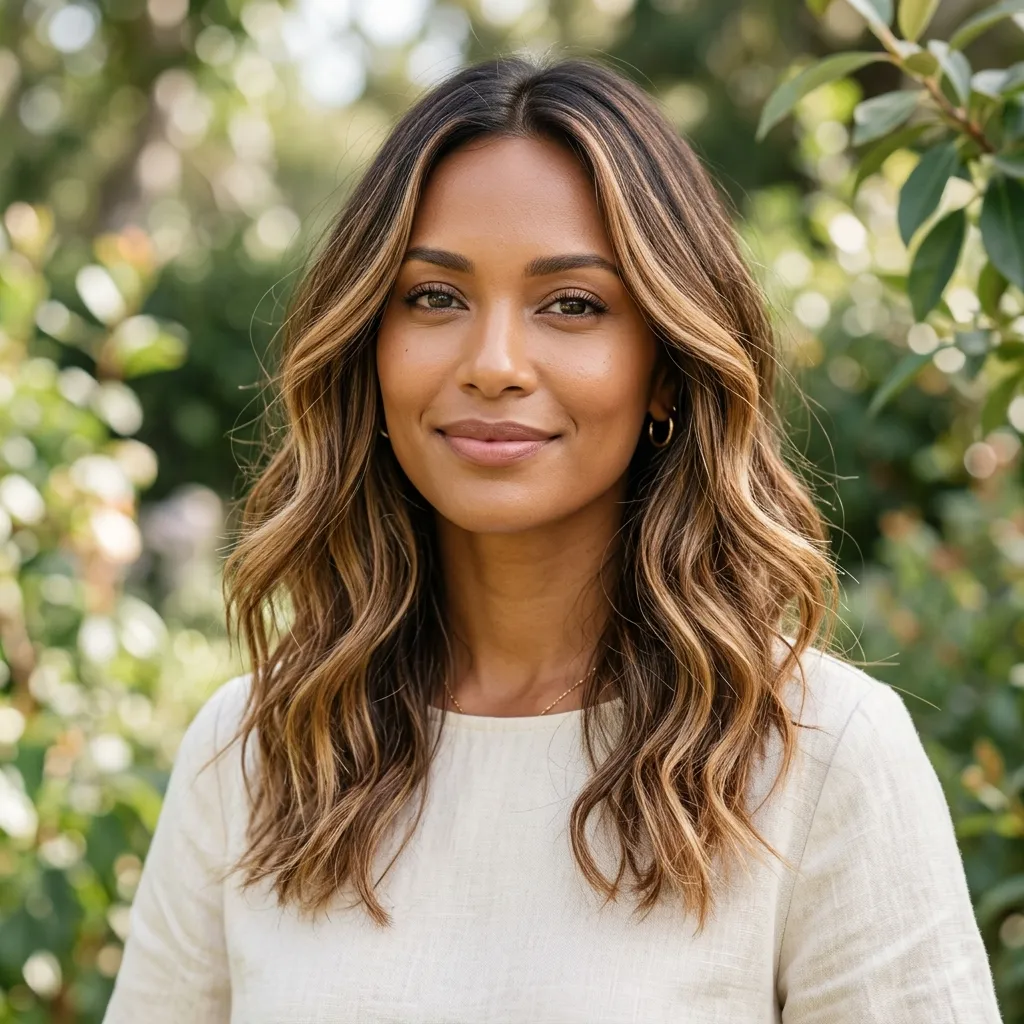
Vibe: Sun-warmed. The look of hair that’s spent a real summer outside, not a salon chair.
Why it works: Balayage is a hand-painted, freehand highlighting technique rather than a foil-sectioned one, so the lightened pieces land irregularly and only on the surface layers, which mimics how hair naturally lightens from sun exposure. That irregular, dimensional placement is what keeps the color looking soft against brown skin instead of creating the harsh line-of-demarcation that uniform foil highlights can leave at the root.
How to get it: Request “low-maintenance balayage” specifically, which places lightened pieces starting 2 to 3 inches from the root, so regrowth blends naturally and salon visits can stretch to every 3 to 4 months instead of every 6 weeks.
Shop The Look
| Product |
|---|
| Purple toning shampoo for warm blonde highlights |
| Leave-in heat protectant spray |
| Boar bristle hairbrush for shine distribution |
| Hair oil treatment for highlighted ends |
| Silk pillowcase for reduced color fading |
3. Choosing Warm vs. Ash Tones Based on Real-World Light
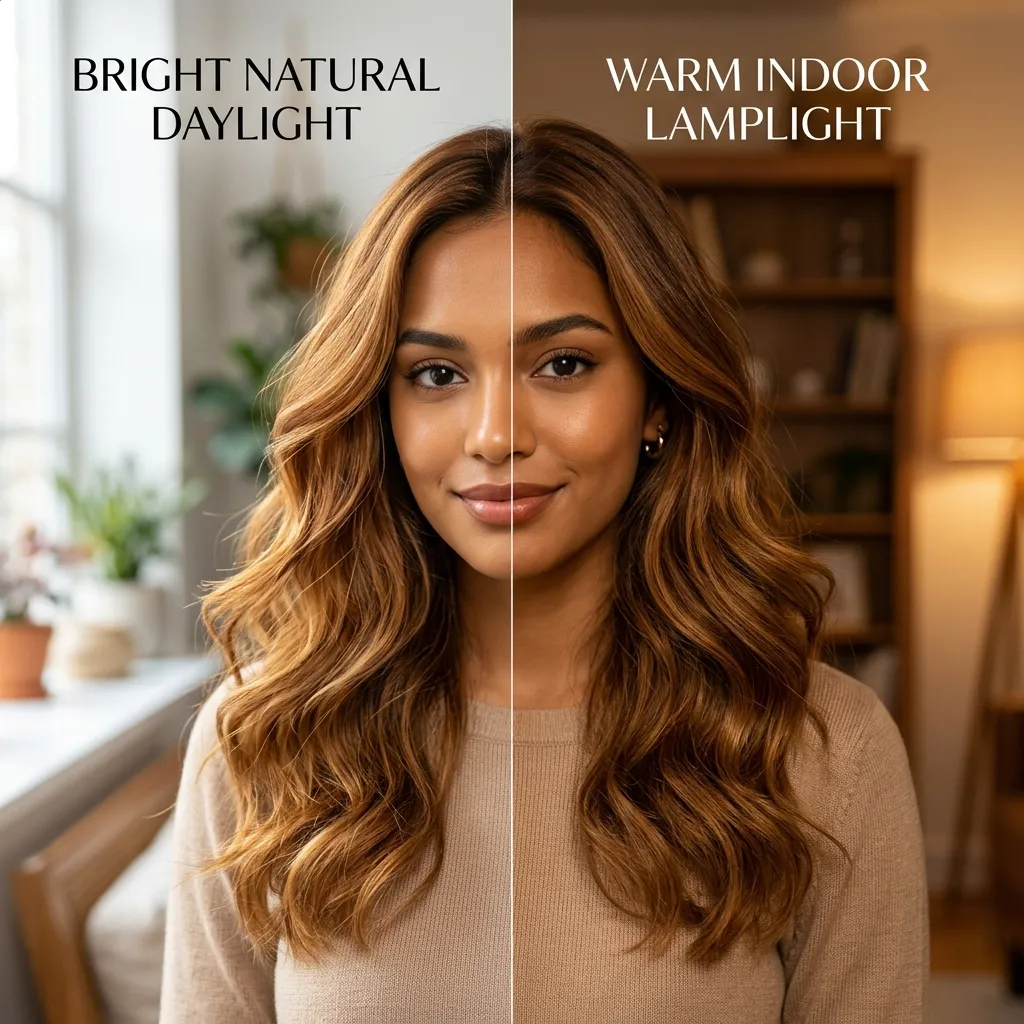
Vibe: Grounded, a color choice based on how your bathroom mirror actually looks, not just the salon’s lighting.
Why it works: Hair color genuinely shifts depending on the light source’s color temperature: warm indoor bulbs (2700K–3000K) amplify gold and copper in hair, while cool daylight or fluorescent light (5000K+) can make the same color read flatter. It’s a light-behavior issue, not a color mistake, which is why a shade can look perfect at the salon and different at home.
How to get it: Ask to see your color swatch under both the salon’s daylight mirror and a warm hand mirror before finalizing a formula, since this reveals how the shade will behave in your home’s typical lighting rather than only the salon’s.
💡 Quick Win: Swap one bathroom bulb for a warm 2700K LED if your current lighting runs cool. It changes how every hair color you’ve ever had looks in that mirror.
Shop The Look
| Product |
|---|
| Warm 2700K LED vanity bulb pack |
| Portable daylight-balanced makeup mirror |
| Color swatch ring for undertone testing |
| Root touch-up powder warm brown |
| Color-depositing conditioner warm caramel |
4. Face-Framing Money Piece Placement by Face Shape
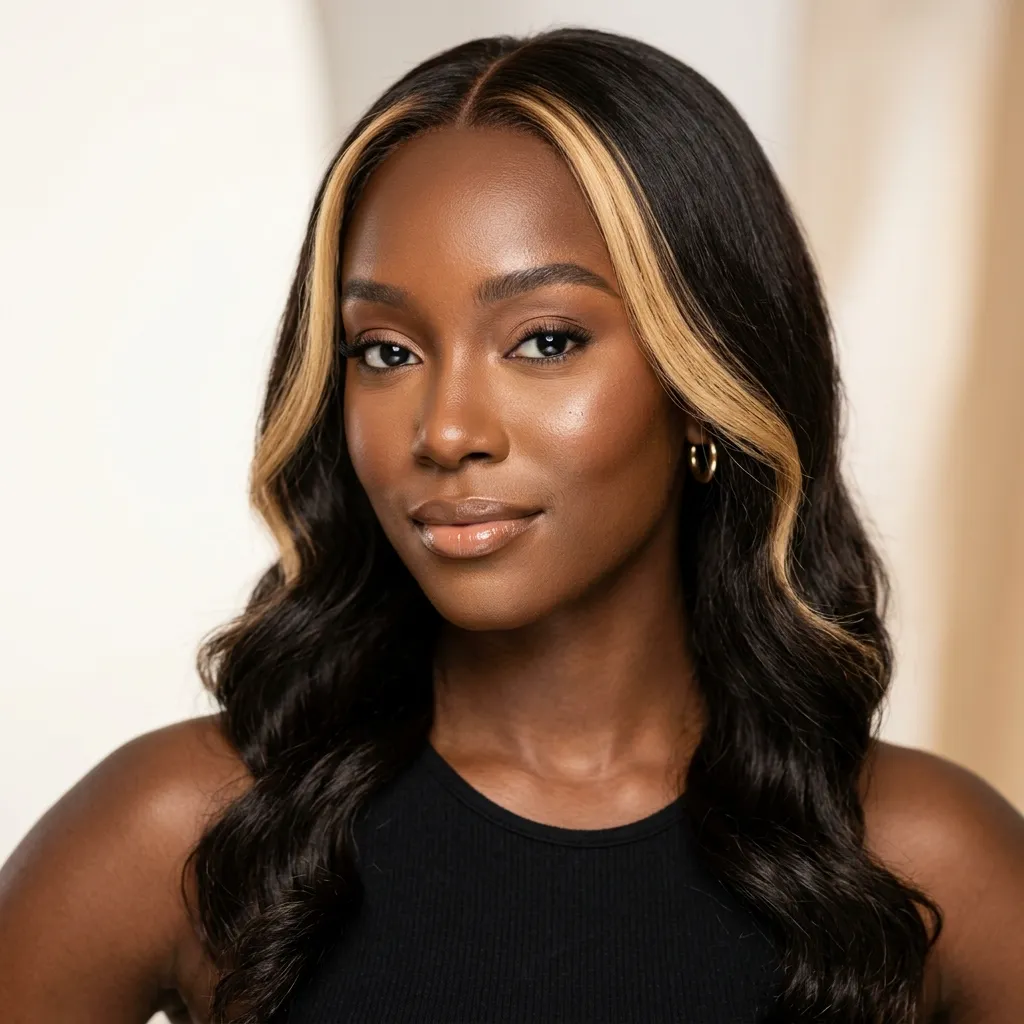
Vibe: Sculpted. Highlights that do the work a good haircut usually does.
Why it works: A money piece is two face-framing highlighted pieces placed to follow the hairline directly beside the eyes, and its placement, not just its color, is what flatters different face shapes. Wider pieces starting closer to the part suit rounder faces by adding vertical lines, while thinner, higher pieces suit longer faces by adding width at the cheekbone level.
How to get it: For round faces, request money pieces roughly a half-inch wide starting at the part line; for longer or narrower faces, ask for thinner pieces (around a quarter-inch) that start slightly further back from the part to avoid elongating the face further.
Shop The Look
| Product |
|---|
| Highlighting foil sheets for precision placement |
| Sectioning clips for money piece application |
| Honey blonde toning gloss |
| Edge control gel for hairline styling |
| Color-safe dry shampoo for touch-ups |
5. Pairing Warm Copper Hair with Bronze Makeup Tones
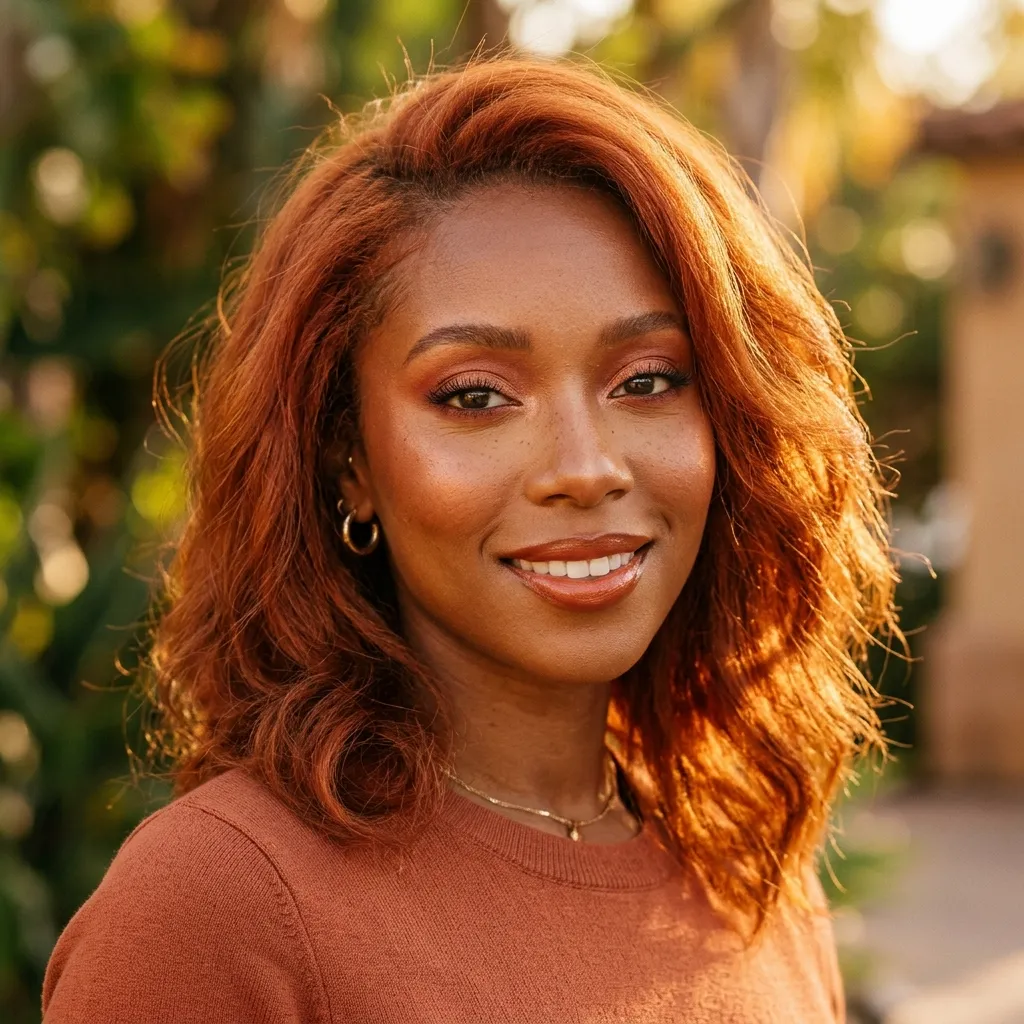
Vibe: Vivid, hair and makeup pulling from the same warm family instead of fighting each other.
Why it works: Copper hair contains strong orange-red pigment, and pairing it with cool-toned makeup (blue-based pinks, silver highlighter) creates visual competition rather than harmony, since the two color temperatures pull the eye in opposite directions. Bronze, warm terracotta, and copper-toned makeup instead echo the hair’s undertone, which is a color-harmony principle called analogous pairing.
How to get it: Choose a bronzer with visible warm shimmer rather than a matte cool-toned contour powder, and pick a lip color in warm terracotta or brick rather than cool mauve to keep the full look in the same temperature family as copper hair.
💡 Quick Win: A single warm bronzer swept along the cheekbones instantly pulls copper hair and skin into the same visual family without changing your existing makeup routine.
Shop The Look
| Product |
|---|
| Warm bronzer palette shimmer finish |
| Copper eyeshadow palette warm tones |
| Terracotta cream blush |
| Copper red demi-permanent hair color |
| Color-depositing copper conditioner |
6. Root Shadow Placement for Easy Grow-Out
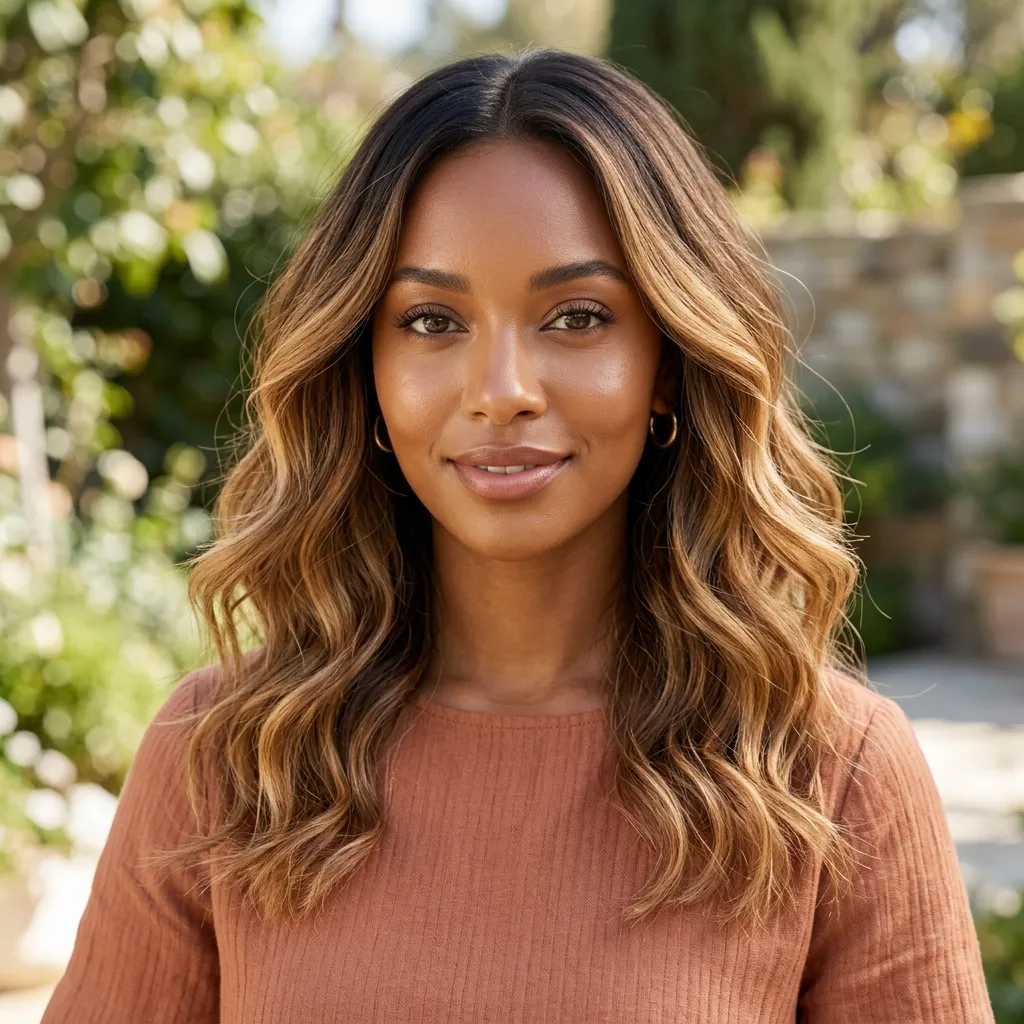
Vibe: Seamless. Color that grows out gracefully instead of announcing itself.
Why it works: A root shadow is a deliberate, soft-edged darkening at the root that’s blended a full inch or two into the lightened lengths, rather than left as a hard line. This uses gradient blending to disguise the natural transition point, so regrowth reads as an intentional design feature rather than a maintenance problem waiting to happen.
How to get it: Ask your colorist to “shadow root” or “smudge” the base using a shade only one to two levels darker than your natural color, blended with a soft brush at least an inch into the lightened sections, rather than using a hard-edged root touch-up.
Shop The Look
| Product |
|---|
| Root smudge brush applicator |
| Root shadow demi-permanent color kit |
| Blending brush for root touch-ups |
| Color-safe shampoo for gradient upkeep |
| Heat protectant spray for blow-drying roots |
7. Deep Burgundy and Wine Tones for Cool Undertones
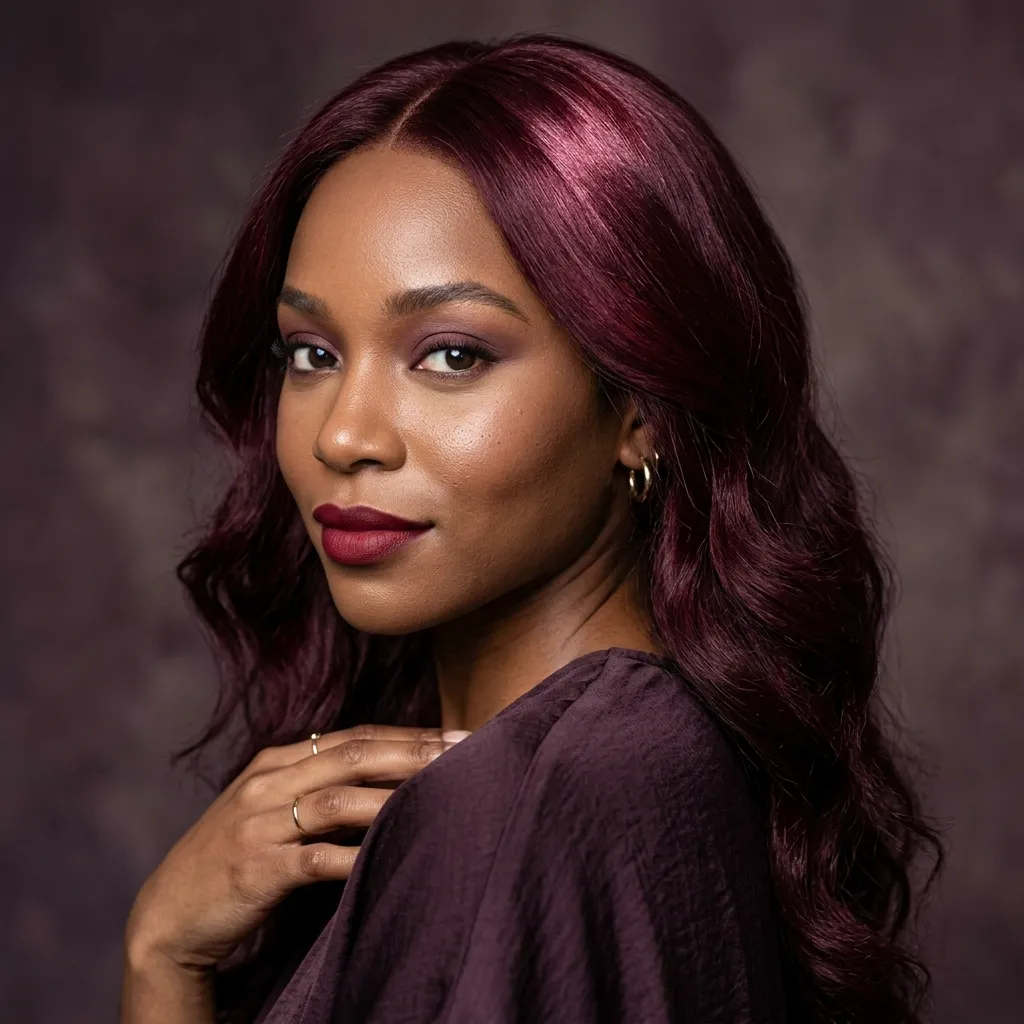
Vibe: Rich. A color with enough depth to hold its own against darker, cooler skin.
Why it works: Deep burgundy and wine tones carry blue-red pigment rather than orange-red, exactly the undertone family that flatters cool or neutral-cool skin the way copper flatters warm skin. A rich, saturated cool-red against cool-toned skin creates harmony, while the same skin in warm copper can look slightly at odds with itself.
How to get it: Ask for a formula with a .6 (violet-red) or .26 modifier rather than a straight red base, since the violet component keeps burgundy from fading into unwanted brassy orange between salon visits.
💡 Quick Win: A burgundy gloss over dark brown hair adds visible red depth in one salon visit without requiring a full lightening or color change first.
Shop The Look
| Product |
|---|
| Burgundy demi-permanent hair gloss |
| Color-safe shampoo for red tones |
| Purple-based mask to prevent brass |
| Silk hair wrap for overnight color protection |
| Wine-tone hair color touch-up pen |
8. Foilyage for Low-Maintenance Multi-Tonal Dimension
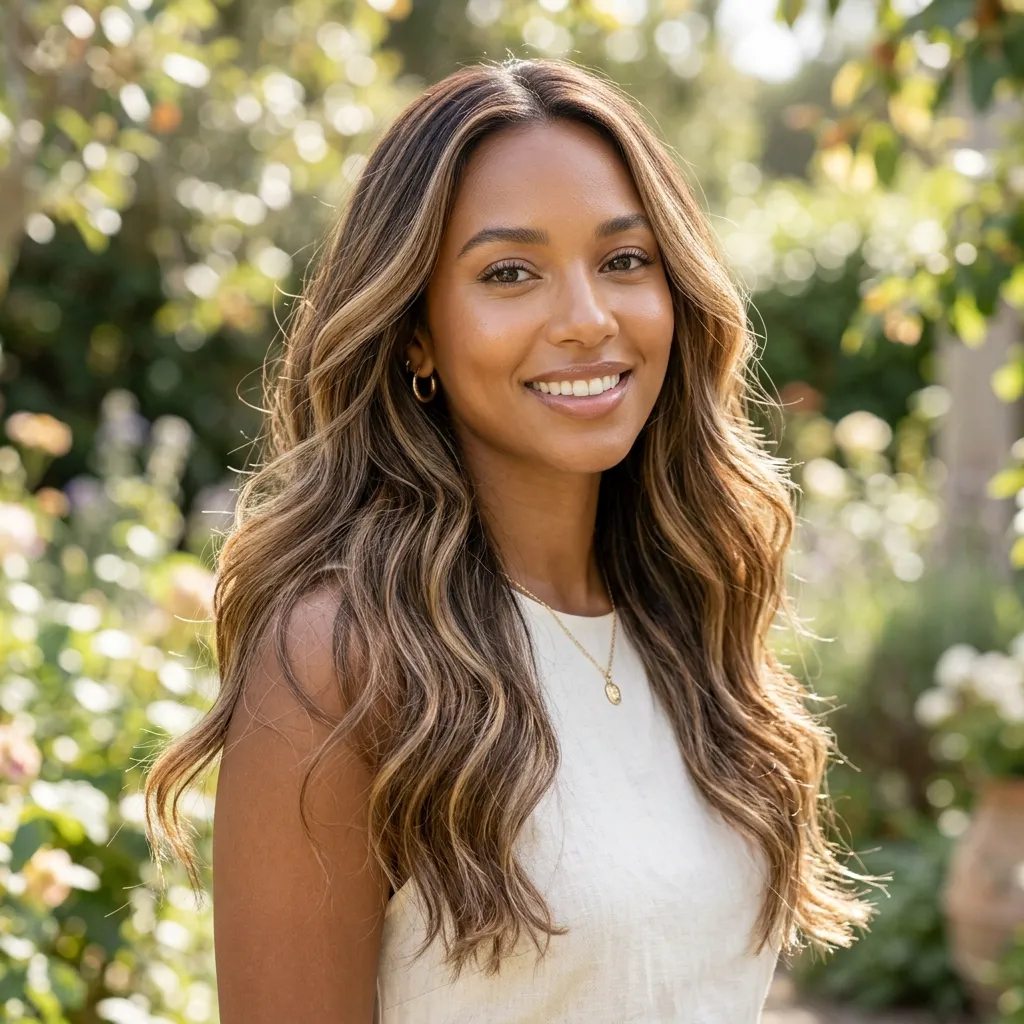
Vibe: Dimensional, hair with visible movement instead of one flat tone.
Why it works: Foilyage combines foil placement with a balayage-style freehand painting technique inside each foil, which produces more precise lift than balayage alone while keeping the soft, blended edges balayage is known for. The result reads as multiple tones of the same color family layered together, a texture-layering principle applied to color rather than fabric.
How to get it: Request “foilyage, not full foil highlights,” specifically asking your colorist to use two to three foil-painted tones within the same warm family for example caramel, honey, and a soft golden blonde, rather than one uniform highlight tone throughout.
Shop The Look
| Product |
|---|
| Multi-tone toning gloss caramel honey blend |
| Bond-building hair treatment for lightened hair |
| Wide detangling brush for foiled hair |
| Color-safe leave-in conditioner |
| Silicone-free hair oil for shine |
9. Hair Color for Brown Skin: Golden Honey Blonde That Reads Warm in Natural Light
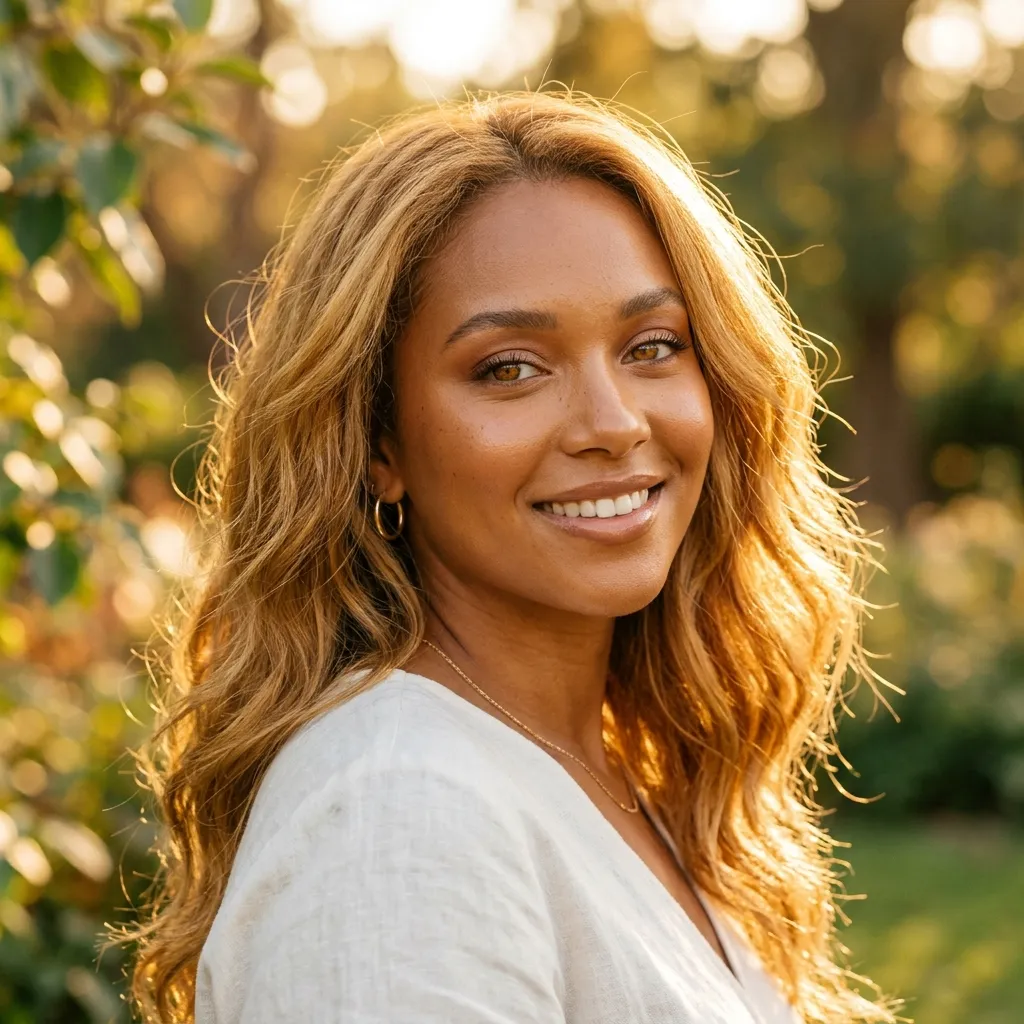
Vibe: Luminous, blonde that photographs as warm in every lighting condition, not just a studio.
Why it works: Golden honey blonde carries a strong yellow-gold base rather than the ash or beige base found in cooler blonde formulas, and that gold base is specifically what prevents the “grayish” or “dirty” appearance warm-undertone skin can pick up from an ash blonde. This is the same reflection-matching principle from warm chocolate brown, applied at a much lighter level.
How to get it: Ask for a lightening service that stops at a gold-toned level 8 or 9 rather than being toned down to ash afterward, and maintain it with a gold-tone-boosting purple shampoo used only once every two weeks rather than the standard weekly use, since standard purple shampoo is formulated to cancel gold tones out.
Shop The Look
| Product |
|---|
| Golden blonde toning gloss |
| Gold-tone boosting shampoo warm blonde |
| Bond repair treatment for lightened hair |
| UV protection hair spray for color fade |
| Wide-tooth comb for lightened fragile hair |
10. Adapting Color Application for Curly and Coily Textures
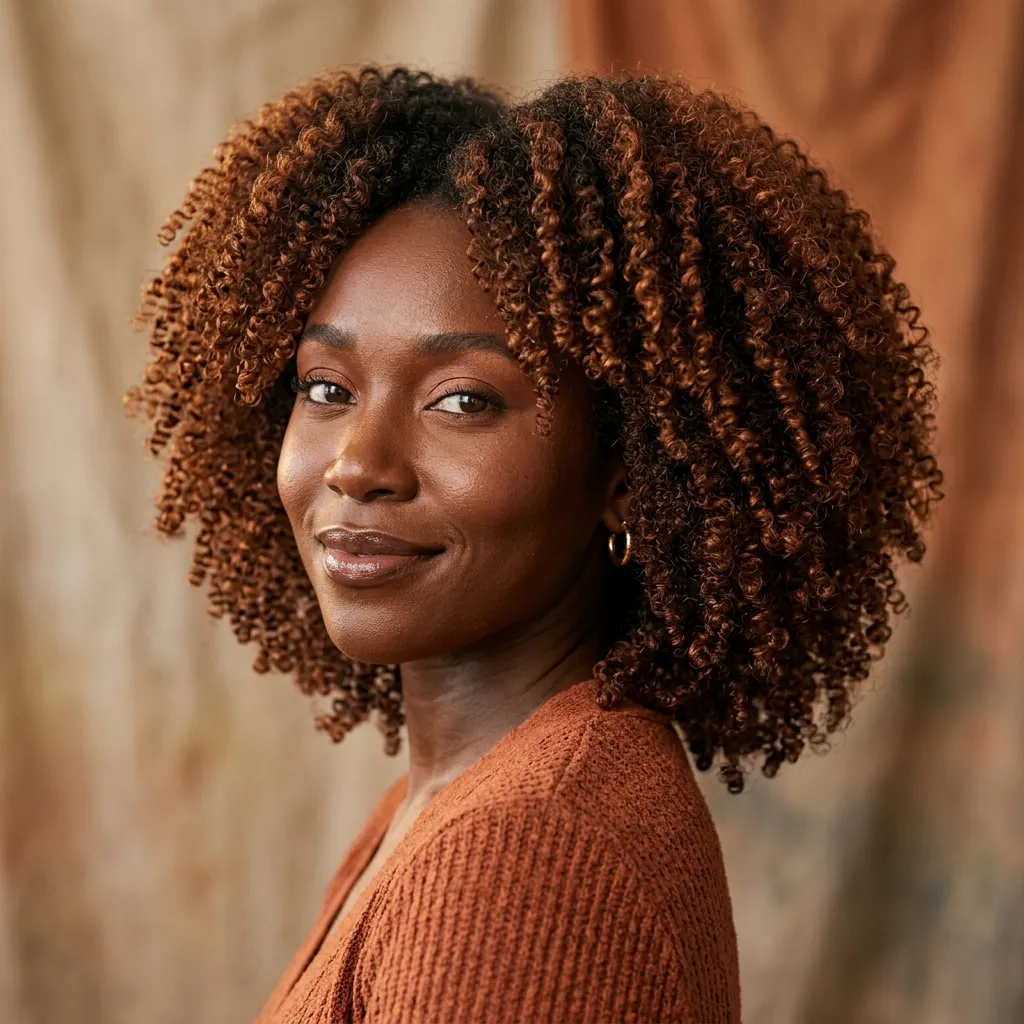
Vibe: Textured, color that moves with the curl pattern instead of flattening it.
Why it works: Tightly coiled and curly textures have more overlapping cuticle layers per strand than straight hair, so color and lightener take longer to fully saturate. Rushing processing time on curly hair is the most common reason color turns out patchy, since underprocessed sections simply don’t lift or deposit as much as fully processed ones.
How to get it: Ask your colorist to apply color in smaller sections than for straight hair and check processing with a strand test every 10 minutes rather than relying on one fixed time, since curl pattern affects how evenly color develops strand to strand.
💡 Quick Win: A color-depositing conditioning mask, rather than permanent dye, adds tone to curly hair without the extended processing time full color requires.
Shop The Look
| Product |
|---|
| Color-depositing mask for curly hair |
| Sulfate-free curl-defining shampoo |
| Leave-in curl cream for color-treated hair |
| Diffuser attachment for curl drying |
| Silk curl bonnet for overnight protection |
11. Accessorizing Espresso Brown with Warm Gold Jewelry
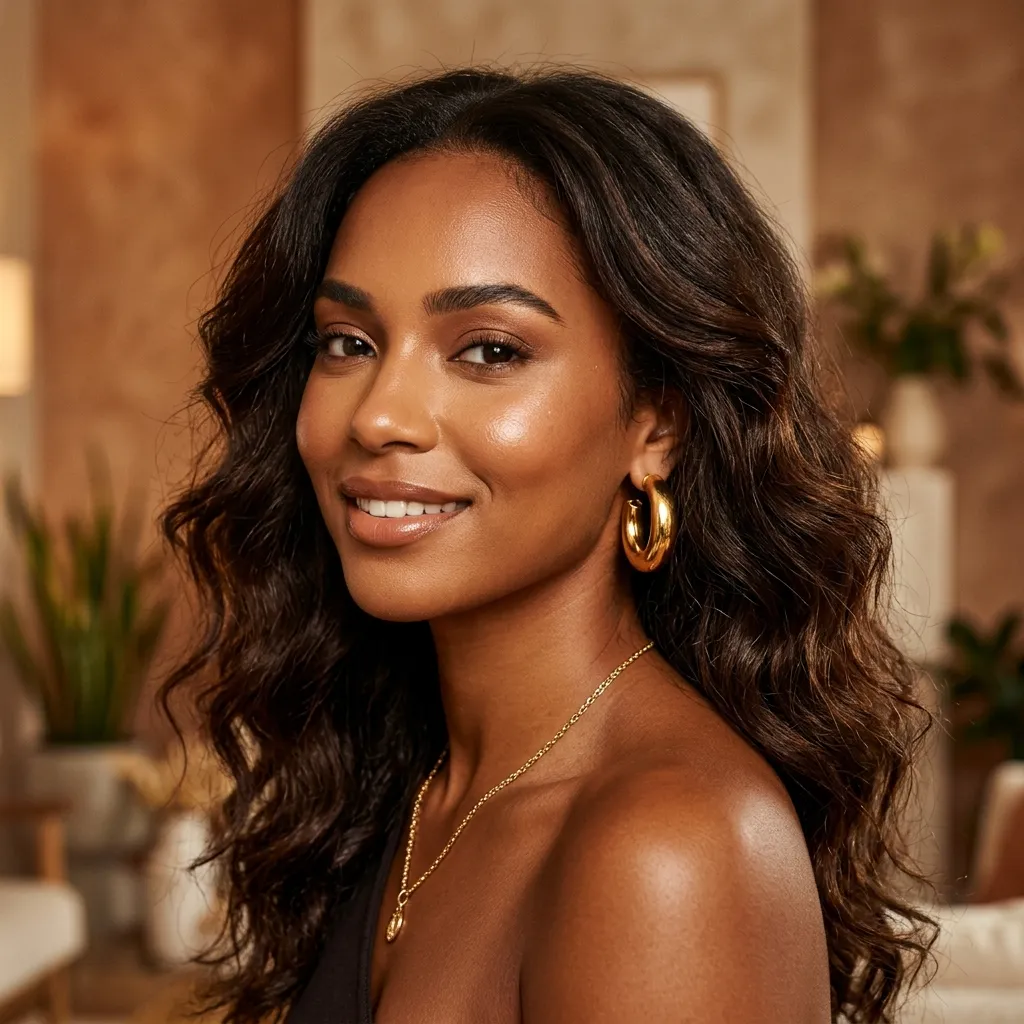
Vibe: Polished. Deep brown hair that reads richer next to warm metal than cool metal.
Why it works: Espresso brown is a nearly black shade with a warm red-brown undercurrent rather than a true cool black, and pairing it with gold jewelry echoes that warm undertone the same way gold jewelry flatters warm-undertone skin directly. Silver or platinum jewelry next to the same espresso hair can create a cool-versus-warm mismatch that makes the hair color read slightly duller by contrast.
How to get it: Choose warm yellow-gold rather than white gold or silver for everyday jewelry if your hair is in the espresso-to-chocolate family, and save cooler-toned metals for looks built around cooler hair colors like ash brown or platinum instead.
Shop The Look
| Product |
|---|
| Warm gold hoop earrings |
| Espresso brown demi-permanent hair color |
| Gold-tone layered necklace set |
| Shine-boosting hair serum dark brunette |
| Color-safe conditioner for espresso brown |
12. Peekaboo Highlight Placement Above vs. Below
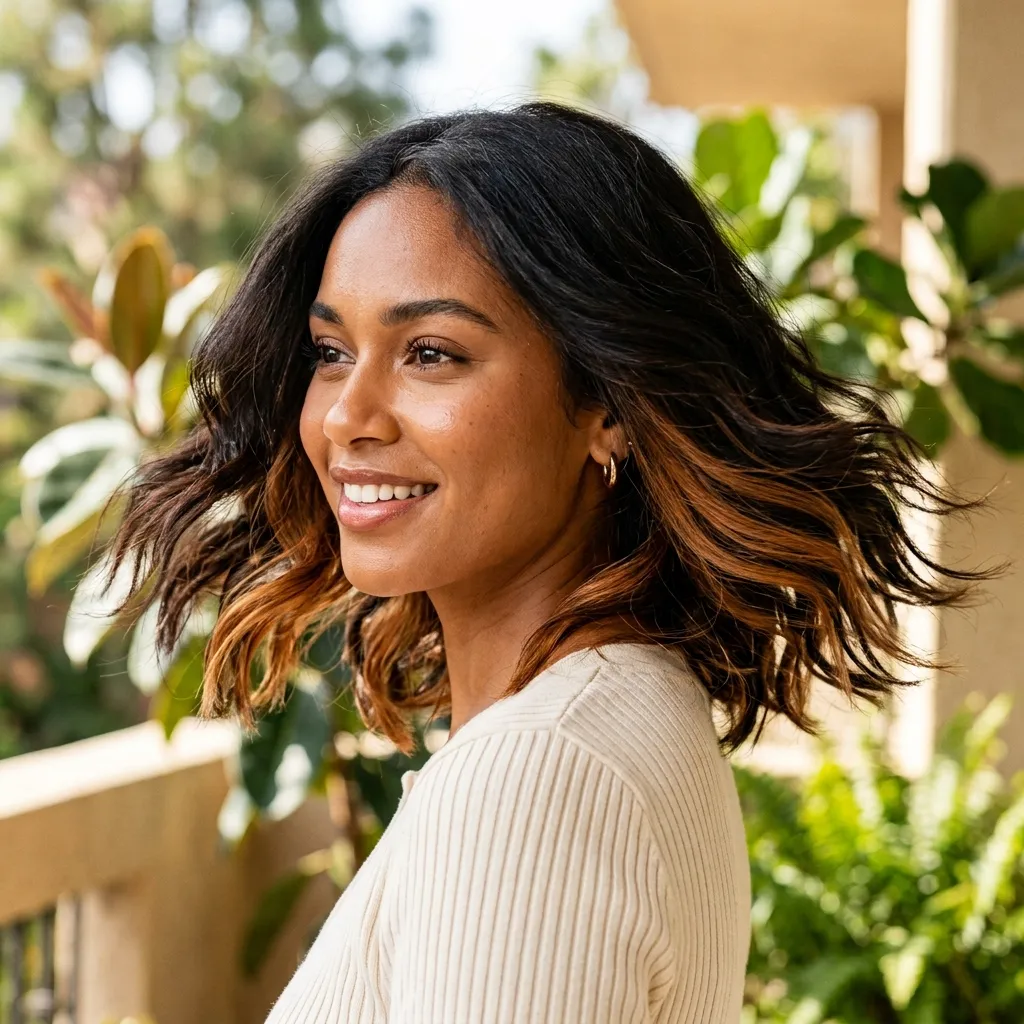
Vibe: Playful. A color secret that only shows up when you move.
Why it works: Peekaboo highlights are placed either underneath the top layer of hair (hidden at rest, visible in motion) or on top (visible at all times), and that placement decision changes the entire commitment level of the look. Underneath placement uses layout strategy the same way a hidden accent wall does in a room. It rewards a closer look rather than demanding constant attention.
How to get it: For a workplace-friendly version, ask for peekaboo highlights placed only in the bottom two inches of the underlayer; for a bolder, always-visible version, ask for the same highlights placed in the top, face-framing layer instead.
Shop The Look
| Product |
|---|
| Sectioning clips for underlayer highlighting |
| Caramel highlight toning gloss |
| Color-safe shampoo for peekaboo maintenance |
| Flat iron for styling highlight reveal |
| Texturizing spray for movement styling |
13. Best Hair Color for Brown Skin with Neutral Undertones: Caramel Bronde
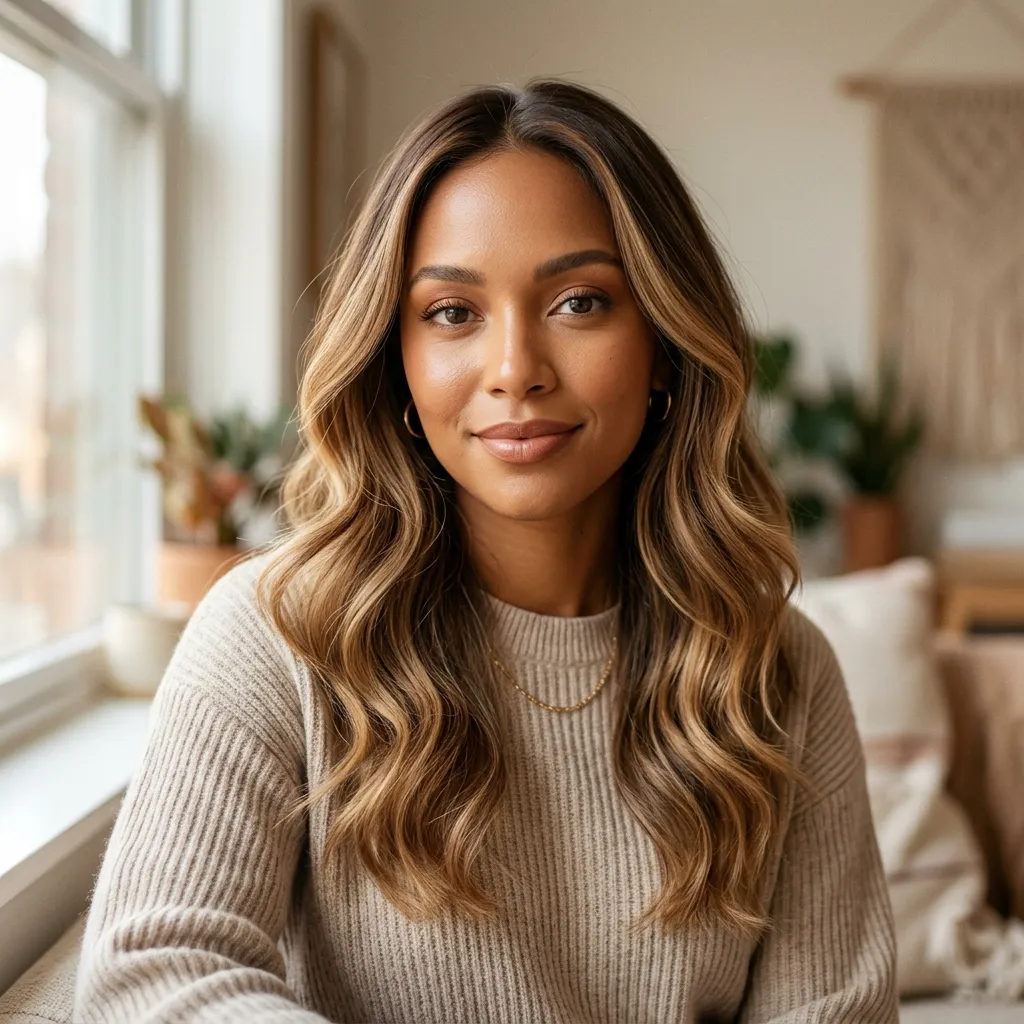
Vibe: Balanced. A color that doesn’t commit fully to brown or blonde, and looks better for it.
Why it works: Bronde blends brown and blonde in roughly equal proportion, and its middle-of-the-road warmth level makes it one of the most forgiving shades for neutral undertones specifically, since it doesn’t lean hard enough toward warm or cool to clash with either direction of undertone.
How to get it: Ask for a bronde formula with a caramel base rather than a beige one, since caramel carries just enough warmth to flatter neutral undertones without tipping into the overly golden territory that suits only strongly warm undertones.
💡 Quick Win: A caramel gloss applied over existing brown hair creates a temporary bronde effect that lasts 6 to 8 weeks before fading back to your natural color.
Shop The Look
| Product |
|---|
| Caramel bronde demi-permanent gloss |
| Neutral-tone purple shampoo |
| Bond repair spray for blended color |
| Heat protectant serum for styling |
| Color-safe hair mask weekly treatment |
14. Gloss and Toning Treatments for Shine Without Commitment
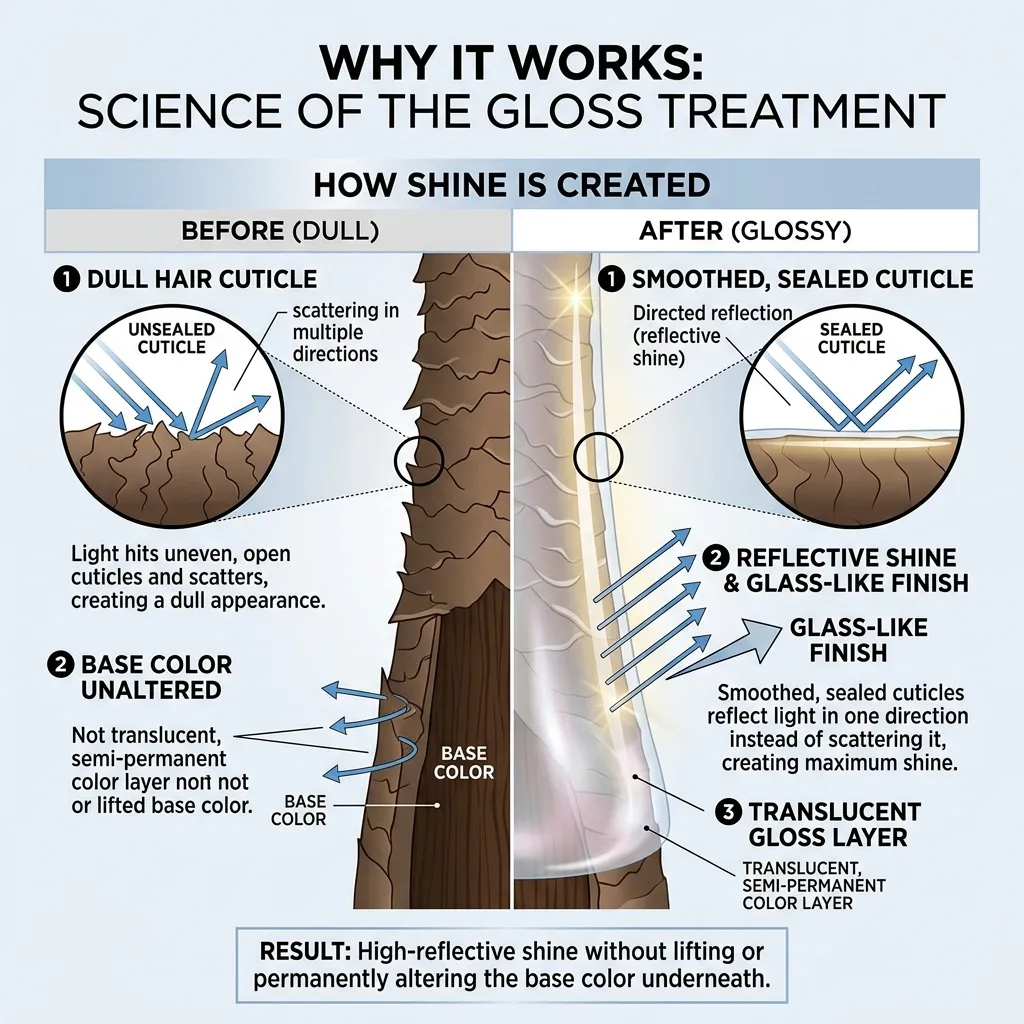
Vibe: Sleek. Hair that catches light the way it does right after a fresh cut.
How to get it: Ask for a clear or tone-matching gloss treatment every 4 to 6 weeks between color services, since gloss fades gradually with washing and needs refreshing far more often than permanent color needs reapplying.
Shop The Look
| Product |
|---|
| Clear glossing hair treatment |
| Glass hair serum shine finish |
| Sulfate-free shampoo for gloss retention |
| Cool-water rinse shower filter |
| Silk hair towel for gentle drying |
15. Small Commitment Options: Semi-Permanent Color for a Trial Run
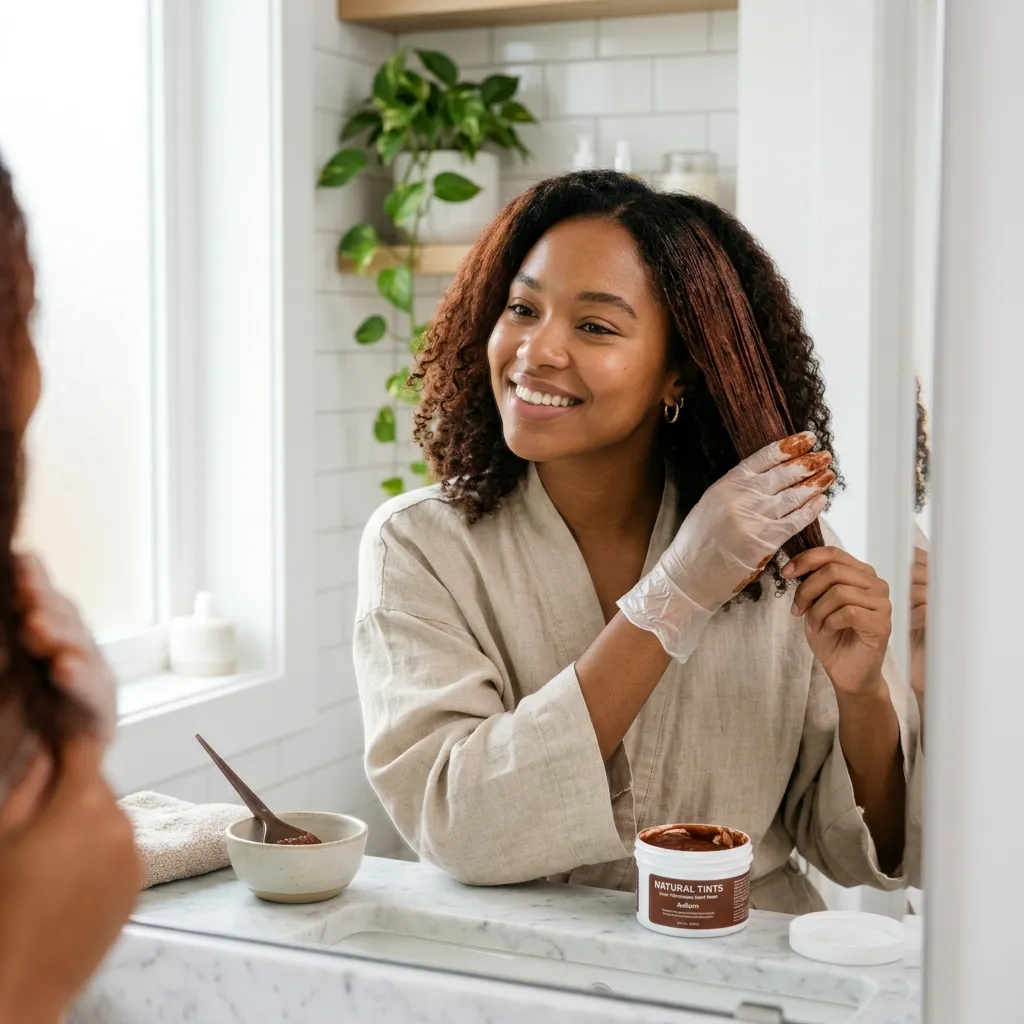
Vibe: Low-pressure. A color test that costs an evening instead of a bad six months.
Why it works: Semi-permanent color coats the hair shaft without lifting or permanently altering the base, fading gradually over 6 to 12 washes: the lowest-risk way to test whether a warmer or cooler direction suits your undertone before committing to permanent, pricier color.
How to get it: Choose a shade one level warmer or richer than your natural color, apply it at home following the box’s timing exactly, and evaluate how it looks in both daylight and indoor lighting over the following week before booking a permanent appointment.
💡 Quick Win: A tinted color-depositing shampoo, used two to three times, offers an even lower-commitment preview than full semi-permanent dye, fading completely within a week or two.
Shop The Look
| Product |
|---|
| Semi-permanent hair color mask auburn |
| Color-depositing tinted shampoo |
| Disposable tinting gloves |
| Plastic processing cap |
| Color-safe conditioner for semi-permanent upkeep |
How to Start Your Hair Color Transformation
Start with an undertone check, not a shade you’ve seen online. Hold a piece of gold and a piece of silver jewelry against your wrist or jawline in natural light. If gold looks richer, you likely lean warm and should start any color conversation from chocolate, caramel, or copper; if silver looks cleaner, you likely lean cool and should start from espresso, burgundy, or ash brunette instead.
The most common mistake is requesting a specific celebrity shade by name without accounting for undertone, which is exactly how warm-undertone clients end up with ashy, gray-tinted color that never looks right no matter how many toning treatments follow. Fix it by describing your undertone and skin depth first, and let your colorist translate a reference photo into a formula suited to you.
Three ways to test a direction for under $20: a color-depositing purple or copper shampoo for a subtle two-week preview, a semi-permanent gloss mask for a fuller six-to-eight-week test, and a clip-in extension in your target shade held up against your face in natural window light before any dye touches your actual hair.
A full color transformation, including lightening and toning, takes one 3-to-5-hour salon visit and runs $150 to $400 depending on length and lift needed. A single-process gloss or root touch-up takes under 90 minutes and runs $50 to $100, the realistic weekend option, while a full lightening transformation is closer to a planned, multi-week commitment.
Frequently Asked Questions About Hair Color for Brown Skin
What’s the difference between choosing hair color by skin tone versus by undertone?
Skin tone refers to depth, how light or deep the skin is, while undertone refers to its underlying warmth, coolness, or neutrality, and hair color should be matched to undertone, not depth. Two people with identical medium-brown depth can have opposite undertones, meaning the same caramel shade could look luminous on one and muddy on the other. Undertone is typically checked using the gold-versus-silver jewelry test or the veins on the inner wrist in natural light.
What hair colors work best for warm undertones in brown skin?
Warm undertones are consistently flattered by chocolate brown with red or gold reflects, honey and caramel blonde, and copper or auburn red, since these shades carry the same warm base the skin does. Ash brown, cool platinum, and taupe-toned blonde clash most, pulling warmth out of hair that warm skin needs reflected. A gold-based level 8 or 9 blonde avoids the grayish cast ash-toned blonde can create.
How much does professional hair color for brown skin typically cost?
A single-process gloss or root touch-up typically runs $50 to $100 and takes under 90 minutes. Balayage or foilyage with toner runs $150 to $350 depending on length and tones used. A full lightening service, such as taking dark brown to a blonde base, can run $200 to $500 and may need more than one visit spaced weeks apart to protect hair health.
Does hair color for brown skin work the same way for curly and coily hair?
The color principles are identical, but application timing differs. Curly and coily hair has more overlapping cuticle layers per strand, so color needs longer, carefully monitored processing to saturate evenly. Rushing this step is the most common reason color turns patchy on textured hair. An experienced colorist checks development with strand tests every 10 minutes rather than one fixed timer for the whole head.
What’s the single most important thing to check before choosing a hair color?
Undertone is the single most important factor, checked by comparing gold versus silver jewelry against your skin in natural daylight. Getting this right before choosing a shade prevents the most common and most expensive coloring mistake: a beautiful color that simply doesn’t suit your skin’s warmth, usually requiring a corrective salon visit to fix.
Ready to Find Your Hair Color for Brown Skin?
These 15 ideas span warm and cool shade families, techniques from balayage to gloss, and placement strategies from root shadows to peekaboo highlights, so there’s a real starting point whichever undertone or commitment level you’re working with. You don’t need a full color transformation right away testing with a gloss or a color-depositing shampoo first is a genuinely smart way to begin.
Today, do the gold-versus-silver jewelry test in natural window light and note which one makes your skin look richer. Once your color actually matches your undertone, it stops looking like something you did to your hair and starts looking like something it was always going to look like. Save whichever shade family matched your undertone test, especially the warm chocolate base or the caramel bronde they tend to be the easiest starting points to build from.

One Comment