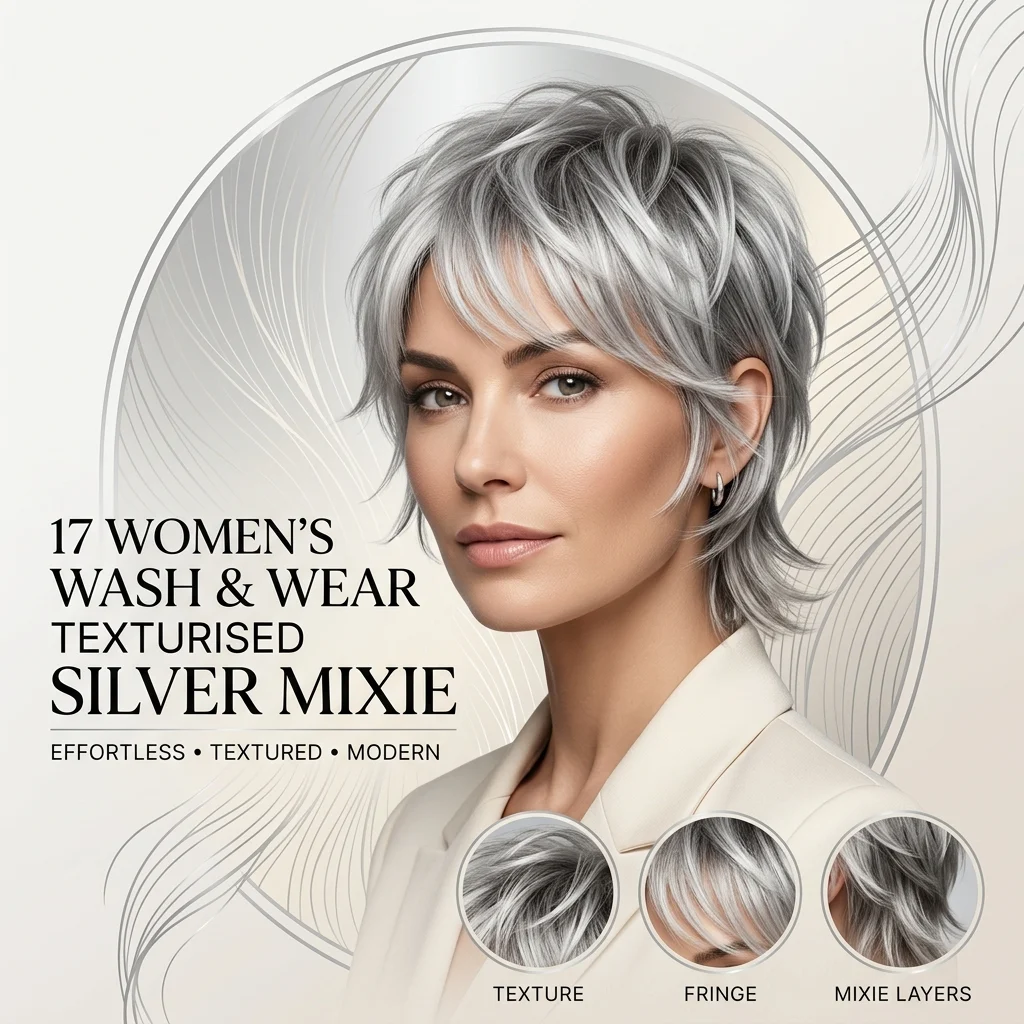
17 Silver Mixie Haircut Ideas That Are Truly Wash and Wear

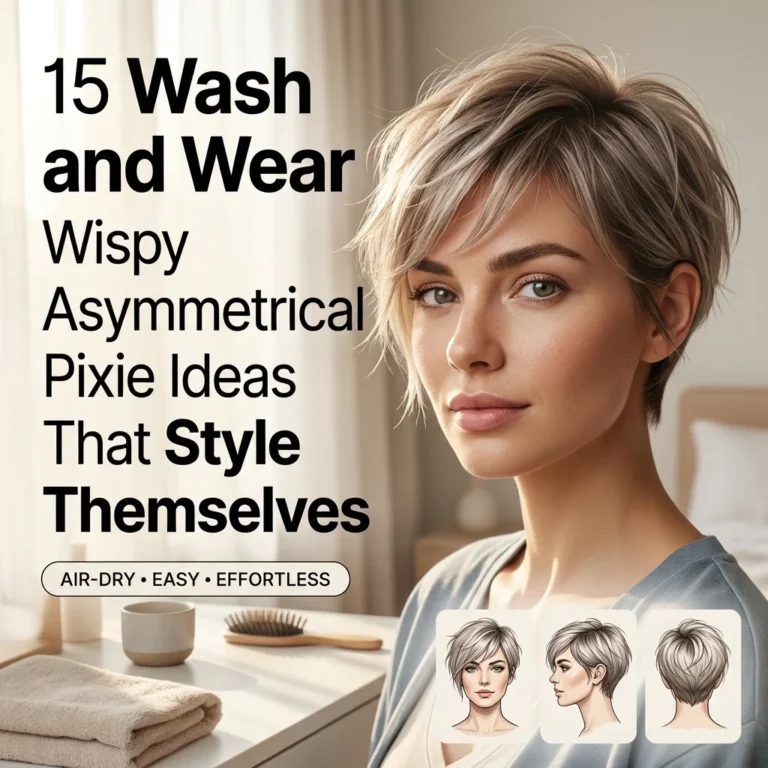
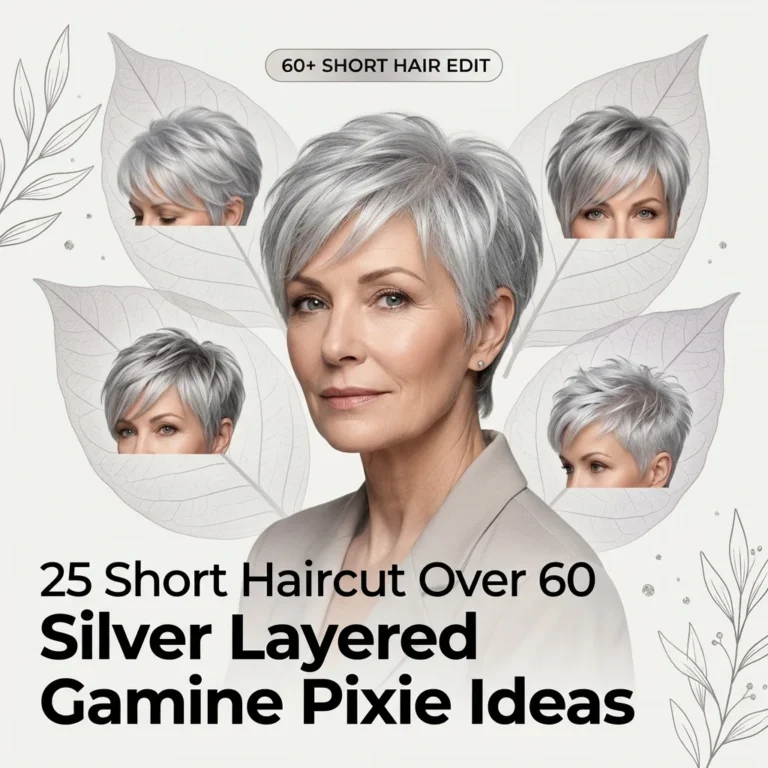
A mixie is a hybrid haircut that blends a cropped, textured pixie through the crown with a longer, mullet-influenced nape and sides, and “wash and wear” means it’s cut specifically to fall into shape as it air-dries, no blow-dryer required. This article gives you 17 wash and wear texturised silver mixie ideas: cut structure, gray-blending color, and air-dry technique that work with your natural texture instead of fighting it.
Picture stepping out of the shower, scrunching in a little paste, and walking out the door with hair that already looks finished. This cut feels quick, textured, a little rebellious. The kind of shape that gets more interesting the less you fuss with it. It reads confident and current, not undone by accident. Here are 17 ideas worth saving, and stealing.
Style at a Glance
| Element | Detail |
| Philosophy | Structured contrast (cropped up top, extended behind) with wash and wear ease |
| Key Techniques | Disconnected layering, point-cutting, razored texture, silver balayage |
| Key Tones | Charcoal root, dove gray, platinum-silver ends |
The 17 Looks
1. The Foundational Mixie Cut: Where Pixie Meets Mullet
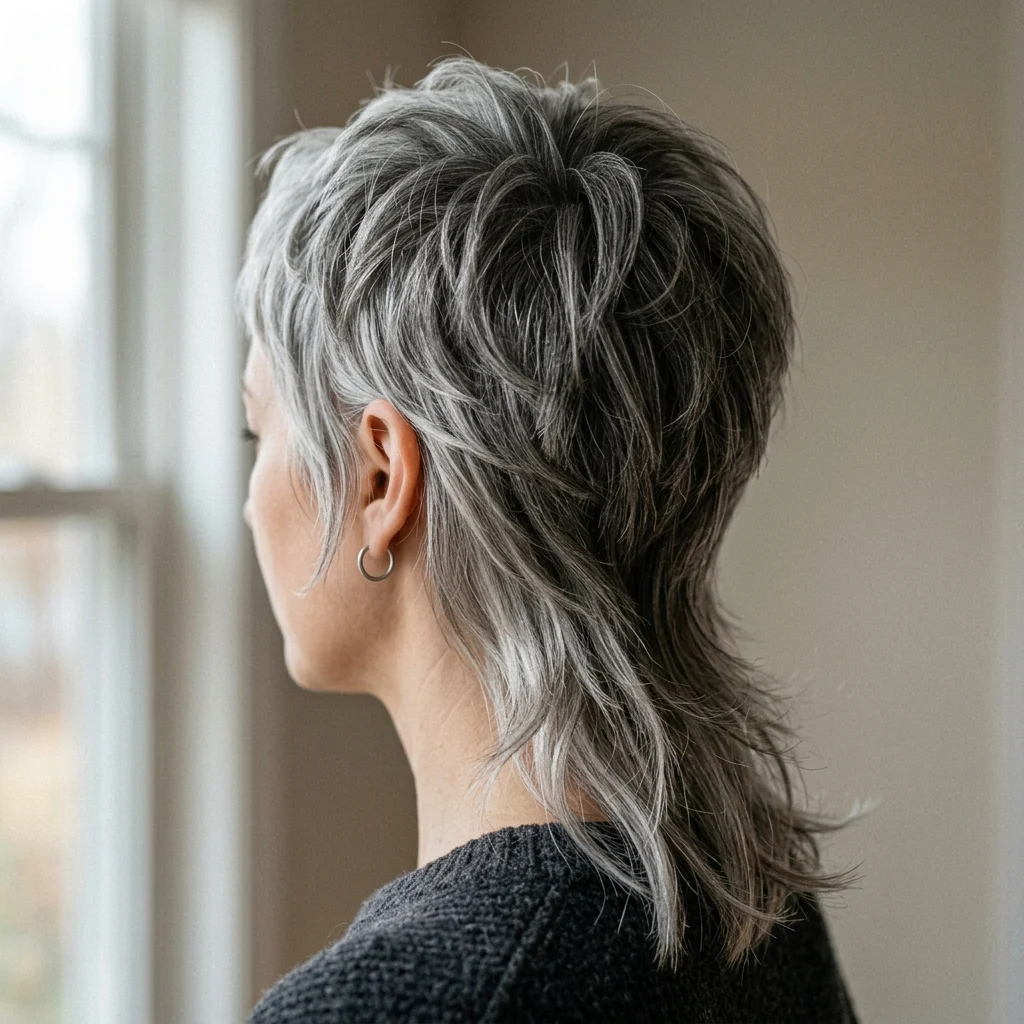
Vibe: Grounded, with a silhouette that reads differently from every angle.
Why it works: The technique principle here is disconnected sectioning: rather than blending the crown into the nape gradually the way a standard layered cut does, the mixie cuts these two zones as separate lengths with a deliberate, visible transition at the occipital bone. This structural contrast is what gives the cut its identity (cropped and textured up top, longer and looser behind), and it’s precisely why the mixie reads as more than a simple short haircut in photos and in person.
How to get it: Ask your stylist for “disconnected mixie sectioning” specifically, with at least a two-inch length difference between the crown and the nape, point-cut throughout rather than blunt-cut for a feathered, wash and wear finish.
💡 Quick Win: Bring three reference photos from different angles (front, side, and back) since the mixie’s structure is defined by a silhouette that’s hard to communicate from a single photo.
Shop the Look
| Product |
| Matte texturizing paste for crown definition |
| Small precision scissors for at-home touch-ups |
| Wide-tooth detangling comb |
| Heat protectant mist for occasional styling |
| Silk pillowcase to preserve texture overnight |
2. Charcoal-to-Silver Root Shadow
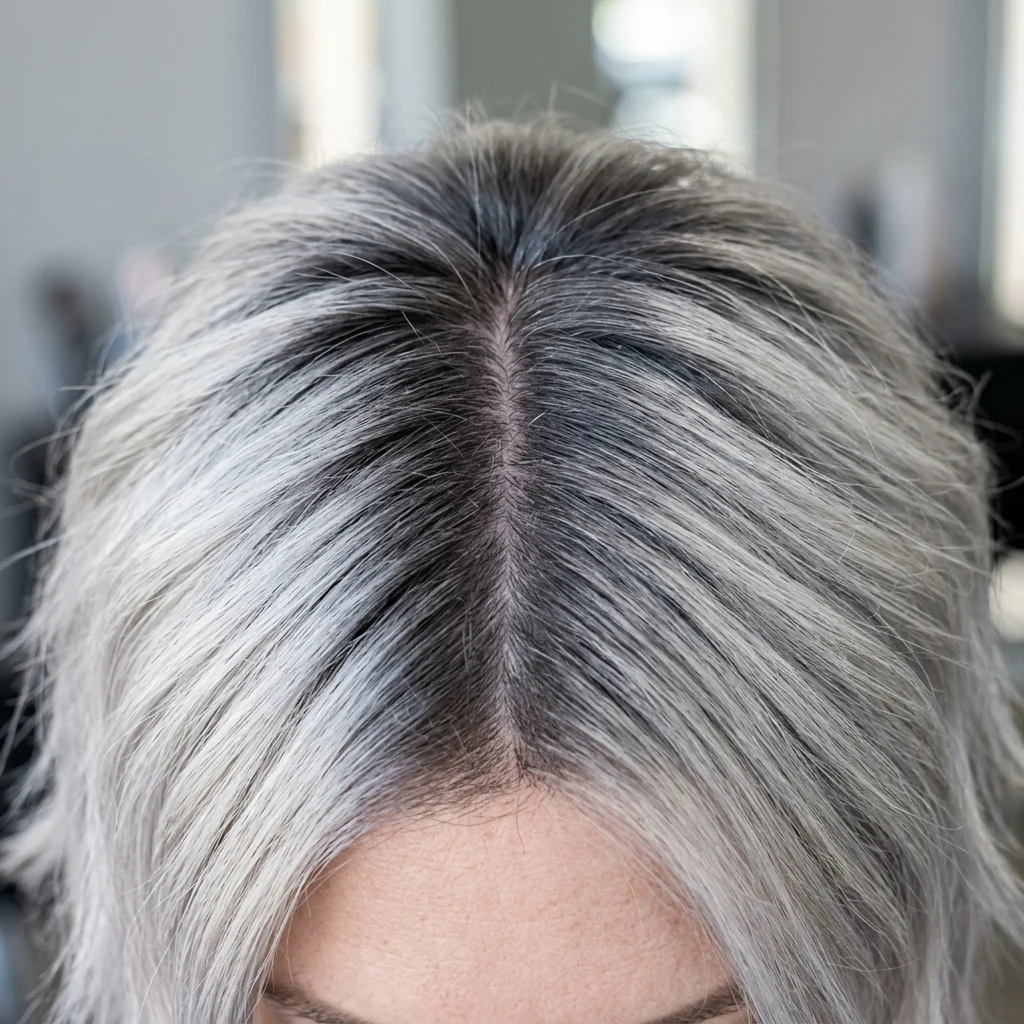
Vibe: Luminous, with depth that builds from the scalp outward.
Why it works: The design principle is tonal gradation as authenticity: a root shadow deposits a soft charcoal tone directly at the root and blends it downward with a brush rather than a hard foil line, which mimics exactly how natural gray grows in, darker near the scalp, lighter through the mid-lengths and ends. This is what separates a professionally blended gray from a flat, single-process dye job, and it’s the reason the color reads as grown rather than applied.
How to get it: Ask your colorist for a “shadow root” gloss applied within the first inch of the part, blended with a tint brush rather than foiled, refreshed every six to eight weeks to keep the transition seamless.
Shop the Look
| Product |
| Demi-permanent root gloss kit |
| Charcoal-toned root touch-up powder |
| Color-safe conditioning mask |
| Tint brush for precise root application |
| Purple-toned shampoo for brassiness control |
3. Diffuser-Free Curl Activation Method
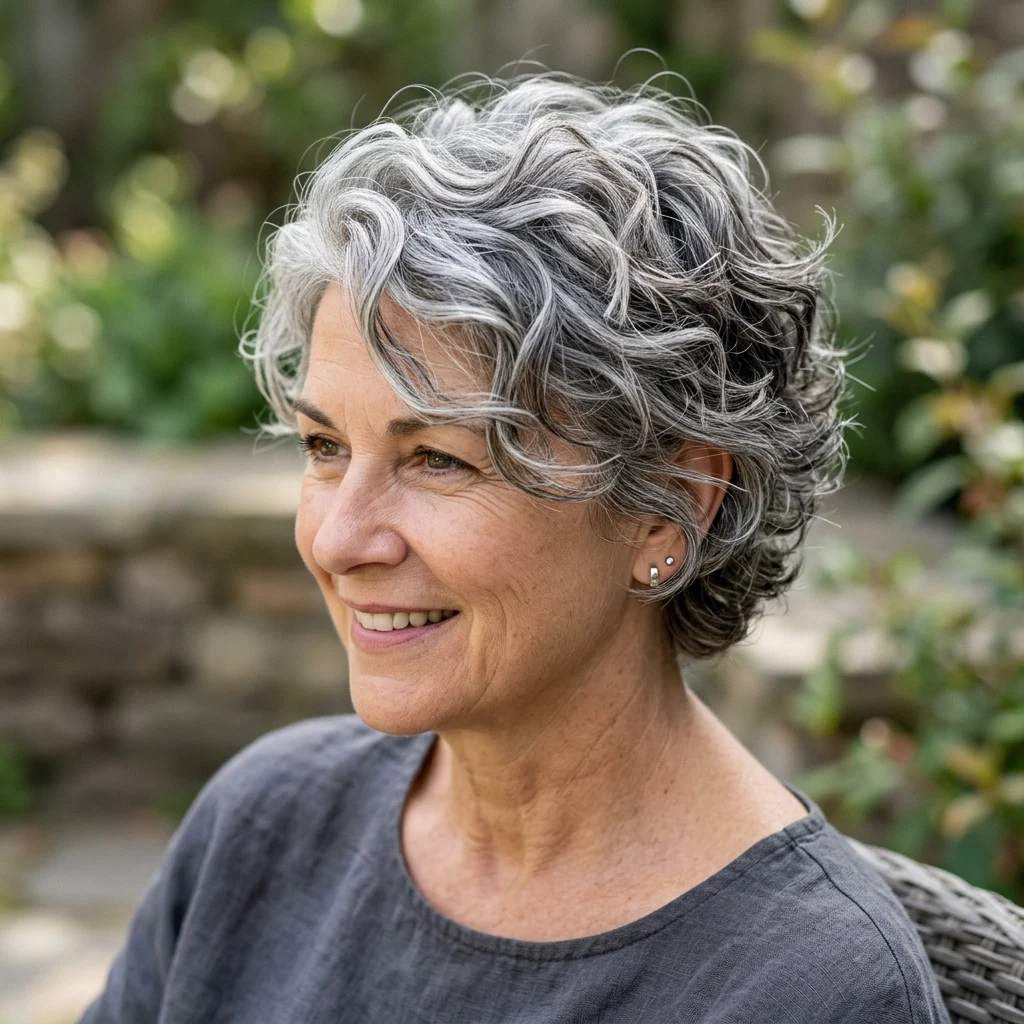
Vibe: Airy, with texture that looks like it happened on its own terms.
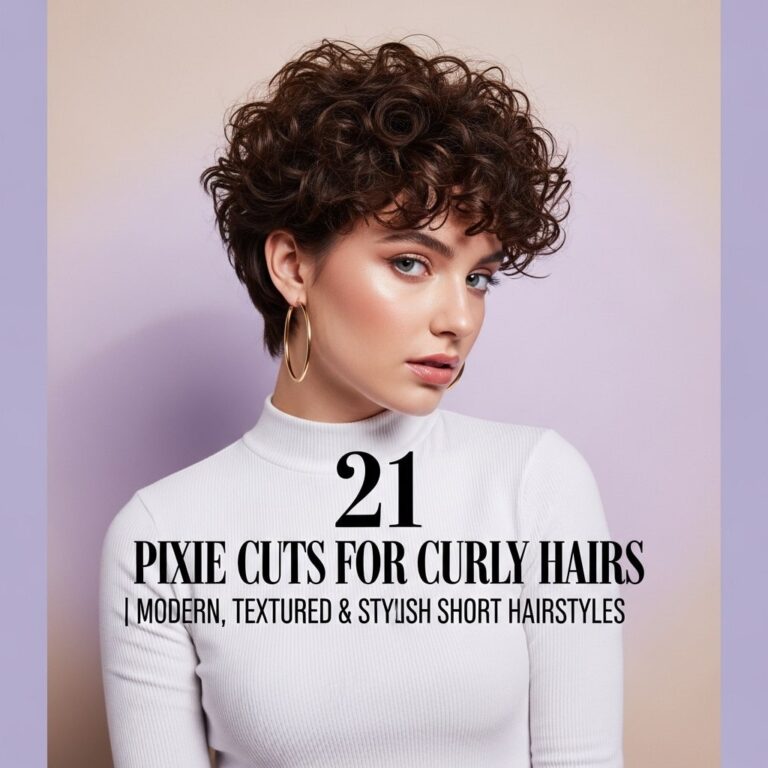
Why it works: The styling principle is cuticle manipulation without heat: scrunching a curl cream into soaking wet hair encourages each strand’s natural bend to show by roughing up the cuticle slightly, which increases grip between strands the same way sea salt roughens hair texture, but without the drying effect of heat styling or the equipment cost of a diffuser attachment.
How to get it: Apply a walnut-sized amount of curl cream to hair while it’s still dripping wet, scrunch upward from the ends toward the scalp, then let it air-dry undisturbed for at least 20 minutes before touching it.
💡 Quick Win: Sleeping in a loose braid overnight extends this texture into day two without any additional product.
Shop the Look
| Product |
| Curl-defining cream for wavy texture |
| Microfiber hair towel to reduce frizz |
| Anti-frizz leave-in spray |
| Satin scrunchies for overnight preservation |
| Flexible-hold finishing spray |
4. Cropped Crown, Extended Nape Silhouette
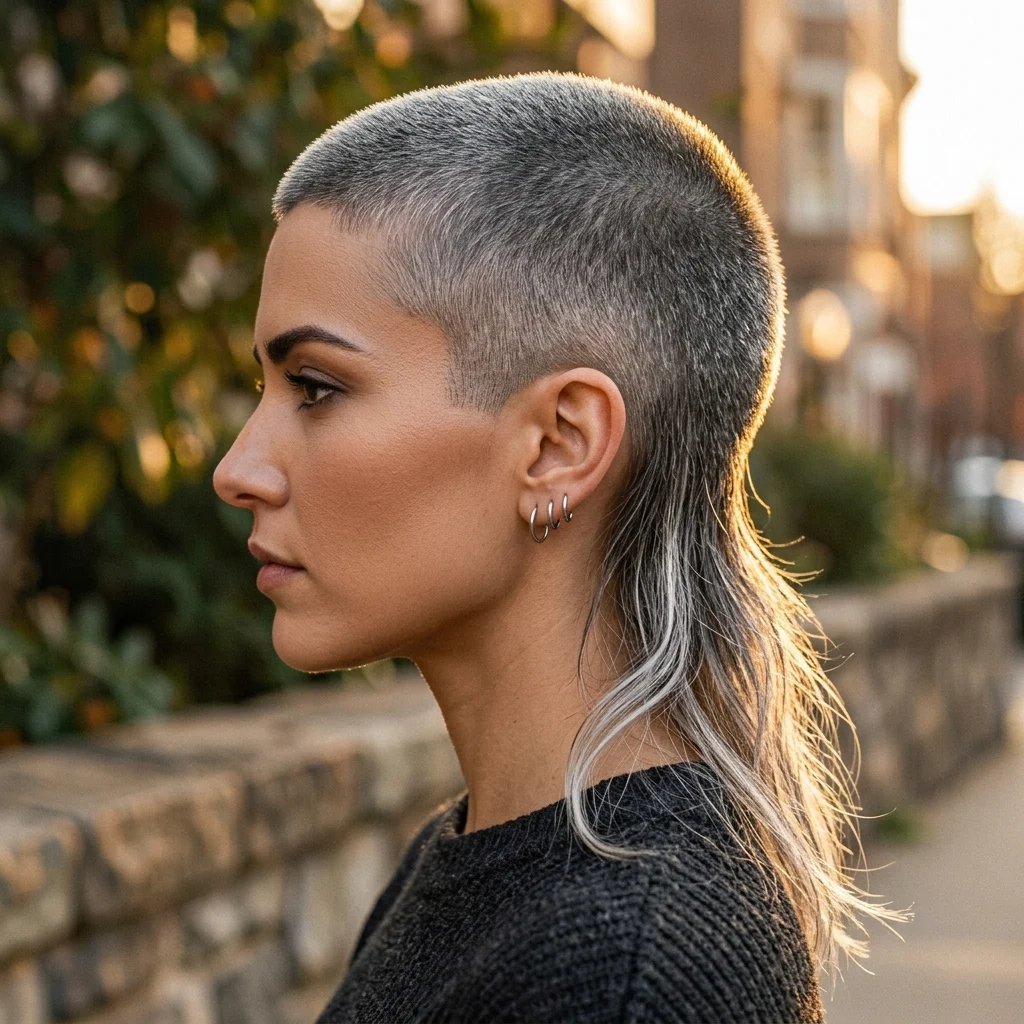
Vibe: Bold, with a shape that announces itself the moment you turn your head.
Why it works: The proportion principle at work is scale contrast: a crown cut short enough to sit under an inch paired with a nape left three to four inches long creates a dramatic size difference between the two zones, the same way an architect uses scale disparity to make a structure feel intentional rather than accidental. Without this contrast, the mixie collapses into an ordinary short layered cut.
How to get it: Request the crown clippered or scissor-cut to under an inch in length, while the nape and sides are left long enough to fall past the collar, with the sides tapered gradually to connect the two zones.
Shop the Look
| Product |
| Compact hair clippers for crown maintenance |
| Firm-hold pomade for crown structure |
| Round ceramic brush for nape volume |
| Shine-enhancing hair oil |
| Flexible finishing hairspray |
5. Brow-Skimming Wispy Fringe
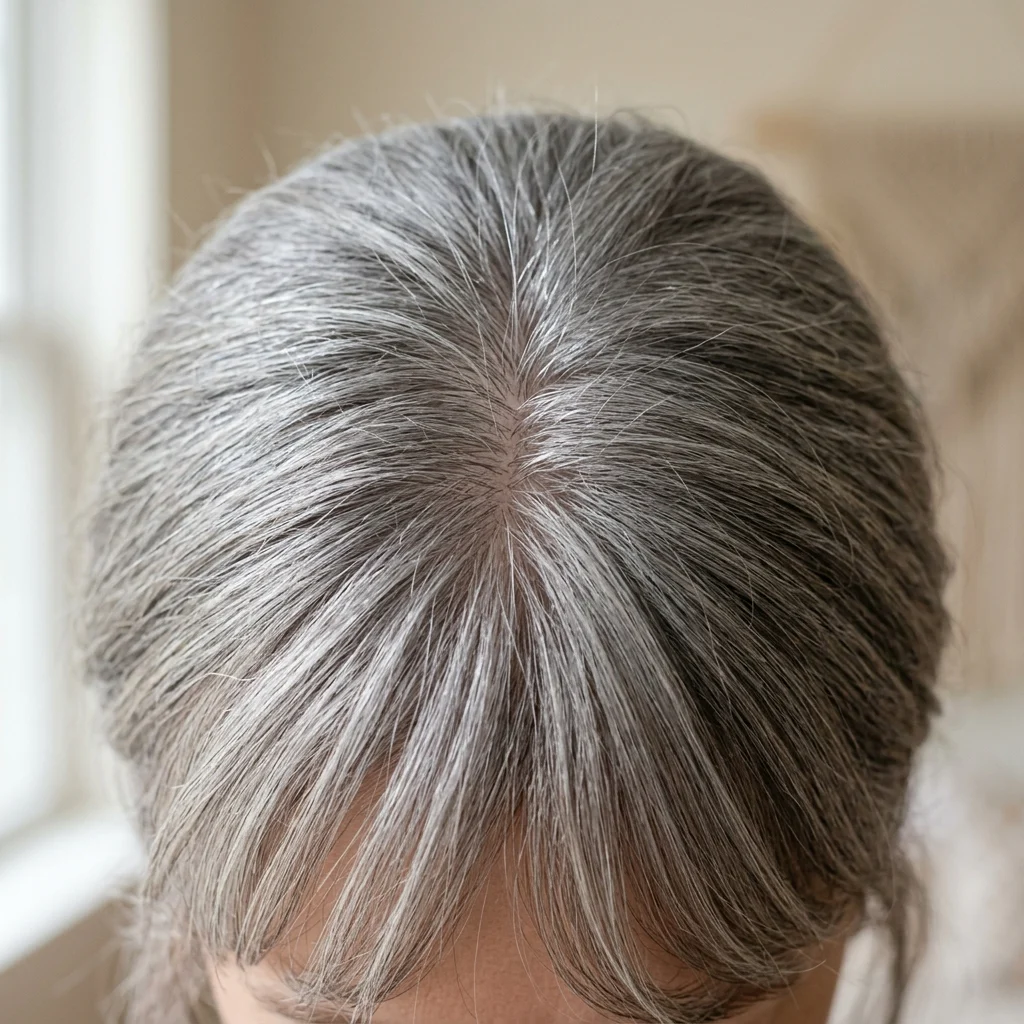
Vibe: Soft, with a fringe that falls into place without a single pass of a brush.
Why it works: The technique principle is weight removal through point-cutting: cutting the fringe’s ends at a 45-degree angle rather than straight across removes bulk unevenly along each strand, which is what allows it to feather and split naturally as it dries instead of requiring a round brush and blow-dryer to sit correctly. The defining difference between a wash and wear fringe and a styled one.
How to get it: Ask your stylist to cut the fringe two inches longer than a traditional blunt bang, point-cut at the ends, so it settles into a soft center part on its own as it air-dries.
Shop the Look
| Product |
| Lightweight texturizing cream for fine hair |
| Small sectioning clips for fringe training |
| Anti-static comb for humid climates |
| Wide-tooth wooden comb |
| Travel-size dryer for quick touch-ups |
6. Disconnected Razored Crown Layers
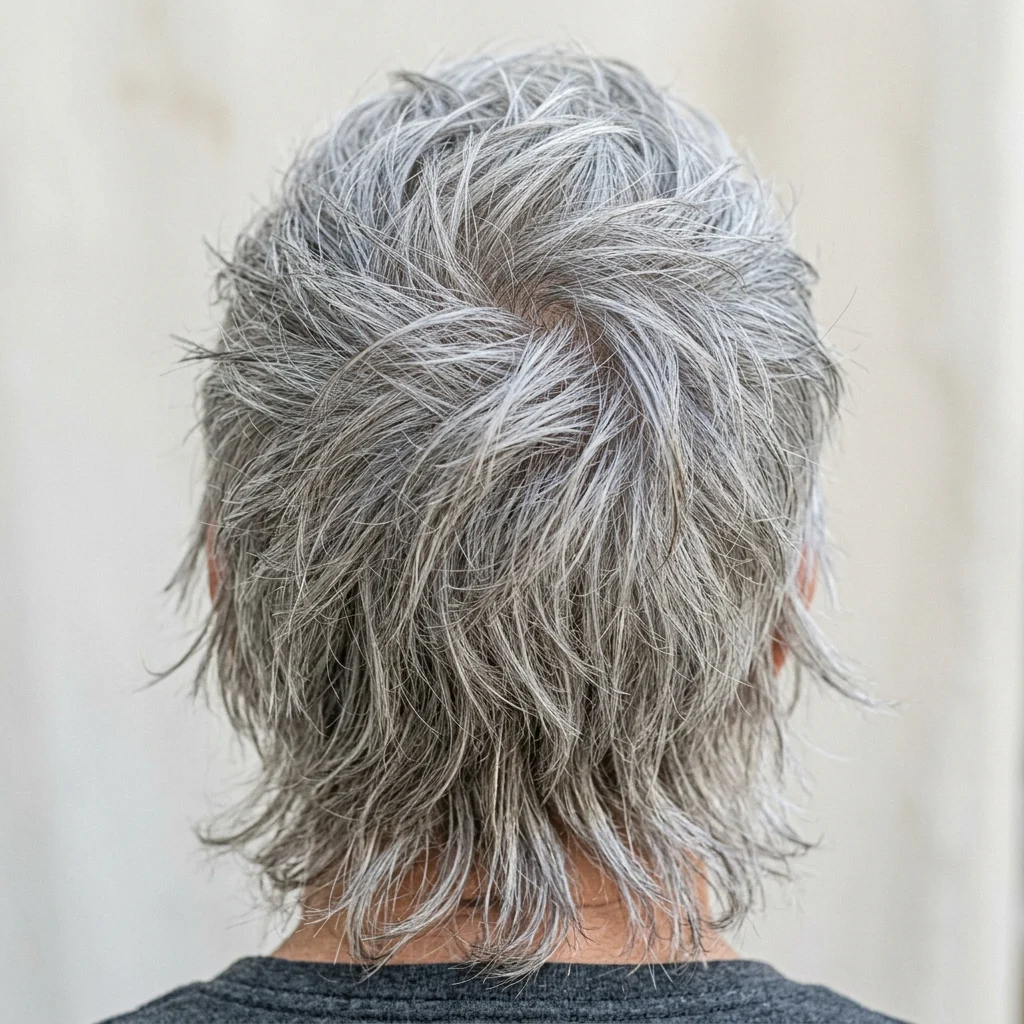
Vibe: Raw, with texture that reads as deliberate rather than grown-out.
Why it works: The cutting principle is disconnection over blending: rather than graduating the crown layers smoothly into one another, each layer is cut at a distinctly different length with a razor, which removes weight unevenly and produces the choppy, piece-y separation that defines textured short cuts. Blended layers look tidy right after a cut but fall flat once air-dried; disconnected ones hold their shape.
How to get it: Ask specifically for “razor-cut disconnected layers” throughout the crown, which works especially well on coarse or wiry silver hair that resists soft texture from scissors alone.
💡 Quick Win: A texturizing powder dusted only at the crown before styling adds instant grip for holding the disconnection.
Shop the Look
| Product |
| Professional-grade texturizing spray |
| Thinning shears for at-home upkeep |
| Texturizing powder for crown grip |
| Boar bristle brush for smoothing without flattening |
| Matte finishing paste for piece-y ends |
7. Edge-to-Edge Platinum Balayage Wash
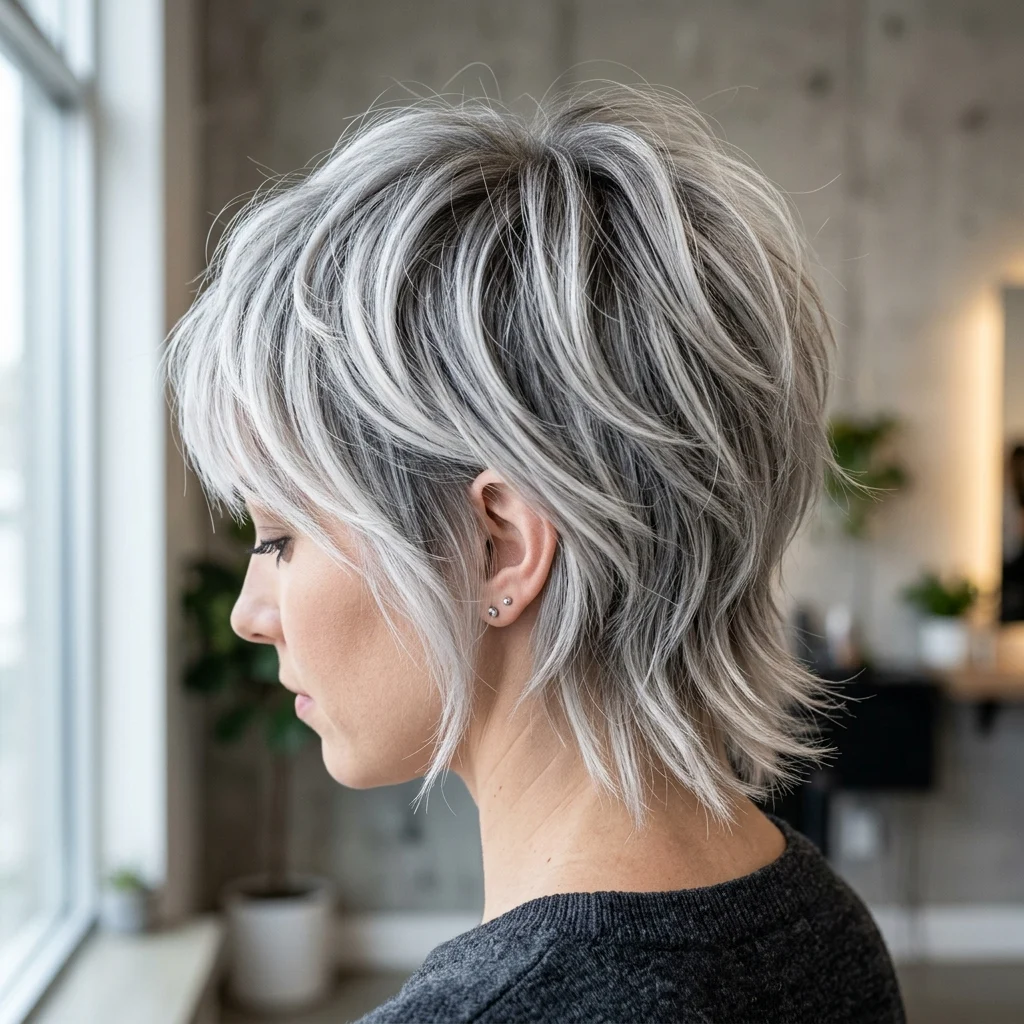
Vibe: Crisp, with silver threaded evenly through every layer of the cut.
Why it works: The color principle is surface painting versus saturation: balayage hand-paints lightener onto the hair’s surface in diagonal sections rather than saturating from root to tip the way a foiled highlight service does, which mimics how natural gray disperses unevenly and lets the mixie’s choppy layers catch light differently at every angle instead of reading as one flat tone.
How to get it: Request balayage painted in small, diagonal sections throughout both the cropped crown and the longer nape, with slightly heavier saturation at the ends where the layers are shortest and most visible.
Shop the Look
| Product |
| Cool-toned glossing treatment |
| Blue or violet shampoo for brass control |
| Bond repair spray for lightened strands |
| Fine-tooth foiling comb |
| Color-depositing conditioner in ash tones |
8. Dual-Zone Volume: Full Crown, Tapered Sides
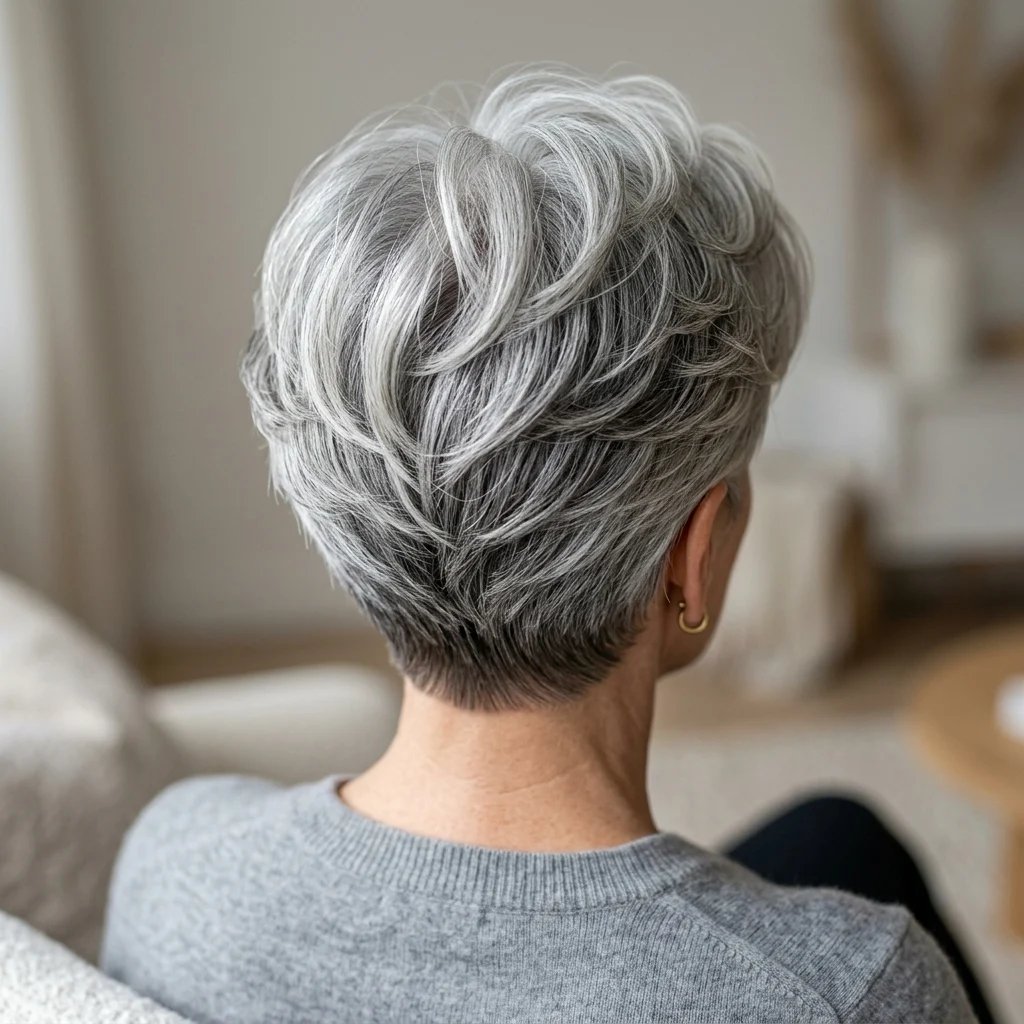
Vibe: Layered, with a clear rhythm from full to controlled.
Why it works: The layout principle is zone definition: concentrating volume specifically at the crown while keeping the sides tapered and close to the head defines two distinct areas within one cut, the same way a small room feels more considered when a busy zone is balanced against a quiet one. Without this zoning, a mixie can read as uniformly bulky rather than intentionally shaped.
How to get it: Ask your stylist to leave two to three inches of length at the crown for lift, while the sides are cut or clippered progressively shorter toward the ear.
Shop the Look
| Product |
| Root-lifting volumizing spray |
| Small round brush for crown lift |
| Dry shampoo with volumizing powder |
| Compact clippers for side taper maintenance |
| Flexible-hold hairspray for all-day structure |
9. Matte Paste Texture Lock Finish
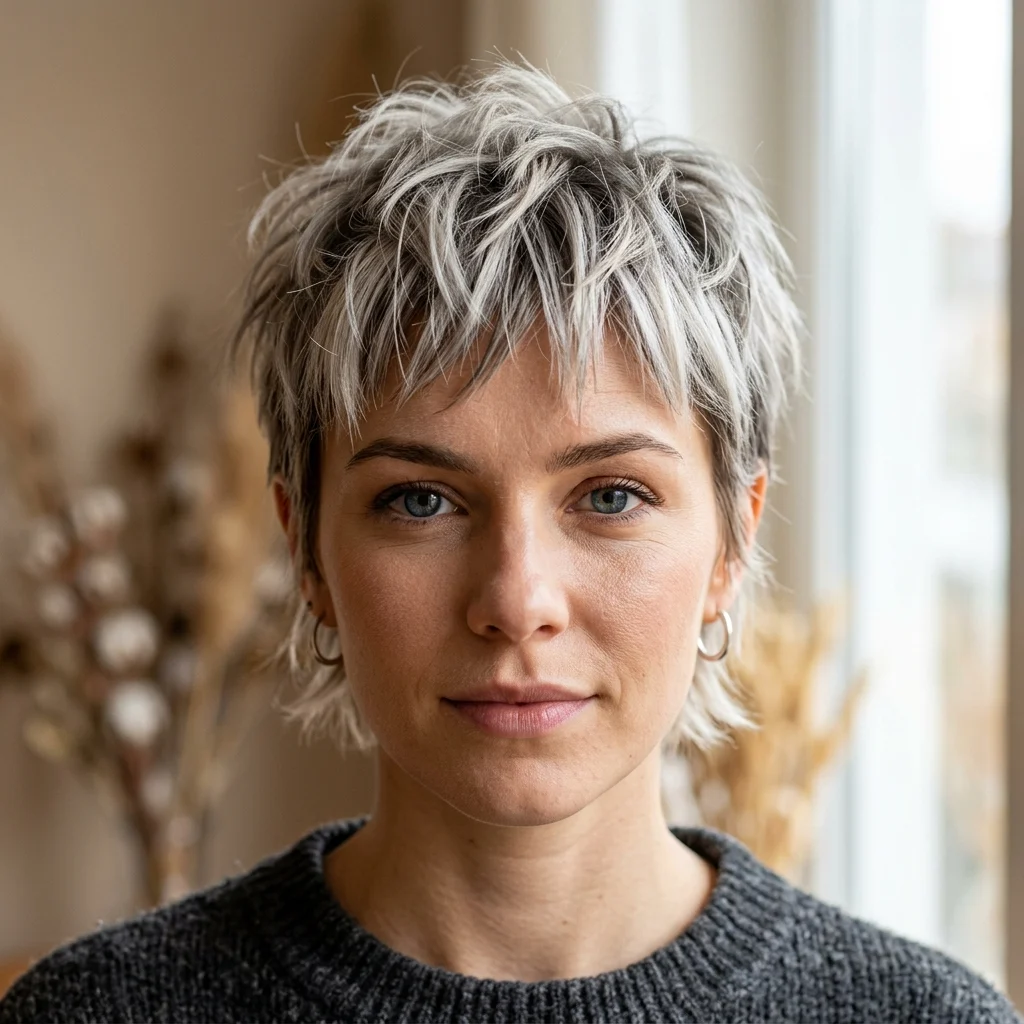
Vibe: Sun-warmed, with a finish that looks like it happened outdoors, not in a salon chair.
Why it works: The finishing principle is matte over gloss for texture retention: a wax or clay-based paste coats each strand with a slight residue that increases grip between hairs, which is what allows piece-y separation to hold through the day, whereas glossy serums or oils actually reduce grip and cause texturised layers to fall smooth within hours.
How to get it: Rub a dime-size amount of matte clay paste between your palms until warm, then pinch small sections of dry hair from root to tip rather than raking it through evenly.
Shop the Look
| Product |
| Matte clay texturizing paste |
| Texturizing powder for extra grip |
| Wide-tooth comb for gentle separation |
| Travel-size matte paste for on-the-go touch-ups |
| Sea salt texturizing spray as a paste alternative |
10. Clippered Undercut Side Panels
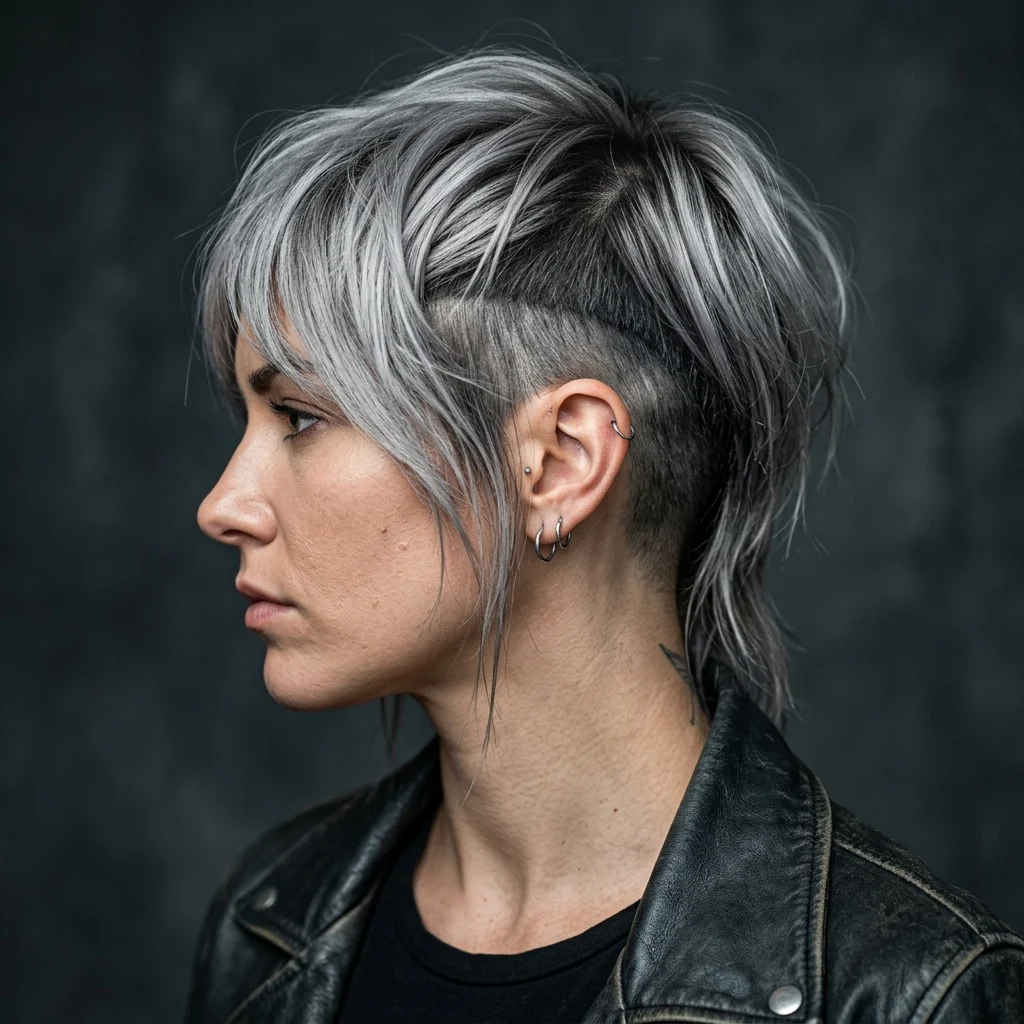
Vibe: Edgy, in a way that’s hidden until you choose to reveal it.
Why it works: The structural principle is negative space through removal: clippering the sides beneath the longer top layer removes bulk exactly where it isn’t needed, creating negative space that reduces overall weight and lets the mixie sit closer to the head without looking thin, a technique borrowed from architecture, where hidden structure supports a cleaner visible line above it.
How to get it: Ask for a short, clippered undercut along both side panels, left concealed by the longer top layer unless you choose to style it swept back and exposed.
💡 Quick Win: A matte pomade combed through the exposed undercut on days you want it visible takes under a minute and adds instant definition.
Shop the Look
| Product |
| Compact hair clippers for undercut maintenance |
| Matte pomade for styling the undercut |
| Neck brush for post-trim cleanup |
| Small tail comb for sectioning |
| Texturizing powder for the top layer |
11. Single-Strand Platinum Face Frame
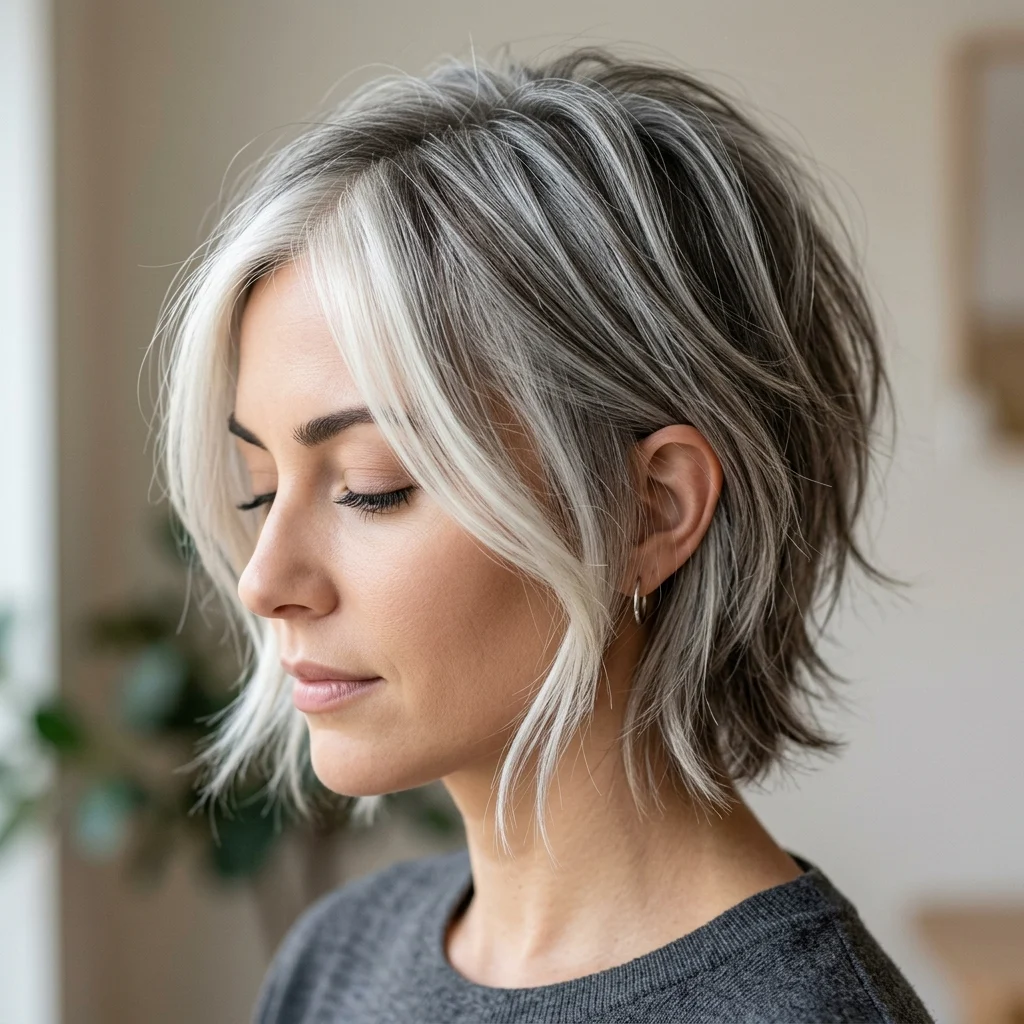
Vibe: Serene, with one bright note doing all the work.
Why it works: The color principle is concentrated contrast: placing the brightest platinum tone at a single face-framing section rather than lightening the whole head uses visual contrast strategically, drawing the eye to the one area that’s most flattering, directly beside the eyes, while keeping the rest of the color commitment, and cost, minimal.
How to get it: Request a single foil, roughly one inch wide, placed just off-center at the front hairline and lightened two to three shades brighter than the rest of your silver blend.
Shop the Look
| Product |
| Illuminating hair gloss for platinum strands |
| Small precision styling brush |
| Fine-tooth foiling comb |
| Purple-toned shampoo for brassiness control |
| Shine-enhancing hair oil for face-framing pieces |
12. Point-Cut Perimeter for Feathered Ends

Vibe: Raw, with ends that catch the air instead of sitting heavy.
Why it works: The technique principle is perimeter softening: point-cutting the entire outer edge of the mixie, rather than leaving a blunt scissor line at the nape and crown, removes the dense, single-plane edge that makes a haircut look rigid and replaces it with a feathered boundary that moves as you do, essential for a cut meant to air-dry into shape rather than be blow-dried into one.
How to get it: Ask your stylist to point-cut the entire perimeter in small, quarter-inch sections rather than a straight horizontal pass with the scissors.
Shop the Look
| Product |
| Small precision scissors for at-home perimeter trims |
| Anti-frizz smoothing serum |
| Wide paddle brush for gentle detangling |
| Heat-resistant styling glove |
| Shine-enhancing finishing spray |
13. Diagonal Side-Swept Fringe Sweep
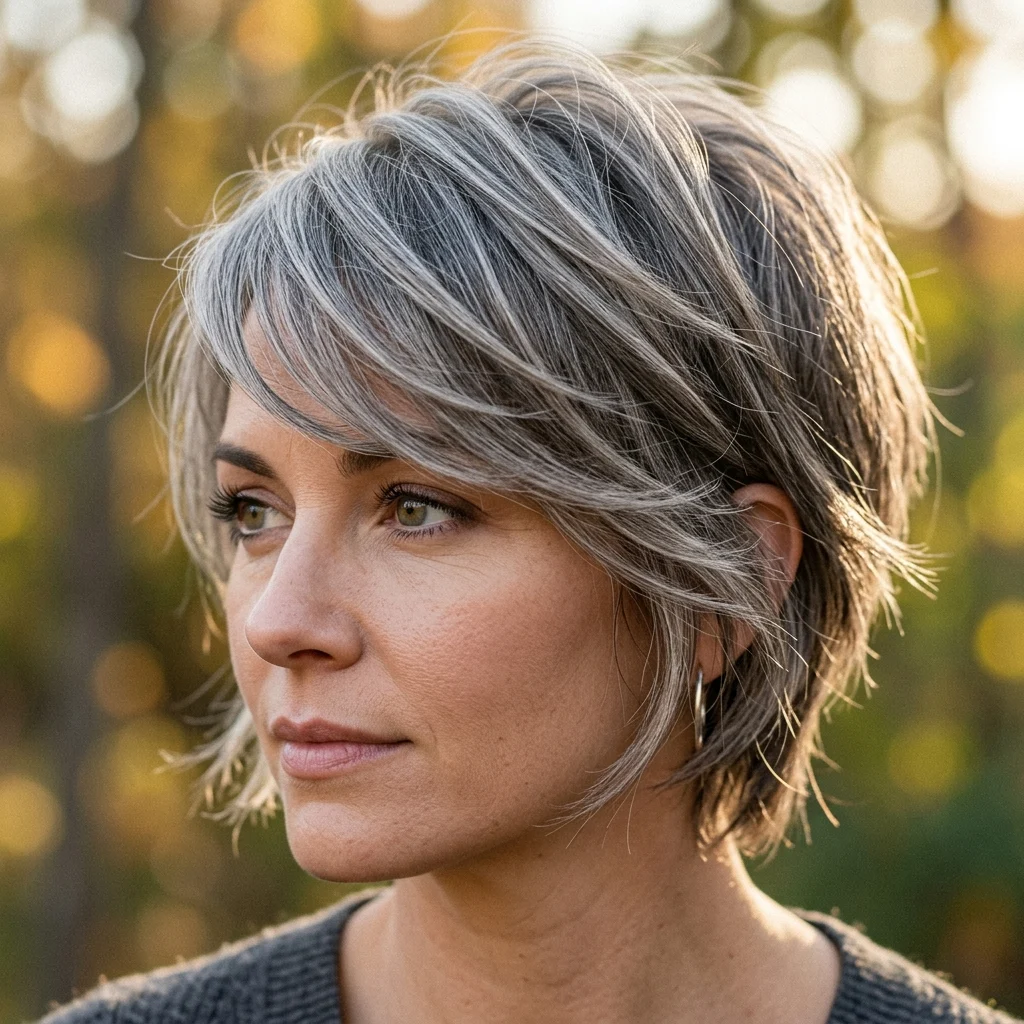
Vibe: Romantic, with a diagonal line that softens everything it crosses.
Why it works: The proportion principle is asymmetry as softening device: cutting the fringe on a diagonal rather than straight across creates an angled line that draws the eye across the face instead of stopping it at a hard horizontal edge, which is the same technique used to soften angular features in portraiture, here applied directly to hair.
How to get it: Have the fringe cut longest at the part and graduating shorter toward the temple, blended into the crown layers so there’s no visible seam between the two sections.
💡 Quick Win: Blow-drying the fringe just once over a large round brush, in the direction you want it to fall, trains it to sweep that way on air-dry days too.
Shop the Look
| Product |
| Large round brush for training fringe direction |
| Flexible-hold fringe spray |
| Small clips for sectioning during blow-dry |
| Smoothing cream for diagonal fringe control |
| Detangling leave-in spray |
14. Fine-Hair Mixie Density Trick
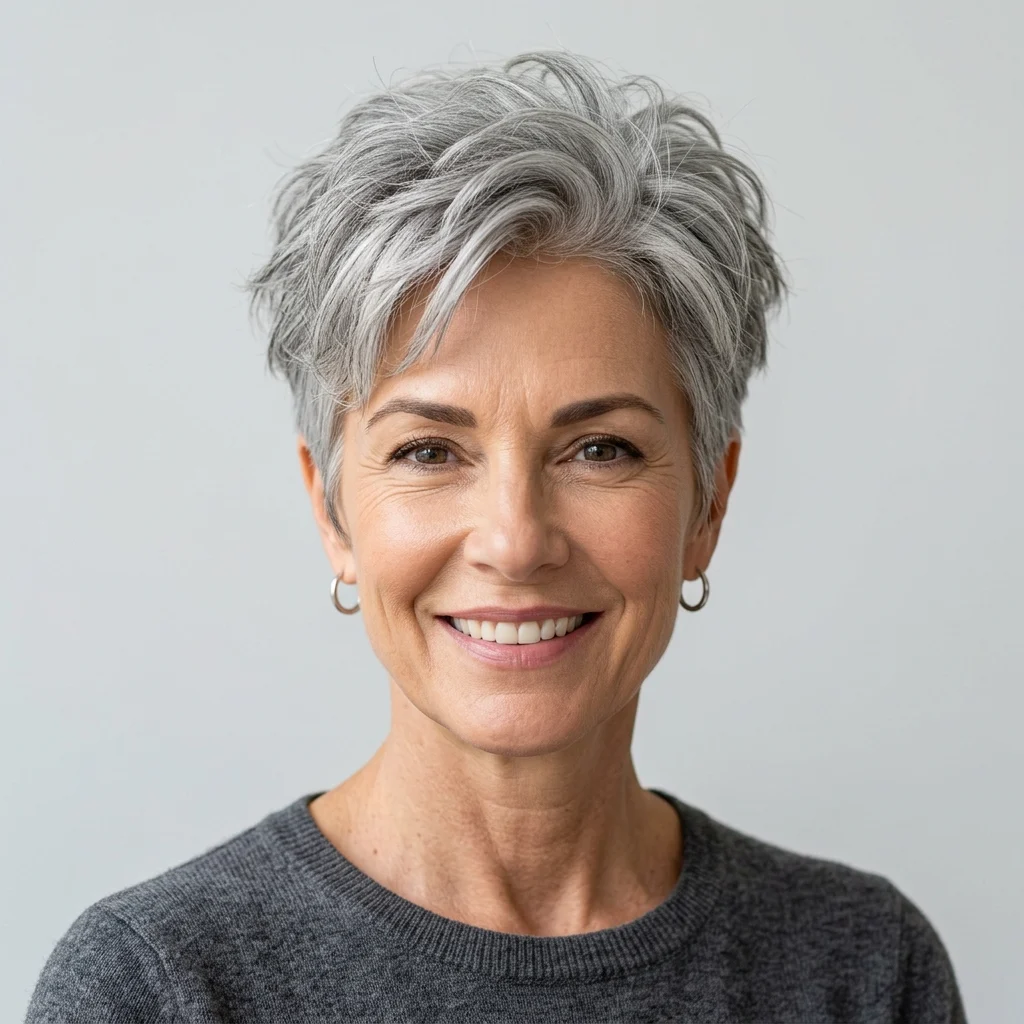
Vibe: Light and lifted, never weighed down by its own layers.
Why it works: The volume principle is weight distribution by length: fine hair holds more visible density when the shortest layers are concentrated at the crown, where less length means less weight pulling the roots flat, while the longer nape is left less heavily layered so it doesn’t thin out further: the opposite distribution of a standard layered cut, and the reason a generic mixie sometimes underperforms on fine hair without this adjustment.
How to get it: Ask your stylist to keep the crown layers no longer than two inches and the nape layering minimal, then scrunch a volumizing mousse into damp roots before air-drying.
Shop the Look
| Product |
| Lightweight volumizing mousse |
| Root-lifting spray for fine hair |
| Dry shampoo with volumizing powder |
| Clip-in root volumizers for special occasions |
| Fine-hair specific heat protectant spray |
15. Wet-Set Scrunch and Air-Dry Method
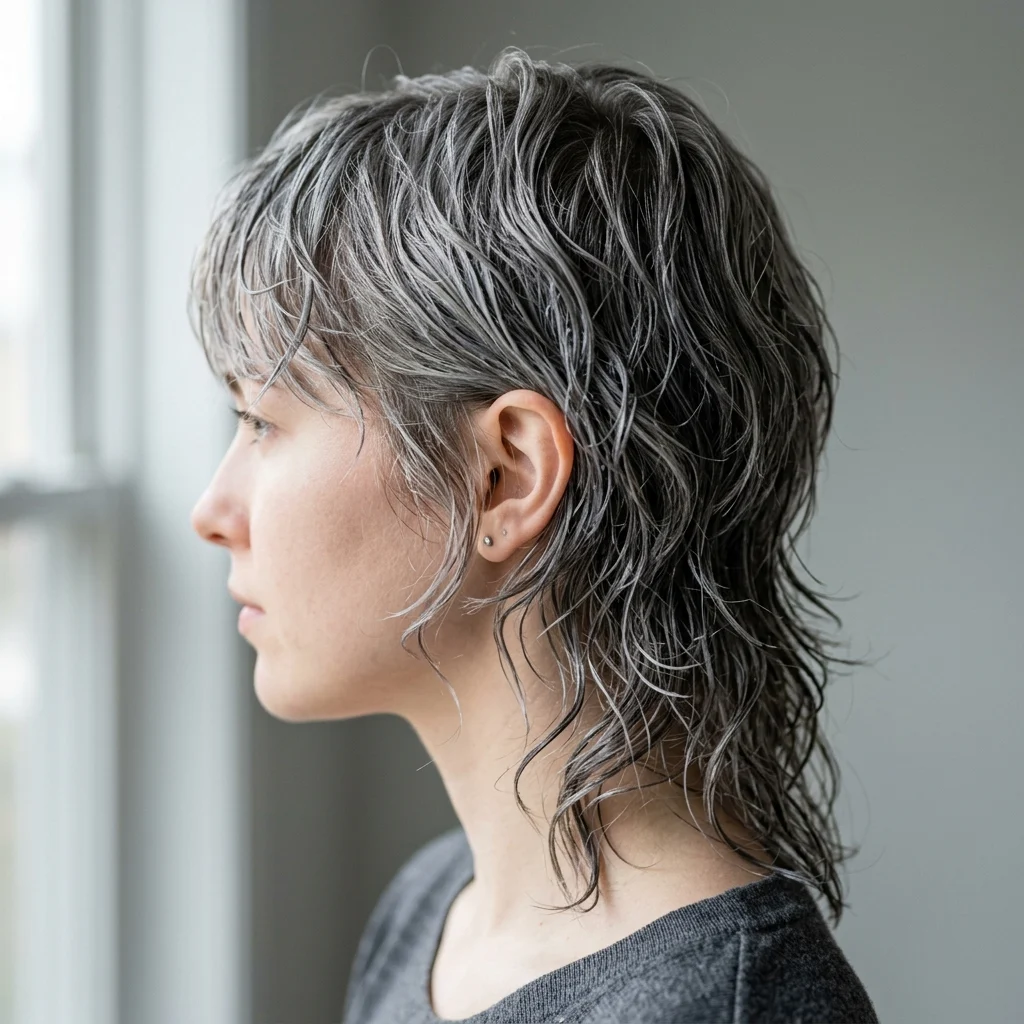
Vibe: Hushed, like hair that’s settling into its final shape without any rush.
Why it works: The technique principle is product layering by wetness level: applying a lightweight gel to soaking wet hair first, followed by a texturizing cream once it’s about 70% dry, builds hold in stages rather than overloading damp hair with heavy product all at once. Layered application is what keeps the finished texture from looking crunchy or overly set.
How to get it: Scrunch a walnut-sized amount of gel through dripping wet hair first, let it air-dry to roughly 70%, then work in a texturizing cream through the ends only for definition without stiffness.
Shop the Look
| Product |
| Lightweight styling gel for wet application |
| Texturizing cream for partial-dry finishing |
| Microfiber hair towel for gentle drying |
| Wide-tooth detangling comb |
| Diffuser attachment for occasional heat-assisted days |
16. Uneven Length Asymmetric Mixie
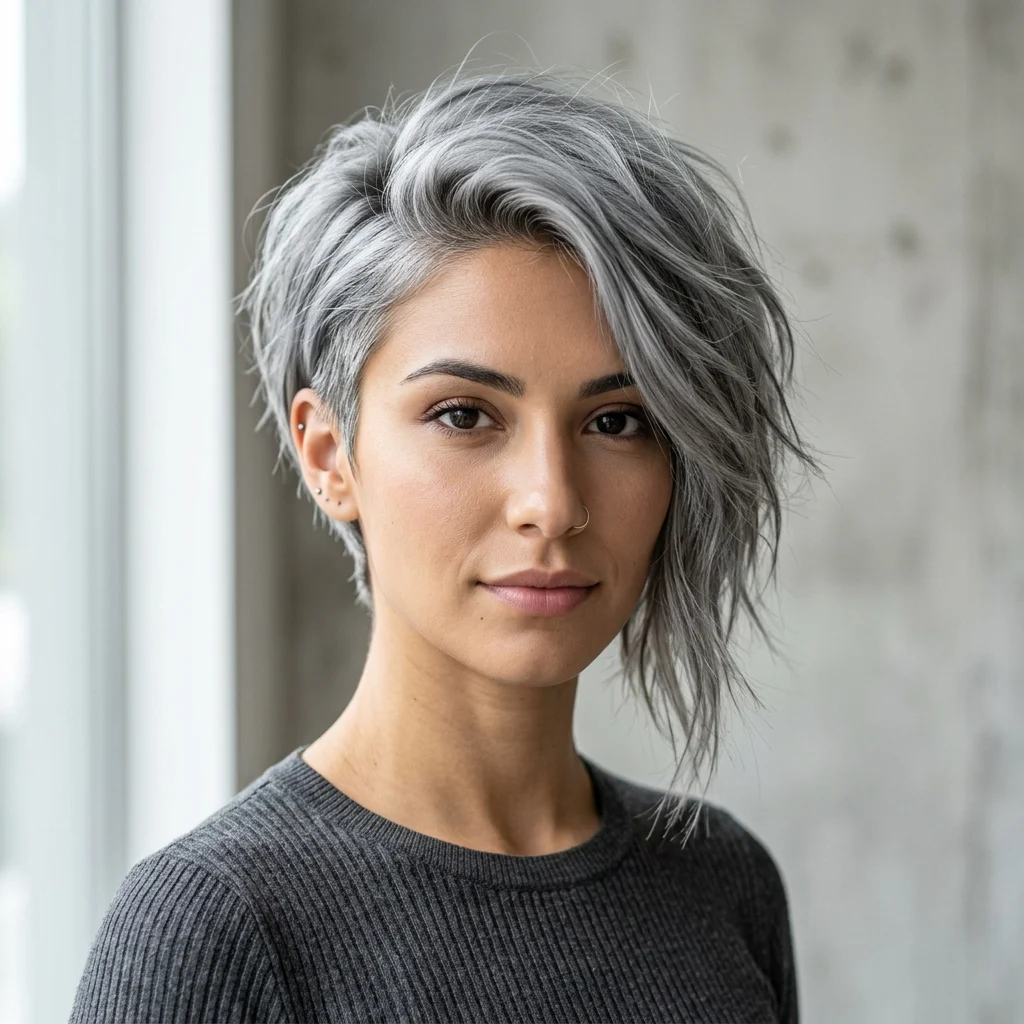
Vibe: Confident, with an off-balance line that keeps the eye moving.
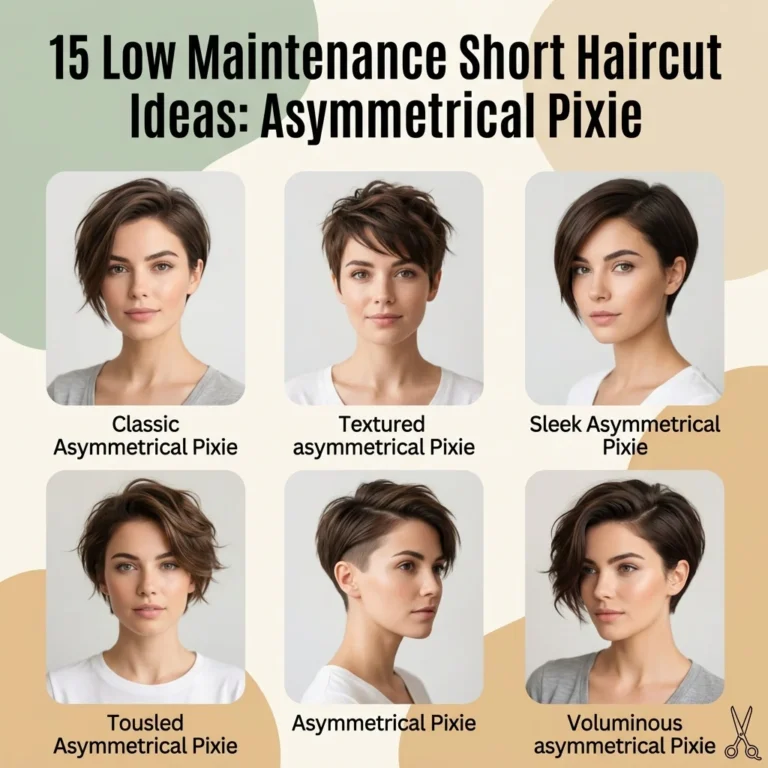
Why it works: The proportion principle is broken symmetry as visual interest: cutting one side noticeably longer than the other disrupts the balance a standard mixie relies on, creating asymmetrical tension that reads as more editorial and less formulaic, a technique frequently used in fashion editorial hair to keep a short cut from reading as generic.
How to get it: Ask for a one-and-a-half to two-inch length difference between the two front sections, with the shorter side kept above the jaw and the longer side left to skim it.
Shop the Look
| Product |
| Texturizing spray for defining asymmetry |
| Small clips for sectioning during styling |
| Mini flat iron for precise side pieces |
| Flexible-hold hairspray |
| Detangling leave-in spray |
17. Feathered Crown Flip Layers
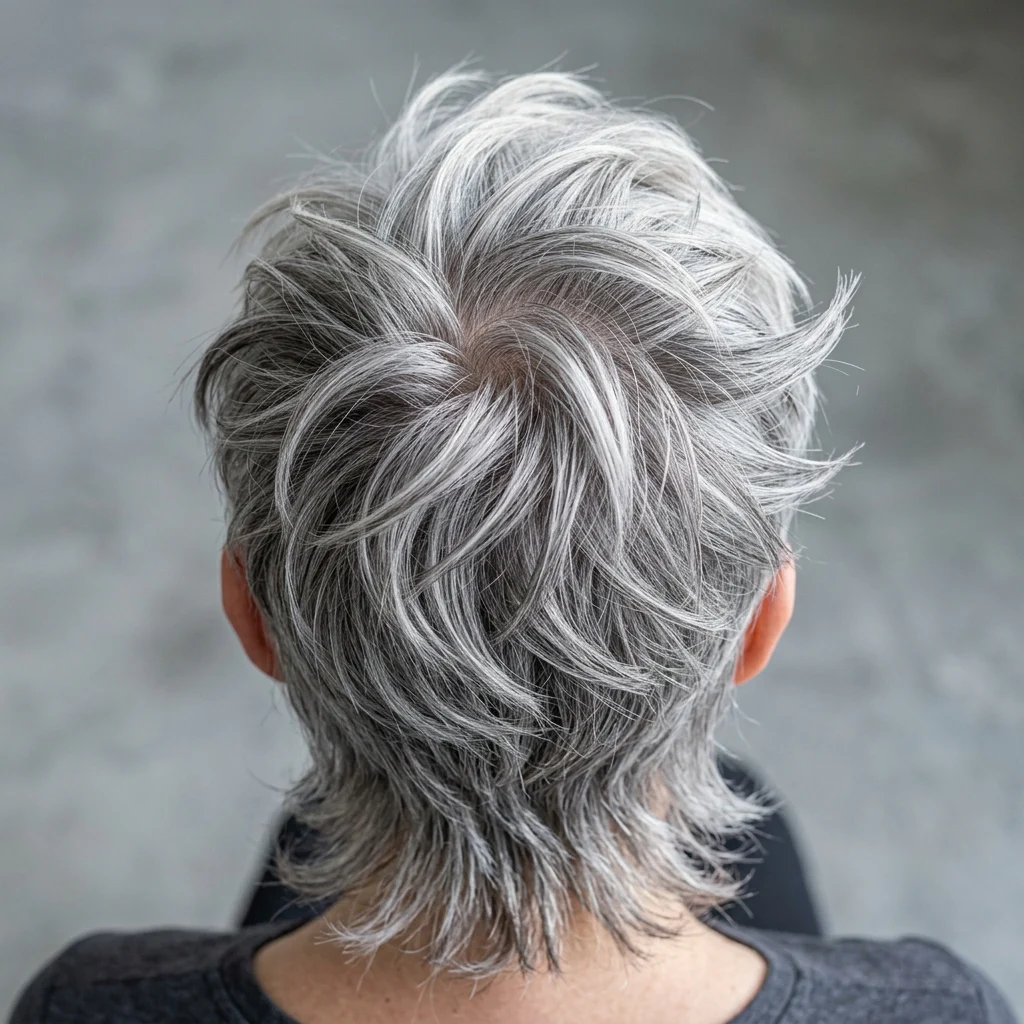
Vibe: Polished, the one look here that leans slightly more finished than undone.
Why it works: The cutting principle is directional layering: layers cut and angled to flip outward at the crown, rather than lying flat against the head, catch and reflect light differently along each strand’s edge, which is why silver and platinum tones look noticeably brighter in this configuration than in a smooth, downward-lying cut. Light behaves differently on an angled surface than a flat one.
How to get it: Ask your stylist to cut the crown layers with an outward flip built into the shape itself, so the ends naturally kick out even without a round brush finishing the effect.
Shop the Look
| Product |
| Small round brush for enhancing the flip |
| High-shine finishing serum |
| Flat iron with digital heat control |
| Ceramic round brush for a polished finish |
| Flexible finishing hairspray |
How to Start Your Wash and Wear Texturised Silver Mixie Transformation
The single best first move is booking a consultation focused on the crown-to-nape length ratio, not just the overall length you want. Bring reference photos from multiple angles and ask your stylist to mark exactly where the disconnection between the short crown and longer nape should sit relative to your head shape. This ratio is what determines whether the finished cut reads as a genuine mixie or simply an uneven short haircut.
The most common mistake is asking for the crown and nape to be blended smoothly, the way a standard layered cut is finished. Smooth blending erases the exact structural contrast that gives a mixie its identity, leaving a cut that looks like a generic pixie that’s simply grown out unevenly. The fix is requesting “disconnected sectioning” by name and confirming with your stylist that the transition point will be visible, not gradual.
Three budget entry points under $50: a matte clay texturizing paste for locking in piece-y separation, a violet-toned toning shampoo to keep silver tones from turning yellow, and a lightweight volumizing mousse for root lift if your hair is fine.
A full color-and-cut transformation typically takes two salon visits over four to six weeks. A cut-only starter version runs $55–$95 in a single weekend appointment, while a full platinum balayage transformation costs $180–$380 depending on length and gray coverage needed.
Frequently Asked Questions About Wash and Wear Texturised Silver Mixie Haircuts
What’s the difference between a mixie and a regular pixie cut?
A mixie combines a cropped, textured pixie through the crown with a longer, mullet-influenced nape and sides, while a regular pixie is cut uniformly short all over with minimal length variation between zones. The visible contrast between short and long is what defines a mixie; without that disconnection, the cut reads as a standard pixie. Stylists typically recommend a mixie for anyone wanting more versatility in styling than a classic pixie allows, since the longer nape can be tucked, flipped, or left loose.
What silver hair color works best with a texturised mixie?
Cool-toned grays like charcoal, dove gray, and platinum-silver blend most naturally, since they mimic how natural gray grows in rather than fighting a warm undertone. A single-strand face-framing highlight works as a subtler entry point, while full balayage suits those ready for a complete transformation. A cool-toned gloss refreshed every six to eight weeks keeps the silver from shifting warm between full color services.
How much does a silver mixie haircut and color cost?
A cut alone typically runs $55–$95 depending on region and salon tier, since the disconnected sectioning takes longer than a standard trim. Adding a root shadow or full balayage service brings the total to $180–$380 for the first full appointment, with touch-ups every six to eight weeks costing less than the initial visit. Starting with just a root shadow instead of full balayage is the most budget-friendly way to test the silver look.
Does a mixie work with curly or wavy hair, or only straight hair?
It works well with wavy and curly textures, since the disconnected layering and razored ends actually enhance natural curl pattern rather than fighting it. Curlier hair may need the crown cut slightly longer than shown in photos, since curl shrinkage pulls it shorter once dry, particularly at the shortest, most texturised sections. Ask your stylist to cut curly or wavy hair dry, in its natural state, so the crown-to-nape ratio is accurate to how it actually falls.
How often do I need to trim a mixie to keep it wash and wear?
Plan on a trim every five to seven weeks, since the crown grows out faster than the longer nape and the two zones need to stay proportionally distinct for the disconnection to keep reading clearly. Skipping trims past eight weeks is the most common reason a mixie starts looking like it’s growing into an ordinary layered cut rather than holding its intended shape. Regular trims also keep the fringe and face-framing pieces at the right length to fall correctly without any blow-drying.
Ready to Create Your Wash and Wear Texturised Silver Mixie?
From the disconnected crown-to-nape structure to the platinum face frame to the matte paste finish that locks it all in place, these 17 ideas cover cut architecture, color placement, and daily air-dry technique in equal measure. You don’t need the full transformation in one visit, starting with just a consultation focused on your crown-to-nape ratio is a real and complete first step. Book that appointment this week and bring photos from the front, side, and back so your stylist can map the disconnection before a single cut is made. Once it’s done, you’ll likely feel less like you’re managing a haircut every morning and more like the shape is simply doing its own thing, well. Pin your favorite length contrast and silver placement now, so you walk into the salon with the exact wash and wear mixie you want.