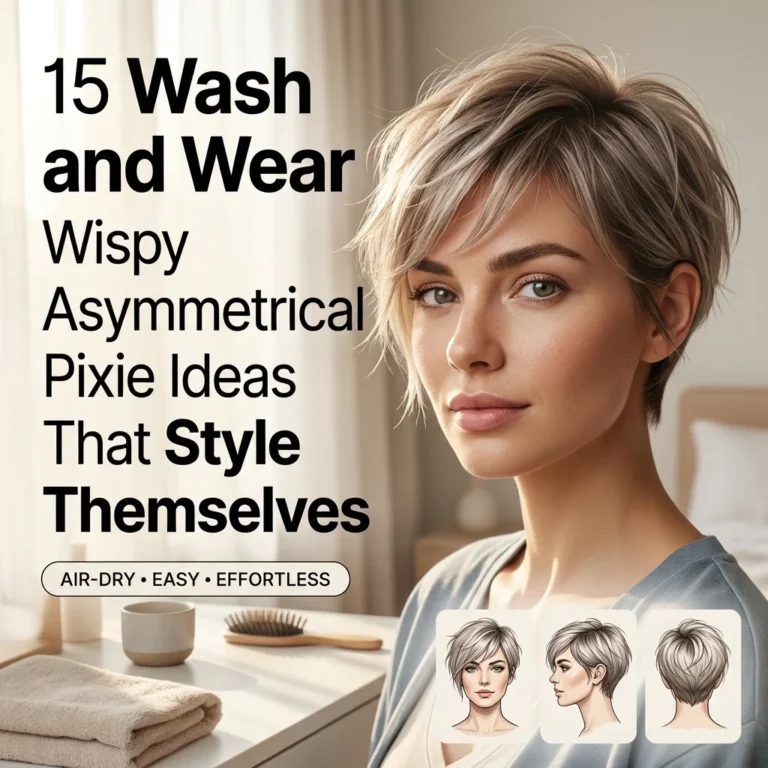
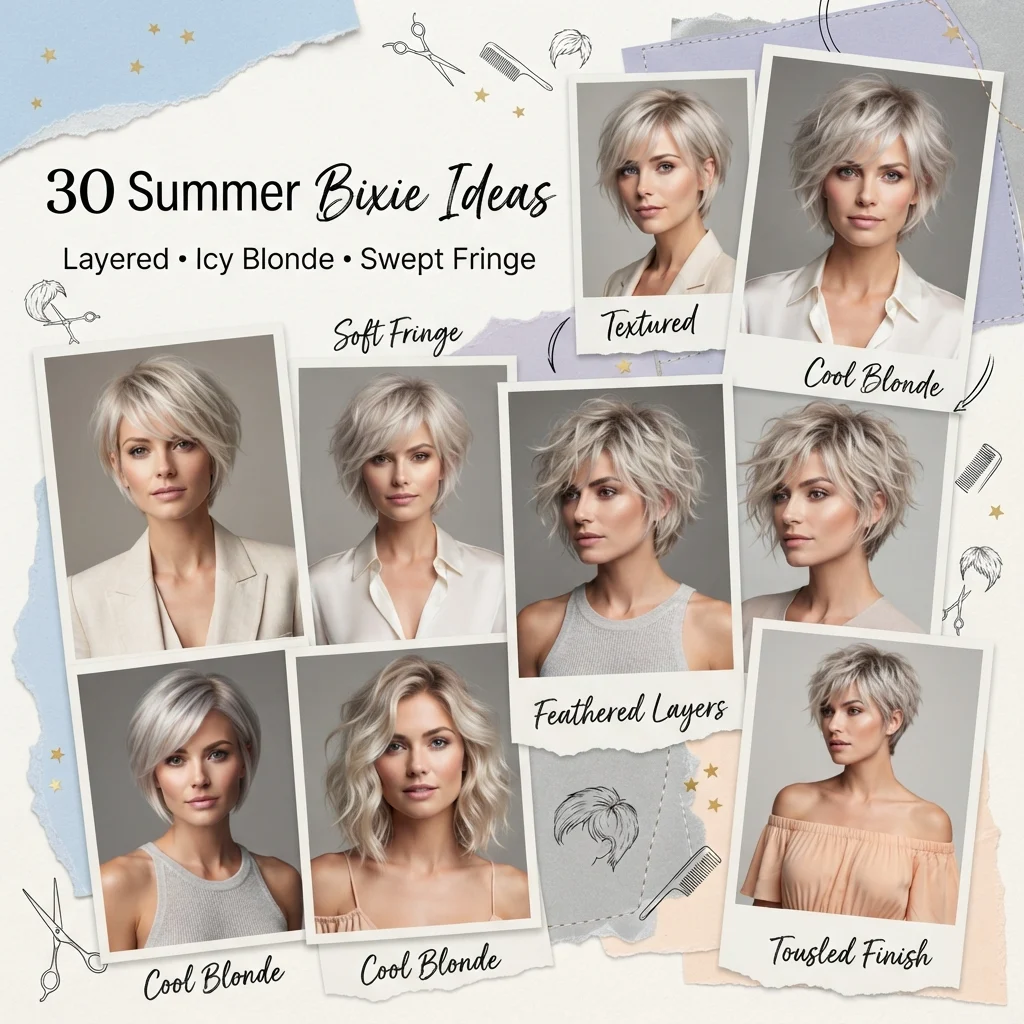
30 Summer Short Layered Icy Blonde Pixie Swept Fringe Ideas

A short layered icy blonde pixie with a swept fringe is a cropped pixie-bob hybrid, longer through the crown and nape than a classic pixie, cut in soft layers, and colored in a near-white cool blonde with a fringe that drapes to one side. This article gives you 30 ways to wear it this summer, from color formula to cutting technique to fringe shape.
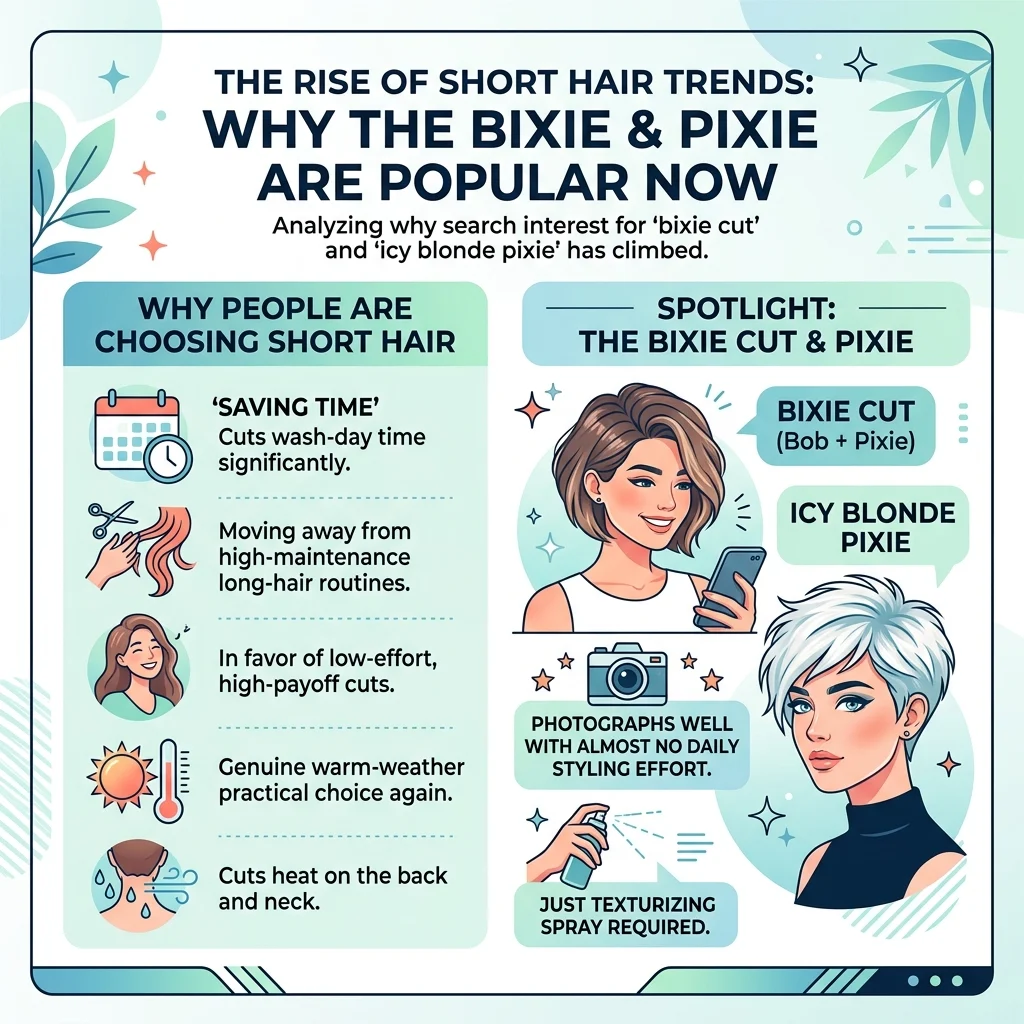
The cut feels light the second the blow dryer clicks off, air moving through it, sun catching the ends. Icy blonde reads cool against tanned summer skin, almost silver in shade and warm gold in direct light. The swept fringe softens the whole shape, pulling attention toward the eyes instead of framing the face like a helmet. It is a low-maintenance cut with a high-impact finish.
Here are 30 ideas worth saving and stealing.
Why This Style Works So Well
What makes a bixie different from a standard pixie cut? A bixie is a pixie-bob hybrid: short and close at the sides and nape like a pixie but with three to five inches of length left through the crown and top, cut in soft layers the way a bob is. The term entered mainstream use as textured, grown-out pixies trended across Pinterest and TikTok, and it sticks because the extra crown length allows styling options, like curtain fringe and side-swept waves, that a true pixie’s uniform shortness cannot support.
What materials and formulas define the icy blonde palette? Icy blonde is built on a level 9 or 10 lightened base, toned with a violet or blue-violet formula, such as Wella Color Charm T18 or Redken Shades EQ 09V, to cancel yellow and gold pigment. Maintenance runs on purple shampoo with blue-violet pigment, bond-repair treatments like Olaplex No. 3, and a lightweight, silicone-light shine serum that keeps the finish glassy instead of dull.
Does this cut work on fine or thin hair? Yes, with one adjustment: fine hair needs shorter, more compact layers at the crown and a blunter perimeter, since long, heavily tapered layers thin out visually on hair with less natural density. The main limit is upkeep, not hair type, since the fringe alone needs a trim every two to three weeks to hold its shape.
Style at a Glance
| Element | Pixie Influence | Bob Influence |
| Length | Short, close nape and sides | 3–5 inch crown and top |
| Cutting technique | Point-cutting, texturizing | Soft internal layering |
| Color base | Level 9–10 lightened | Violet or ash toner |
30 Icy Blonde Bixie Swept Fringe Ideas
1. Platinum Bixie with Soft Curtain Fringe
Vibe: Luminous, like hair lit from inside.
Why it works: The technique here is center-split framing, which drapes fringe on both sides of the part rather than concentrating length at one point on the forehead. A curtain fringe adds no bulk to a bixie’s already short crown, since the split distributes weight evenly across two panels instead of one dense curtain. The platinum base reflects light evenly across every layer, which is why this pairing photographs so well outdoors. It reads as soft rather than severe, even at this pale a shade.
How to get it: Ask your colorist for a level 10 base toned with Wella Color Charm T18 or a comparable violet-based toner rather than a blue one, since violet cancels yellow without pushing the hair grey in tone. Book the curtain fringe as a separate section, parted at the center and cut on a diagonal so both sides taper toward the cheekbone.
Shop The Look
| Product |
| Purple shampoo for blonde and silver hair, 8oz |
| Olaplex No. 3 bond-repair treatment |
| Half-inch ceramic flat iron for short hair |
| UV protection spray for color-treated hair |
2. Choppy Piecey Layers Through the Crown
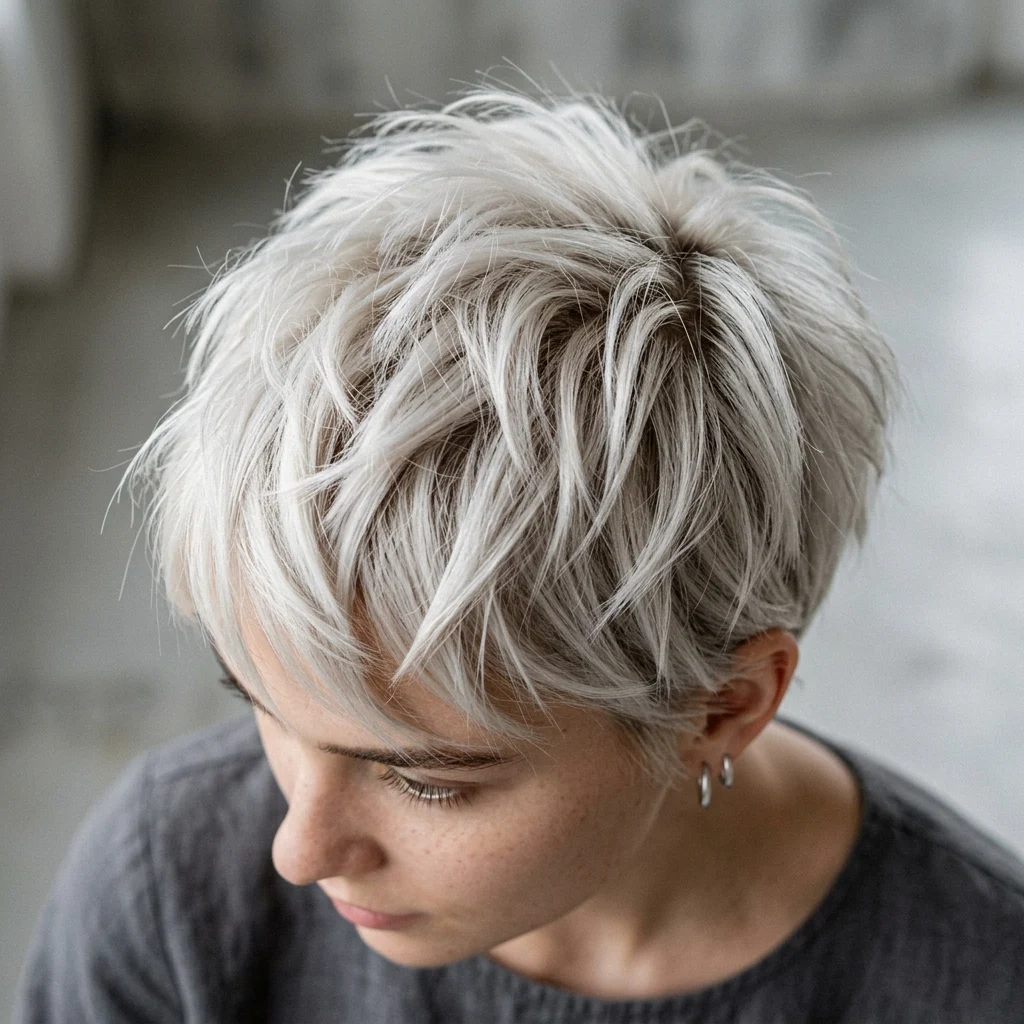
Vibe: Raw, undone in the best way.
Why it works: The technique is point-cutting, using a razor rather than shears to remove weight unevenly along each strand’s edge. This is what separates piece-y texture from a blunt, solid cap of hair, since razored ends catch light at different angles instead of one flat plane. Uneven layer lengths read as movement even when the hair sits completely still. It is the opposite finish from the glassy, smooth looks later in this list.
How to get it: Work a pea-sized amount of a matte texturizing paste, such as Bumble and bumble Sumowax, between your palms and press it into just the ends. Twist small sections between two fingers rather than raking product through the whole head, which keeps the separation defined instead of clumped.
Shop The Look
| Product |
| Matte texturizing paste, travel-size tin |
| Wide-tooth detangling comb |
| Dry texturizing spray for fine hair |
| Boar bristle round brush, 1-inch |
3. Deep Side-Part Swept Fringe
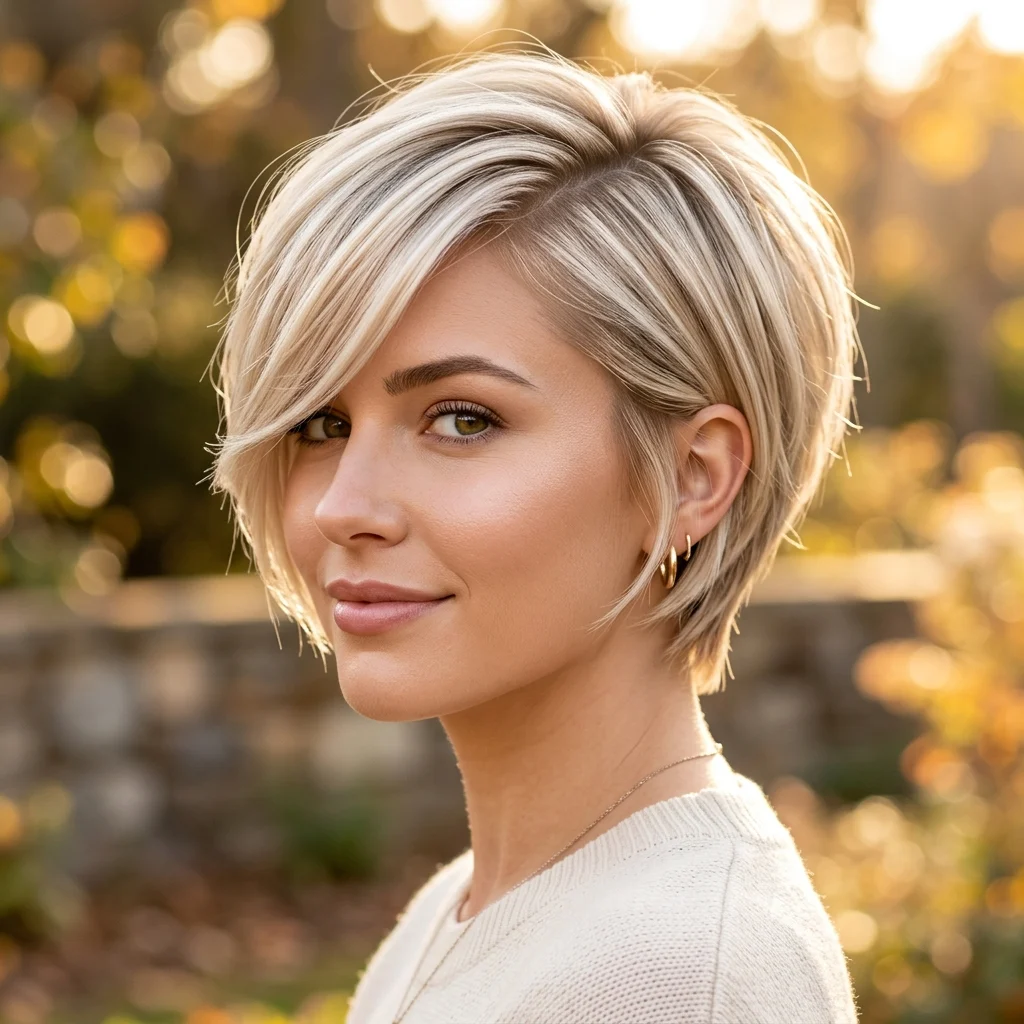
Vibe: Cinematic, sun-warmed.
Why it works: The technique is asymmetric weight distribution, shifting the fringe’s visual mass off-center instead of splitting it evenly. This elongates a rounder face shape by breaking the horizontal symmetry a straight-across fringe creates. Sweeping the longest fringe pieces back toward the ear also opens the eye area more than fringe that falls forward. It’s a deliberate imbalance that reads as polish, not accident.
How to get it: Dry your fringe, pulling the brush diagonally back and away from the part line, using a one-inch round brush to set the direction before it fully cools. Finish with a light-hold spray aimed only at the root of the fringe to lock the direction without stiffening the ends.
Shop The Look
| Product |
| One-inch round brush |
| Blow-dryer with concentrator nozzle |
| Light-hold volumizing mousse |
| Flexible-hold hairspray, low shine |
4. Air-Dried Wash-and-Go Texture
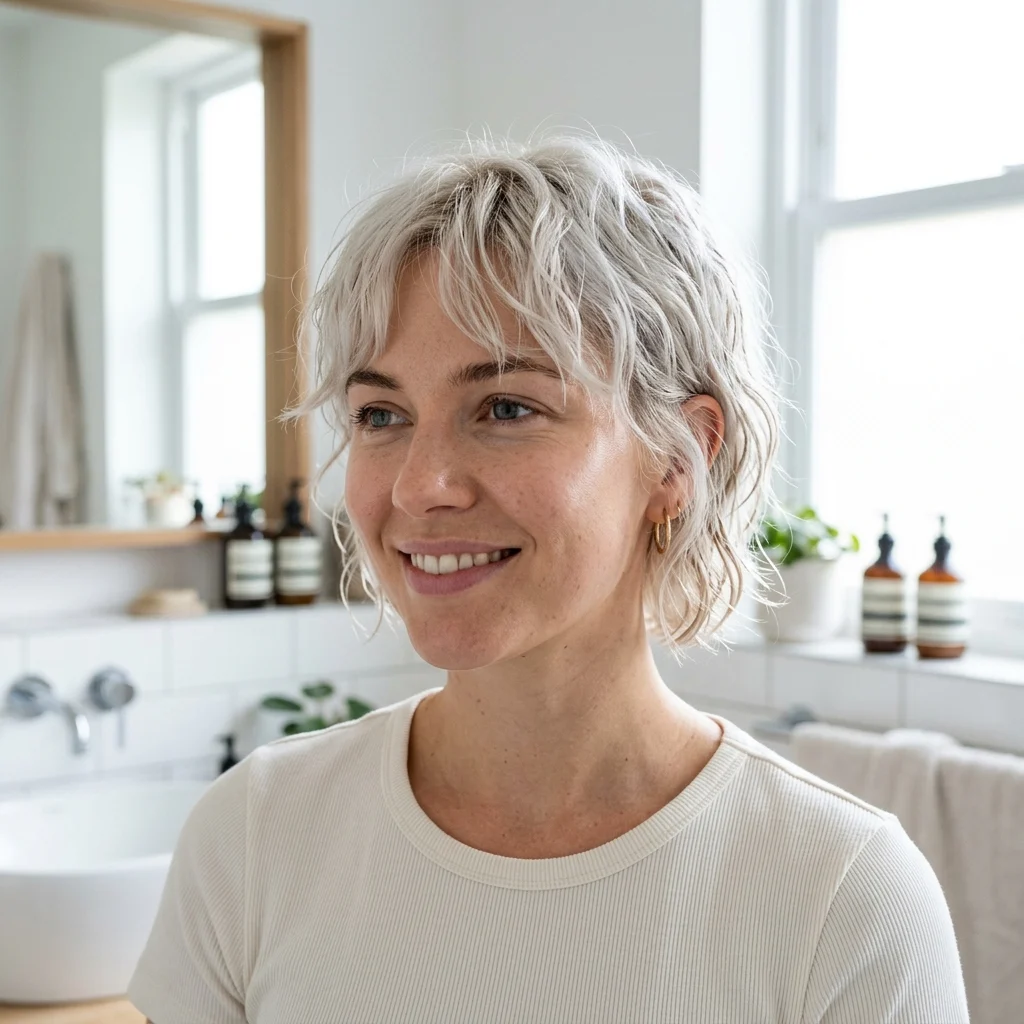
Vibe: Fresh, unbothered.
Why it works: The principle is texture reliance over heat styling, since short layers depend on the hair’s own bend more than long hair does, which carries enough weight to pull the curl pattern flat. Air-drying preserves whatever natural wave the hair has instead of overriding it with a brush and heat. This makes the bixie one of the fastest wash-day cuts available. It also cuts down on cumulative heat damage across a summer of frequent washing.
How to get it: Apply a lightweight curl or texture cream, such as Verb Ghost Oil or a comparable lightweight formula, to towel-dried hair. Scrunch gently from the ends upward and leave it alone until fully dry, since touching damp hair breaks the pattern before it sets.
Shop The Look
| Product |
| Lightweight curl and texture cream |
| Microfiber hair towel |
| Sea salt texturizing spray, alcohol-free |
| Diffuser attachment for compact blow-dryers |
5. Gold Hoop and Icy Blonde Pairing
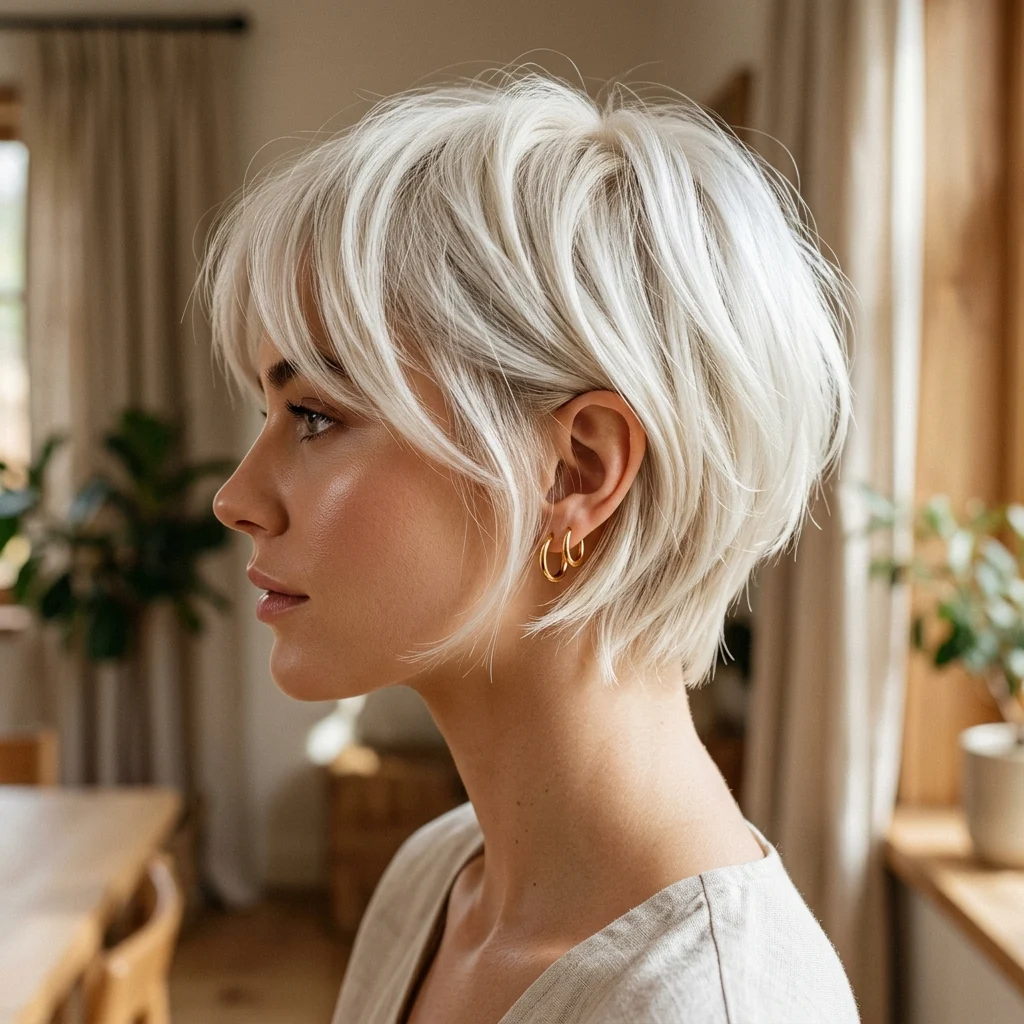
Vibe: Warm metal against cool hair.
Why it works: The principle is temperature contrast, pairing a cool-toned color family with a warm-toned metal so the eye reads two deliberate temperatures instead of a mismatch. Short hair exposes the ear and jaw more than longer styles do, which means jewelry carries more visual weight in the finished look. A small hoop against platinum reads as intentional styling, not an afterthought accessory. This pairing works across almost every skin tone because the contrast, not the color match, is the point.
How to get it: Choose a hoop between three-quarters of an inch and one inch, small enough to stay visible through side layers rather than getting lost behind them. Tuck the side hair briefly behind the ear before a photo or event to reveal the earring fully.
Shop The Look
| Product |
| Small gold huggie hoop earrings |
| Tucking hair clip for side sweep |
| Shine spray for blonde hair |
| At-home cooling toning gloss |
6. Cool Beige Blonde for Warmer Undertones
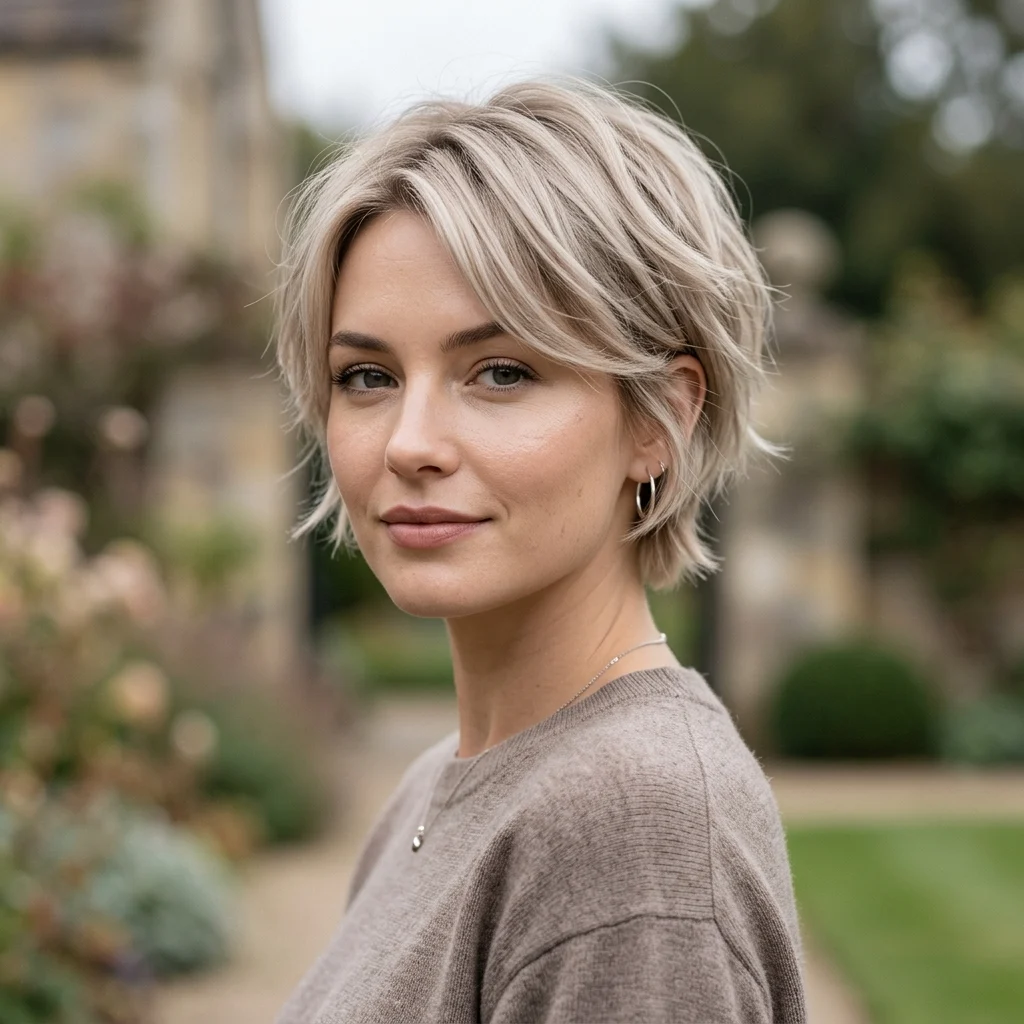
Vibe: Soft, grounded, not stark.
Why it works: The principle is undertone matching, softening the icy family’s cool base so it flatters warmer skin instead of pushing it sallow the way true platinum can. Beige blonde sits one or two levels darker than platinum, which also means less bleaching and less cumulative damage to the strands. It keeps the low-saturation, cool quality of icy blonde without the starkness. This makes it the more wearable everyday choice for most skin tones.
How to get it: Ask your colorist to formulate around level 8 or 9 with a beige or ash-beige toner instead of pure violet, softening the cool cast without eliminating warmth entirely. Refresh the tone every four to six weeks with a beige-toned gloss to keep it from drifting brassy between visits.
Shop The Look
| Product |
| Toning gloss for beige-blonde tones |
| Bond-building shampoo, sulfate-free |
| Weightless hair oil for fine ends |
| Heat protectant mist |
7. Feathered Layers with Weightless Ends
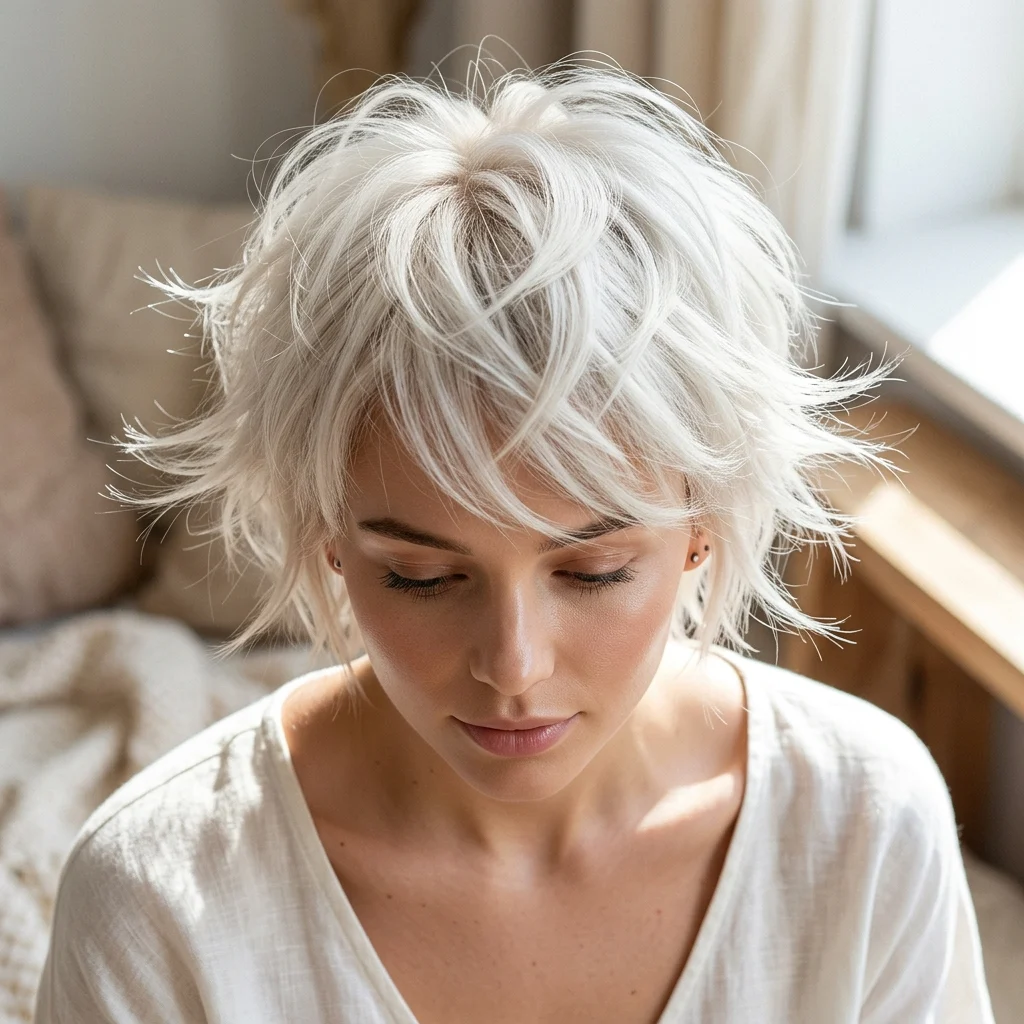
Vibe: Light enough to lift in a breeze.
Why it works: The technique is feathering, a series of fine, vertical cuts made at the very end of each layer after the main shape is already finished. This removes weight in a different way than point-cutting does, producing a softer, less dense edge instead of chunky separation. The result carries less visual weight, so the cut reads soft even at the same length as sharper versions of the bixie. It is a finishing technique, not a haircut on its own.
How to get it: Request feathered ends specifically at your next trim, since most stylists will not add this detail automatically unless asked. Style with a lightweight serum only, since heavier pomades weigh the feathered tips back down and cancel the effect.
Shop The Look
| Product |
| Fine-tooth styling comb |
| Lightweight finishing serum |
| Small ceramic cushion paddle brush |
| Anti-frizz cream for fine hair |
8. Beach-Day Salt Spray Finish

Vibe: Salt-air texture, wind-caught.
Why it works: The principle is surface roughening, using a gritty sea-salt formula to lift the hair’s outer cuticle layer slightly so strands grip each other instead of sliding smooth. Short layers respond to this faster than long hair, since there is less length for product to weigh down before it dries. It’s what creates the tousled, just-out-of-the-water look without an actual ocean nearby. The effect fades within a day or two, which keeps it from building product residue.
How to get it: Spray a fine-mist sea salt formula, such as Oribe Maritime Volume Spray or a comparable product, onto damp hair before air-drying or onto dry hair for a quick between-wash refresh. Scrunch lightly at the roots rather than the ends, where the texture matters most.
Shop The Look
| Product |
| Fine-mist sea salt texturizing spray |
| Travel-size dry shampoo for blonde hair |
| UV-protecting leave-in spray |
| Wide sunglasses sized for a pixie length |
9. Wispy, Barely-There Fringe
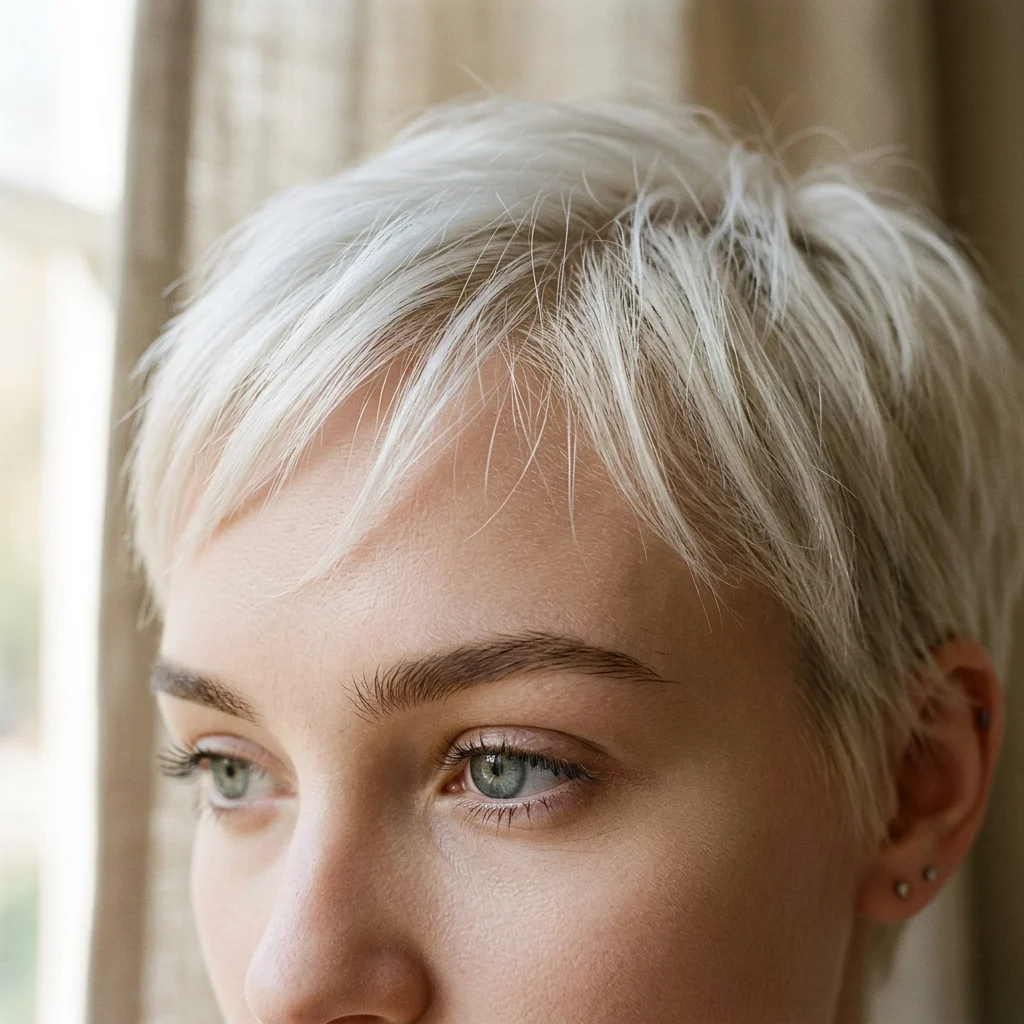
Vibe: Delicate, barely there.
Why it works: The technique is narrow sectioning, taking the fringe from a section no wider than two fingers rather than the full front hairline. This keeps the fringe from adding visual weight to the forehead, unlike a full curtain fringe. It suits finer hair densities especially well, since a fuller fringe on thin hair reads sparse and patchy instead of intentional. The narrow section also grows out with far less visible awkwardness than a wide one.
How to get it: Section off a narrow triangle no wider than two fingers at the crown for the fringe, leaving the rest of the front hairline untouched and blended into the side layers. Trim it yourself between salon visits only along the very ends using small precision scissors, never a full re-cut.
Shop The Look
| Product |
| Precision styling scissors for at-home trims |
| Volumizing root spray |
| Soft-hold pomade, small tin |
| Fine-tooth tail comb |
10. Blow-Dry Volume at the Crown
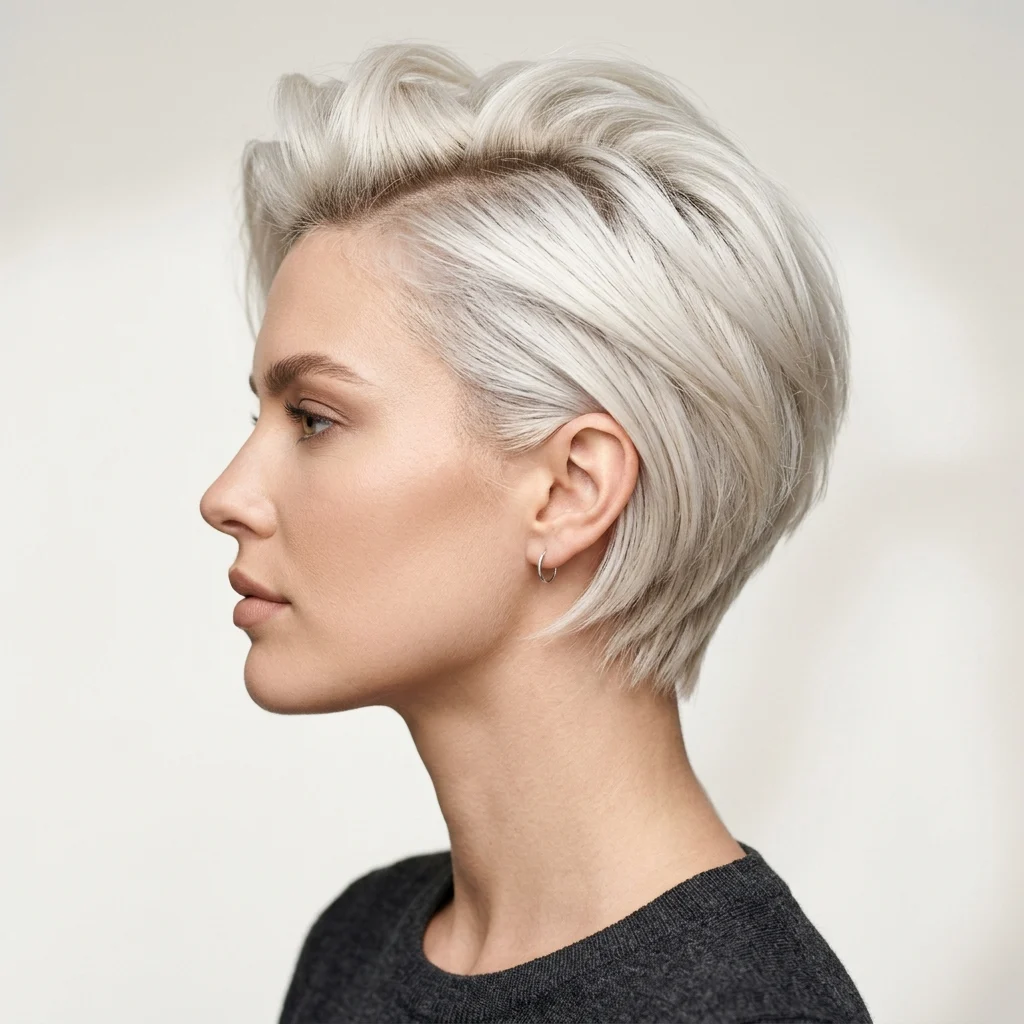
Vibe: Lifted, confident.
Why it works: The technique is directional root lift, blow-drying against the hair’s natural fall instead of with it to build height rather than length. This changes a short cut’s proportions by adding vertical volume, which keeps a pixie from reading flat against the scalp. It’s the blow-drying technique, not a product, that does most of the work here. A cool-air finish locks the lift in place once the shape is set.
How to get it: Flip your head forward while blow-drying the crown, directing the nozzle against the direction hair naturally falls, then flip back and set with a cool shot of air. Use a one-inch round brush at the root only, since brushing the mid-lengths the same way flattens the volume you just built.
Shop The Look
| Product |
| Root-lifting spray |
| Ionic blow-dryer with cool-shot setting |
| One-inch round brush for crown volume |
| Firm-hold finishing spray |
11. Silver-White Bixie with Grown-Out Root
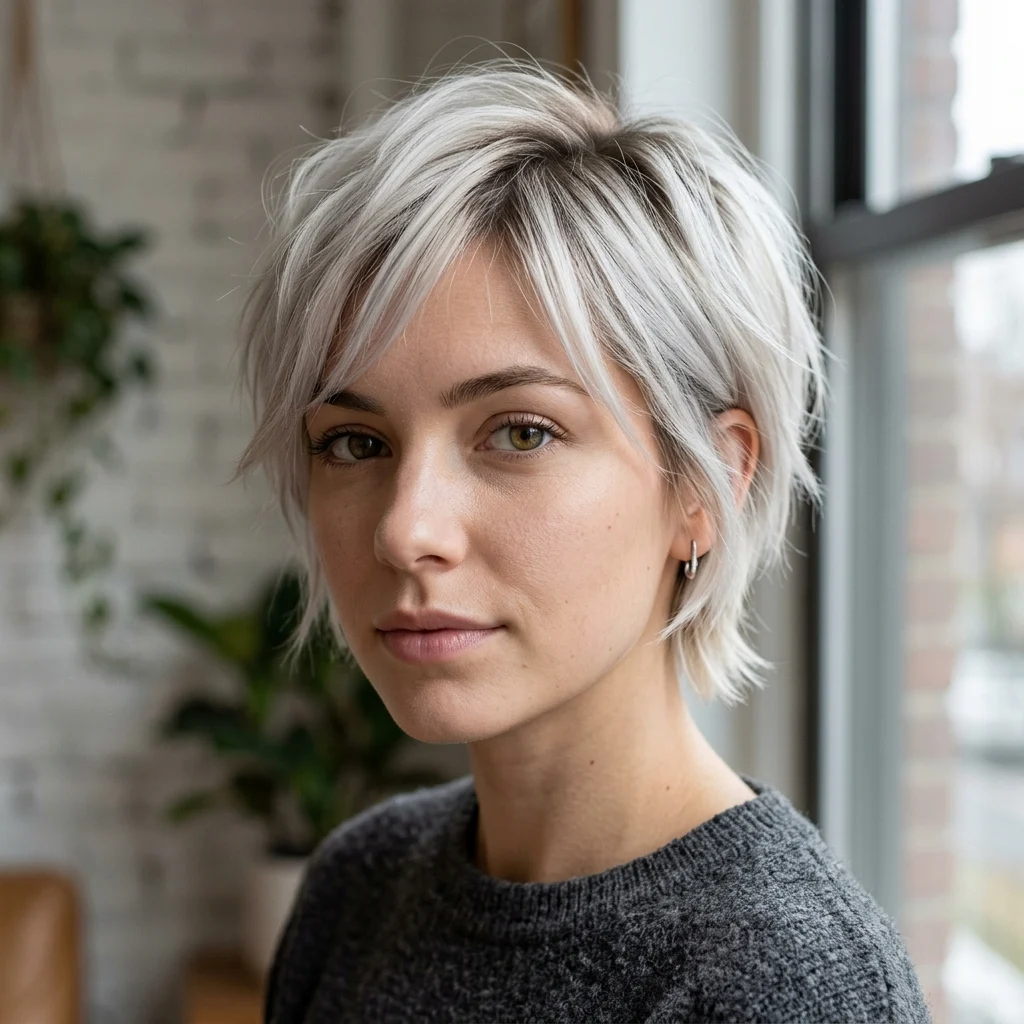
Vibe: Cool, unbothered by regrowth.
Why it works: The technique is a shadow root, hand-painting a soft ash blend at the part rather than letting natural regrowth create a hard, uneven line. It stretches the time between color appointments because the transition from roots to ends looks intentional at every growth stage. This is different from balayage, since the shadow sits close to the scalp rather than through the mid-lengths. It’s the single technique that makes platinum realistic for busy schedules.
How to get it: Ask your colorist for a root shadow, sometimes called a smudge root, hand-painted about half an inch from the scalp rather than a hard color line. Touch it up every eight to ten weeks instead of the four to six weeks a solid root color would need.
Shop The Look
| Product |
| Root touch-up powder in ash tone |
| Bond-repair conditioner mask |
| Silver-toning purple shampoo |
| Tinted dry shampoo for cool blonde |
12. Statement Sunglasses with a Short Fringe
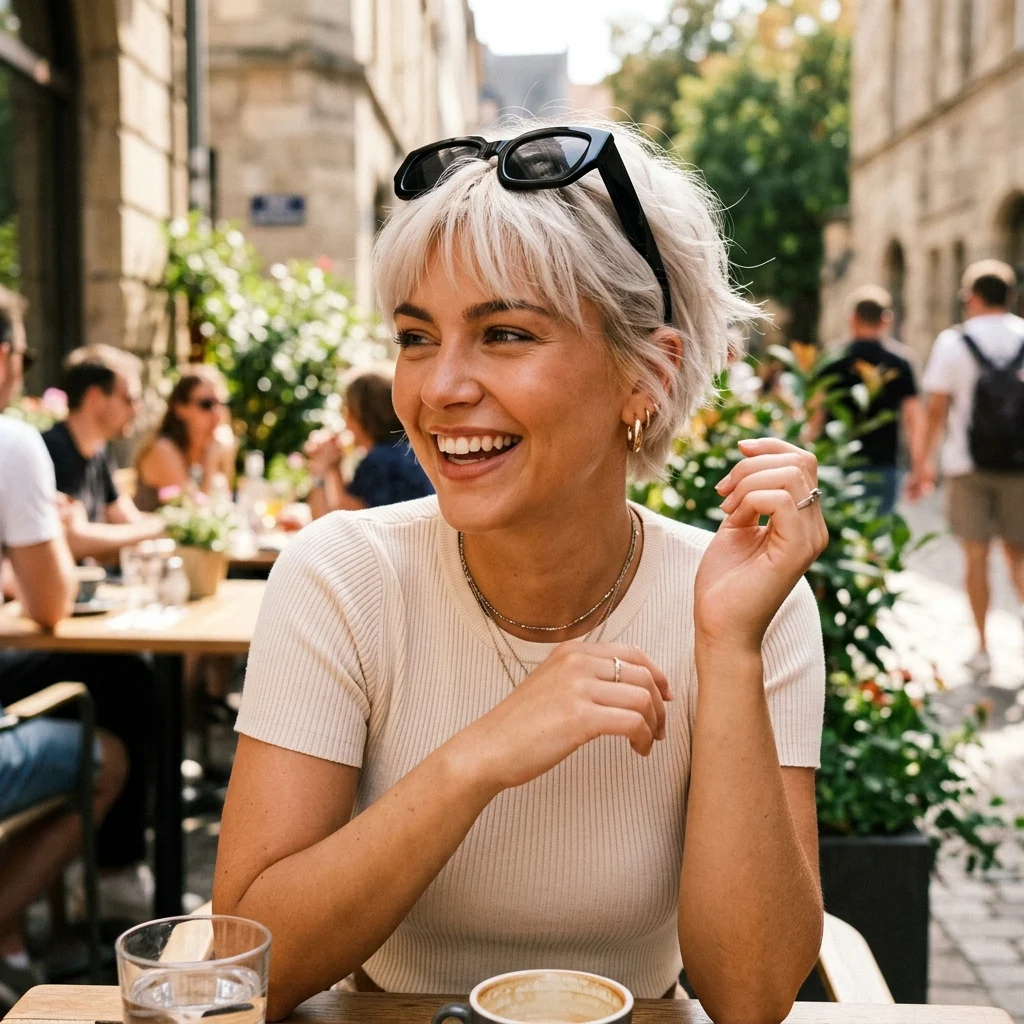
Vibe: Playful, sun-drenched.
Why it works: The principle is surface area grip, since an oversized frame has enough contact area to rest securely on short, textured hair without sliding the way a small frame does. Pushing sunglasses back over a short fringe works cleanly because there is little length to catch or pull awkwardly. The frame adds a second horizontal line across the forehead, which balances a fringe swept to one side. It’s a two-second styling trick that reads as deliberate.
How to get it: Choose a slightly oversized round or square frame rather than a small one, and push it back from the hairline rather than perching it low on the nose. Add a texturizing spray beforehand so the fringe has enough grip to hold the glasses in place.
Shop The Look
| Product |
| Oversized round sunglasses, acetate frame |
| Flexible-hold texturizing spray |
| Small hair clip for pinning back fringe |
| Lightweight SPF hair mist |
13. Sleek, Glassy Finish
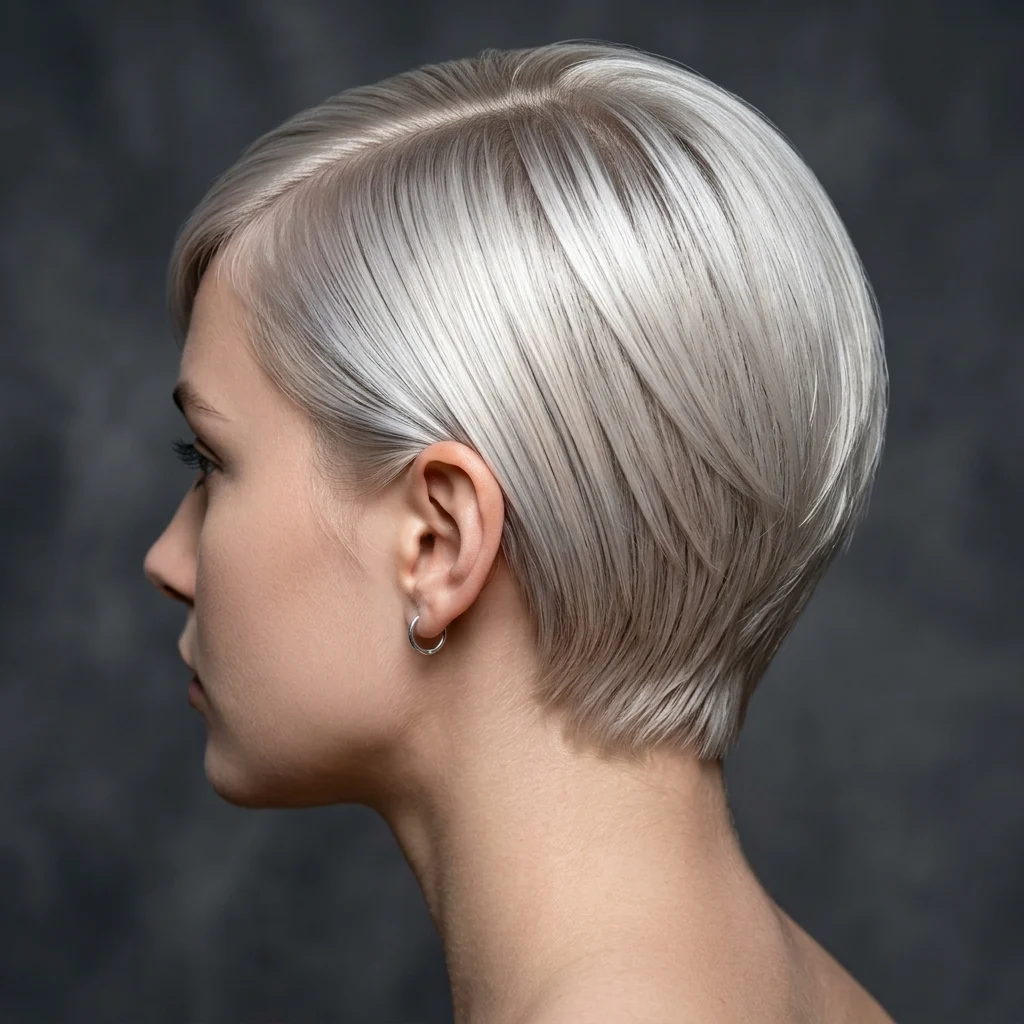
Vibe: Glassy, cool to the touch.
Why it works: The technique is cuticle sealing, smoothing hair with a flat iron and cool air so the outer cuticle lies flat and reflects light in one clean line instead of scattering it. This is the direct opposite of the matte, piecey looks earlier in this list, and it reads noticeably sleeker on camera. Glassy finishes depend entirely on technique, not product volume, since too much product actually dulls the reflective effect. It photographs especially well under studio or flash lighting.
How to get it: Smooth a shine serum through damp hair before blow-drying straight with a small paddle brush, finishing with a cool shot of air to seal the cuticle flat. Run a flat iron set no higher than 300°F over each section once since repeated passes on fine, lightened hair cause more damage than a single smooth pass.
Shop The Look
| Product |
| Glossing shine serum, silicone-light formula |
| Small ceramic paddle brush |
| Ceramic flat iron with temperature control |
| Anti-static finishing spray |
14. Face-Framing Adjustment for Round Faces
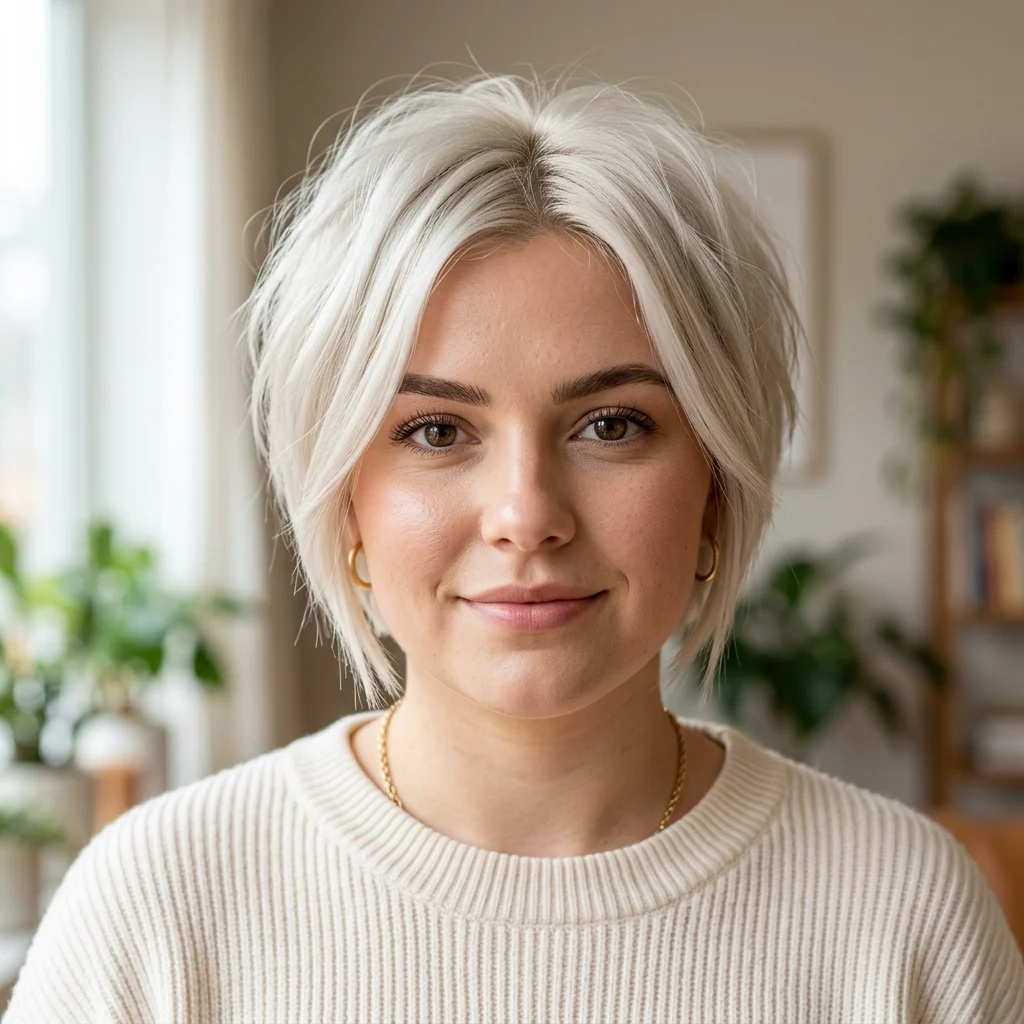
Vibe: Softly elongating.
Why it works: The principle is vertical line creation, leaving the front pieces one to two inches longer than the back and sides to draw a downward line that counters a round face’s width. A fringe swept off to one side reinforces this by avoiding the straight horizontal line a blunt fringe would add. This is the most requested pixie adjustment for round and square face shapes specifically. It works with the cut’s existing layering rather than requiring a different haircut altogether.
How to get it: Ask specifically for the front pieces to be left one to two inches longer than the back and sides, angled to graze the jaw rather than cut blunt. Bring a reference photo showing the exact angle, since “longer in front” alone is too vague for consistent results.
Shop The Look
| Product |
| One-inch round brush for jaw-length pieces |
| Flexible-hold styling cream |
| Fine-mist finishing spray |
| Boar-bristle detangling brush |
15. Curtain Fringe Blended into Side Layers

Vibe: Seamless, no hard lines.
Why it works: The technique is continuous layering, cutting the fringe using the same graduated method as the crown instead of treating it as an isolated section. This removes the visual break point where a fringe typically ends and the rest of the hair begins. It works especially well on a bixie because the side lengths are already short enough to connect naturally with fringe length. The result looks grown-in from day one, not freshly cut.
How to get it: Ask your stylist to cut the fringe as part of the overall layering pattern rather than sectioning it off separately, so the two areas graduate into each other. Style by brushing everything in one direction while blow-drying, rather than styling the fringe and sides as separate zones.
Shop The Look
| Product |
| Wide-tooth comb for blending sections |
| Lightweight texturizing cream |
| One-inch round brush |
| Flexible hairspray |
16. Champagne Blonde for a Warmer Icy Tone
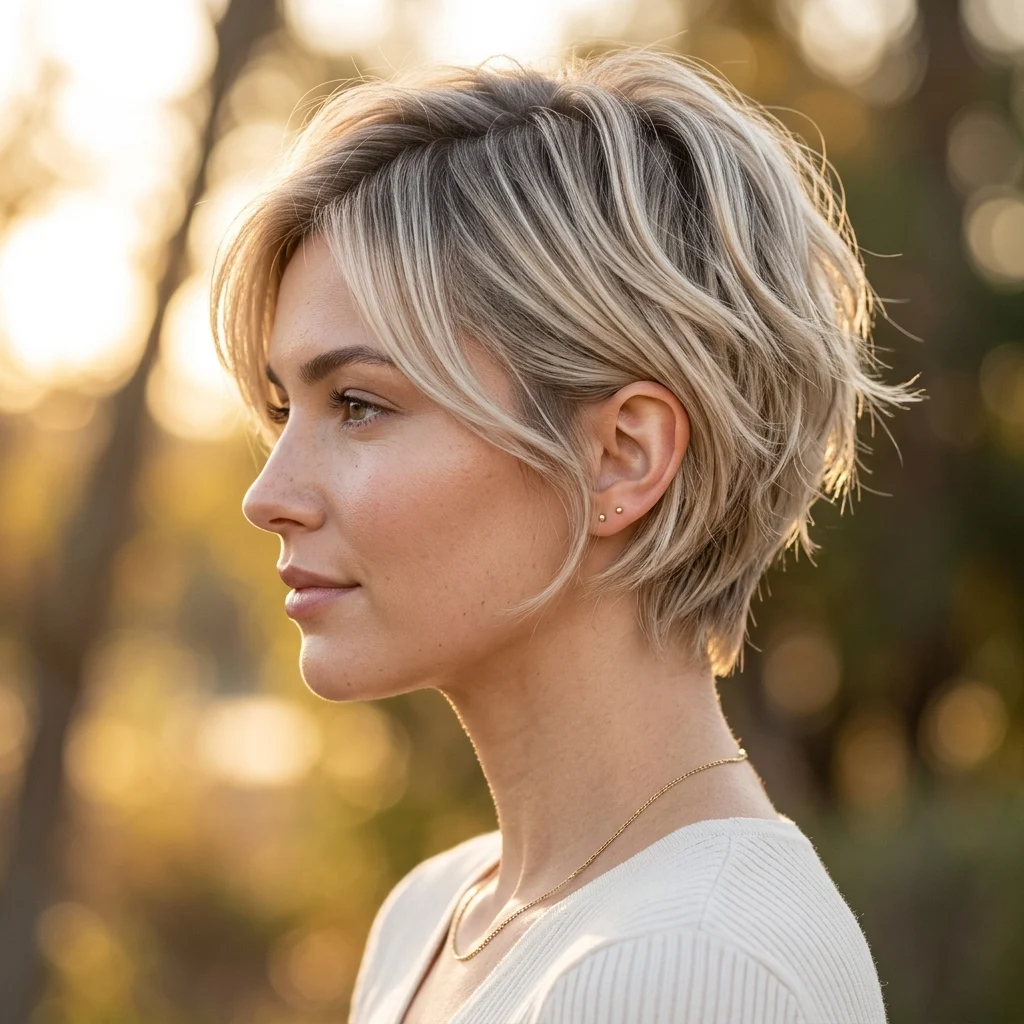
Vibe: Warm light on cool hair.
Why it works: The principle is a half-step warm shift, keeping the pale, low-saturation quality that defines icy blonde while adding just enough gold to flatter medium skin tones. Champagne sits at the warmest edge of the icy family, achieved by toning slightly warmer rather than changing the underlying lightening process. It reads as cool in daylight and gently warm under indoor or golden-hour light. This dual quality is why it photographs well across more settings than pure platinum.
How to get it: Ask for a champagne or vanilla toner instead of pure violet or ash, shifting the finished color a half-step warmer without leaving the cool blonde family. Refresh with a champagne-toned gloss every five to six weeks to keep the gold undertone from fading into a duller yellow.
Shop The Look
| Product |
| Toning gloss, champagne blonde formula |
| Color-safe hydrating conditioner |
| Weightless shine drops |
| Heat protectant spray for fine hair |
17. Finger-Styled Undone Texture
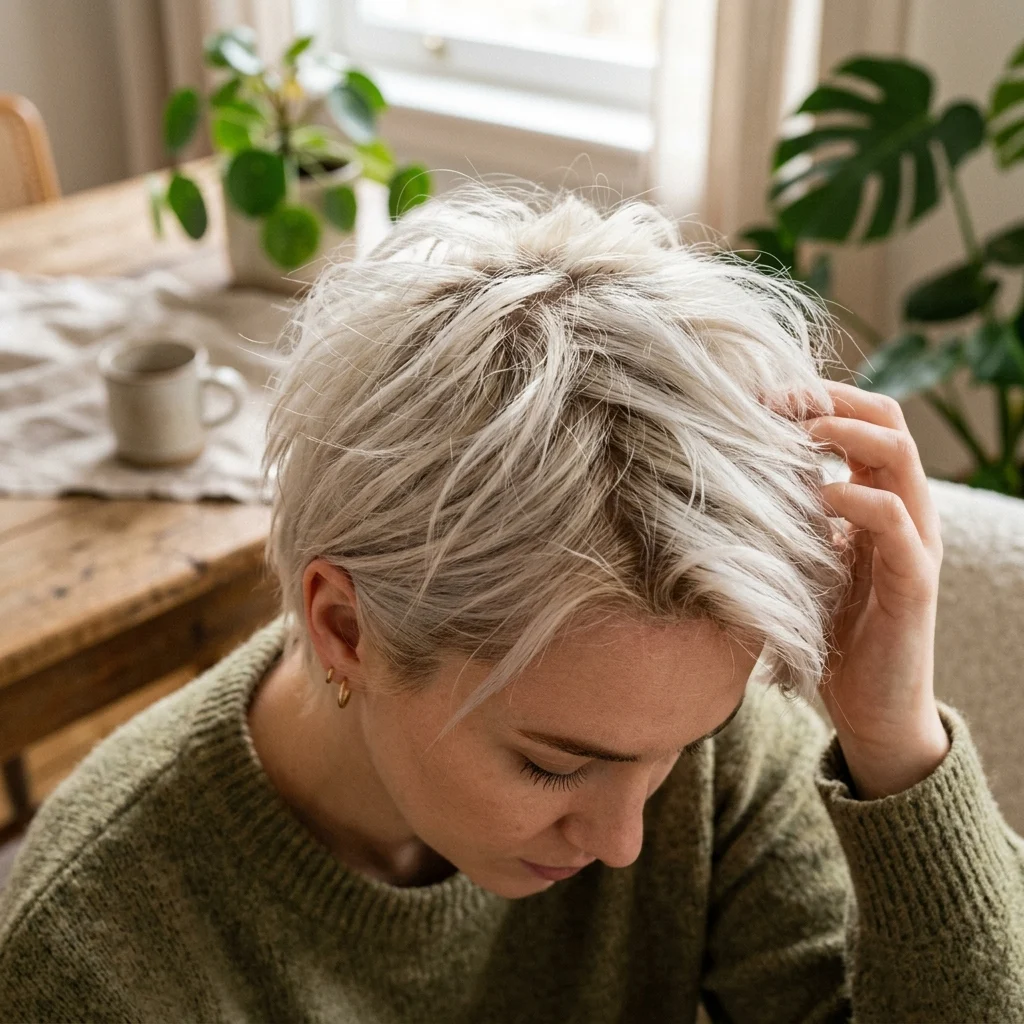
Vibe: Relaxed, hands-only.
Why it works: The technique is hand-styling instead of brush-styling, which avoids the smoothing effect a brush creates and keeps individual pieces separated rather than blended into one shape. This suits a pixie’s already-layered structure, since the layers are short enough to hold shape without the added tension a brush applies. It takes under two minutes and needs no heat tool. It is the fastest styling method on this entire list.
How to get it: Work a small amount of clay or paste through damp hair using only your fingers, twisting small sections at the ends. Let the rest air dry rather than brushing it smooth, which is what preserves the separated, hand-finished texture.
Shop The Look
| Product |
| Matte clay for texture, small tin |
| Alcohol-free texturizing spray |
| Wide-tooth detangling comb |
| Lightweight-hold hairspray |
18. Heat-Styled Face-Framing Waves
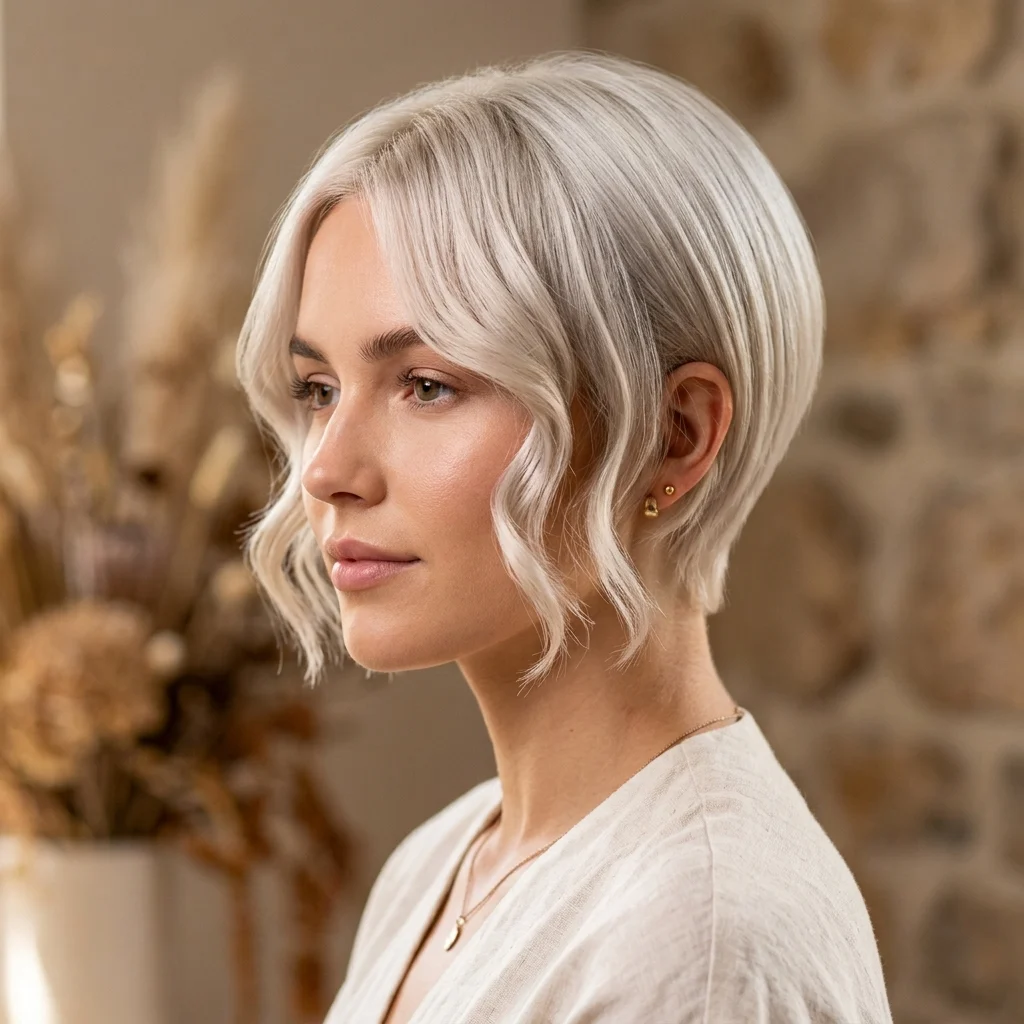
Vibe: Soft movement at the face.
Why it works: The principle is targeted styling, waving only the two or three pieces closest to the face rather than the whole head. This keeps a short cut from looking overly done while still softening the area nearest the eyes. It also takes a fraction of the time a full head of curls requires, which fits the bixie’s low-maintenance appeal. Alternating curl direction between pieces is what keeps the pattern from reading uniform or wig-like.
How to get it: Use a half-inch curling wand on just the two or three pieces framing your face, alternating the direction of the curl away from and toward your face. Brush the curl out gently with your fingers once it cools, never while it’s still hot.
Shop The Look
| Product |
| Half-inch curling wand, short-hair size |
| Heat protectant spray |
| Flexible-hold finishing spray |
| Small tail comb for sectioning |
19. Silk Scarf Headband Styling
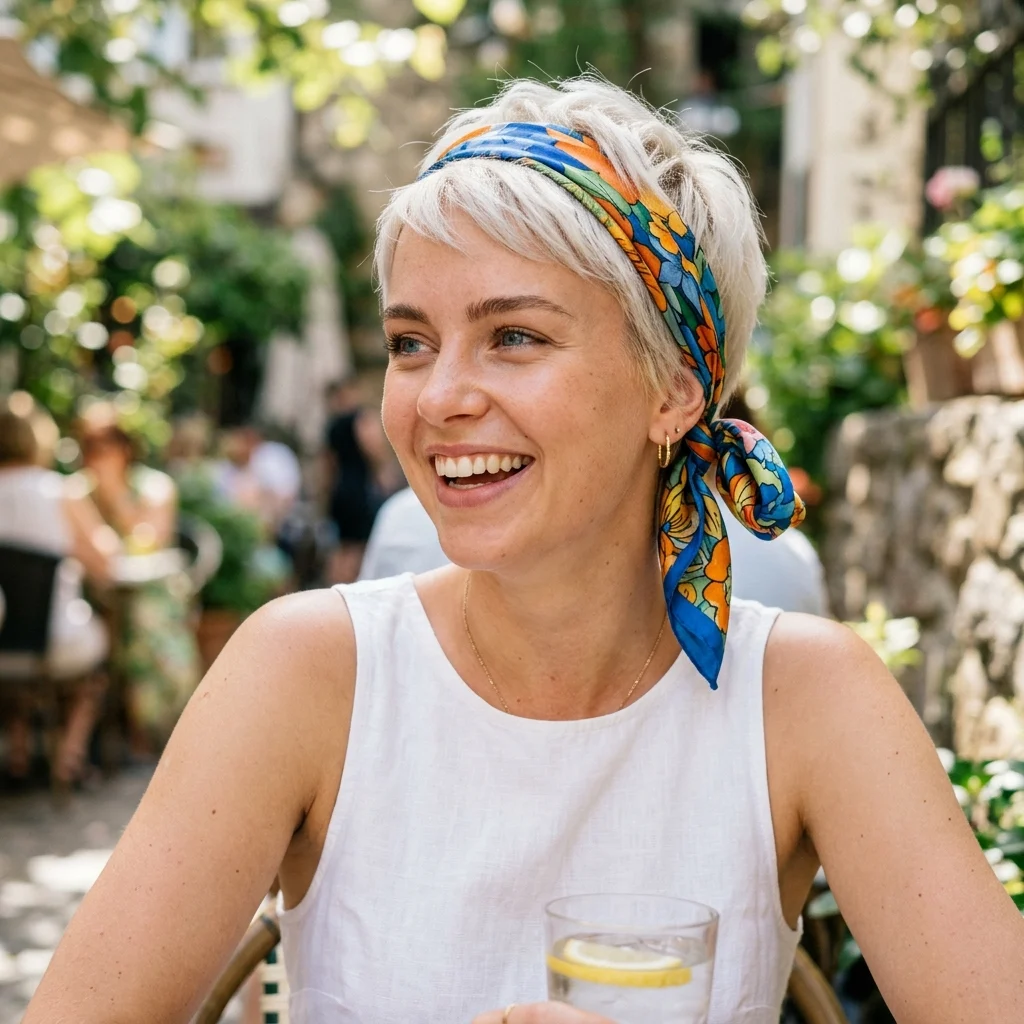
Vibe: Playful, warm-weather.
Why it works: The principle is length-appropriate accessorizing, since a bixie has just enough length to tuck under a knot without slipping the way a longer style would, but not so much that it overwhelms the accessory. A scarf headband also solves the practical problem of keeping a fringe out of the eyes on high-heat days. It reads as a styling choice, not a fix, when the fold and knot placement are considered. This is one of the few accessory looks that works better on short hair than long.
How to get it: Fold a square silk scarf into a two-inch-wide band, position it just behind the fringe, and knot it at the side rather than the center back. Secure with two bobby pins hidden under the scarf fold, angled toward the crown for extra hold.
Shop The Look
| Product |
| Thin silk scarf, square, mixed print |
| Matte-finish bobby pins |
| Texturizing spray for grip |
| Lightweight finishing pomade |
20. Office-Ready Polished Bixie
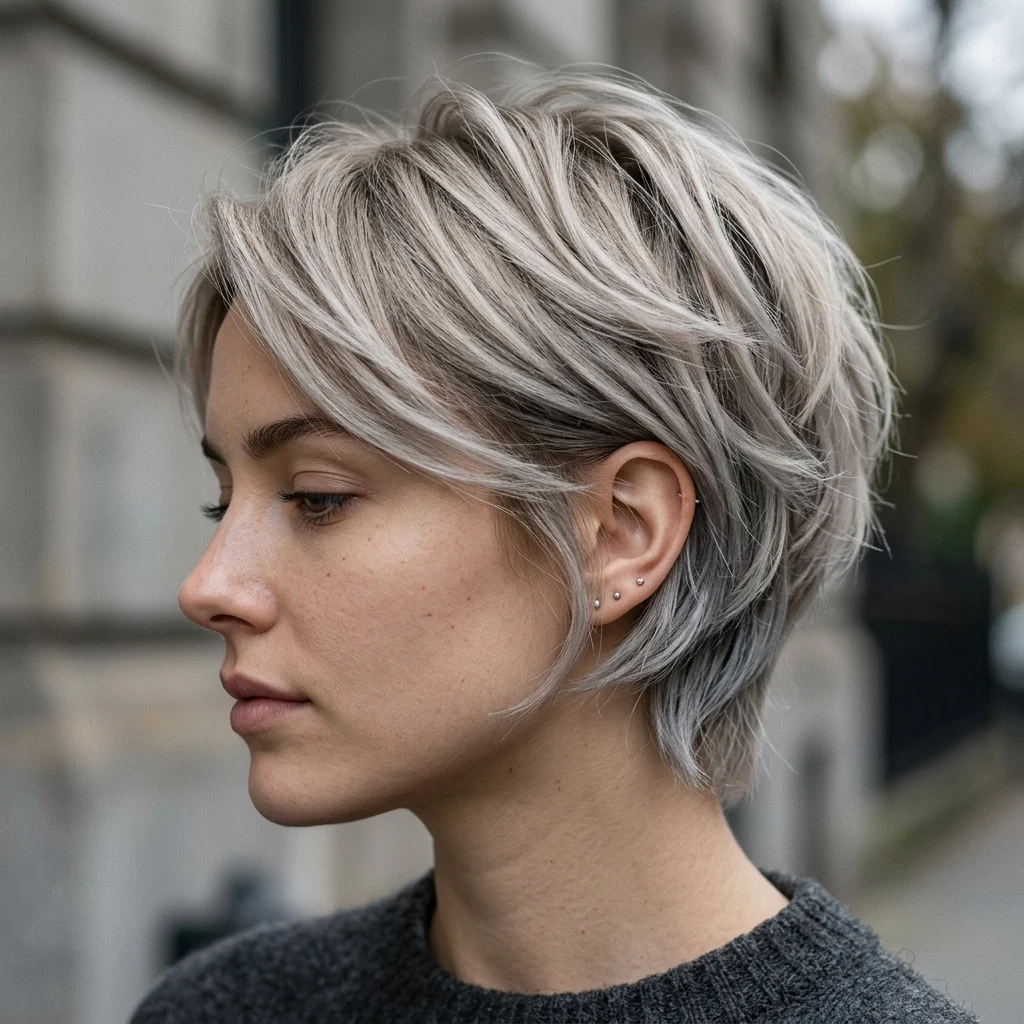
Vibe: Composed, camera-ready.
Why it works: The principle is cuticle smoothing plus flyaway control, which flattens the surface and reads as more formal than the tousled, textured versions of the same cut. This is achieved entirely through blow-drying technique and product, not a different haircut, which is part of why a bixie shifts between casual and professional so easily. A smooth crown reads composed under fluorescent office lighting in a way texture does not. It takes under ten minutes once the technique is familiar.
How to get it: Blow-dry with a paddle brush pulling hair smooth in the direction you want it to fall, then set flyaways with a small amount of pomade rubbed between your palms along the hairline. Finish with a fine-mist hairspray held at least eight inches away to avoid a stiff, sprayed look.
Shop The Look
| Product |
| Small ceramic paddle brush |
| Smoothing pomade, light hold |
| Anti-frizz finishing serum |
| Edge brush for the hairline |
21. Ash Blonde with Cool Undertone Boost
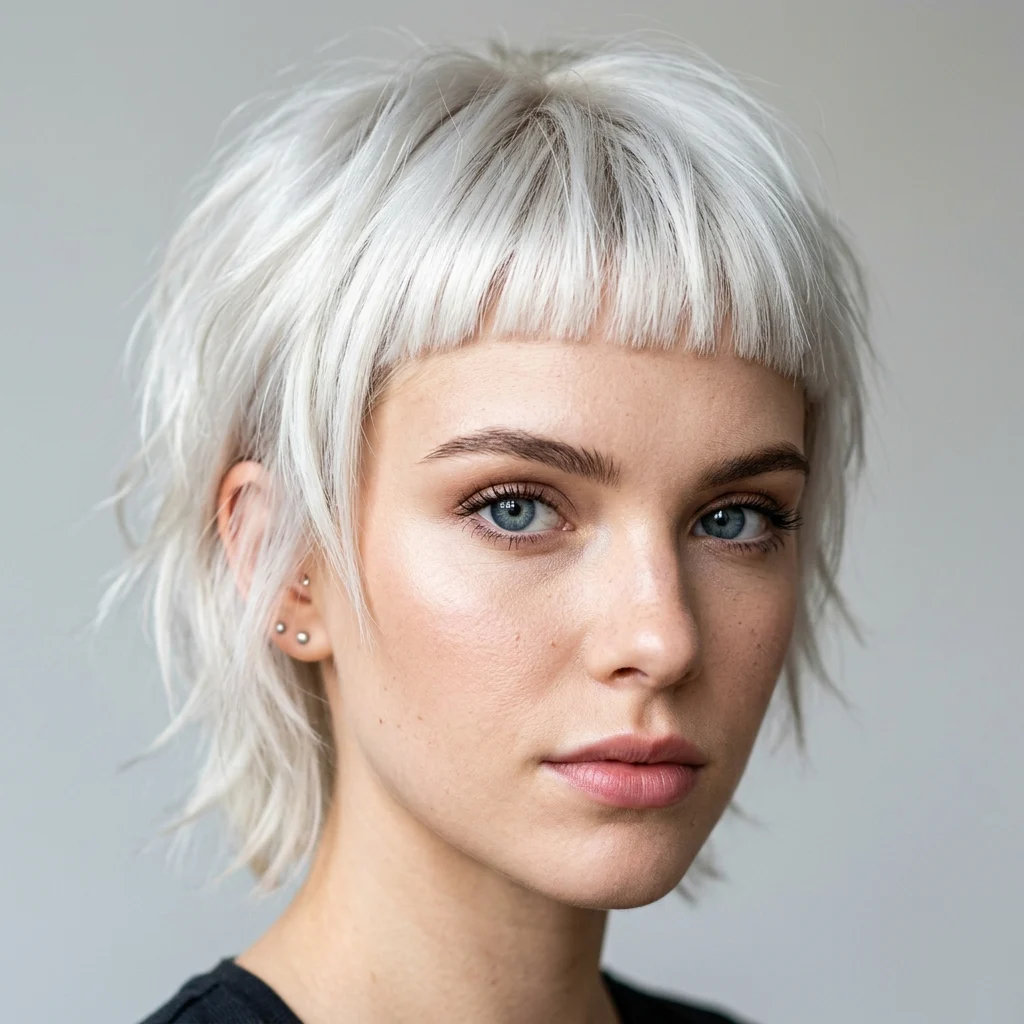
Vibe: Cool, matte, muted.
Why it works: The principle is pigment concentration, using a higher ratio of blue-violet pigment than a standard icy toner to cancel warmth more aggressively. This gives the color a matte, non-reflective quality, a deliberate contrast to the glassy, high-shine looks elsewhere on this list. Ash blonde needs the strongest maintenance routine of any shade here since warmth returns to lightened hair faster than the cool tone fades. It’s the most dramatic version of “icy” this list covers.
How to get it: Request an ash-specific toner rather than a general blonde formula, and ask your colorist about a blue-based purple shampoo for maintenance between visits. Use the purple shampoo no more than twice a week, since overuse on already-ash-toned hair can push the color grey rather than simply keeping it cool.
Shop The Look
| Product |
| Blue-toned purple shampoo for ash blonde |
| Cool-tone conditioning mask |
| Matte finishing spray, no-shine formula |
| Ash blonde root touch-up spray |
22. Micro Fringe Just Above the Brow
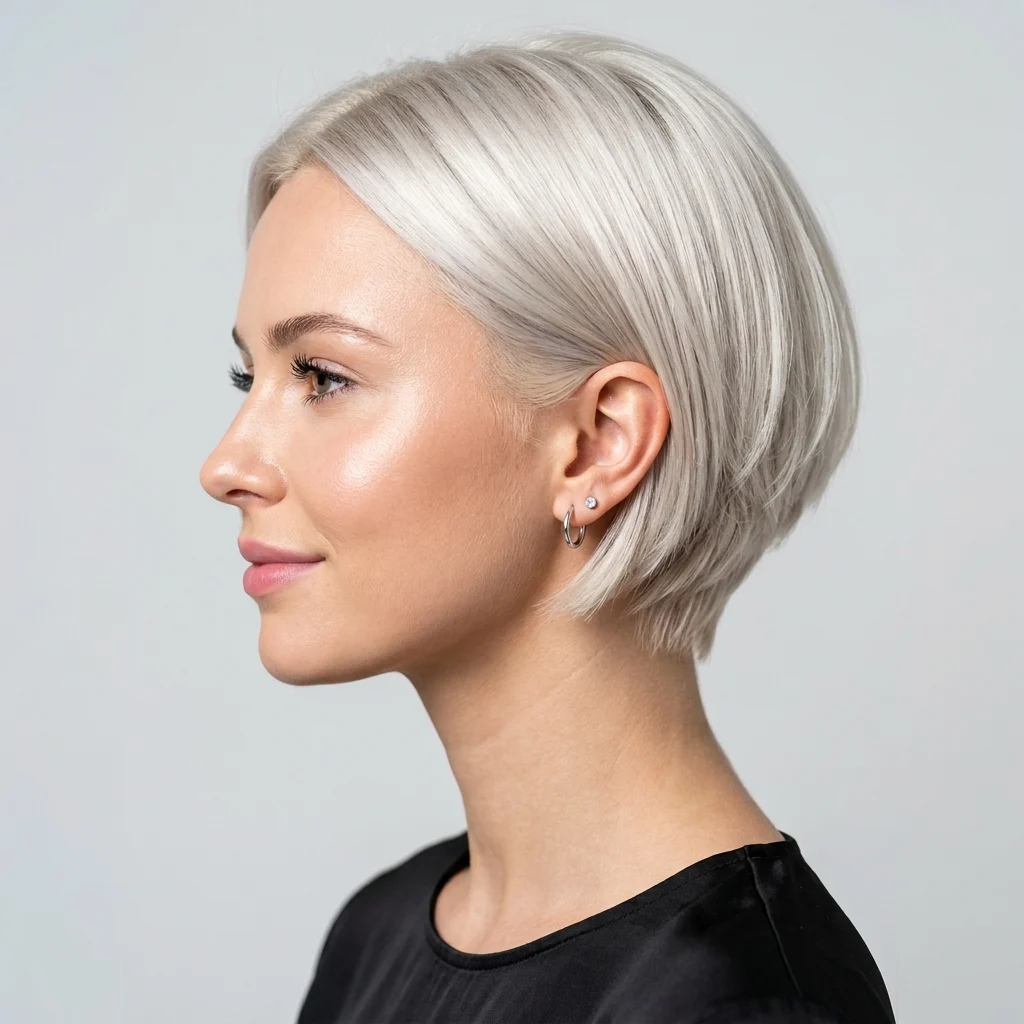
Vibe: Bold, graphic.
Why it works: The principle is proportional balance, since the rest of a pixie is already short enough that a micro fringe, sitting well above the brow, doesn’t overwhelm the overall shape the way it would on longer hair. This is a considerably bolder styling choice than the swept fringes covered elsewhere in this list. It works because the crop’s existing shortness sets up the proportion the micro-fringe needs to look intentional. Even a few millimeters of difference changes how it sits, which is why precision matters more here than on any other idea.
How to get it: This length requires precision cutting best left to a stylist, since even small errors shift how the line sits above the brow. Set it dry with a light-hold texturizing paste worked only through the ends, never the root, to avoid weighing the short line down.
Shop The Look
| Product |
| Precision styling scissors |
| Fine-tooth comb for fringe sectioning |
| Light-hold texturizing paste |
| Setting spray for fine fringe pieces |
23. Glossy Blunt Ends for Density
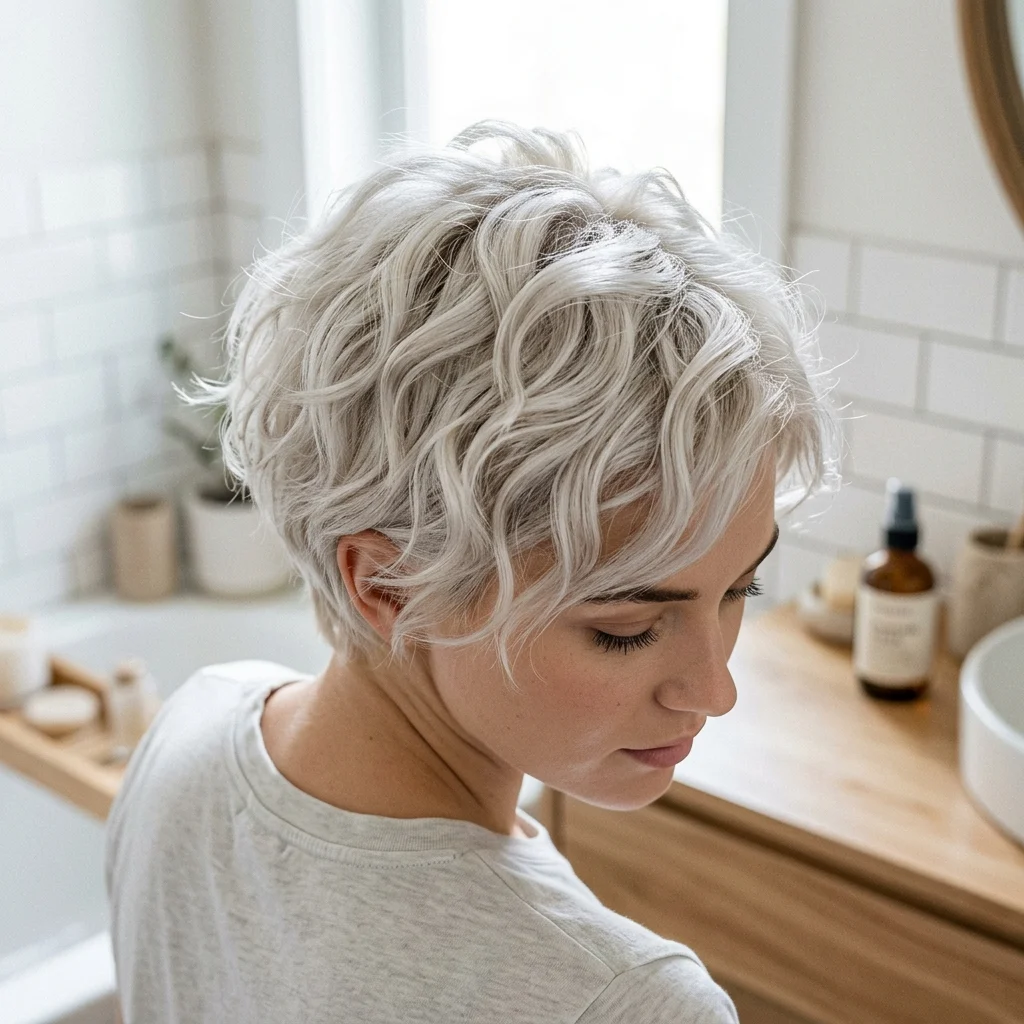
Vibe: Dense, deliberate.
Why it works: The principle is a single terminal line, cutting the perimeter straight across rather than layered, so every strand ends at the same visual point instead of tapering off gradually. This creates the appearance of more density, since a blunt edge reads thicker than a feathered one at the same actual hair volume. It’s a useful correction for finer hair that looks thin when heavily layered throughout. The interior can still carry movement while the perimeter stays deliberately solid.
How to get it: Ask your stylist to keep the perimeter blunt while still layering the interior, which builds shape without sacrificing the thickened appearance a blunt line creates. Smooth the ends with a flat iron on the final pass to sharpen the line further.
Shop The Look
| Product |
| Thickening shine spray |
| Ceramic flat iron for smoothing ends |
| Volumizing shampoo for fine hair |
| Weightless finishing gloss |
24. Diffused Curl Enhancer for Natural Texture
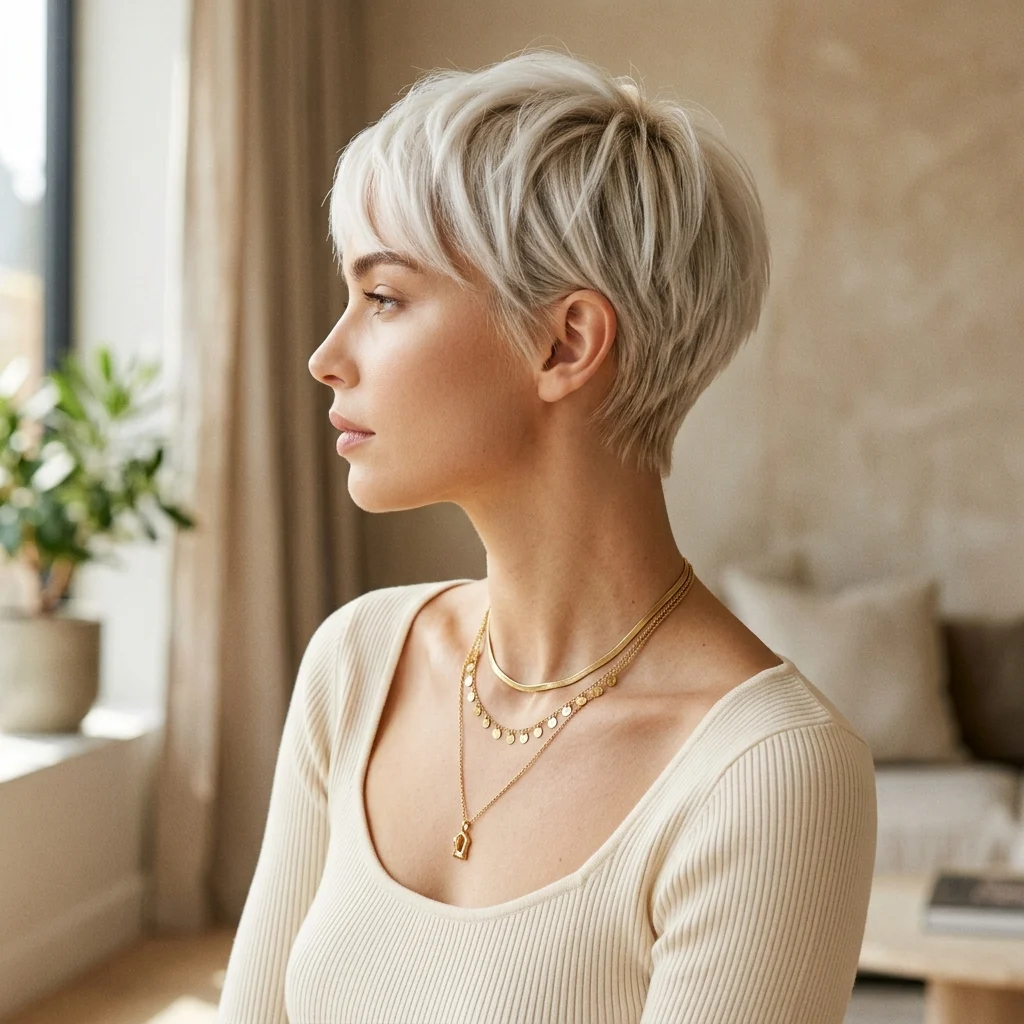
Vibe: Natural, defined.
Why it works: The principle is wide-area airflow, since a diffuser spreads heat across a larger surface than a standard nozzle, drying curls without disturbing the pattern the way direct airflow does. This matters more with short hair, since there is less length for curls to settle into shape naturally before they’re touched. It preserves natural texture rather than fighting it. This is the technique that lets curly and wavy hair types wear a pixie without daily flat-ironing.
How to get it: Apply a curl-defining cream to soaking-wet hair, cup sections in the diffuser bowl, and hold each section still for several seconds rather than moving the dryer constantly. Avoid touching curls until they’re fully dry, since disrupting them mid-dry is the most common cause of frizz with this technique.
Shop The Look
| Product |
| Diffuser attachment for short hair |
| Curl-defining cream, lightweight formula |
| Microfiber plopping towel |
| Anti-frizz curl serum |
25. Layered Statement Necklace Pairing
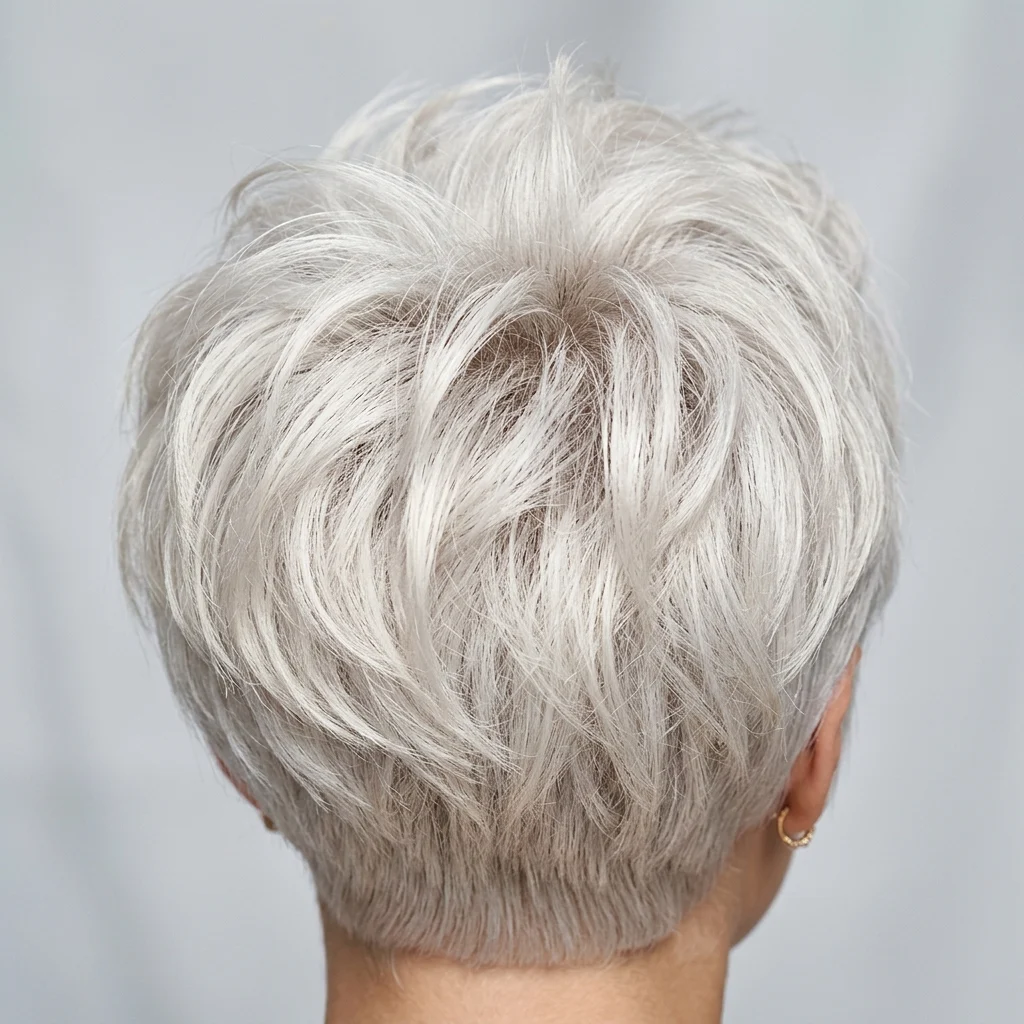
Vibe: Elevated, neck-forward.
Why it works: The principle is newly visible real estate, since a pixie exposes the nape and collarbone in a way longer hair never does, giving neckline jewelry more visual weight than it carries with covered hair. Layered necklaces of varying lengths fill that space without competing with the haircut itself. Two or three thin chains read as intentional detail rather than one bulky piece would. This pairing is specific to short hair; it doesn’t translate the same way to a longer cut.
How to get it: Choose two or three thin chains of different lengths rather than one thick piece, so the layering reads as considered rather than accidental. Keep the shortest chain close to the collarbone and let the longest fall an inch or two lower for visible separation.
Shop The Look
| Product |
| Layered gold chain necklace set |
| Smoothing nape trimmer for touch-ups |
| Lightweight neck and shoulder highlighter |
| Shine spray for exposed ends |
26. Bixie Adjustment for Fine, Thin Hair
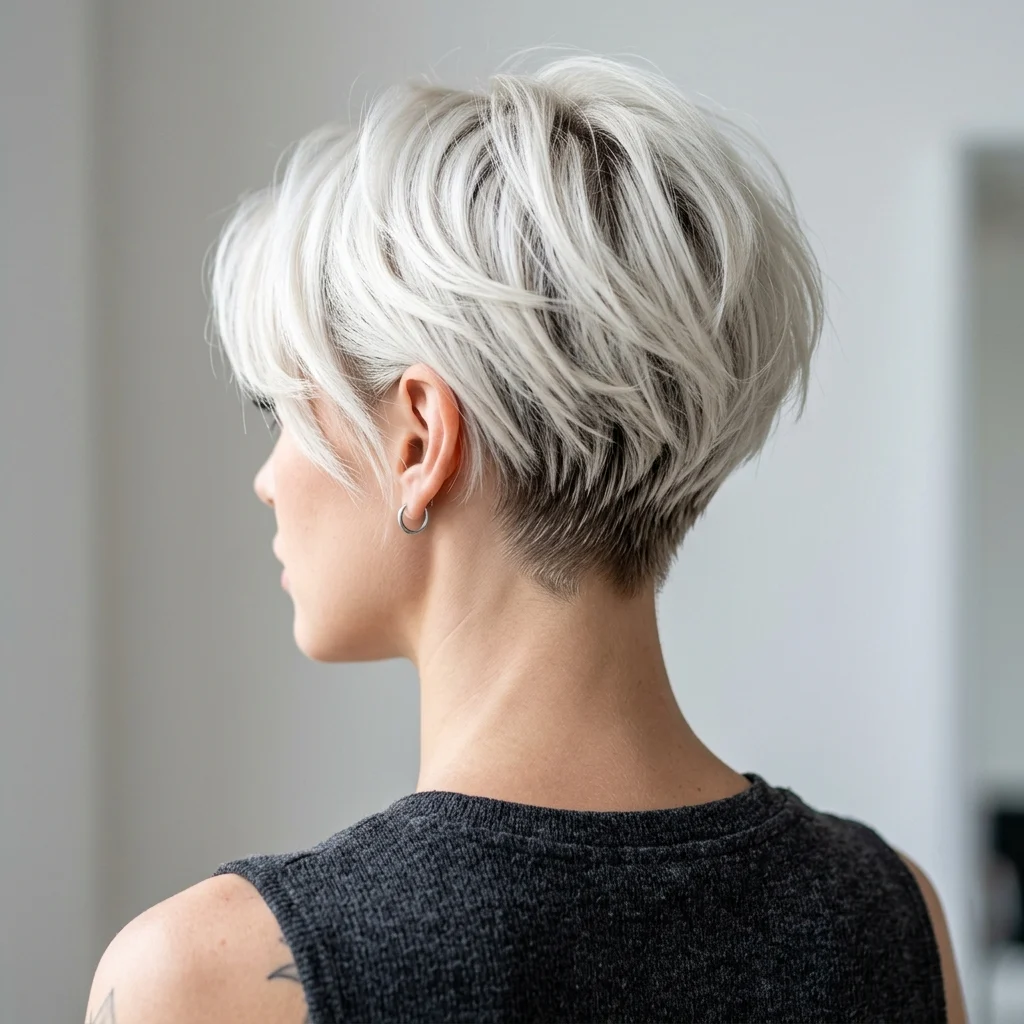
Vibe: Lifted, fuller.
Why it works: The principle is a shortened layering ratio, cutting more compact layers at the crown than a standard bixie uses since fine hair holds less shape on its own and needs the extra structure. A blunter perimeter, instead of a heavily feathered one, also prevents the ends from thinning out visually, a common problem with fine hair cut in long, tapered layers. This adjustment is specific to hair density, not a different haircut altogether. Most stylists will not adjust the ratio automatically unless you mention your hair type.
How to get it: Ask specifically for shorter crown layers and a blunter perimeter, and mention that your hair is fine so your stylist adjusts the layering ratio accordingly. Apply a root-lifting spray at the base before blow-drying upside down for two minutes of added volume.
Shop The Look
| Product |
| Root-lifting volumizing spray |
| Thickening dry shampoo |
| One-inch round brush for crown volume |
| Lightweight volumizing mousse |
27. Pearl Blonde with Cool Pink Undertone
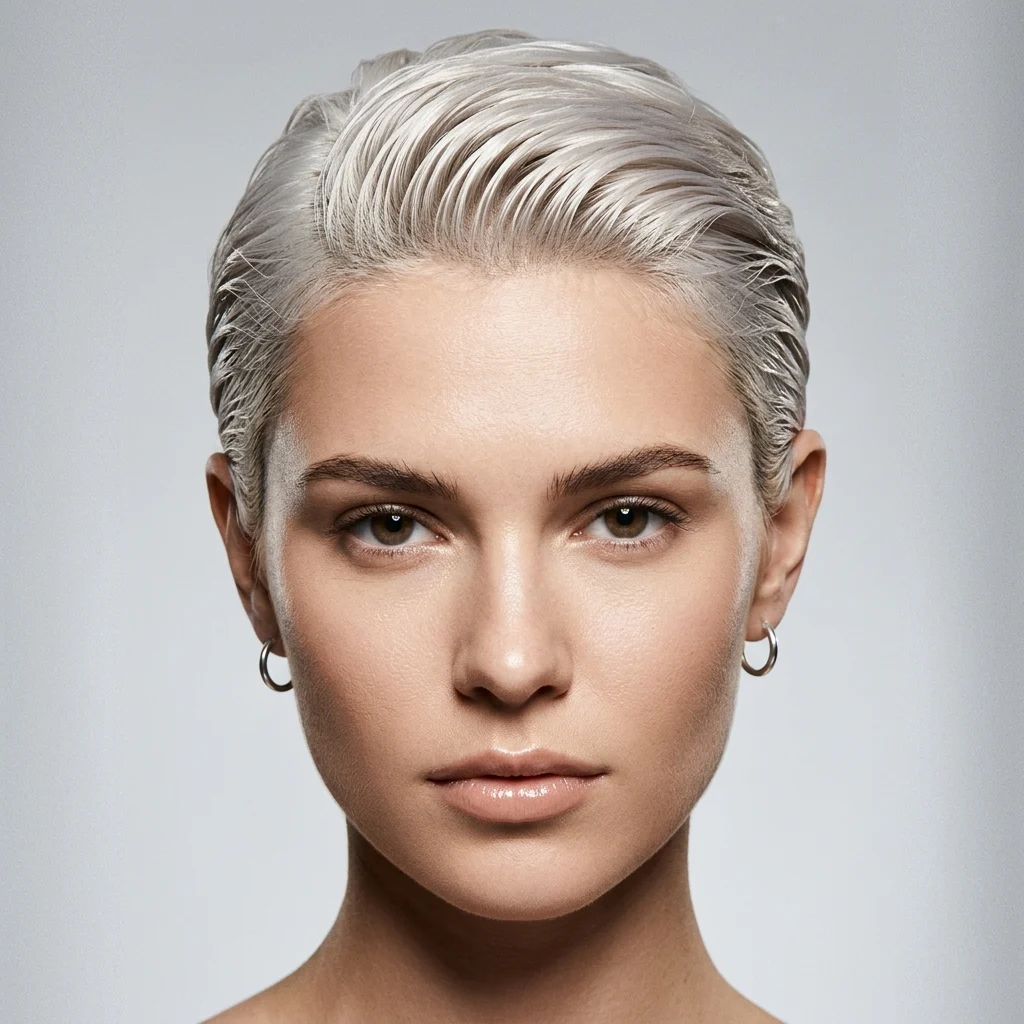
Vibe: Ethereal, iridescent.
Why it works: The principle is multi-pigment toning, combining violet with a small amount of pink or rose pigment to create a shifting, iridescent quality rather than a single flat cool tone. This reads differently depending on the light source, catching a faint shimmer under direct light and settling paler indoors. It’s a more advanced formula than a standard ash or violet toner and typically requires a colorist experienced in pearl or opal blonde work. It’s the most photograph-dependent shade on this list, since its effect changes with lighting more than any other.
How to get it: Ask specifically for a pearl or opal toning formula by name, since not every colorist stocks or mixes this shade as a default option. Maintain it with a pearl-tone purple shampoo rather than a standard violet one, since a standard formula will flatten out the pink undertone over repeated washes.
Shop The Look
| Product |
| Pearl-tone purple shampoo |
| Iridescent shine drops |
| Bond-repair mask for lightened hair |
| Cool-tone dry shampoo |
28. Textured Crop with Disconnected Nape
Vibe: Edgy, structured.
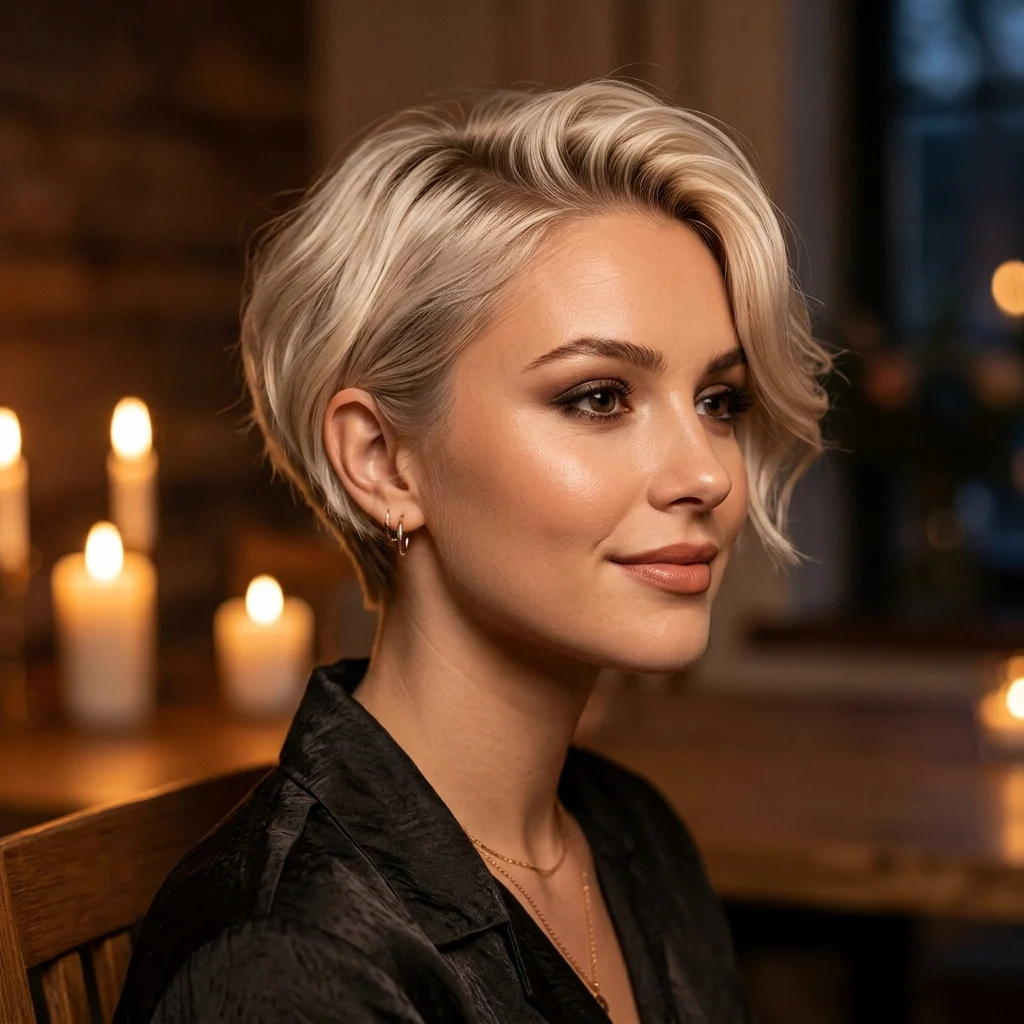
Why it works: The technique is disconnection, cutting a deliberate gap in length between the nape and crown rather than blending the two areas gradually. This creates a graphic, structured silhouette instead of the softer, blended shape most versions on this list use. It’s a more architectural take on the bixie, requiring the underlayer to be cut significantly shorter than the top. The visible length contrast is the entire point, so it should never be softened with heavy blending.
How to get it: Ask your stylist for a disconnected nape specifically since this requires cutting the underlayer noticeably shorter than a standard graduated bixie. Keep the nape trimmed every three to four weeks, since disconnection grows out faster and less gracefully than a blended cut.
Shop The Look
| Product |
| Cordless nape trimmer for touch-ups |
| Strong-hold matte paste |
| Texturizing powder for the crown |
| Precision edge comb |
29. Wet-Look Slicked Fringe
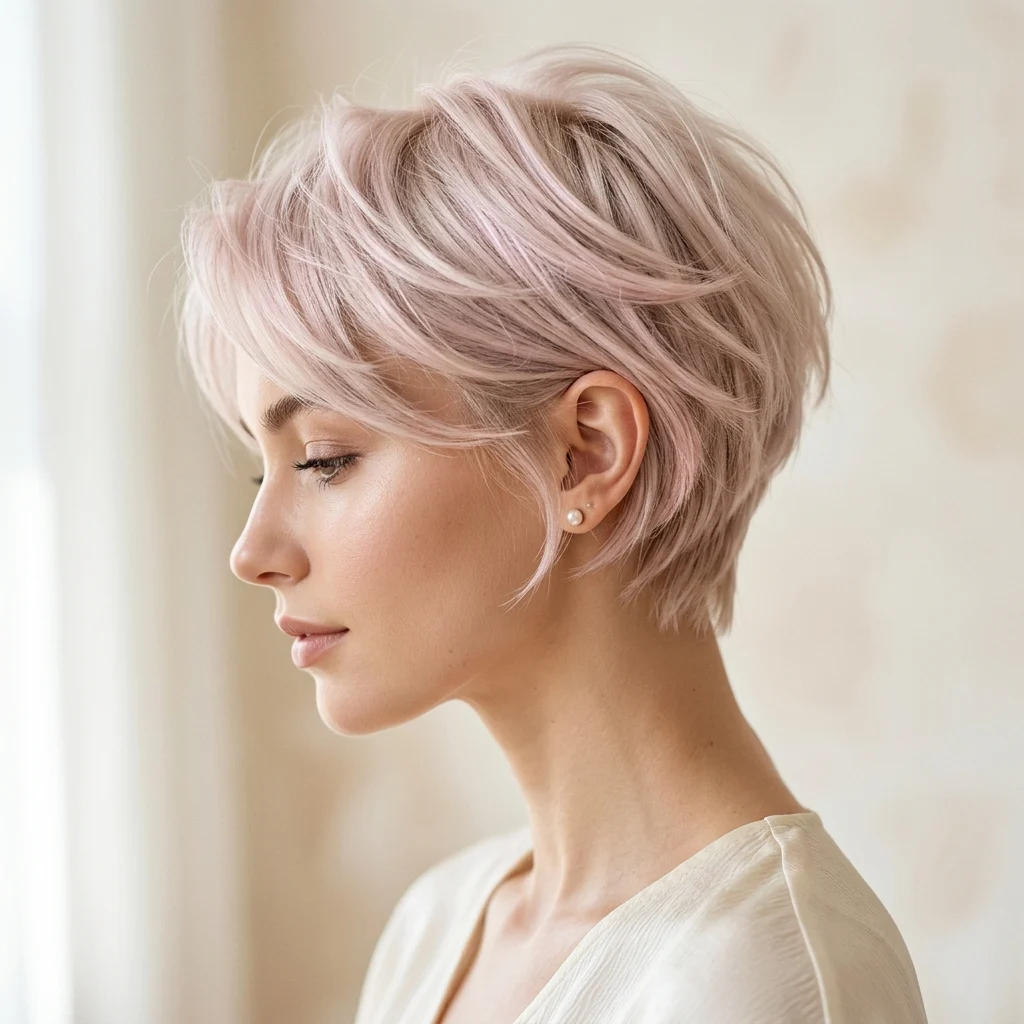
Vibe: Bold, high-shine.
Why it works: The principle is deliberate flattening, using a heavier gel-based product to press the fringe flat and reflective instead of swept and airy, a clear departure from the movement-driven styles elsewhere in this list. It reads as more dramatic under artificial or evening light than under daylight, which makes it better suited to events than daytime wear. The technique is entirely product-driven, requiring no heat tool at all. Once set, it holds through several hours without a single touch-up.
How to get it: Apply a clear, high-shine gel to damp hair with a fine-tooth comb, pressing the fringe flat against the forehead. Let it air-dry completely without touching it, since disturbing the gel before it sets creates flaking rather than the intended glass-like finish.
Shop The Look
| Product |
| Clear high-shine styling gel |
| Fine-tooth styling comb |
| Edge brush for pressing flat sections |
| Long-hold setting spray |
30. Evening-Out Fringe with Soft Waves
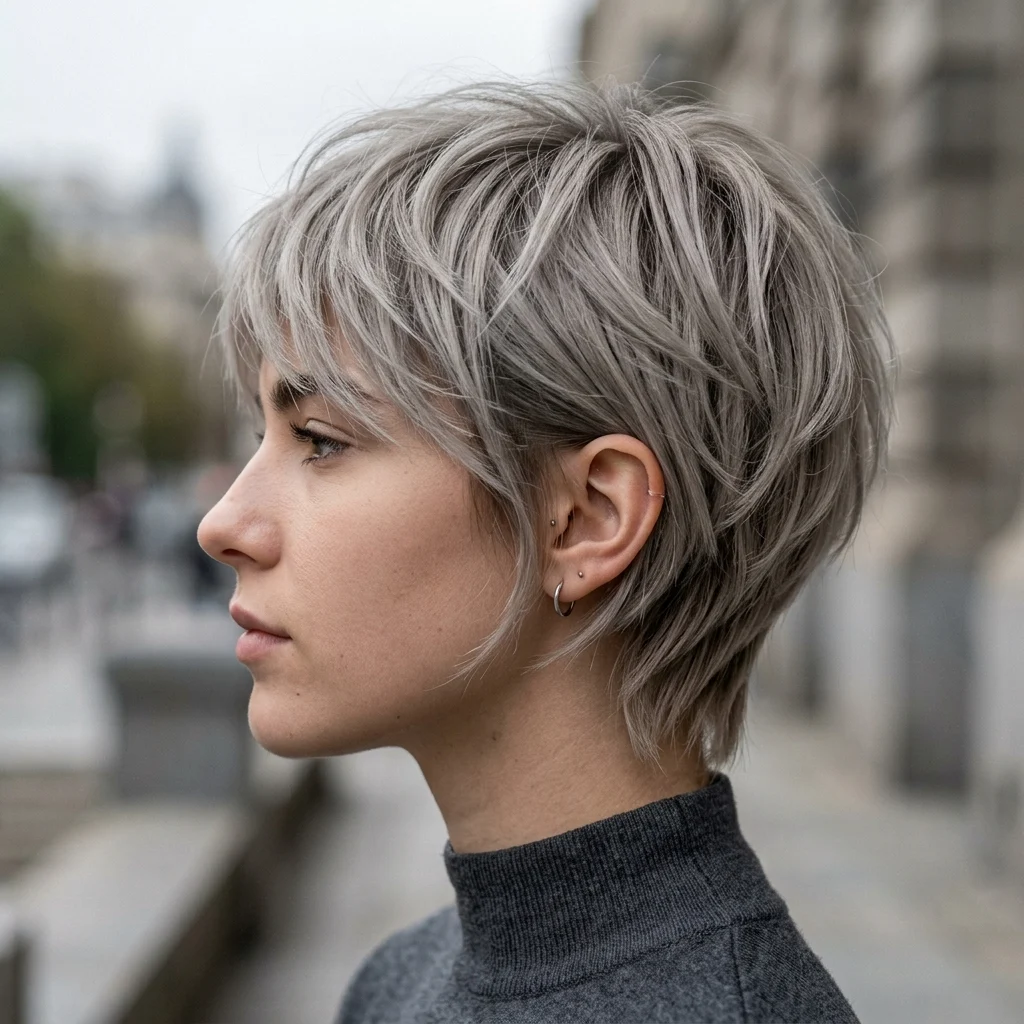
Vibe: Warm, romantic.
Why it works: The principle is light-dependent color shift, since warm ambient lighting adds gold undertones to hair that looks stark white in daylight, meaning the same cut reads entirely differently from day to evening. Soft waves added specifically for the occasion soften the sharper, structured lines the daytime versions of this cut use. This look is built to be temporary, meant for a single evening rather than daily wear. It’s the version of the cut most worth photographing under warm indoor light rather than daylight.
How to get it: Curl small sections with a half-inch wand, brush the curls out gently with your fingers rather than a brush, and sweep the fringe to one side. Set with a light-hold spray only at the root, keeping the ends soft enough to move through the evening.
Shop The Look
| Product |
| Half-inch curling wand |
| Light-hold finishing spray |
| Glossing hair oil for evening shine |
| Small bobby pins for securing the sweep |
How to Start Your Icy Blonde Bixie Transformation
The single first move is booking a color consultation before the cut, specifically to establish your starting base level and how many sessions it will take to reach a safe level 9 or 10. Going short before the color is right risks being stuck with a shape you dislike for months while the color corrects, since a bad cut grows out faster than damaged hair recovers. The color, not the cut, is what determines the timeline for this entire look.
The most common mistake is requesting pure platinum in a single session on hair that has never been lightened before. This over-processes the strand, leaving it brittle right at the layered ends that define the cut’s texture. The fix is a multi-session lightening process, spaced four to six weeks apart, letting the hair rest between appointments so it lifts without sacrificing the strength needed to hold shape.
Three items under $50 to start building the look at home: a travel-size tin of matte texturizing paste, a bottle of purple shampoo formulated for silver and platinum tones, and a half-inch curling wand for face-framing waves.
A full transformation, color and cut together, realistically takes two to three salon visits over six to eight weeks from a darker natural base at $150 to $250 per session. A single cut refresh on hair that’s already blonde fits into one weekend appointment for under $100.
Frequently Asked Questions About Icy Blonde Bixie Cuts
What is the difference between a bixie and a pixie cut?
A pixie cut is uniformly short all over, typically under two inches at its longest point, while a bixie leaves three to five inches through the crown and top, blended into shorter sides and nape. The bixie’s longer top is what allows the layering and swept fringe styles covered in this article. A true pixie generally cannot support a curtain or side-swept fringe the way a bixie can, since there isn’t enough length to sweep.
What blonde shade should I ask for to get an icy tone?
Ask for a level 9 or 10 base toned with a violet or ash-based toner, such as Wella Color Charm T18 or Redken Shades EQ 09V, rather than a warm or golden one. Ash-beige formulas soften the effect for warmer skin undertones. Ask specifically for “icy” or “ash” blonde by name, since “beach blonde” or “golden blonde” produces a warmer result entirely.
How much does an icy blonde pixie typically cost?
A full-color transformation from a darker natural shade usually runs $150 to $300 per session, often needing two to three sessions spaced four to six weeks apart. A cut alone, once the color is established, typically costs $50 to $90 depending on your area. Maintenance touch-ups for root shadow or toner refresh run $40 to $80 every four to six weeks.
Does this style work with curly or wavy natural hair textures?
Yes, though the layering technique changes slightly. Curly and wavy textures need slightly longer layers than straight hair, since curl shrinkage makes the finished length appear shorter than it was actually cut. A diffuser attachment, covered in idea 24, is especially useful for maintaining natural patterns on this length without daily heat styling.
How often does a pixie fringe need to be trimmed?
Fringe grows out of shape faster than the rest of the cut, typically needing a trim every two to three weeks to hold a swept or curtain shape, compared to six to eight weeks for the overall cut. Many stylists offer a free or low-cost fringe-only trim between full appointments for exactly this reason, so it’s worth asking when you book.
Ready to create your dream icy blonde bixie?
From color formula to fringe shape to the small styling details like a scarf, headband, or a pair of hoops, these 30 ideas cover a lot more ground than just one haircut. Starting small is not a compromise here, since a single texturizing paste and a bottle of purple shampoo can get you testing the vibe before you ever sit in a colorist’s chair. Book a consultation this week, even if the cut itself is still a few months out, so your stylist can map the lightening process against your current hair health. There’s a particular kind of ease that comes with wash-and-go hair that still looks finished, more time everywhere else, and less time in the mirror. Save your favorites now, especially the fringe shapes, since that’s the detail worth bringing straight into your next appointment.