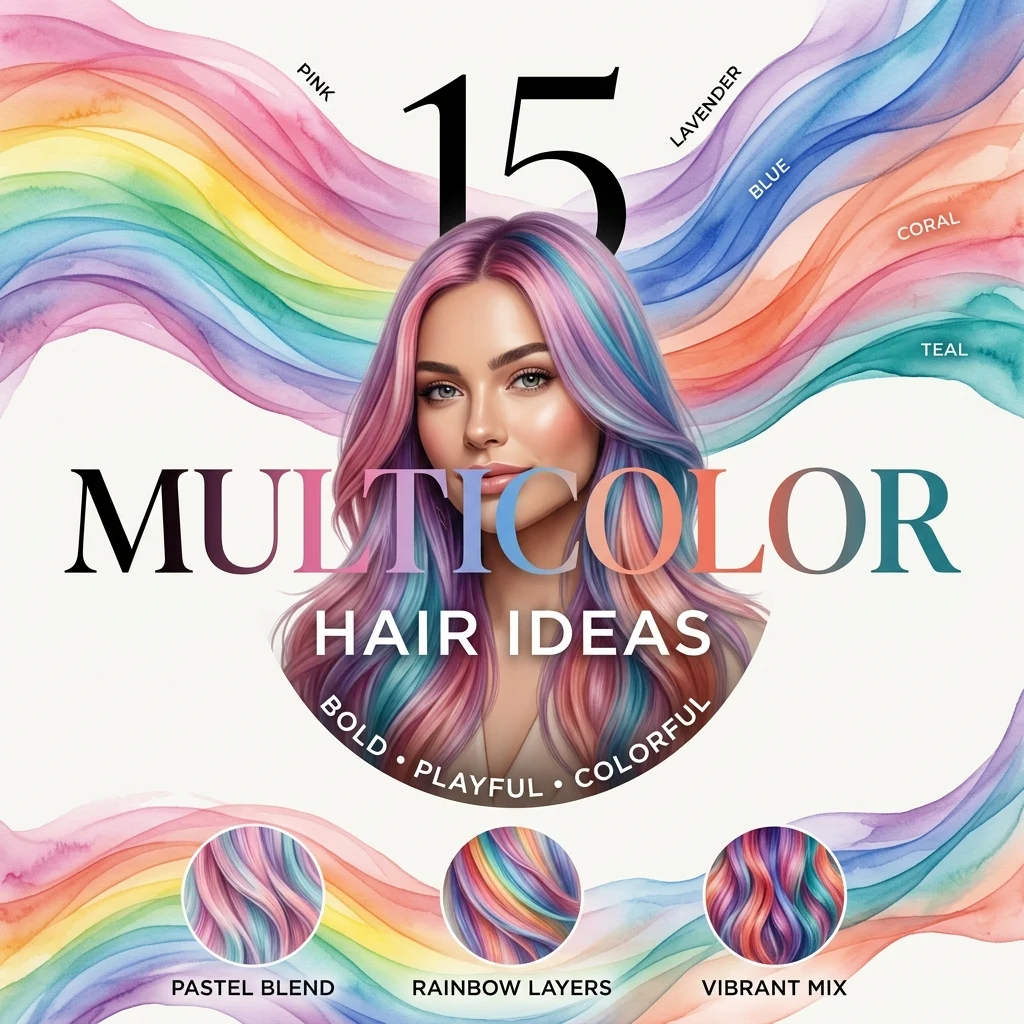
15 Multicolor Hair Ideas

Multicolor hair is a coloring approach that blends two or more distinct shades across a single head of hair instead of sticking to one tone. This article walks through 15 multicolor hair ideas, ranging from bold all over blends to barely there hidden panels.
There is a specific kind of confidence that comes from hair that shifts color when it catches the light. Some looks feel loud and celebratory, built for a festival crowd or a night out. Others sit quietly under the top layer, a private secret only visible when the wind moves. Multicolor hair can be playful, moody, romantic, or edgy depending on the palette and placement chosen.
Here are 15 ideas worth saving and stealing.
Why Multicolor Hair Ideas Work So Well
Multicolor hair pulls from decades of subculture coloring, punk dye jobs, festival looks, and Y2K chunky highlights, then filters them through modern salon technique. What separates a current multicolor look from an old school dye job is precision. Colorists now use color melting, foilyage, and hand painted placement to blend two or three tones so they read as intentional rather than accidental.
The strongest multicolor looks rely on a small set of repeatable tools. Colorists lift a base with lightener, then deposit vivid semi permanent shades like Arctic Fox Poseidon or Pravana Vivids Violet over the lifted sections. Toners such as Wella T18 keep the underlying blonde clean so the vivid tones stay true instead of turning muddy. Placement matters as much as color choice, since a money piece near the face reads differently than an underlayer panel.
Search interest in multicolor and vivid hair has climbed steadily as people return to expressive personal style after years of muted, low maintenance color. Pinterest data consistently shows spikes around festival season and back to school, when people want a change that photographs well. Social platforms reward hair that moves and catches light differently in every frame, which vivid multicolor sections do naturally.
Short hair and long hair both handle multicolor color well, though the approach shifts. On shorter cuts, even a small money piece or underlayer reads clearly because there is less hair to dilute the effect. Longer hair has more room for a full color melt but needs more product and more foils to keep the blend even from root to end.
Style at a Glance
| Element | Detail |
|---|---|
| Philosophy | Color as personal expression, blending two or more tones with intention |
| Key Techniques | Color melting, foilyage, hand painting, dip dye, peekaboo panels |
| Key Colors | Cobalt blue, emerald green, rose gold, lavender, jet black |
15 Multicolor Ideas
1. Sunset Copper, Rose Gold, and Amber Melt
Also view: 12 Warm Copper Hair Color Ideas
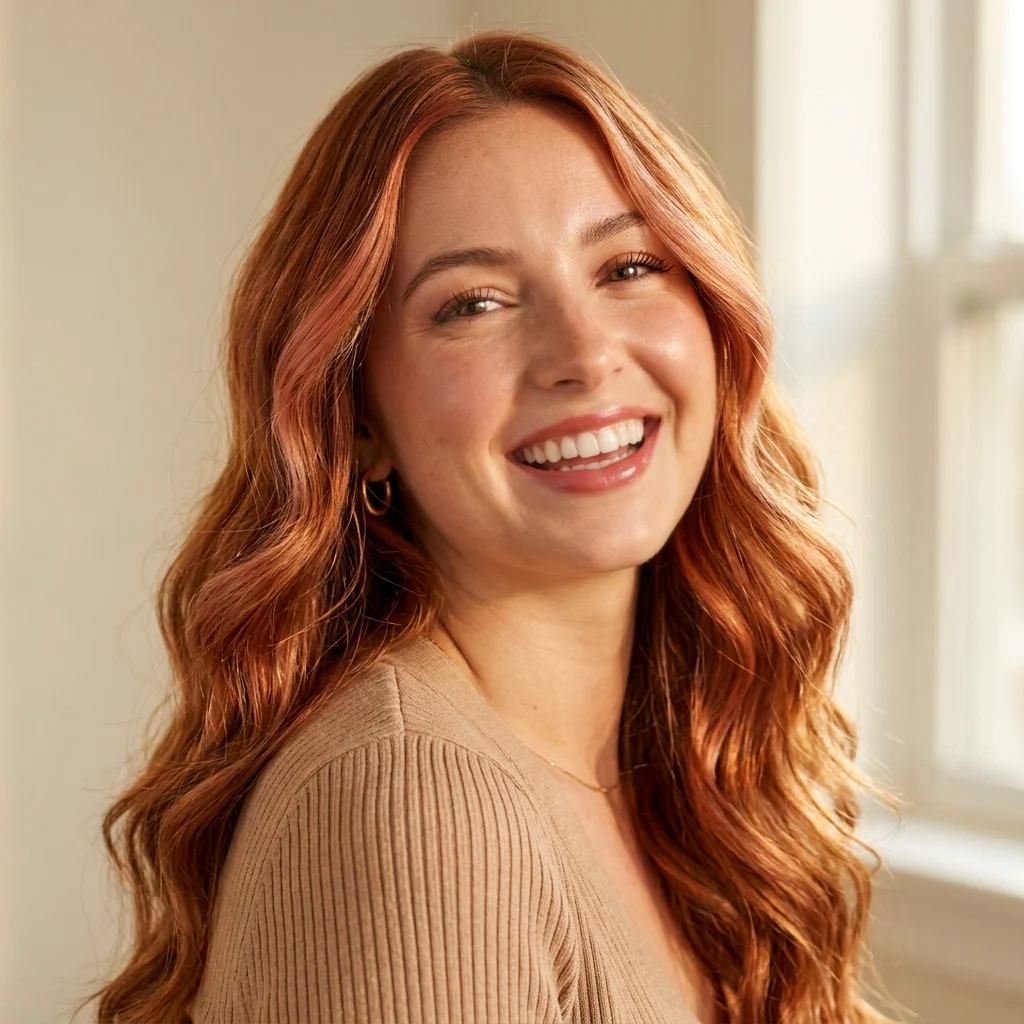
Vibe: Sun-warmed, the kind of color that looks lit from within even indoors.
Why it works: Copper, rose gold, and amber sit close together on the color wheel, so the blend reads smooth instead of stripy. The warmth flatters most skin undertones, which is rare for a three tone look. Balayage placement keeps the roots natural, so regrowth stays low maintenance. The gradual shift from copper to amber mimics natural sun bleaching, which is why it photographs so well.
How to get it: Ask for a balayage foundation lightened only through the mid lengths and ends. Have the colorist glaze with a copper toner, then hand paint rose gold and amber through the front pieces. Use a color depositing conditioner like dpHUE Copper Gloss between salon visits to keep the copper vivid. Wash with a sulfate free, color safe shampoo to slow fading.
Shop The Look
| Product |
|---|
| dpHUE Gloss+ color depositing conditioner, Copper |
| Sulfate free color safe shampoo and conditioner set |
| Olaplex No. 6 bond smoother leave in treatment |
| Heat protectant spray for colored hair |
| Satin pillowcase, standard size |
2. Chunky Cobalt Blue Money-Piece Highlights
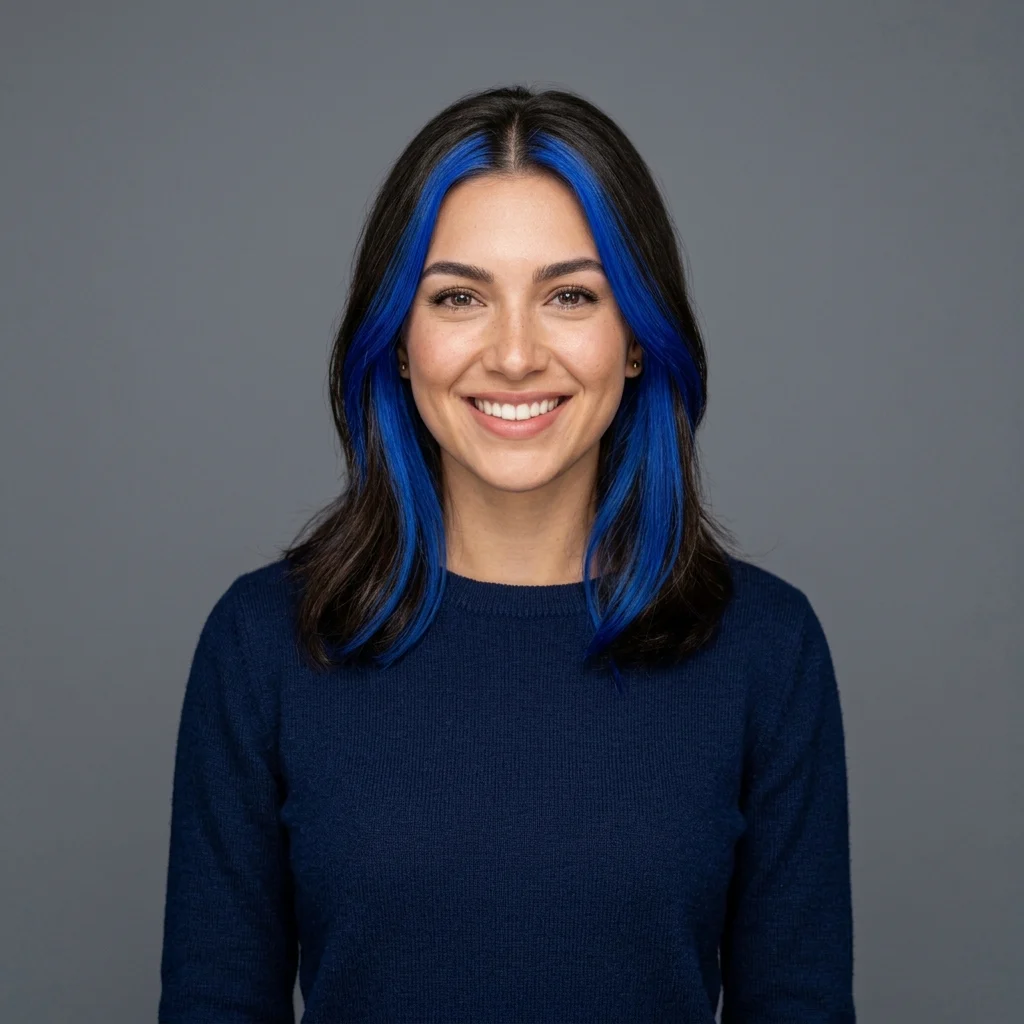
Vibe: Sharp and graphic, the kind of contrast that reads from across a room.
Why it works: Chunky, thick sections of color create visual weight near the face, a technique colorists call framing. Cobalt blue against dark brown produces high value contrast, so the blue looks saturated instead of washed out. Keeping the sections wide rather than fine avoids a dated, streaky 2000s look. Bleaching only two or three pieces limits overall hair damage compared to a full head lightening.
How to get it: Section two pieces at the front hairline, each about one inch wide, and foil separately from the rest of the hair. Lighten to a pale yellow, then apply a direct dye like Arctic Fox Poseidon for a true cobalt result. Rinse with cool water only to preserve the vivid pigment. Refresh color every four to six weeks with a blue toning mask between full applications.
Shop The Look
| Product |
|---|
| Arctic Fox Poseidon semi permanent hair dye |
| Foil sheets for highlighting, pop up dispenser box |
| Tint brush and mixing bowl set |
| Blue toning color depositing mask |
| Sectioning clips, salon grade, pack of 6 |
3. Lavender Roots Melting Into Icy Silver Ends
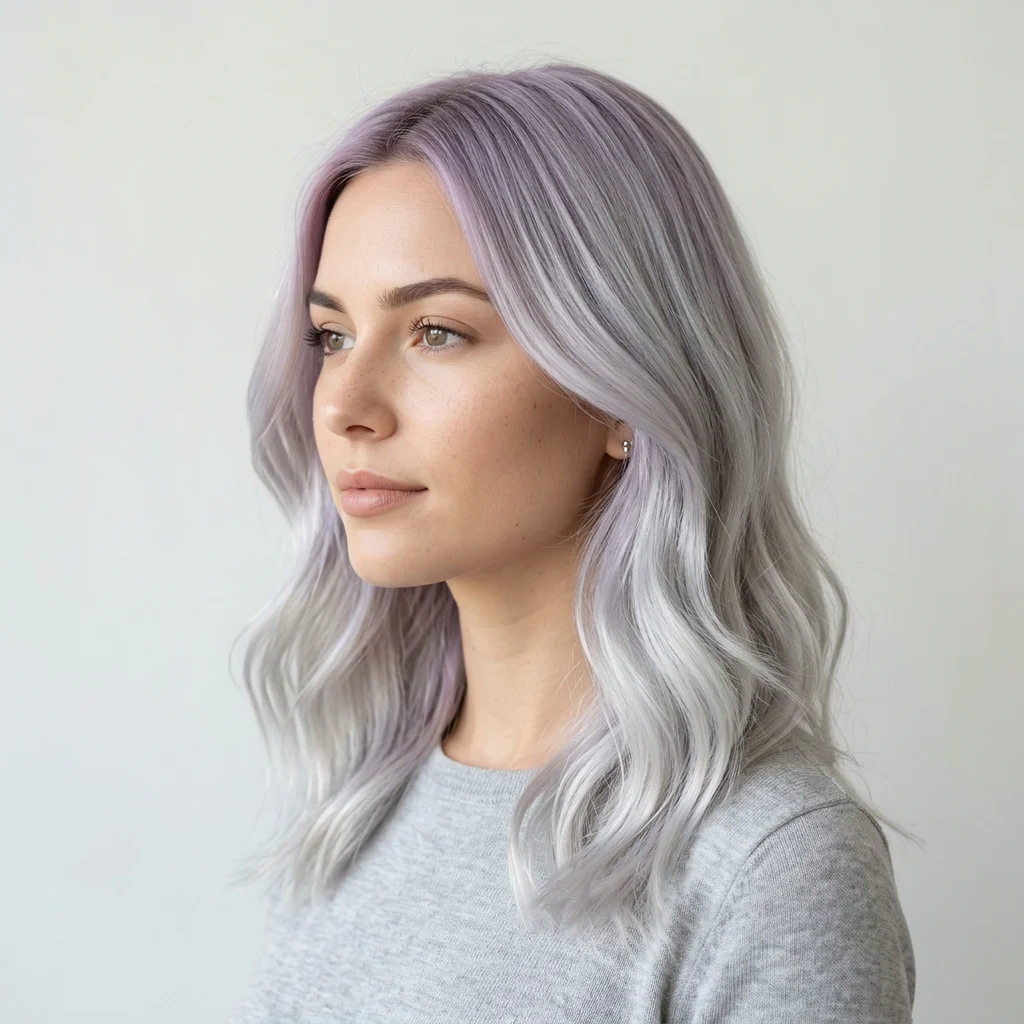
Vibe: Hushed and cool, like frost catching early morning light.
Why it works: Lavender and silver sit on the same cool, low saturation end of the palette, so the transition looks intentional rather than grown out. A root smudge technique softens the line where the lavender begins, avoiding a harsh block of color. Both tones require a violet based toner to stay true, so maintenance overlaps instead of doubling. The muted saturation ages gracefully as the color fades, unlike high vividness dyes.
How to get it: Have the colorist lighten the entire head to a pale yellow base first, since both lavender and silver need minimal underlying warmth. Apply a violet toner like Wella T18 through the ends, then a diluted lavender direct dye at the root using Pulp Riot Lavender mixed with clear crystal. Sleep on a silk pillowcase to reduce friction fading. Use purple shampoo once a week to refresh the cool cast.
Shop The Look
| Product |
|---|
| Pulp Riot Lavender semi permanent color |
| Wella Color Charm T18 toner |
| Clear crystal clarifier for dye dilution |
| Purple toning shampoo for cool tones |
| Silk pillowcase, queen size |
4. Waist-Length Layers with Multicolor Rainbow-Dipped Ends
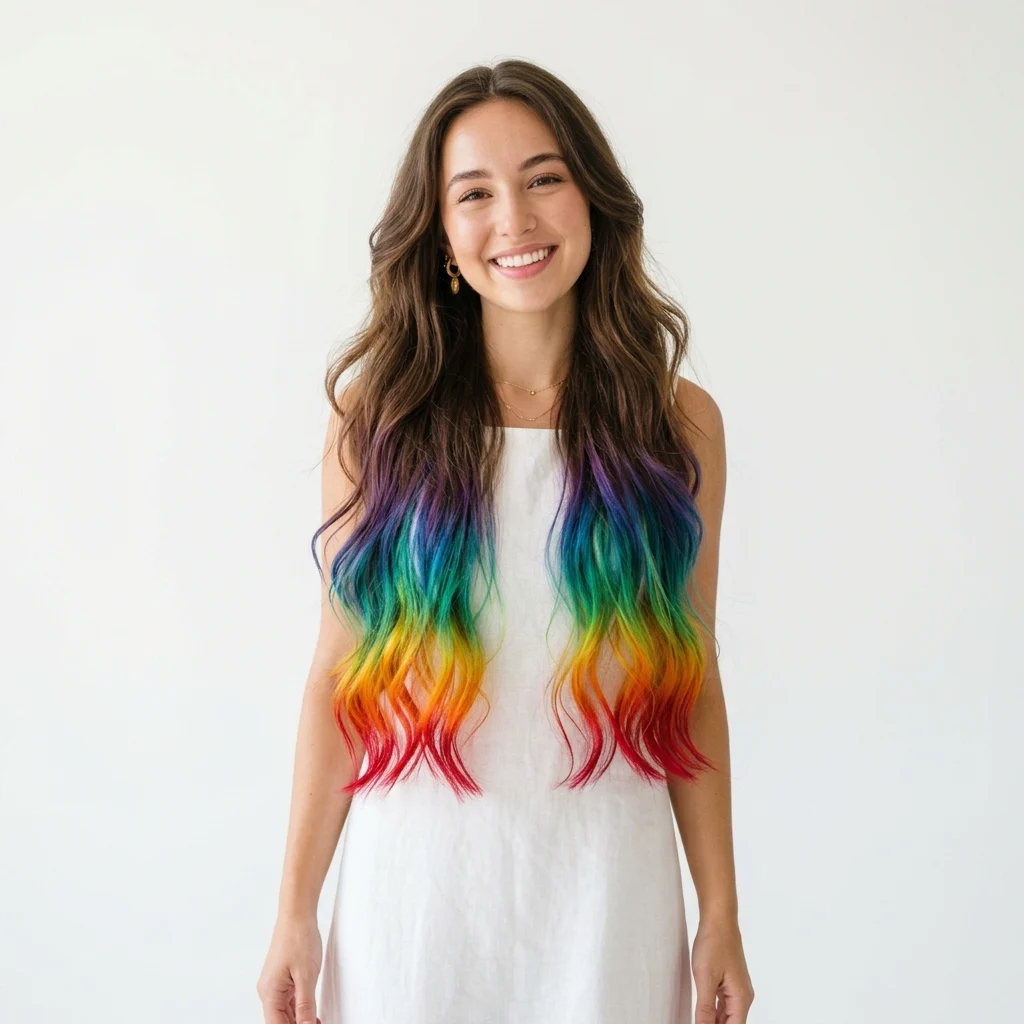
Vibe: Playful and layered, hair that feels like it belongs to summer.
Why it works: Confining the rainbow to the last several inches limits both damage and daily upkeep, since the natural color stays untouched above it. Layered ends give each color band its own visible strip instead of blurring together. Dip dye placement is one of the least damaging vivid techniques because the bleach never touches the scalp. The gradient order, following the visible light spectrum, reads as deliberate rather than random.
How to get it: Lighten only the bottom four to six inches with a low ammonia lightener, working upward in gentle sections. Apply Special Effects or Manic Panic dyes in spectrum order, wiping each transition point with a damp sponge to soften the seams. Wrap sections loosely in plastic wrap rather than foil for a softer blend. Trim ends every eight weeks to keep the color line crisp.
Shop The Look
| Product |
|---|
| Manic Panic vivid hair color multi shade set |
| Low ammonia cream lightener kit |
| Plastic wrap roll for hair color processing |
| Sea sponge for color blending |
| Bond building leave in spray |
5. Emerald Green Peekaboo Underlights
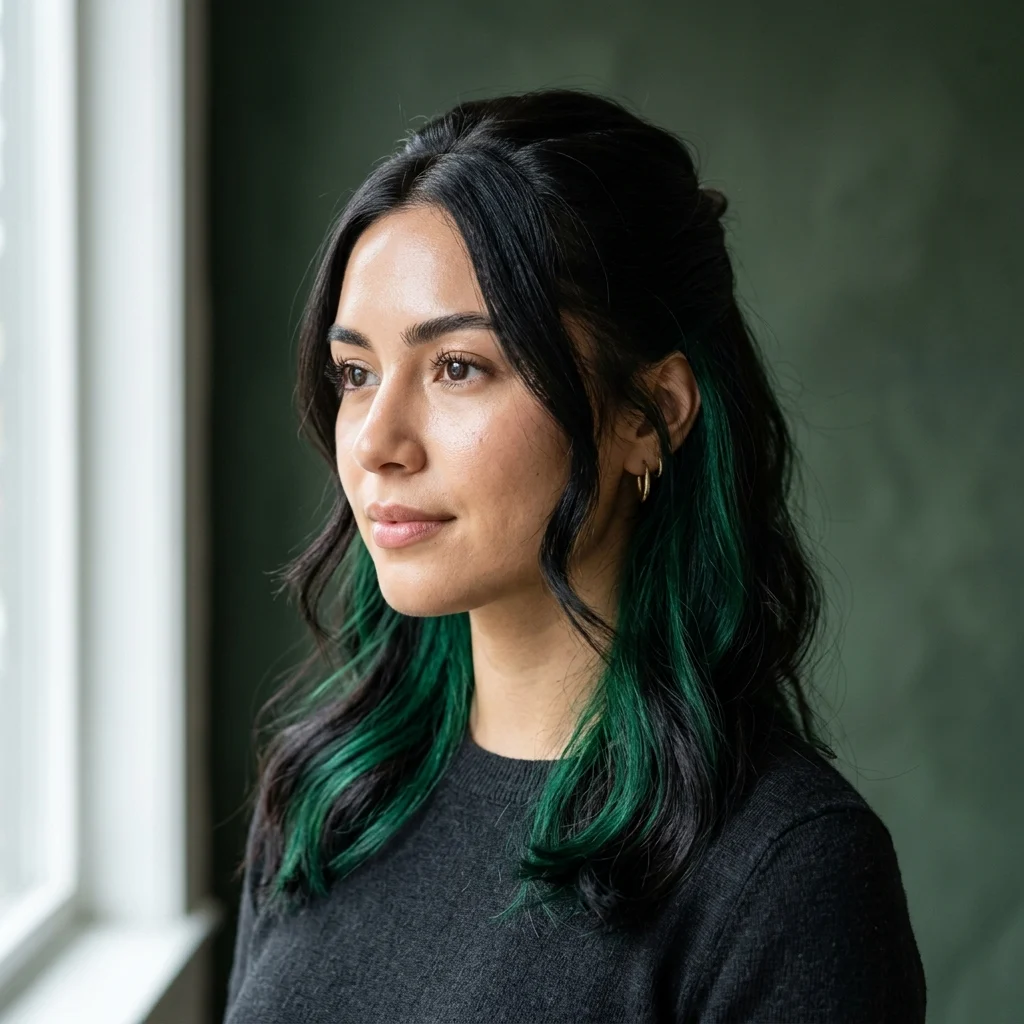
Vibe: Secretive and rich, a color that only reveals itself in motion.
Why it works: Placing vivid color in the underlayer instead of the top hides it from a workplace or classroom dress code while still visible in ponytails or half up styles. Emerald green against near black hair creates deep, jewel toned contrast rather than a washed out result. The technique only requires lightening the interior sections, which protects the top layer from bleach damage entirely. This placement suits people who want a reveal moment rather than constant visibility.
How to get it: Have the colorist part the top layer of hair away and section only the interior, underside hair for lightening. Apply Pravana Vivids Green over the lightened panels and process until fully saturated. Style with the top layer down for daily wear, then push it up or braid it back to reveal the green. Refresh with a green color depositing conditioner monthly.
Shop The Look
| Product |
|---|
| Pravana Vivids Green semi permanent dye |
| Green color depositing conditioner |
| Wide tooth detangling comb |
| Root touch up powder, near black shade |
| Boar bristle brush for smoothing top layer |
6. Braided Rainbow Accent Strands for Everyday Wear
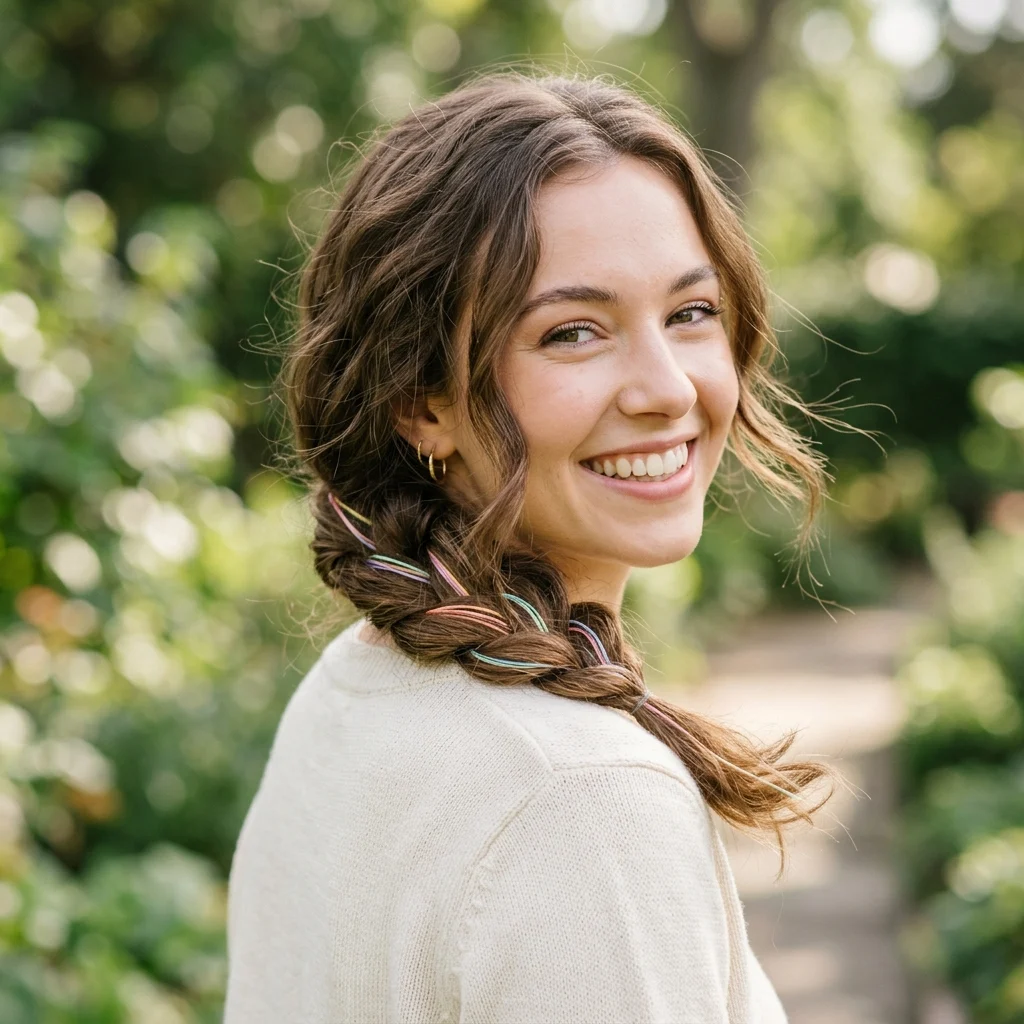
Vibe: Light and easygoing, color you can put away when you are done.
Why it works: Braiding in colored extension strands adds vivid color without touching the natural hair or requiring any bleach at all. Thin strands, rather than thick sections, keep the look subtle enough for daily wear. The technique is fully reversible, so it suits anyone unsure about a permanent commitment. Weaving the strands into a braid gives them structure so they do not tangle with the surrounding hair.
How to get it: Buy pre colored kanekalon strands in a rainbow pack and cut them to match hair length. Tie each strand around a small section near the root with a secure loop knot, then braid it in alongside natural hair. Seal the tied end with a dab of clear nail polish to prevent slipping. Remove strands before washing to keep them looking fresh longer.
Shop The Look
| Product |
|---|
| Kanekalon rainbow braiding hair strands pack |
| Small elastic hair ties, clear |
| Rat tail comb for sectioning |
| Clear nail polish for sealing strand ends |
| Colorful ribbon hair ties |
7. Hidden Jewel-Tone Panel Under the Top Layer
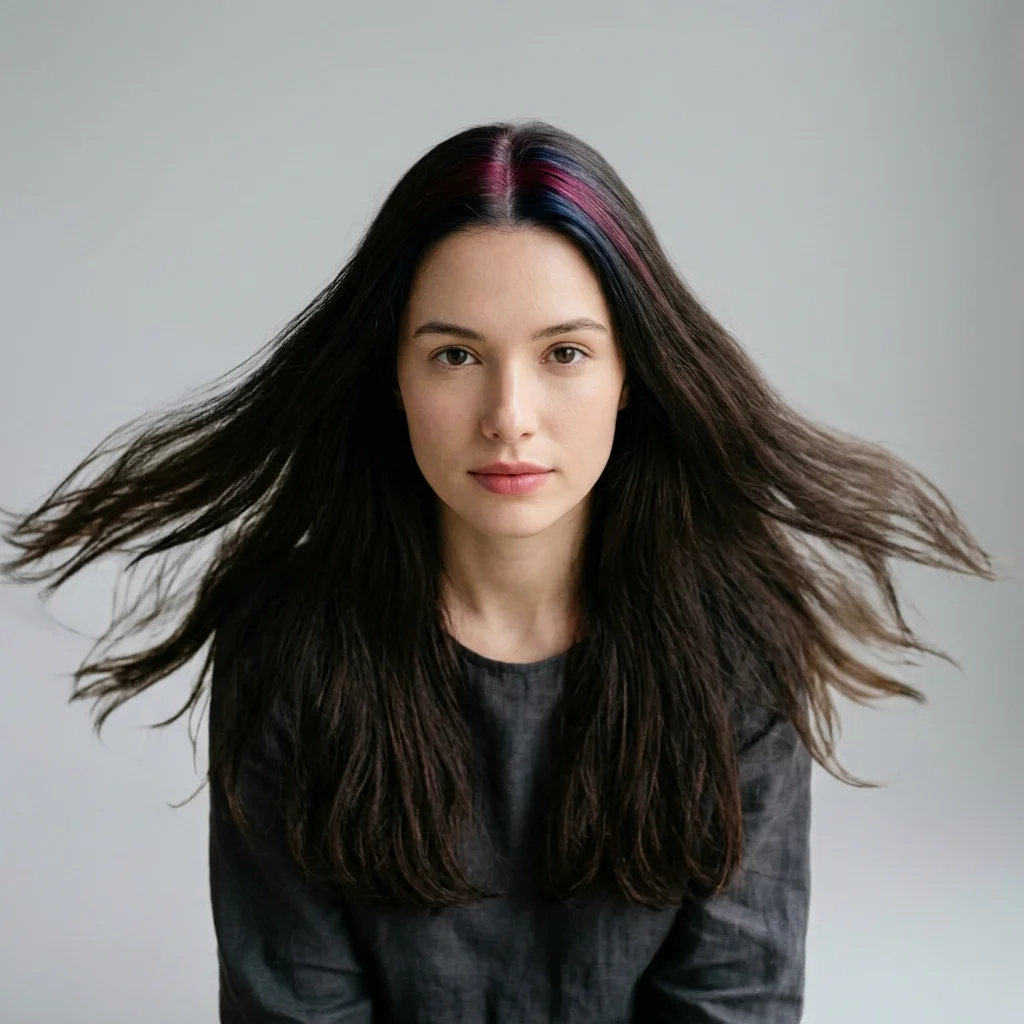
Vibe: Grounded, a color secret that only you fully know about.
Why it works: This panel sits just beneath the crown, so it stays completely hidden under normal hair fall and only shows if the part shifts or hair is pulled up. Magenta and sapphire together create rich contrast without needing a large lightened surface area. Because the panel is small, damage and maintenance stay minimal compared to full head color. This approach works especially well for anyone in a formal workplace who still wants vivid color.
How to get it: Section a two inch wide panel starting about one inch back from the crown and foil it separately from the rest of the head. Lighten to pale yellow, then apply Pravana Vivids Magenta on one half and Wild Orchid Sapphire Blue on the other. Keep the surrounding hair long enough to fully cover the panel when worn down. Check the panel is concealed by looking in a mirror with hair in its usual daily part.
💡 Quick Win: For a no commitment test run, clip in a single small magenta and sapphire feather extension near the crown before booking any color appointment.
Shop The Look
| Product |
|---|
| Pravana Vivids Magenta semi permanent dye |
| Wild Orchid Sapphire Blue direct dye |
| Foil sheets for highlighting |
| Small feather clip in hair extension, jewel tones |
| Color safe deep conditioning mask |
8. Cotton Candy Pink and Baby Blue Blend
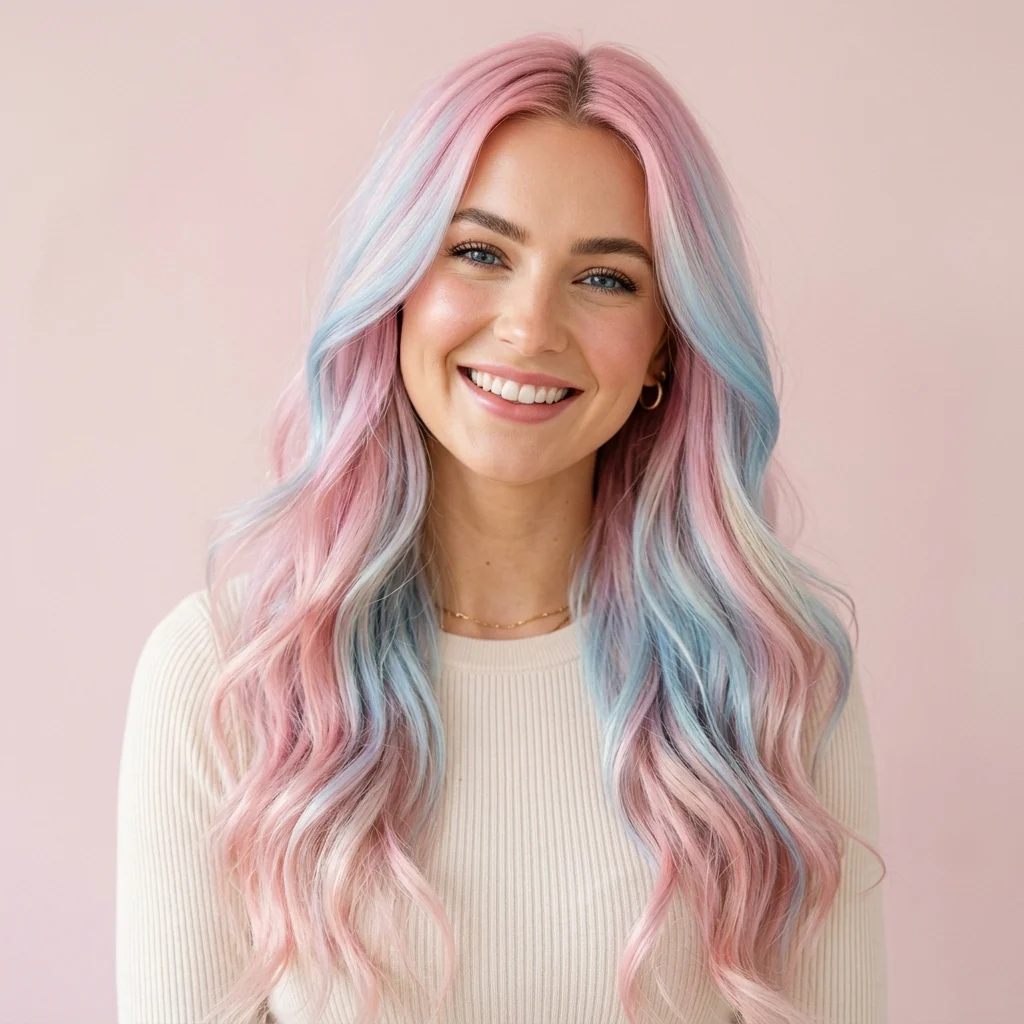
Vibe: Airy and sweet, color that feels like an early spring morning.
Why it works: Pink and blue sit opposite each other in saturation balance, so pairing them at pastel strength keeps the overall look soft rather than clashing. A full head lift to pale blonde is required so both pastel tones show true color. Blending the two through the mid lengths, rather than splitting them in a hard line, gives a cotton candy effect instead of a two tone block. Pastel tones fade gently over time, so there is no harsh regrowth line to manage.
How to get it: Lighten the entire head to a pale, near white blonde base using a gentle bleach and bond protector. Apply diluted Punky Colour Pastel Pink through the front and crown, and Punky Colour Pastel Blue through the back and ends, blending where they meet with a wet brush. Wash with cool water for the first three days to lock in pigment. Use a color safe purple shampoo occasionally to prevent the pink from turning brassy.
Shop The Look
| Product |
|---|
| Punky Colour Pastel Pink semi permanent dye |
| Punky Colour Pastel Blue semi permanent dye |
| Bond protector additive for bleach |
| Color safe purple shampoo |
| Wet detangling brush |
9. Black-to-Neon-Orange Dip-Dye Ombre
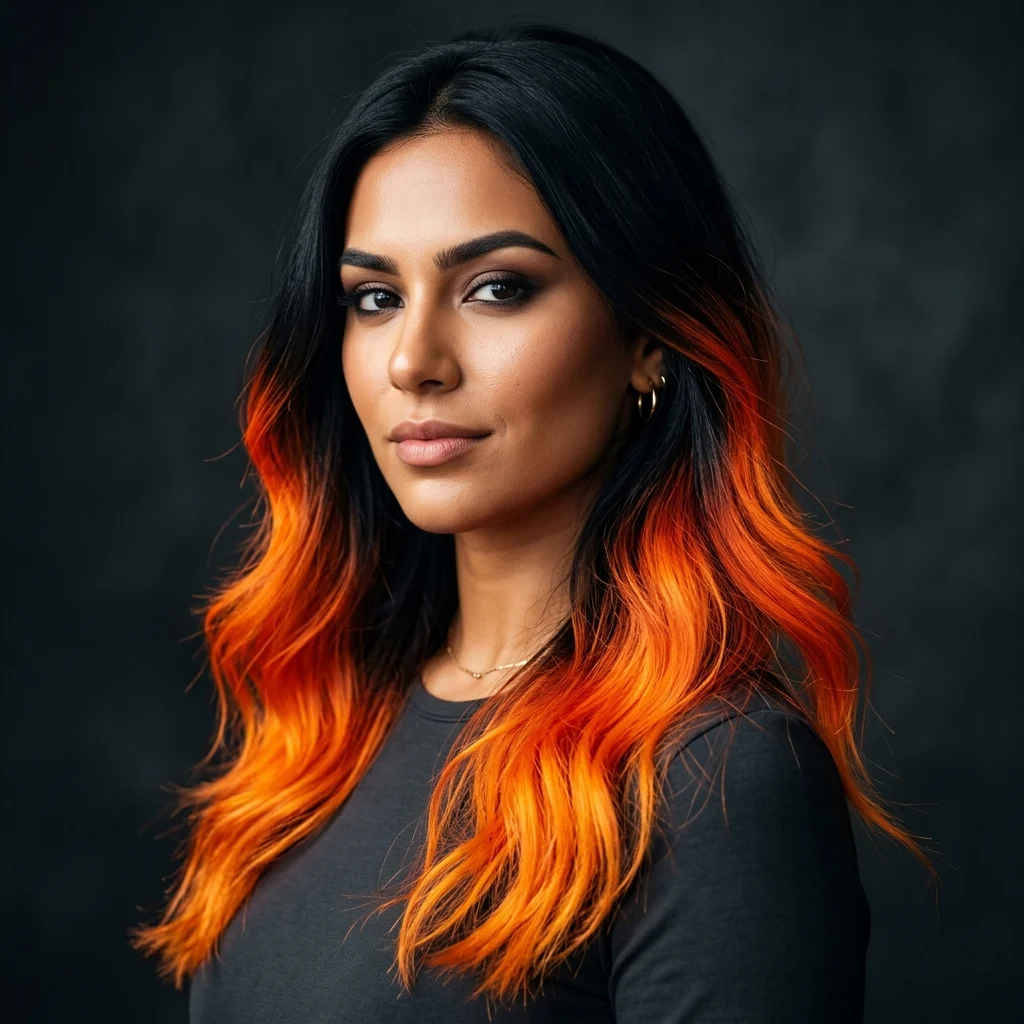
Vibe: Electric and warm, a look built for standing out in a crowd.
Why it works: The strong value contrast between black and neon orange creates one of the most photograph friendly gradients in vivid color work. Dip dye placement limits lightener to only the lower portion of hair, protecting the roots and scalp entirely. A short amber transition zone between black and orange prevents a harsh, unblended line. Neon orange over pre lightened hair reads true and saturated rather than muddy or brown toned.
How to get it: Lighten only the bottom third of the hair to a pale yellow using foils, keeping the line slightly angled rather than perfectly straight. Apply Special Effects Electric Banana mixed with a touch of red as a base, then layer Punky Colour Orange over top for full saturation. Blend the transition zone with a fine tooth comb while the dye still sits wet. Deep condition weekly since bright orange requires repeated lightening to stay vivid.
Shop The Look
| Product |
|---|
| Special Effects Electric Banana semi permanent dye |
| Punky Colour Orange semi permanent dye |
| Fine tooth blending comb |
| Weekly deep conditioning hair mask |
| Heat protectant spray for styling |
10. High-Contrast Platinum and Jet Black Split
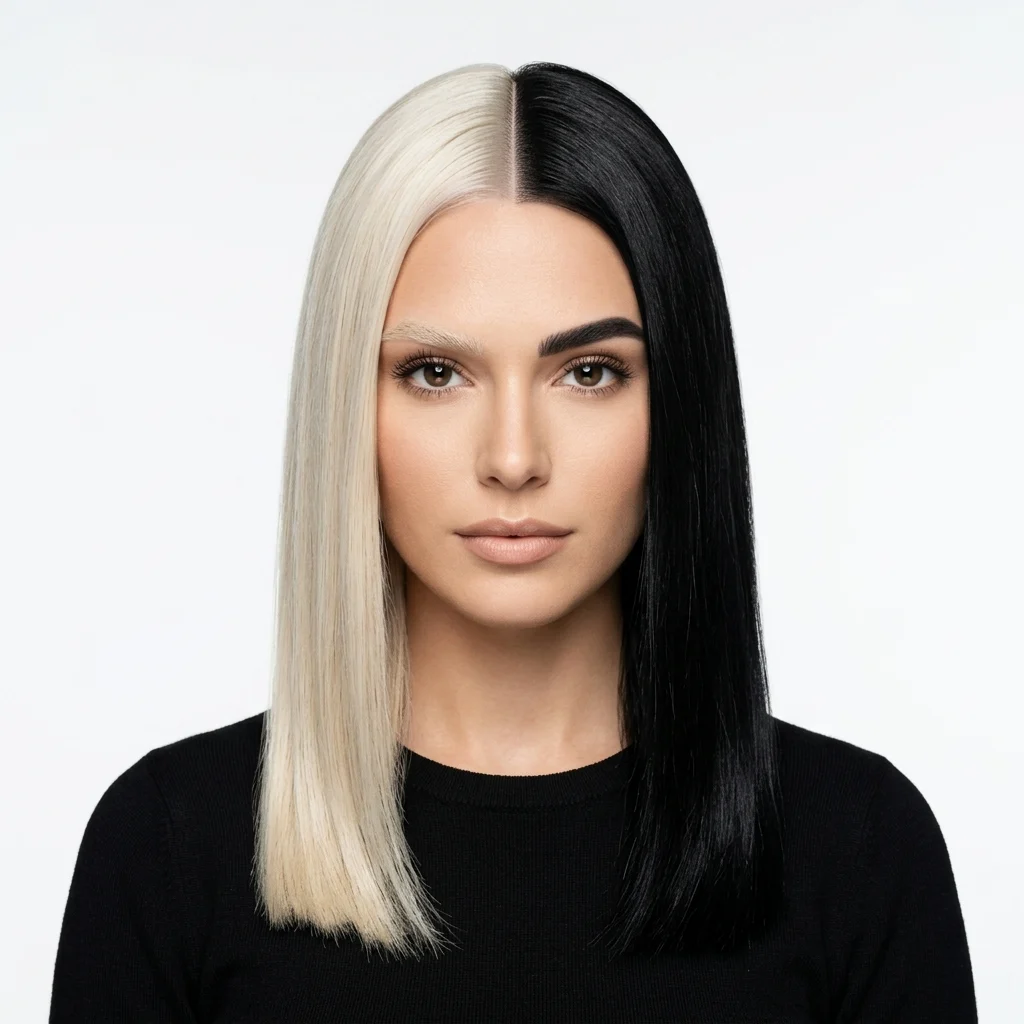
Vibe: Graphic and fearless, hair styled like a piece of visual art.
Why it works: Splitting hair into two solid colors relies purely on value contrast, with no blending needed, which makes it one of the boldest multicolor approaches available. A perfectly straight center or side part is essential, since any waver in the line breaks the visual effect. Platinum requires significant lightening while the black half needs deep, even coverage, so the two sides are colored as separate processes. This look reads clearly in photographs even from a distance, which explains its popularity for editorial and event styling.
How to get it: Section hair down the exact center or a deep side part using a rat tail comb and secure each half separately with clips. Lighten one half fully to a pale yellow, then tone with a violet based platinum toner. Color the other half with a permanent jet black dye, applying carefully along the part line to avoid overlap. Touch up the part line every two to three weeks since regrowth shows quickly on both sides.
Shop The Look
| Product |
|---|
| Platinum blonde toner, violet based |
| Permanent jet black hair dye |
| Rat tail comb, metal pin |
| Sectioning clips, salon grade |
| Root touch up brush for precise part lines |
11. Curly Bob with Multicolor Confetti Highlights
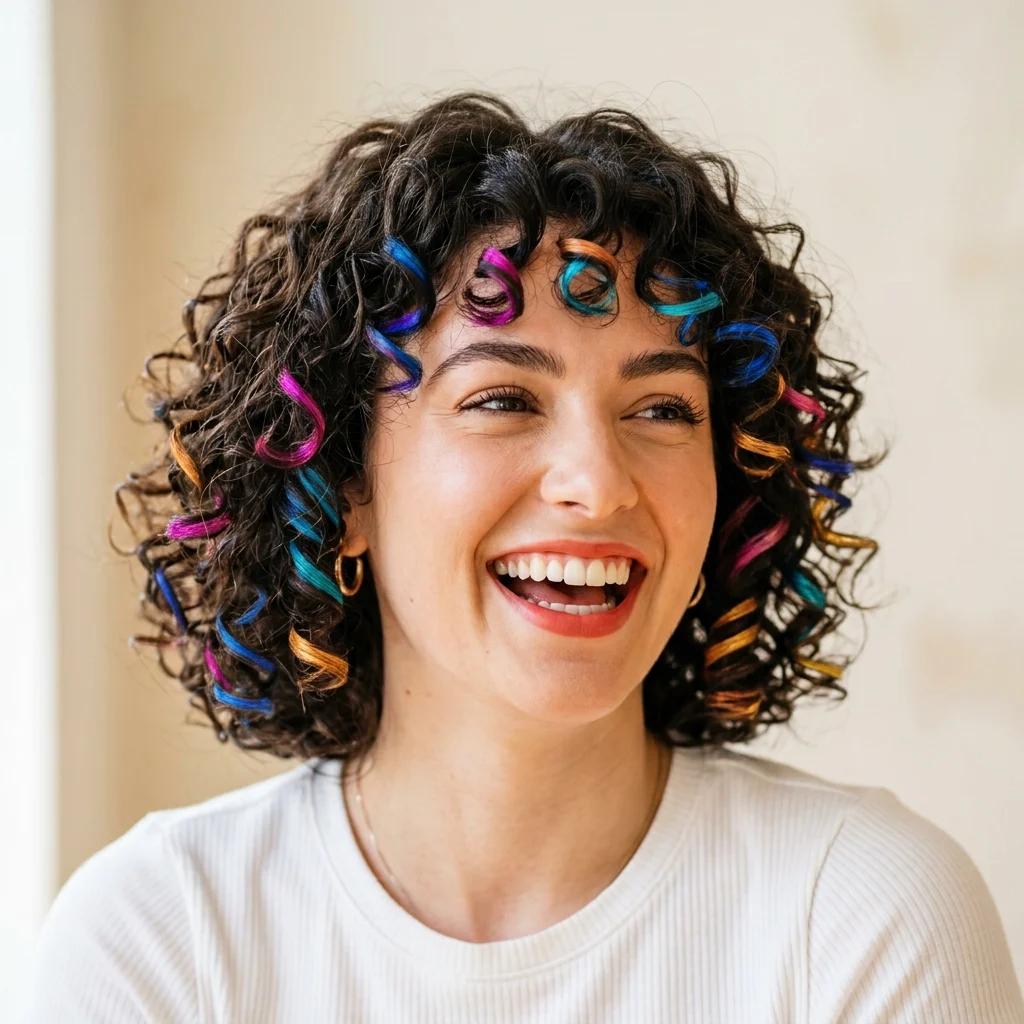
Vibe: Bouncy and bright, color that moves with every curl.
Why it works: On a curly bob, the natural texture scatters light differently than straight hair, so small confetti sized highlights read as sparkling flecks instead of solid streaks. Short length means fewer highlights are needed to cover the whole head, keeping the technique quick and affordable. Placing small sections randomly rather than in a pattern mimics the organic movement curls already have. Curl shape also hides regrowth longer than straight hair, since coils naturally obscure the root area.
How to get it: Ask the colorist for pencil thin foil sections, no wider than a quarter inch, scattered randomly through the top and sides of the curls. Lighten each section to pale yellow, then apply a mix of pink, teal, and gold direct dyes across different sections for a true confetti effect. Use a curl defining cream after coloring to keep ringlets from frizzing during processing. Diffuse dry on low heat to protect both curl pattern and vivid color.
Shop The Look
| Product |
|---|
| Curl defining cream for colored curly hair |
| Diffuser attachment for blow dryer |
| Mixed vivid dye trio, pink, teal, gold |
| Foil sheets, pop up dispenser |
| Leave in curl refreshing spray |
12. Violet Face-Framing Money Pieces
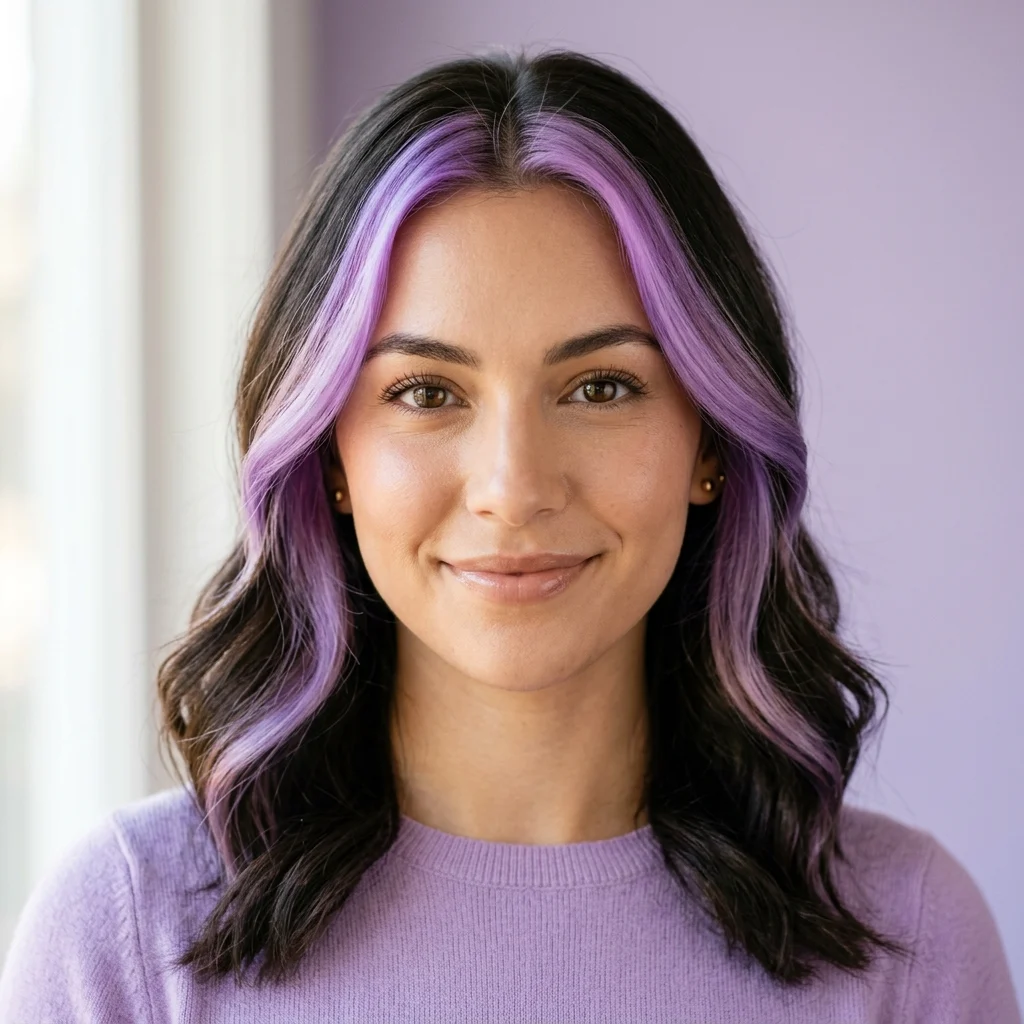
Vibe: Romantic and soft, a color placed exactly where it flatters most.
Why it works: Money piece placement targets the two face framing sections that draw the most visual attention in any portrait or selfie. Violet against a dark brunette base creates enough contrast to be noticed without requiring a full head commitment. Keeping the violet slightly softer near the part and brighter at the ends creates a gentle gradient instead of a flat block. This placement also grows out gracefully, since money pieces are meant to be re highlighted more often than the rest of the head anyway.
How to get it: Section two face framing pieces, roughly three quarters of an inch wide, and foil them separately from the back sections of hair. Lighten to a pale yellow base, then tone with a diluted violet direct dye like Pulp Riot Lilac. Blend the color slightly toward the part with a gentle balayage sweep for a softer root. Refresh the violet tone every three to four weeks with a purple toning gloss.
Shop The Look
| Product |
|---|
| Pulp Riot Lilac semi permanent dye |
| Purple toning gloss treatment |
| Foil sheets for face framing sections |
| Edge control gel for smooth part lines |
| Color safe hydrating hair oil |
13. Mermaid Teal, Turquoise, and Seafoam Blend
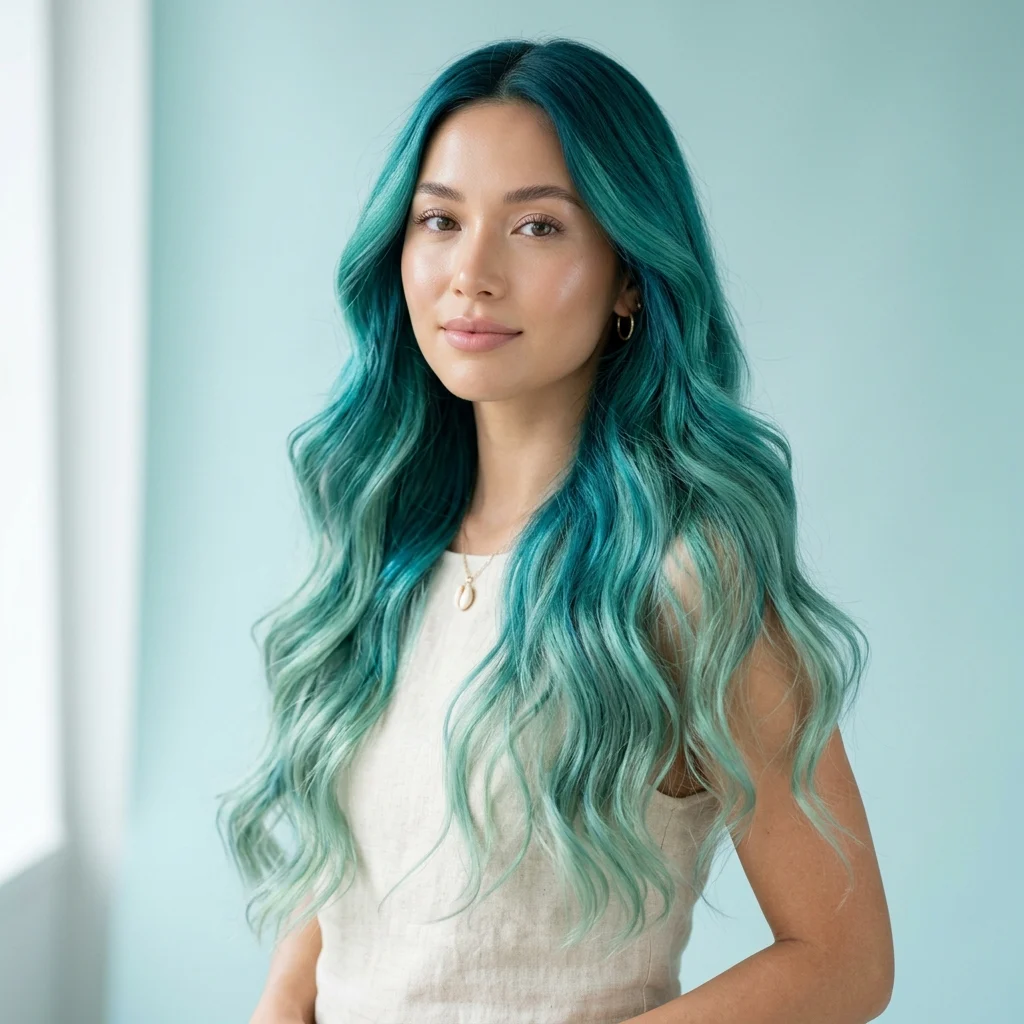
Vibe: Cool and fluid, like light moving through shallow water.
Why it works: Teal, turquoise, and seafoam sit close together on the color wheel, so the three tone blend reads as one cohesive color story rather than three competing shades. Full head lightening is necessary since all three tones need a pale base to show true saturation. Layering the tones from deep teal at the root to lighter seafoam at the ends mimics natural water gradients, which is part of why this look performs well on Pinterest. Cool toned vivids like these tend to fade to soft pastel versions of themselves, giving the color a longer usable lifespan.
How to get it: Lighten the entire head to a pale yellow using a gentle, bond protected bleach process. Apply Adore Teal near the roots, Arctic Fox Poseidon through the mid lengths, and a diluted turquoise mixed with clear crystal through the ends. Blend each transition zone with a wet comb while the color is still processing. Wash in cool water only for the first week to preserve saturation.
Shop The Look
| Product |
|---|
| Adore Teal semi permanent hair color |
| Arctic Fox Poseidon semi permanent dye |
| Turquoise direct dye with clear crystal mixer |
| Bond protector additive for bleach |
| Cool water safe color depositing shampoo |
14. Airbrushed Vivid Color Melt
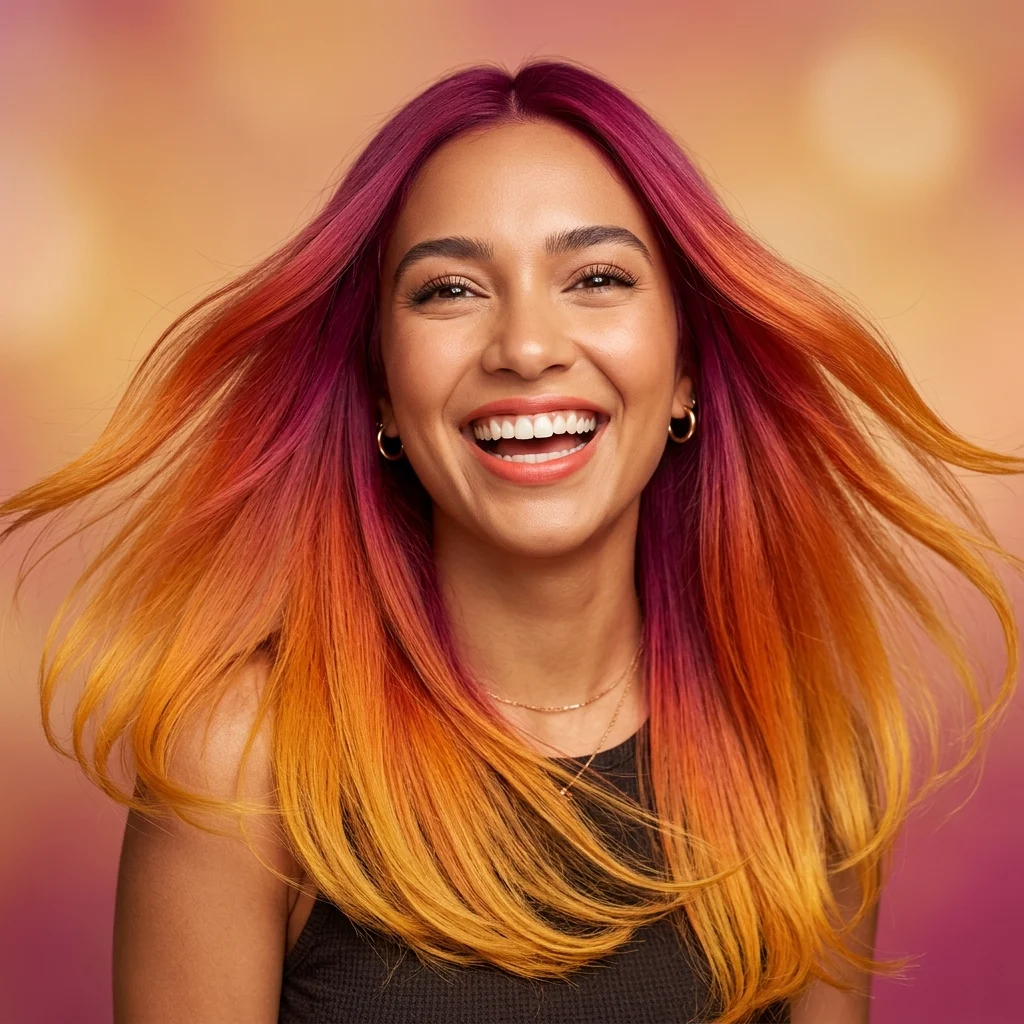
Vibe: Vibrant and seamless, color that flows rather than stops and starts.
Why it works: Color melting blends multiple tones with zero visible lines by applying each shade while the previous one is still slightly damp, letting the pigments merge at the edges. Magenta, orange, and yellow sit in warm sequence on the color wheel, so the transitions look sunlit rather than jarring. This technique demands an experienced colorist, since timing and application speed determine how seamless the blend turns out. A full lift to pale blonde is required across the whole head for every tone to read at full saturation.
How to get it: Lighten the entire head evenly to a pale yellow blonde base in a single session or over two visits for hair health. Apply magenta at the crown, working quickly into orange through the mid section and yellow at the ends while each layer is still wet, blending with gloved hands. Use a color melting brush for the transition zones rather than a standard tint brush. Book a color refresh every four weeks since three vivid tones fade at slightly different rates.
Shop The Look
| Product |
|---|
| Pravana Vivids Magenta semi permanent dye |
| Pravana Vivids Orange semi permanent dye |
| Pravana Vivids Yellow semi permanent dye |
| Color melting brush, angled tip |
| Vinyl coloring gloves, box of 100 |
15. Single Money-Piece Multicolor Look for First-Timers
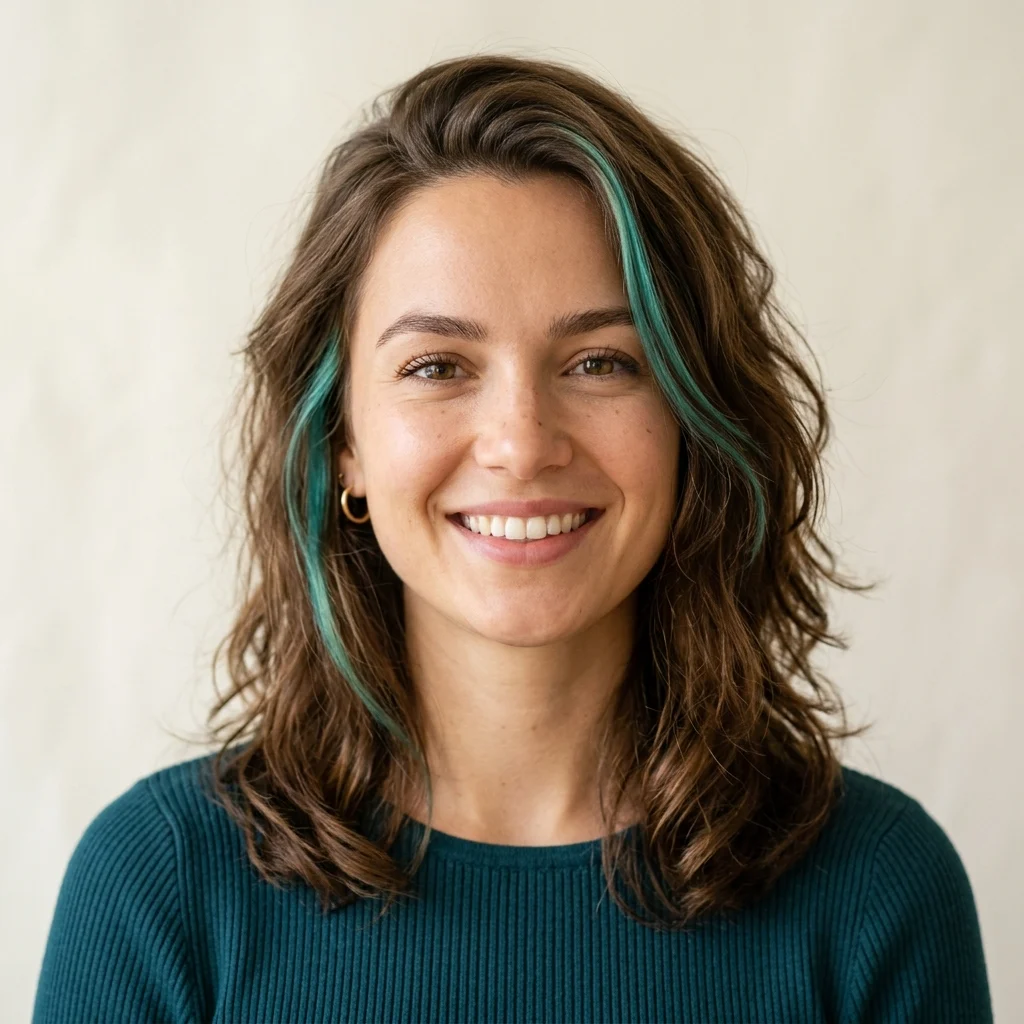
Vibe: Understated, a first step into color without a full commitment.
Why it works: A single money piece limits the lightened surface area to one small section, which keeps both cost and damage low for someone testing vivid color for the first time. One thin streak of teal against natural brown reads as a deliberate accent rather than a full color change. Because only one section needs upkeep, the maintenance schedule is far simpler than any full head look. This approach also makes it easy to remove or grow out if the wearer decides vivid color is not for them.
How to get it: Section a single half inch piece near the front hairline and foil it apart from the rest of the hair. Lighten gently to a pale yellow, keeping the surrounding hair completely untouched. Apply a semi permanent teal dye like Adore Teal, which fades gradually rather than leaving a harsh grown out line. Wash with cool water and a color safe shampoo to stretch the vivid result as long as possible.
Shop The Look
| Product |
|---|
| Adore Teal semi permanent dye |
| Color safe sulfate free shampoo |
| Single foil sheet pack for small sections |
| Root concealer spray, medium brown |
| Hydrating leave in conditioner spray |
How to Start Your Multicolor Hair Transformation
The single best first move is booking a consultation focused on one money piece or underlayer panel rather than committing to a full head blend right away. Starting small lets a colorist match the exact vivid shade to your natural base and skin tone before scaling up, and it anchors every future addition to a color that already works on you. The most common mistake beginners make is choosing a vivid shade before the hair is lightened enough, which turns bright blue or green into a muddy, brownish result. The fix is simple: always confirm the hair reaches a pale yellow or paler before any direct dye goes on.
Three items under fifty dollars create real impact fast: a bottle of Arctic Fox Poseidon or Adore Teal semi permanent dye, a color safe sulfate free shampoo and conditioner set, and a set of clip in colored feather extensions for a trial run before committing to permanent lightening. A single money piece or peekaboo panel typically takes one salon session and stays vivid for four to six weeks before needing a refresh. A full head color melt or multicolor blend often takes two sessions spaced a few weeks apart for hair health, with realistic starter budgets around one hundred fifty dollars and full transformations running several hundred dollars depending on length and tone count.
Frequently Asked Questions About Multicolor Hair Ideas
What is the difference between multicolor hair and ombre?
Ombre refers to a gradual shift between two shades, usually a natural color fading into a lighter or darker version of itself. Multicolor hair uses two or more distinct, often unrelated hues like cobalt blue and emerald green placed intentionally across the head. Ombre is typically more subtle and low maintenance, while multicolor looks lean toward bold, statement style color.
What colors work best together for multicolor hair?
Colors that sit close together on the color wheel, like teal, turquoise, and seafoam, blend smoothly with minimal effort. Colors that sit opposite each other, like cobalt blue and copper, create sharper contrast and work best in separate, defined sections rather than blended together. Pastel pairings such as pink and baby blue stay soft when kept at low saturation.
How much does multicolor hair typically cost?
A single money piece or small panel usually falls between eighty and one hundred fifty dollars depending on the salon. A full head color melt or multicolor blend with several vivid tones often runs between two hundred fifty and five hundred dollars, since it requires more lightening, more product, and more colorist time. At home semi permanent dyes like Arctic Fox or Punky Colour cost around fifteen dollars per bottle for touch ups between salon visits.
Is multicolor hair compatible with curly or textured hair?
Yes, multicolor techniques work well on curly and textured hair, though placement often shifts to smaller, scattered sections since curls naturally catch and scatter light differently than straight strands. Confetti style highlights and underlayer panels tend to look especially striking on curls because the color peeks through as hair moves. A curl defining cream applied right after coloring helps ringlets stay defined through the lightening process.
How long does vivid multicolor hair dye typically last?
Semi permanent vivid dyes like those used in money pieces or panels usually last four to six weeks before needing a refresh, fading gradually rather than leaving a hard line. Pastel tones tend to fade to a softer, ghostly version of themselves rather than disappearing completely. Washing with cool water and color safe, sulfate free shampoo extends vivid color noticeably longer than hot water and standard shampoo.
Ready to Try These Multicolor Hair Ideas?
These 15 ideas cover everything from bold color melts and chunky money pieces to hidden panels and single strand accents, so there is a starting point for every comfort level. Starting with just one small section is not a compromise, it is the smartest way to test a vivid shade against your own skin tone and hair texture.
Book a consultation this week and ask specifically about a single money piece in the color that caught your eye first. Once the color settles in, catching your reflection and seeing a flash of teal or violet you chose on purpose tends to feel like a small, private celebration every time. Save your favorite two or three looks now, so you walk into that consultation ready to point and say exactly what you want.