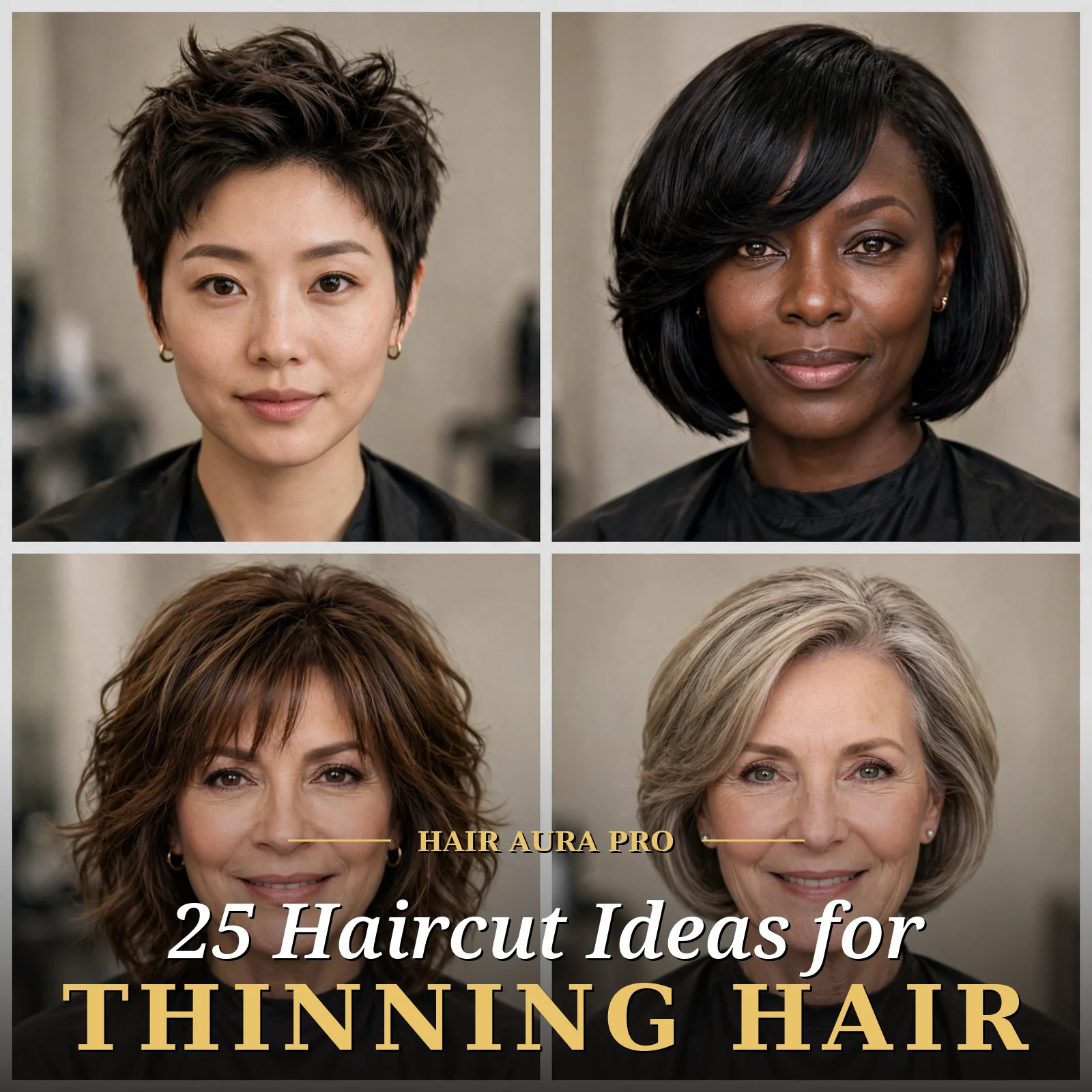
25 Haircut Ideas for Thinning Hair That Actually Work

Thinning hair changes the rules of a good haircut. When density drops at the crown, the part line, or the temples, length alone cannot carry a style. The right cut works like architecture: it redistributes weight, builds height where the hair has gone flat, and stacks ends so the perimeter reads dense instead of wispy.
What surprises most women is how much fullness a pair of shears can fake. Strategic texture breaks up the scalp showing through at the part. A blunt edge gathers every strand into one solid line. Hidden interior layers let roots stand upright instead of plastering to the head. These are the mechanics stylists rely on when clients ask for hair that photographs thicker.
Below you will find twenty-five cuts built specifically for low-density hair, from cropped pixies to longer layered shapes. Each one includes exactly what to ask your stylist for, how the shape creates the illusion of thickness, and a quick win to try before your appointment.
25 Haircut Ideas for Thinning Hair That Actually Work
In This Guide
- 1. The Classic Textured Pixie
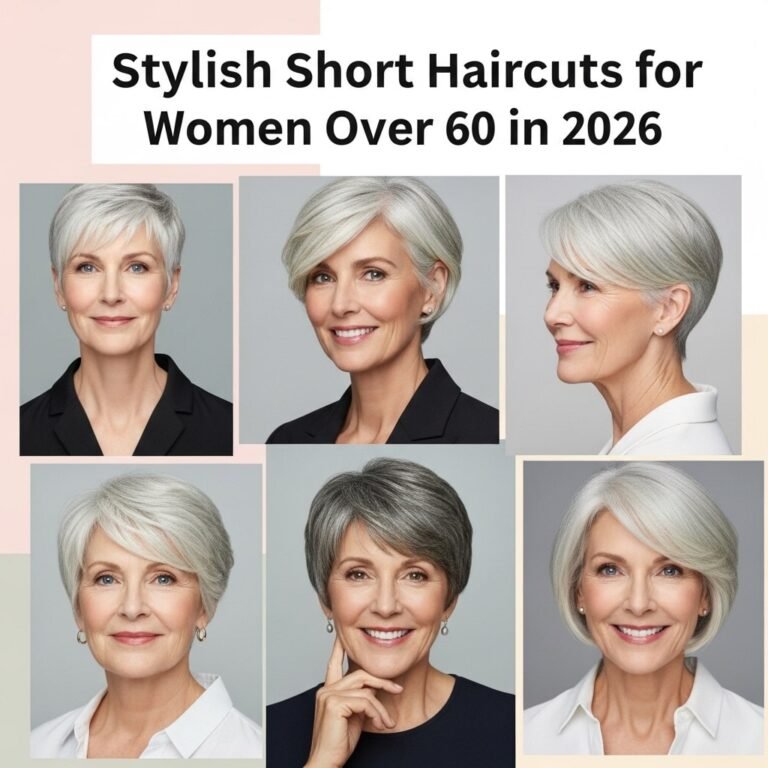
- 2. The Bixie (Bob Meets Pixie)
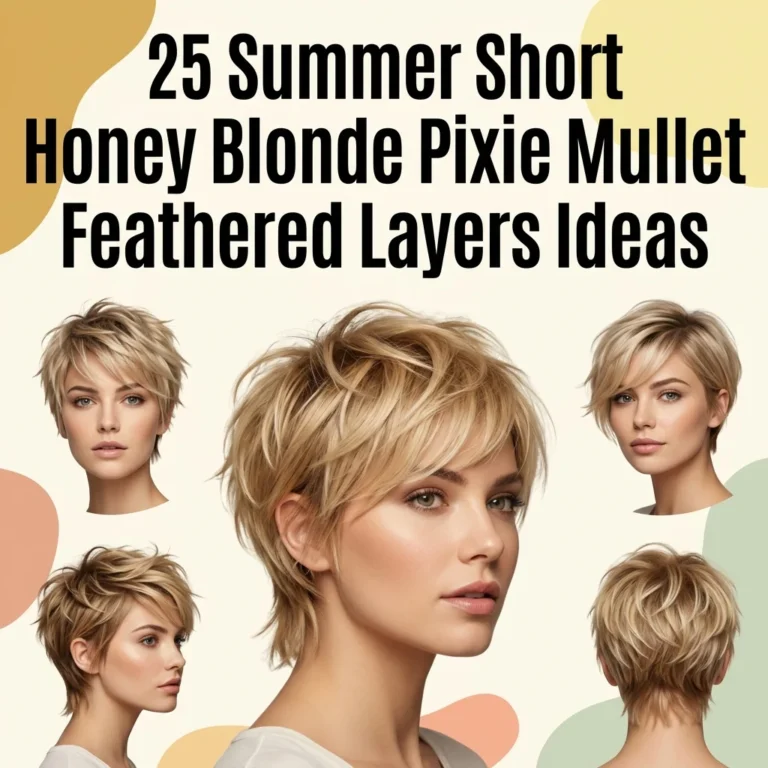
- 3. Feathered Pixie With a Side Sweep
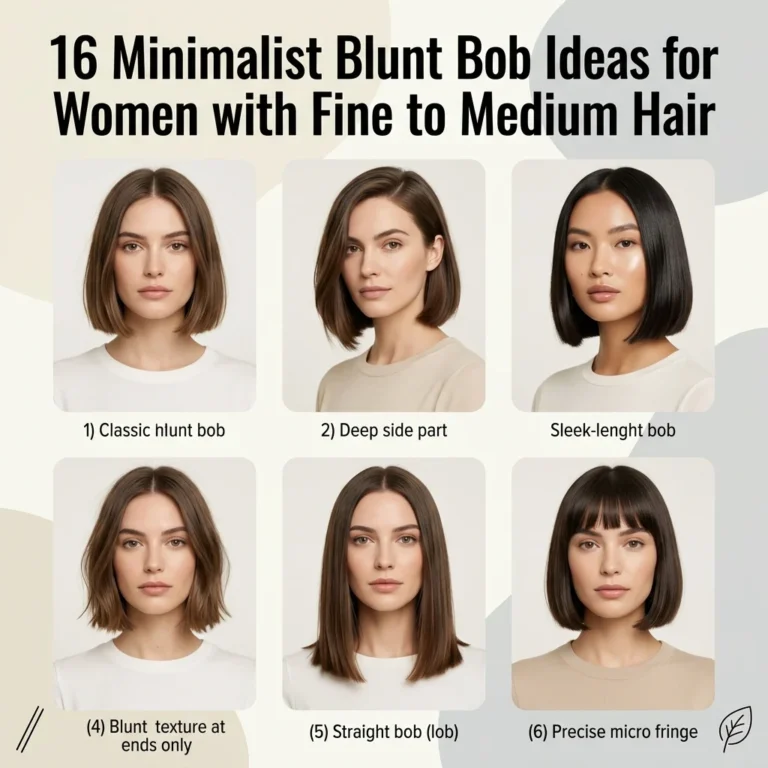
- 4. Blunt Chin-Length Bob
- 5. Angled Inverted Bob
- 6. Graduated Stacked Bob
- 7. Collarbone Lob With a Deep Side Part
- 8. One-Length Lob With Blunt Ends
- 9. Wavy Lob With Lifted Roots
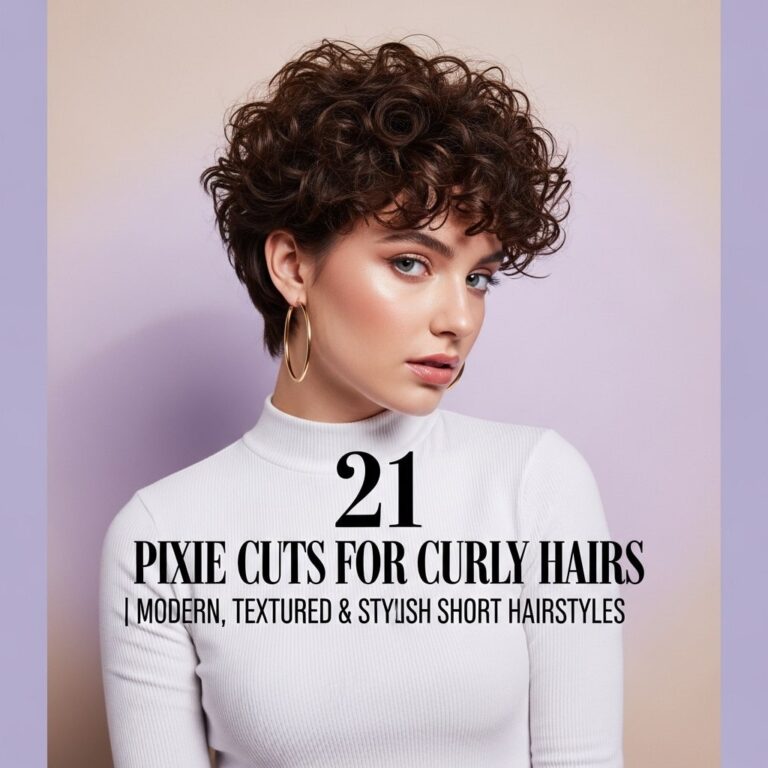
- 10. Rounded Curly Bob
- 11. Shoulder Layers With Side-Swept Bangs
- 12. Long Layers With Curtain Bangs
- 13. Chin Bob With a Wispy Fringe
- 14. Shaggy Pixie With Choppy Texture
- 15. Soft Layered Shag
- 16. Cropped Pixie With Tapered Sides
- 17. Long Pixie With Crown Volume
- 18. Side-Parted Pompadour Pixie
- 19. Asymmetrical Bob
- 20. Textured Crop With a Forward Fringe
- 21. Shoulder Cut With a Hidden Crown Lift
- 22. U-Shaped Cut With Cheekbone Swoops
- 23. Disconnected Textured Crop
- 24. Parisian Bob With a Soft Fringe
- 25. Pixie-Bob With Side-Swept Layers
Why These Haircut Ideas for Thinning Hair Work So Well
Most haircuts are designed around the assumption of average density, which is why thinning hair so often looks stringy after a standard trim. A cut built for fine or sparse strands starts from the opposite direction: every decision protects the perimeter, lifts the root, or redirects the eye toward fullness. Shorter lengths remove the weight that drags roots flat, which is why cropped shapes consistently outperform long one-length hair in the volume department.
Texture is the second lever. When layers are cut into the surface rather than carved through the ends, strands separate into light-catching pieces that read as body. This is the difference between a pixie that looks dense and one that looks patchy: diffused texture hides the scalp, while razor-thin ends expose it. The same principle applies to bobs and lobs, where a solid baseline with movement only on the surface keeps the outline substantial.
The third lever is the part. A deep side part or an off-center part covers a widening center part instantly and stacks hair where it is thinnest. Combine that with root-lifting blow-dry technique and matte-finish products, and the same head of hair can look twenty to thirty percent fuller without a single extension.
Color also plays a supporting role. Dimensional color, root shadowing, and lowlights create the impression of depth, which the eye interprets as density. Ask your colorist about these options during the same appointment, since cut and color for thinning hair are most effective when planned together.
| Design Principle | What It Does |
|---|---|
| Shorter length | Removes weight so roots lift instead of lying flat against the scalp |
| Blunt perimeter | Stacks all strands into one dense edge that reads as thickness |
| Surface texture | Creates light-catching separation that hides visible scalp |
| Deep side part | Covers a widening part and piles hair where density is lowest |
| Hidden crown layers | Lifts roots from underneath without thinning the visible ends |
| Dimensional color | Adds depth and shadow that the eye interprets as fullness |
25 Haircut Ideas for Thinning Hair to Try
1. The Classic Textured Pixie
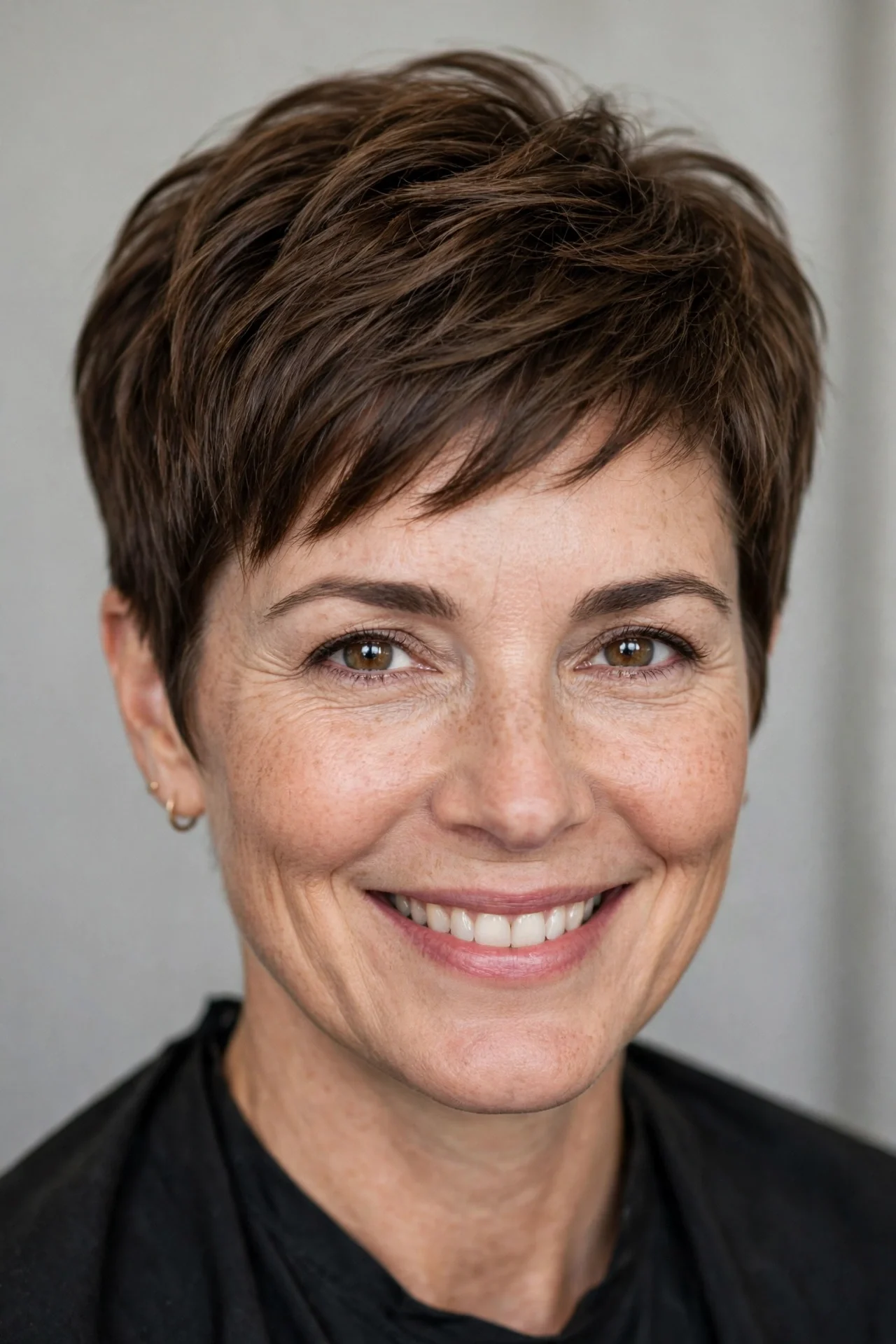
Vibe: Confident, low-maintenance, quietly bold.
Why it works: The classic textured pixie is the benchmark haircut for thinning hair because it solves the two biggest problems at once: flat roots and visible scalp. Keeping the sides close and the top longer concentrates every strand where volume matters most, and point-cut texture breaks the surface into pieces that scatter light instead of revealing skin. The silhouette stays strong even on second-day hair.
How to get it: Ask your stylist for scissor-cut tapered sides, a longer textured top with point cutting for separation, and enough length in front to sweep or stand up. Bring a photo of the exact fringe direction you want, since the front is where the style succeeds or fails. Request trims every five to six weeks to keep the shape crisp.
Quick Win: Blow-dry the crown forward with your fingers, then flip it back into place. The roots set with twice the lift.
Shop the Look
| Shop the Look |
|---|
| Lightweight volumizing mousse for root lift |
| Matte texturizing paste with flexible hold |
| Boar bristle teasing brush for the crown |
| Root lifting spray with heat protection |
| Dry texture spray for second-day volume |
2. The Bixie (Bob Meets Pixie)
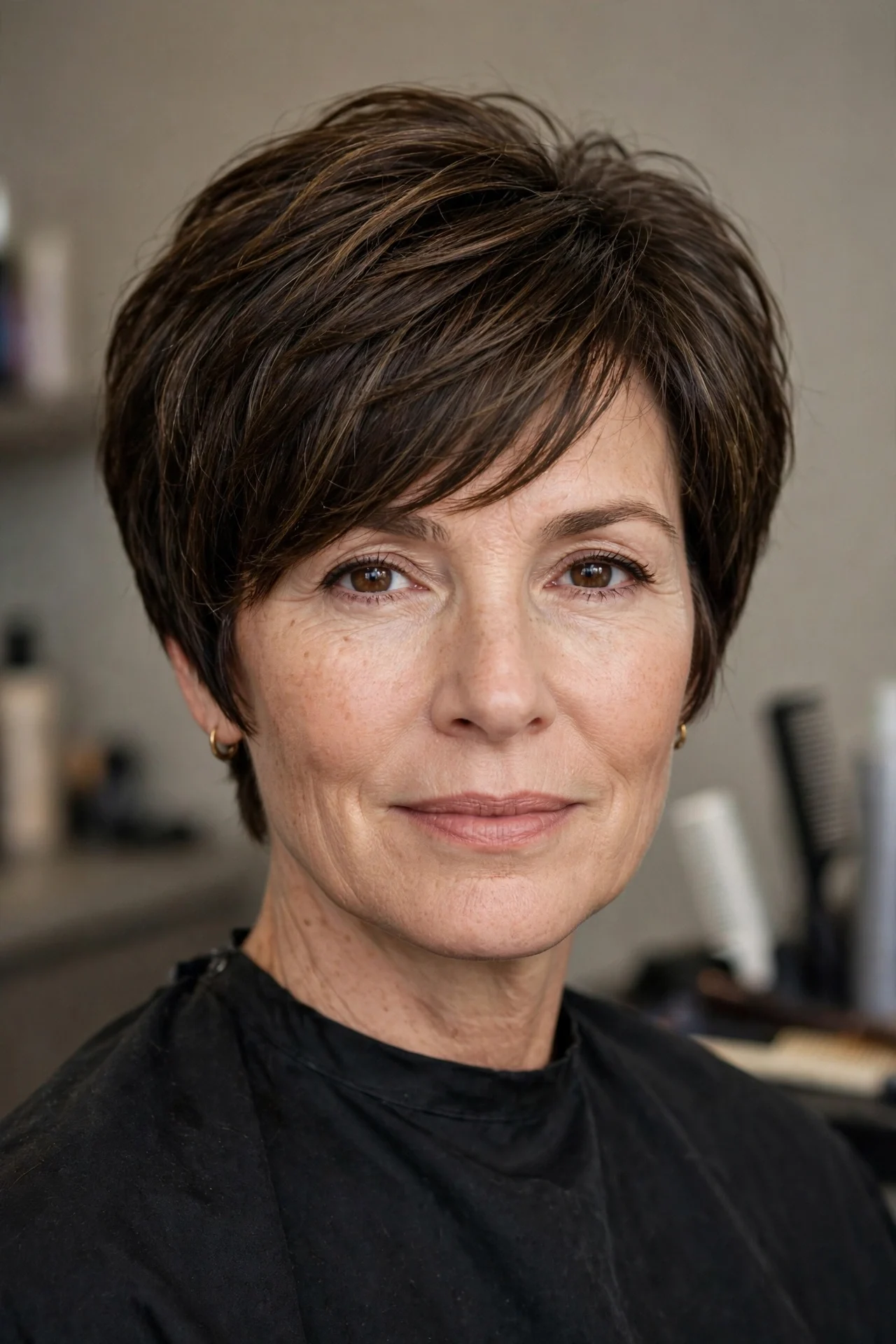
Vibe: Playful, modern, and endlessly wearable.
Why it works: The bixie borrows the pixie’s lifted crown and the bob’s face-framing length, which makes it one of the most forgiving haircuts for thinning hair. Ear-length sides keep the outline narrow rather than puffy, while connected layers through the crown build height exactly where fine hair collapses. It photographs thicker than either cut does on its own.
How to get it: Ask your stylist for a bixie with ear-length sides, a softly tapered nape, connected crown layers, and a fringe you can wear swept or forward. Explain that fullness at the crown matters more to you than length at the nape. Style by rough-drying upside down, then smoothing the front with your fingers and a pea-size amount of cream.
Quick Win: Pinch styling cream into only the ends of the crown pieces so the hair stays airy instead of separating into thin wisps.
Shop the Look
| Shop the Look |
|---|
| Lightweight styling cream for piece definition |
| Volumizing root foam for crown lift |
| Wide-tooth comb for gentle detangling |
| Flexible-hold hairspray for all-day shape |
| Silk pillowcase to reduce overnight flattening |
3. Feathered Pixie With a Side Sweep
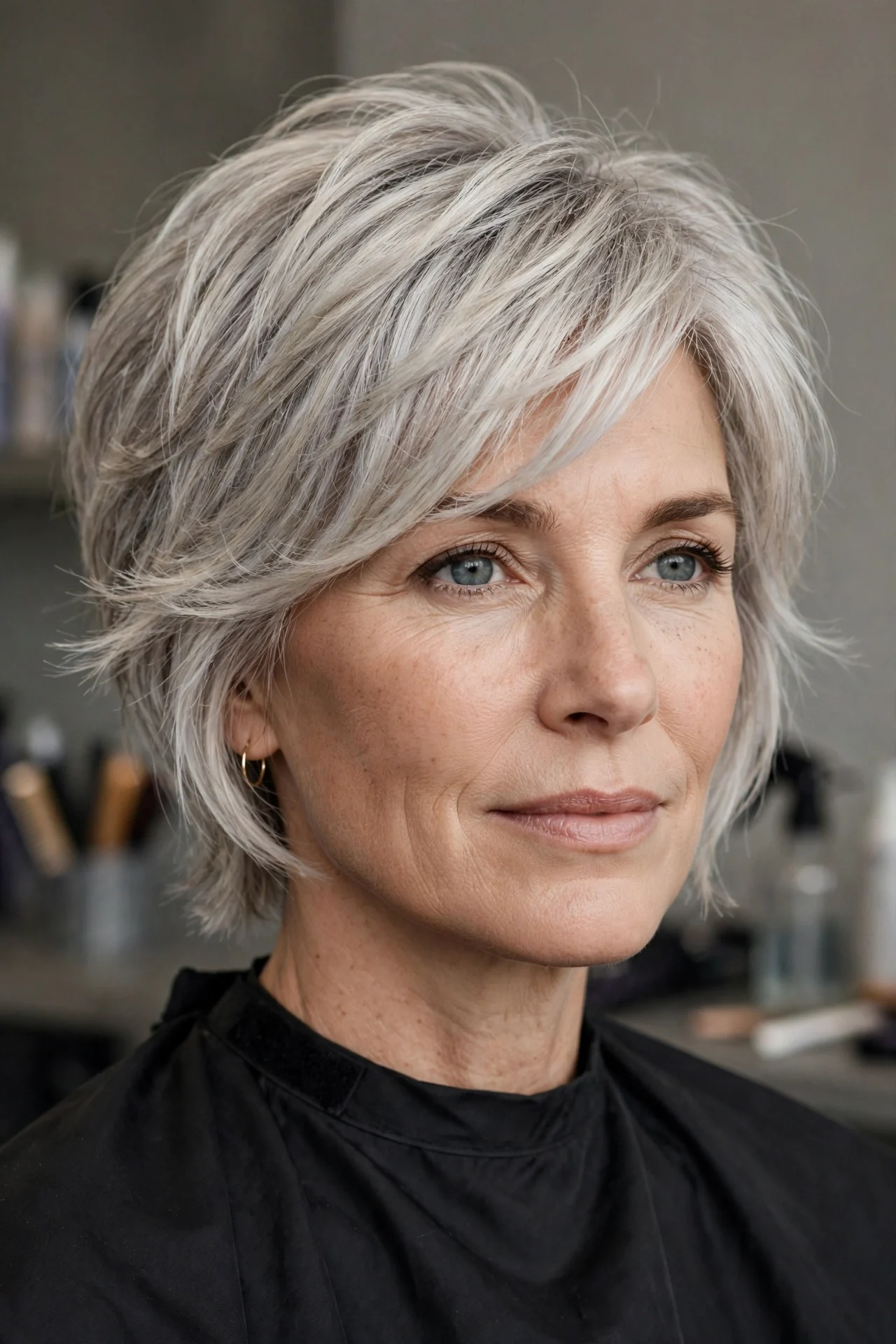
Vibe: Soft, feminine, and quietly glamorous.
Why it works: Feathering softens the edges of a pixie so fine hair falls in overlapping layers that disguise sparse spots. The side sweep is doing the real work here: by directing the longer top across the forehead, it covers a high or thinning hairline and adds a diagonal line that draws attention to the eyes instead of the scalp. It is a forgiving shape for women growing out of a very short cut.
How to get it: Ask your stylist for a pixie with feathered, overlapping layers on top and a substantial side-swept front left long enough to tuck or sweep. Have them cut the fringe dry if possible so the sweep direction is exact. At home, blow-dry the front across your forehead in the opposite direction first, then sweep it into place for lasting body.
Shop the Look
| Shop the Look |
|---|
| Smoothing blow-dry cream for frizz control |
| Round thermal brush for the side sweep |
| Lightweight shine serum for the ends |
| Heat protectant spray for daily styling |
| Soft-hold finishing spray for movement |
4. Blunt Chin-Length Bob
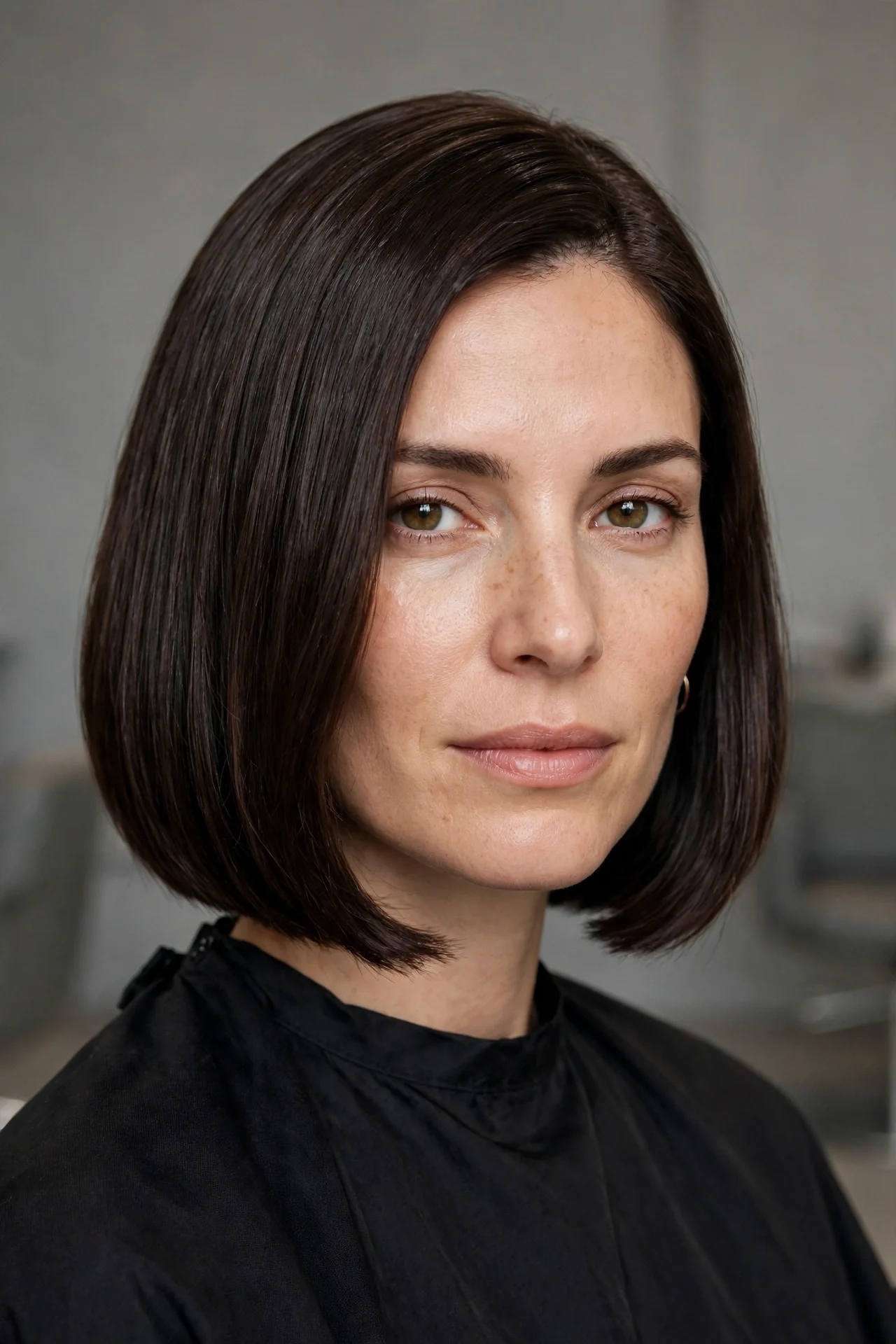
Vibe: Polished, precise, and effortlessly chic.
Why it works: A one-length blunt edge is the fastest way to make thinning ends look thick. By cutting every strand to the same line, the bob gathers fine hair into a single dense perimeter instead of letting it taper into see-through points. Ending right at the chin keeps the shape from widening the face, and an off-center part interrupts symmetry so the eye reads fullness, not sparseness.
How to get it: Ask your stylist for a blunt bob cut to just below the chin with zero graduation and minimal face framing. Request that they cut it dry or check it dry, because fine hair shrinks and shifts when wet. Keep up trims every six to eight weeks; the blunt line loses its thickening effect the moment the ends start to fray.
Quick Win: Tuck one side behind your ear and let the other fall forward. The asymmetry makes the bob look intentionally styled.
Also view: [INTERNAL:volumizing hairstyles]
Shop the Look
| Shop the Look |
|---|
| Smoothing flat iron with adjustable heat |
| Anti-frizz blow-dry lotion |
| Microfiber hair towel to reduce breakage |
| Leave-in conditioner for fine hair |
| Gloss spray for a dense, healthy finish |
5. Angled Inverted Bob
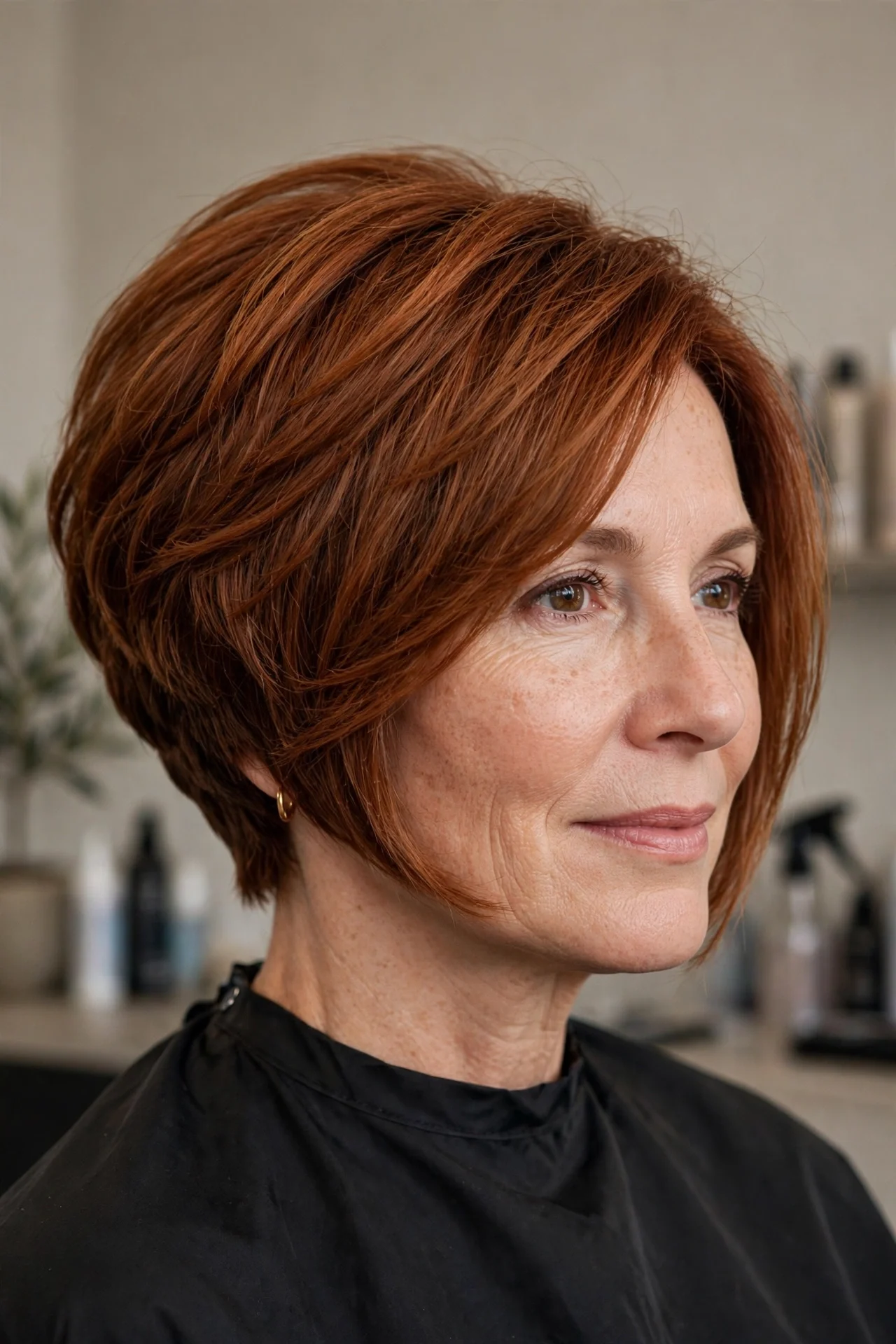
Vibe: Sharp, contemporary, and full of movement.
Why it works: The inverted bob builds volume exactly where thinning hair needs it: the stacked layers at the back push hair upward and outward, creating a rounded crown that holds its shape all day. The longer front pieces add a slimming diagonal that keeps the cut looking modern rather than severe. It is an excellent choice when the back of the head has gone flat but the front still has decent density.
How to get it: Ask your stylist for an inverted bob with stacked layers through the back, a tapered nape, and front pieces that graze the jaw or collarbone. Make sure the shortest layer in back sits high enough to create real lift. Blow-dry the back with a round brush, lifting sections straight up from the scalp, then smooth the front pieces forward.
Shop the Look
| Shop the Look |
|---|
| Round ceramic brush for back volume |
| Volumizing mousse applied at the roots |
| Root lift powder for the crown |
| Medium-hold hairspray for structure |
| Sectioning clips for easier blow-drying |
6. Graduated Stacked Bob
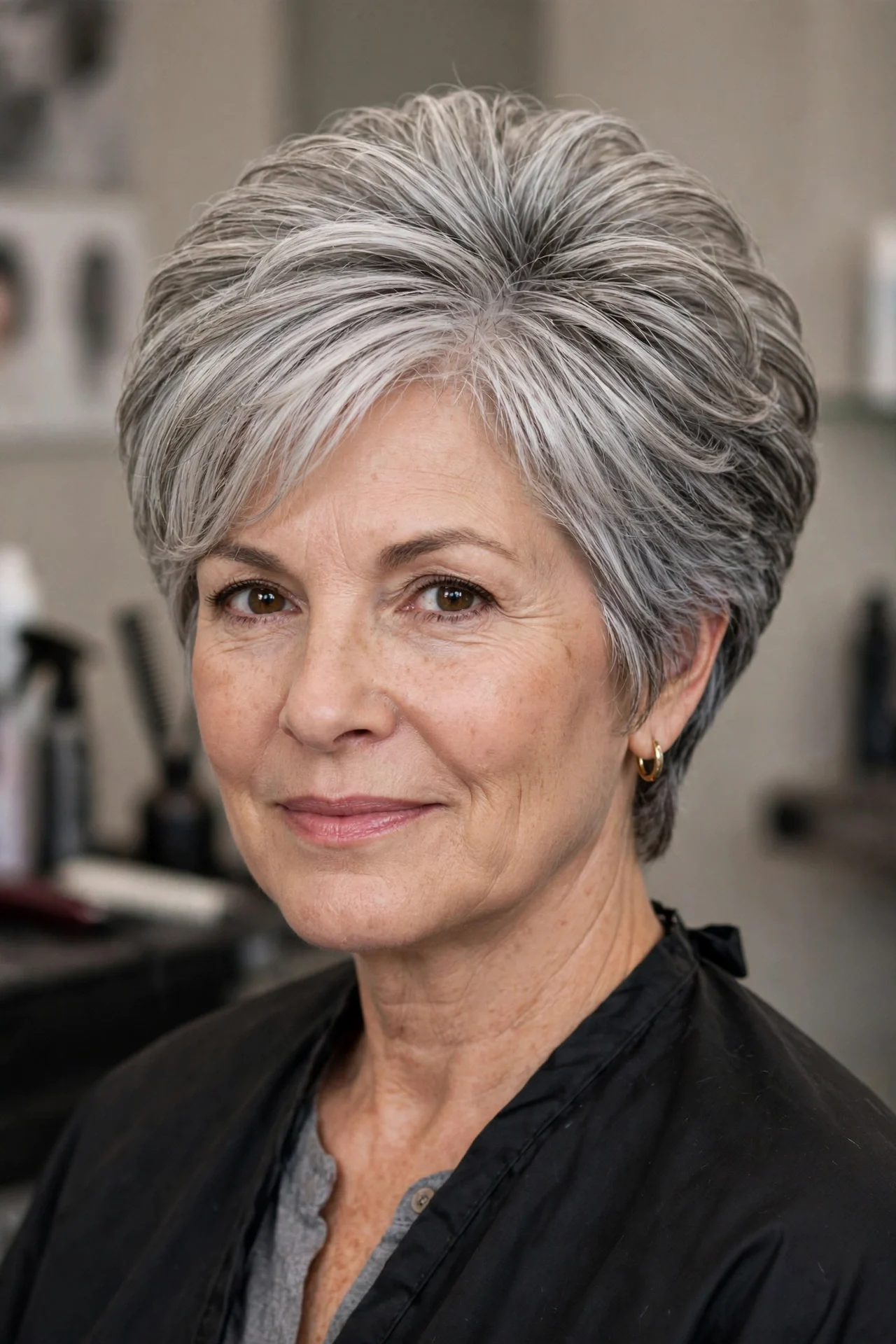
Vibe: Classic salon polish with built-in body.
Why it works: Graduation is a quiet workhorse for thinning hair. Each stacked layer in the back sits on top of the one below it, which forces the crown to round out and stay there. The result reads as one full shape rather than separate strands, and the tapered nape keeps the neckline clean so the eye travels up to the volume. Women with fine, straight hair get the most dramatic thickening effect from this cut.
How to get it: Ask your stylist for a graduated bob with visible stacking through the back, a clean tapered nape, and length that sits at or just below the jaw in front. Have them show you where the shortest layer lands so you understand the shape. Dry with a paddle brush, directing the back sections upward, and finish with a light mist of spray to lock the roundness.
Quick Win: Flip your head upside down for the last thirty seconds of blow-drying to set the stacked crown.
Shop the Look
| Shop the Look |
|---|
| Paddle brush for smooth blow-drying |
| Smoothing serum for the nape |
| Volumizing shampoo for fine hair |
| Lightweight conditioner for the ends only |
| Flexible finishing spray |
7. Collarbone Lob With a Deep Side Part
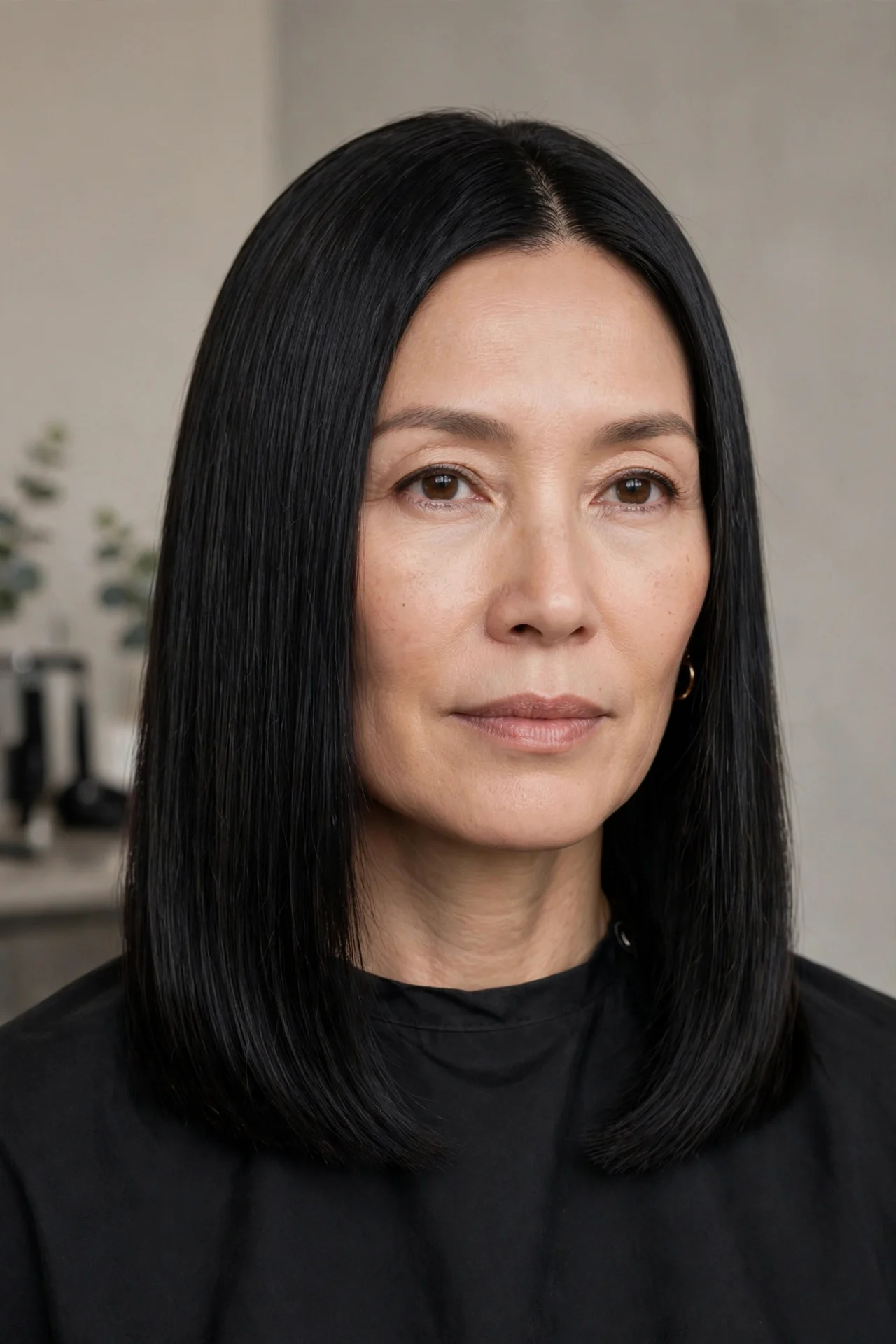
Vibe: Relaxed, current, and quietly confident.
Why it works: The collarbone lob is the longest cut that still behaves like a short one. Its solid perimeter protects density through the ends, while the deep side part sweeps a large section of hair across the crown, instantly covering a thinning part line. The slight forward angle of the front keeps the shape from looking boxy and adds movement without sacrificing the full edge.
How to get it: Ask your stylist for a collarbone lob with a subtle forward angle, a solid perimeter with no thinning through the ends, and framing that starts below the cheekbones. Request a deep side part and have them dry it that way so the roots learn the direction. Style by drying roots against the part, then flipping them back into place.
Shop the Look
| Shop the Look |
|---|
| Large round brush for smooth bends |
| Heat protectant for shoulder-length hair |
| Dry shampoo for root lift on day two |
| Soft-hold texturizing spray |
| Wide flat iron for polished ends |
8. One-Length Lob With Blunt Ends
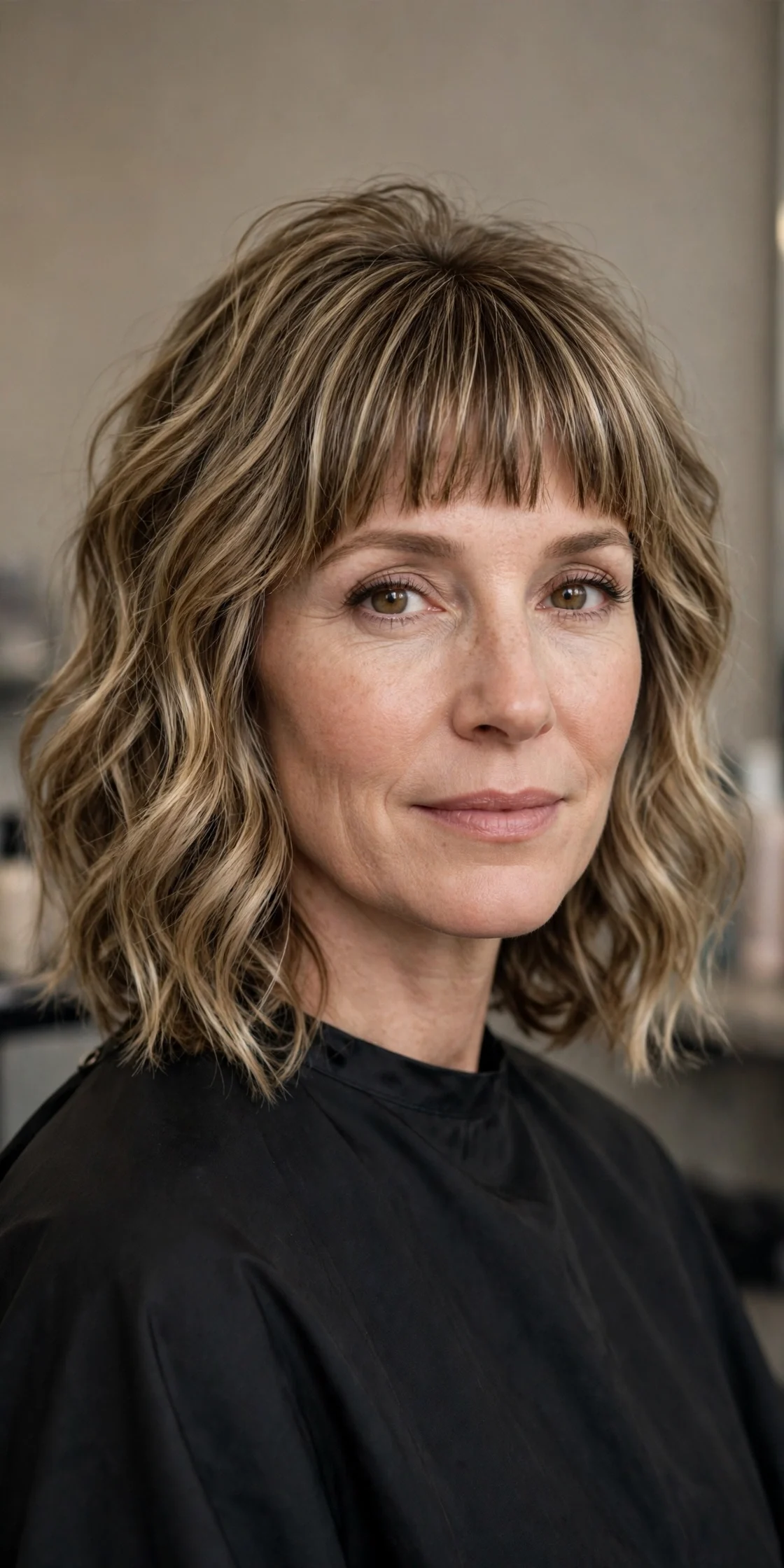
Vibe: Minimalist, sleek, and strong-lined.
Why it works: When thinning is concentrated at the ends, a one-length lob with blunt ends is the most honest fix available. Cutting everything to a single horizontal line stops fine hair from tapering into wisps and makes the bottom third of the hair look as dense as the roots. The middle part keeps it modern, and the shoulder-grazing length is short enough to prevent the weight that flattens roots.
How to get it: Ask your stylist for a one-length lob ending at the collarbone with a razor-sharp blunt edge and no layers through the bottom three inches. Have them blunt-cut it dry for a truly even line. Wear it straight to show off the thick perimeter, or add a single loose bend through the midlengths with a flat iron for softness.
Quick Win: Sleep with the lob in a loose topknot to wake up with bend and body instead of flat roots.
Also view: [INTERNAL:bob haircut ideas]
Shop the Look
| Shop the Look |
|---|
| Flat iron with rounded edges for bends |
| Blunt-cut maintenance trim every 8 weeks |
| Silicone-free shine drops |
| Gentle clarifying shampoo |
| Heat protectant mist |
9. Wavy Lob With Lifted Roots
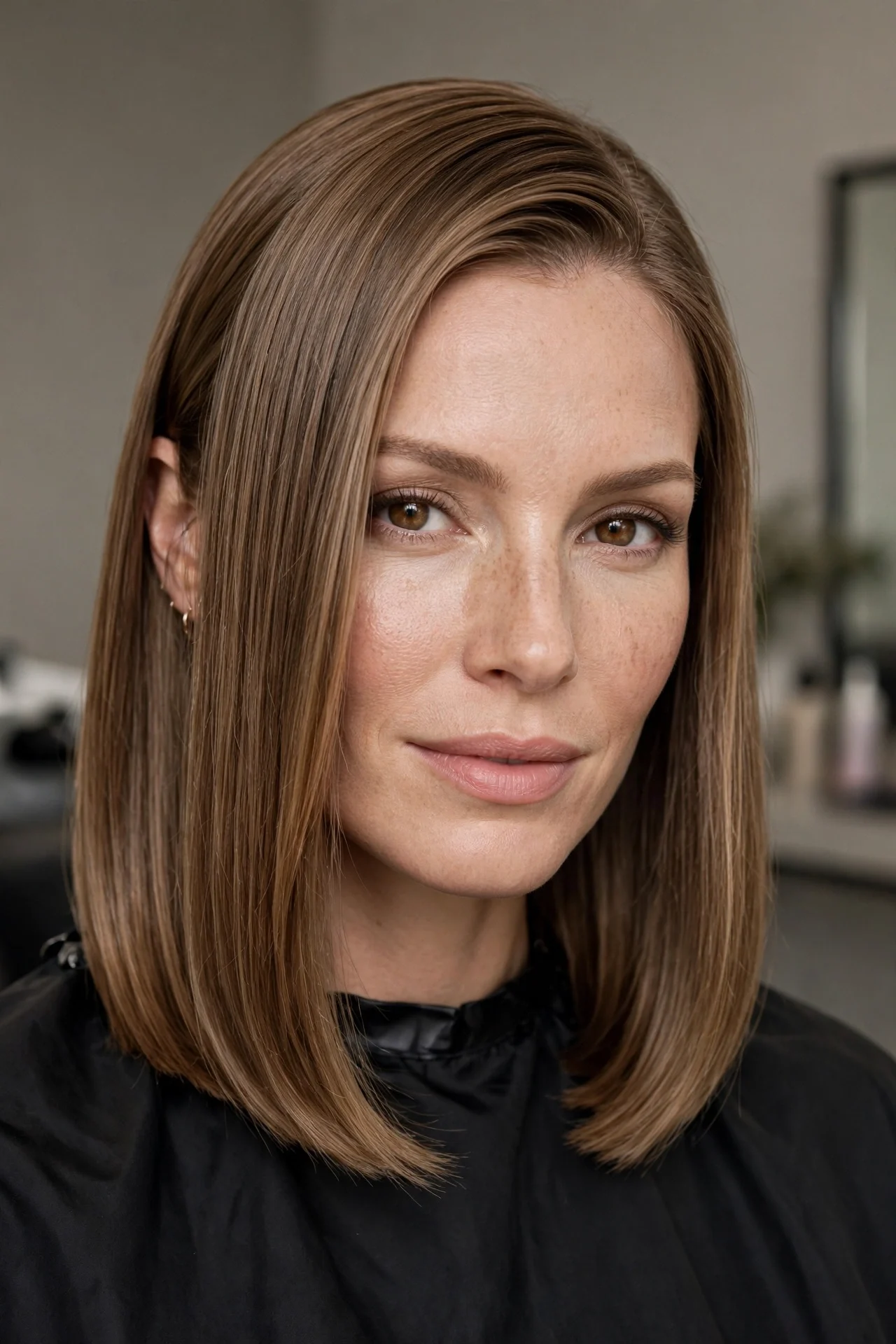
Vibe: Beachy, touchable, and full of air.
Why it works: Waves add horizontal width, which is exactly what thinning hair lacks. On this lob, the bends start below the cheekbones so volume lands where the hair is densest, while lifted roots at the crown prevent the top from going flat. The blunt collarbone edge keeps the finish substantial instead of stringy, which is where most wavy cuts fail on fine hair.
How to get it: Ask your stylist for a collarbone lob with a blunt perimeter and only long, surface-level movement through the midlengths, with no short layers at the cheeks. Apply mousse at the roots before drying, then wrap wide sections around a large-barrel iron, leaving the ends straight. Break up the waves with your fingers, never a brush.
Shop the Look
| Shop the Look |
|---|
| Large-barrel curling iron for loose bends |
| Root-lifting mousse |
| Sea salt-free wave spray |
| Lightweight dry texture spray |
| Wide-tooth comb for wave separation |
10. Rounded Curly Bob
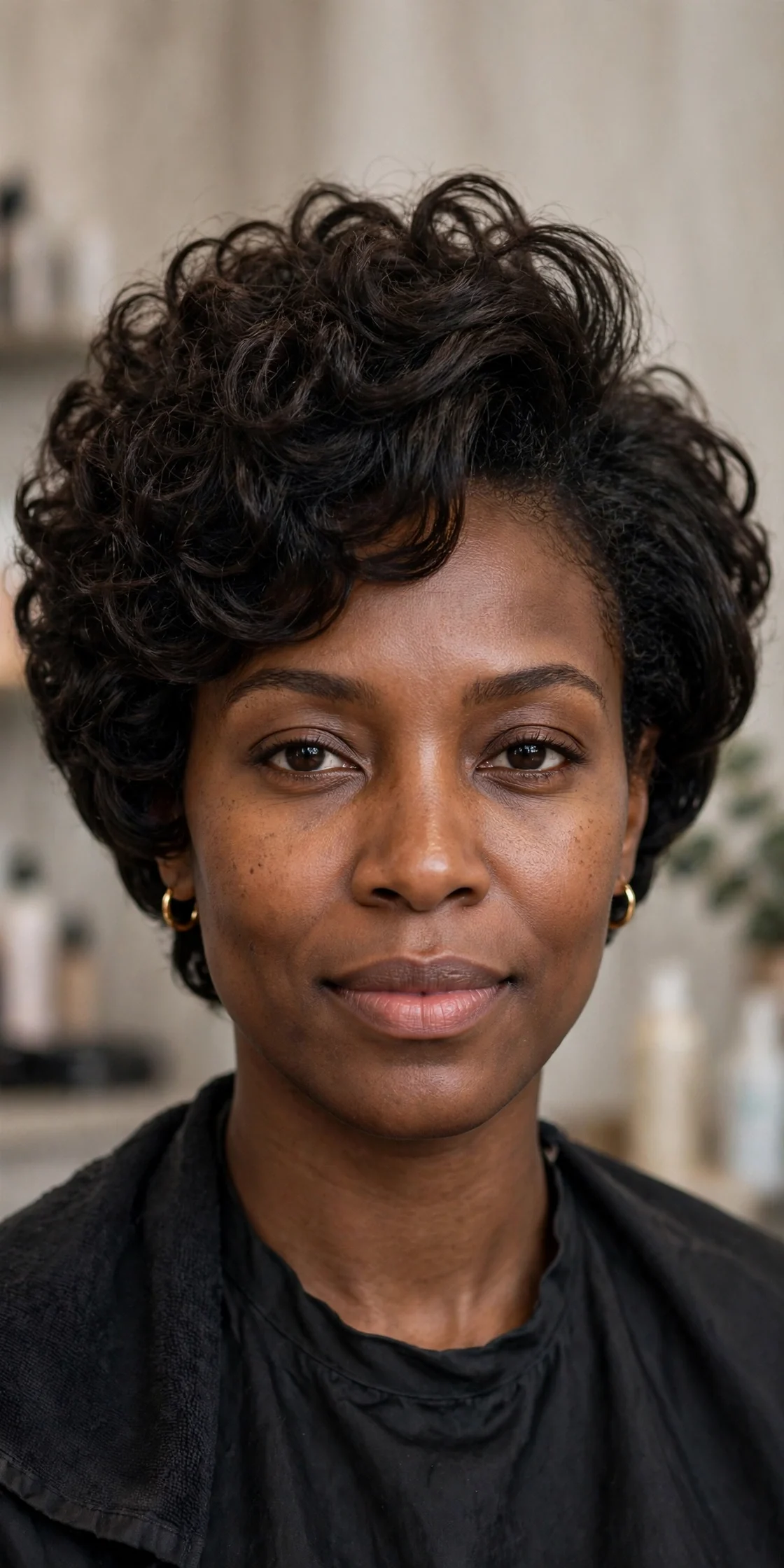
Vibe: Joyful, bouncy, and full of personality.
Why it works: Curls are nature’s volumizer, and a rounded bob shape makes the most of them. By keeping the widest point of the cut above the cheeks and the crown long, fine curls cluster into substantial shapes instead of separating into thin spirals. The perimeter narrows toward the jaw, which gives the style a finished silhouette and stops the ends from looking sparse.
How to get it: Ask your stylist for curl-by-curl shaping with the crown length preserved, volume concentrated near the temples, and a dry perimeter that falls below the jaw. Request a dry cut if your stylist offers one, since curls spring up unpredictably when wet. Style on soaking-wet hair with light gel, diffuse at the roots, and avoid breaking the cast into tiny pieces.
Quick Win: Pineapple the curls in a loose high ponytail overnight to protect the crown volume.
Shop the Look
| Shop the Look |
|---|
| Lightweight curl-defining gel |
| Diffuser attachment for the dryer |
| Microfiber towel for plopping |
| Curl-refreshing mist |
| Satin bonnet for overnight protection |
11. Shoulder Layers With Side-Swept Bangs
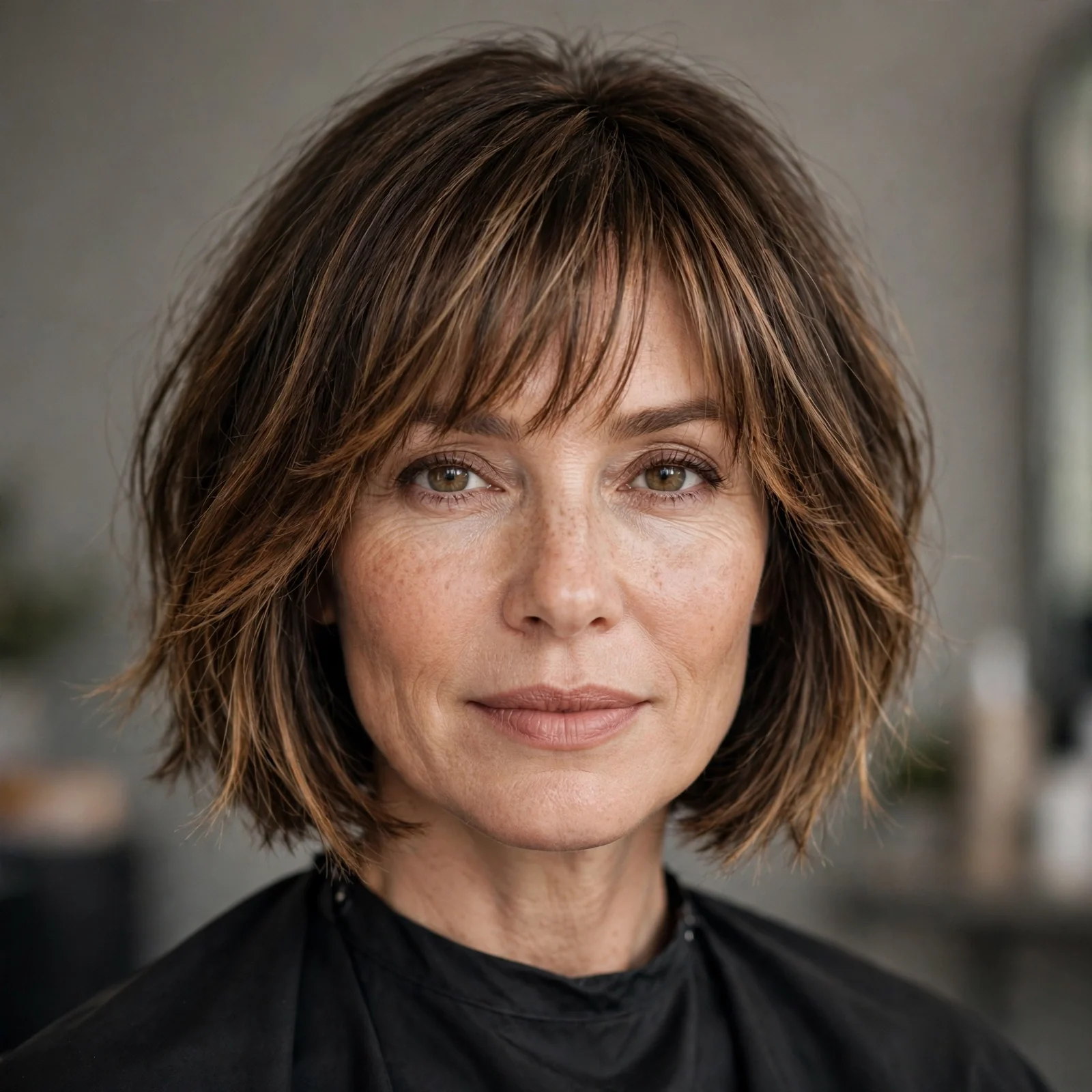
Vibe: Soft, approachable, and easy to live with.
Why it works: Side-swept bangs are one of the oldest tricks for a thinning hairline, and they work because a diagonal fringe redirects the eye across the face instead of up toward the scalp. Paired with shoulder-length layers, the fringe blends into face-framing pieces that add movement without removing density from the ends. It is a gentle, low-commitment way to fake fullness.
How to get it: Ask your stylist for shoulder-length layers with the shortest face-framing piece starting at the chin and a side-swept bang that blends into it. Have the bangs cut slightly long so you can sweep them deeper on days the hairline looks sparse. Blow-dry the fringe across your forehead first, then sweep it to the side for maximum lift at the root.
Shop the Look
| Shop the Look |
|---|
| Small round brush for the fringe |
| Lightweight blow-dry primer |
| Flexible-hold hairspray |
| Mini flat iron for fringe touch-ups |
| Dry shampoo for bang refresh |
12. Long Layers With Curtain Bangs
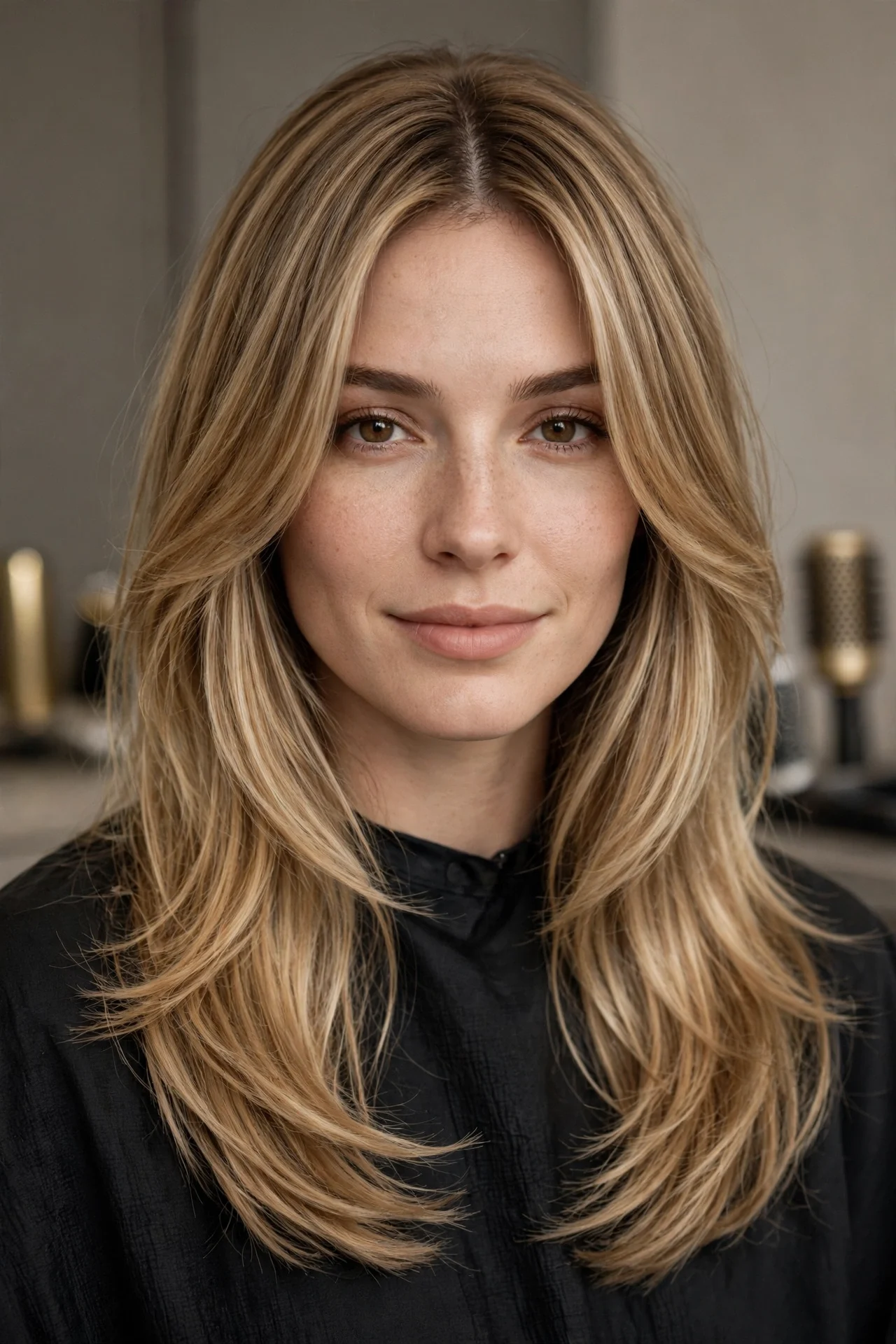
Vibe: Romantic, flowing, and on-trend.
Why it works: Curtain bangs parted down the middle frame the face with two soft panels that disguise thinning at the temples, the first place many women notice loss. Because the layers stay long through the back, this cut keeps the length you love while the bangs do the thickening work around the face. The center part of the curtain blends into a side part easily, so the style adapts as your part line changes.
How to get it: Ask your stylist for curtain bangs that start at the cheekbones and melt into long layers, keeping the back perimeter full. Have them cut the bangs dry so the part falls exactly where you wear it. Style the curtains with a round brush, rolling them away from your face, and let the lengths air-dry or blow out smooth.
Quick Win: Set each curtain panel in a large velcro roller while you do your makeup for a perfect swoop.
Also view: [INTERNAL:wedding guest hairstyles]
Shop the Look
| Shop the Look |
|---|
| Large velcro rollers for the bangs |
| Round brush for curtain styling |
| Lightweight hair oil for the ends |
| Blow-dry cream for smoothness |
| Soft-bristle brush for daily smoothing |
13. Chin Bob With a Wispy Fringe
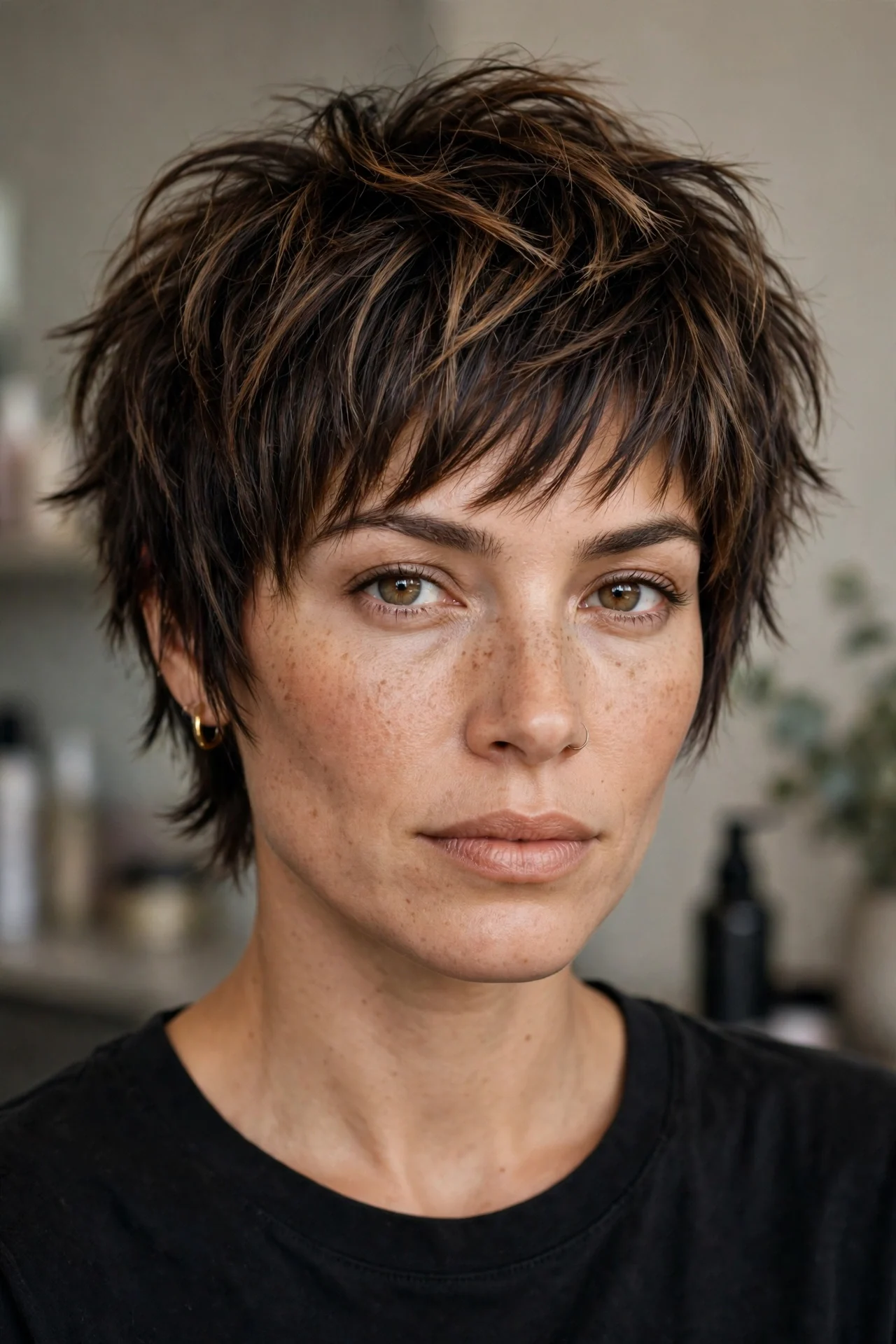
Vibe: Sweet, French-inspired, and light as air.
Why it works: A wispy fringe adds coverage across the forehead without the heaviness of a blunt bang, which matters when density is limited. On a chin-length bob, the fringe creates a soft frame that makes the whole cut feel fuller, and the light texture through the ends keeps the bob from looking severe. It is a flattering option for fine, straight hair that falls flat in blunt styles.
How to get it: Ask your stylist for a chin-length bob with lightly textured ends and a wispy fringe cut to skim the brows. Request that the fringe be point-cut rather than cut straight across so it stays airy. Style by blow-drying the fringe forward with a small round brush, then tousling the ends with a dab of cream.
Shop the Look
| Shop the Look |
|---|
| Small round brush for fringe styling |
| Texturizing cream for the ends |
| Lightweight dry shampoo |
| Heat protectant spray |
| Soft-hold hairspray |
14. Shaggy Pixie With Choppy Texture
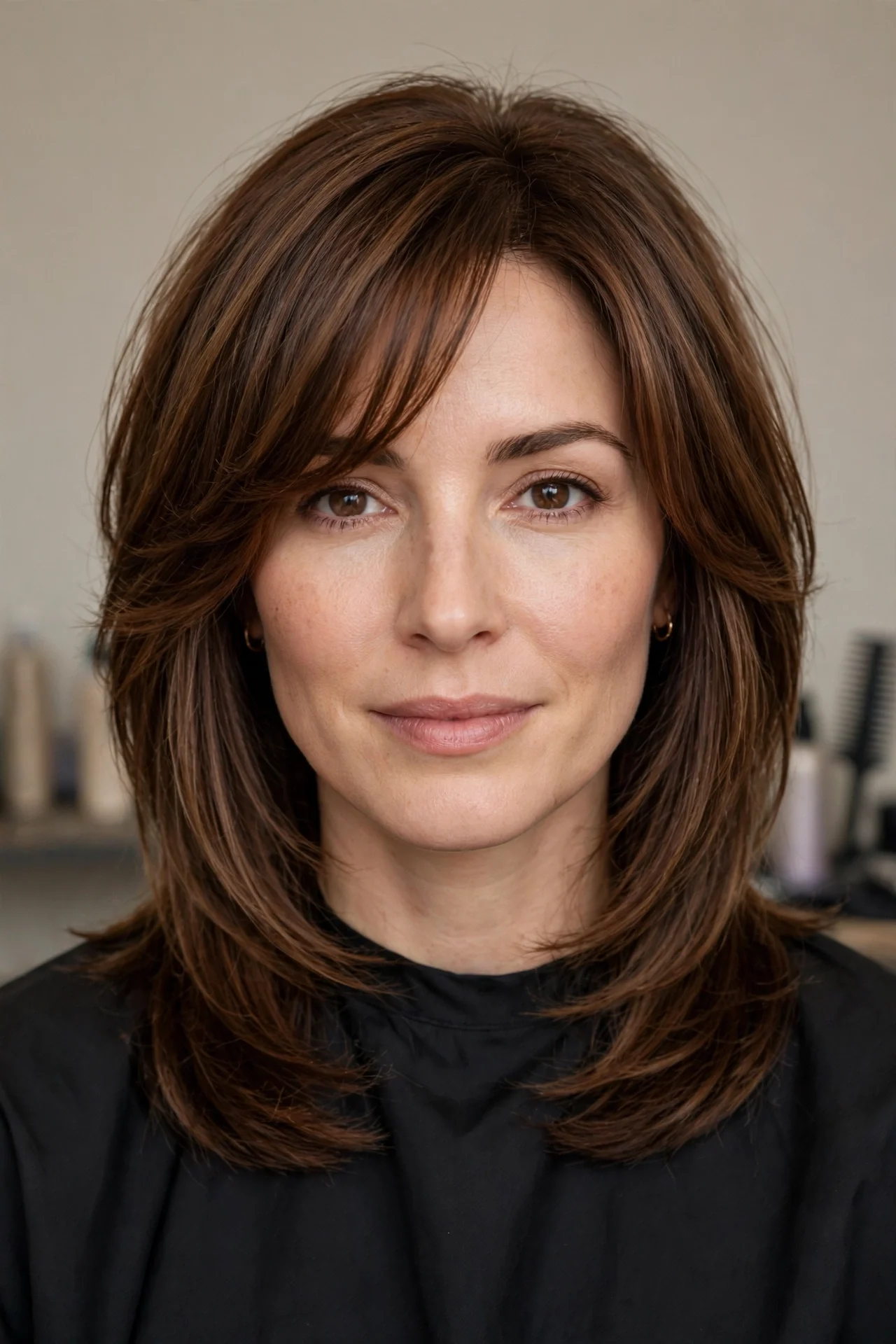
Vibe: Edgy, artistic, and full of attitude.
Why it works: The shaggy pixie turns thin hair’s biggest weakness into a style statement. Choppy, uneven pieces create so much separation and movement that the eye cannot find the scalp, and the tousled finish means the cut looks better slightly undone. It is ideal for women who want their haircut to do the styling work for them.
How to get it: Ask your stylist for a pixie with choppy, disconnected layers, plenty of texture through the crown, and piecey length around the ears. Emphasize that you want an undone finish, not a polished one. Style by working a small amount of matte paste through dry hair, twisting random pieces for definition.
Quick Win: Sleep on it and revive it with dry texture spray instead of washing. The shaggy pixie improves on day two.
Shop the Look
| Shop the Look |
|---|
| Matte styling paste for definition |
| Dry texture spray for revival |
| Texturizing powder for the roots |
| Wide-tooth comb |
| Sulfate-free volumizing shampoo |
15. Soft Layered Shag
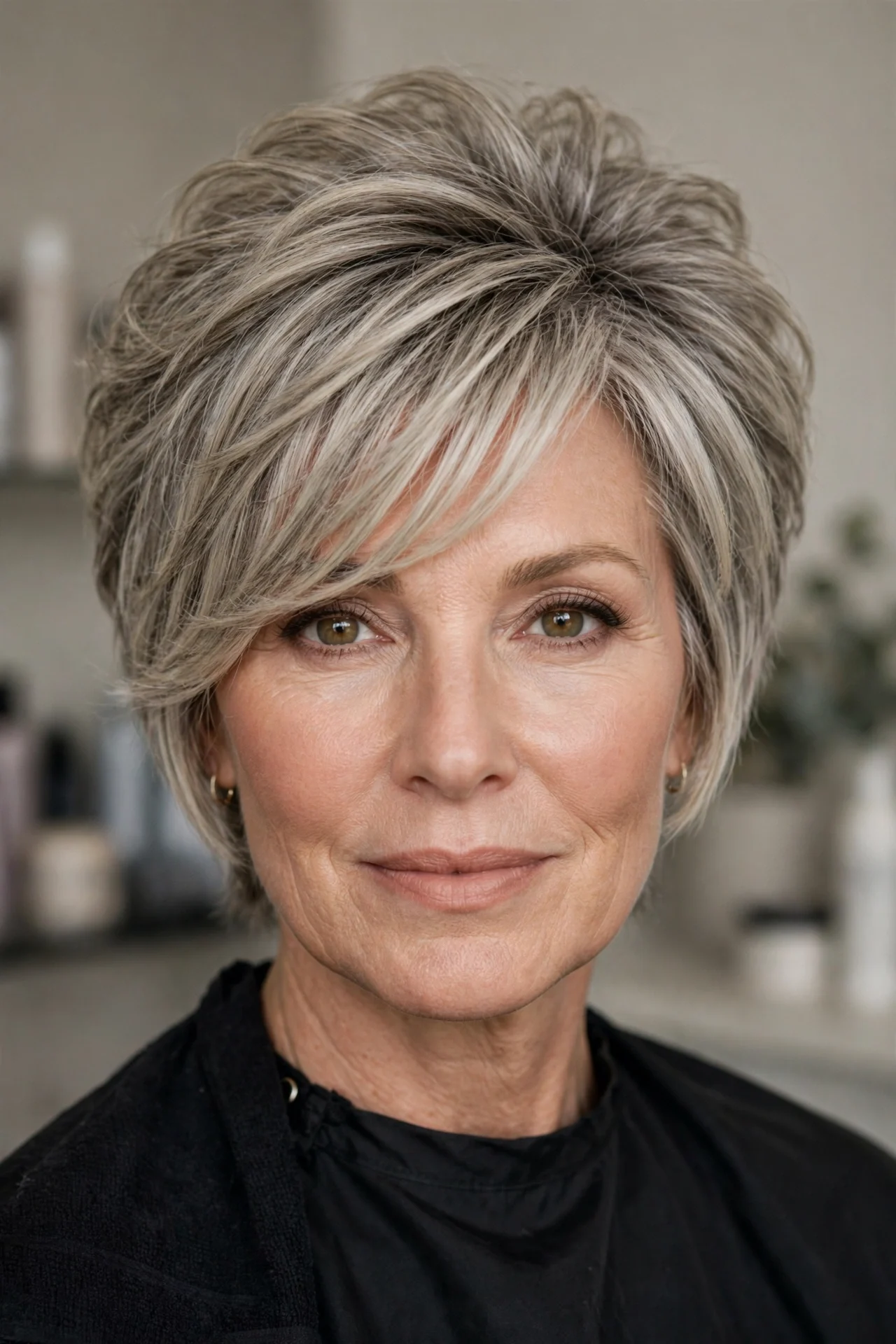
Vibe: Bohemian, relaxed, and effortlessly cool.
Why it works: A soft shag distributes volume through the midlengths instead of demanding it all from the roots, which takes pressure off a thinning crown. Feathered layers around the face open up the features, while the tousled texture makes fine hair look deliberately piecey rather than sparse. It is one of the few longer shapes that genuinely suits low-density hair.
How to get it: Ask your stylist for a shoulder-length shag with soft, feathered layers, a curtain fringe, and texture concentrated through the midlengths rather than the ends. Keep the perimeter reasonably full so the shape does not go straggly. Scrunch in a light mousse and let it air-dry, or diffuse for extra lift.
Shop the Look
| Shop the Look |
|---|
| Lightweight mousse for air-drying |
| Diffuser attachment |
| Curl-enhancing cream for the layers |
| Dry texture spray |
| Silk scrunchies for overnight waves |
16. Cropped Pixie With Tapered Sides
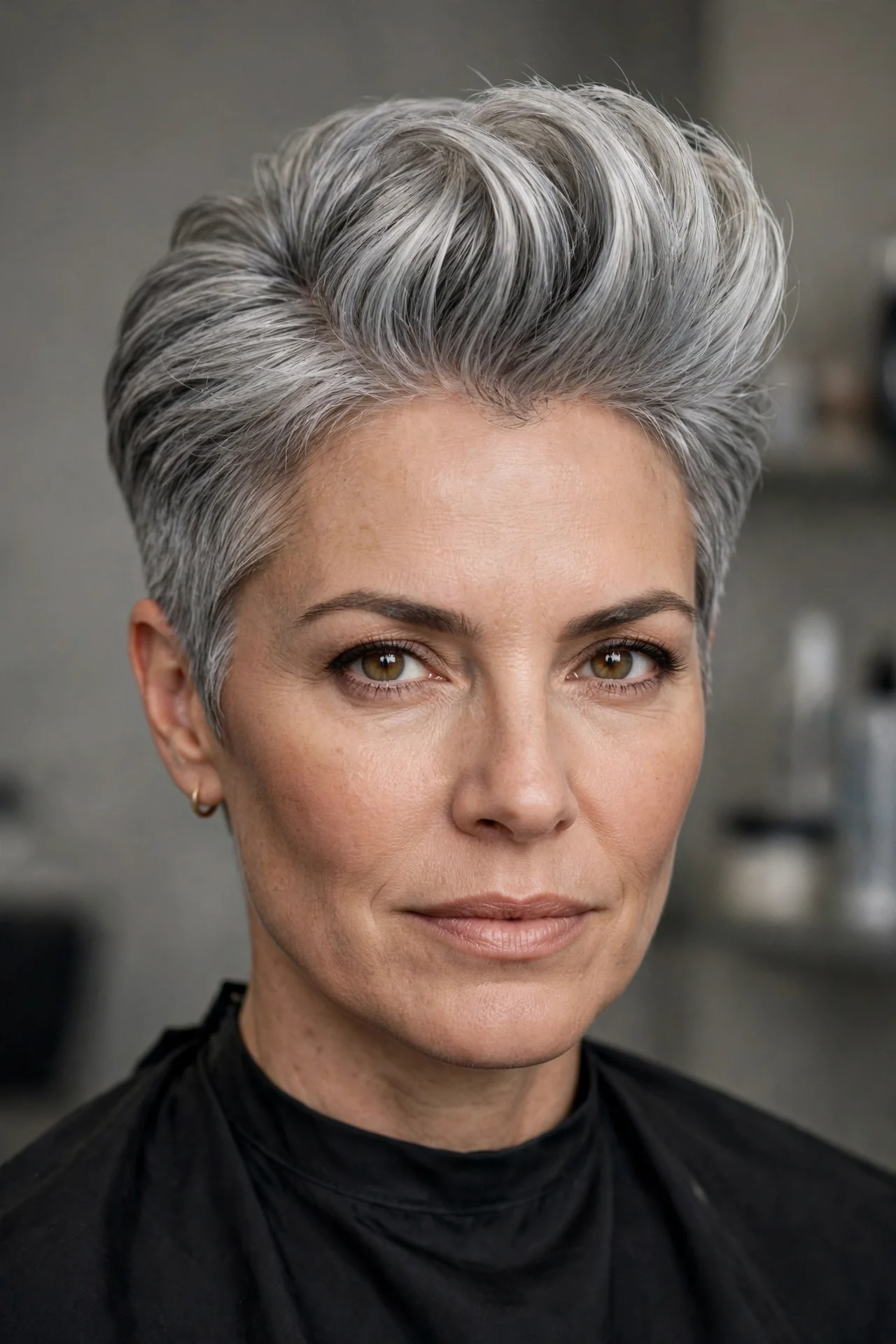
Vibe: Clean, architectural, and striking.
Why it works: Tapering the sides close to the head is a strategic choice for thinning hair: it removes the sparse, see-through hair at the temples entirely and concentrates all remaining density on top. The longer textured top then has real presence because there is nothing wispy competing with it. The contrast between the close sides and the full top reads as intentional edge rather than hair loss.
How to get it: Ask your stylist for closely tapered sides and nape with a longer, heavily textured top you can wear forward or swept up. Discuss how short you are comfortable going on the sides, since the taper is the defining feature. Style the top with a small amount of paste, pushing it forward for coverage or up for height.
Quick Win: Push the top forward when the crown looks sparse and sweep it up when you want height. One cut, two illusions.
Also view: [INTERNAL:short haircut ideas]
Shop the Look
| Shop the Look |
|---|
| Strong-hold matte paste |
| Precision trimmer for the nape |
| Texturizing spray |
| Clarifying shampoo for product buildup |
| Lightweight conditioner |
17. Long Pixie With Crown Volume
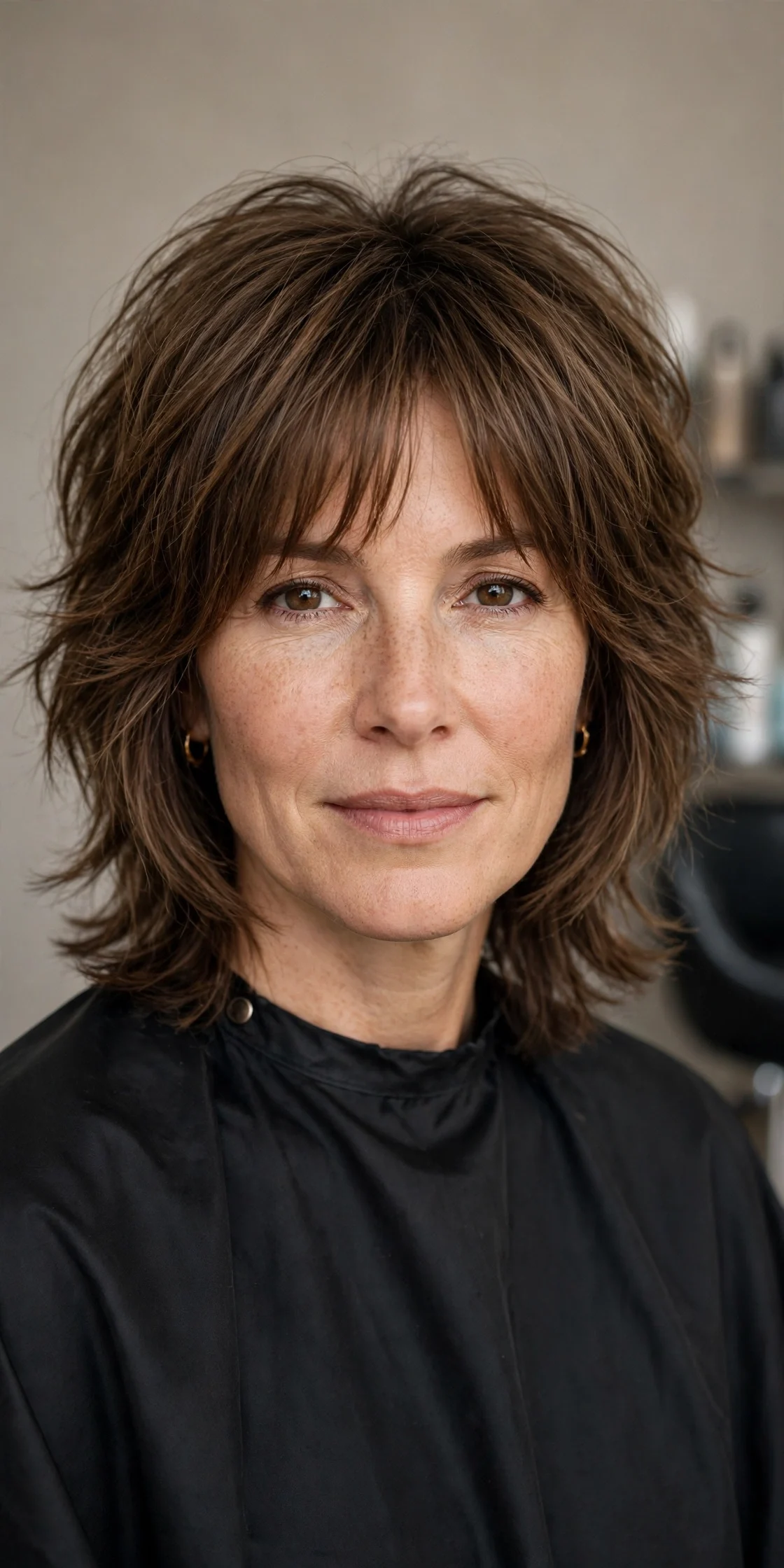
Vibe: Elegant, feminine, and quietly dramatic.
Why it works: The long pixie keeps softness around the face while building serious height at the crown, which is exactly the combination thinning hair needs. Longer sides cover the ears and temples, the areas where sparseness shows first, while the voluminous top creates a strong silhouette. It reads as a deliberate style choice rather than a compromise.
How to get it: Ask your stylist for a long pixie with significant length through the crown, longer sides that cover the ears, and a soft tapered nape. Request internal layering at the crown so the volume comes from the cut, not just styling. Blow-dry the crown upward with a round brush, then smooth the sides down for contrast.
Shop the Look
| Shop the Look |
|---|
| Round brush for crown blow-drying |
| Volumizing mousse |
| Root-lifting spray |
| Shine serum for the sides |
| Medium-hold hairspray |
18. Side-Parted Pompadour Pixie
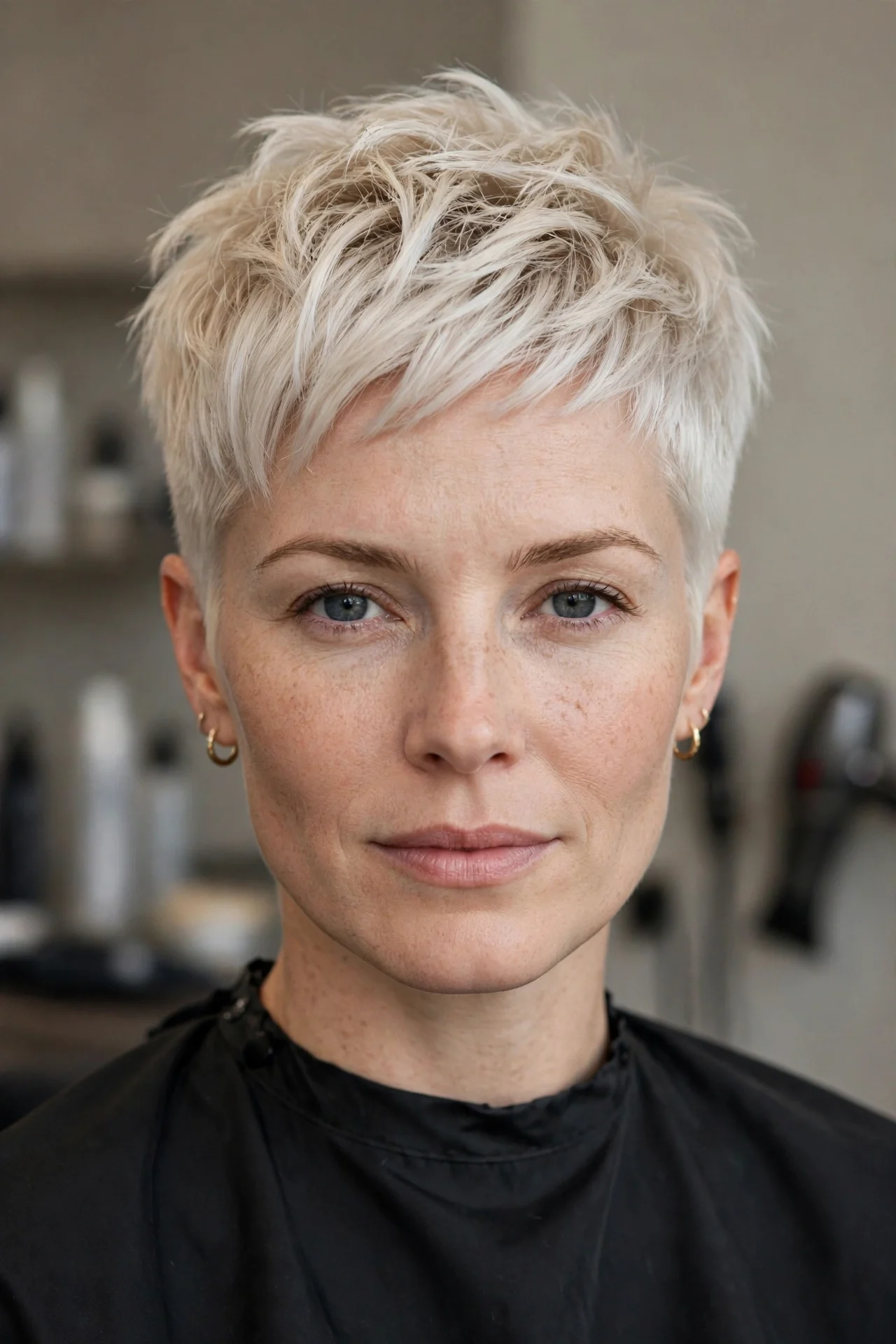
Vibe: Bold, vintage-tinged, and full of swagger.
Why it works: The pompadour pixie piles height at the front of the head, which lengthens the face and creates a dramatic focal point far from any thinning areas. The deep side part stacks hair over the crown, and the sleek sides keep the silhouette tight so all the attention goes to the volume on top. It is a statement cut that happens to be brilliant camouflage.
How to get it: Ask your stylist for a pixie with a deep side part, significant length on top to build the pompadour, and neat tapered sides. Bring reference photos of the exact height you want, since pompadour is a spectrum. Blow-dry the top up and back over a round brush, then set it with a strong-hold product.
Quick Win: Backcomb the underside of the pompadour section before smoothing the top layer over it for instant height.
Shop the Look
| Shop the Look |
|---|
| Strong-hold pomade or wax |
| Fine-tooth backcombing brush |
| Extra-hold hairspray |
| Round brush for the lift |
| Dry shampoo for grip at the roots |
19. Asymmetrical Bob
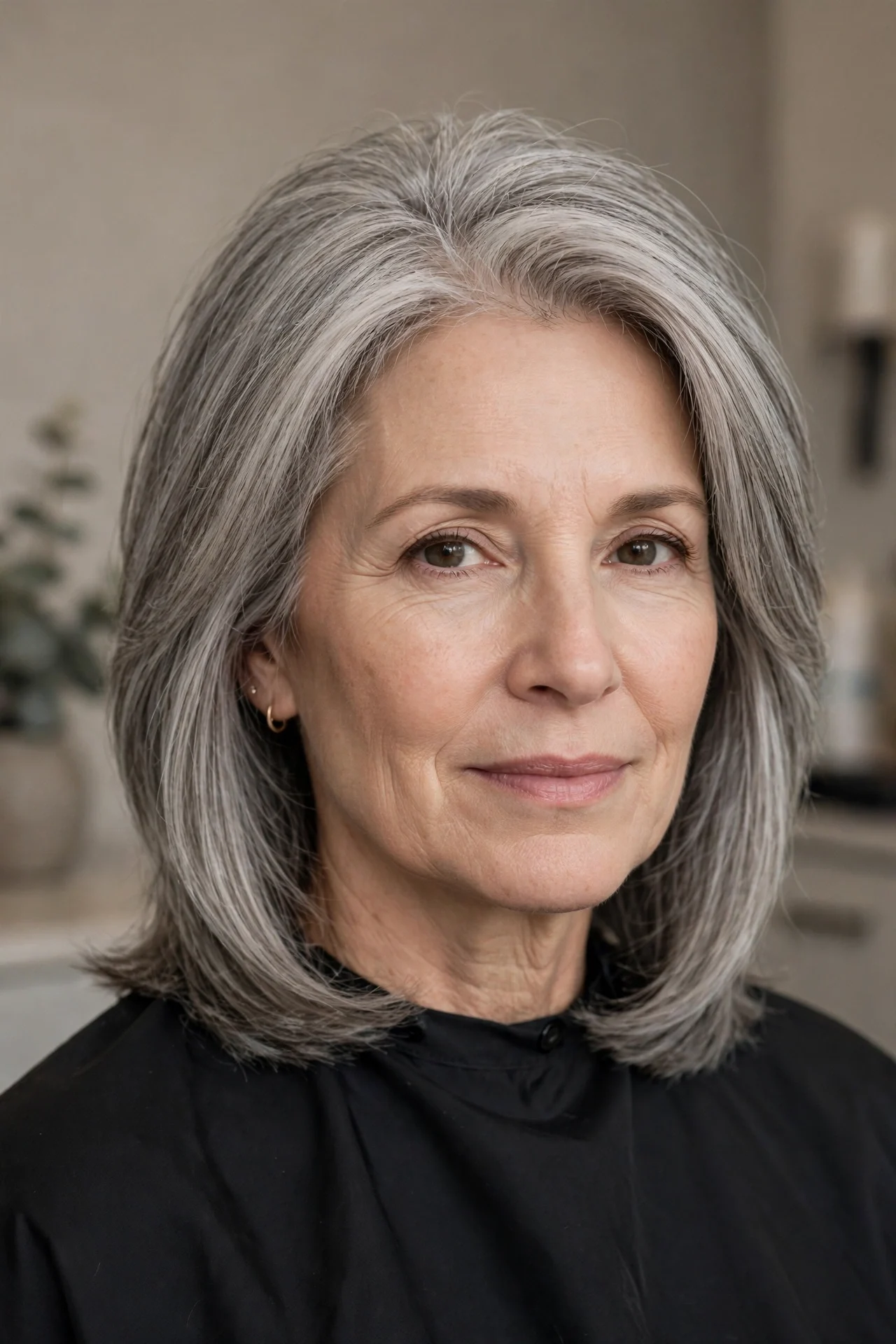
Vibe: Fashion-forward and architecturally cool.
Why it works: Asymmetry is a distraction technique that works beautifully on thinning hair. The longer side draws the eye along a diagonal, which makes the whole head of hair look like it has more going on, while the shorter side keeps the shape tight and intentional. The uneven perimeter also means the eye never settles on one spot long enough to notice sparseness.
How to get it: Ask your stylist for a bob that is noticeably longer on one side, with a clean line connecting the two lengths. Decide how dramatic you want the difference before the appointment and bring a photo. Wear it sleek to emphasize the architecture, or add a slight bend to the longer side for softness.
Shop the Look
| Shop the Look |
|---|
| Flat iron for sleek styling |
| Anti-frizz serum |
| Heat protectant spray |
| Shine spray for the longer side |
| Precision scissors for at-home trims are not recommended; book the salon instead |
20. Textured Crop With a Forward Fringe
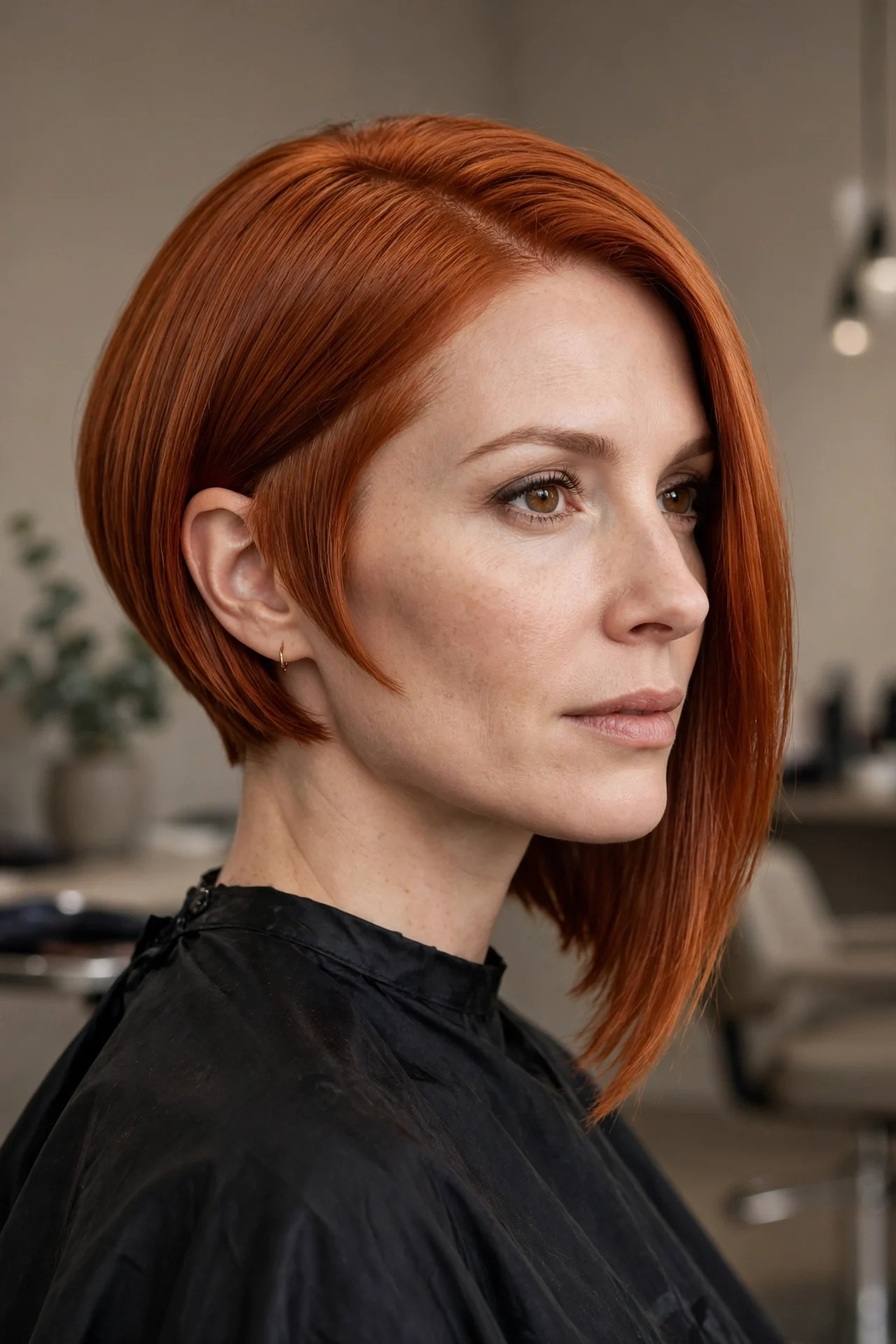
Vibe: Modern, graphic, and self-assured.
Why it works: A forward fringe covers the hairline completely, which instantly solves thinning at the front, while the textured crop behind it keeps the whole head looking dense. The short, even length means no strand is left hanging alone, and the matte texture scatters light across the surface. It is a low-maintenance shape that looks styled with almost no effort.
How to get it: Ask your stylist for a textured crop with a full fringe cut straight across or slightly rounded, and short textured layers through the crown. Make sure the fringe is cut to work with your natural growth patterns so it does not split. Style by rough-drying with your fingers and finishing with a tiny amount of matte paste.
Quick Win: Blow-dry the fringe side to side, not just down, to train it to lie flat and full.
Also view: [INTERNAL:updo hairstyles]
Shop the Look
| Shop the Look |
|---|
| Matte clay for texture |
| Blow-dryer with concentrator nozzle |
| Lightweight leave-in conditioner |
| Dry shampoo for the fringe |
| Soft brush for daily smoothing |
21. Shoulder Cut With a Hidden Crown Lift
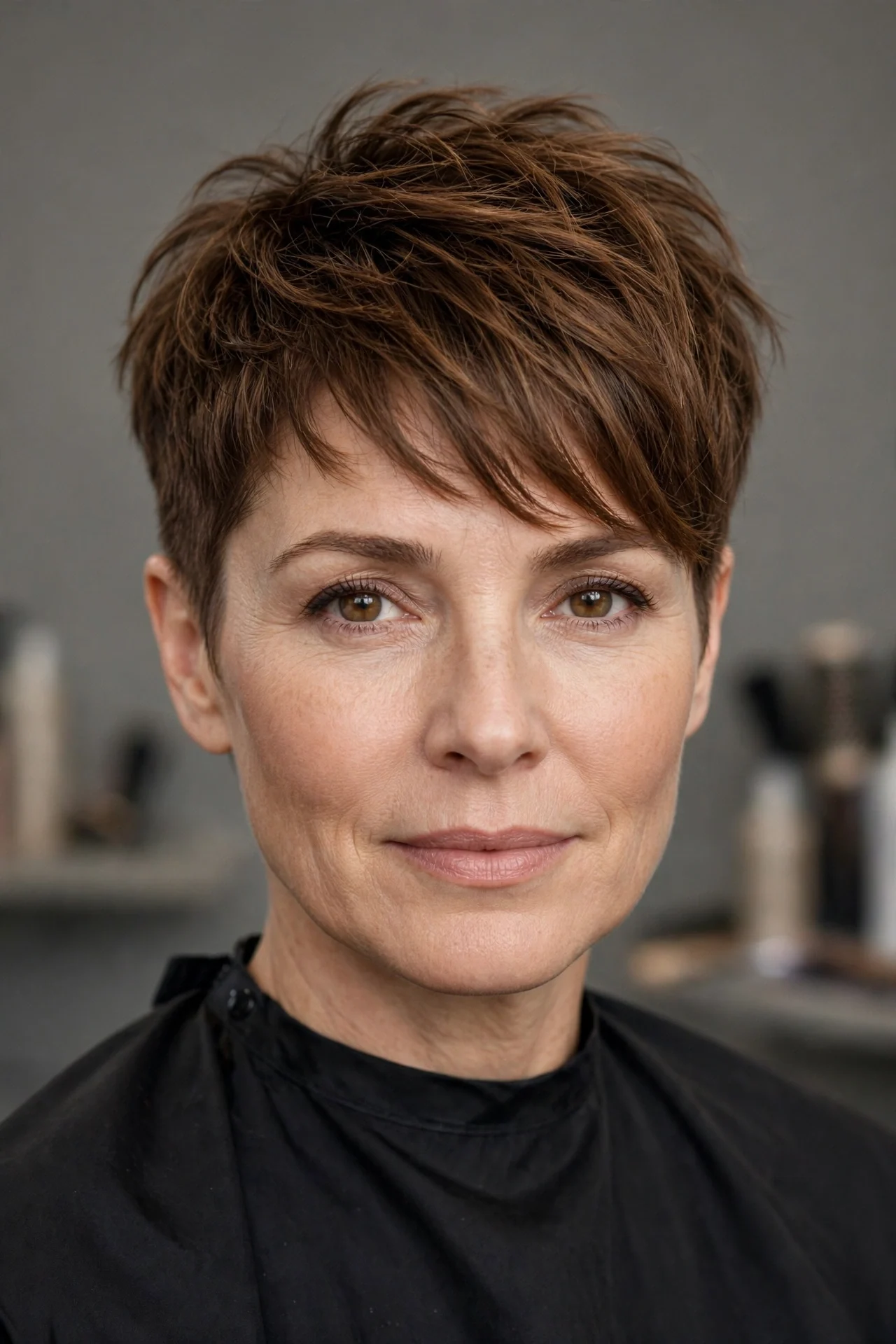
Vibe: Natural, polished, and secretly strategic.
Why it works: This cut looks almost one-length from the outside, which keeps the perimeter visibly dense, but a few invisible interior layers at the crown remove weight so the roots can stand up. It is the best option for women who want to keep their length but need real lift at the top. Nobody can see the layers; they only see the volume.
How to get it: Ask your stylist for a solid shoulder-length baseline with hidden, low-elevation layers at the crown and no thinning through the bottom three inches. Emphasize that the layers must stay invisible from the outside. Rough-dry the crown upward for two minutes, then smooth the lengths with a brush.
Shop the Look
| Shop the Look |
|---|
| Volumizing root spray |
| Paddle brush for smoothing |
| Blow-dryer with strong airflow |
| Lightweight hair oil for the ends |
| Flexible-hold hairspray |
22. U-Shaped Cut With Cheekbone Swoops
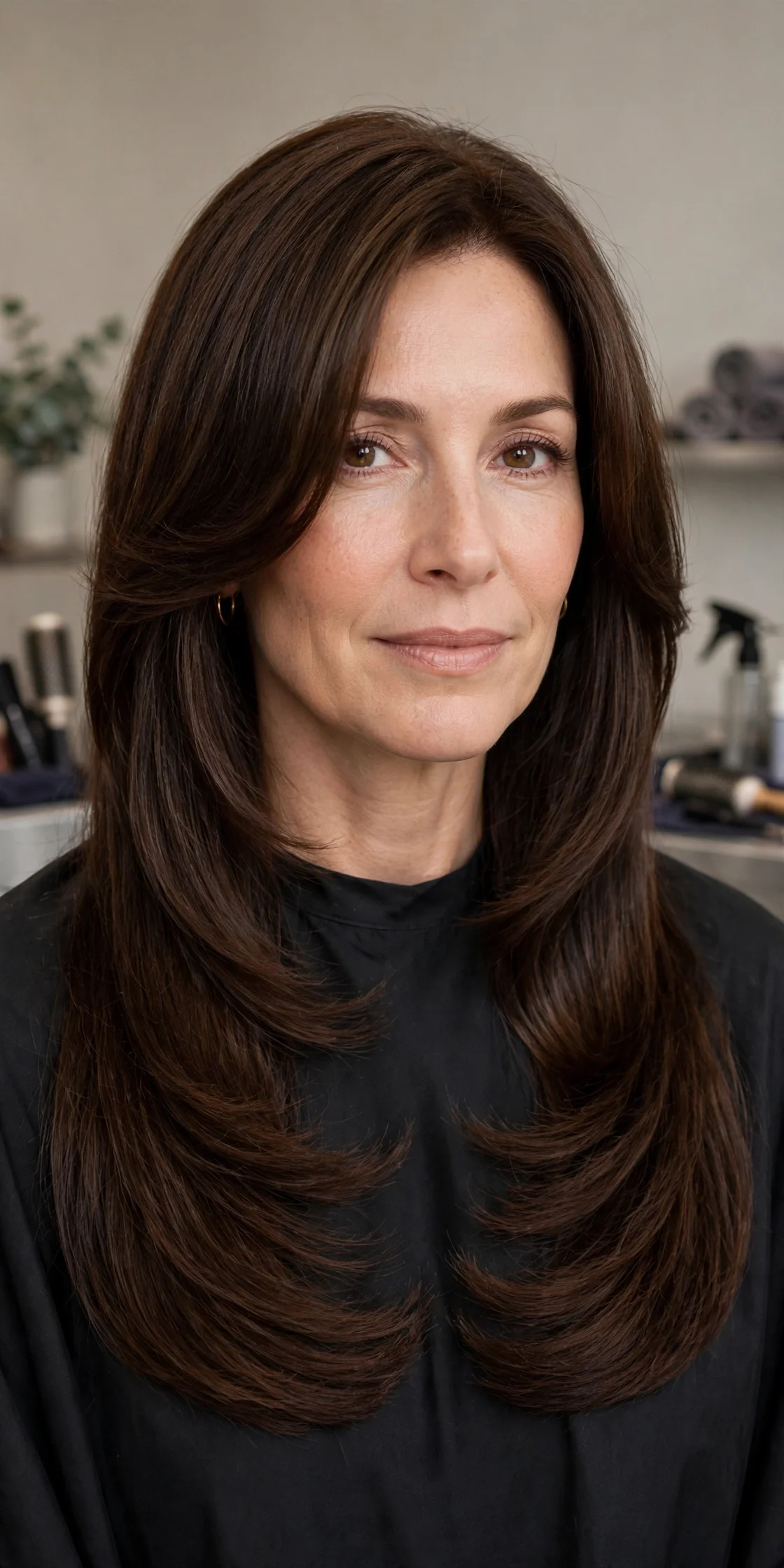
Vibe: Romantic, flowing, and graceful.
Why it works: The U-shaped perimeter keeps the back of long hair looking generous instead of tapering to a point, which protects the appearance of density. Two long swooping pieces that start at the cheekbones add vertical movement and frame the face without carving the lengths into visible layers. It preserves enough weight for braids, ponytails, and clips, which all look fuller on a solid perimeter.
How to get it: Ask your stylist for a shallow U-shaped perimeter, no layers above the shoulders, and long framing that begins at the cheekbone but keeps its bulk below the jaw. Set the front pieces in two large rollers while the roots cool, then brush through once for a soft swoop.
Shop the Look
| Shop the Look |
|---|
| Large hot rollers for the swoops |
| Lightweight styling cream |
| Boar bristle brush for smoothing |
| Heat protectant spray |
| Soft-hold finishing spray |
23. Disconnected Textured Crop
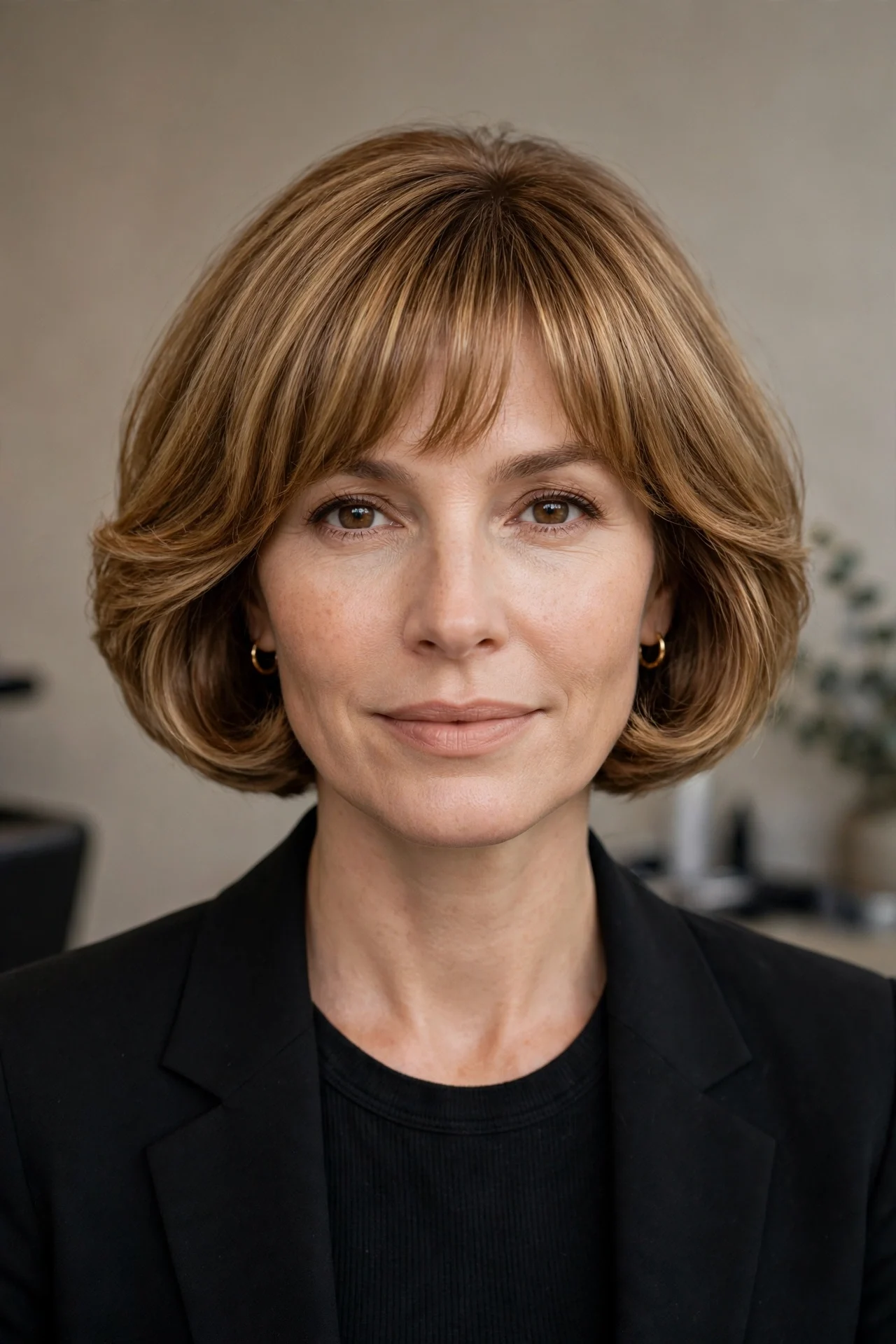
Vibe: Avant-garde and unapologetically cool.
Why it works: Disconnection means the top and the sides are cut as two separate ideas, which creates dramatic contrast that reads as style rather than sparseness. The very short back removes any wispy hair from the equation, while the longer textured top gets all the visual weight. On thinning hair, this contrast is flattering because the eye compares the full top to the intentional shortness below it.
How to get it: Ask your stylist for a disconnected crop with a very short tapered back and a longer, heavily textured top with a side sweep. Be clear about how much contrast you want, since disconnected can range from subtle to extreme. Style the top with matte product, sweeping it to one side for maximum coverage.
Quick Win: Change your sweep direction every few days to prevent the top from going flat in one position.
Shop the Look
| Shop the Look |
|---|
| Matte texturizing paste |
| Strong-hold hairspray |
| Texturizing powder |
| Precision edger for the neckline |
| Volumizing shampoo |
24. Parisian Bob With a Soft Fringe
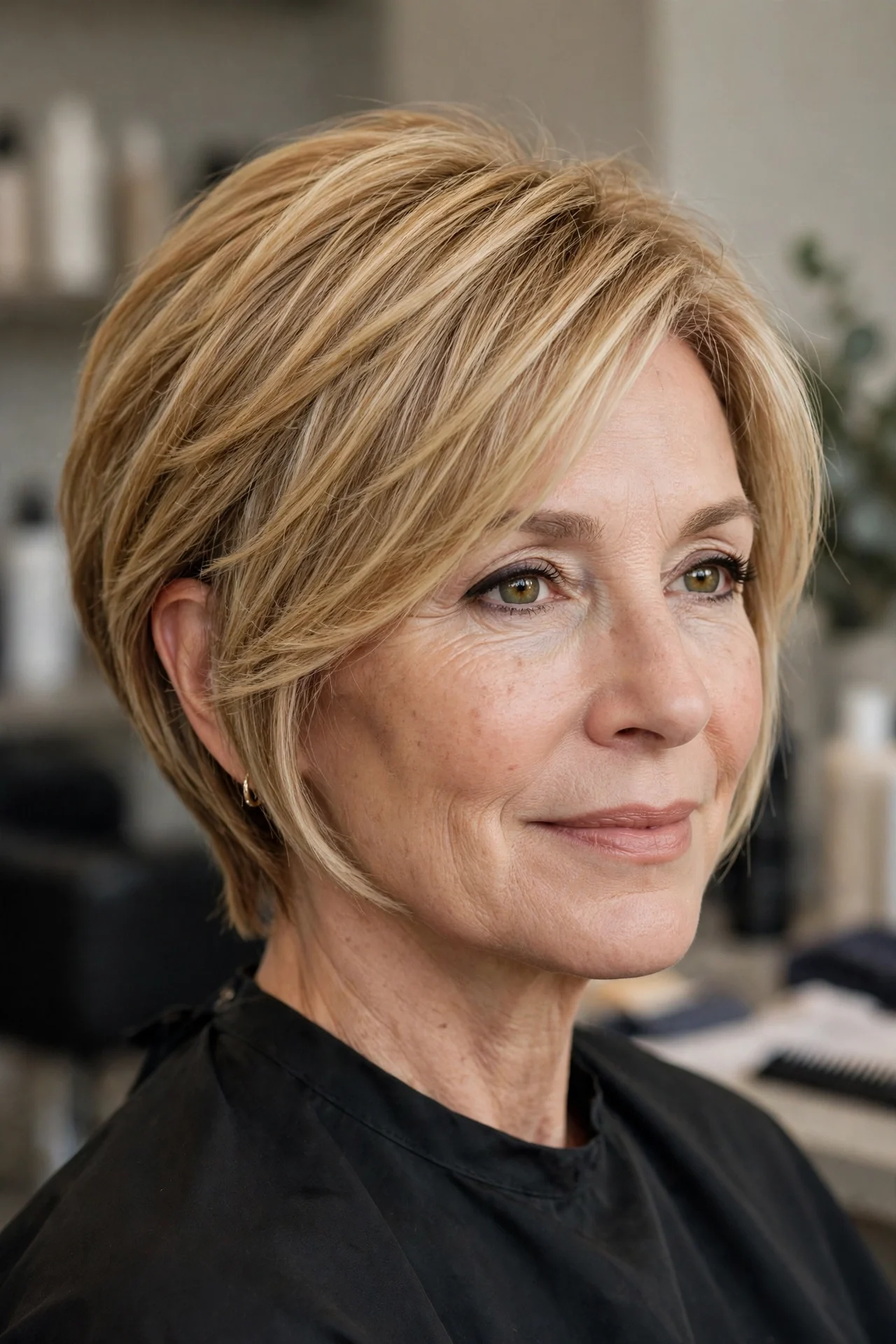
Vibe: Chic, insouciant, and timeless.
Why it works: The Parisian bob sits right at the jaw with a soft, straight-across fringe, and its charm is also its thickening mechanism: the short length keeps every strand close to the scalp, the fringe covers the forehead completely, and the bouncy ends look dense because they have nowhere to taper. It is the rare cut that looks thicker the less you do to it.
How to get it: Ask your stylist for a jaw-length bob with a soft fringe that skims the brows and lightly textured ends for bounce. Request that the back be cut slightly shorter than the front for a subtle Parisian swing. Air-dry with a little cream scrunched in, or blow-dry with a round brush for a polished finish.
Also view: [INTERNAL:lob haircut ideas]
Shop the Look
| Shop the Look |
|---|
| Air-dry styling cream |
| Small round brush |
| Lightweight hair oil |
| Dry texture spray |
| Silk scarf for overnight smoothing |
25. Pixie-Bob With Side-Swept Layers
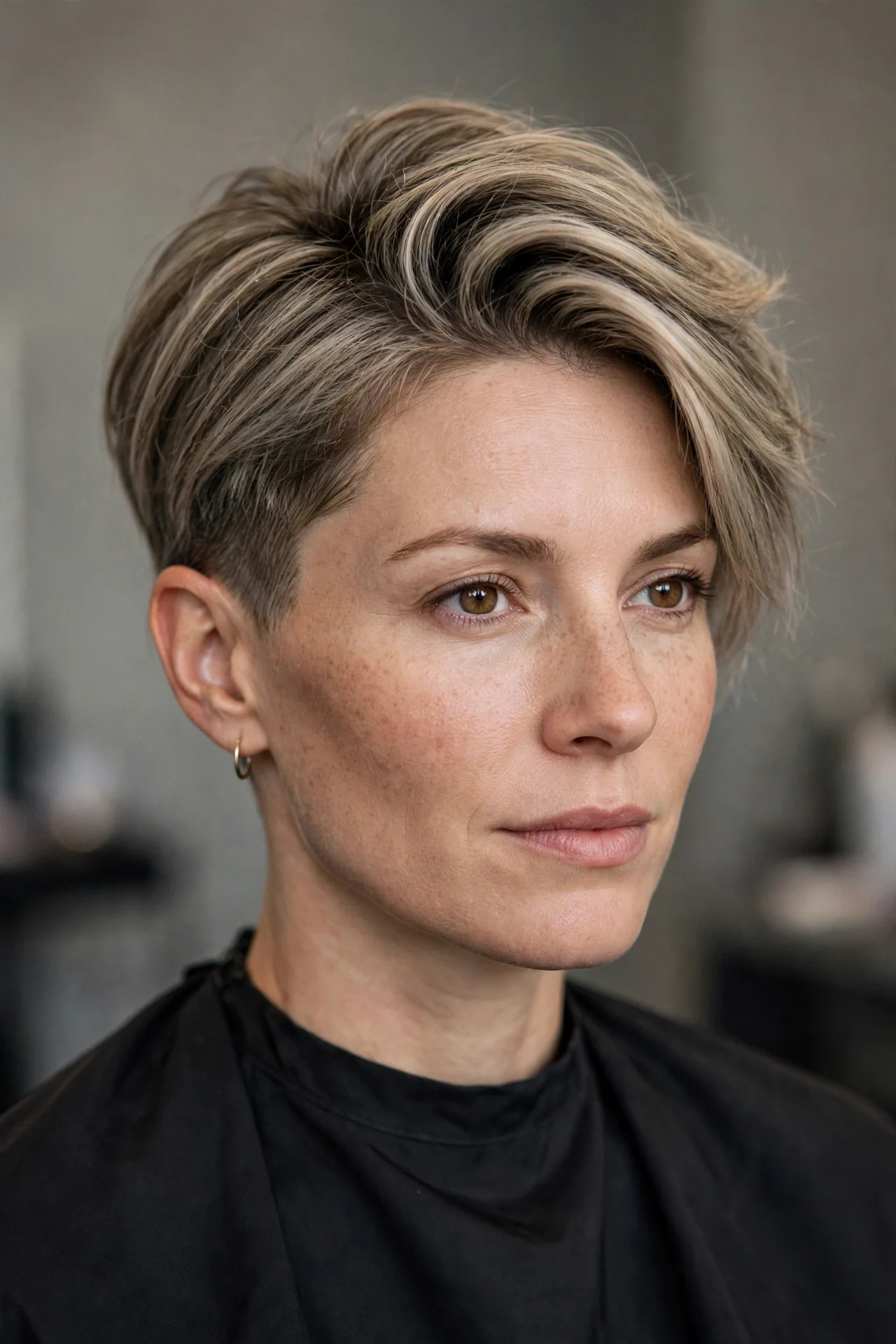
Vibe: Feminine, versatile, and softly structured.
Why it works: This hybrid keeps the pixie’s easy volume and the bob’s feminine length around the ears, which makes it one of the most adaptable haircuts for thinning hair. The side-swept layers fall across the face in overlapping panels that hide sparse temples, and the soft tapered nape keeps the back neat. It grows out more gracefully than a true pixie, which means fewer emergency trims.
How to get it: Ask your stylist for a pixie-bob with longer side-swept layers around the ears, a soft tapered nape, and texture through the crown. Explain that you want it to grow out softly. Style by blow-drying the front to the side with a small round brush and smoothing the crown with your palms and a dab of cream.
Quick Win: Switch the sweep to the other side when roots go flat. The change alone adds a day of volume.
Shop the Look
| Shop the Look |
|---|
| Small round brush |
| Smoothing cream |
| Root-lifting mousse |
| Flexible-hold spray |
| Gentle detangling brush |
How to Start Your Thinning Hair Transformation
Begin with a consultation, not a haircut. Book fifteen minutes with a stylist who has real experience cutting fine or thinning hair, and bring two or three reference photos of cuts you love on hair that looks like yours, not on models with thick hair. Photos close the gap between what you describe and what the stylist hears, and they let the stylist tell you honestly which shapes your density can support.
The most common mistake is asking for long layers to create volume. On thinning hair, long layers do the opposite: they remove weight from the ends, which makes the perimeter look thinner and the scalp more visible. If you want movement, ask for surface texture or face framing instead, and keep the baseline solid. Another frequent misstep is over-thinning with thinning shears, which can leave the ends see-through for months.
At home, the budget version of this transformation costs less than a salon visit. A volumizing mousse, a root-lifting spray, and a round brush will take you most of the way, and learning to blow-dry roots upward against their growth direction is a free skill that pays off every morning. Wash with a lightweight volumizing shampoo, condition only the midlengths and ends, and avoid heavy oils near the roots.
In the salon, expect to pay the standard women’s cut price in your area, typically between forty and ninety dollars, with restyles that involve significant length removal sometimes priced higher. Add dimensional color or a root shadow and the appointment can reach one hundred fifty to three hundred dollars. Plan trims every six to eight weeks, since the thickening effect of a precision cut fades as the shape grows out.
Frequently Asked Questions About Haircuts for Thinning Hair
Should I cut my thinning hair short?
In most cases, yes, because shorter hair removes the weight that pulls roots flat and lets the remaining strands stand up with real body. That does not mean you must go pixie-short; a collarbone lob or a chin-length bob delivers most of the benefit. The key is the shape, not just the length: a blunt perimeter, hidden crown layers, and a deep side part will make almost any length look denser than long, wispy layers.
What haircut makes thin hair look the thickest?
A blunt bob or a textured pixie usually creates the strongest illusion of thickness, because both concentrate density into a solid shape. The blunt bob gathers every strand into one heavy edge, while the pixie stacks short layers so the scalp disappears under texture. Between the two, choose the pixie if your crown is the thinnest area and the bob if your ends are the problem.
Are layers good or bad for thinning hair?
It depends entirely on where they are placed. Long, carved-through layers are bad because they thin out the ends and expose the scalp. Short, hidden layers at the crown and surface texture that never reaches the perimeter are good because they create lift and movement while the baseline stays dense. Ask your stylist to protect the bottom two inches and layer only where lift is needed.
Can bangs help thinning hair look fuller?
Yes, when they are the right kind. Side-swept and curtain bangs redistribute hair across the forehead and temples, covering the areas where thinning shows first. Avoid baby bangs or very thin wispy fringes cut from sparse hair, since they can emphasize exactly what you want to hide. The fringe should be cut from enough hair to lie as a substantial panel.
How often should I trim thinning hair?
Every six to eight weeks is the sweet spot for most cuts on this list. Thinning hair shows damage faster than thick hair, and split ends travel upward quickly on fine strands, making the perimeter look ragged. Shorter precision cuts like pixies may need attention every five weeks to hold their shape, while longer bobs can sometimes stretch to ten.
Your Turn to Shine
Thinning hair does not mean settling for flat, lifeless styles. The twenty-five cuts above prove that the right shape, the right part, and the right texture can make fine strands look dramatically thicker, often from the very first blow-dry. Pick the two or three ideas that match your face shape and lifestyle, save their photos, and bring them to your consultation.
Book that consultation this week and tell your stylist your goal in plain words: maximum fullness with minimum daily effort. Pin your favorite look now so you have it ready at the appointment, and get ready to see your hair in a completely new light.
Related Reads
- 18 Volumizing Hairstyles for Fine Hair Worth Trying
- 15 Low-Maintenance Short Haircuts for Women Over 40
- 20 Bob Haircuts With Bangs That Flatter Every Face
- 12 Root-Lifting Blow-Dry Techniques for Fuller Hair