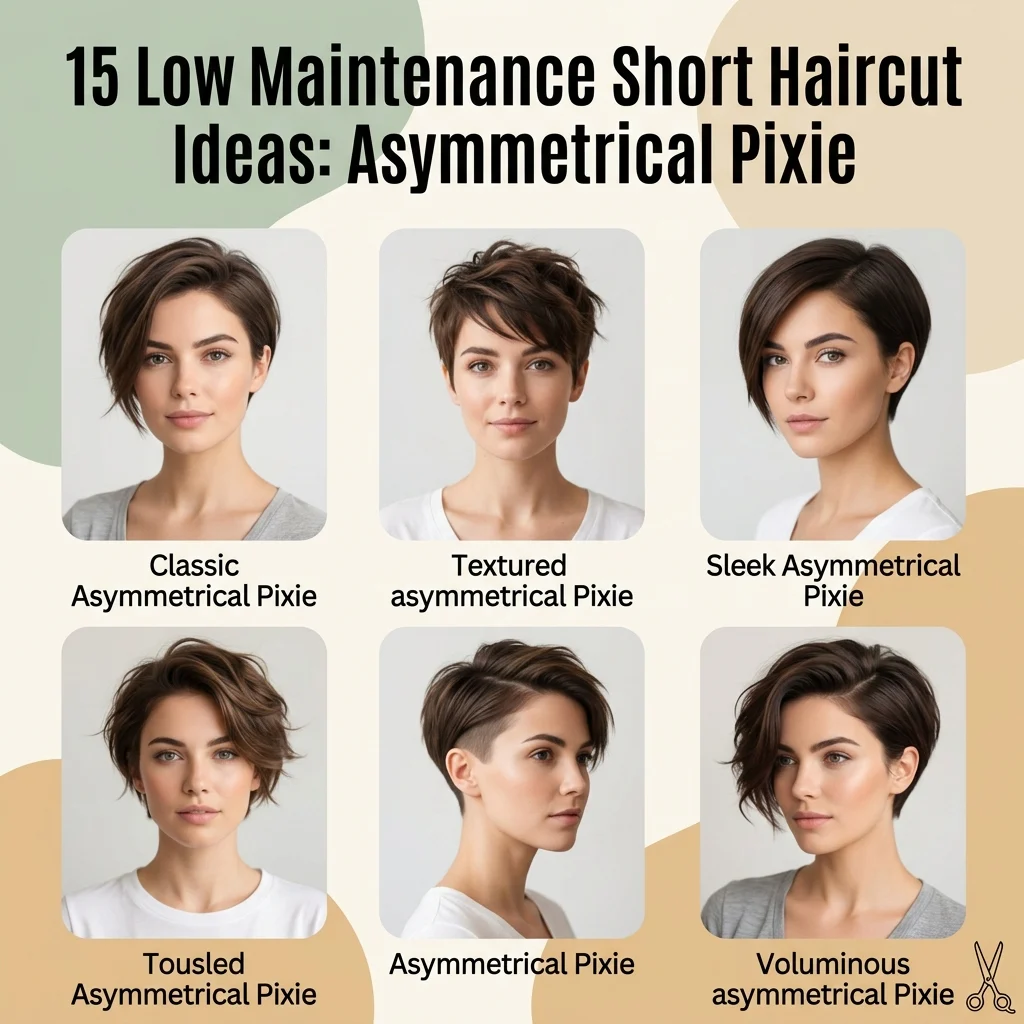
15 Low Maintenance Short Haircut Ideas: Asymmetrical Pixie

An asymmetrical pixie is a short haircut with deliberately uneven length between the two sides, one cropped close and the other left longer, styled to require minimal daily effort. This article gives you 15 low maintenance short haircut ideas built around the asymmetrical pixie cut structure, color placement, and styling technique that work with almost no morning routine.
Picture reaching for nothing but your fingers, tousling damp hair for ten seconds, and walking out the door with a shape that already looks finished. This cut feels quick, sharp, unbothered the kind of haircut that gets more character the less you touch it. It reads deliberate and current, not thrown together. Here are 15 ideas worth saving, and stealing.
Why Low Maintenance Asymmetrical Pixie Works So Well
Why does an uneven cut actually require less daily styling than a symmetrical one? The asymmetrical pixie descends from the cropped pixie cuts popularized in the 1950s and reworked repeatedly through punk and new wave subcultures in the late 1970s and ’80s, when stylists began deliberately breaking symmetry rather than correcting it. What makes this version distinct from a standard pixie is the intentional length imbalance between the two sides (one cut close to the scalp, the other left long enough to tuck, sweep, or fall loose) a structural choice that removes the need for precise, matched styling on both sides every morning.
Core techniques here favor cut architecture over product dependency: point-cutting and razoring at the crown, a buzzed or closely clippered temple on one side, and a color palette that ranges from deep, low-maintenance root taps to sun-warmed balayage that grows out without a hard demarcation line. The asymmetry itself does most of the visual work, which is why this cut relies less on daily heat styling than almost any other short haircut.
This look is trending because low-maintenance, heat-free styling has become one of the fastest-growing search categories on Pinterest, and because asymmetry photographs distinctively well against the wave of increasingly uniform, symmetrical short cuts saturating feeds. It offers visual interest without adding a single extra step to a morning routine.
Fine to medium hair adapts to this shape especially well, since the shorter cropped side naturally reduces weight while the longer side provides just enough length for texture. The honest limit is very thick, coarse hair on the longer side, which can require occasional thinning to keep the length-to-density ratio from overwhelming the cropped side’s proportions.
Style at a Glance
| Element | Detail |
| Philosophy | Deliberate imbalance that removes the need for daily precision styling |
| Key Techniques | Buzzed or clippered temple, point-cut crown, low-maintenance root color |
| Key Tones | Deep espresso root, warm caramel, sun-kissed golden-brown |
The 15 Looks
1. Diagonal-Cropped Crown Foundation
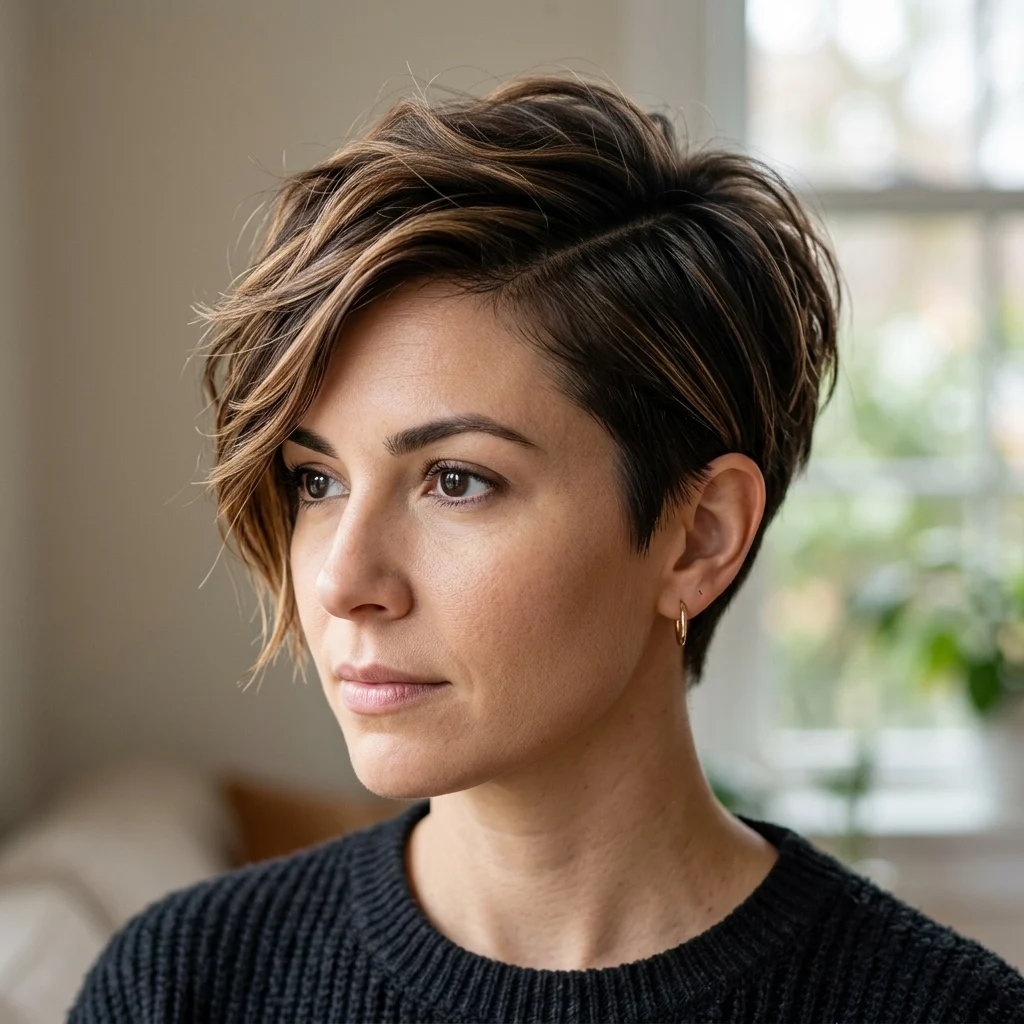
Vibe: Grounded, with an off-balance line that still reads intentional.
Why it works: The cutting principle is diagonal weight redistribution: rather than cutting the crown at one even length, the diagonal line shifts length gradually from short at one temple to longer at the crown’s opposite point, which removes the need to match styling on both sides since the two sides were never meant to mirror each other.
How to get it: Ask your stylist for a “diagonal crown crop” specifically, with the shortest point starting just above one ear and lengthening gradually toward the opposite side.
💡 Quick Win: Bring a front-view reference photo and point out exactly which side you want shorter, since left-right preference is easy to miscommunicate verbally.
Shop the Look
| Product |
| Matte texturizing paste for crown definition |
| Small precision scissors for at-home touch-ups |
| Wide-tooth detangling comb |
| Compact hair clippers for the shorter side |
| Silk pillowcase to preserve texture overnight |
2. Two-Tone Contrast Wash
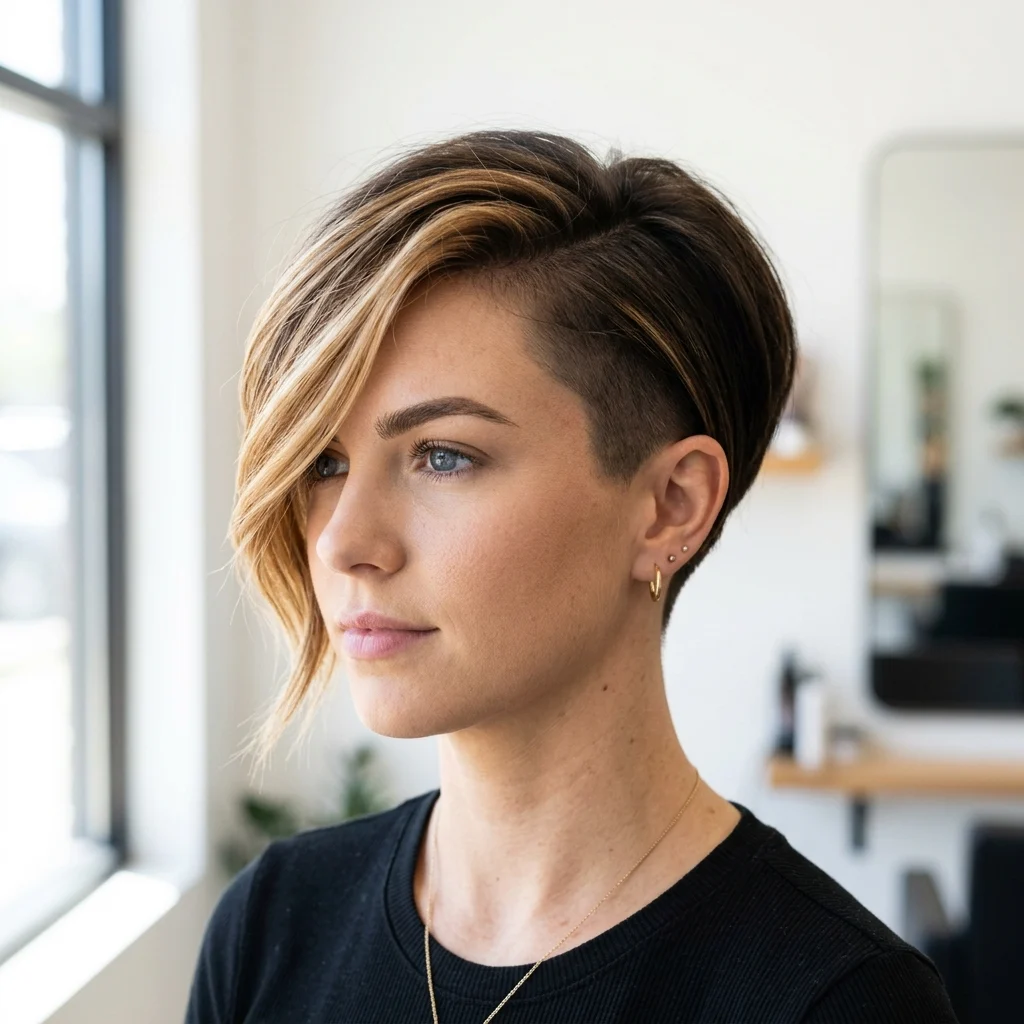
Vibe: Crisp, with color that reinforces the cut’s asymmetry rather than smoothing over it.
Why it works: The color principle is structural reinforcement through contrast: applying a deeper tone to the cropped side and a lighter tone to the longer side uses color to visually echo the haircut’s existing length imbalance, which strengthens the overall asymmetry rather than working against it the way a uniform, all-over color would.
How to get it: Request a two-tone service where the shorter side receives your natural or a deepened base color, while the longer side is lightened two to three shades with a balayage technique.
Shop the Look
| Product |
| Bond-building hair mask for lightened strands |
| Color-safe shampoo for dual-tone maintenance |
| Fine-tooth foiling comb |
| Illuminating hair gloss for the lighter side |
| UV-protectant hair serum |
3. Finger-Dry Texture Rule
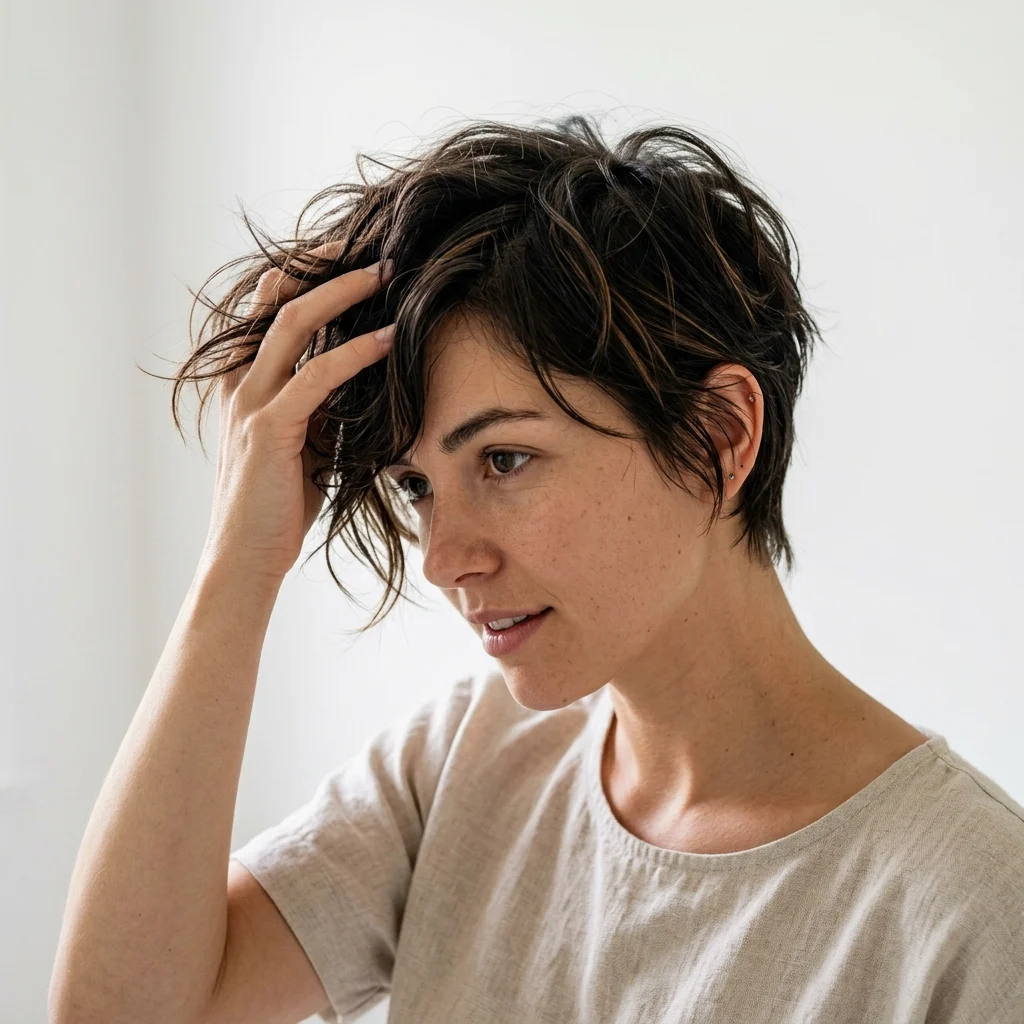
Vibe: Airy, with a finish that looks untouched by any tool at all.
Why it works: The styling principle is manual texture preservation: running fingers through damp hair rather than a brush or comb avoids smoothing the cuticle into one uniform direction, which is what keeps the pixie’s natural piece-y separation intact, brushes redirect hair into a single pattern, while fingers leave the irregular texture a low-maintenance cut depends on.
How to get it: Apply a dime-size amount of texturizing cream to damp hair, scrunch and tousle with your fingers only, then let it air-dry without touching it again until fully dry.
Shop the Look
| Product |
| Lightweight texturizing cream |
| Microfiber hair towel for gentle drying |
| Sea salt texturizing spray |
| Anti-frizz leave-in spray |
| Travel-size texturizing cream for touch-ups |
4. One-Sided Extended Length Panel
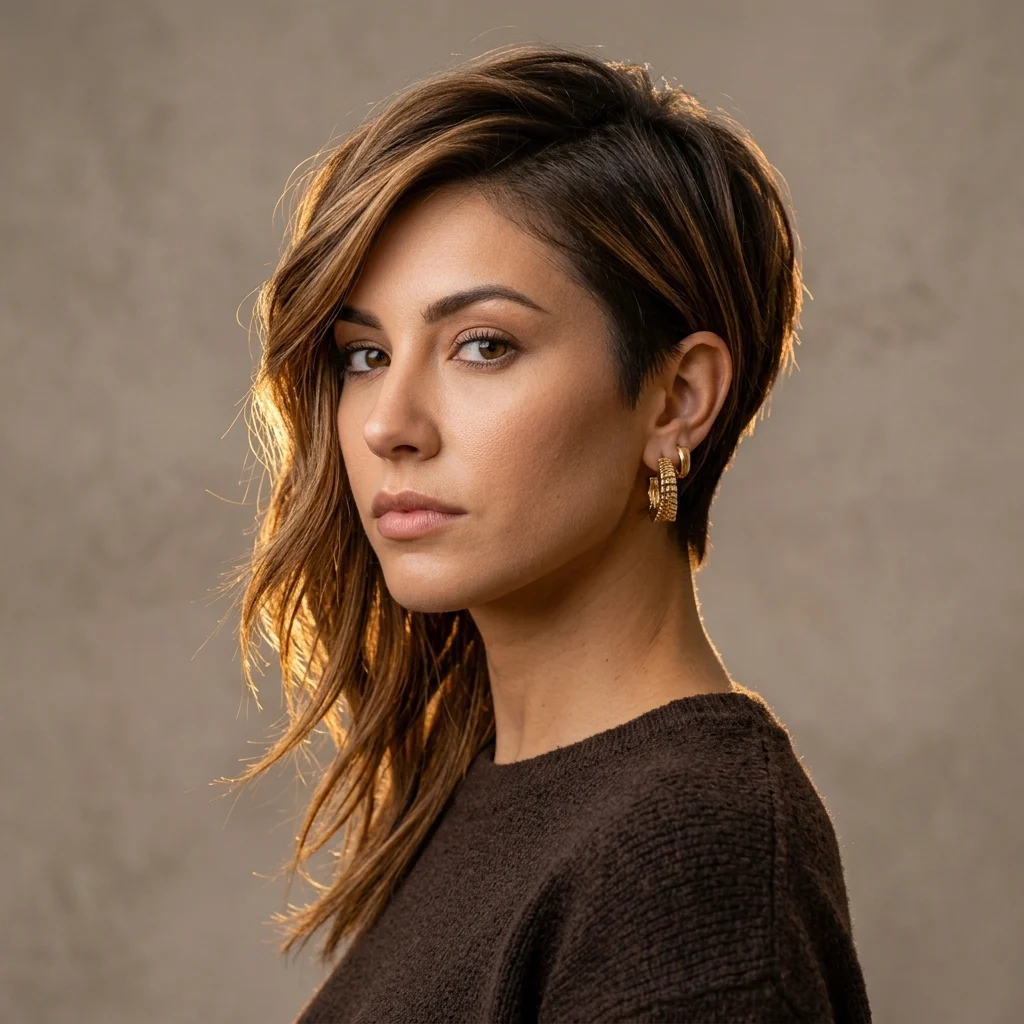
Vibe: Bold, with a single panel of length doing all the dramatic work.
Why it works: The proportion principle is scale contrast for identity: leaving one panel of hair long enough to reach the jaw while the rest of the head stays cropped under an inch creates the most extreme length differential in this list, which is precisely what makes the cut instantly recognizable rather than reading as an ordinary short haircut with slightly uneven sides.
How to get it: Ask for one panel, roughly two inches wide, left at jaw-length or longer, with the rest of the head clippered or scissor-cut to under an inch and blended at the boundary.
Shop the Look
| Product |
| Firm-hold pomade for the cropped side |
| Round ceramic brush for the longer panel |
| Shine-enhancing hair oil for the length panel |
| Flexible finishing hairspray |
| Compact hair clippers for the cropped side |
5. Angled Swoop Bang

Vibe: Romantic, with a diagonal line that softens the pixie’s sharper edges.
Why it works: The proportion principle is diagonal softening: a bang cut on a steep angle rather than straight across creates a line that draws the eye across the face instead of stopping it at a horizontal edge, which balances the more severe, geometric cropping found elsewhere in an asymmetrical pixie.
How to get it: Ask your stylist to cut the bang longest at the part and graduating shorter toward the temple, blended into the crown so there’s no visible seam where the two sections meet.
💡 Quick Win: Blow-drying the bang just once in the direction you want it to fall trains it to sweep that way on low-effort, air-dry days too.
Shop the Look
| Product |
| Large round brush for training the swoop |
| Flexible-hold fringe spray |
| Small clips for sectioning during blow-dry |
| Smoothing cream for diagonal control |
| Detangling leave-in spray |
6. Buzzed Temple with Long Top Contrast
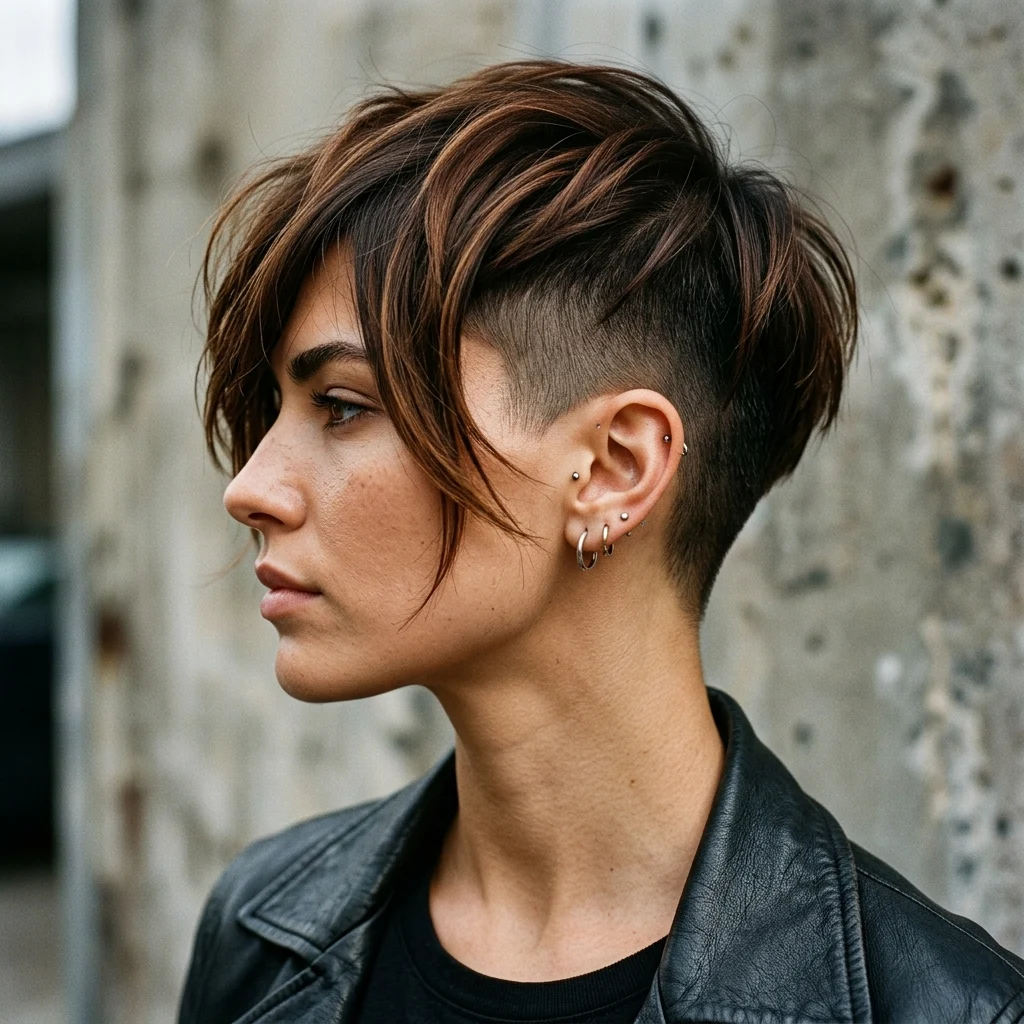
Vibe: Edgy, with a contrast that reads confident rather than accidental.
Why it works: The structural principle is negative space through extreme reduction: buzzing one temple down to a quarter-inch or less removes nearly all visible bulk from that side, creating negative space that makes the longer top section appear even more voluminous by comparison, the sharper the reduction, the stronger the visual contrast.
How to get it: Ask for one temple buzzed with clippers using a short guard, while the top is left long enough to sweep over and partially cover the buzzed section when styled down.
Shop the Look
| Product |
| Compact hair clippers with adjustable guards |
| Matte pomade for styling the longer top |
| Neck brush for post-trim cleanup |
| Small tail comb for sectioning |
| Texturizing powder for the top layer |
7. Sun-Kissed Balayage Sweep
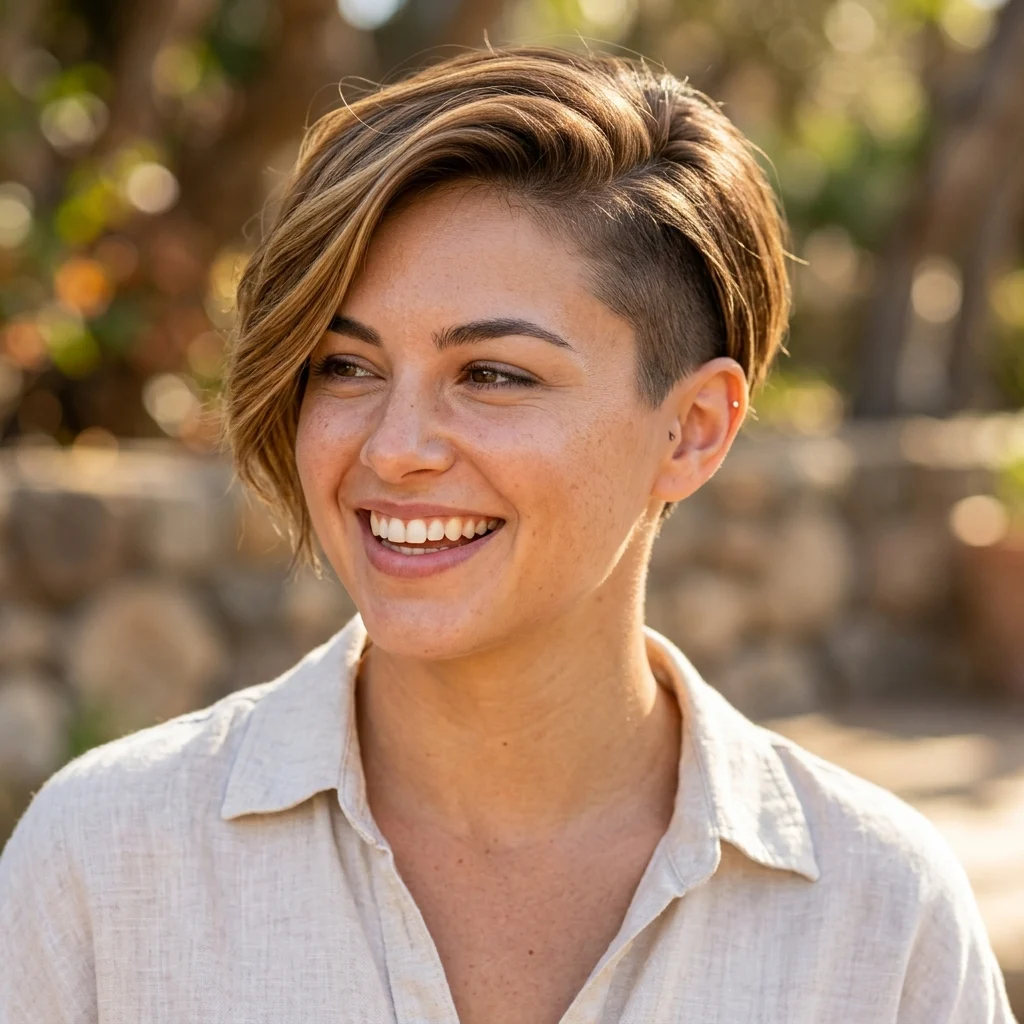
Vibe: Sun-warmed, with brightness that looks earned rather than applied.
Why it works: The color principle is low-maintenance placement: hand-painting balayage highlights only onto the longer panel, rather than throughout the whole head, grows out without a visible root line since the technique deliberately avoids saturating hair close to the scalp. This is what makes it require far fewer touch-up visits than a foiled highlight service.
How to get it: Request balayage painted in diagonal sections only on the longer panel, starting at least two inches below the root to ensure a soft, low-maintenance grow-out.
Shop the Look
| Product |
| Purple-toned shampoo for brassiness control |
| Bond repair spray for lightened strands |
| Wide paddle brush for even application |
| Color-depositing conditioner in warm tones |
| Shine-enhancing hair oil for balayage strands |
8. Off-Center Weight Distribution
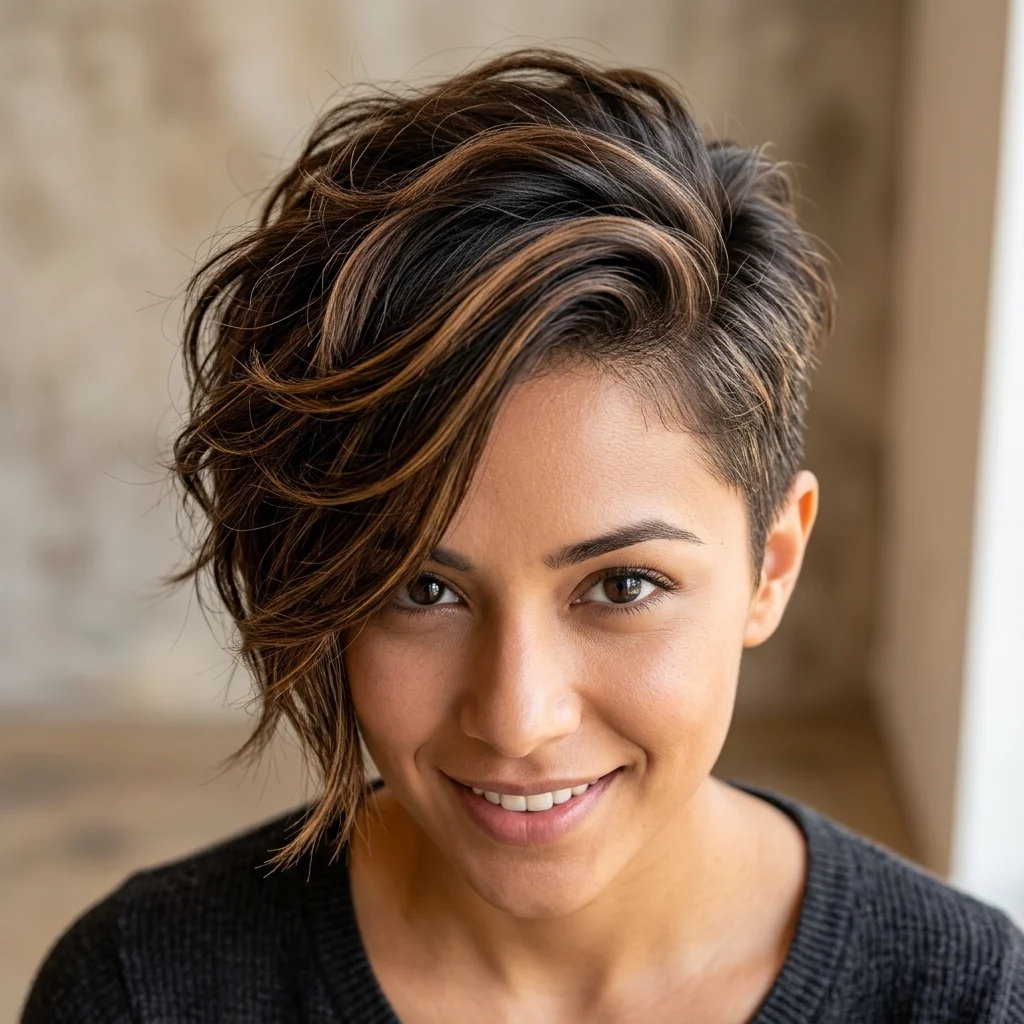
Vibe: Layered, with weight that settles toward one side by design.
Why it works: The layout principle is intentional imbalance: distributing more visual weight toward one side of the crown while thinning the opposite side creates a directional pull that guides the eye across the whole head rather than settling evenly, the same proportion logic used to keep a composition from feeling static or centered.
How to get it: Ask your stylist to leave slightly more length and density on one side of the crown, thinning the opposite side with point-cutting to create the directional imbalance.
Shop the Look
| Product |
| Teasing comb for crown weight styling |
| Root-lifting volumizing spray |
| Firm-hold hairspray for holding the distribution |
| Texturizing powder for the lighter side |
| Small round brush for directional styling |
9. Product-Free Bed-Head Method

Vibe: Hushed, with texture that requires genuinely nothing to look finished.
Why it works: The styling principle is cut-dependent texture: a pixie cut specifically engineered with enough internal layering holds its shape even without product, since the layering itself creates the separation a heavier, single-length cut would need styling cream to fake. This is the truest test of a low-maintenance cut.
How to get it: Ask your stylist whether your specific hair texture can support a fully product-free finish, and if so, simply tousle with dry fingers after waking rather than applying anything at all.
💡 Quick Win: Keep a travel-size dry shampoo nearby for the rare day this texture needs a quick refresh at the roots.
Shop the Look
| Product |
| Travel-size dry shampoo |
| Wide-tooth detangling comb |
| Silk pillowcase for overnight texture preservation |
| Small precision scissors for at-home trims |
| Lightweight leave-in spray for occasional frizz |
10. Elongated Nape Point
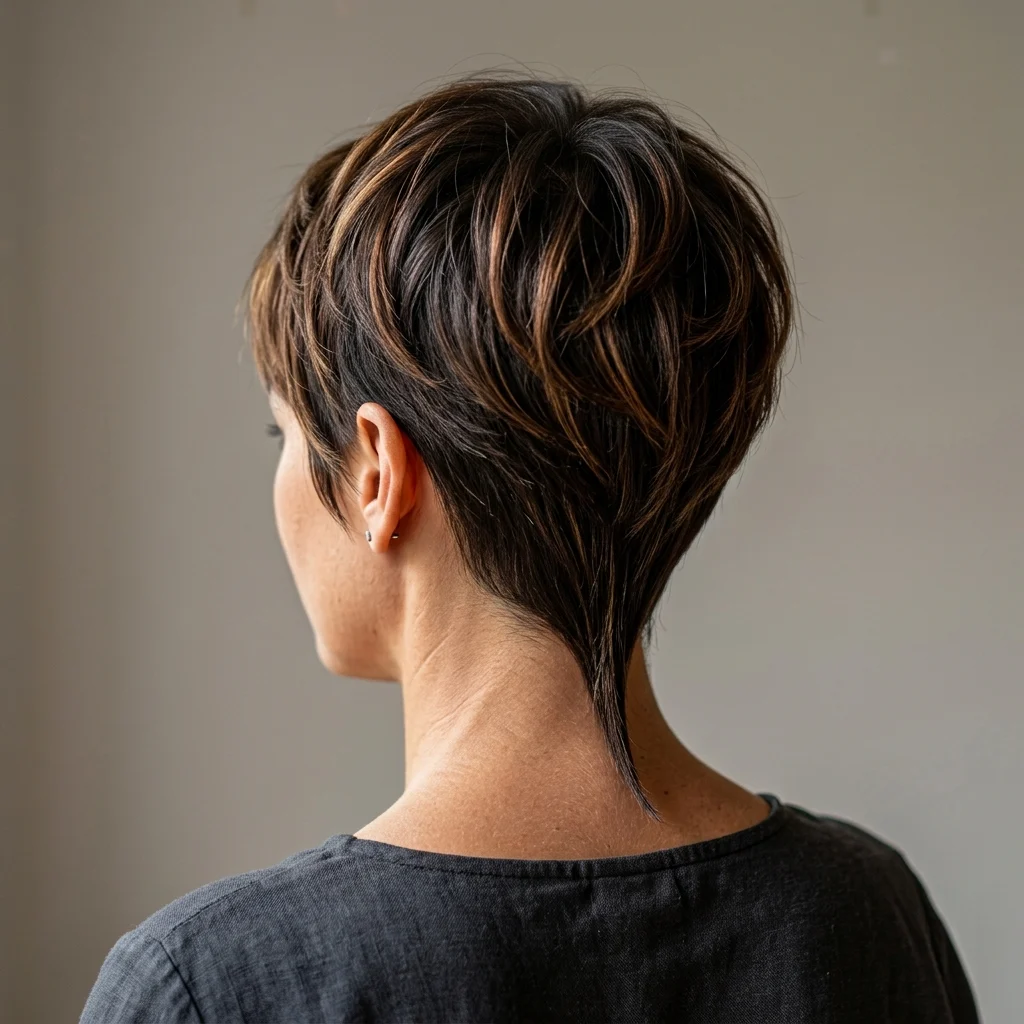
Vibe: Grounded, with a small point of length that anchors the whole back view.
Why it works: The proportion principle is focal elongation: leaving a single pointed section at the nape longer than the surrounding cropped hair creates a focal point that draws the eye downward along the neckline, elongating the overall silhouette from behind in a way a uniformly short nape cannot achieve.
How to get it: Ask for one narrow section at the nape, no wider than an inch, left two to three inches longer than the rest of the cropped perimeter, tapered to a soft point at the end.
Shop the Look
| Product |
| Small precision scissors for nape point maintenance |
| Texturizing powder for nape grip |
| Neck brush for post-trim cleanup |
| Shine-enhancing hair oil for the nape point |
| Boar bristle brush for gentle smoothing |
11. Deep Root Tap with Golden Ends
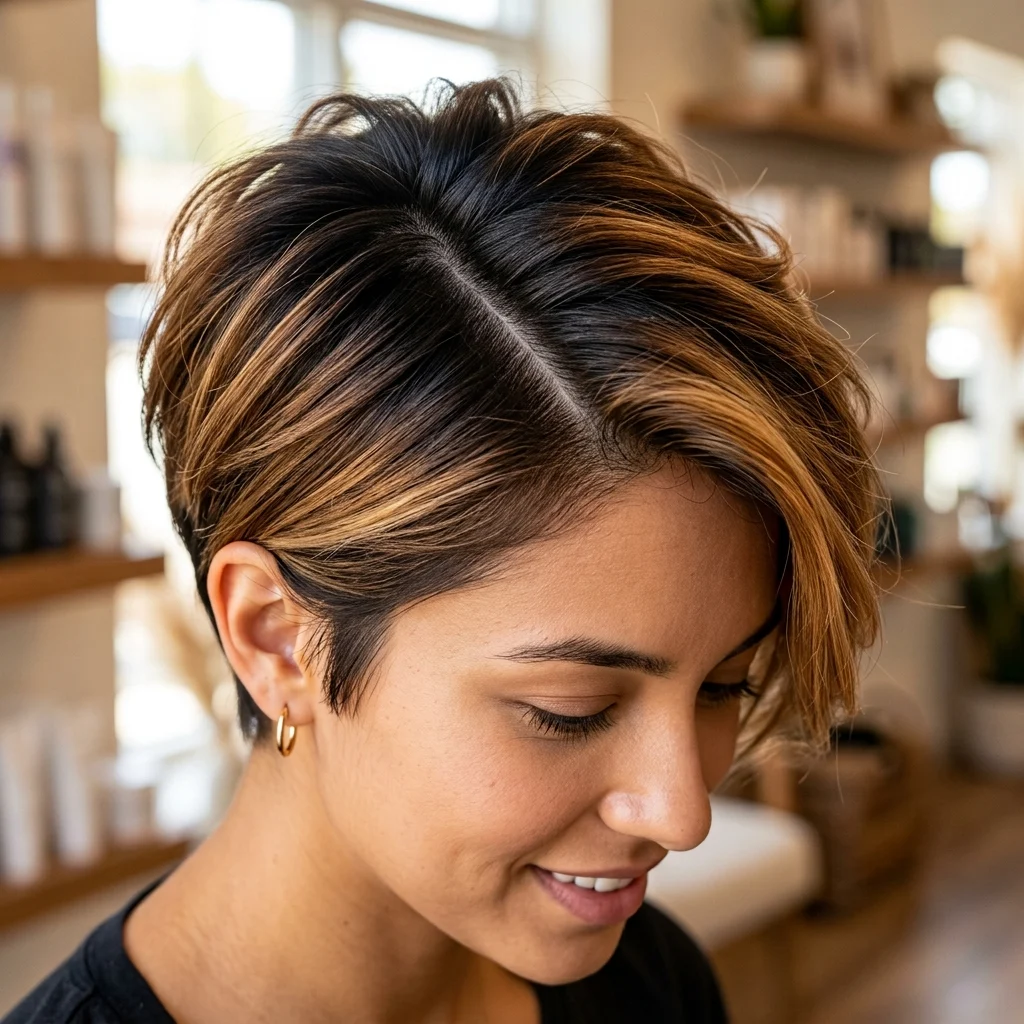
Vibe: Warm, with color that deepens close to the scalp and lightens outward.
Why it works: The color principle is grow-out forgiveness: a root tap deposits a rich, deep tone at the root that closely matches or slightly deepens the natural base color, which means regrowth blends in visually for much longer than a lightened root would, drastically reducing how often a color touch-up appointment is needed.
How to get it: Ask your colorist for a “root tap” or “root melt” service that stays within one to two shades of your natural color at the root, contrasted against golden or caramel-toned ends.
Shop the Look
| Product |
| Demi-permanent root gloss kit |
| Golden-toned color-depositing conditioner |
| Color-safe conditioning mask |
| Tint brush for precise root application |
| Warmth-boosting glaze for golden ends |
12. Uneven Perimeter Zigzag Line
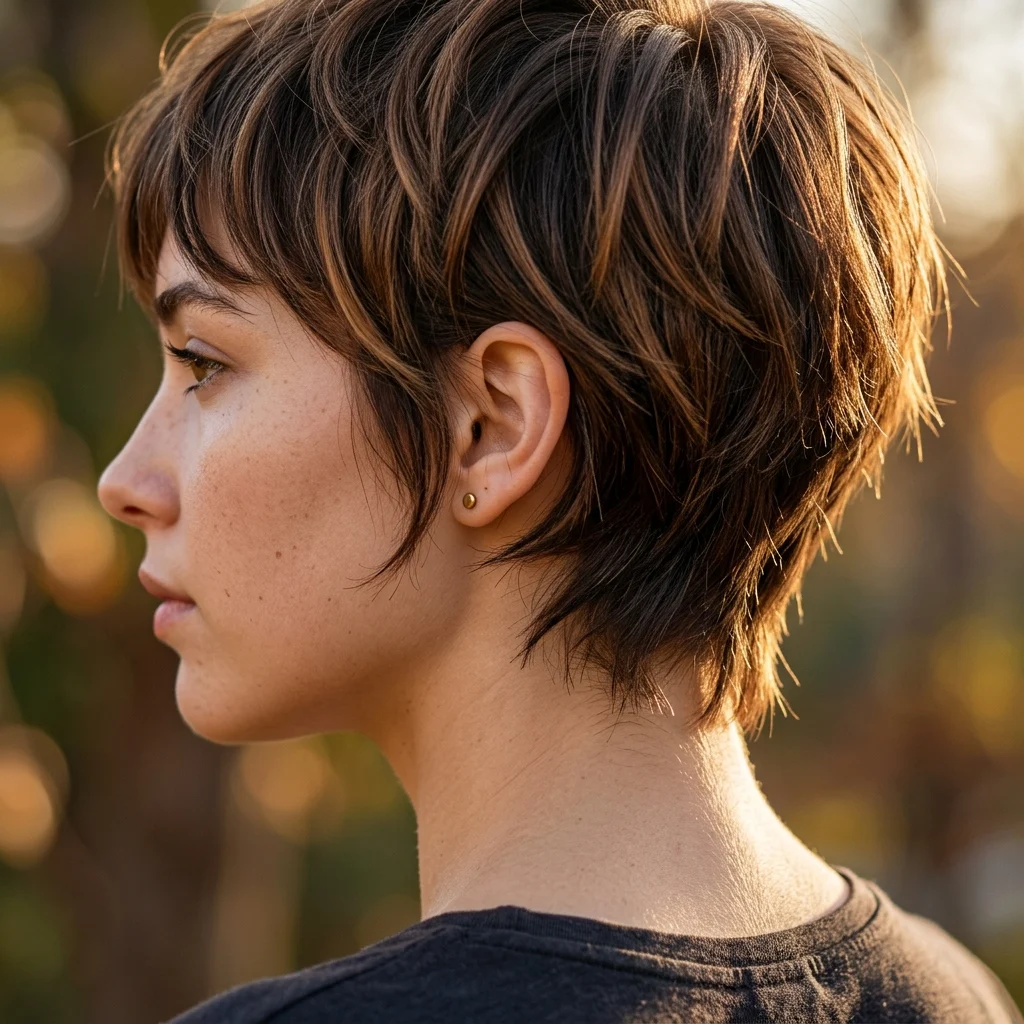
Vibe: Raw, with a hemline that refuses to sit in one predictable line.
Why it works: The cutting principle is deliberate irregularity: cutting the perimeter in a jagged, zigzag pattern rather than a smooth curve or straight line removes any single length the eye can lock onto, which is what allows this haircut to grow out without looking obviously uneven. An irregular line simply shifts shape rather than visibly losing its own structure.
How to get it: Ask your stylist for a “zigzag perimeter” cut using point-cutting technique in varied, non-repeating lengths around the cropped side of the head.
Shop the Look
| Product |
| Professional-grade texturizing spray |
| Thinning shears for at-home upkeep |
| Matte finishing paste for piece-y ends |
| Boar bristle brush for smoothing without flattening |
| Small precision scissors for perimeter touch-ups |
13. Slicked-Back Ear Tuck
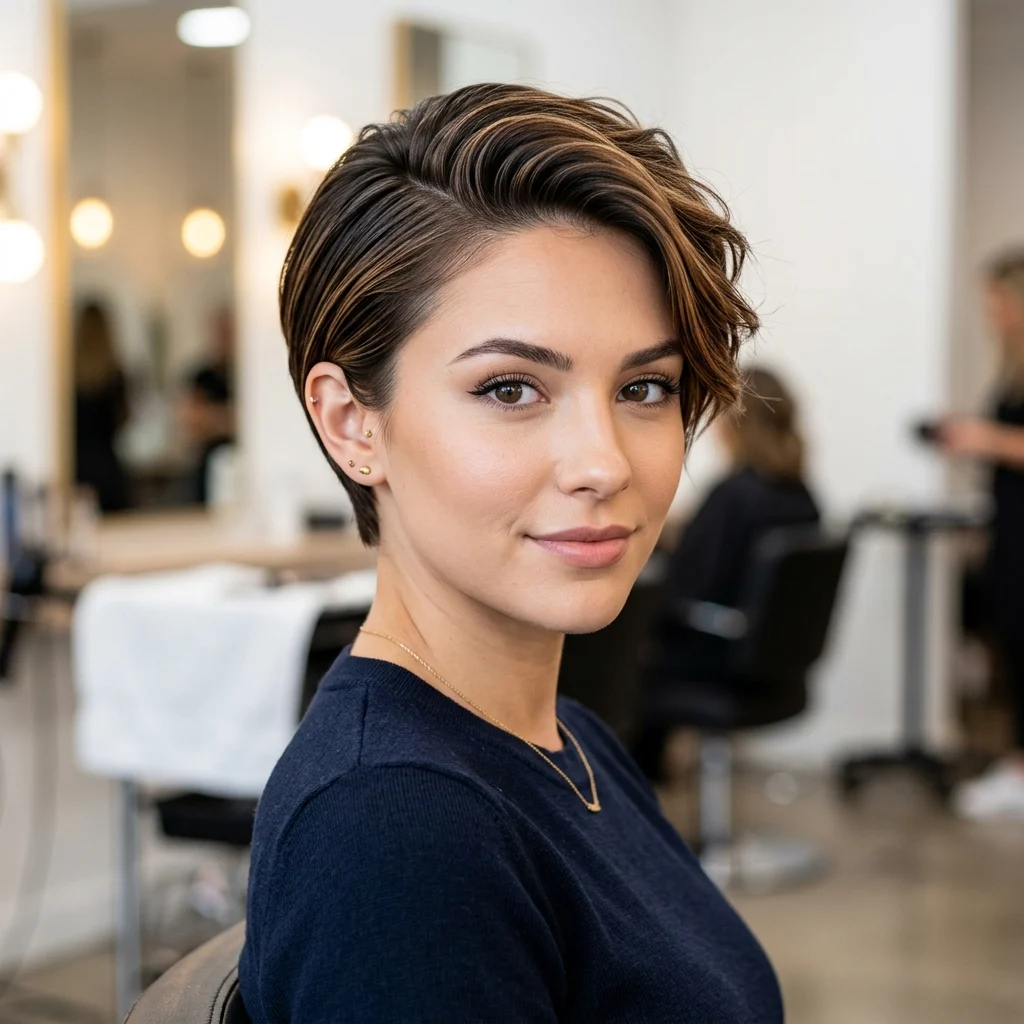
Vibe: Polished, with one quick tuck transforming the whole look in seconds.
Why it works: The styling principle is single-gesture versatility: slicking the longer side back and tucking it behind the ear takes under ten seconds and instantly shifts the cut from tousled to polished, which is precisely the kind of low-effort styling range that makes an asymmetrical pixie practical for both casual and dressier days without any additional tools.
How to get it: Run a small amount of pomade through the longer side while damp, comb it back smoothly, and tuck it behind the ear, letting the cropped side stay textured for contrast.
Shop the Look
| Product |
| Matte or shine pomade for slicking |
| Fine-tooth comb for a smooth tuck |
| Edge-control gel for smoothing baby hairs |
| Flexible-hold hairspray for holding the tuck |
| Small bobby pins for securing behind the ear |
14. Thin-Strand Density Trick for Asymmetry

Vibe: Light and lifted, with density built strategically rather than evenly.
Why it works: The volume principle is asymmetric compensation: concentrating what natural density thin hair has onto the longer side rather than spreading it evenly across both sides makes that panel read fuller, since less hair spread across less width appears denser than the same amount spread across a full head. A trick standard symmetrical cuts on fine hair can’t use.
How to get it: Ask your stylist to keep minimal layering on the longer panel specifically to preserve density there, while the cropped side is thinned further since less length shows regardless.
Shop the Look
| Product |
| Lightweight volumizing mousse |
| Root-lifting spray for fine hair |
| Dry shampoo with volumizing powder |
| Clip-in root volumizers for special occasions |
| Fine-hair specific heat protectant spray |
15. Textured Crown Spikes
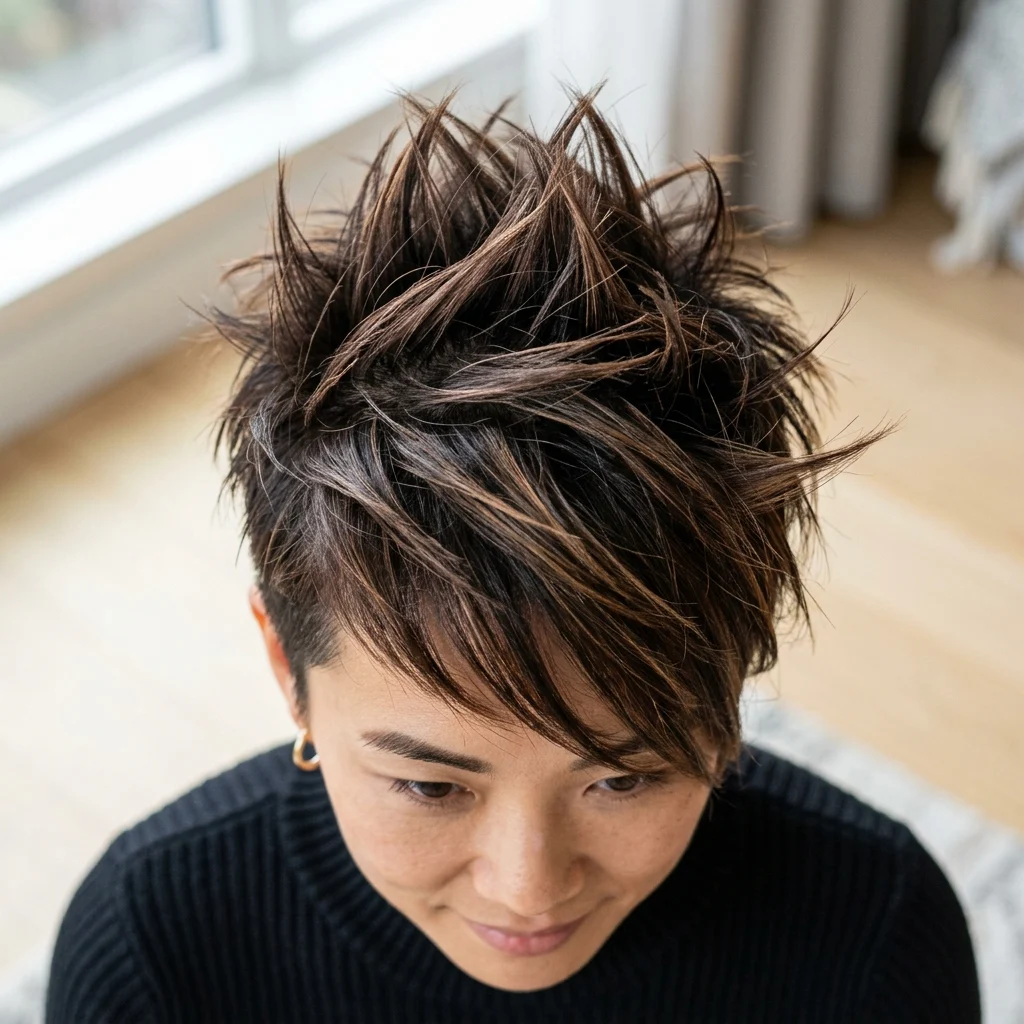
Vibe: Bold, with height that adds an edge to the whole shape.
Why it works: The technique principle is upward separation for scale: pinching small sections of the crown upward into piece-y spikes increases the perceived height of the cropped side, which helps balance the visual weight of the longer panel elsewhere on the head rather than letting the two sides feel mismatched in scale.
How to get it: Rub a dime-size amount of matte clay wax between your palms, then pinch quarter-inch sections of the crown upward from root to tip rather than combing it flat.
💡 Quick Win: A texturizing powder dusted only at the crown before styling adds instant grip for holding the spikes through the day.
Shop the Look
| Product |
| Matte clay texturizing wax |
| Texturizing powder for crown grip |
| Wide-tooth comb for gentle separation |
| Travel-size wax for on-the-go touch-ups |
| Firm-hold hairspray for all-day hold |
How to Start Your Low Maintenance Asymmetrical Pixie Transformation
The single best first move is booking a consultation focused on which side you want longer, decided before you sit down. Bring a front-view reference photo and confirm the exact side out loud with your stylist, since this single detail determines the entire structure of the cut and is surprisingly easy to miscommunicate once you’re in the chair.
The most common mistake is asking for “a little asymmetry” without committing to a real length difference between the two sides. A subtle, barely-there imbalance often just reads as an uneven haircut rather than an intentional asymmetrical pixie, since the visual language needs enough contrast to register as deliberate. The fix is asking for at least an inch and a half of difference between the shortest and longest points.
Three budget entry points under $50: a matte clay texturizing wax for holding piece-y separation, a demi-permanent root gloss kit for a low-maintenance root tap between salon visits, and a travel-size dry shampoo for the rare refresh a product-free style occasionally needs.
A full cut-and-color transformation typically takes one to two salon visits over two to four weeks. A cut-only starter version runs $45–$85 in a single weekend appointment, while a full balayage or two-tone color transformation costs $130–$320 depending on length and technique.
Frequently Asked Questions About Low Maintenance Asymmetrical Pixie Haircuts
What’s the difference between an asymmetrical pixie and a regular pixie cut?
An asymmetrical pixie has a deliberate length imbalance between the two sides, with one cropped short and the other left noticeably longer, while a regular pixie is cut evenly short all over with minimal variation. This imbalance is what defines the style and is also what makes it genuinely low maintenance, since the two sides were never meant to match and require less coordinated daily styling. Stylists often recommend at least an inch and a half of contrast so the asymmetry reads as intentional rather than uneven.
What hair colors work best with an asymmetrical pixie?
Low-maintenance root taps in deep espresso or chestnut work well since they minimize regrowth visibility, while balayage concentrated on the longer panel grows out without a hard line. A two-tone approach, with a deeper shade on the cropped side and a lighter tone on the longer side, reinforces the cut’s existing structure. A cool-toned gloss refreshed every eight to ten weeks keeps any lightened sections from turning brassy.
How much does an asymmetrical pixie haircut and color cost?
A cut alone typically runs $45–$85 depending on region and salon tier, since the cut requires more precise, individualized sectioning than a standard uniform pixie. Adding a root tap or balayage service brings the total to $130–$320 for the first full appointment, with maintenance trims every four to six weeks costing less than the initial visit, since the cropped side grows out visibly fast. A cut-only appointment is the most budget-friendly way to test the shape before committing to color.
Does an asymmetrical pixie work with curly or wavy hair?
Yes, and curl or wave texture can actually enhance the asymmetry, since natural movement on the longer side adds visual interest that a straight panel of hair doesn’t provide on its own. The cropped side may shrink more visibly with tighter curl patterns, so ask your stylist to leave slightly more length there than they would for straight hair to account for shrinkage. Cutting curly or wavy hair dry, in its natural state, ensures the length contrast between the two sides is accurate once it’s fully dry.
How often does an asymmetrical pixie need to be trimmed?
Plan on a trim every four to six weeks, since the cropped side grows out noticeably faster in relative terms than the longer panel and needs regular maintenance to preserve the dramatic length contrast the style depends on. Skipping trims past six weeks is the most common reason an asymmetrical pixie starts to look like it’s simply growing out unevenly rather than holding its intended shape. Regular trims also keep the buzzed or clippered sections crisp against the longer length.
Ready to Create Your Low Maintenance Asymmetrical Pixie?
From the buzzed temple contrast to the sun-kissed balayage sweep to the crown spikes that finish it all off, these 15 ideas cover cut structure, color placement, and truly effortless styling in equal measure. You don’t need every detail decided today starting with just choosing which side you want longer is a real and complete first step.
Book that appointment this week and say the side out loud, confirmed with your stylist, before a single cut is made. Once it’s done, you’ll likely feel less like you’re managing a haircut every morning and more like the shape simply works with whatever your hair does on its own. Pin your favorite length contrast and color placement now, so you walk into the salon with the exact low maintenance asymmetry you want.