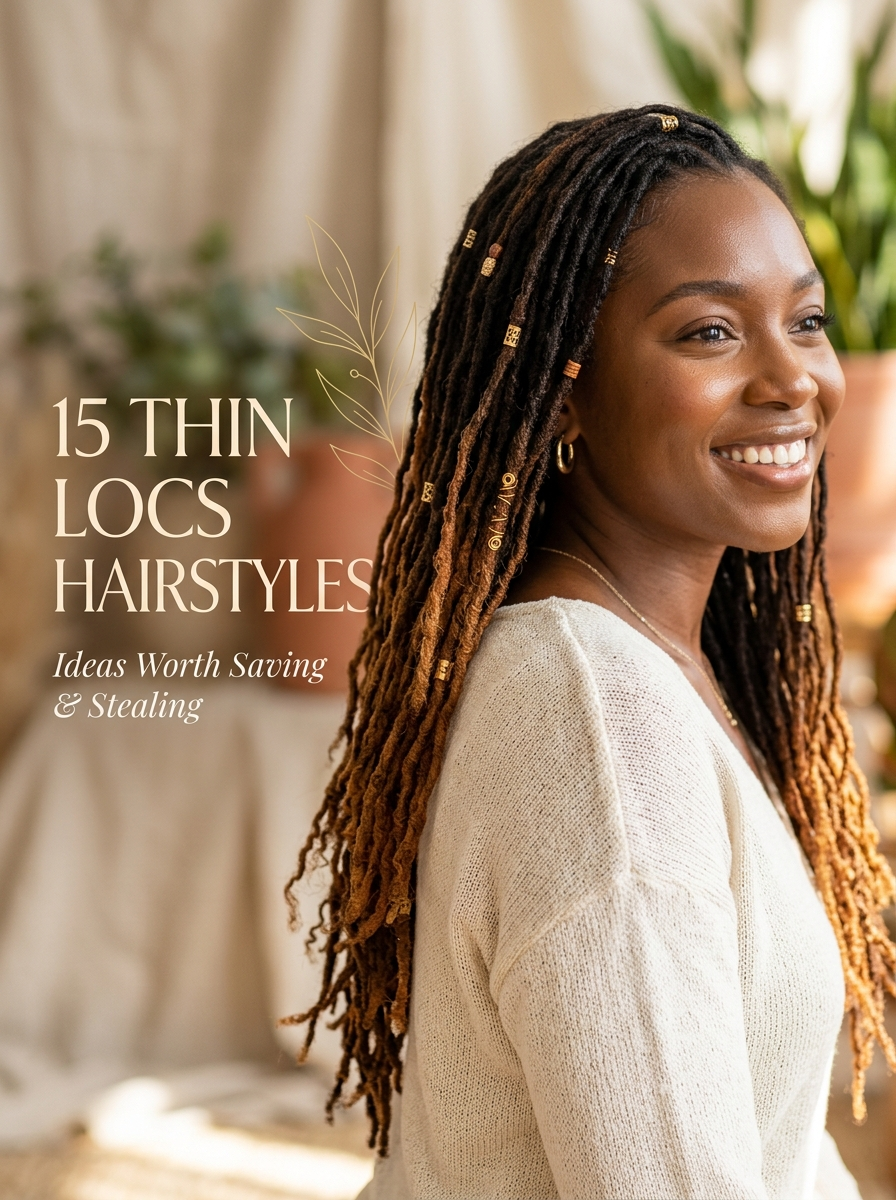
15 Thin Locs Hairstyles

Thin locs hairstyles are styles built around sisterlocks or microlocs locs typically under a quarter-inch in diameter, formed through interlocking rather than palm-rolling, which gives them more movement and a finer, more versatile texture than traditional locs. This guide covers 15 thin locs hairstyles, from color treatments to updos to low-maintenance everyday options, so you can style thin locs for any occasion or texture goal.
Thin locs move the way loose hair does swinging into a ponytail, gathering into a soft bun, catching light along each individual strand instead of one thick rope. There’s a lightness to them, an ease of styling that thicker locs can’t quite match, paired with a texture that reads as natural, unfussy, and entirely your own no matter which direction you take it.
Here are 15 ideas worth saving and stealing.
Why Thin Locs Hairstyles Work So Well
Thin locs, commonly known as sisterlocks or microlocs, are formed by interlocking small sections of hair, typically a quarter-inch or less in width, using a specialized tool rather than the palm-rolling or backcombing method used for traditional locs. The technique originated as a refinement of traditional locking methods developed within Black hair care traditions, designed specifically to create finer, more numerous locs that move and part more like loose natural hair.
The materials that keep thin locs healthy and styled well are specific: a lightweight, non-waxy loc butter or gel (heavy wax buildup weighs down thin strands and causes buildup faster than it does on thicker locs), satin-lined hair ties and scrunchies to prevent friction breakage, and small-gauge hair cuffs or beads sized for a slimmer loc diameter rather than standard jewelry made for thicker locs.
Thin locs are trending now because the broader natural hair movement has shifted toward styles that photograph as versatile and low-manipulation rather than uniform, and sisterlocks specifically allow the kind of updos, half-up styles, and ponytails that thicker traditional locs handle less easily. A flexibility search interest for “sisterlocks styles” has reflected steadily rising over the past several years.
Any hair length can transition to thin locs, though the honest limitation is time: because there are far more, thinner sections than in traditional locs, installation typically takes 12 to 20 hours across one or more sessions, and retwist maintenance every 5 to 8 weeks is non-negotiable in the first year while locs mature and lock fully.
Style at a Glance
| Philosophy | Movement over uniformity | Low manipulation, high versatility |
| Key Materials | Non-waxy loc butter, satin ties | Small-gauge cuffs, silk wraps |
| Key Colors | Natural black, warm copper | Honey blonde ombre, subtle balayage |
15 Thin Locs Hairstyles
1. Thin Locs Hairstyles in Warm Copper for Depth and Movement
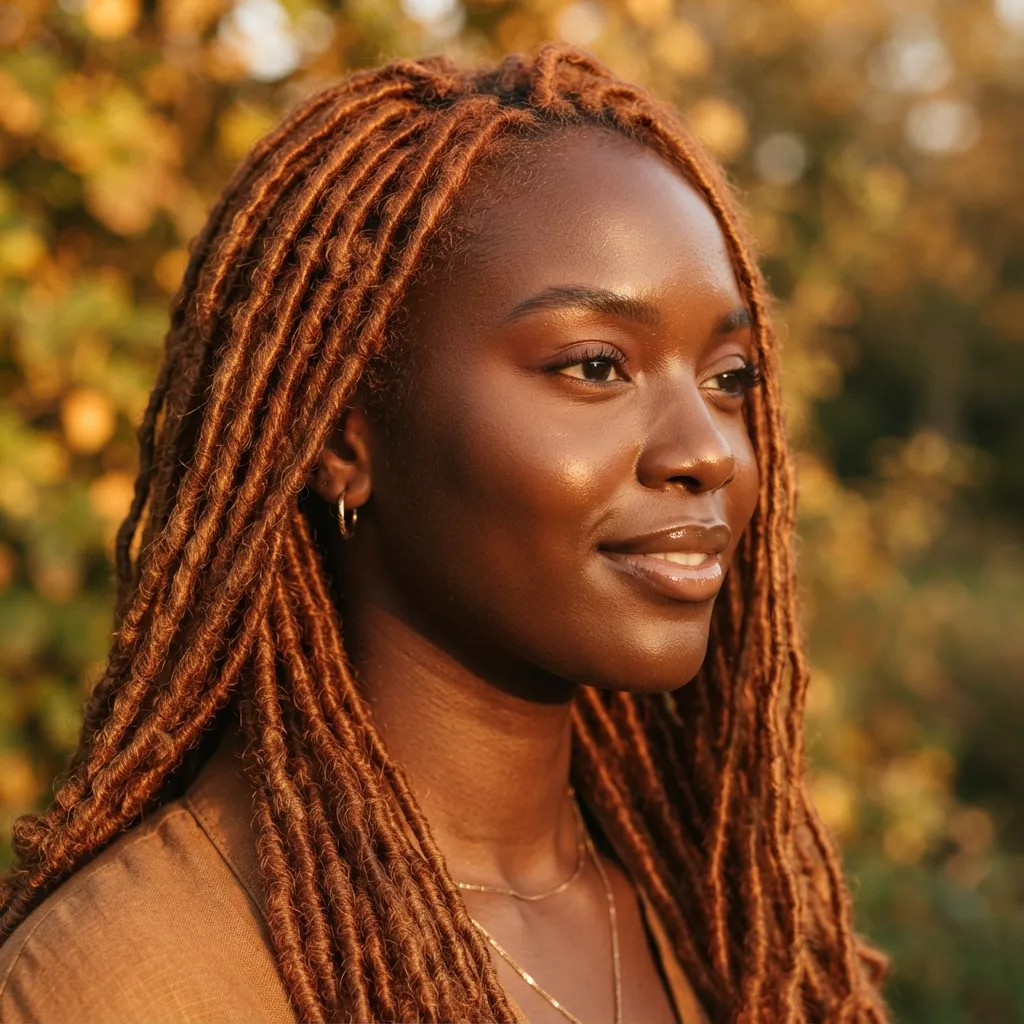
Vibe: Warm, locs that catch light instead of absorbing it.
Why it works: Because thin locs are so numerous and fine, a warm copper tone reflects light across dozens of individual strands rather than one thick rope, multiplying the visual effect of the color far beyond what the same shade would do on thicker locs. Copper’s orange-red base also flatters most brown skin undertones by echoing rather than fighting warmth already present in the skin.
How to get it: Ask your loctician or colorist for a demi-permanent copper gloss applied strand by strand rather than an all-over bath, which keeps the natural root dark and lets the copper concentrate on the lengths where movement and light catch are strongest.
💡 Quick Win: A color-depositing copper conditioning treatment, used weekly, builds warmth gradually without a full salon color service.
Shop The Look
| Copper color-depositing conditioner for locs |
| Non-waxy loc butter lightweight formula |
| Satin-lined scrunchie set |
| Small-gauge gold loc cuffs |
| Silk head wrap for overnight protection |
2. Gold and Wooden Cuffs for Textured Dimension
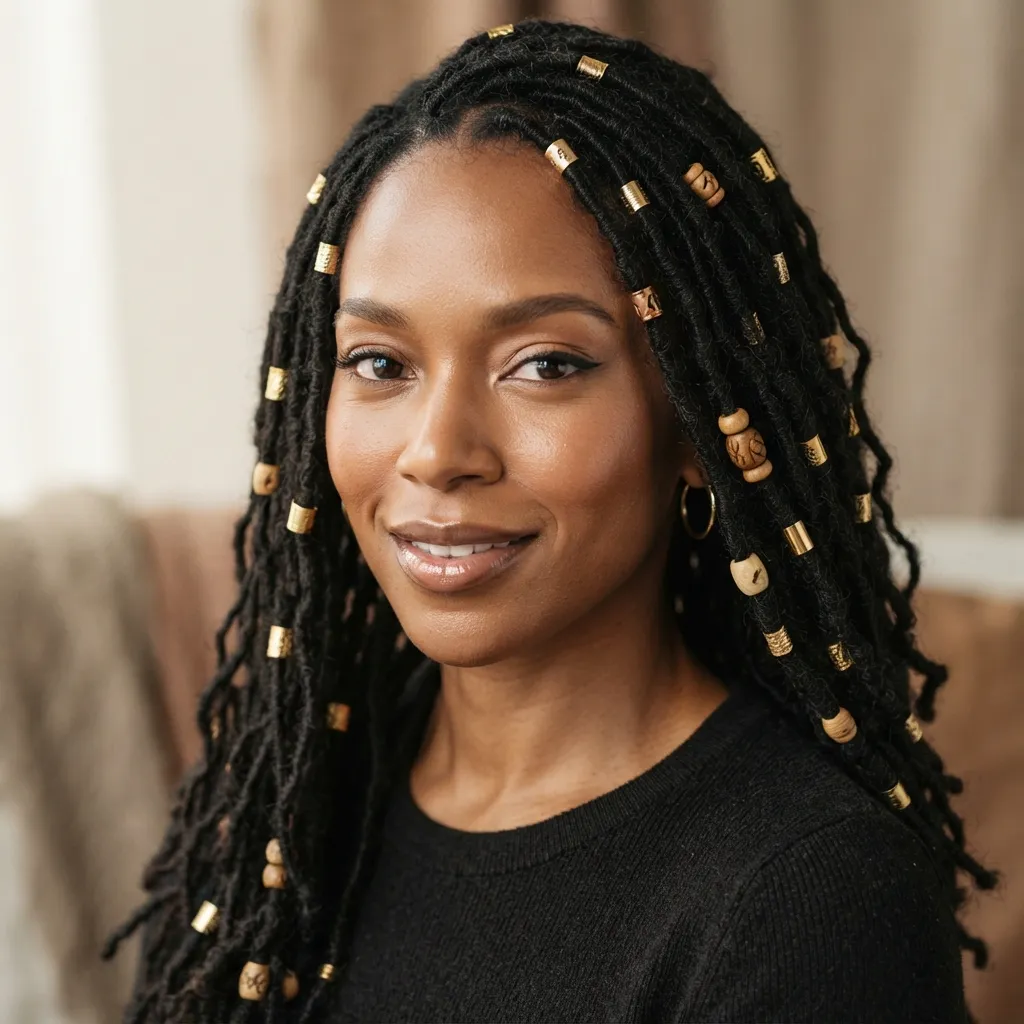
Vibe: Textured. Small details that reward a closer look.
Why it works: Mixing gold metal cuffs with natural wood cuffs creates material contrast the same way brass and oak do in interior styling. The reflective gold catches direct light while the matte wood absorbs it, so the eye reads texture and depth rather than one flat accessory repeated throughout.
How to get it: Place cuffs unevenly rather than symmetrically, cluster two or three together near the crown and scatter single cuffs lower down, using small-gauge cuffs sized specifically for sisterlock or microloc diameter so they don’t slip or pinch.
Shop The Look
| Product |
|---|
| Small gold cuffs for thin locs set |
| Natural wood loc beads set |
| Loc jewelry sizing tool |
| Edge control gel for clean parts |
| Scalp oil for cuff-adjacent hydration |
3. High-Shine Gloss Finish for Photo-Ready Locs
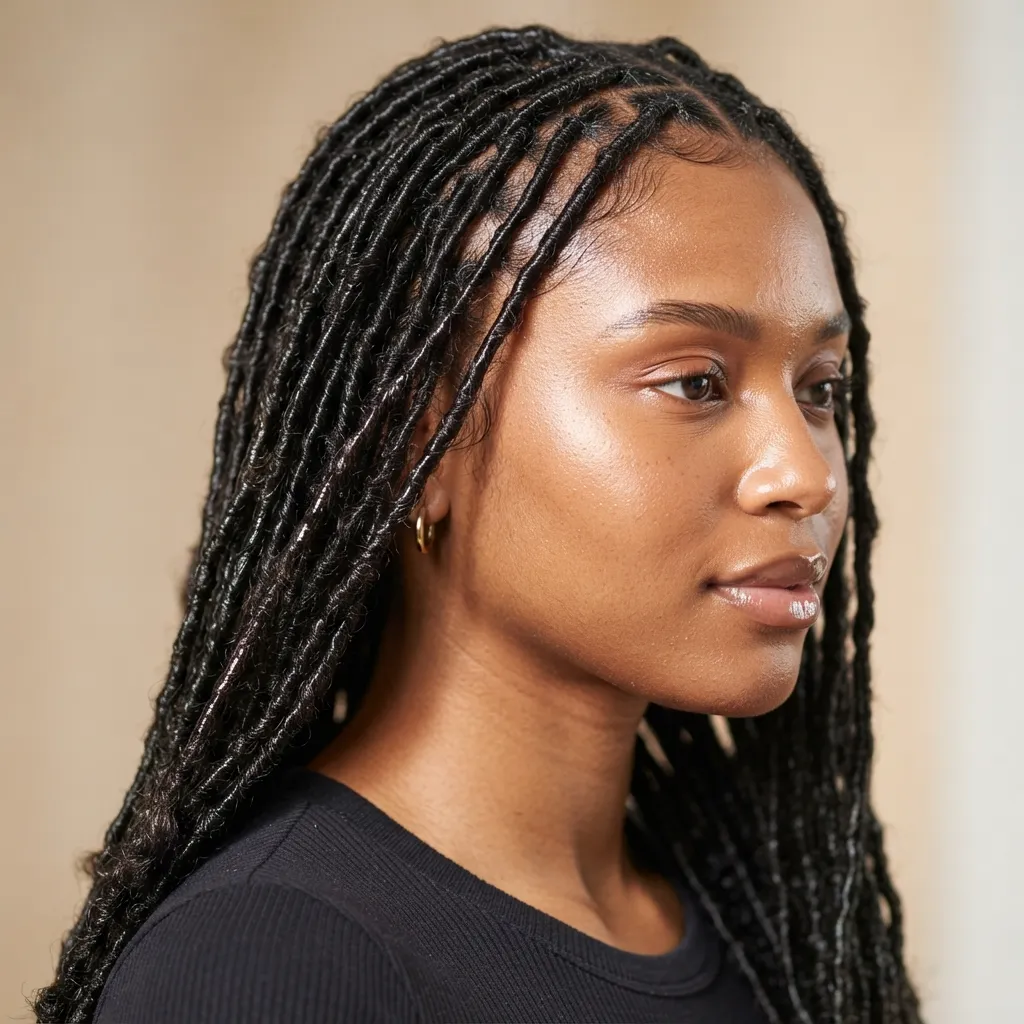
Vibe: Sleek. Locs that catch light the way glass does.
Why it works: A lightweight, silicone-based shine serum seals the loc’s surface without the buildup heavier waxes cause, and that sealed surface reflects light directionally instead of scattering it across a rough, matte texture. The same light-behavior principle that makes glossed hair or polished wood read as more finished.
How to get it: Apply two to three drops of a lightweight shine serum to dry locs, focusing on the mid-lengths and ends rather than the scalp, where product buildup causes the most irritation and slows new growth from locking in cleanly.
Shop The Look
| Product |
|---|
| Lightweight shine serum for locs |
| Silicone-free hair oil finishing drops |
| Microfiber towel for gentle drying |
| Clarifying shampoo for buildup removal |
| Satin pillowcase for shine retention |
4. Structured High Bun for Thin Locs
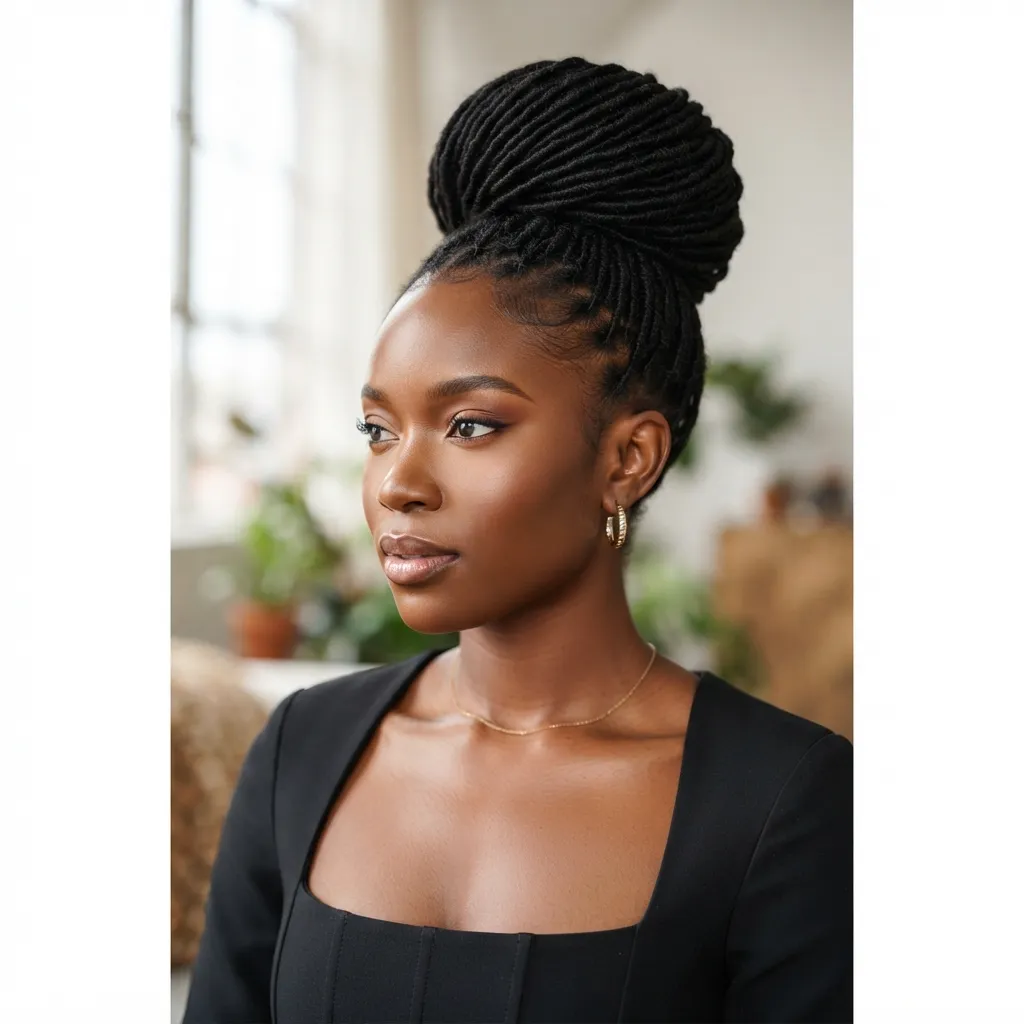
Vibe: Polished. A silhouette that reads as intentional from across a room.
Why it works: Thin locs gather into a smooth, rounded bun far more easily than thick locs, which tend to create a lumpy, uneven silhouette when bundled together. The finer diameter and higher strand count distribute more evenly around a bun’s circumference, producing a cleaner shape.
How to get it: Gather locs at the crown using a satin-lined tie, twist the gathered section once before wrapping it around the base to create structure, and secure with bobby pins angled downward into the bun rather than straight in, which holds better against the loc’s weight.
Shop The Look
| Product |
|---|
| Satin-lined hair tie set |
| Bobby pin set for locs |
| Edge control gel strong hold |
| Smoothing gel for crown styling |
| Decorative hairpin set gold tone |
5. Wrapped Thread Accents Along the Shaft
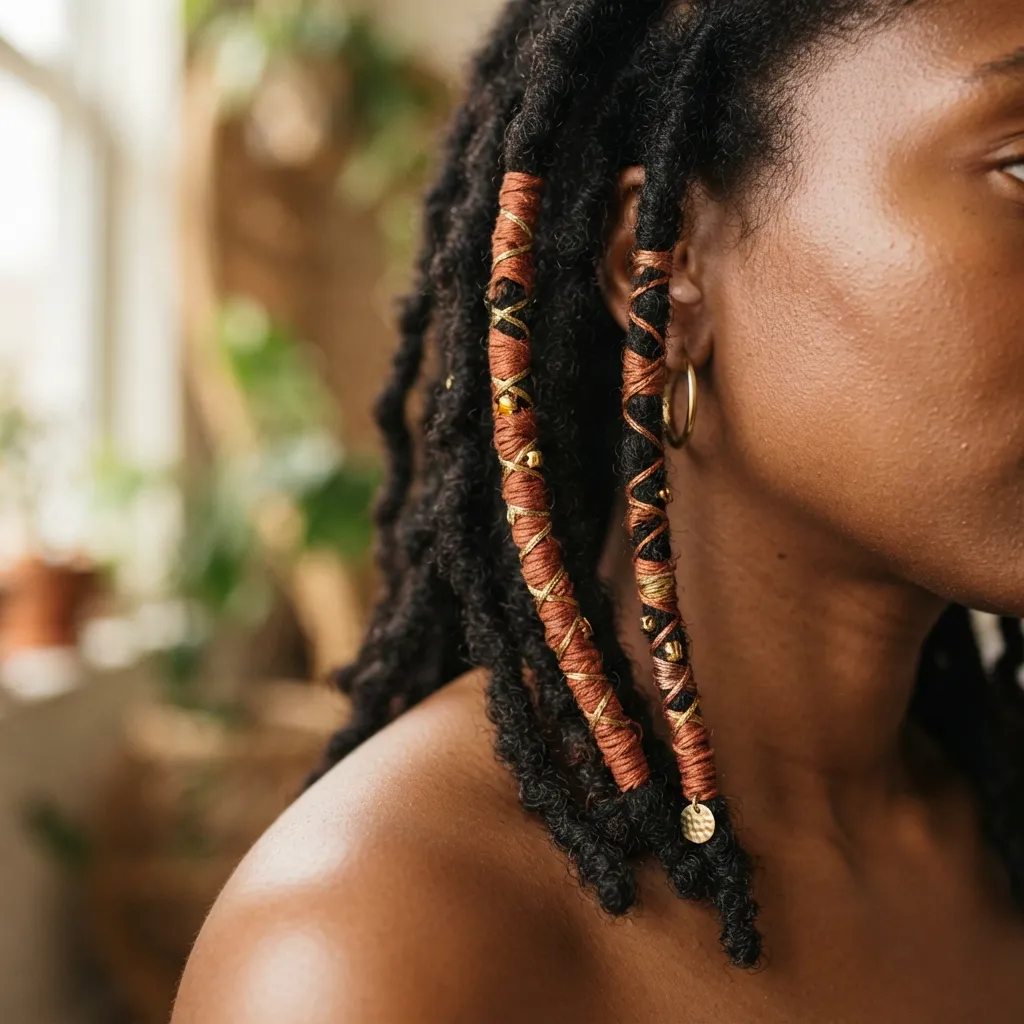
Vibe: Artisanal. A detail that looks hand-done because it is.
Why it works: Wrapping embroidery thread around select locs adds textural and color accents without any chemical color process, and choosing just 3 to 5 locs out of dozens to wrap, rather than the whole head, uses the same restraint principle as a single accent wall: a little goes further than a lot.
How to get it: Choose embroidery thread in a color that complements your skin’s undertone, wrap it snugly and evenly from root to about two-thirds down the loc’s length, and seal the end with a small dot of clear nail polish so it doesn’t unravel with washing.
💡 Quick Win: Thread-wrapping just the front two face-framing locs creates a noticeable accent in under 15 minutes without committing to a full-head treatment.
Shop The Look
| Product |
|---|
| Embroidery thread multi-color pack |
| Clear nail polish for thread sealing |
| Small embroidery scissors |
| Loc clip for sectioning during wrapping |
| Leave-in conditioner spray for locs |
6. Diamond-Part Grid Pattern for Fuller Coverage
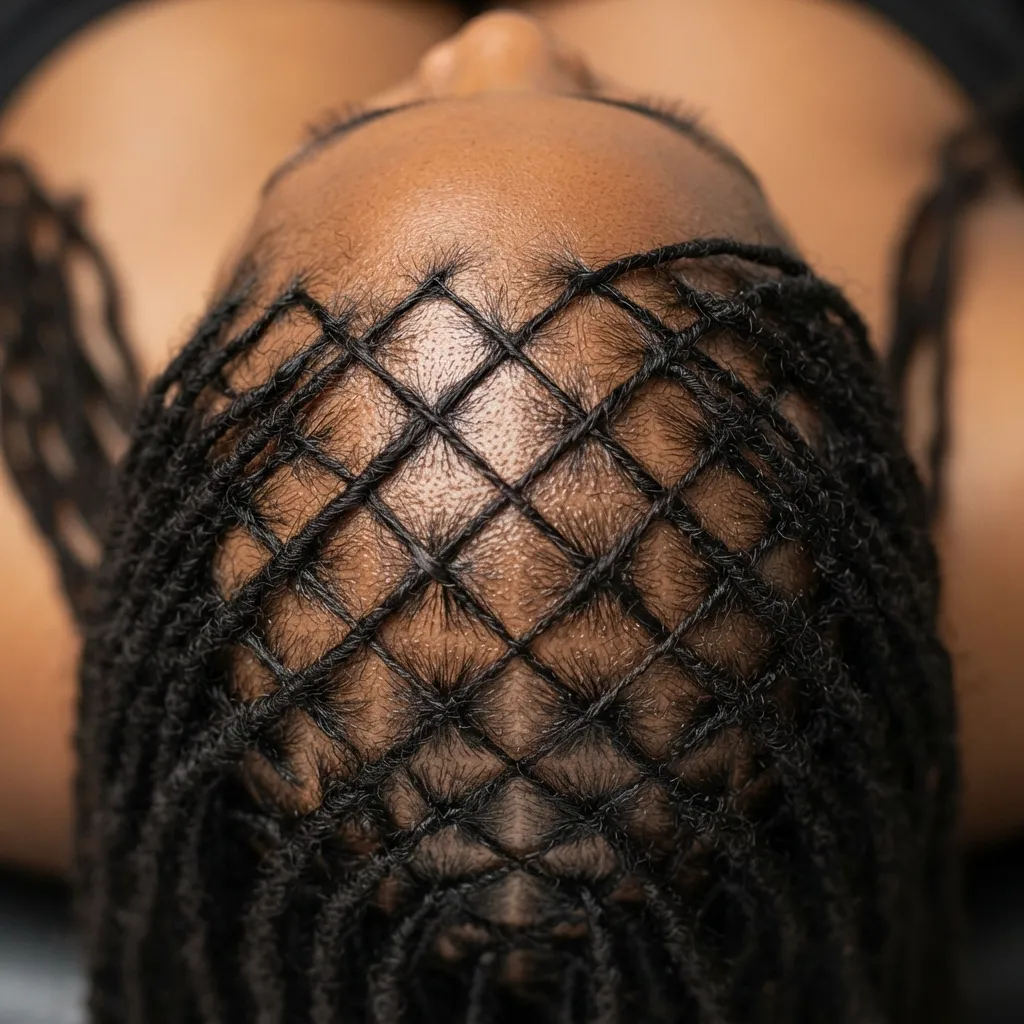
Vibe: Structured. A pattern that looks deliberate even before any styling happens.
Why it works: A diamond or brick-lay parting pattern staggers each loc’s starting point relative to its neighbors, which distributes visual coverage more evenly across the scalp than a simple square grid, where locs can appear to line up into visible rows with scalp showing between them.
How to get it: Ask your loctician for a diamond parting pattern specifically rather than a standard square grid at your next retwist or new-growth session. The difference is in how each row offsets from the one before it, not in the loc size itself.
Shop The Look
| Product |
|---|
| Rat-tail parting comb for precise sections |
| Sectioning clips set |
| Scalp oil for tension relief |
| Loc retwist gel |
| Satin bonnet for overnight scalp protection |
7. Subtle Balayage Highlights on Natural Thin Locs
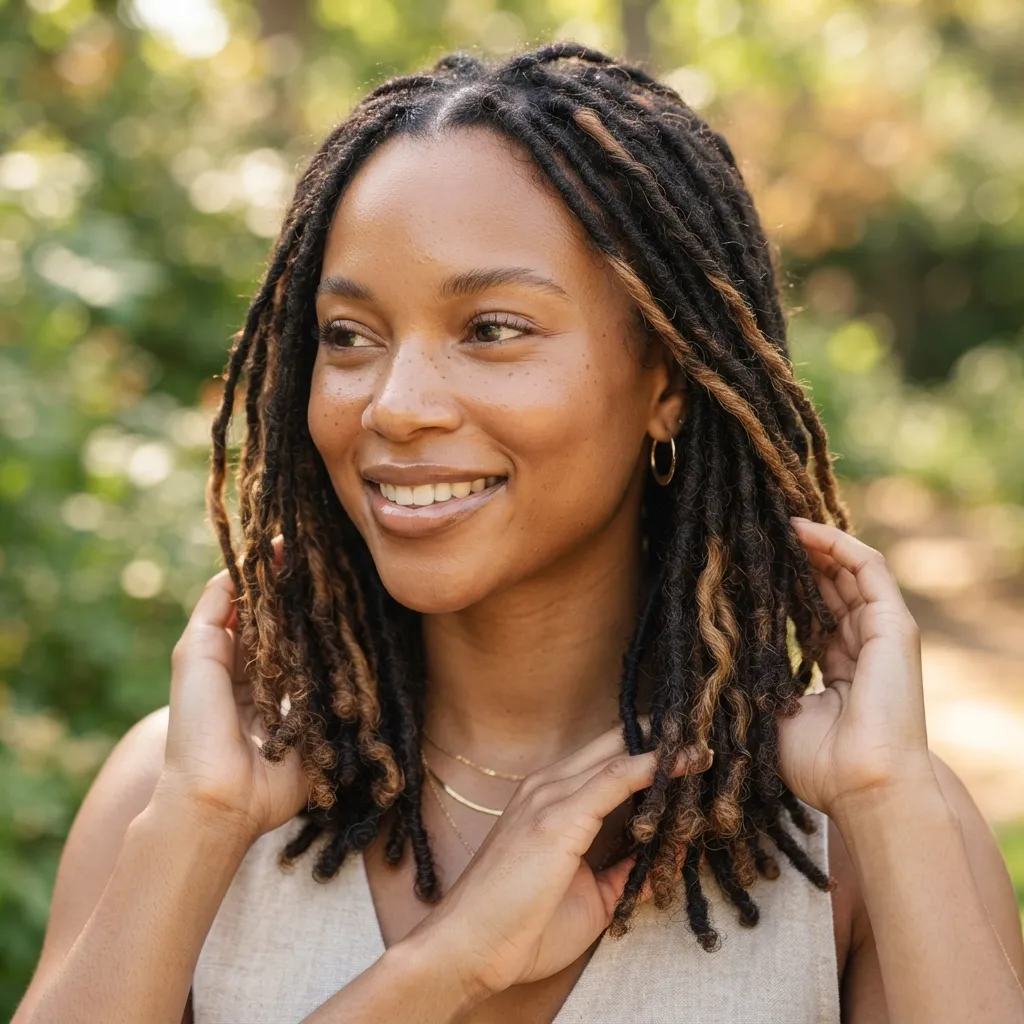
Vibe: Sun-warmed. Highlights that look earned rather than applied.
Why it works: Applying lightener to only 15 to 20 percent of locs, hand-selected and concentrated toward the crown and face-framing pieces, creates the same soft, irregular dimension balayage achieves on loose hair, since the untouched majority of locs anchor the look in a natural base color rather than an all-over process.
How to get it: Select locs unevenly across the front and crown rather than in a uniform row, and ask for a gentle, low-volume lightener processed in foil to protect the untouched locs from unintentional color transfer during processing.
Shop The Look
| Product |
|---|
| Low-volume developer for loc lightening |
| Foil sheets for loc highlighting |
| Purple toning shampoo for locs |
| Bond-repair treatment for lightened locs |
| Color-safe leave-in spray |
8. Silk Ribbon Loc Wraps for a Polished Look
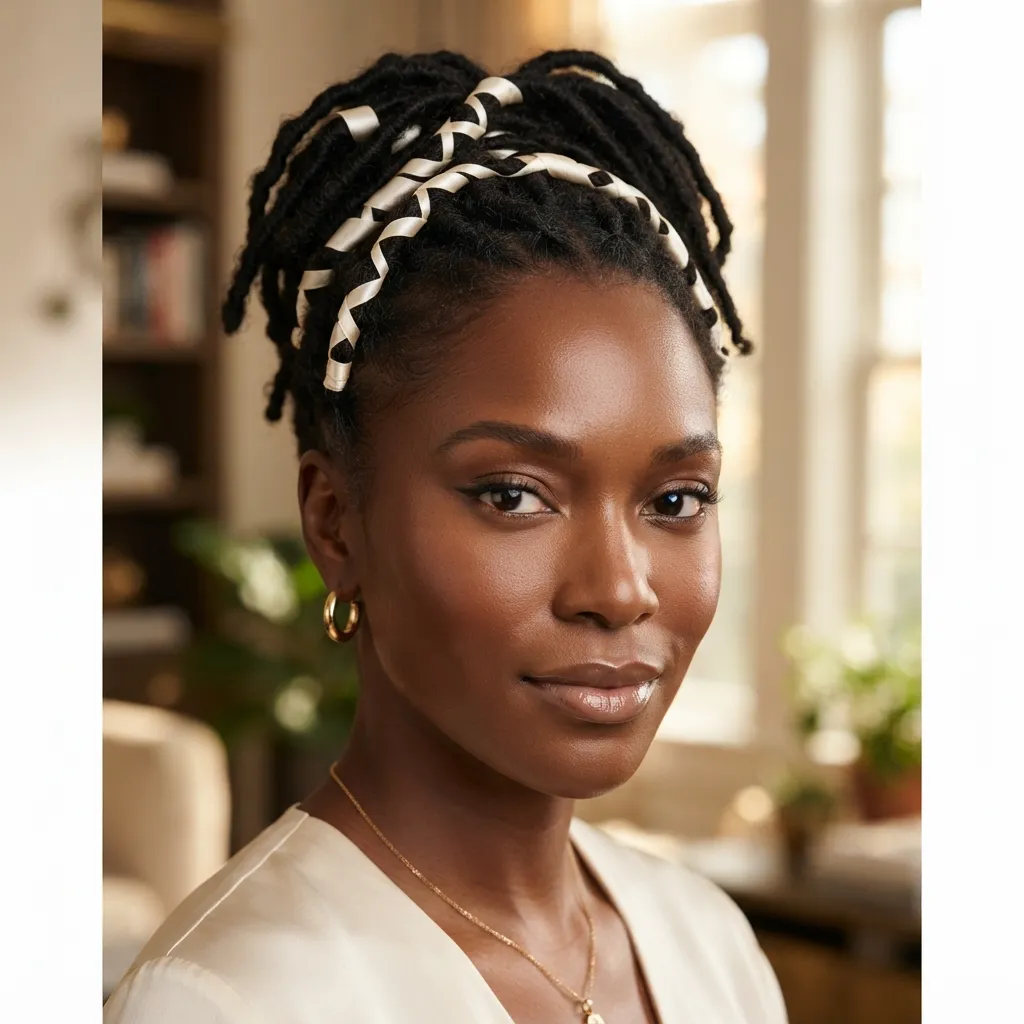
Vibe: Elegant. A finishing touch that reads as event-ready.
Why it works: A smooth silk ribbon wrapped around select locs contrasts directly against the locs’ naturally coiled texture, and that smooth-versus-textured pairing is a material contrast principle that reads as intentional styling rather than simply “hair with fabric on it.”
How to get it: Wrap a half-inch silk ribbon around 3 to 4 locs near the crown, spiraling downward for about 3 inches, and secure the end with a small dab of fabric glue rather than a knot, which keeps the wrap flat against the loc.
💡 Quick Win: Wrapping just the two front locs in ribbon for a single event takes under 10 minutes and unwraps cleanly afterward with no lasting commitment.
Shop The Look
| Product |
|---|
| Ivory silk ribbon spool half-inch |
| Fabric glue for ribbon wraps |
| Small fabric scissors |
| Bobby pins for wrap securing |
| Shine serum for finishing touch |
9. Matte, Natural Finish for Everyday Wear
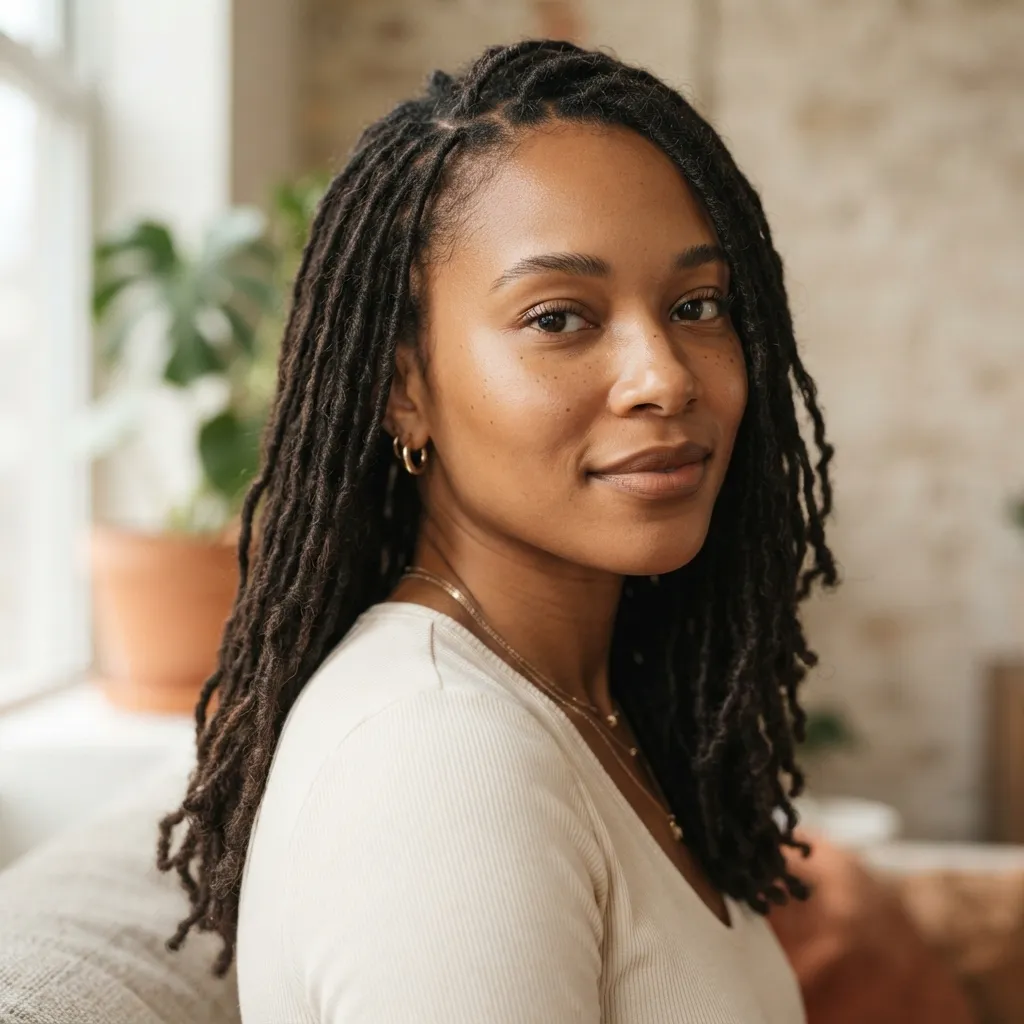
Vibe: Grounded. Hair that looks like itself, not like a finished product.
Why it works: A matte finish relies on light scattering evenly across a slightly textured surface rather than reflecting directionally, which is the opposite optical effect from a gloss finish, and it reads as more casual and lower-maintenance precisely because it doesn’t demand the same product upkeep a high-shine look does.
How to get it: Use a water-based, non-shine leave-in spray instead of an oil or serum-based product, and avoid heavy butters on the lengths, reserve richer products for the scalp only, where dryness is the actual concern.
Shop The Look
| Product |
|---|
| Water-based leave-in spray for locs |
| Lightweight scalp butter |
| Satin scrunchie set |
| Clarifying shampoo monthly use |
| Wide-tooth pick for gentle scalp massage |
10. Half-Up Half-Down Style for Face-Framing Volume
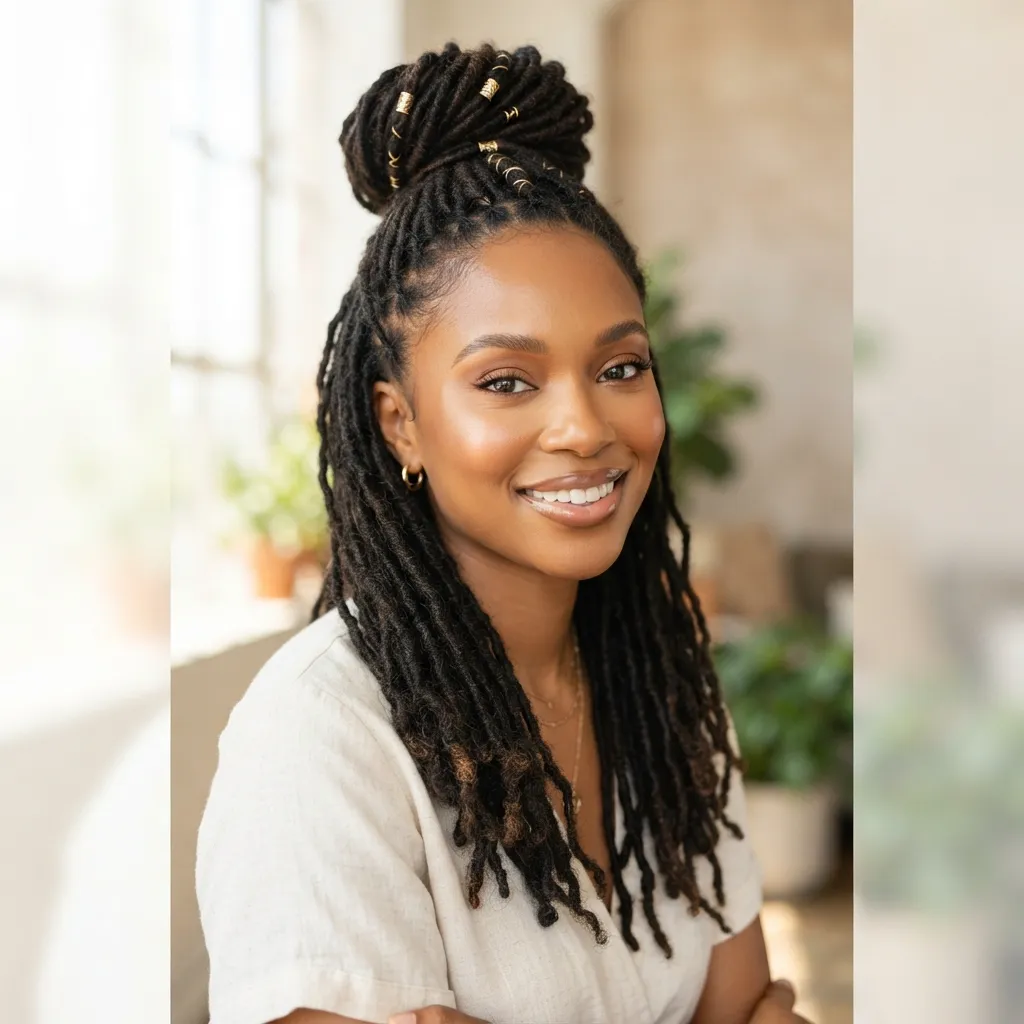
Vibe: Balanced, structure on top, movement below.
Why it works: Gathering only the top third to half of locs while leaving the rest down creates proportion balance, pulling hair away from the face for definition while still allowing the majority of locs to move freely, a silhouette principle borrowed directly from how stylists balance volume in loose-hair updos.
How to get it: Section from ear to ear across the crown, gather that section only with a satin tie, and leave the remaining locs completely loose rather than gathering more than half, which tips the style toward looking like an incomplete bun instead of an intentional half-up look.
Shop The Look
| Product |
|---|
| Satin-lined hair tie for sectioning |
| Rat-tail comb for clean part |
| Decorative hairpin for top section |
| Shine serum for loose lengths |
| Leave-in detangling spray |
11. Beaded Ends for Movement and Sound
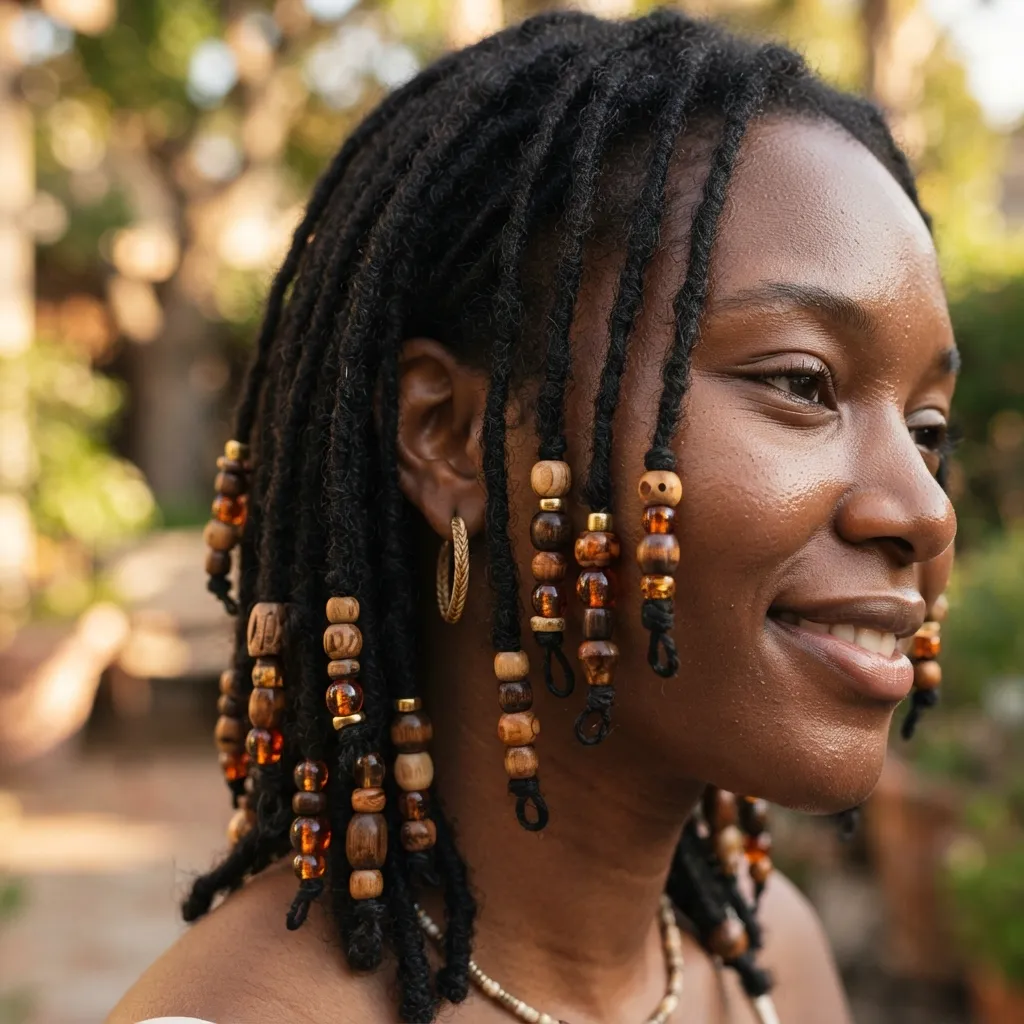
Vibe: Playful, a detail you notice through sound before you see it.
Why it works: Beading only the ends rather than the full length keeps the weight low and concentrated where locs are strongest, avoiding the tension and breakage risk beads placed near the root can cause, while still creating movement and a soft sound with every turn of the head.
How to get it: Choose beads sized for thin loc diameter specifically, standard beads made for thicker locs will slide off or sit loosely, and secure each with a small rubber band or thread wrap beneath the bead so it stays in place through washing.
Shop The Look
| Product |
|---|
| Small wooden beads for thin locs |
| Amber glass bead set |
| Bead threading tool |
| Small rubber bands for bead security |
| Leave-in oil for bead-adjacent ends |
12. Side-Swept Deep Part for Asymmetrical Styling
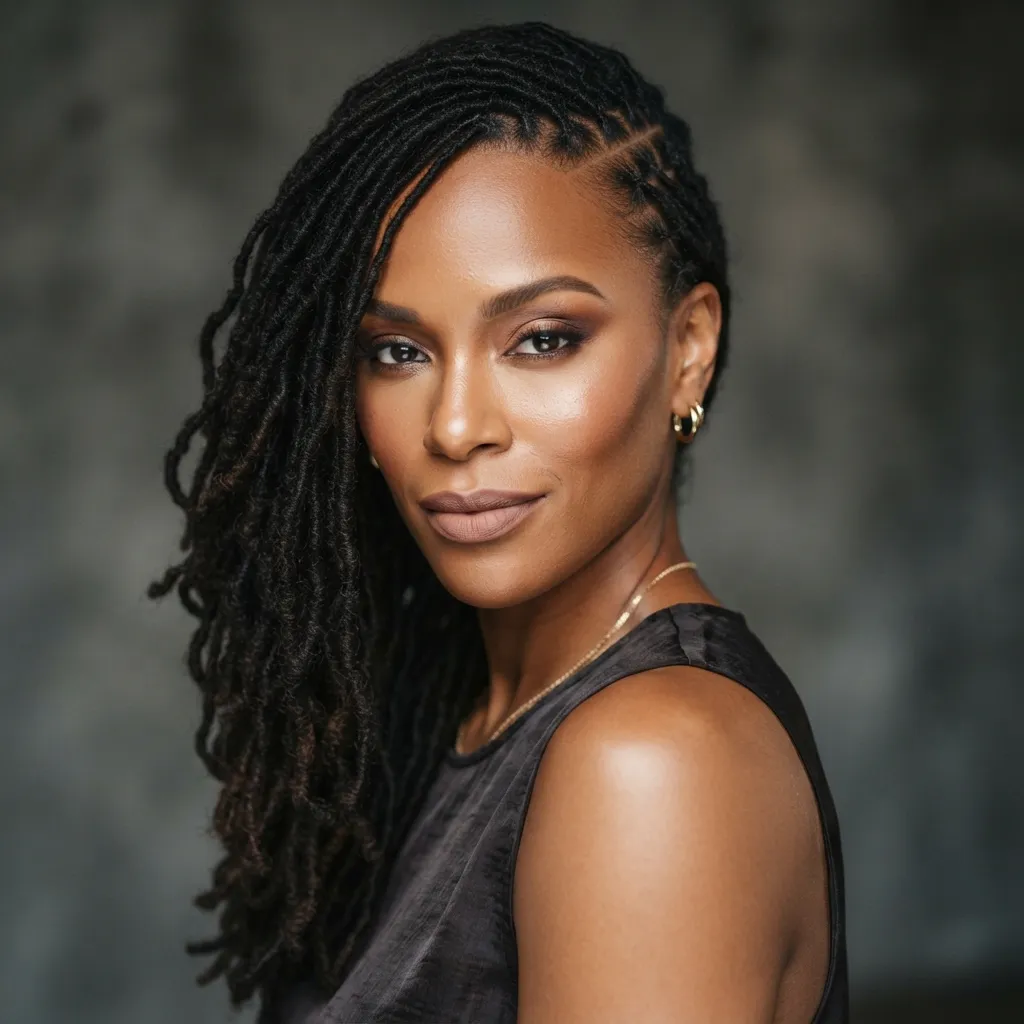
Vibe: Dramatic, asymmetry that changes the whole face’s balance.
Why it works: A deep side part shifts the visual weight of the entire hairstyle to one side, which can soften a strong jawline or add visual interest to a symmetrical face. An asymmetry principle that works the same way an off-center piece of art draws more attention than a perfectly centered one.
How to get it: Part from just above one eyebrow diagonally back to the opposite crown, rather than a straight vertical line, and sweep the larger section of locs over one shoulder, securing with a single decorative pin at the ear if the section needs extra hold.
💡 Quick Win: A single deep side part, with no other styling, changes the entire look of an otherwise simple down style in under a minute.
Shop The Look
| Product |
|---|
| Rat-tail comb for deep parting |
| Decorative hairpin for side securing |
| Shine serum for polished part line |
| Edge control for clean part definition |
| Silk scarf for part protection overnight |
13. Ombre Fade from Natural Root to Honey-Blonde Tips
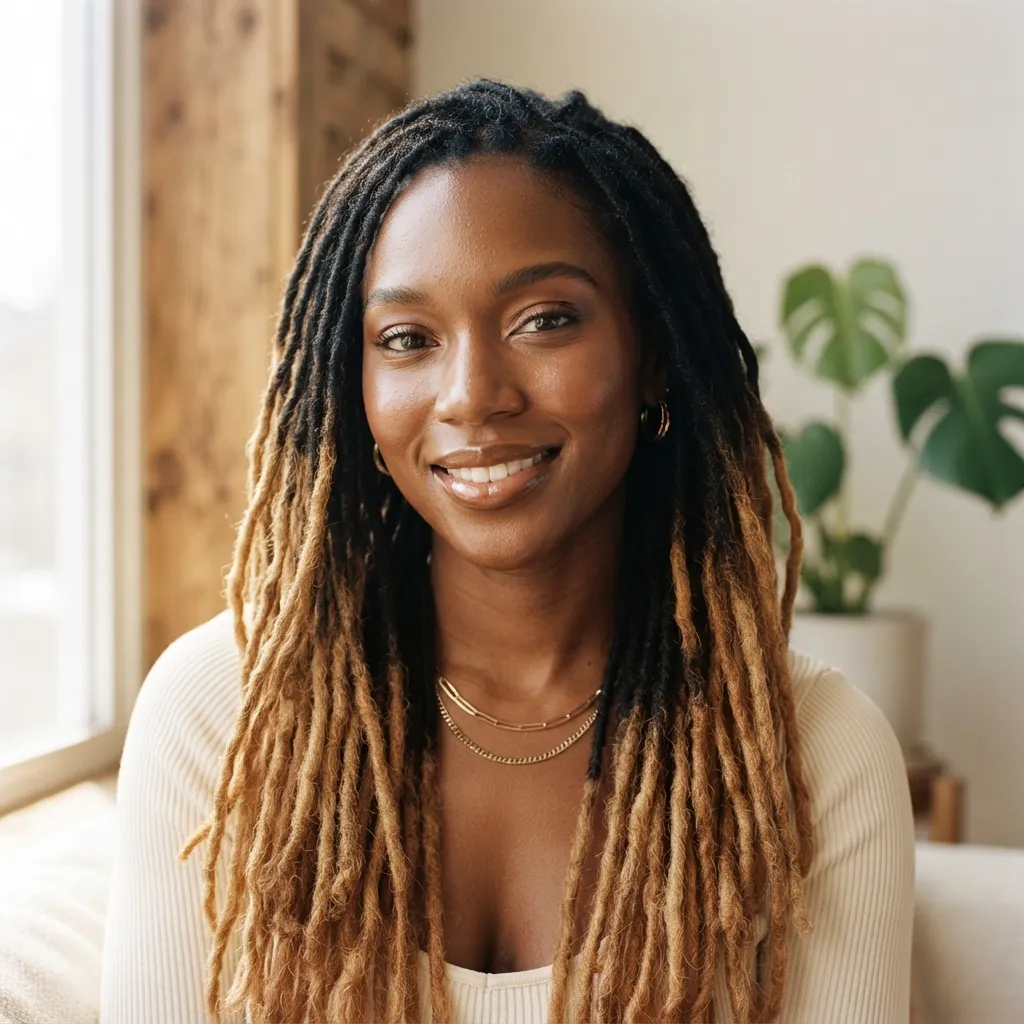
Vibe: Dimensional, color that changes as your eye travels down each loc.
Why it works: An ombre gradient on locs requires more careful blending than on loose hair, since each loc processes somewhat independently and can lighten unevenly if lightener isn’t applied with a soft, feathered technique at the transition zone rather than a hard stop.
How to get it: Ask your colorist to apply lightener starting at the mid-shaft and feather it upward toward the root with a diffusing motion rather than a clean line, processing the ends longest since they’ll lift the most and the transition zone least.
Shop The Look
| Product |
|---|
| Honey blonde toning gloss for locs |
| Bond-repair treatment for lightened locs |
| Gold-tone boosting shampoo |
| UV protection spray for color fade |
| Deep conditioning mask for lightened ends |
14. Barrel Twist Extensions for Temporary Thickness
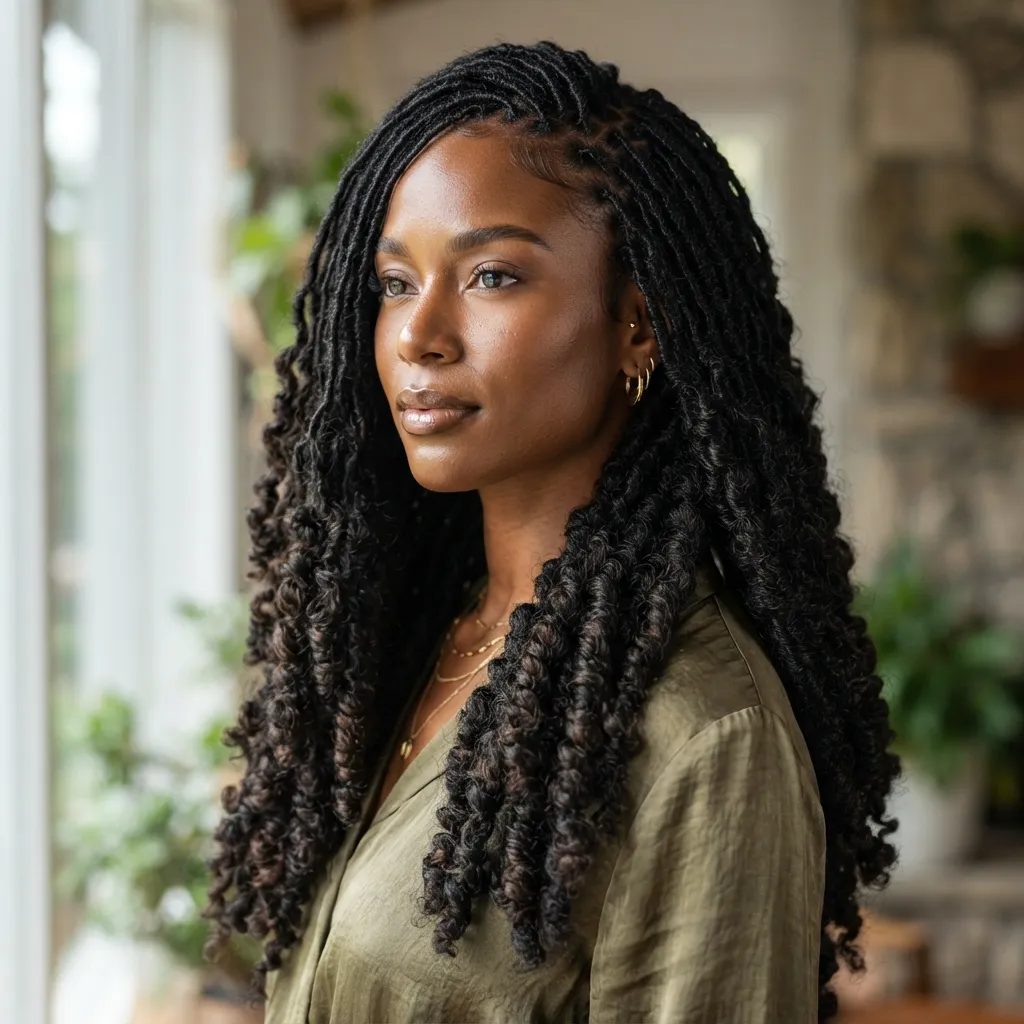
Vibe: Full, the volume of thick locs without the years-long wait.
Why it works: Barrel twist extensions attach synthetic or human-hair loc pieces to the ends of thin natural locs, adding length and visual weight temporarily without altering the natural locs underneath, a reversible way to test a thicker, longer look before committing years of growth to it.
How to get it: Choose extension pieces matched in both color and diameter to your natural locs specifically, since mismatched thickness is the most common reason blended extensions look obviously attached rather than seamless, and have them removed and reinstalled every 6 to 8 weeks to avoid tension on the natural locs.
Shop The Look
| Product |
|---|
| Loc extension pieces matching diameter |
| Extension attachment tool |
| Lightweight sealing gel for attachment points |
| Satin bonnet for extension protection |
| Leave-in spray for blended lengths |
15. Quick Low Pony for Busy Mornings
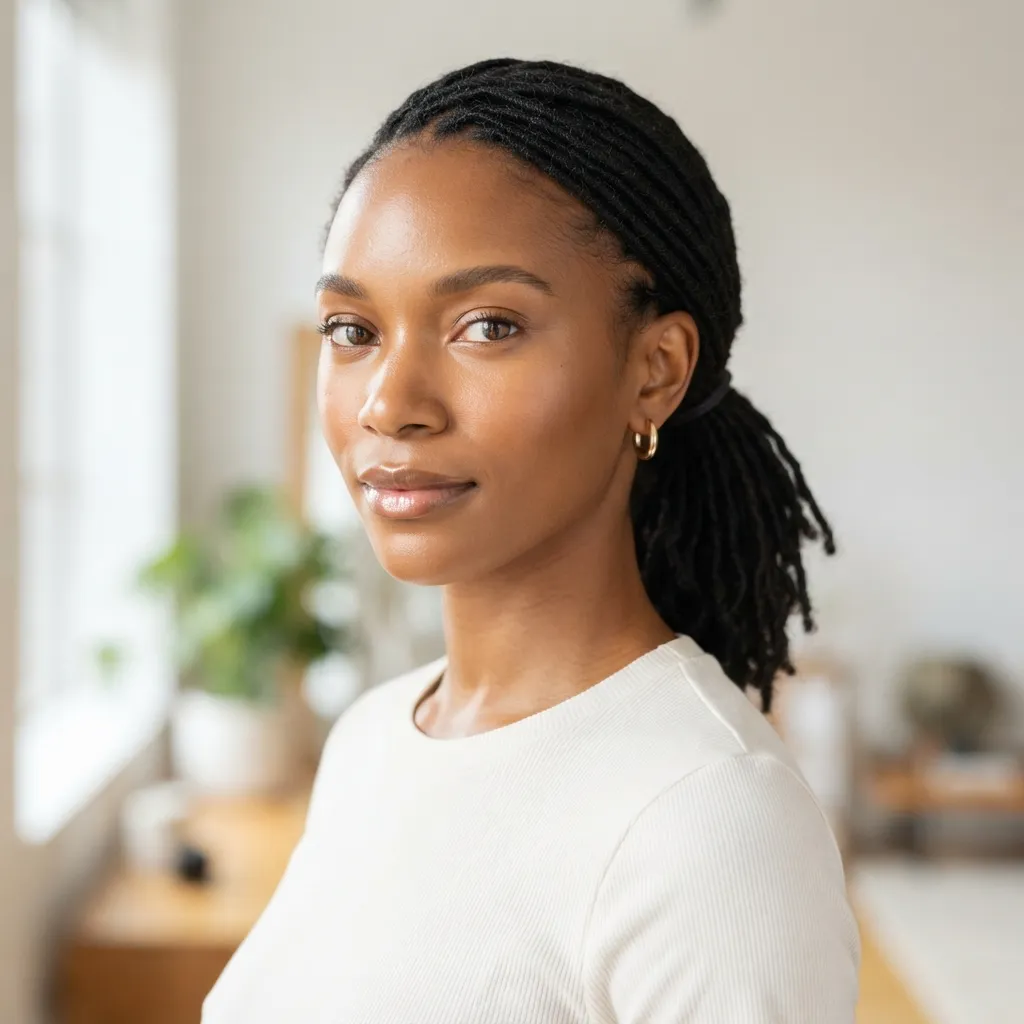
Vibe: Effortless. The style that takes less time than deciding what to wear.
Why it works: A simple low ponytail at the nape distributes the weight of numerous thin locs evenly across a wide base, unlike a high ponytail, which concentrates tension at a single point and can strain locs and edges over repeated daily wear.
How to get it: Gather locs loosely at the nape with a satin-lined tie, leaving a slight amount of slack rather than pulling tightly, and smooth any flyaways at the hairline with a small amount of edge gel applied with a soft brush rather than fingers.
💡 Quick Win: This entire style takes under 5 minutes and requires only a satin tie and a soft edge brush, no other tools needed.
Shop The Look
| Product |
|---|
| Satin-lined ponytail holder |
| Edge control gel light hold |
| Soft edge brush |
| Leave-in detangling mist |
| Silk scarf for edge protection overnight |
How to Start Styling Your Thin Locs
Start with a satin-lined hair tie collection before anything else. Standard rubber-based elastics cause friction breakage at the exact point every gathered style depends on, and swapping to satin-lined ties is the single change that protects every other style on this list from causing damage over time.
The most common mistake is using heavy, wax-based products meant for thicker traditional locs, which causes buildup far faster on thin locs due to their smaller surface-area-to-product ratio. Fix it by switching to lightweight, water-based or gel-based products specifically labeled for sisterlocks or microlocs.
Three items under $50 that create real styling range: a set of small-gauge gold cuffs sized for thin locs, around $15, a satin-lined scrunchie set for damage-free gathering, around $10, and a lightweight shine serum for a polished finish, around $18.
A single new style, like a half-up look or a low pony, takes 5 to 15 minutes. A more involved style, like beading or thread-wrapping several locs, realistically takes 30 to 60 minutes. Color treatments like balayage or ombre require a full salon session of 2 to 4 hours and should be spaced no closer than every 8 weeks to protect loc health during the maturation period.
Frequently Asked Questions About Thin Locs Hairstyles
What’s the difference between thin locs and traditional locs?
Thin locs, typically formed as sisterlocks or microlocs, are interlocked at a quarter-inch or smaller diameter using a specialized tool, while traditional locs are usually palm-rolled or backcombed at a larger diameter. Thin locs move and part more like loose hair, allowing styles like ponytails and buns that thicker locs handle less easily, but they also require significantly more individual sections, often 300 to 600 compared to 30 to 100 for traditional locs.
What hair colors work best on thin locs?
Warm copper, subtle caramel balayage, and honey-blonde ombre all work well because thin locs’ higher strand count multiplies the visual effect of any color treatment applied to even a portion of the head. Full head bleaching is riskier on thin locs specifically, since the smaller diameter has less structural hair to protect from lightener damage, so partial or gradual color techniques are generally the safer starting point.
How much does it cost to maintain thin locs hairstyles?
A retwist appointment, needed every 5 to 8 weeks in the first year, typically costs $75 to $150 depending on hair length and loc count. Color treatments like balayage or an ombre fade run $150 to $300 due to the additional processing time required for hundreds of individual sections. Everyday styling products, loc butter, satin ties, shine serum usually run under $50 total for a starter kit.
Do thin locs hairstyles work for shorter hair or newly started locs?
Yes, though styling range is more limited in the first 6 to 12 months while locs are still maturing and haven’t fully locked, since new, immature locs are more prone to unraveling under styling tension. Simple, low-tension styles like a loose low ponytail or leaving locs down are the safest options during this early period, while structured buns and deep parts are better suited to fully mature locs.
What’s the most important product for thin locs specifically?
A lightweight, non-waxy loc butter or gel is the single most important product, since standard heavy pomades formulated for thicker traditional locs cause visible buildup far faster on thin locs due to their smaller surface area. Choosing a product specifically labeled for sisterlocks or microlocs, rather than a general loc product, is the detail most new thin-loc wearers miss in their first few months.
Ready to Style Your Thin Locs?
These 15 ideas span color treatments, jewelry and wraps, structured updos, and quick everyday options, so there’s a real starting point whether you’re dressing up for an event or just getting out the door on time. You don’t need to try every technique at once picking one style to master first, like the low pony or the diamond parting pattern, is a genuinely smart way to begin.
Today, swap any standard rubber-based hair ties for satin-lined ones, since that single change protects every style you try after it. Once your thin locs are styled with the right products and techniques, they stop feeling high-maintenance and start feeling like the lowest-effort, most versatile texture you’ve ever worked with. Save whichever style matched your morning routine, especially if it’s the quick low pony or the beaded ends they tend to become the ones you reach for most.