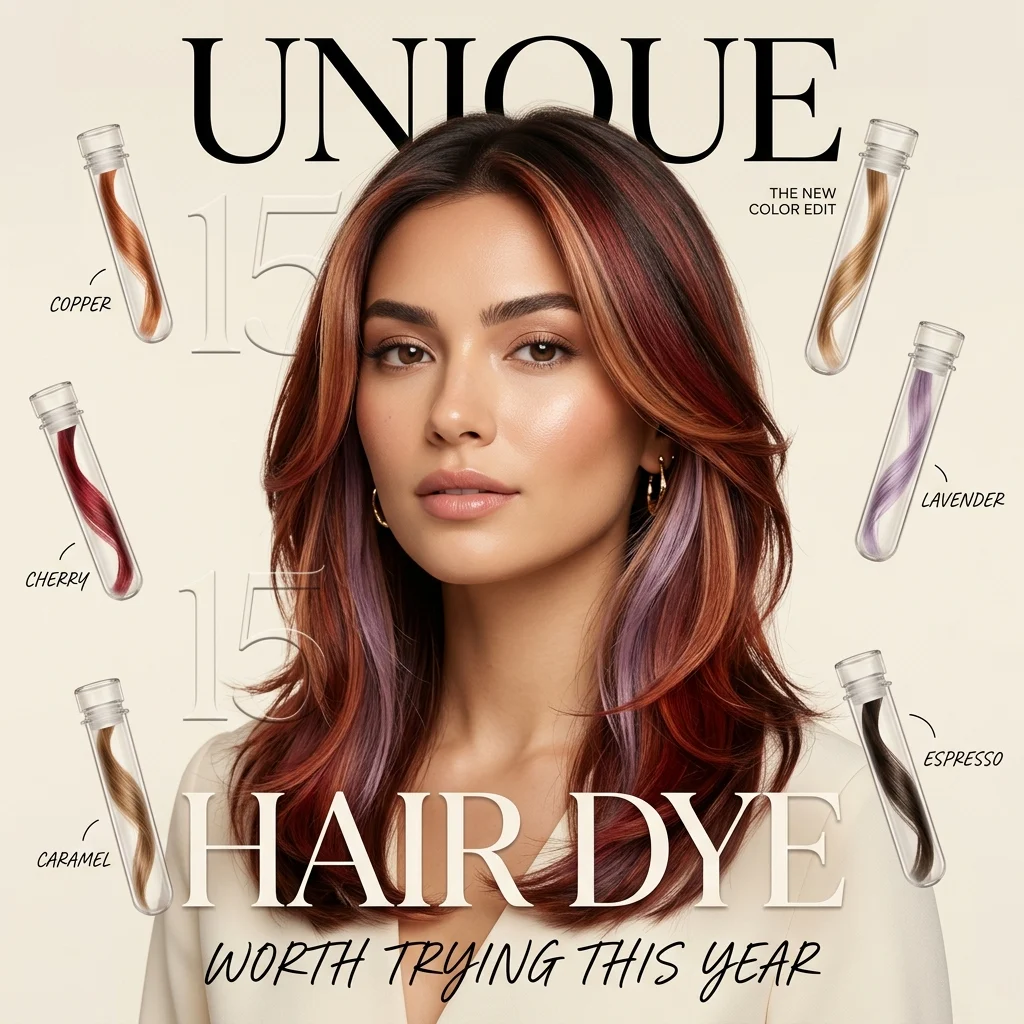
15 Unique Hair Dye Ideas Worth Trying This Year

Unique hair dye means color that’s built in layers instead of dumped in one flat tone dimension, with placement and glaze working together instead of a single box-dye result. This guide gives you 15 unique hair dye ideas, from subtle root melts to bold peekaboo brights.
Great color has a certain movement to it. It catches light differently at the crown than at the ends, it shifts with the season, and it feels less like a “dye job” and more like your hair just does this naturally. That’s the feeling behind every idea below: layered, lived-in, intentional.
Here are 15 ideas worth saving and stealing.
Why Dimensional Hair Color Works So Well
Dimensional coloring grew out of the French balayage technique, a hand-painted method developed in 1970s Parisian salons as an alternative to harsh, uniform foil highlights. It later merged with American foiliage and Korean glossing trends, producing the soft, sun-kissed multi-tonal color most people now mean when they say “unique” or “natural-looking” dye.
The palette leans on named tones, not vague ones: copper, rose gold, ash brown, chocolate cherry, and smoky lavender. Formulas range from permanent color with 20-volume developer for lift, to semi-permanent glazes and glossing toners that add shine without lightening, to henna-based dyes for a lower-damage option.
This approach is trending because grow-out anxiety is real root shadowing and money-piece placement let color fade gracefully instead of showing a hard line at week three. Search interest in “low-maintenance hair color” has climbed steadily as people want fewer salon visits without sacrificing a polished look.
Fine or damaged hair can absolutely wear this style, but with limits. Prioritize gloss and toner-based techniques over heavy bleach, and keep lightened sections to face-framing pieces rather than all-over lift, since damaged strands hold vivid tone unevenly.
Style at a Glance
| Element | Classic Single-Process | Unique Multi-Tonal |
|---|---|---|
| Philosophy | One flat, uniform shade | Layered tones with visible movement |
| Key Materials | Permanent box dye | Foils, hand-painting, glossing toner |
| Key Colors | Solid brown, black, or blonde | Copper, ash, cherry, lavender, rose gold |
15 Unique Hair Dye Ideas
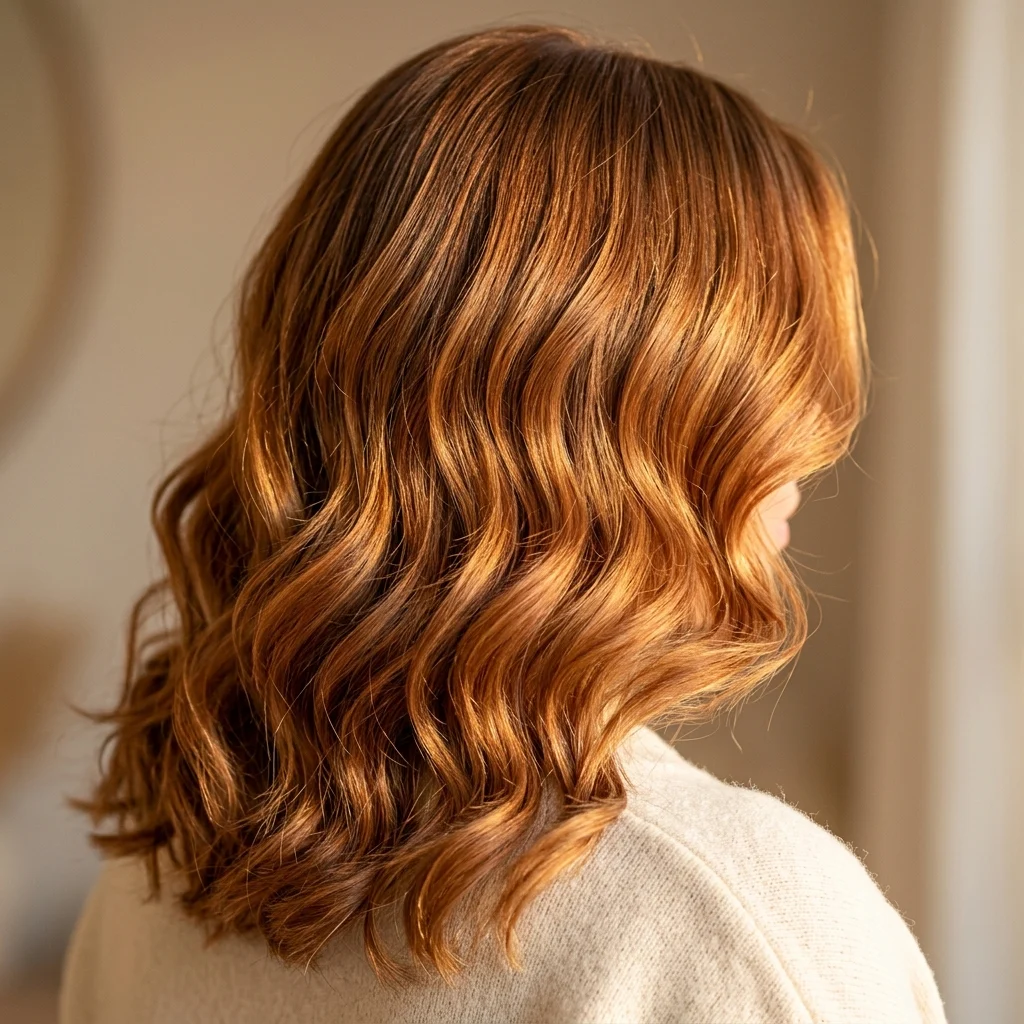
1. Copper Balayage with Golden Undertones
Vibe: sun-warmed.
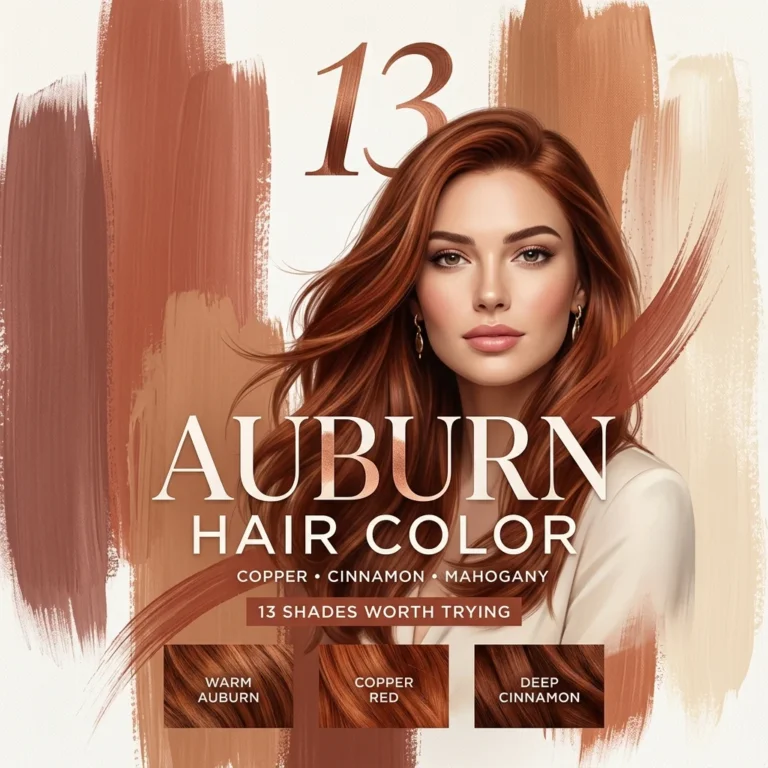
Why it works: Balayage relies on hand-painting rather than foils, so lightener is applied unevenly on purpose, mimicking how hair naturally lightens at the ends and crown from sun exposure. The contrast between the deeper copper root and lighter golden mid-lengths creates depth without a harsh line.
How to get it: Ask your colorist for a “copper balayage with a golden glaze” specifically, since a plain toner alone can pull too orange on warm-based hair. Request a copper-tinted gloss as the final step to unify the tone.
💡 Quick Win: A weekly copper-toned conditioning mask keeps the shade from fading dull between salon visits.
Shop The Look
| Product |
|---|
| Copper-toned color-depositing conditioning mask |
| Wide-tooth detangling comb for wavy hair |
| Heat protectant spray for color-treated hair |
| Silk pillowcase for reduced color fade |
| Boar bristle brush for shine distribution |
2. Semi-Permanent Vivid Glaze Over a Dark Base
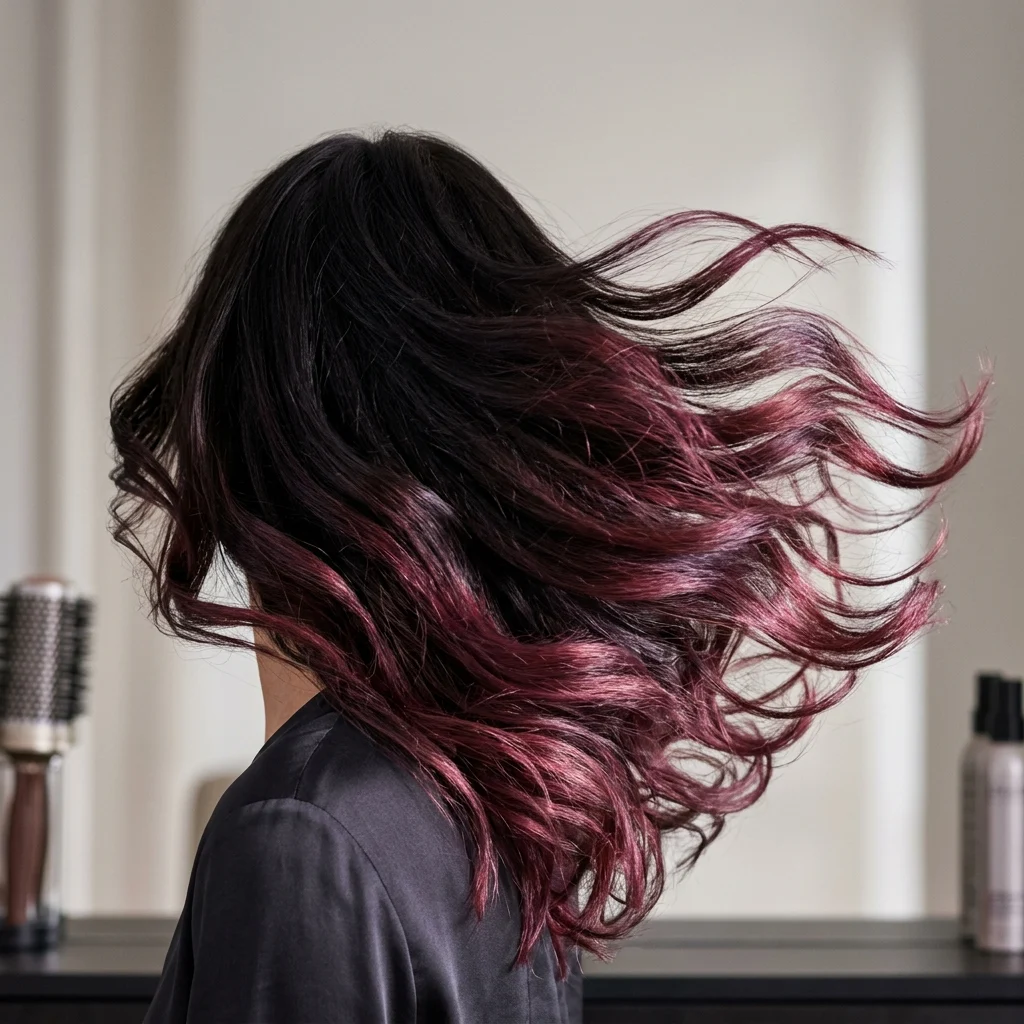
Vibe: hushed.
Why it works: Semi-permanent glaze sits on top of the hair shaft rather than lifting the natural pigment, so it reads as a subtle tint rather than a full color change a technique called “color washing.” This lets dark hair show a hint of red or violet only in direct light.
How to get it: Choose a semi-permanent gloss labeled for dark hair specifically, and apply it only to mid-lengths and ends rather than the roots, so regrowth stays seamless.
Shop The Look
| Product |
|---|
| Semi-permanent violet-red hair gloss for dark hair |
| Tinting brush and mixing bowl set |
| Disposable dye application gloves |
| Old towel-style color-safe cape |
| Clarifying shampoo for glaze removal |
3. Sun-Catching Money Piece Highlights
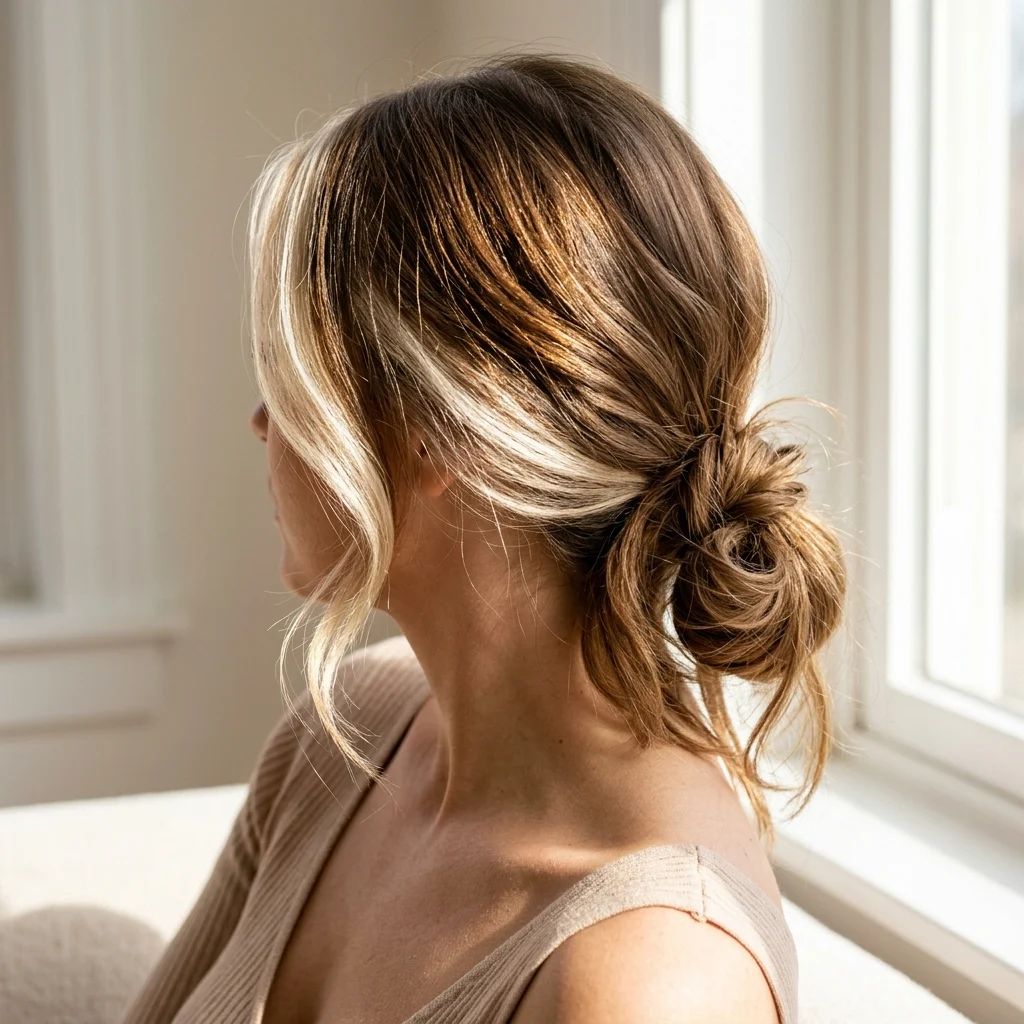
Vibe: luminous.
Why it works: Placing the brightest highlights only around the face uses the design principle of visual weight the eye is drawn upward and outward, framing features without lightening the whole head. It also means only two small sections need retouching as they grow out.
How to get it: Request highlights placed no wider than one inch from the hairline on each side, lifted two to three shades lighter than your base for visible contrast.
💡 Quick Win: A temporary highlighting spray-in wand lets you test the placement before committing to a salon appointment.
Shop The Look
| Product |
|---|
| Temporary highlighting hair chalk wand |
| Root touch-up concealer powder matching base shade |
| Flat iron for face-framing piece styling |
| UV-protectant hair serum for highlighted strands |
| Wide claw clip for half-up styling |
4. Temporary Hair Chalk for Festival Days
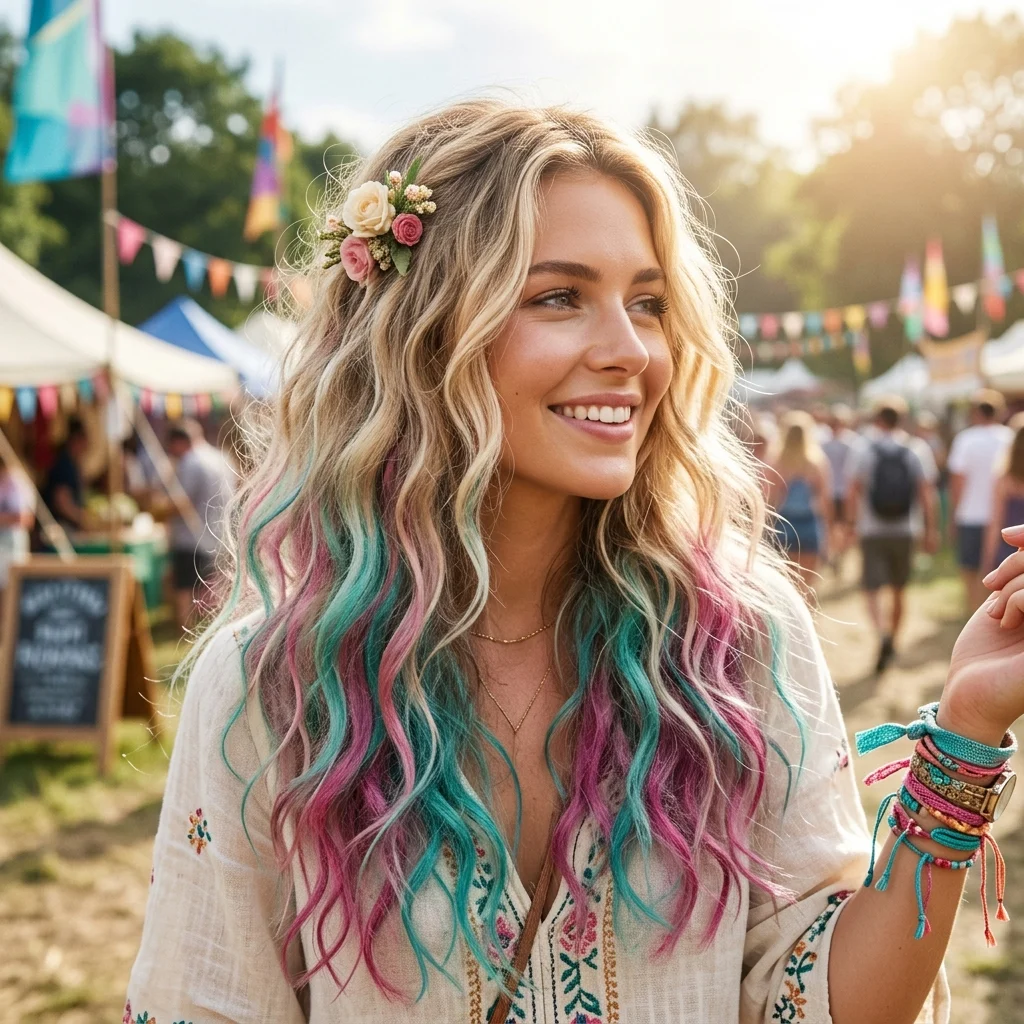
Vibe: layered.
Why it works: Temporary color pigment sits on the outer cuticle layer only, so it can be applied in bold, saturated placement without any chemical lift a zero-commitment way to test a vivid combination before dyeing permanently.
How to get it: Twist small one-inch sections and apply chalk from mid-shaft to ends only, then seal with a flat iron on low heat to lock the pigment in for the day.
Shop The Look
| Product |
|---|
| Temporary hair chalk set, multiple vivid shades |
| Small sectioning clips for precise application |
| Travel-size dry shampoo for post-event cleanup |
| Texturizing sea salt spray for beach waves |
| Color-safe leave-in detangling spray |
5. Henna-Infused Copper for Damage-Free Color
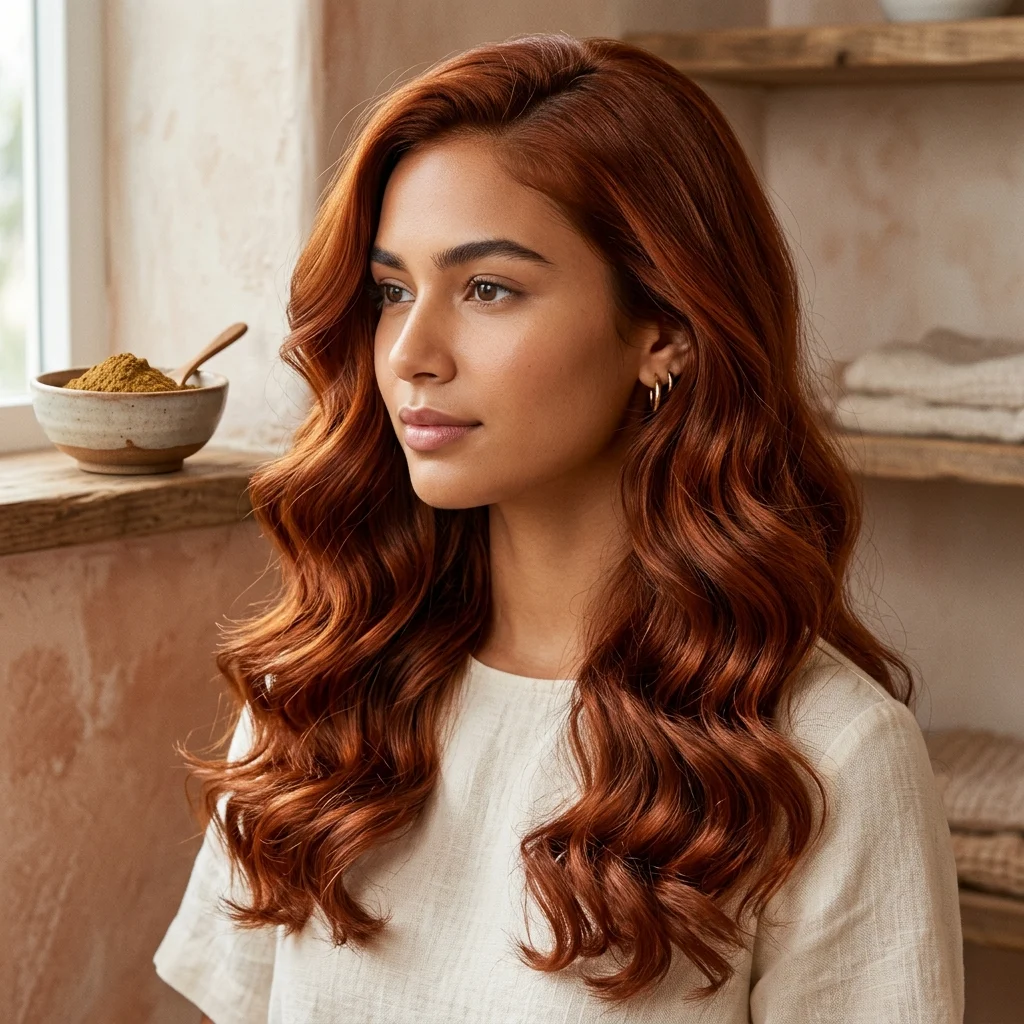
Vibe: grounded.
Why it works: Henna coats the hair shaft with a plant-based pigment rather than penetrating and altering the cortex, which is why it strengthens strands over time instead of weakening them the way repeated bleach lightening does. The color also deepens gradually with each application, building richness rather than fading it.
How to get it: Mix pure body-art-quality henna powder with warm water into a yogurt-like paste, leave it on for two to four hours under a plastic cap, and expect the true copper tone to fully oxidize over 48 hours.
💡 Quick Win: A henna-infused deep conditioner between full applications maintains the copper depth without the mess.
Shop The Look
| Product |
|---|
| Pure body-art-quality henna powder |
| Plastic hair processing cap |
| Wide sectioning clips for even application |
| Henna-tinted deep conditioning treatment |
| Old dark-colored towel for henna application |
6. Root Shadow Melt for Low-Maintenance Grow-Out
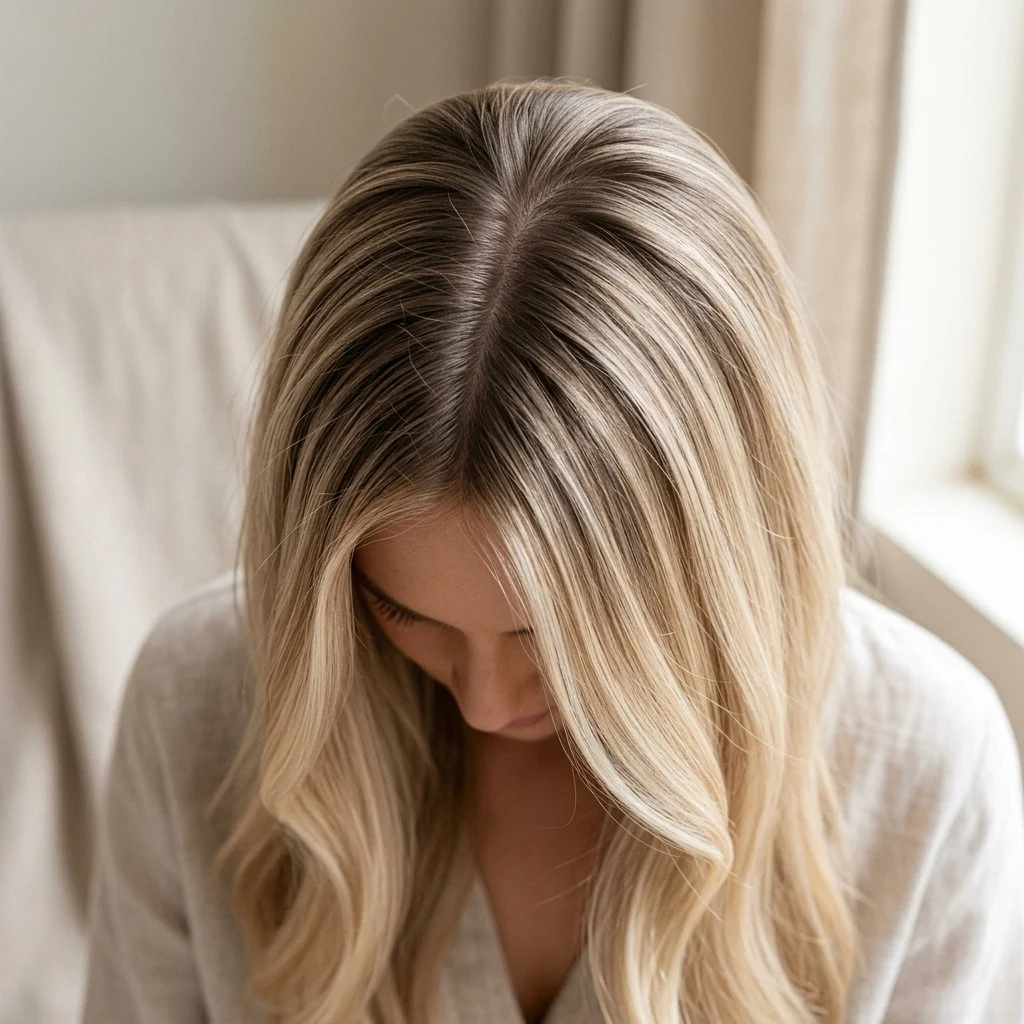
Vibe: still.
Why it works: A root shadow uses a soft, low-volume demi-permanent color blended just below the natural regrowth line, so the transition into lightened lengths reads as intentional shading rather than obvious regrowth. This is a proportion technique darkening the smallest visible area to control the whole head’s perceived structure.
How to get it: Ask specifically for a “shadow root” using a demi-permanent formula one to two shades darker than your natural color, blended with a soft brush for two inches below the part.
Shop The Look
| Product |
|---|
| Root touch-up spray matching natural base |
| Volumizing dry shampoo for root texture |
| Wide-tooth comb for gentle detangling |
| Color-safe purple shampoo for blonde lengths |
| Satin-lined hair bonnet for overnight protection |
7. Smoky Lavender Root Melt
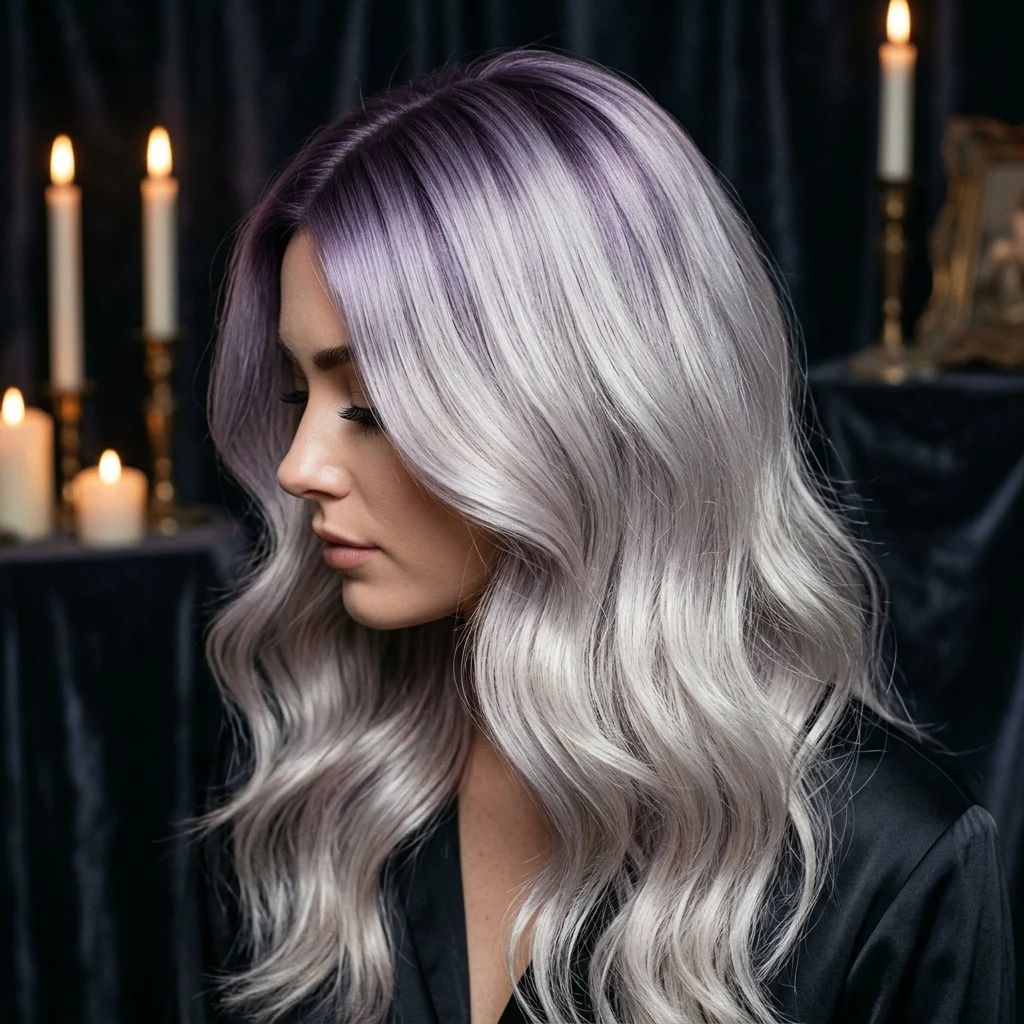
Vibe: moody.
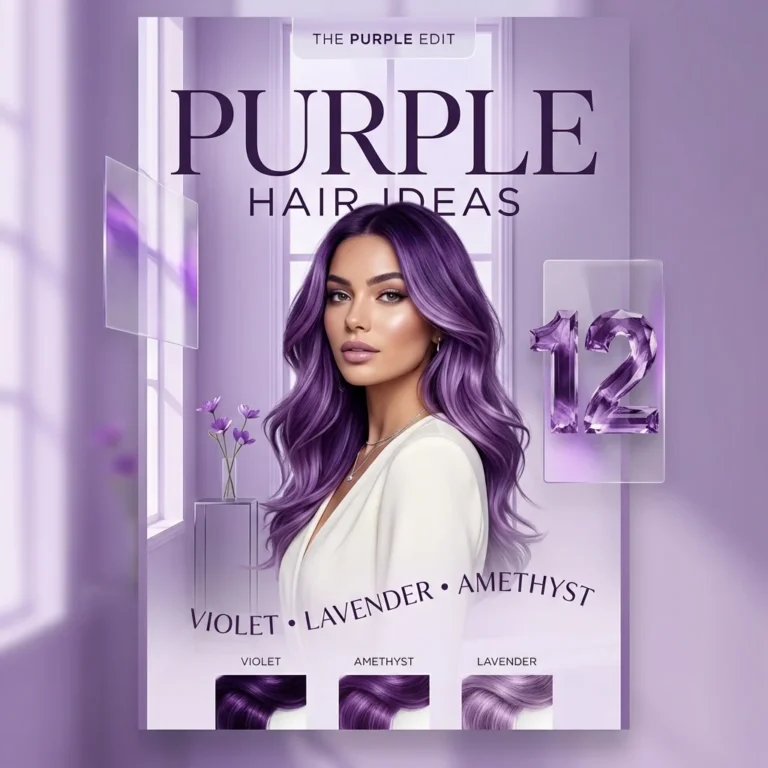
Why it works: Cool-toned pastels like lavender read as sophisticated rather than costume-like when they’re desaturated and blended into a shadow root, since the muted violet pigment neutralizes any brassy yellow left in pre-lightened hair. It’s a color-correction technique doing double duty as a statement look.
How to get it: Use a violet-based semi-permanent toner mixed with a small amount of clear glaze to soften the saturation, applied only through the top two inches of regrowth.
💡 Quick Win: A purple-toned dry shampoo refreshes the lavender cast between washes without reapplying dye.
Shop The Look
| Product |
|---|
| Violet semi-permanent toning gloss |
| Clear glaze diluting base for pastel tones |
| Purple-tinted dry shampoo |
| Color-depositing purple shampoo and conditioner set |
| Cool-tone hair mask for silver blonde |
8. Face-Framing Dimension for Round Faces
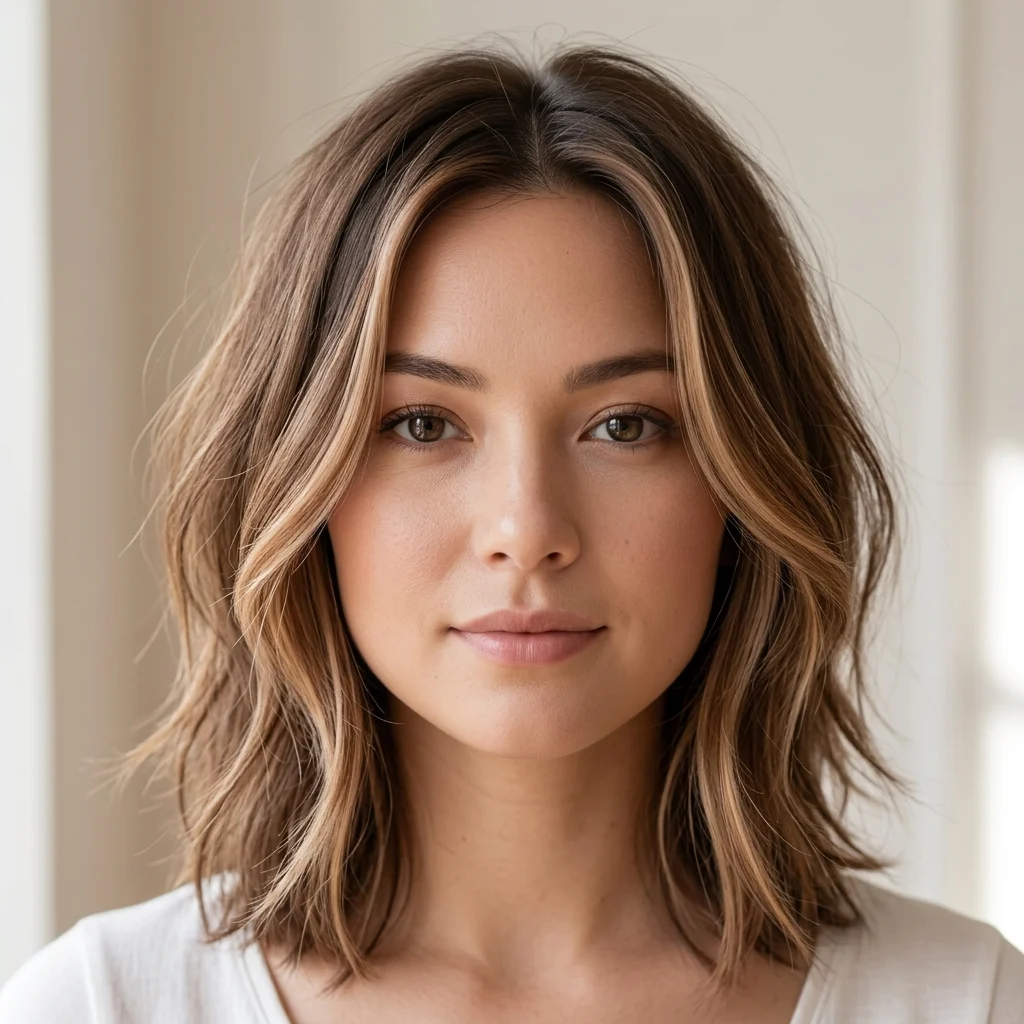
Vibe: airy.
Why it works: Placing thinner, vertically-oriented highlight pieces along the jawline uses an optical elongation principle narrow, light-to-dark contrast draws the eye downward and creates the illusion of length rather than width. Placement matters more here than the actual shade chosen.
How to get it: Request highlights no wider than a quarter-inch each, concentrated at the jaw and below, rather than wide chunky pieces near the temples which widen the face visually.
Shop The Look
| Product |
|---|
| Fine-tooth rat-tail comb for precise sectioning |
| Curved barrel curling iron for face-framing waves |
| Lightweight taming serum for frizz-free pieces |
| Ceramic flat iron for smoothing highlighted sections |
| Volumizing mousse for root lift balance |
9. Gloss Toner Over Balayage for Extra Shine
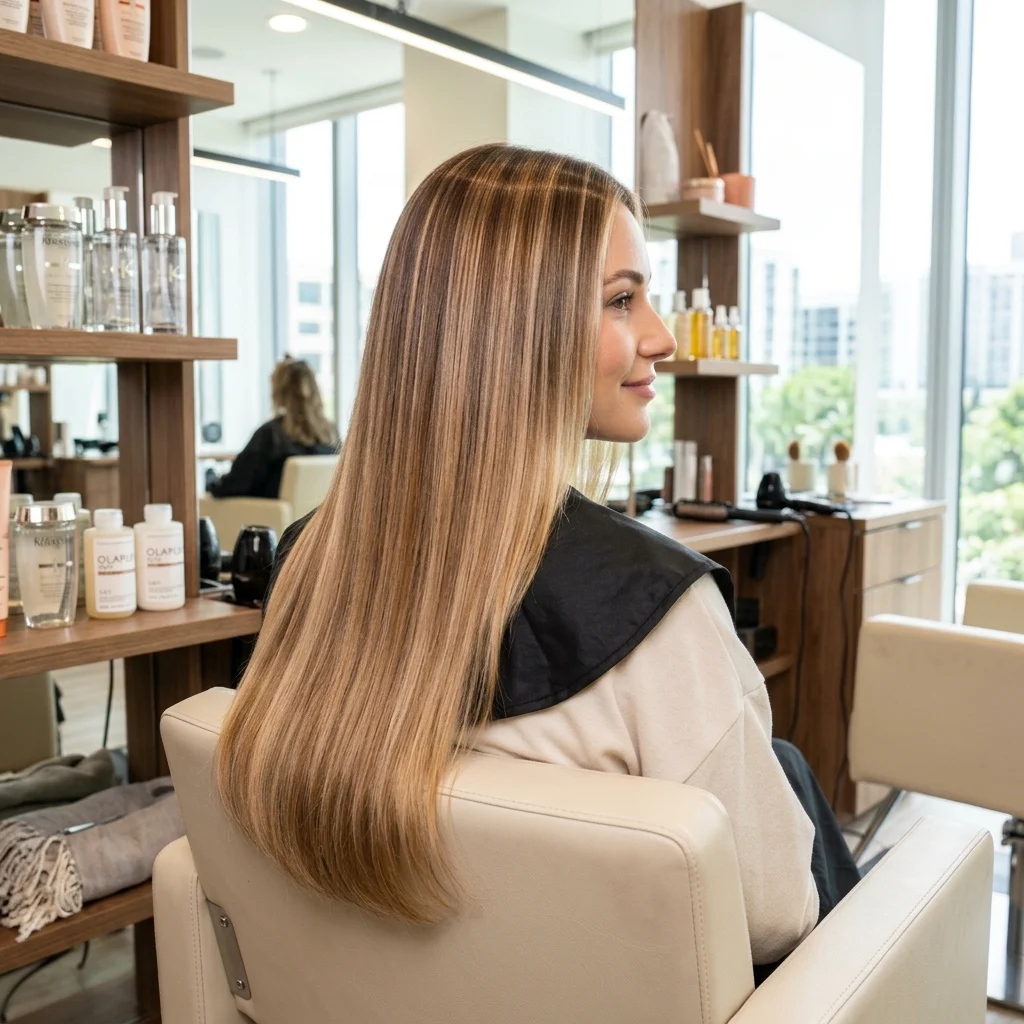
Vibe: luminous.
Why it works: A clear or lightly tinted gloss seals the hair cuticle flat, which changes how light reflects off the surface this is the same principle behind “glass hair” trends, where shine reads as more valuable to the eye than the color itself. It also extends the life of the underlying balayage by a few weeks.
How to get it: Ask for a gloss treatment as a standalone add-on every four to six weeks between full color appointments, rather than only when getting highlights redone.
💡 Quick Win: An at-home clear gloss treatment applied after washing adds noticeable shine for under ten dollars.
Shop The Look
| Product |
|---|
| At-home clear glossing hair treatment |
| Microfiber hair towel for reduced frizz |
| Glass or ceramic paddle brush for shine |
| Silicone-free shine serum |
| Cool-shot blow dryer attachment for cuticle sealing |
10. Peekaboo Underlights in Bright Pink
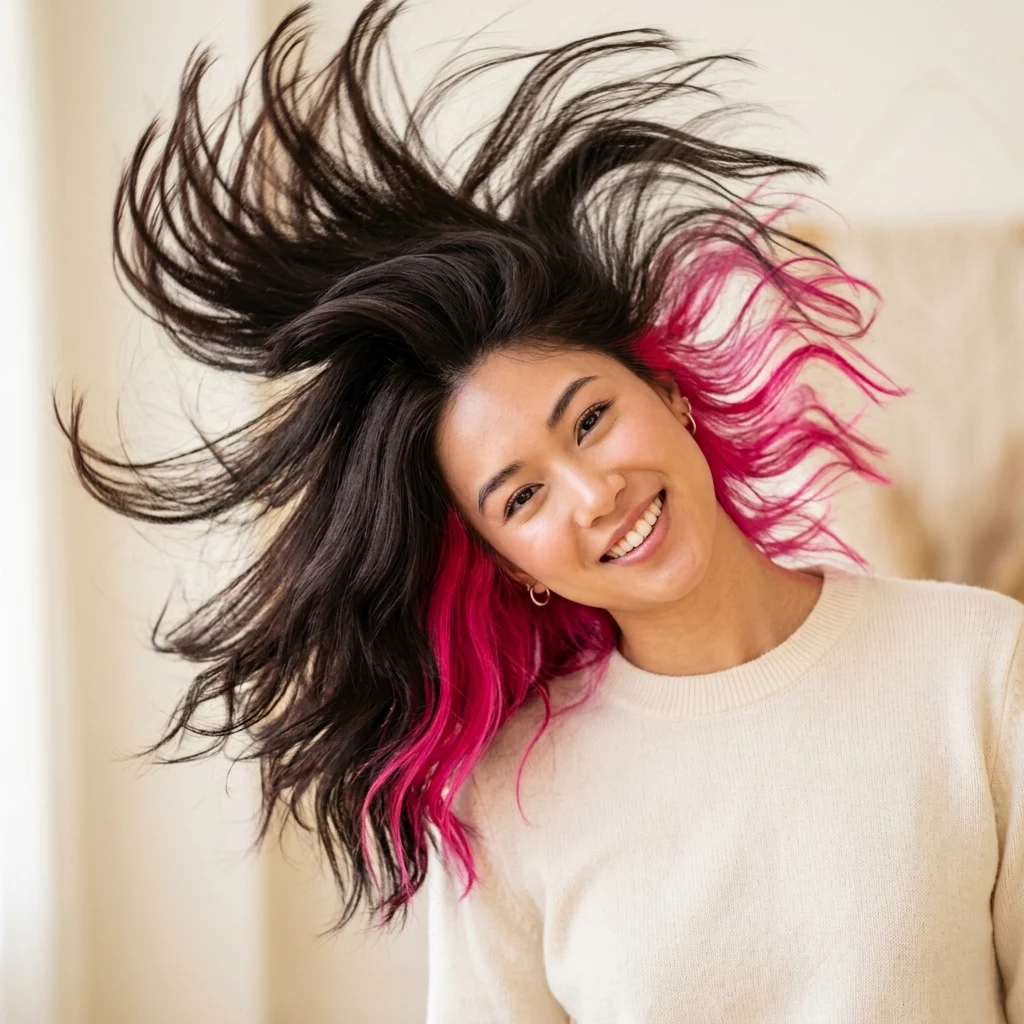
Vibe: layered.
Why it works: Underlights use section-based placement to hide bold color beneath a natural top layer, meeting the design principle of controlled reveal the color only shows in motion or when styled up, giving flexibility for professional settings without sacrificing personality.
How to get it: Section hair horizontally at ear level, dye only the bottom layer with a vivid semi-permanent shade, and leave the crown section natural to conceal it when hair is down.
Shop The Look
| Product |
|---|
| Vivid pink semi-permanent hair dye |
| Horizontal sectioning clips for underlayer separation |
| Color-safe sulfate-free shampoo |
| Deep conditioning mask for vivid-dyed sections |
| Braided headband for styled-up reveal looks |
11. Money Piece Placement for Asymmetrical Cuts
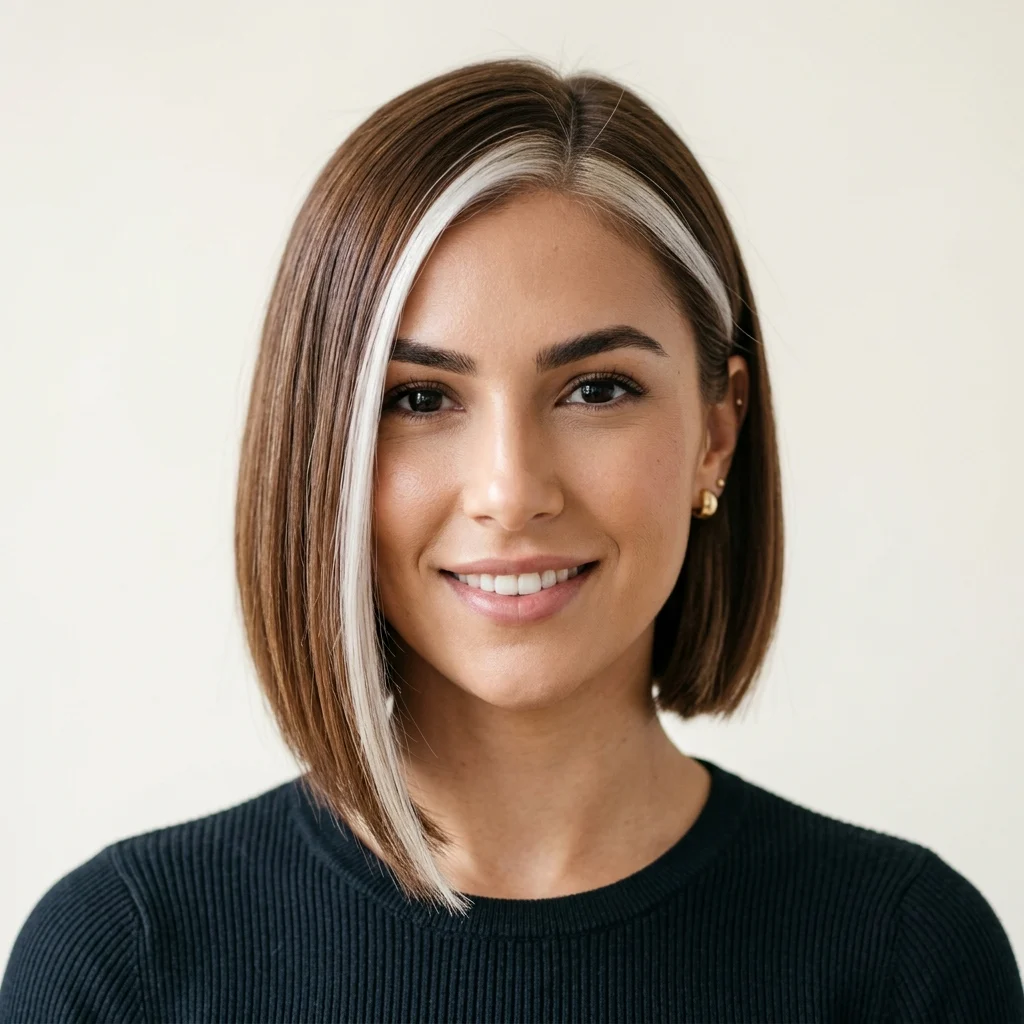
Vibe: confident.
Why it works: On an asymmetrical cut, placing the money piece only on the longer side reinforces the haircut’s existing visual imbalance rather than fighting it, using color to emphasize the line the stylist already built into the cut. Placing it evenly on both sides would flatten that intentional asymmetry.
How to get it: Have your colorist place the highlighted piece before cutting, matching it to whichever side falls longer, so the color and cut line grow out together.
Shop The Look
| Product |
|---|
| Precision sectioning clip for asymmetrical placement |
| Flat iron with narrow plates for sharp bob styling |
| Anti-frizz smoothing serum for blunt ends |
| Color-safe shine spray |
| Wide-tooth comb for gentle post-color detangling |
12. Chocolate Cherry Depth for Brunettes
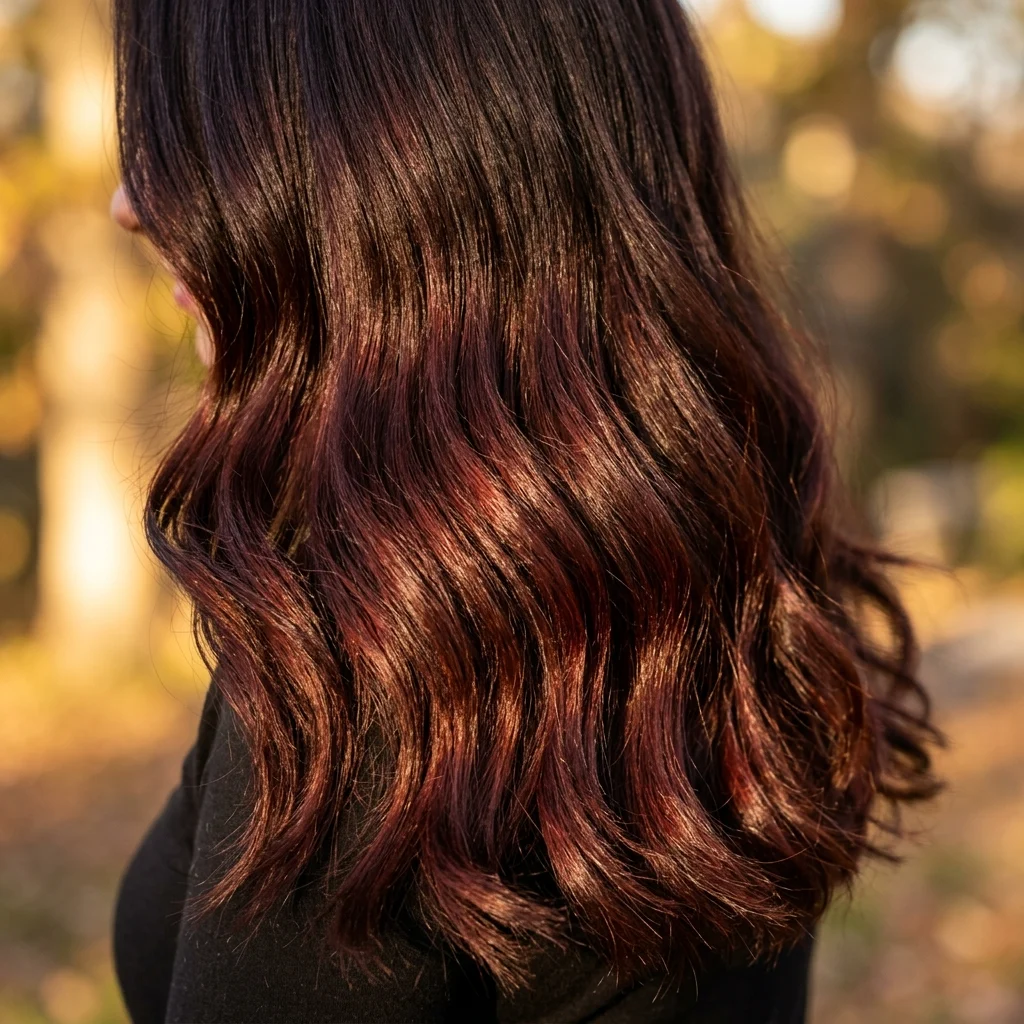
Vibe: warm.
Why it works: Mixing a red-based permanent dye into a chocolate brown base adds reflective depth that a flat brown alone can’t achieve, since red pigment molecules catch and bounce light differently than brown ones. In direct sun the cherry undertone becomes visible, while indoors it reads as a rich, deep brunette.
How to get it: Have your colorist mix a small ratio of red-violet permanent color into your regular brunette formula rather than dyeing a separate red layer, which keeps the depth subtle rather than obvious.
💡 Quick Win: A weekly red-tinted color mask preserves the cherry depth as brunette shades naturally fade warm-to-drab over time.
Shop The Look
| Product |
|---|
| Red-tinted color-depositing hair mask |
| Color-safe shampoo for brunette tones |
| Wide flat brush for even mask application |
| Heat protectant spray for warm-toned hair |
| Satin scrunchies to reduce color friction damage |
13. Braid-In Color Extensions for Commitment-Free Change
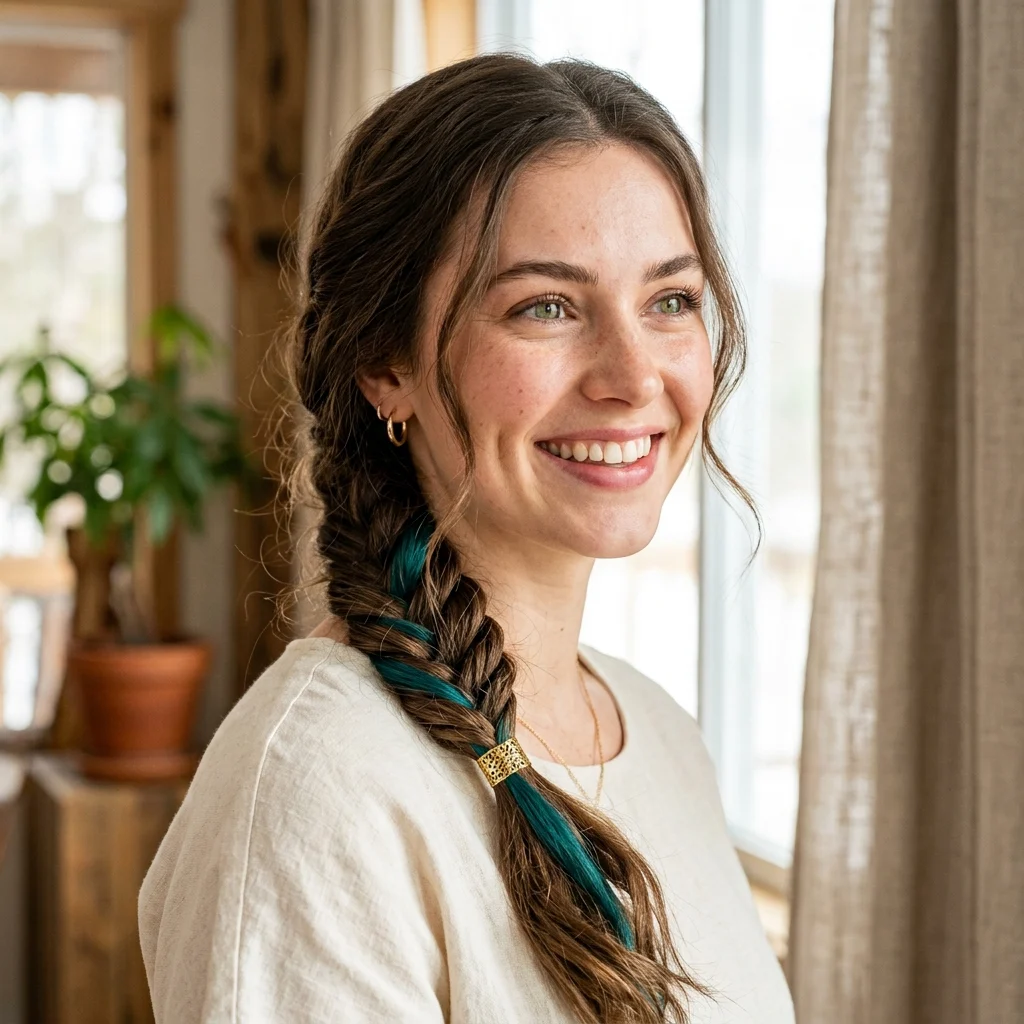
Vibe: playful.
Why it works: Clip-in or braid-in colored extensions add bold pigment without touching your natural hair at all, which sidesteps the biggest risk of vivid color irreversible damage from bleaching virgin hair to a light enough level to hold saturated dye.
How to get it: Choose extension strands that match your natural hair’s texture and thickness, then braid them in alongside a small section near the temple or crown for the most visible placement.
Shop The Look
| Product |
|---|
| Clip-in colored hair extension strands |
| Small gold hair cuff accessory |
| Extension-safe detangling brush |
| Texturizing spray for blended braid finish |
| Extension storage pouch with hanger clip |
14. Single-Strand Streak for First-Timers
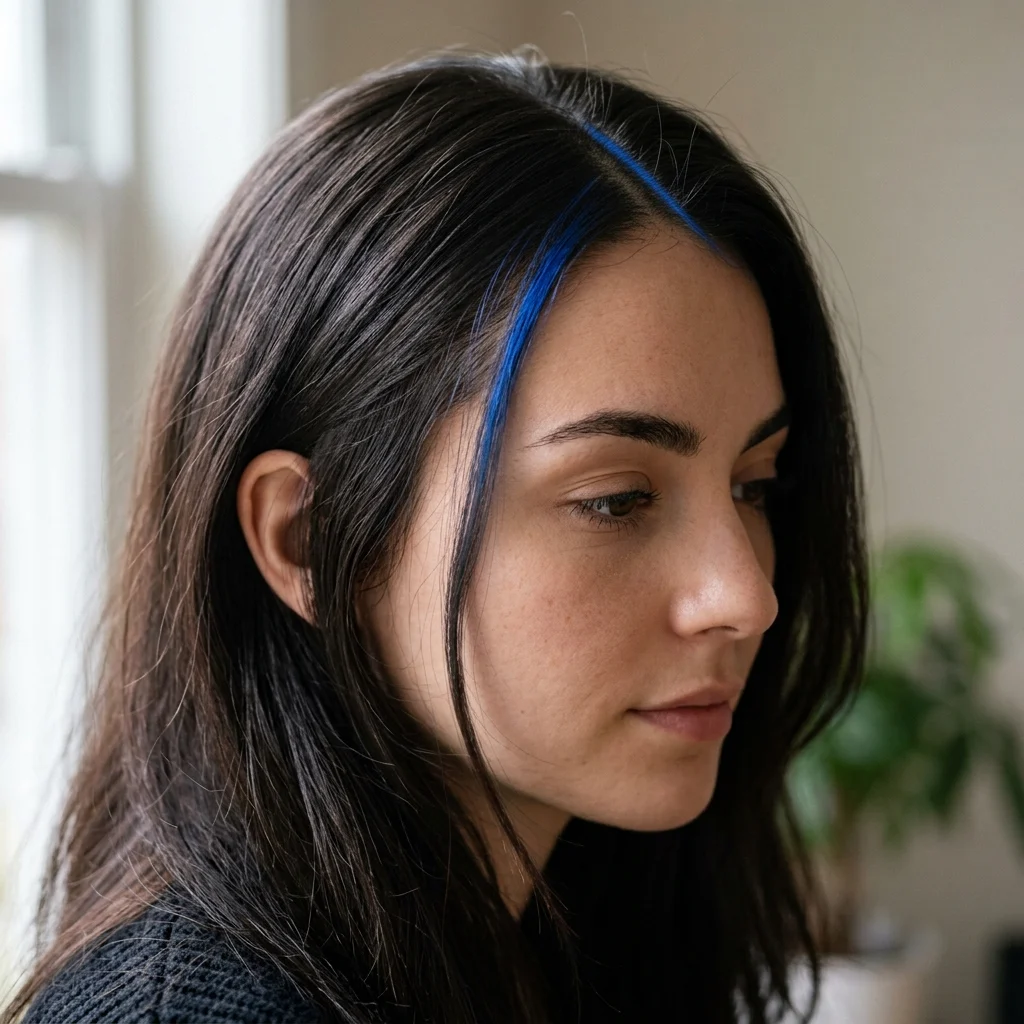
Vibe: still.
Why it works: A single dyed strand is the lowest-risk entry point into vivid color because it affects a tiny surface area, so if the shade fades unevenly or you change your mind, only one small section needs correcting rather than a whole head of highlights.
How to get it: Section off one very thin piece near the front hairline, bleach it lightly if needed, then apply a semi-permanent vivid dye and monitor how it fades over two weeks before deciding to expand it.
Shop The Look
| Product |
|---|
| Small precision sectioning clip |
| Mini bleach kit for single-strand lightening |
| Semi-permanent vivid dye, single small tube |
| Cotton swabs for clean dye-line application |
| Travel-size color-safe shampoo |
15. Ombre Transition for Long Layers
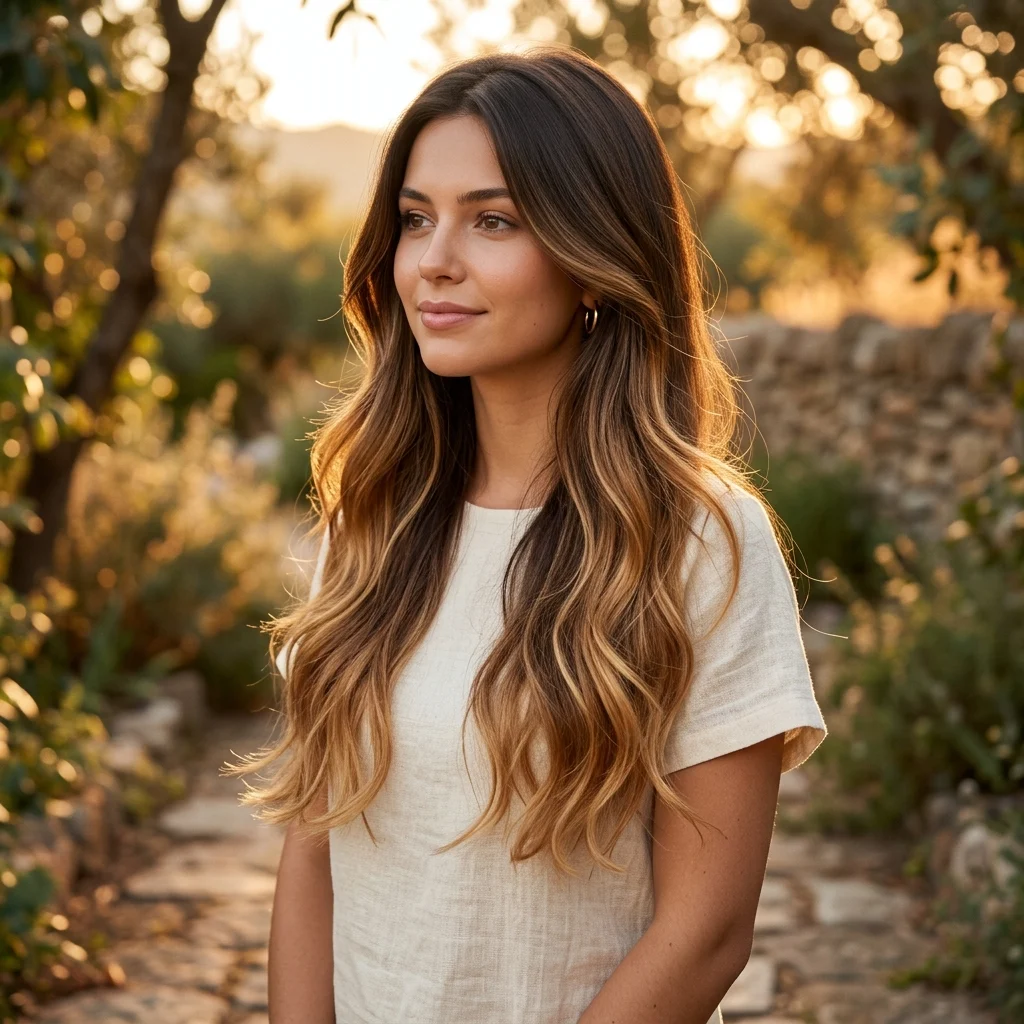
Vibe: sun-warmed.
Why it works: Ombre relies on a vertical gradient rather than horizontal sections, which reads naturally on long layers because the eye already tracks length in that direction. The technique uses graduated lightening heaviest lift at the very ends, tapering off as it moves up to avoid a visible stripe.
How to get it: Have your colorist feather the lightener upward using a diffusing brush technique rather than a hard horizontal line, starting the transition no higher than chin length for the most natural gradient.
Shop The Look
| Product |
|---|
| Diffusing color brush for gradient blending |
| Color-safe curling wand for long layers |
| Lightweight oil serum for caramel-toned ends |
| Wide-barrel round brush for smooth blowouts |
| Overnight silk hair wrap for length protection |
How to Start Your Hair Dye Transformation
Start with a single consultation and strand test before any dye touches your whole head. This one move testing your exact desired shade on a hidden underlayer first tells you how your hair actually processes color, since porosity and previous treatments change results more than any color chart can predict.
The most common mistake is choosing a shade based on skin tone alone and ignoring your hair’s underlying pigment. Warm copper tones can turn brassy fast on hair with strong natural red undertones, and the fix is simple: ask for a slightly ashier base formula to counteract it.
Three items under $50 to start: a purple-tinted color-depositing conditioner, a single tube of semi-permanent vivid dye for a test streak, and a root touch-up spray matched to your base shade.
A subtle root melt or gloss refresh can be done in one weekend appointment. A full balayage transformation from a dark base typically takes two to three sessions over a couple of months and runs $150 to $400 per visit, while a full head of vivid color from virgin hair can take four to six months of gradual lightening to protect strand health.
Frequently Asked Questions About Unique Hair Dye Techniques
What’s the difference between balayage and traditional highlights?
Traditional highlights use foils to isolate sections for uniform, all-the-way-to-root lightening, while balayage is hand-painted freehand, leaving the color heavier at the ends and softer near the root. Balayage grows out with far less visible demarcation, which is why it typically needs touch-ups every three to four months compared to six to eight weeks for foil highlights.
What hair dye color is trending right now for unique looks?
Chocolate cherry and copper balayage are two of the most requested shades this year, both prized for adding warmth and dimension rather than a single flat color. Cooler smoky lavender root melts are trending as a lower-commitment way to try pastel color without going fully platinum first.
How much does dimensional hair color typically cost?
A single balayage or money-piece service usually runs $150 to $350 depending on hair length and salon location, while a full head of vivid color from a dark base can run $300 to $600 across multiple sessions. At-home semi-permanent glosses and single-strand dye kits cost under $20 and are a lower-cost way to test a shade first.
Can these techniques work on curly or textured hair?
Yes, though placement needs adjusting balayage and money-piece highlights actually show curl pattern beautifully since the color catches each curl’s twist and reflects light differently at each turn. Vivid underlights work especially well on curly hair because the coily texture naturally hides the underlayer until it’s styled up or the wind catches it.
What is a “money piece” in hair coloring?
A money piece refers to two face-framing highlighted pieces, usually placed closer to the hairline than other highlights and lifted slightly brighter for contrast. The term comes from the visible, “money-making” placement right around the face, and it’s one of the lowest-maintenance highlight styles since only a small section needs retouching as it grows out.
Ready to Try One of These Unique Hair Dye Ideas?
From copper balayage to hidden pink underlights, this list covered color placement, technique, and commitment level so there’s an entry point no matter your comfort with change. Starting with one small streak or a single gloss treatment is not a lesser version of the transformation it’s the smart way in. Book a strand-test consultation this week before committing to a full-color appointment. Once the shade settles in, the payoff is that quiet, put-together feeling of hair that looks like it just does this naturally. Save your favorite money piece or root melt now, so you’ve got the exact reference photo ready for your next salon visit.