12 Purple Hair Ideas

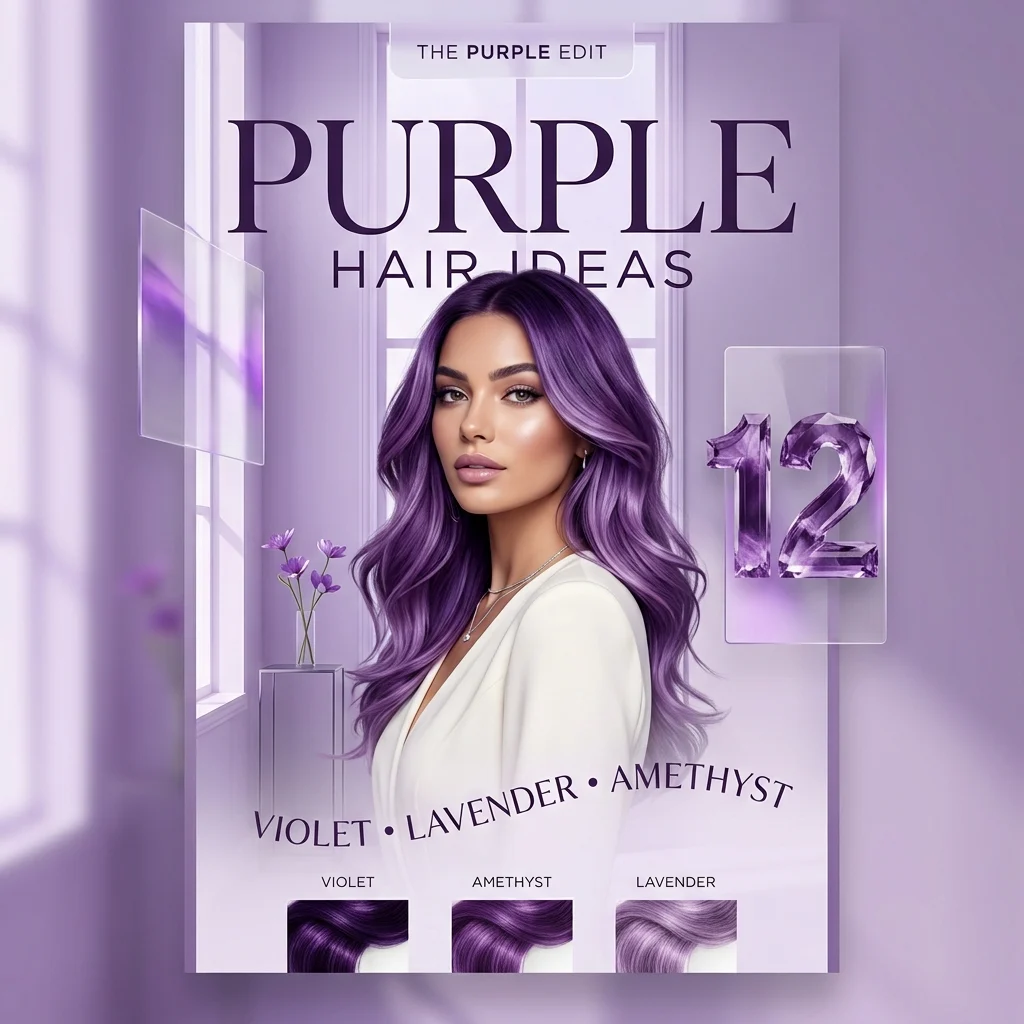
Purple hair color is a fantasy-adjacent shade that ranges from soft, barely-there lavender to deep, saturated plum, built on violet pigment layered over a range of natural bases. This article walks through 12 purple hair ideas, from subtle everyday tones to bold statement transformations.
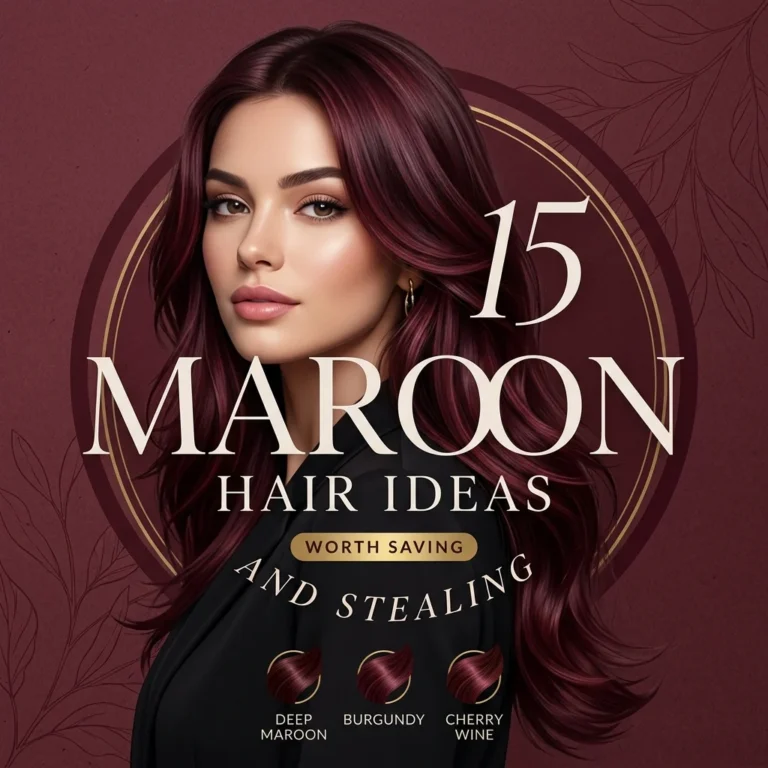
Purple carries a certain theatrical warmth that no other color family quite matches, equal parts moody and playful depending on how deep you take it. It reads soft and dreamy in pastel form, then shifts into something bold and commanding the moment the pigment gets richer. Purple has held a steady place in salon culture for years precisely because it refuses to sit still in one mood. Here are 12 ideas worth saving, and stealing.
Why Purple Hair Color Works So Well
Purple hair color sits outside the natural color spectrum entirely, which places it in the same fantasy or vivid color family as pink, blue, and teal, distinct from the red-and-brown family that includes auburn or copper. The trend traces back to punk and grunge subcultures in the late twentieth century, where unnatural hair color signaled individuality, before crossing into mainstream fashion through runway shows and, later, Pinterest and Instagram. What separates purple from other vivids is its range: it can be muted into something office-appropriate or pushed into full saturation without ever reading as a different color family altogether.
The materials behind the color matter as much as the shade name. A true violet-based vivid dye, mixed with a touch of blue to prevent it from fading pink, creates the richest results, usually applied over a pre-lightened pale yellow or white base since purple pigment needs a light canvas to show true. Colorists commonly reach for direct dyes rather than permanent oxidative color for the most vibrant purples, since direct pigment sits on the hair shaft rather than processing inside it.
Purple has climbed steadily on Pinterest search data over the past several seasons, driven partly by a broader shift toward personalized, non-traditional hair color as an extension of personal style rather than a departure from professionalism. Muted, low-maintenance versions like smoky lavender have also made the color more accessible to workplaces that once ruled out vivid shades entirely.
Style at a Glance
| Element | Muted Lavender | Vivid Plum |
| Base Tone | Cool, silvery undertone | Deep, saturated violet undertone |
| Best For | Lighter starting hair, low-commitment wear | Pre-lightened hair, bold statement looks |
| Maintenance | Purple shampoo, gloss every 5 to 6 weeks | Direct dye refresh every 3 to 4 weeks |
12 Purple Hair Ideas
1. Deep Plum All-Over Color
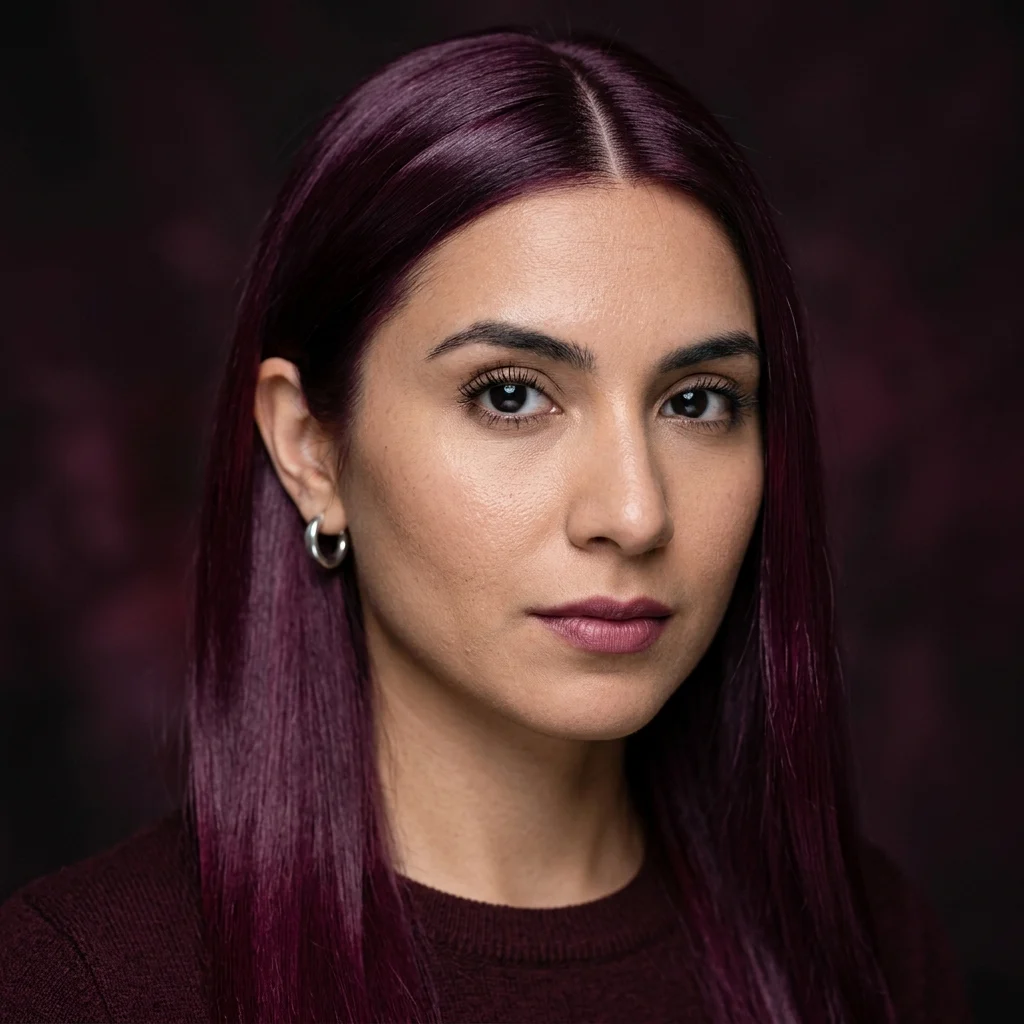
Vibe: Moody and rich, a color that owns the room without needing volume.
Why it works: An all-over plum saturates every strand evenly, which reads as intentional and polished rather than experimental the way partial color sometimes can. The deep violet base also flatters most skin tones because it sits close enough to natural brunette depth to avoid looking harsh against the face. Glossy, straight styling amplifies the richness of the color by reflecting more light across a smooth surface. This combination makes plum one of the more wearable full-vivid options for daily life.
How to get it: Ask your colorist to pre-lighten to a pale yellow or white base first if your natural hair is medium to dark, since plum needs that lift to show true depth rather than reading as a dull brown-purple. Request a direct-dye vivid formula mixed with a small amount of blue to keep the plum from fading toward pink. Apply the color all over in one session rather than sectioning, since uniform saturation is the goal here. Seal the color with a cool water rinse to help the cuticle close around the pigment.
Shop the Look
| Product |
| Purple-tone color-depositing shampoo |
| Direct dye vivid color, plum shade |
| Ceramic flat iron for sleek finish |
| Small silver hoop earrings |
| Deep burgundy blouse |
2. Lavender Balayage
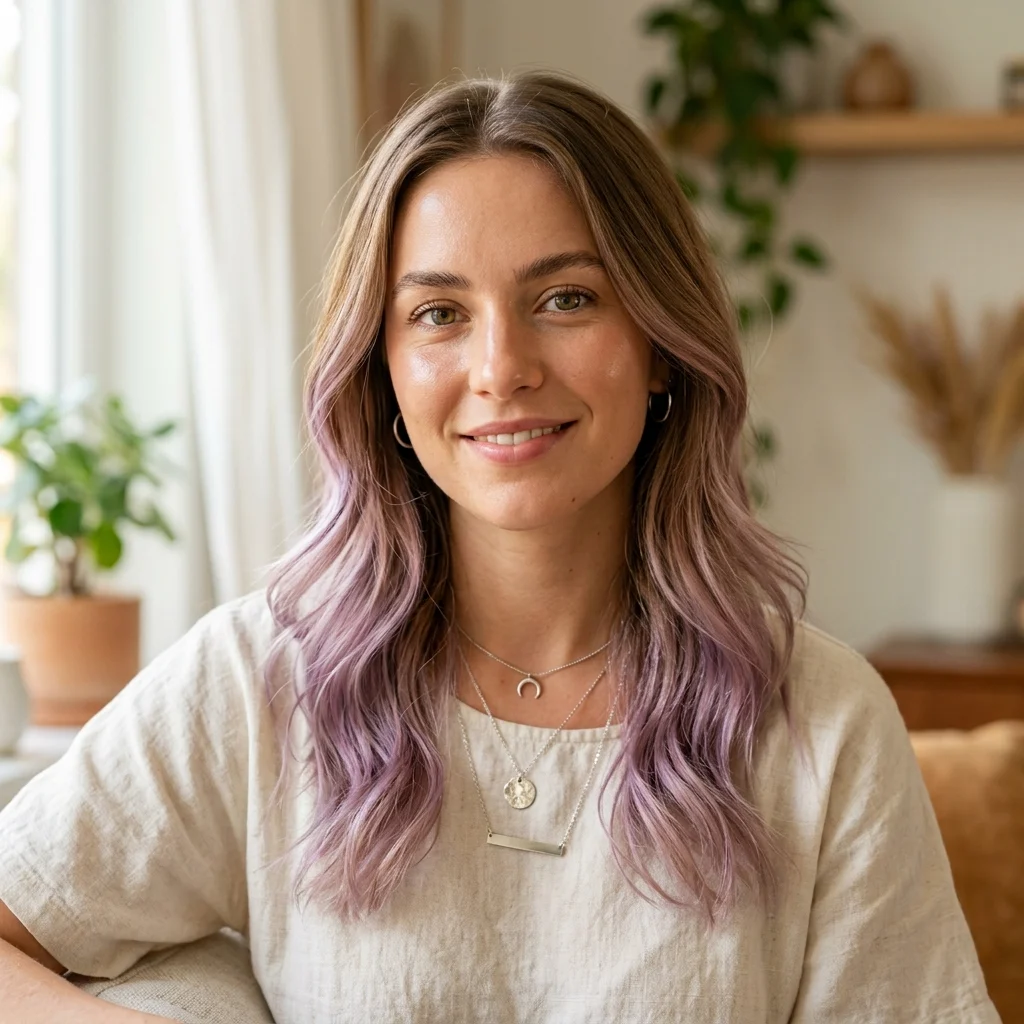
Vibe: Soft and airy, like a color that was always meant to be there.
Why it works: Hand-painting lavender rather than foiling it in solid blocks creates a soft gradient with no visible line of demarcation, the same technique that defines balayage in natural color work. Concentrating the lightest, most lavender pieces toward the ends keeps the color from overwhelming the face near the roots. This placement also means regrowth stays unnoticeable for months, since color was never applied near the scalp.
How to get it: Ask specifically for a lavender balayage rather than a full-head vivid application, requesting the painting be concentrated from mid-shaft to ends only. Have your colorist lighten the painted sections to a pale yellow first, then tone with a diluted violet direct dye for the soft lavender finish. Choose a colorist experienced with pastel toning specifically, since lavender fades faster and less predictably than deeper purples. Book a toning refresh every 5 to 6 weeks to keep the lavender from fading to a dull gray.
💡 Quick win: A purple-tinted leave-in spray on the ends between washes keeps the lavender pieces from turning brassy yellow as they fade.
Shop the Look
| Product |
| Purple-tinted leave-in toning spray |
| Lightweight argan hair oil |
| Wide-tooth balayage detangling brush |
| Layered silver chain necklace set |
| Cream linen blouse |
3. Purple to Silver Ombré
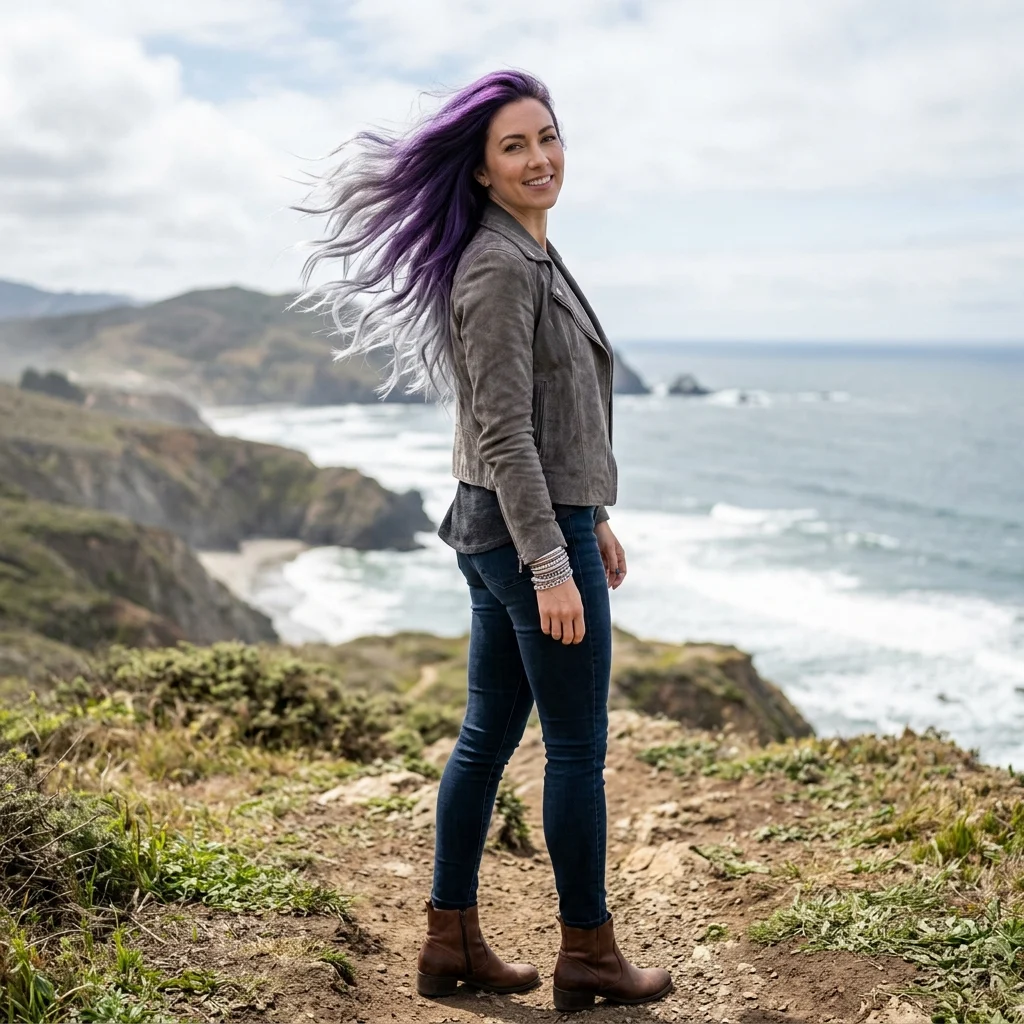
Vibe: Dramatic and flowing, two cool tones working in contrast.
Why it works: A defined transition point at mid-length gives ombré its signature two-tone drama, relying on longer hair to give the transition zone room to read clearly. Pairing purple with silver rather than a warmer tone keeps both colors in the same cool family, which prevents the transition from looking mismatched. This tonal harmony is what separates a well-executed cool ombré from one that fights itself. The silver ends also catch and scatter light differently than the denser purple root, adding visual texture to the movement.
How to get it: Ask your colorist for a clear, though softly blended, transition point at or just below the shoulders, pre-lightening the ends to a pale yellow before toning them silver with a blue-violet based toner. Keep the root section in a deep, direct-dye violet for maximum contrast against the cool ends. Request a glaze specifically formulated to neutralize yellow undertones in the silver sections, since brassiness reads as especially obvious against purple.
Shop the Look
| Product |
| Blue-violet toning gloss for silver ends |
| Direct dye vivid color, deep violet |
| Leather wrap bracelet set |
| Gray suede jacket |
| Wide-tooth detangling comb |
4. Pastel Lilac Full Head
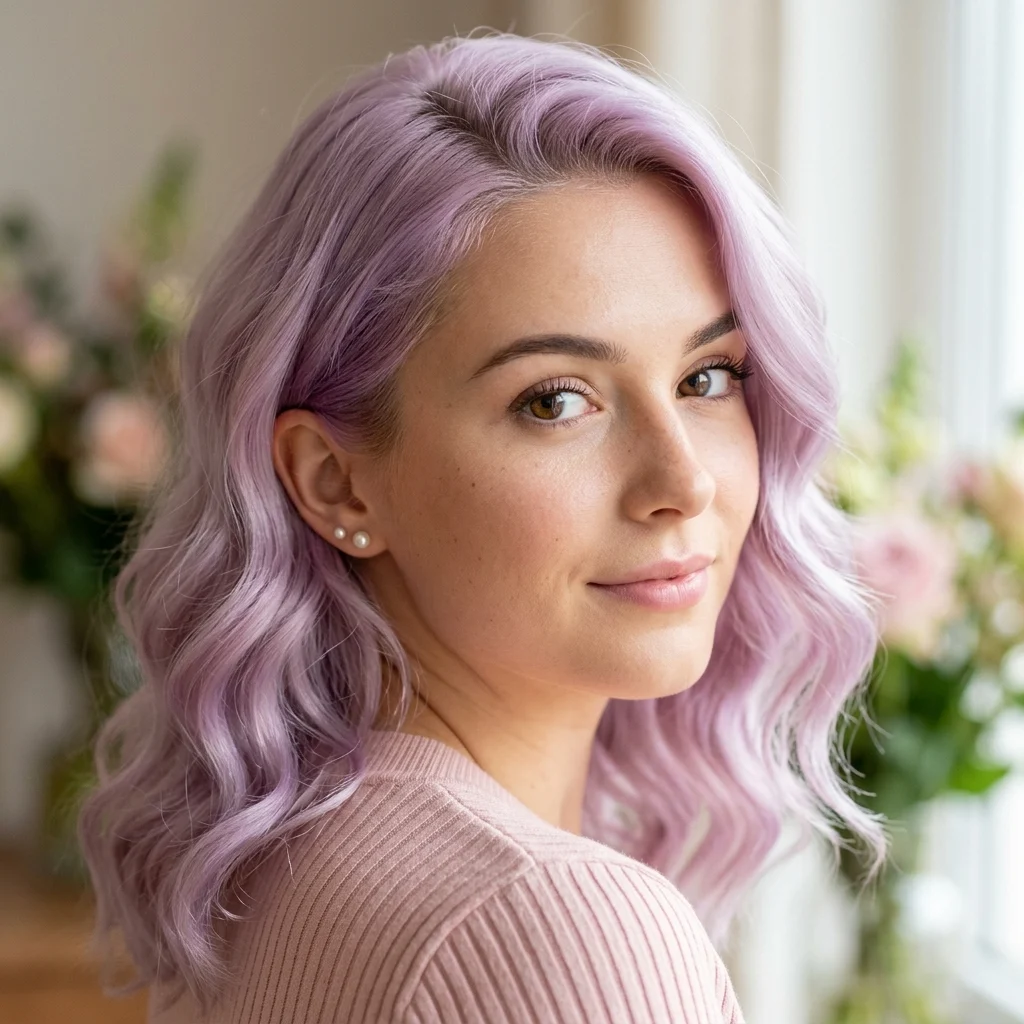
Vibe: Light and dreamy, a color that feels like soft focus in real life.
Why it works: Committing to a full head of pastel, rather than partial placement, gives lilac an even, uniform softness that partial applications can’t replicate, since any darker natural hair peeking through would break the pastel illusion. The extremely light saturation also requires the most lightening of any purple shade here, which is part of why the finished color looks so ethereal rather than muddy. Loose waves add gentle movement that keeps the pale tone from looking flat under studio lighting. This is one of the more delicate colors to maintain, but also one of the most distinct.
How to get it: Ask your colorist to lighten the entire head to a near-white or pale yellow base first, since lilac only shows true at the lightest possible starting point. Request a heavily diluted violet direct dye, mixed at a fraction of full strength, applied all over rather than in sections. Use a color-safe purple shampoo no more than once a week to avoid over-toning the pastel into a deeper shade than intended. Deep condition after every wash, since the lightening process required for this shade is significant.
Shop the Look
| Product |
| Bond-building deep conditioning mask |
| Purple-tone color-safe shampoo, gentle formula |
| Ceramic curling wand for loose waves |
| Small pearl stud earrings |
| Soft pink blouse |
5. Vivid Amethyst Jewel Tone
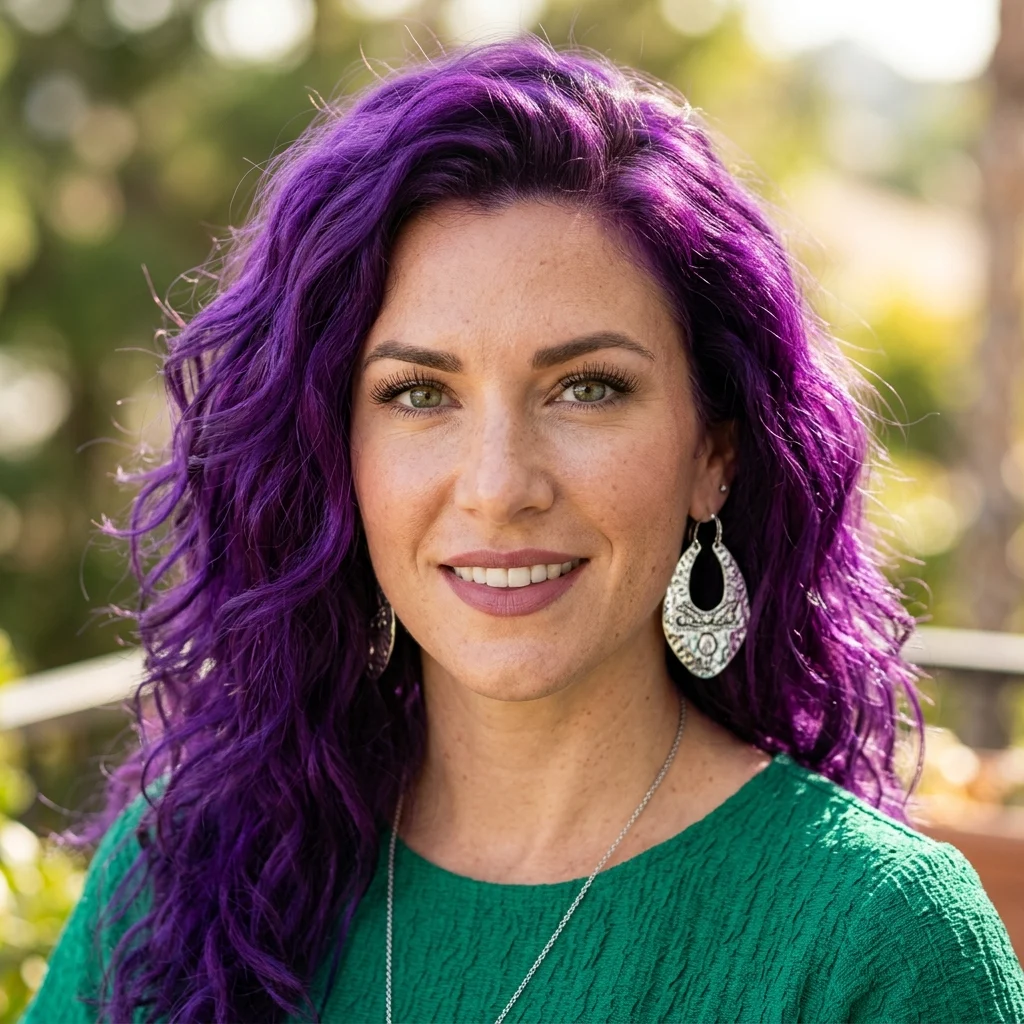
Vibe: Bold and vivid, a color that reads as confident from across a room.
Why it works: Pushing the violet pigment concentration to jewel-tone intensity creates a color saturated enough to hold its richness even in low light or shadow, which separates it from the softer purples most people picture first. This concentrated formula also holds vibrancy through more wash cycles before fading toward a duller tone. Pairing it with a cool-toned green, like emerald, creates contrast that makes the amethyst read even more intense by comparison.
How to get it: Request a full-strength direct-dye vivid in an amethyst or jewel-purple shade rather than a diluted pastel formula, applying it over a fully pre-lightened pale yellow base for true saturation. Use a color-safe, sulfate-free shampoo exclusively, since sulfates strip vivid pigment noticeably faster than they strip permanent color. Wash hair in cool water only, since heat accelerates fading on saturated vivid tones more than on any other purple depth.
Shop the Look
| Product |
| Vivid amethyst direct dye, full strength |
| Sulfate-free color-safe shampoo |
| Silk hair wrap for overnight protection |
| Statement silver drop earrings |
| Emerald green blouse |
6. Purple Money Piece
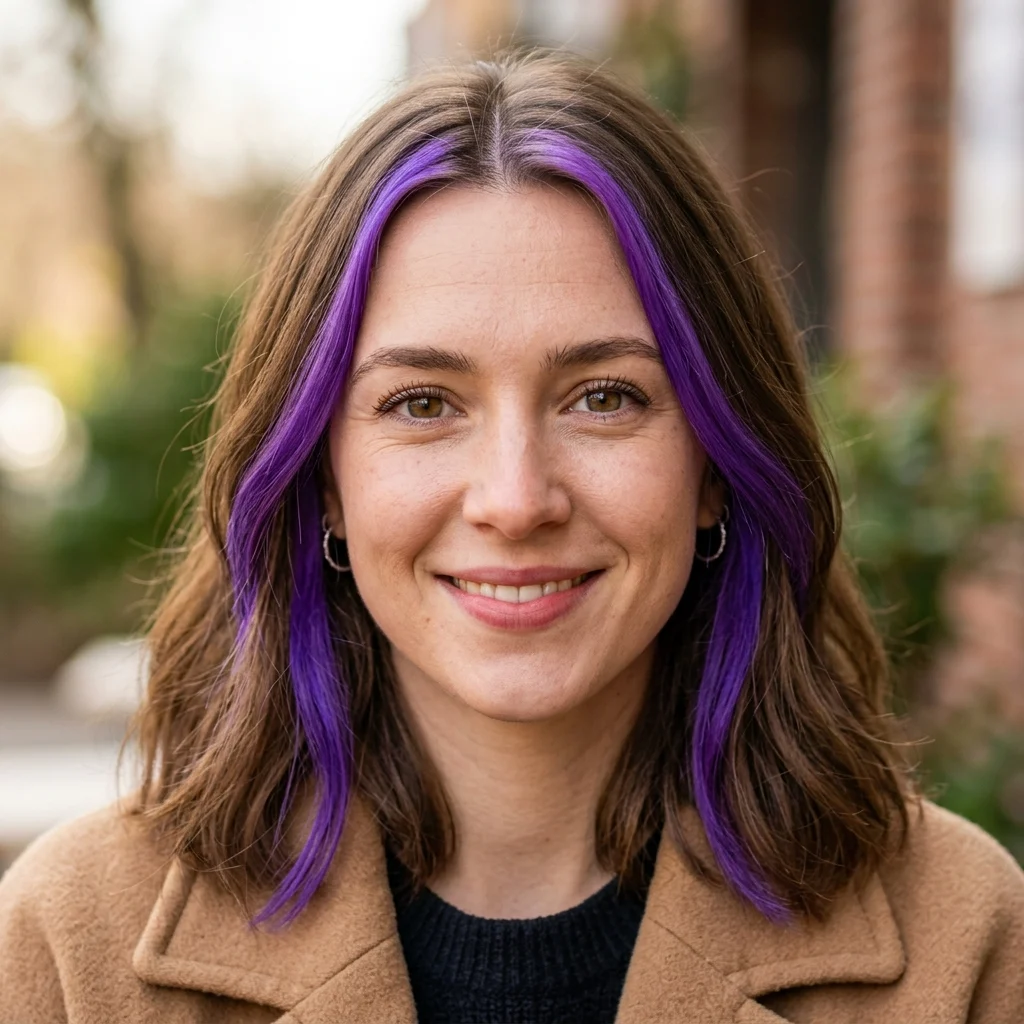
Vibe: Bright and framing, color placed exactly where it flatters most.
Why it works: Concentrating vivid purple only around the face, while leaving the rest of the hair natural, applies the same face-framing brightening principle used in blonde balayage but with violet pigment instead. This creates contrast exactly where it does the most visual work, near the eyes and jawline, without committing to a full head of color. The technique also requires far less upkeep than an all-over application, since only two small sections need regular refreshing.
How to get it: Ask your colorist for two face-framing highlight pieces only, positioned to fall just outside each eye when hair is worn down, rather than highlights distributed through the whole head. Pre-lighten just these two sections to a pale yellow before applying a saturated violet direct dye for maximum contrast against the natural brown. Keep the placement symmetrical by measuring the same width and starting point on both sides.
💡 Quick win: A one-step purple gloss treatment applied just to the two highlighted pieces refreshes their vibrancy in under 20 minutes at home between salon visits.
Shop the Look
| Product |
| At-home color gloss treatment, violet tone |
| Color-safe leave-in conditioner |
| Small silver hoop earrings |
| Camel wool coat |
| Boar-bristle finishing brush |
7. Purple Bob for Short Hair
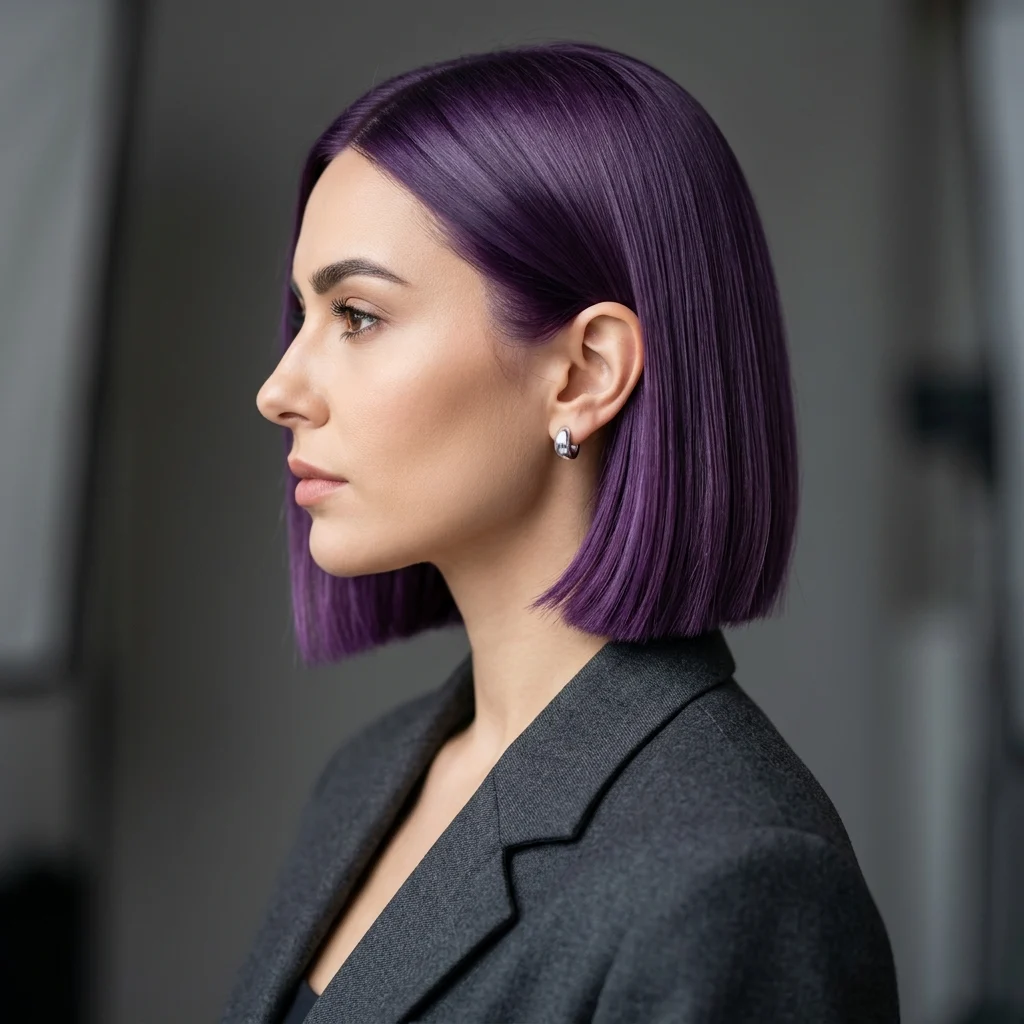
Vibe: Polished and confident, color and cut working as one statement.
Why it works: On shorter hair, an all-over purple reads bolder and more immediate than it would on longer lengths, since there’s less hair for the eye to travel across before absorbing the full color. A blunt cut paired with saturated, uniform color also emphasizes the crisp geometry of the bob itself, since there’s no gradient competing for attention. This combination turns color and cut into a single design decision rather than two separate choices.
How to get it: Request a single-process, all-over purple formula rather than any highlighting technique, since a bob’s short length shows off pure saturation better than dimension would. Ask your stylist to cut the blunt line after coloring rather than before, so the fresh ends show the color at its most vibrant. Choose a glossy, shine-boosting finishing treatment to enhance the polished look a bob depends on. Book color refreshes every 3 to 4 weeks, since regrowth is more visually obvious on shorter, single-process vivid color.
Shop the Look
| Product |
| Glossing shine serum for colored hair |
| Ceramic flat iron, small barrel |
| Color-safe shampoo, violet pigment formula |
| Small silver stud earring set |
| Structured charcoal blazer |
8. Subtle Purple on Natural Curls
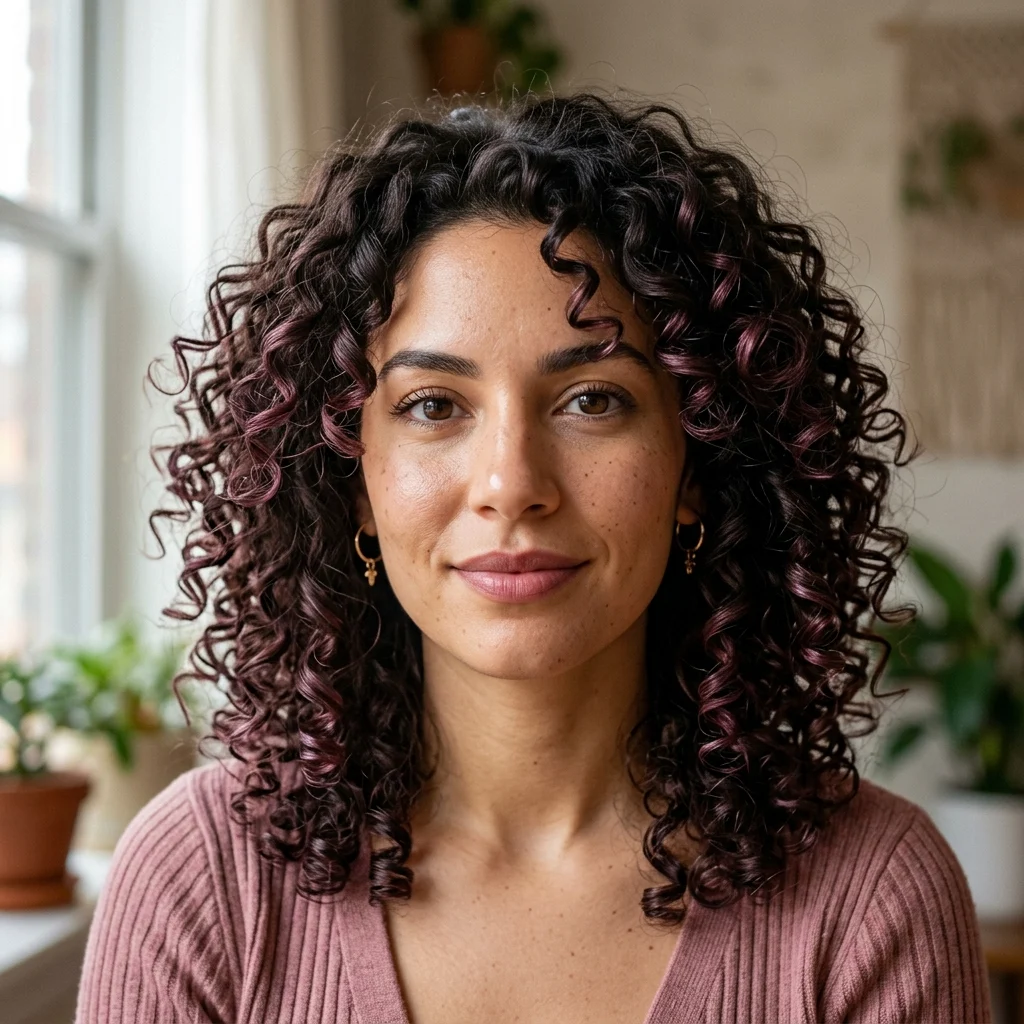
Vibe: Soft and defined, warmth and depth woven into the curl pattern.
Why it works: Curl patterns naturally catch and reflect light differently at the edges than at the core of each curl, so even a subtle plum tone applied evenly reads as more dimensional on curly hair than it would on straight hair. This happens because the curl’s own shape does part of the dimensional work that highlighting would otherwise accomplish separately. A lighter, gentler application also protects curl integrity better than the heavy lightening a vivid purple usually requires.
How to get it: Choose a demi-permanent, low-lift plum gloss rather than a full vivid dye requiring pre-lightening, since curly hair is often more porous and processes color faster and less evenly with harsher formulas. Ask your colorist to apply the color while hair is stretched, not in its shrunken curly state, to ensure even saturation from root to end. Request a lower-volume developer to minimize any impact on curl elasticity and pattern. Deep condition weekly following the color to maintain both curl definition and tone together.
Shop the Look
| Product |
| Curl-defining cream, color-safe formula |
| Plum-tone color-depositing deep conditioner |
| Microfiber curl-drying towel |
| Small gold hoop earrings |
| Dusty rose blouse |
9. Root Smudge Purple with Silver Ends
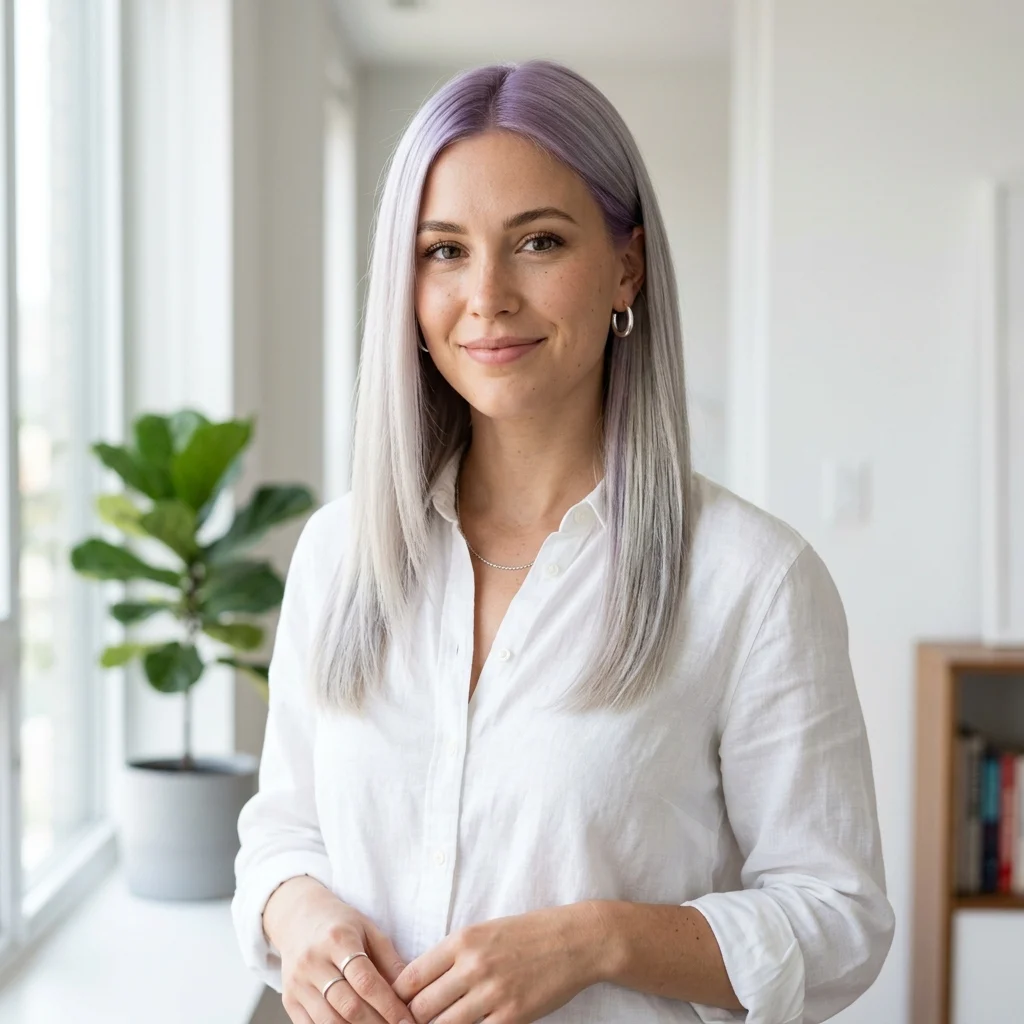
Vibe: Sleek and low-maintenance, built to grow out gracefully.
Why it works: A soft purple root shadow melting into lighter silver-blonde ends means new growth simply extends the existing gradient instead of creating a visible line, the core principle behind low-maintenance shadow-root techniques. This graduated approach also adds depth to icy blonde hair, which can otherwise look flat without a rooted base. Choosing purple specifically, rather than a standard dark brown root, adds a fantasy edge that complements cool, silvery ends better than a warm brown would.
How to get it: Ask your colorist to apply a soft violet tone only at the root, blending it downward for about two to three inches before the icy blonde takes over. Request a feathered application rather than a hard line, using a brush technique that fades the color gradually into the lighter length. Choose a blue-violet toner specifically for the ends to keep them cool and prevent any yellow cast from showing through.
💡 Quick win: A purple-tinted toning mask applied to the root section every other wash keeps the smudge from fading into a flat brown before the next salon visit.
Shop the Look
| Product |
| Purple-tinted toning hair mask |
| Silver-blonde purple shampoo |
| Ceramic flat iron for sleek finish |
| Minimalist silver hoop earrings |
| White cotton button-down shirt |
10. Purple Highlights on Fine Hair
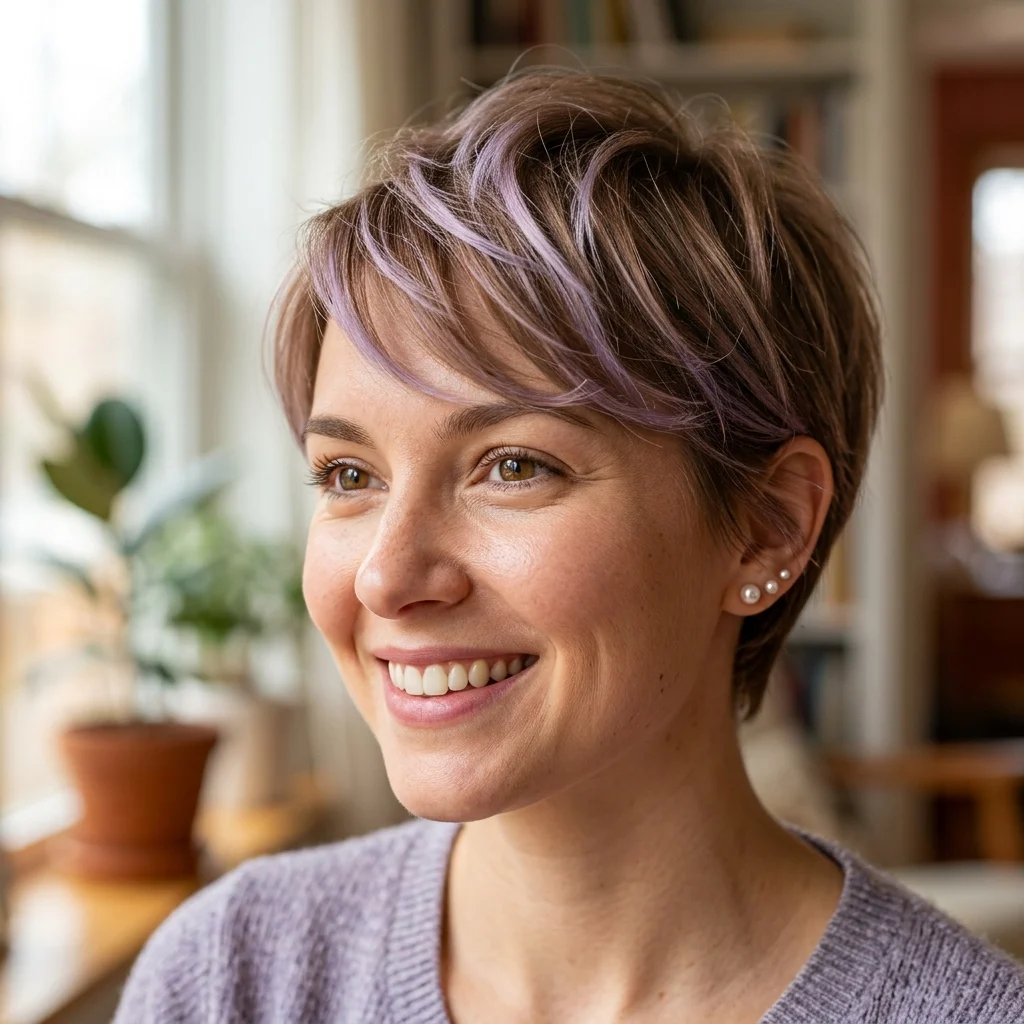
Vibe: Light and lifted, more visual volume without more length.
Why it works: Concentrating fine purple highlights specifically at the crown, rather than throughout the whole head, creates the appearance of added density exactly where fine hair tends to look flattest. This targeted placement means fewer highlights are needed overall, which reduces processing time and stress on fine, more fragile strands. The cool violet tone also catches light differently than the surrounding natural hair, adding to the perception of texture and fullness.
How to get it: Ask your colorist to concentrate highlight foils at the crown and part line specifically, using no more than a third of the highlights you’d get in a full head application. Request the thinnest possible foil sections, since fine hair shows chunky highlights as noticeably heavier rather than more voluminous. Choose a low-volume developer and a diluted violet toner to minimize damage and keep the color soft rather than saturated.
Shop the Look
| Product |
| Volumizing root mousse, color-safe |
| Fine-hold hairspray for lift |
| Wide-tooth detangling comb |
| Small pearl stud earrings |
| Lavender-gray blouse |
11. Purple Color Melt for Layered Cuts
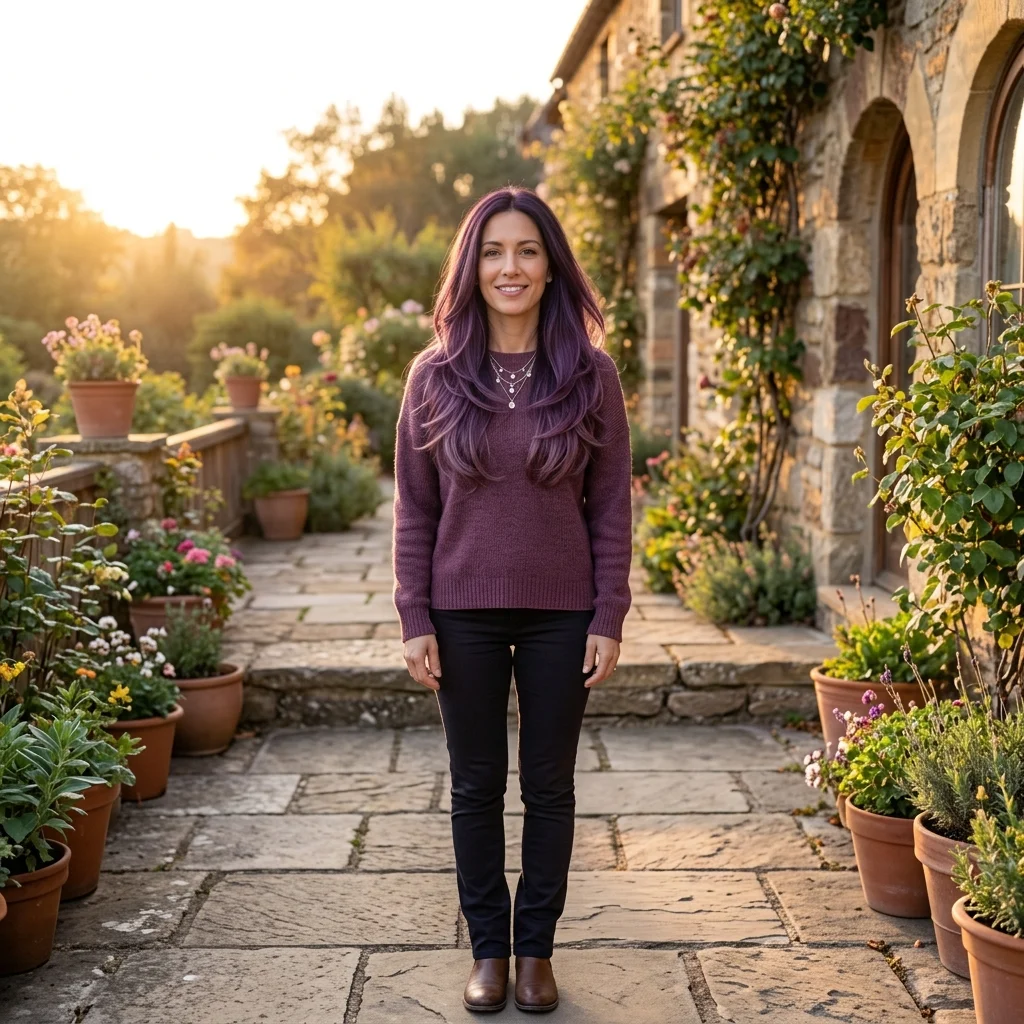
Vibe: Dimensional and flowing, color that moves with the cut.
Why it works: Applying a color melt technique specifically to a layered cut lets each layer catch a slightly different depth of purple, since the melt is designed to shift gradually rather than settle into flat, single-tone sections. This means the layers themselves become more visible and defined through color rather than cut alone. The technique works because layered hair already has built-in movement, which the gradual color shift amplifies rather than competes with.
How to get it: Ask your colorist for a color melt specifically, blending two to three shades of purple seamlessly rather than a standard two-tone ombré with one visible transition point. Request the melt be mapped to follow your layers, with deeper violet underneath and lighter, brighter purple on the top layers that catch the most light. Have your stylist cut or refresh the layers first, then color to those specific lines.
Shop the Look
| Product |
| Multi-tonal purple color-safe shampoo and conditioner set |
| Lightweight thermal protection spray |
| Round brush for layered blowouts |
| Layered silver necklace set |
| Plum-colored knit sweater |
12. Deep Purple for Winter
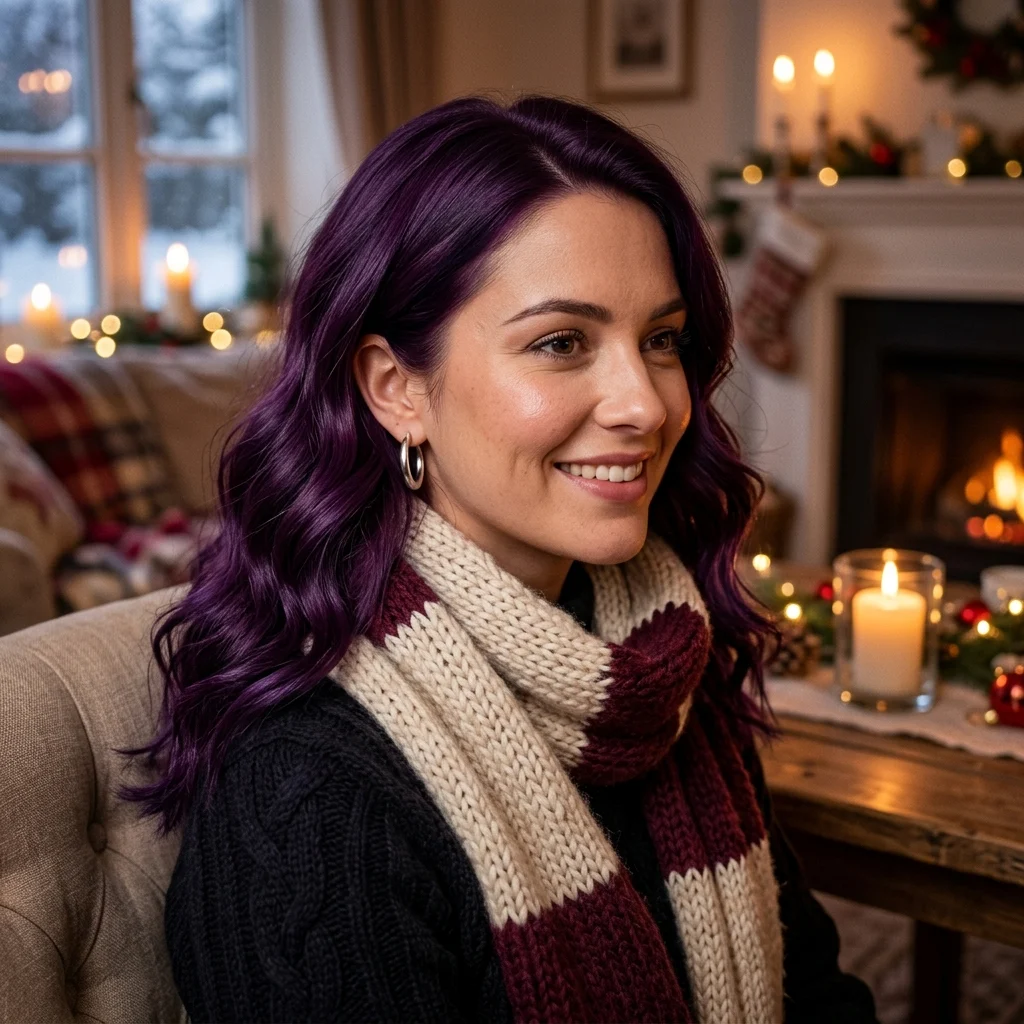
Vibe: Cozy and warm, made for shorter days and low winter light.
Why it works: Deepening the purple formula specifically for the colder months compensates for the way low winter light tends to flatten and dull vivid color that reads perfectly vibrant under summer sun. A richer, more saturated base holds its visual depth even under fluorescent or warm indoor lighting, where lighter purples can look washed out rather than rich. This seasonal adjustment is a strategy many colorists use deliberately, shifting formulas slightly deeper twice a year.
How to get it: Ask your colorist for a formula one to two shades deeper than your usual purple, moving toward a plum-leaning base rather than a lighter lilac one. Request an in-chair gloss treatment specifically timed for the seasonal shift, since this refreshes vibrancy without a full re-color. Use a hydrating, color-safe purple mask weekly through winter, since dry, cold air makes vivid color more prone to fading and static.
Shop the Look
| Product |
| Hydrating color-safe purple hair mask |
| Deep-tone violet color-depositing gloss |
| Ceramic curling wand for soft waves |
| Chunky knit infinity scarf |
| Silver hoop earring set |
How to Start Your Purple Hair Journey
Begin with an honest assessment of your current hair color and how much lightening it will take to get there, since purple pigment shows true only against a pale yellow or white base. This single step anchors the whole process, because a colorist working from an accurate starting point can plan the right number of sessions instead of promising a one-visit result that dark hair simply can’t deliver.
The most common mistake is skipping or rushing the pre-lightening step, which happens when someone tries to save time or money with a single at-home box dye over dark natural hair. It’s the direct cause of purple turning out muddy, gray-brown, or barely visible instead of the vivid shade pictured, and the fix is patience: lighten in stages over multiple sessions rather than forcing one aggressive lift that also risks breakage.
Three items under $50 make an immediate difference: a purple-tone color-depositing shampoo, around $12 to $18, a bond-building leave-in treatment, around $15 to $20, and a silk pillowcase to slow color fade overnight, around $20 to $30.
A full transformation from dark natural hair can take 2 to 3 salon visits over several weeks to lighten safely, while already-light hair can achieve full vivid color in a single 2 to 4 hour session. Budget $150 to $300 for a full-head vivid application, or $60 to $120 for a smaller money piece or root smudge version.
Frequently Asked Questions About Purple Hair Color
What’s the difference between purple and lavender hair?
Purple hair generally refers to the full depth range, from soft pastel to deep saturated plum, while lavender specifically describes the palest, most diluted end of that range, closer to a cool pastel gray-violet. Lavender requires the most lightening of any purple shade to show true, since even a small amount of underlying warmth will pull it toward a muddier tone. Deeper purples like plum or amethyst are more forgiving of a slightly less-than-perfect lightening job underneath.
How much does purple hair color typically cost?
Prices vary by salon and how much pre-lightening is required, but expect $150 to $300 for a full vivid purple transformation on dark hair, $80 to $150 for a smaller placement like a money piece or root smudge, and $60 to $100 for a purple balayage refresh on already-light hair. At-home direct dye kits typically run $10 to $25, though results depend heavily on how light your hair already is.
Does purple hair color work on all skin tones?
Purple flatters a wide range of skin tones because the color spans both warm-leaning plum and cool-leaning lilac, giving most people an option somewhere in the range. Cooler, ashier purples like lilac or amethyst tend to suit fair to medium skin tones with cool undertones, while deeper, warmer plums often flatter olive and deeper skin tones. A consultation with color swatches held against your face is the most reliable way to confirm the right depth before committing.
Is purple hair color high maintenance?
Yes, more than most natural color families, since purple is typically a direct dye that sits on the hair shaft and fades with every wash rather than growing out slowly like permanent color. Expect to use color-safe, sulfate-free products and a purple-toning shampoo weekly, along with a gloss or dye refresh every 3 to 6 weeks depending on the depth chosen. Lighter pastel shades like lilac generally require more frequent toning than deep, saturated shades like plum.
How do you keep purple hair color from fading too fast?
Wash hair in cool or lukewarm water rather than hot, since heat opens the hair cuticle and releases direct dye pigment faster than any other color type. Use a sulfate-free, color-safe shampoo along with a purple-tinted color-depositing conditioner once or twice a week to redeposit pigment between salon visits. Limiting wash frequency overall and switching to dry shampoo between washes also slows fading, since purple direct dye rinses out with every single shampoo session.
Ready to Try Purple Hair Color?
These 12 ideas move across depth, placement, and technique, so there’s a starting point whether you want a subtle root smudge or a fully saturated jewel-tone transformation. Trying purple doesn’t require an all-or-nothing leap, and a small money piece is just as valid a starting point as a full head of vivid color. Today, book a consultation with reference photos so your colorist can map out how much lightening your specific hair will need. Once the color settles in, there’s a quiet thrill that comes with catching your own reflection and seeing something genuinely unexpected looking back. Save the shades that caught your eye most, and bring that image straight to your next appointment.