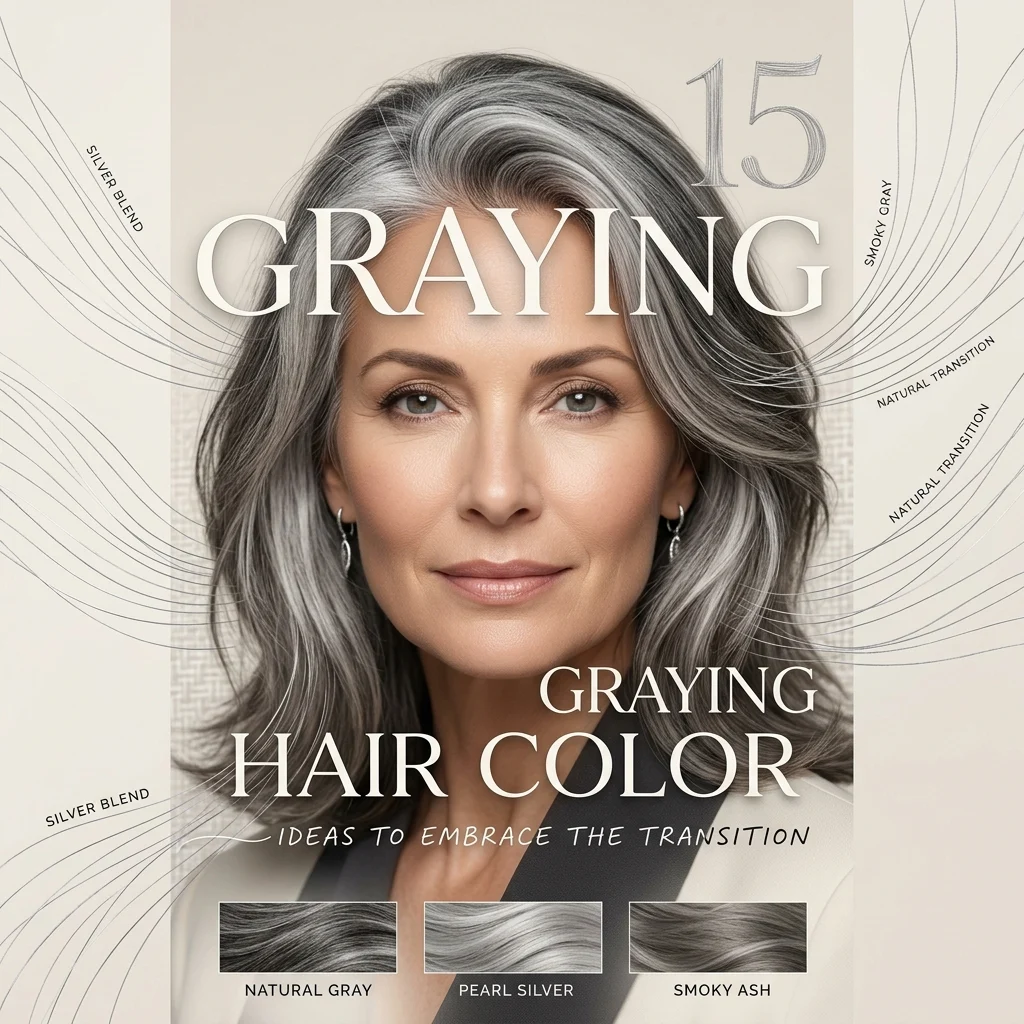
15 Graying Hair Color Ideas

There is a specific kind of confidence that comes from gray hair that looks chosen rather than simply arrived at. Some approaches blend gray so seamlessly into existing color that regrowth stops being a countdown to a salon visit. Others lean fully into silver, letting it read as polished and deliberate under any light. Graying hair color ideas can be bold and all over, quietly blended, or barely there depending on where someone sits in their transition.
Here are 15 ideas worth saving and stealing.
Why Graying Hair Color Ideas Work So Well
Graying hair color ideas have shifted away from the old assumption that gray must be covered entirely, drawing instead from the same dimensional coloring principles used for any other hair color trend. What separates a current approach from an outdated one is treating gray as a texture and tone to work with, not a flaw to erase. Colorists now use foilyage, reverse balayage, and toning glosses to either highlight natural silver or ease someone out of permanent color gradually.
The strongest graying hair techniques rely on a small set of repeatable tools. Colorists section hair to blend natural silver with lowlights or lightened pieces, then finish with a purple or blue based toner like Wella T18 to keep any yellow cast neutralized. Glossing treatments add shine that gray hair often lacks on its own, since gray strands tend to be more porous and duller than pigmented hair. Placement matters as much as tone, since a face framing money piece reads completely differently than an all over gray transition.
Style at a Glance
| Element | Detail |
| Philosophy | Working with natural gray through blending and toning rather than erasing it |
| Key Techniques | Foilyage, reverse balayage, root smudging, dimensional lowlighting |
| Key Colors | Silver ash, pewter, charcoal, champagne blonde, icy white |
1. Silver Ash Blonde Full Transition
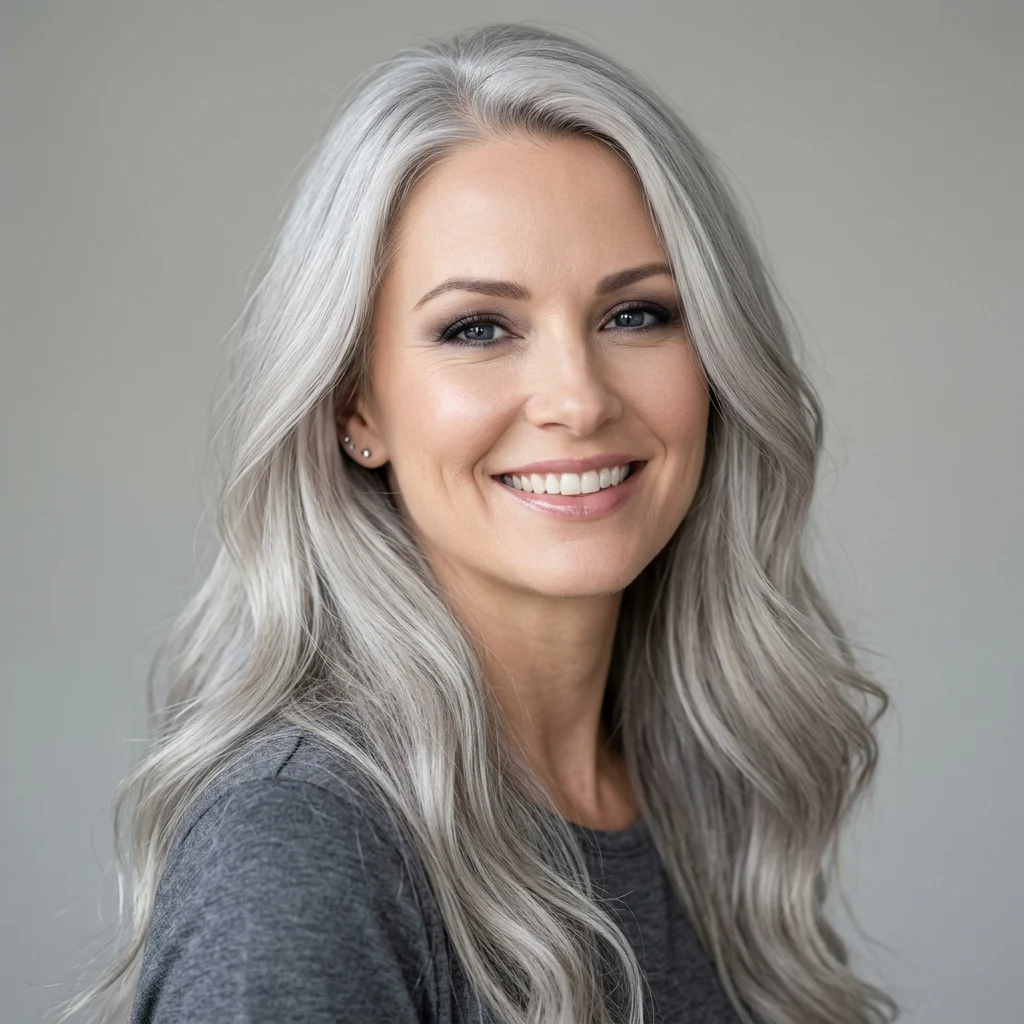
Vibe: Cool and polished, hair that reads as chosen rather than arrived at.
Why it works: A full silver ash transition works by lightening the entire head to a pale yellow base, then applying a violet based toner to neutralize warmth completely. This approach suits someone who wants a uniform result rather than a gradual blend with existing gray. The cool, smoky finish flatters most skin undertones because it sits neutral rather than leaning warm or cool to an extreme. Achieving true silver on darker natural hair requires significant lightening, which is the main trade off of this fully committed approach.
How to get it: Lighten the entire head evenly using a lightener designed for full color changes, checking the underlying pigment carefully before toning. Apply a violet based toner like Wella Color Charm T18 to neutralize any remaining yellow or gold. Use a purple shampoo once or twice a week to maintain the cool cast between salon visits. Book a toner refresh every four to five weeks since silver fades toward yellow faster than most other shades.
Shop The Look
| Product |
| Wella Color Charm T18 toner |
| Purple shampoo for silver and blonde hair |
| Bond building leave in treatment |
| Heat protectant spray for colored hair |
| Silk pillowcase, queen size |
2. Gray Blending Highlights to Camouflage Regrowth

Vibe: Natural and low maintenance, color that works with what is already growing in.
Why it works: This technique places lightened foils directly where natural gray already appears, rather than applying an even pattern across the whole head. Matching the highlight width to the actual gray strands means the blend looks organic instead of like an obvious highlight job layered on top. The result extends the time between root touch ups significantly, since gray regrowth blends into the highlighted pattern instead of standing out against solid color. This approach works especially well for someone in the early to middle stages of graying who is not ready to go fully silver.
How to get it: Have the colorist map out where gray is currently concentrated, usually at the temples and part line, before placing any foils. Lighten only those mapped sections to a shade close to the natural gray tone rather than a stark blonde. Blend the edges of each highlighted section with a soft, feathered technique so there is no hard line. Reassess and remap the highlights every ten to twelve weeks as more gray grows in.
Shop The Look
| Product |
| Fine foil sheets for gray blending highlights |
| Low deposit toning gloss, grey matched shade |
| Rat tail comb, fine pin |
| Color safe hydrating conditioner |
| Root touch up powder, matched base shade |
3. Warm Pewter Silver for a Softer Gray
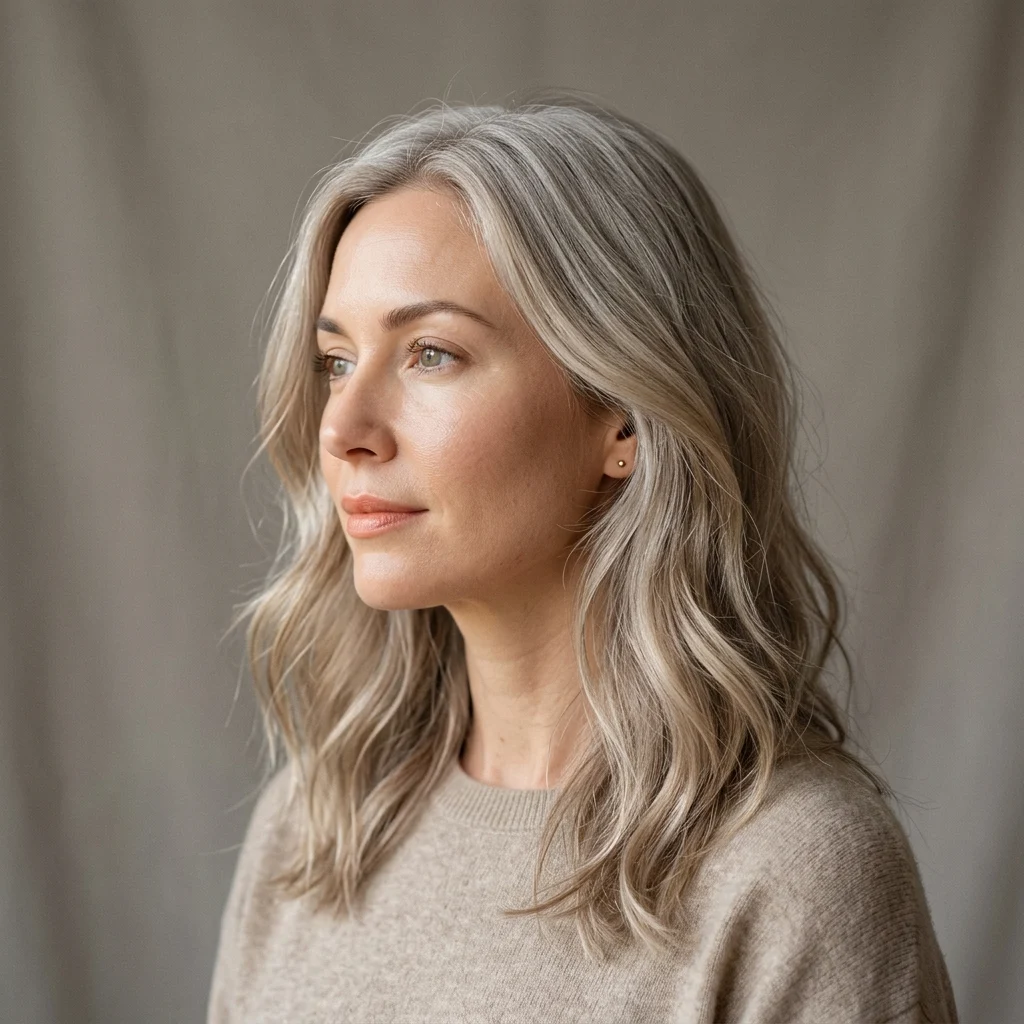
Vibe: Soft and warm, silver without the harsh, icy edge.
Why it works: Pewter silver blends a small amount of warm pigment into an otherwise cool silver base, softening the overall effect for skin tones that a stark platinum silver can wash out. The softer tone also tends to hide yellow rebound less obviously than a pure cool silver, since there is already some warmth accounted for in the base. This approach suits someone who finds fully cool silver tones aging rather than flattering on their complexion.
How to get it: Lighten the hair to a pale yellow base as usual, then mix a violet toner with a small amount of a beige or gold toner rather than using violet alone. Apply the blended toner evenly and process according to standard timing, checking partway through for the right warmth level. Use a color safe shampoo without added violet pigment, since pewter needs less correction than a pure cool silver. Refresh the toner blend every four to five weeks to maintain the balance.
💡 Quick Win: For a quick pewter test before a full appointment, use a semi permanent gray toning gloss mixed with a drop of beige gloss over an existing light blonde base.
Shop The Look
| Product |
| Violet toner for base neutralizing |
| Beige or gold toning additive |
| Color safe shampoo, neutral formula |
| Tint brush and mixing bowl set |
| Lightweight shine serum |
4. Long Salt and Pepper Blend with Dimensional Lowlights
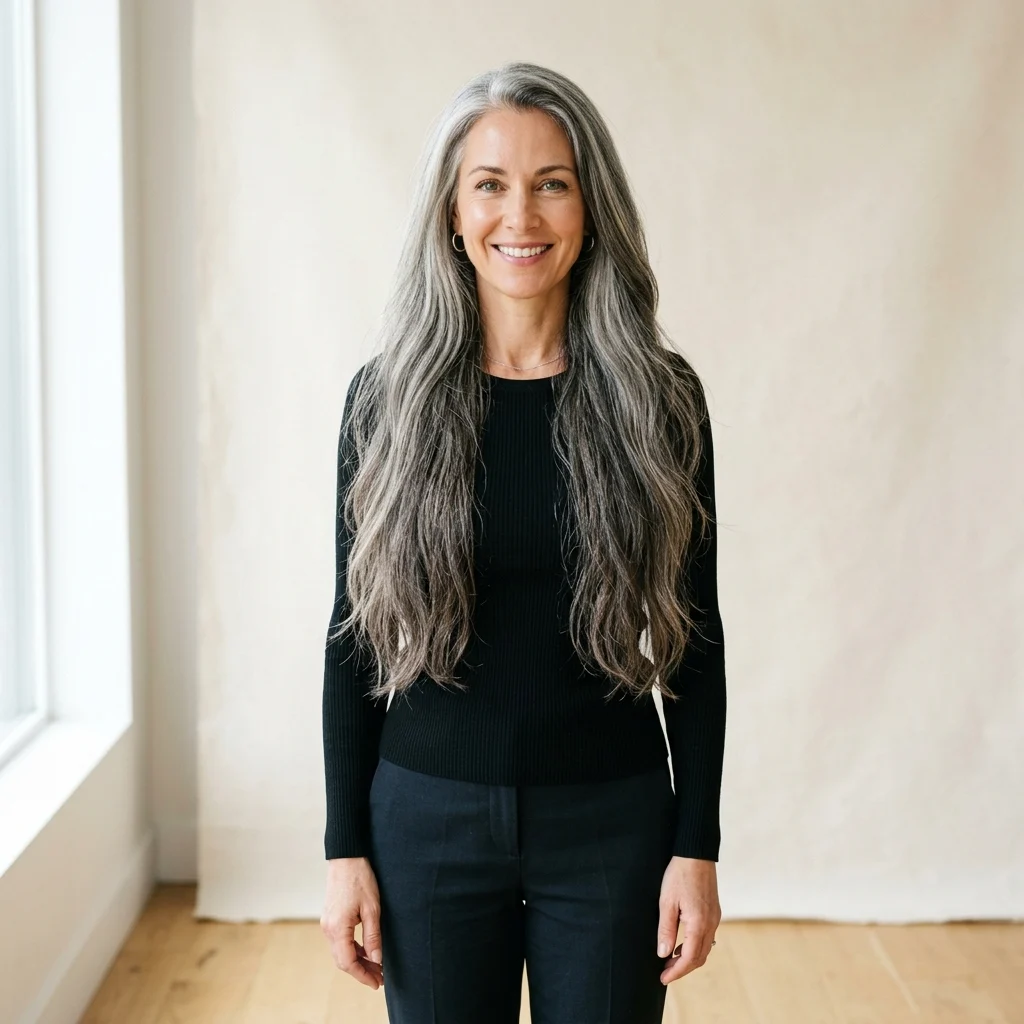
Vibe: Rich and natural, silver given depth instead of flattening into one tone.
Why it works: Long hair shows off a salt and pepper pattern clearly since there is enough length for the natural variation between white, grey, and darker strands to read as texture rather than a flat single tone. Adding dimensional lowlights in a deep charcoal reintroduces some richness that pure gray can lack on its own, especially through the mid lengths. The added depth also helps long gray hair avoid looking dull or flat under indoor lighting.
How to get it: Identify the natural pattern of lighter and darker strands before adding any color, working with the existing distribution rather than against it. Apply a few deep charcoal lowlights through the mid lengths and ends where hair naturally reads as flatter or more washed out. Use a glossing treatment over the whole head afterward to unify shine across both the natural gray and the added lowlights. Deep condition regularly, since gray hair strands tend to be more porous than pigmented ones.
Shop The Look
| Product |
| Charcoal demi permanent hair color |
| Clear glossing treatment for shine |
| Deep conditioning hair mask |
| Wide tooth detangling comb |
| Color safe hydrating hair oil |
5. Face-Framing Silver Money Piece Over Natural Gray
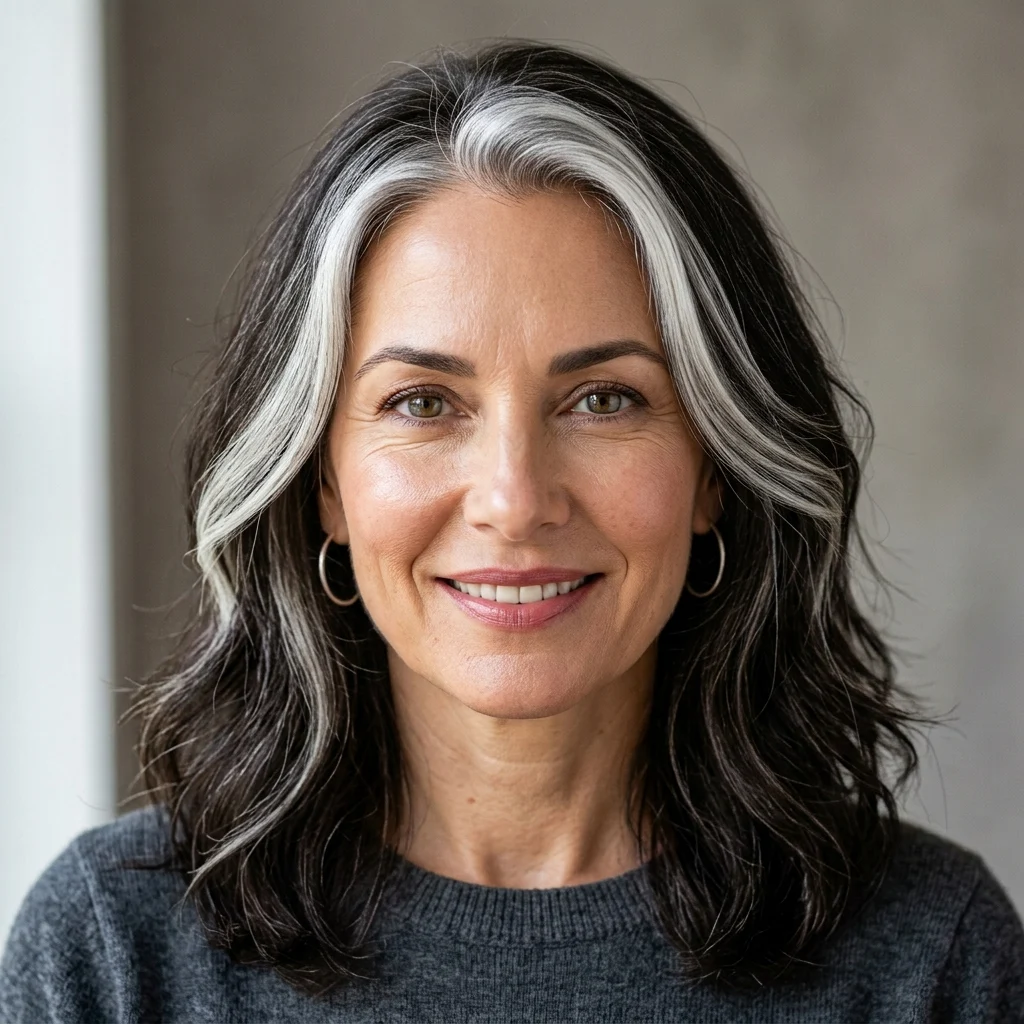
Vibe: Polished and intentional, one section brightened just enough to lead the eye.
Why it works: Money piece placement targets the two face framing sections that draw the most visual attention in any portrait or selfie, making it an efficient way to brighten natural gray without a full head process. Lightening just this section to a cleaner, brighter silver than the surrounding natural gray creates a deliberate focal point. The technique lets someone test a brighter silver look before committing to it everywhere.
How to get it: Section two face framing pieces, roughly three quarters of an inch wide, and foil them separately from the rest of the natural hair. Lighten to a pale yellow base, then tone with a violet based silver toner for a clean, bright result. Blend the color slightly toward the part with a gentle balayage sweep for a softer root. Refresh the silver tone every three to four weeks with a purple toning gloss.
Shop The Look
| Product |
| Violet based silver toner |
| Purple toning gloss treatment |
| Foil sheets for face framing sections |
| Edge control gel for smooth part lines |
| Color safe hydrating hair oil |
6. Glossy Silver Toner for High-Shine Gray
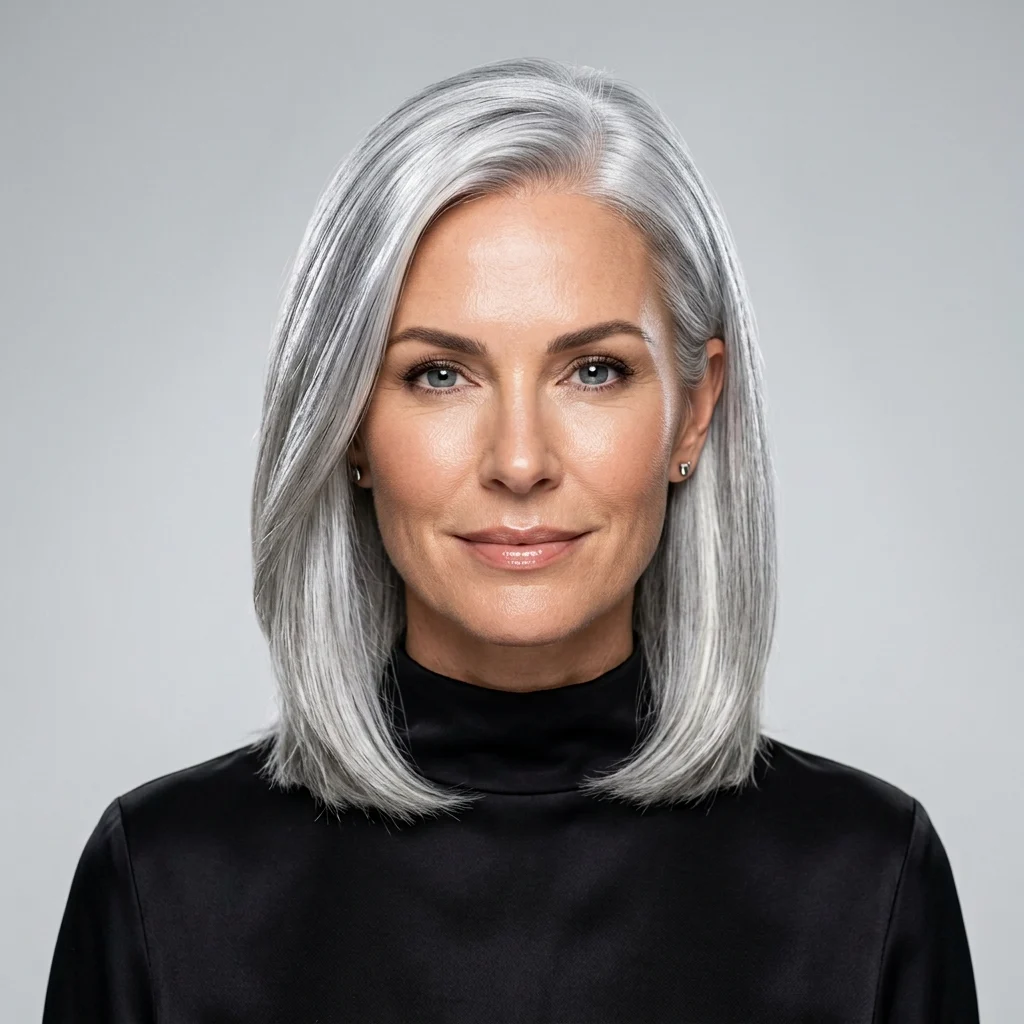
Vibe: Sleek and polished, gray styled to reflect light rather than absorb it.
Why it works: Gray and silver strands often carry a coarser texture and duller natural shine than pigmented hair, so a glossing step does more visible work here than on most other hair colors. A clear or lightly tinted gloss seals the cuticle flat, which is what produces the mirror like shine rather than the toner alone. This technique requires no additional lightening, keeping the treatment quick and low commitment. The glossy effect fades gradually with washing, so upkeep stays simple compared to a full color reprocess.
How to get it: Apply a clear glaze treatment over toned silver hair, processing for the standard fifteen to twenty minute timing. Finish blow drying with a boar bristle brush to smooth the cuticle before any shine product is applied. Add two drops of a lightweight shine serum, such as one with argan oil, through the mid lengths and ends only. Style with a flat iron on a low heat setting for maximum shine without unnecessary heat damage.
Shop The Look
| Product |
| Clear glaze treatment for silver hair |
| Boar bristle smoothing brush |
| Lightweight argan oil shine serum |
| Flat iron with adjustable low heat setting |
| Heat protectant spray for styling |
7. Root Smudge to Soften the Gray Grow-Out Line

Vibe: Soft and unhurried, a grow out line that never announces itself.
Why it works: A root smudge blurs the line between natural gray and existing dyed length by lightly toning or lowlighting the first inch of regrowth, so the transition looks intentional rather than overdue. This technique extends the time between full color appointments significantly, since the smudge softens even several months of new gray growth. It works with almost any existing color, from blonde to brunette, making it one of the most flexible entry points into embracing gray. The soft root also frames the face gently rather than creating a stark demarcation line.
How to get it: Ask the colorist to apply a soft, diffused tone just at the root area, blending it downward into the existing color with a brush rather than a hard line. Use a shade close to the natural gray tone, slightly softened, rather than a stark contrast against the dyed length. Touch up only the root smudge every eight to ten weeks instead of a full re color. Maintain the rest of the length separately with a bond building treatment between visits.
Shop The Look
| Product |
| Root smudge toning kit |
| Bond building treatment for colored lengths |
| Color safe shampoo and conditioner set |
| Tint brush for root application |
| Root touch up powder, matched grey shade |
8. Icy White Blonde Full Head for Advanced Gray

Vibe: Crisp and bright, color matched precisely to advanced natural silver.
Why it works: When natural gray coverage is already extensive, matching the remaining pigmented hair to an icy white blonde creates a seamless, fully unified result rather than a visible mix of tones. This shade requires the most aggressive lightening on this list, since any underlying warmth will show clearly against true white. The payoff is a low maintenance result once achieved, since the goal is matching existing gray rather than fighting an ongoing transition. This approach suits someone whose natural gray coverage is already at seventy percent or higher.
How to get it: Lighten the remaining pigmented sections as close to white as the hair’s health allows, working in stages over multiple sessions if needed to protect integrity. Apply a strong violet toner immediately after lightening to eliminate any yellow before it has a chance to show. Use a purple shampoo two to three times a week, since icy white fades toward yellow faster than any other tone on this list. Deep condition after every wash to offset the porosity that comes with this level of lightening.
Shop The Look
| Product |
| Strong violet toner for icy blonde |
| Purple shampoo, intensive formula |
| Deep conditioning hair mask |
| Bond building treatment for lightened hair |
| Heat protectant spray for colored hair |
9. Reverse Balayage to Ease Into Gray
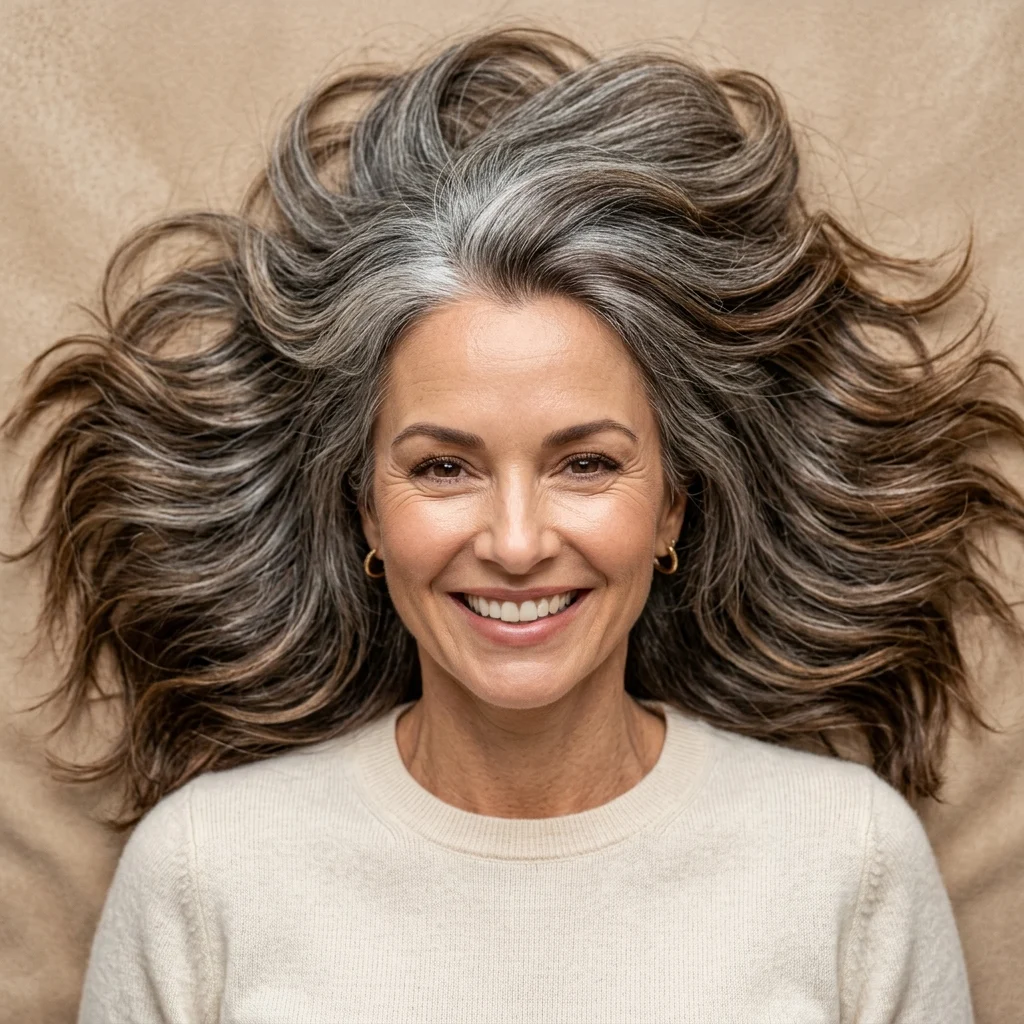
Vibe: Transitional and calm, color easing toward gray rather than fighting it.
Why it works: Reverse balayage hand paints a deeper color over previously dyed hair while deliberately leaving natural gray pieces untouched, gradually reducing reliance on all over color. This technique gives someone a structured way to stop covering gray completely without the shock of a sudden, full commitment. Leaving natural gray peeking through lets the transition build confidence over several appointments rather than one drastic change. This approach has grown in popularity as more people look for a supported, gradual path out of permanent color rather than an abrupt stop.
How to get it: Hand paint a warm or neutral demi permanent color over the mid lengths and ends of previously dyed hair, leaving natural gray sections near the crown and temples untouched. Blend the painted sections into the natural gray with a soft, feathered technique rather than a hard line. Use a bond building treatment throughout the process, since hair has likely already been through prior color services. Plan for the transition to continue gradually over several appointments as more length grows out naturally gray.
Shop The Look
| Product |
| Warm neutral demi permanent hair color |
| Bond building treatment for previously colored hair |
| Color safe conditioner, warm tone formula |
| Wide tooth detangling comb |
| Lightweight hair oil for shine |
10. Charcoal Lowlights to Deepen Salt and Pepper
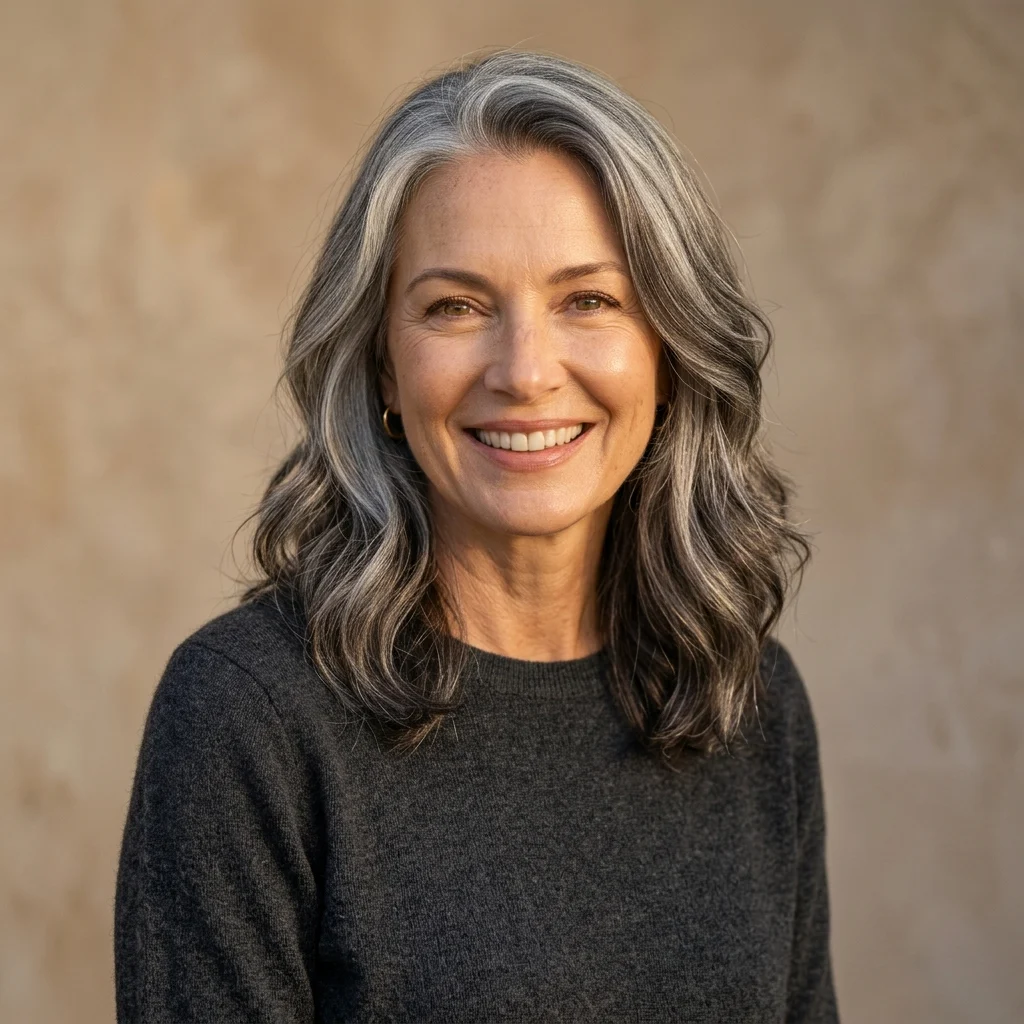
Vibe: Rich and grounded, gray given weight instead of fading into flatness.
Why it works: Charcoal sits close enough in depth to natural salt and pepper hair that the lowlights blend rather than reading as a separate, obvious color decision. Distributing the charcoal tones evenly through the mid lengths, rather than concentrating them near the face, restores visual weight that gray hair can lose as it lightens with age. This pairing relies on value contrast rather than a large color shift, since the depth difference between charcoal and lighter grey strands does most of the work. The technique also requires no lightening at all, since charcoal deposits directly onto the existing gray.
How to get it: Section the mid lengths and ends into even, foiled pieces throughout the head rather than concentrating them at the crown or hairline. Apply a charcoal demi permanent color directly onto the sectioned pieces, since no lightening is required for a depositing tone. Leave enough natural silver untouched throughout to maintain the salt and pepper effect rather than darkening the whole head. Refresh the charcoal lowlights every eight to ten weeks as needed.
Shop The Look
| Product |
| Charcoal demi permanent hair color |
| Foil sheets for lowlighting |
| Color safe shampoo, neutral tone formula |
| Deep conditioning treatment for grey hair |
| Wide tooth detangling comb |
11. Cropped Pixie Embracing Natural Silver
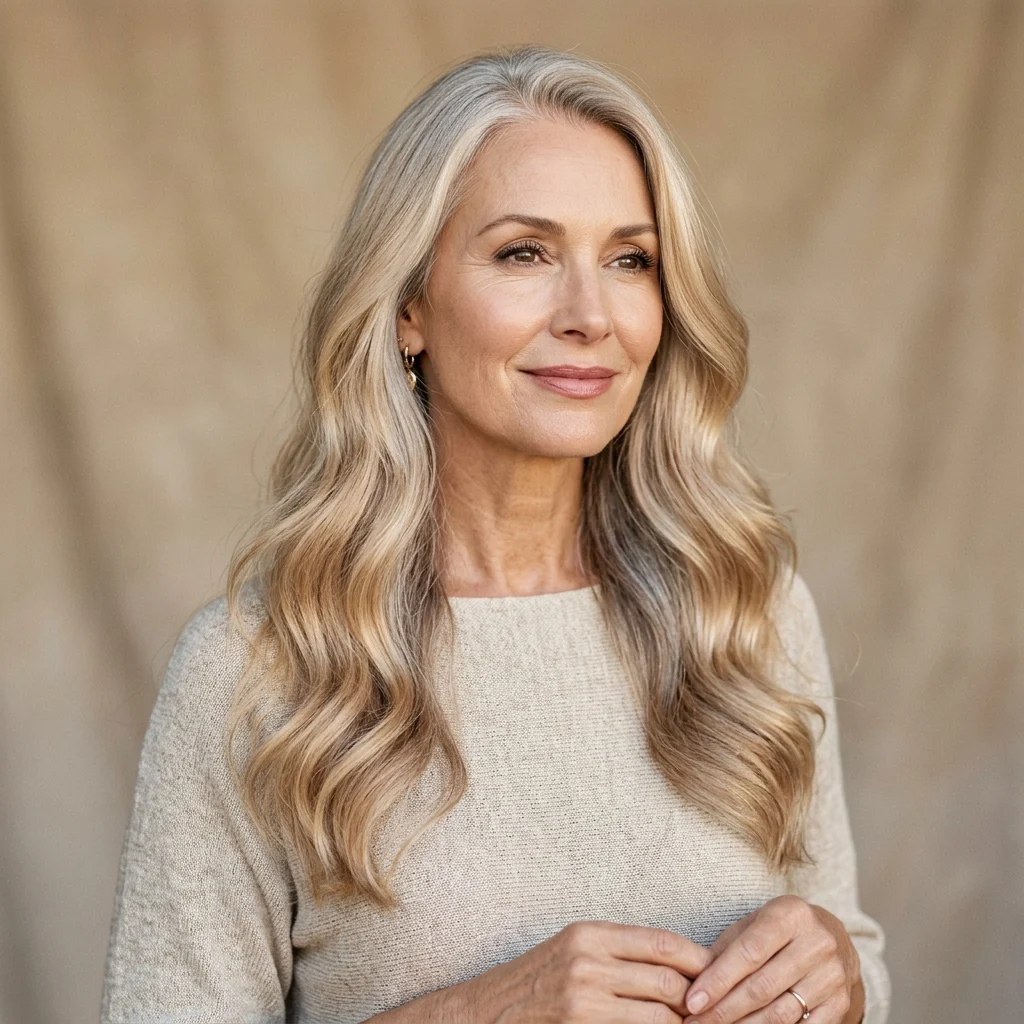
Vibe: Bold and fresh, gray fully embraced at its most compact length.
Why it works: A pixie cut is one of the fastest routes to a fully natural gray look, since cutting away most of the pigmented length leaves mostly new, naturally silver growth. Shorter hair also shows off the natural texture and shine of gray more clearly than long hair, since there is less length to dull the overall impression. This scale requires far less patience than growing out gray on long hair, cutting the transition timeline from years down to a matter of months. The style reads as a deliberate choice rather than a stage in progress, which suits someone ready to fully commit to silver.
How to get it: Work with a stylist to cut away the majority of pigmented length in stages, timing each cut to remove color as new natural gray grows in underneath. Use a purple or blue toning shampoo weekly to keep any remaining warmth from showing against the fresh silver. Add a lightweight glossing treatment every six to eight weeks to keep the short length shiny rather than dull. Style with a flexible hold pomade to define the cropped shape without weighing down the fine, coarser gray texture.
Shop The Look
| Product |
| Purple toning shampoo for silver hair |
| Lightweight glossing treatment |
| Flexible hold styling pomade |
| Texturizing spray for short hair |
| Boar bristle brush for short cuts |
12. Temple Highlights to Blend Early Gray
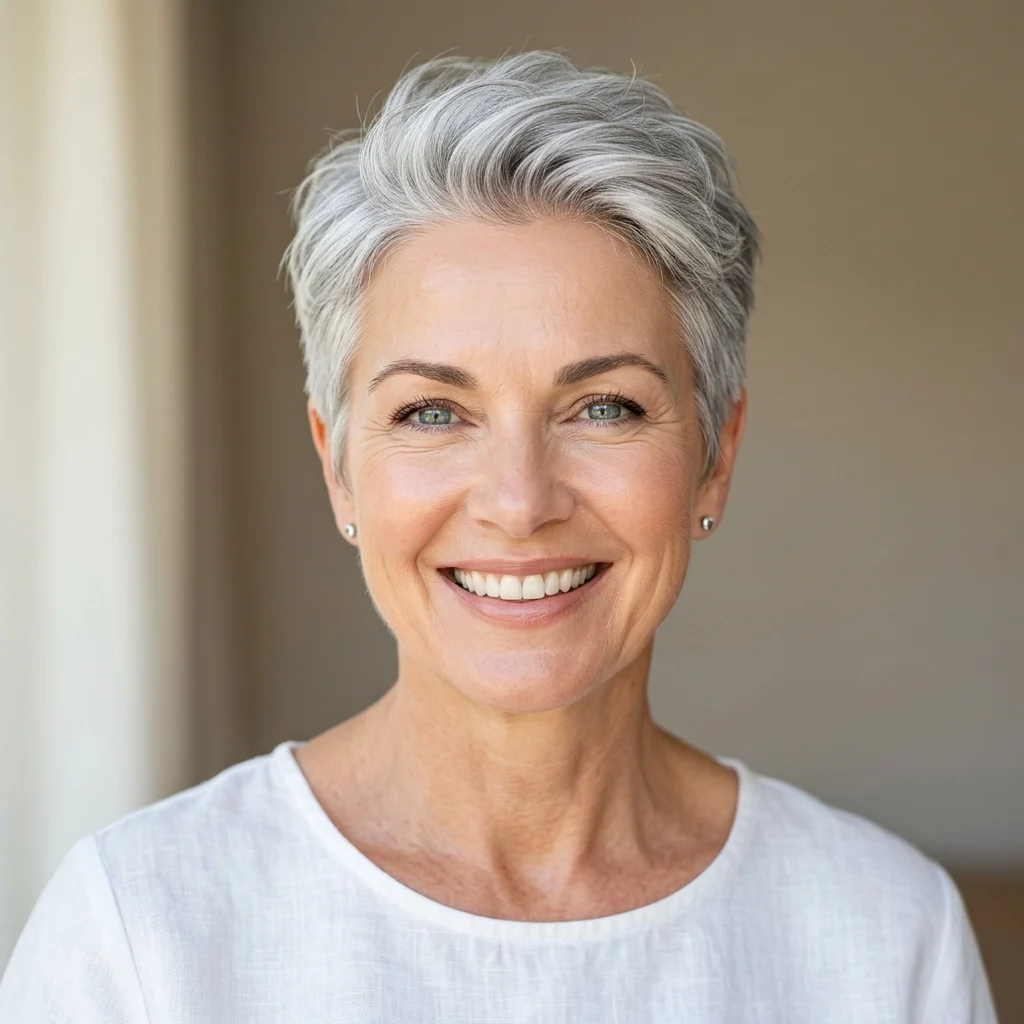
Vibe: Subtle and natural, blending exactly where gray first tends to show.
Why it works: Temples are typically the first area where gray becomes visible, so placing highlights only there addresses the actual problem area without unnecessary processing elsewhere. This targeted placement keeps the technique quick and affordable compared to a full head service, since only a small section needs attention. Matching the highlight tone closely to the natural gray, rather than a bright blonde, keeps the blend looking accidental rather than obviously colored. This approach suits someone in the very earliest stages of graying who wants a low key solution.
How to get it: Section only the temple areas on both sides and foil them separately from the rest of the hair. Lighten gently to a soft, muted tone close to the natural gray rather than a stark blonde. Blend the edges carefully with a feathered technique so there is no visible boundary against the surrounding dark hair. Touch up only the temple sections every ten to twelve weeks as new gray continues to grow in.
Shop The Look
| Product |
| Fine foil sheets for temple highlights |
| Low deposit toning gloss, grey matched shade |
| Rat tail comb, fine pin |
| Color safe hydrating conditioner |
| Root touch up powder, matched base shade |
13. Champagne Blonde Overlay to Soften Gray

Vibe: Soft and elegant, gray warmed just enough to feel gentle.
Why it works: A champagne overlay deposits a warm, gold based tone directly onto natural gray without lightening, softening what can otherwise read as a stark, cool silver. This approach suits someone who finds pure silver too harsh against their skin tone but still wants to work with their gray rather than covering it entirely. Because there is no lift involved, this technique carries minimal damage risk compared to a full lightening process. The champagne tone also tends to hide any yellow rebound better than a pure silver, since warmth is already part of the formula.
How to get it: Apply a demi permanent champagne blonde formula directly over clean, dry natural gray hair, since no lightening is required for this depositing technique. Process according to standard timing, checking partway through for the right level of warmth. Use a color safe shampoo without added violet pigment, since champagne tones need less correction than a pure cool silver. Refresh the champagne overlay every four to six weeks as the tone naturally fades.
Shop The Look
| Product |
| Demi permanent champagne blonde hair color |
| Color safe shampoo, neutral formula |
| Color safe conditioner, warm tone formula |
| Tint brush and mixing bowl set |
| Lightweight shine serum |
14. Dimensional Foilyage Mixing Gray with Natural Base
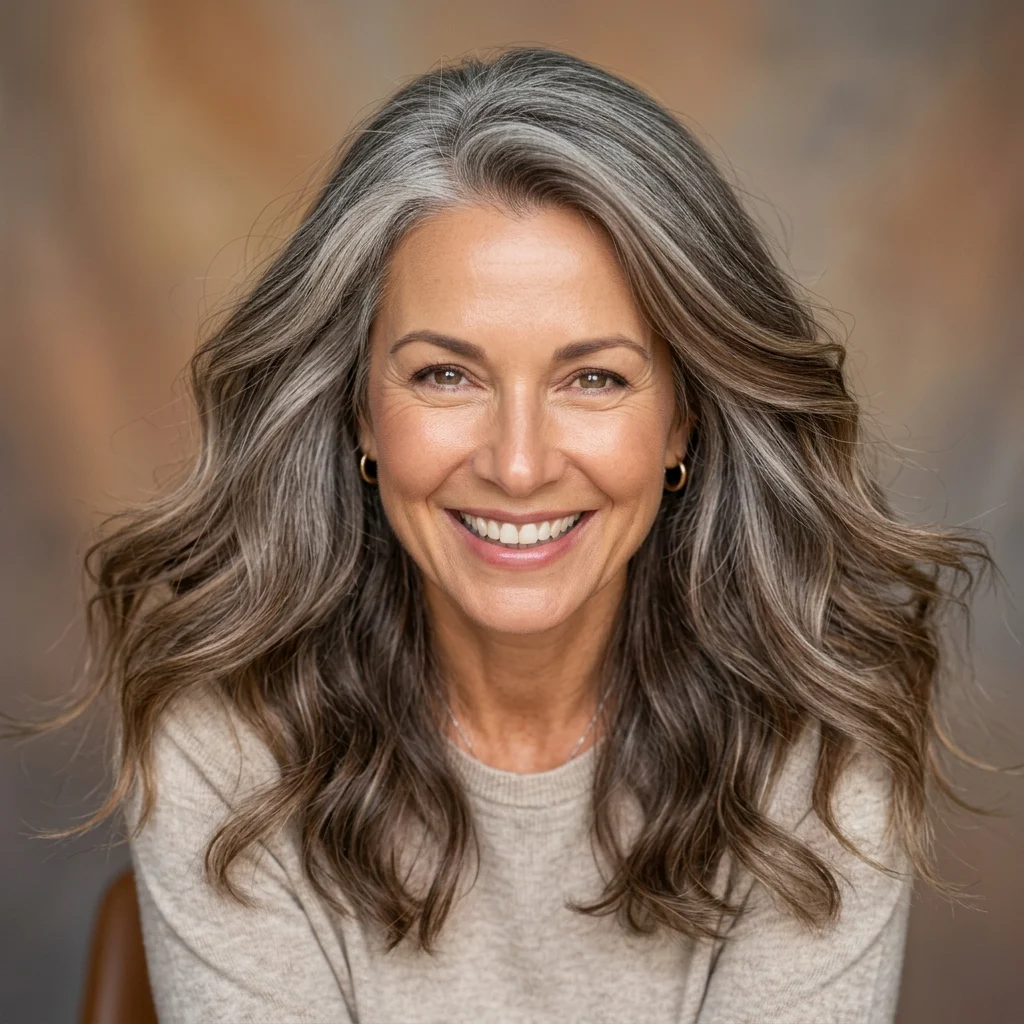
Vibe: Dimensional and natural, gray woven into the color story rather than set apart from it.
Why it works: Foilyage combines the precision of foiling with the soft, hand painted placement of balayage, giving a colorist control over exactly where gray needs support while still keeping the overall result blended. This hybrid technique works especially well for someone with an uneven gray pattern, since foils can target dense areas of gray while balayage softens the surrounding transition. The dimensional result reads as multi tonal and intentional rather than a simple attempt to cover or highlight gray uniformly. This technique typically takes longer in the chair than a single process but produces a more customized, long lasting blend.
How to get it: Have the colorist assess the natural gray pattern first, then use foils only in the densest gray areas while hand painting lighter pieces through the rest of the head. Tone the entire head afterward with a single glossing formula to unify the different lightened sections into one cohesive result. Ask for a consultation photo to be taken partway through, so adjustments can be made before the final tone is applied. Book maintenance appointments every ten to twelve weeks to keep the dimensional blend looking fresh as new gray grows in.
Shop The Look
| Product |
| Foil sheets for dimensional foilyage |
| Unifying gloss treatment, multi tone formula |
| Rat tail comb for precise sectioning |
| Bond building treatment for lightened sections |
| Color safe hydrating hair oil |
15. Single Toning Gloss to Reduce Yellow Cast in Gray

Vibe: Clean and refreshed, gray corrected without any lightening involved.
Why it works: A single toning gloss corrects the yellow cast that naturally graying hair often develops from sun exposure, product buildup, or environmental minerals, without requiring any lightening at all. This is the lowest commitment entry point among graying hair color ideas, since it simply neutralizes an existing issue rather than changing the color itself. The added shine from the gloss formula also does visible work, since gray strands often appear duller than pigmented hair even when the tone is otherwise clean. This approach makes it easy to maintain a fresh looking gray with minimal salon time.
How to get it: Choose a violet or blue based toning gloss depending on how strong the yellow cast currently reads, using violet for a mild cast and blue for a stronger one. Apply evenly through clean, damp gray hair and process for the standard fifteen to twenty minute timing. Use a color safe purple shampoo afterward to extend the correction and prevent the yellow from returning quickly. Repeat the gloss treatment every four to six weeks to maintain a clean, bright silver tone.
Shop The Look
| Product |
| Violet or blue based toning gloss |
| Purple shampoo for silver hair |
| Processing cap |
| Color safe conditioner, gloss safe formula |
| Lightweight shine serum |
How to Start Your Graying Hair Transformation
The single best first move is booking a consultation focused on a small area, either temple highlights or a single toning gloss, rather than committing to a full silver transition right away. Starting small lets a colorist assess exactly how much natural gray you have and how it responds to toner before scaling up to any larger technique. The most common mistake beginners make is trying to match gray with a warm, gold based blonde, which clashes against the cool, ashy tone most natural gray carries. The fix is simple: always ask for a violet or blue based product when blending or matching gray rather than a warm formula.
Three items under fifty dollars create real impact fast: a bottle of purple shampoo formulated for silver and gray hair, a demi permanent gloss in a shade close to your natural gray, and a lightweight shine serum to counter the dullness gray strands often develop. A single toning gloss or small money piece typically takes one salon session and lasts four to six weeks before needing a repeat. A full silver transition or dimensional foilyage often takes two to three sessions spaced several weeks apart for hair health, with realistic starter budgets around one hundred fifty dollars and full transformations running several hundred dollars depending on length and current color history.
Frequently Asked Questions About Graying Hair Color Ideas
What is the difference between graying hair color ideas and standard gray coverage?
Standard gray coverage aims to hide gray completely by matching it as closely as possible to a previous natural or dyed shade. Graying hair color ideas work with the gray instead, using blending, toning, and dimensional techniques to make it look intentional or to ease a gradual transition. The goal shifts from concealment to enhancement, which usually means less frequent, less demanding maintenance over time.
What hair colors work best for graying hair?
Cool, ash based tones like silver ash and charcoal blend most naturally with the existing cool undertone most gray hair carries. Warmer options like champagne blonde and pewter silver soften the look for those who find pure cool tones too harsh against their skin. Avoiding warm, gold heavy formulas is generally the safest rule, since gold tends to clash rather than blend with natural gray.
How much does transitioning to gray typically cost?
A single toning gloss or small area of temple highlights usually falls between sixty and one hundred fifty dollars depending on the salon. A full silver transition or dimensional foilyage with several sessions often runs between two hundred and six hundred dollars total, since it typically requires multiple appointments spaced over weeks or months. At home purple shampoos and toning glosses cost between fifteen and thirty dollars for maintenance between salon visits.
Is a graying hair transition compatible with curly or textured hair?
Yes, these techniques work well on curly and textured hair, though gray strands in curly hair are often coarser and more resistant to toner absorption than straight hair. Foilyage and reverse balayage tend to look especially natural on curls because the blended sections move and catch light differently than a flat, single process color. A deep conditioning treatment applied regularly helps offset the added porosity that comes with toning gray, coarser textures.
How often does gray hair color need to be refreshed?
A toning gloss over natural gray typically needs refreshing every four to six weeks, since gray strands tend to develop a yellow cast faster than most other hair colors. Blending techniques like temple highlights or foilyage can often stretch to eight to twelve weeks between appointments, since the goal is working with regrowth rather than hiding it completely. Using a purple or blue toning shampoo weekly between appointments extends the time needed before a full salon refresh.
Ready to Try These Graying Hair Color Ideas?
These 15 ideas cover everything from full silver transitions and dimensional foilyage to subtle toning glosses and a single blended money piece, so there is a starting point for every stage of the process. Starting with just one small area, like your temples or a single gloss treatment, is not a compromise, it is the smartest way to see how your natural gray responds before committing further.
Book a consultation this week and ask specifically about the one technique from this list that matches where you currently are in your transition. Once the tone settles in, catching your reflection and seeing gray that looks chosen rather than simply arrived at tends to feel like a quiet kind of relief. Save your favorite two or three looks now, so you walk into that consultation ready to point and say exactly what you want.