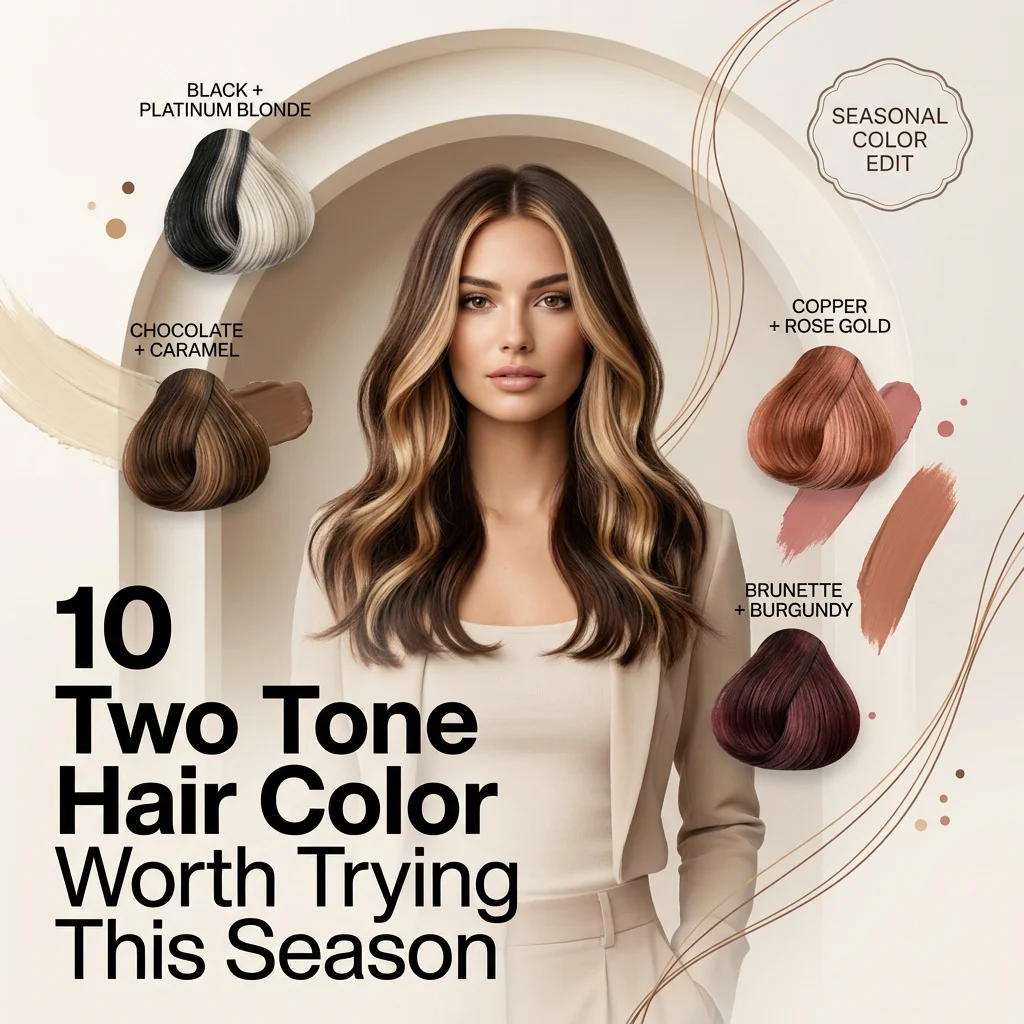
10 Two Tone Hair Color Ideas Worth Trying This Season

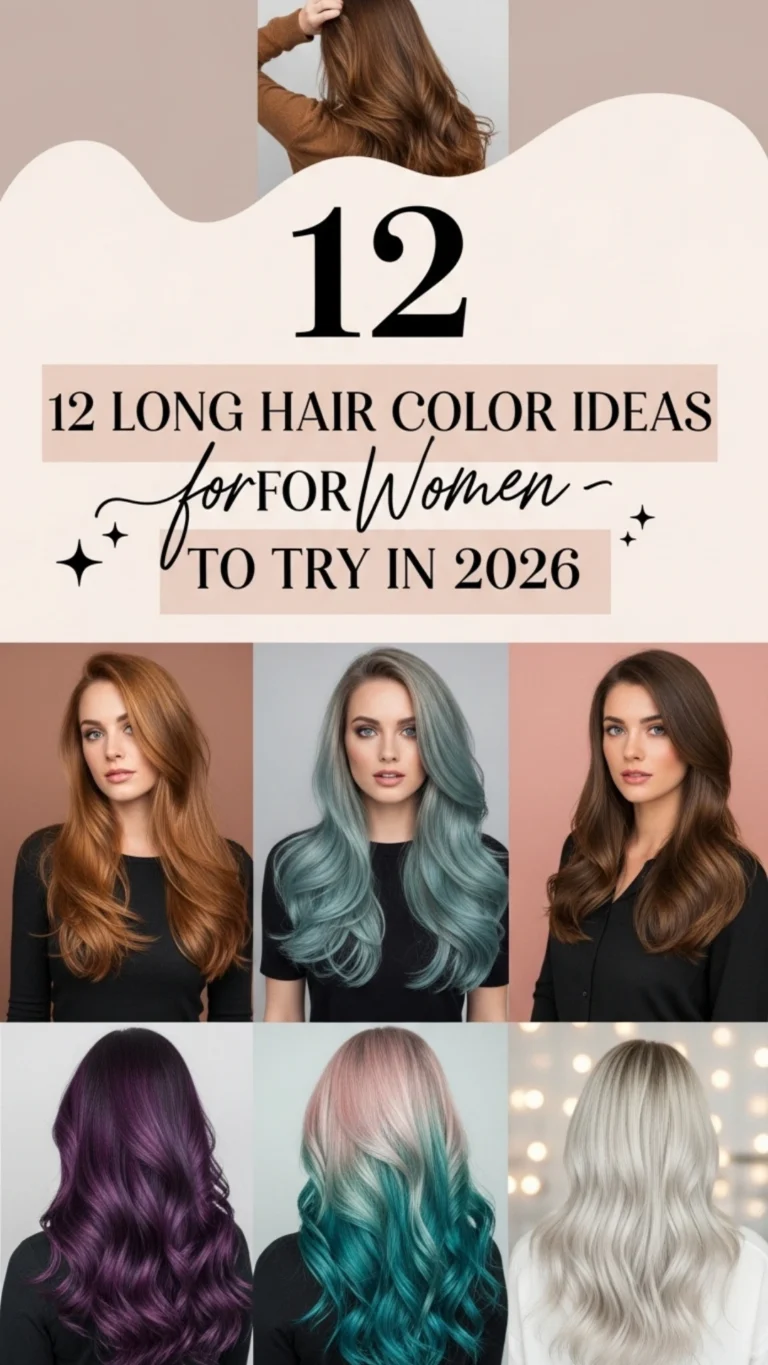
Two tone hair color is a coloring technique that combines exactly two distinct shades across the hair, either blended at the midlengths or split cleanly between the top and bottom layers. This article gives you 10 two-tone hair color ideas, from soft blended combinations to bold contrast splits, so you can find the exact pairing that suits your base color and your maintenance level.
Why Two Tone Hair Color Works So Well
What makes two tone hair color different from balayage or ombre? Balayage and ombre blend gradually across a single continuous gradient, while two tone color uses exactly two defined shades, either softly merged at one point or split with a visible line. The defining trait is intentional duality, not gradual transition.
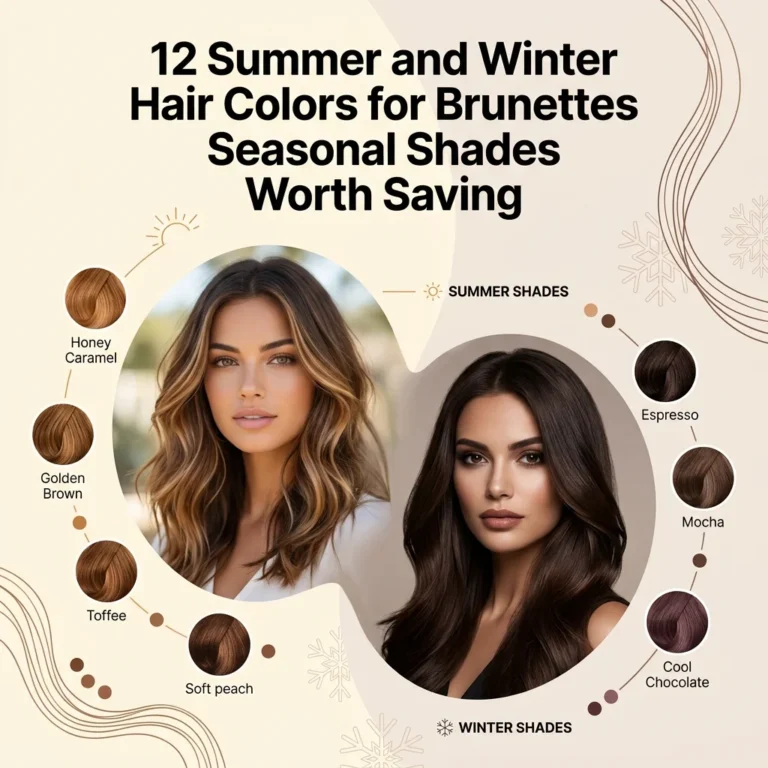
What are the most common color pairings? Warm chestnut with honey blonde, jet black with platinum, and chocolate brown with copper are the most requested combinations. The pairing depends on contrast level, high contrast pairs (black and platinum) read bold, while low contrast pairs (chestnut and honey) read soft and wearable.
Why is two tone color trending now? Search interest in “split dye hair” and “two tone hair color” has grown alongside a wider shift toward personalized, statement color choices seen across Pinterest and TikTok, moving away from uniform, single-process color.
Does it work on shorter haircuts? Yes, and often more dramatically. Short cuts show the color division at a closer, more visible range, so a bob or lob makes the two tone effect read clearly without needing much length to carry the contrast.
Style at a Glance
| Element | Blended Two Tone | Split Two Tone |
| Philosophy | Soft transition between two tones | Sharp, defined color division |
| Key Technique | Balayage blend at the midshaft | Horizontal or vertical color block |
| Color Pairing | Chestnut and honey, brunette and caramel | Black and platinum, brown and copper |
10 Two Tone Hair Color Ideas
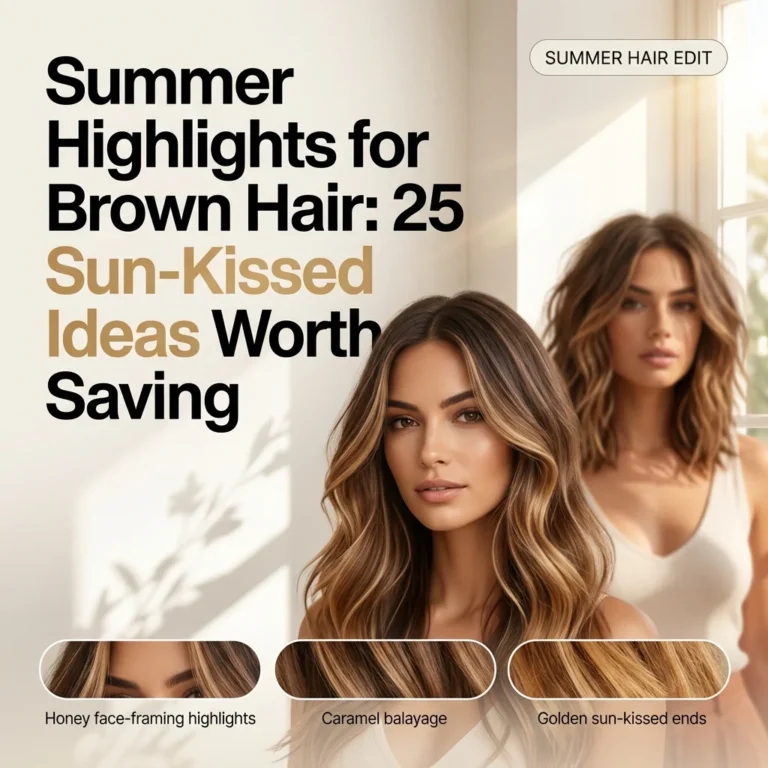
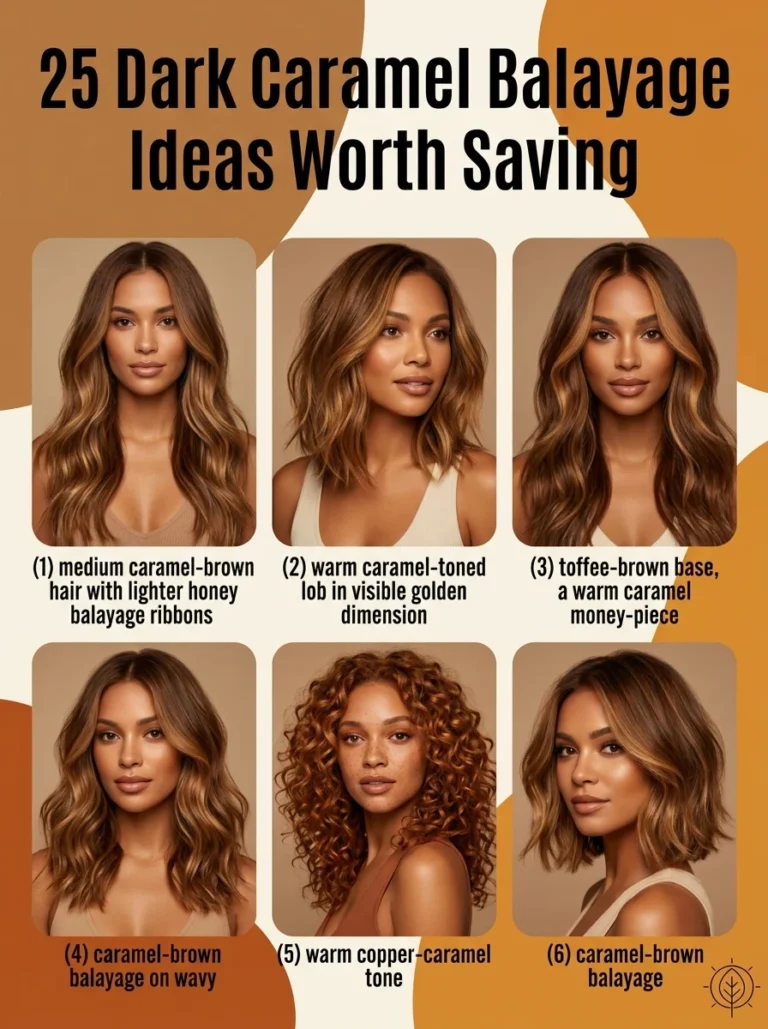
1. Chocolate Brown Base With Caramel Money Piece
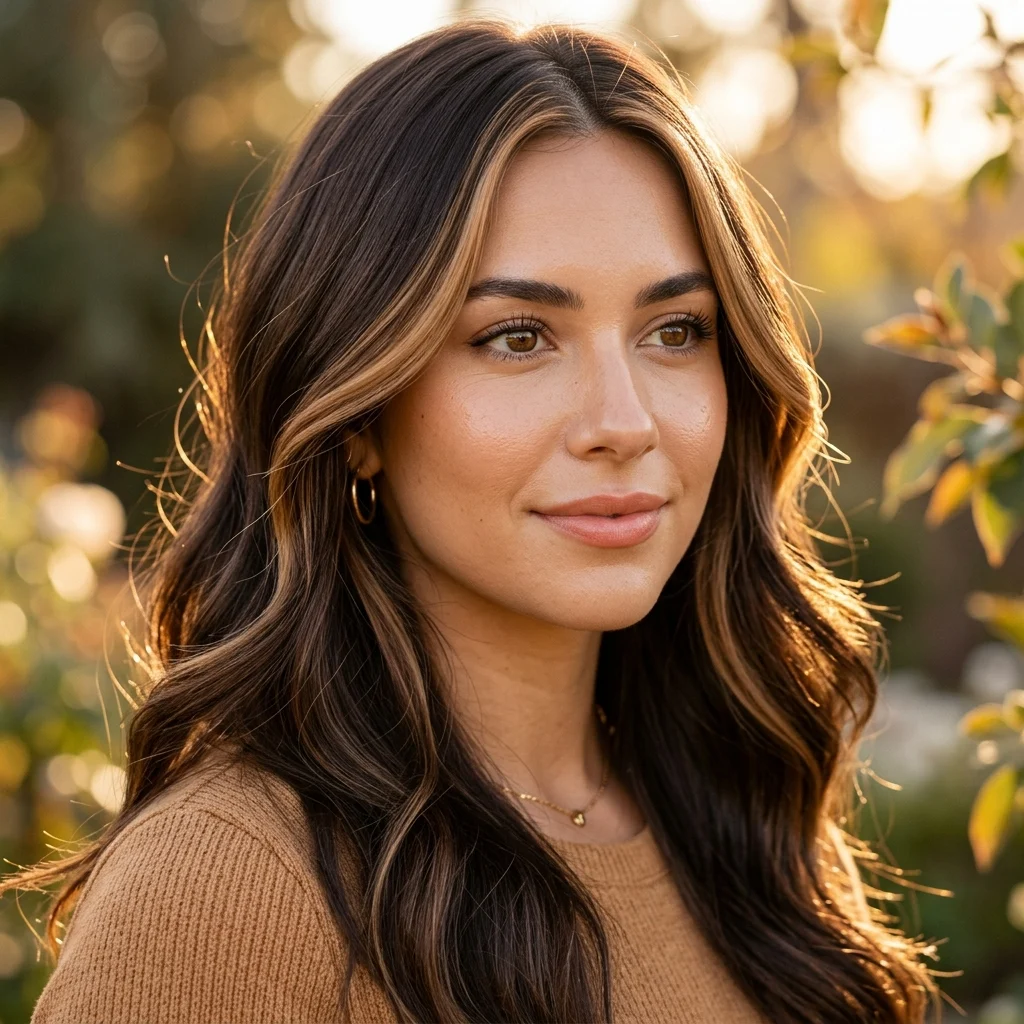
Vibe: Warm. This is the most wearable two tone combination, built to look sunlit rather than dyed.
Why it works: A money piece places the lighter caramel tone only at the front face framing pieces, using proximity to the face as the design principle rather than covering the whole head. The chocolate base stays intact everywhere else, keeping upkeep low.
How to get it: Ask for “money piece balayage in caramel, two shades lighter than base, front pieces only.” Touch up every 12 to 14 weeks since the color sits away from the root line.
💡 Quick Win: A single toning gloss at home between salon visits keeps the caramel from turning brassy for under 15 dollars.
Shop The Look
| Product |
| Purple toning shampoo for warm blonde pieces |
| Color safe leave in conditioner spray |
| Glossing treatment for at home toning |
| Silk pillowcase for reduced color fade |
| Heat protectant spray for styling color treated hair |
2. Jet Black Roots With Platinum Ends
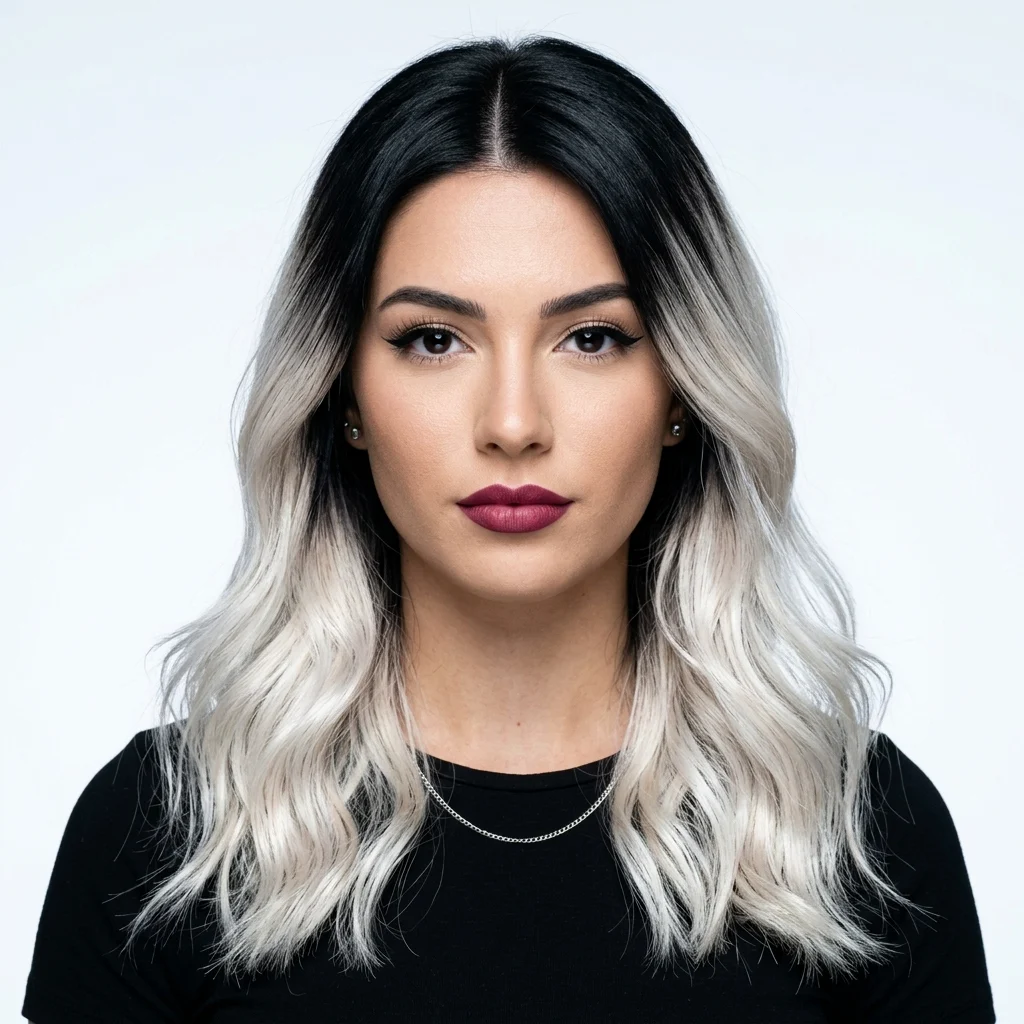
Vibe: Bold. The highest contrast pairing on this list, built for hair that wants to be noticed.
Why it works: Black and platinum sit at opposite ends of the value scale, so the transition point becomes a strong visual line rather than a soft blend. This works because the two tones share no undertone overlap, which keeps the contrast crisp instead of muddy.
How to get it: Request “root smudge in natural black, lifted to platinum starting at the ear line.” Expect a multi session lightening process if starting from a darker natural base.
Shop The Look
| Product |
| Blue toning shampoo for cool platinum tones |
| Bond building treatment for lightened hair |
| Deep repair hair mask for damaged ends |
| Root touch up powder in black |
| Heat protectant spray for fragile lightened hair |
3. Ash Brown Top With Rose Gold Underlayer
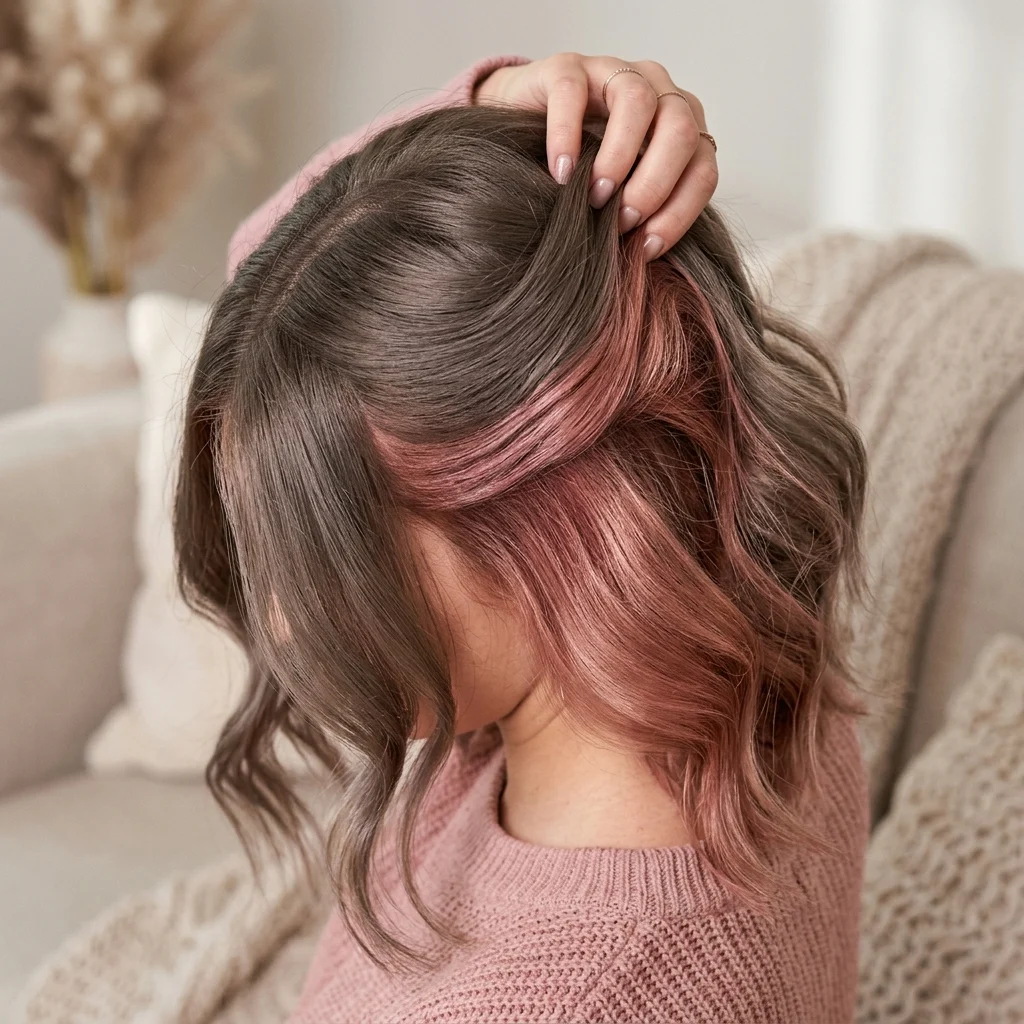
Vibe: Playful. A hidden layer that reveals itself only in movement or when styled up.
Why it works: Placing the bold rose gold tone underneath rather than on top uses concealment as a design choice, so the color surfaces only in specific moments like a ponytail or a windy day. This keeps the statement color workplace appropriate most of the time.
How to get it: Section off the bottom two inches of hair at the nape and color separately in rose gold, leaving the top layer ash brown. Style with a half up style occasionally to reveal it on purpose.
💡 Quick Win: Braiding a small section at the nape shows off the underlayer without committing to a full updo.
Shop The Look
| Product |
| Rose gold semi permanent color depositing mask |
| Sectioning clips for layer separation |
| Color safe shampoo for pastel tones |
| Detangling brush for gentle sectioning |
| Fabric hair tie for half up styling |
4. Auburn Base With Copper Balayage Blend
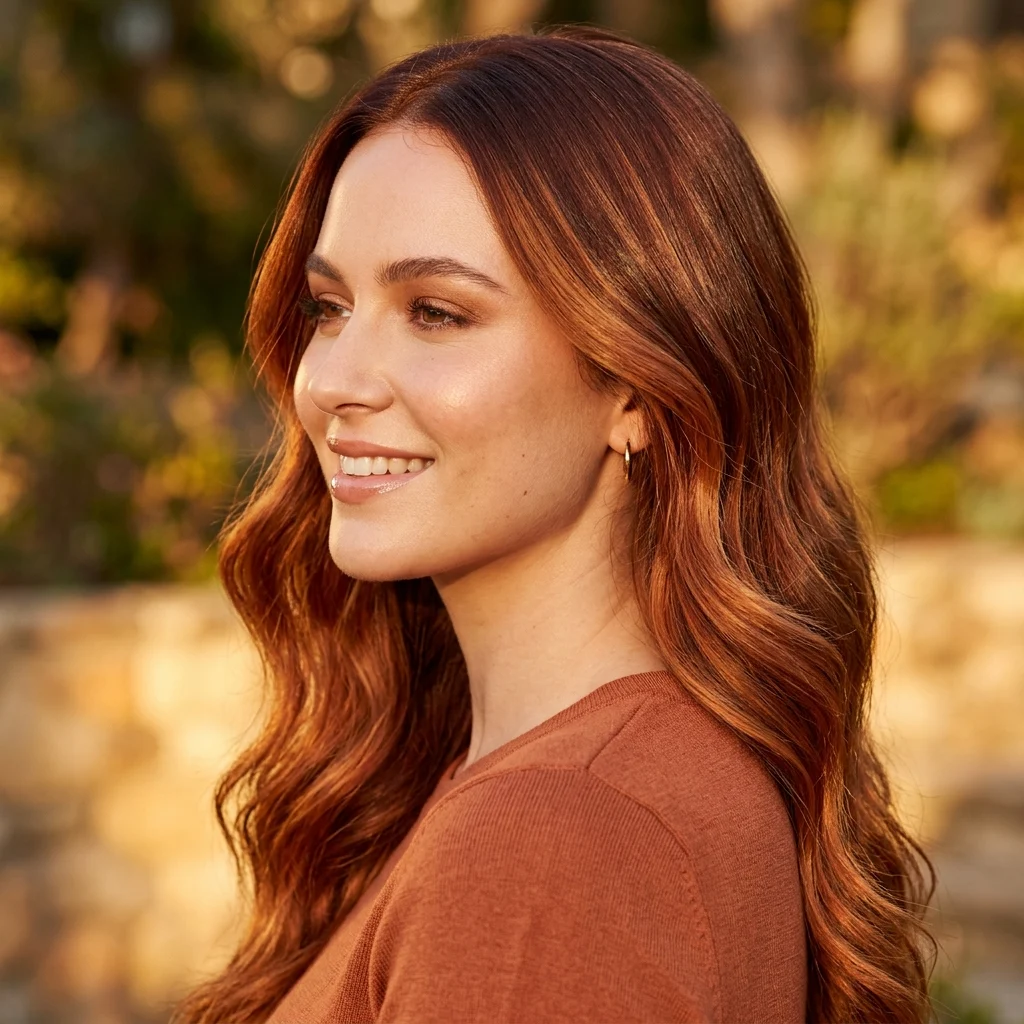
Vibe: Radiant. Both tones share the same warm undertone, so this blend reads cohesive rather than split.
Why it works: Auburn and copper sit close together on the warm color spectrum, which is tonal proximity, the same principle that keeps root growth from looking harsh. The blend point softens naturally because neither tone fights the other for dominance.
How to get it: Ask for “copper balayage over an auburn base, blended from the midshaft down.” This pairing needs no toner since both shades share the same warm family.
Shop The Look
| Product |
| Color depositing conditioner for red tones |
| Sulfate free shampoo for color treated hair |
| UV protectant spray for red color longevity |
| Boar bristle brush for shine distribution |
| Wide tooth comb for gentle detangling |
5. Vertical Split Dye in Two Contrasting Colors
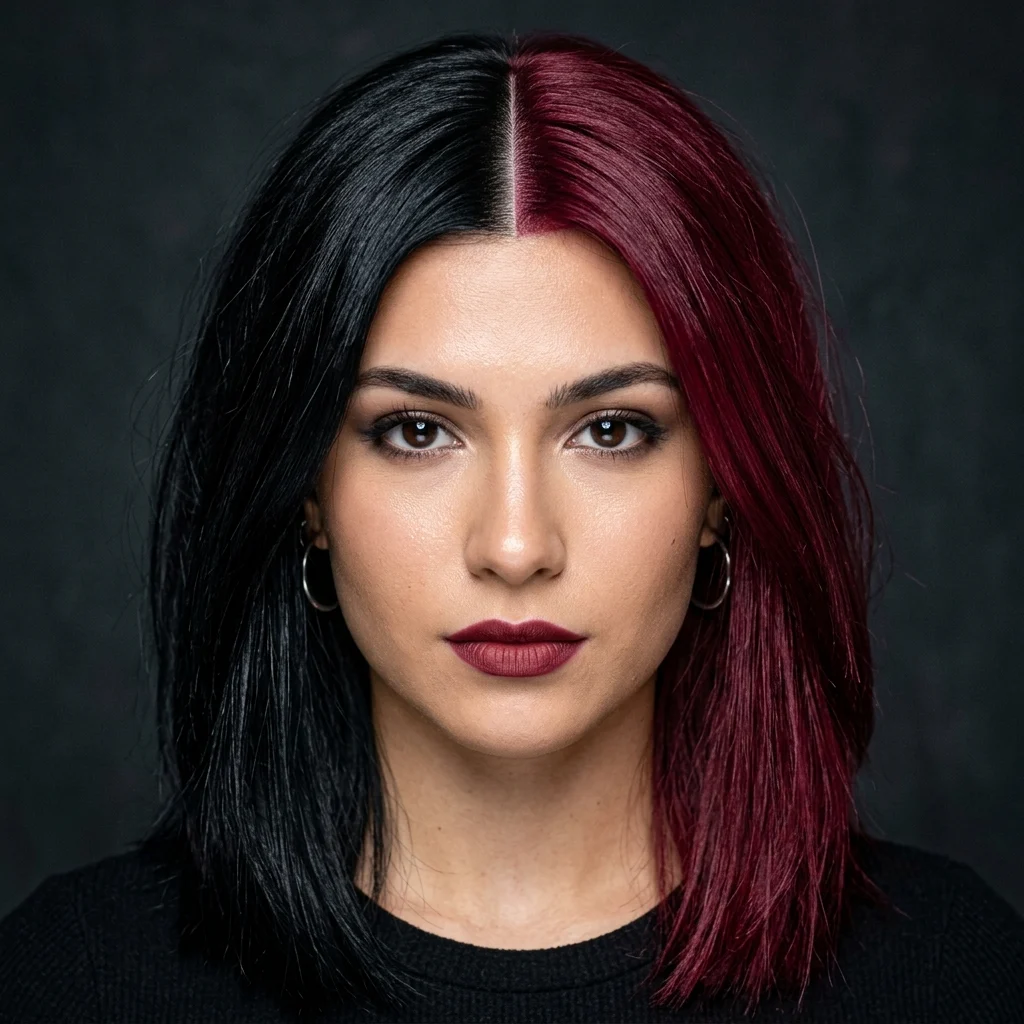
Vibe: Dramatic. The most committed option on this list, splitting the head down the center part.
Why it works: A vertical part creates visual weight on both sides of the face, using symmetry as structure while the color contrast provides the drama. Because the division follows the natural part line, it reads intentional rather than accidental.
How to get it: Section hair down the center part before coloring and apply each shade separately, keeping the part line precise with foil during processing. Maintain the same center part daily to preserve the clean division.
💡 Quick Win: Temporary color sprays let you test a split dye look for a weekend before committing to permanent color.
Shop The Look
| Product |
| Temporary color spray for testing split dye |
| Rat tail comb for precise center parting |
| Foil sheets for sectioned color application |
| Color safe conditioner for vivid tones |
| Color depositing mask to refresh vivid shades |
6. Espresso Brown With Honey Blonde Face Frame
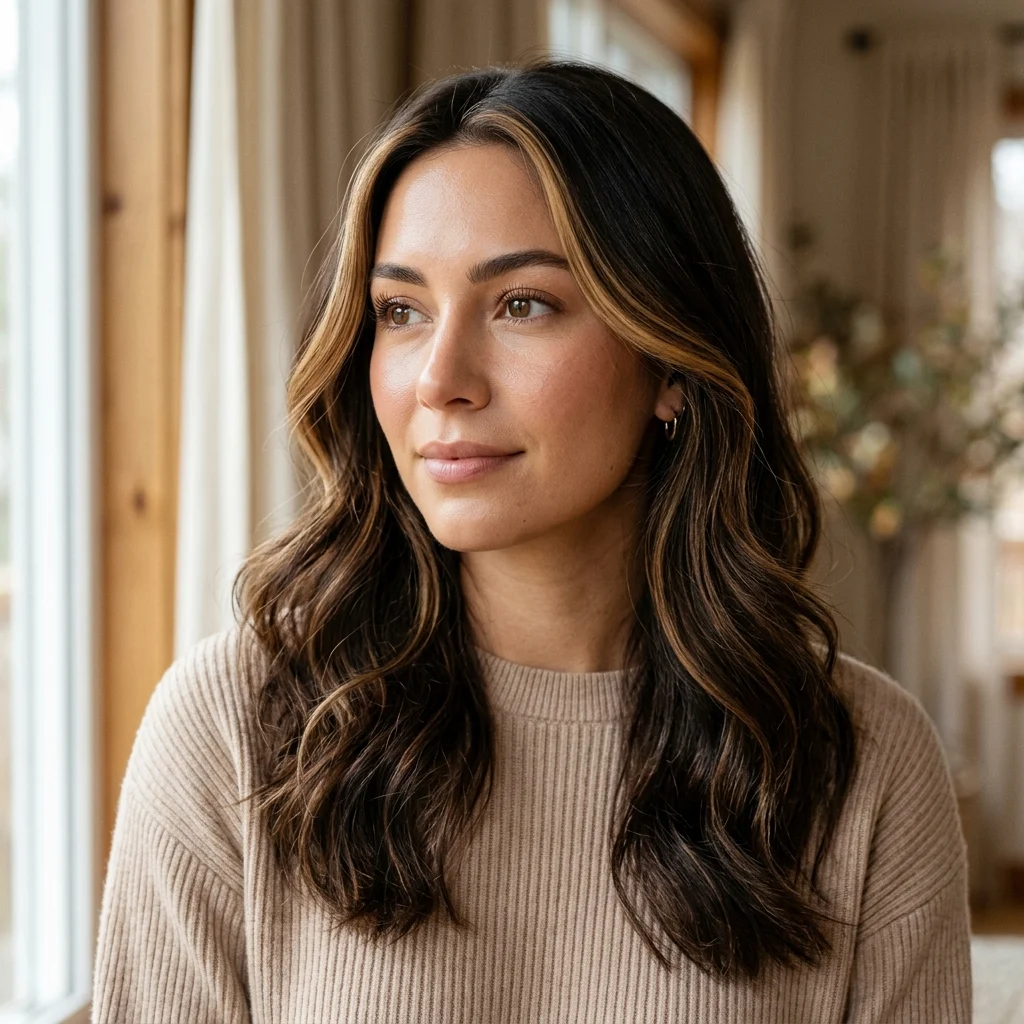
Vibe: Soft. A gentler cousin of the money piece idea, with lighter overall placement.
Why it works: Placing honey tones specifically around the hairline uses proximity to the face to brighten the complexion without lightening the whole head. The deep espresso base stays as the dominant tone, so the honey reads as an accent rather than a competing color.
How to get it: Request “face framing highlights in honey blonde, two to three pieces on each side, blended softly into an espresso base.” This placement grows out with minimal visible line.
Shop The Look
| Product |
| Honey toned glossing treatment |
| Brunette color depositing shampoo |
| Leave in heat protectant serum |
| Round brush for face framing styling |
| Flexible hold hairspray for finishing |
7. Icy Blonde Top With Dark Smudged Roots
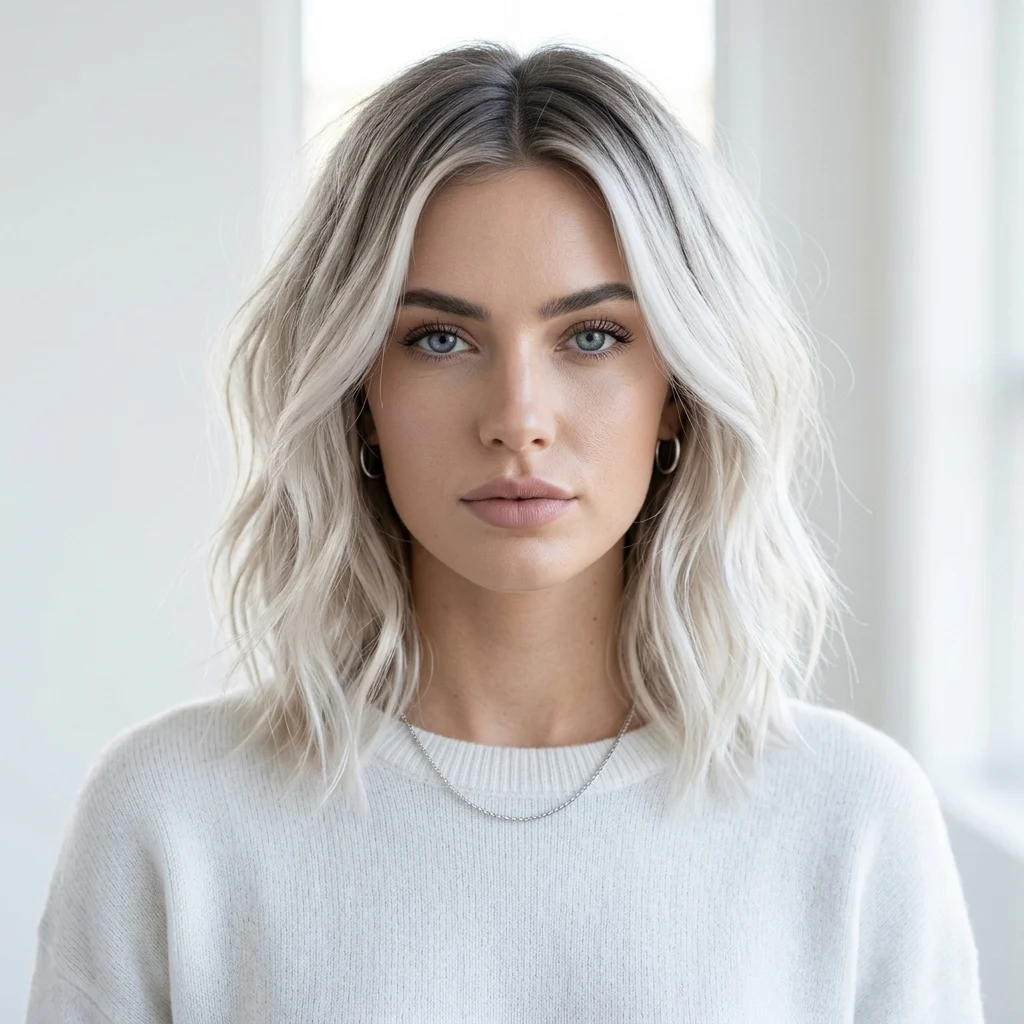
Vibe: Cool. A low maintenance take on blonde that uses shadow to soften regrowth.
Why it works: Smudging a dark tone at the root before it transitions to platinum uses shadow gradation, the same technique that makes regrowth photograph as intentional rather than needing a touch up. The two tones sit at opposite ends of value but blend at a single controlled point.
How to get it: Ask your colorist for “root smudge in ash brown, transitioning into icy platinum from the ear down.” Use a purple shampoo weekly to keep the platinum from turning yellow.
💡 Quick Win: A toning gloss every four weeks maintains the icy tone longer than shampoo alone.
Shop The Look
| Product |
| Purple toning shampoo for platinum blonde |
| Bond repair treatment for lightened hair |
| Root smudge touch up powder |
| Silver toning conditioner mask |
| Heat protectant spray for fragile blonde ends |
8. Burgundy Base With Copper Peekaboo Panels
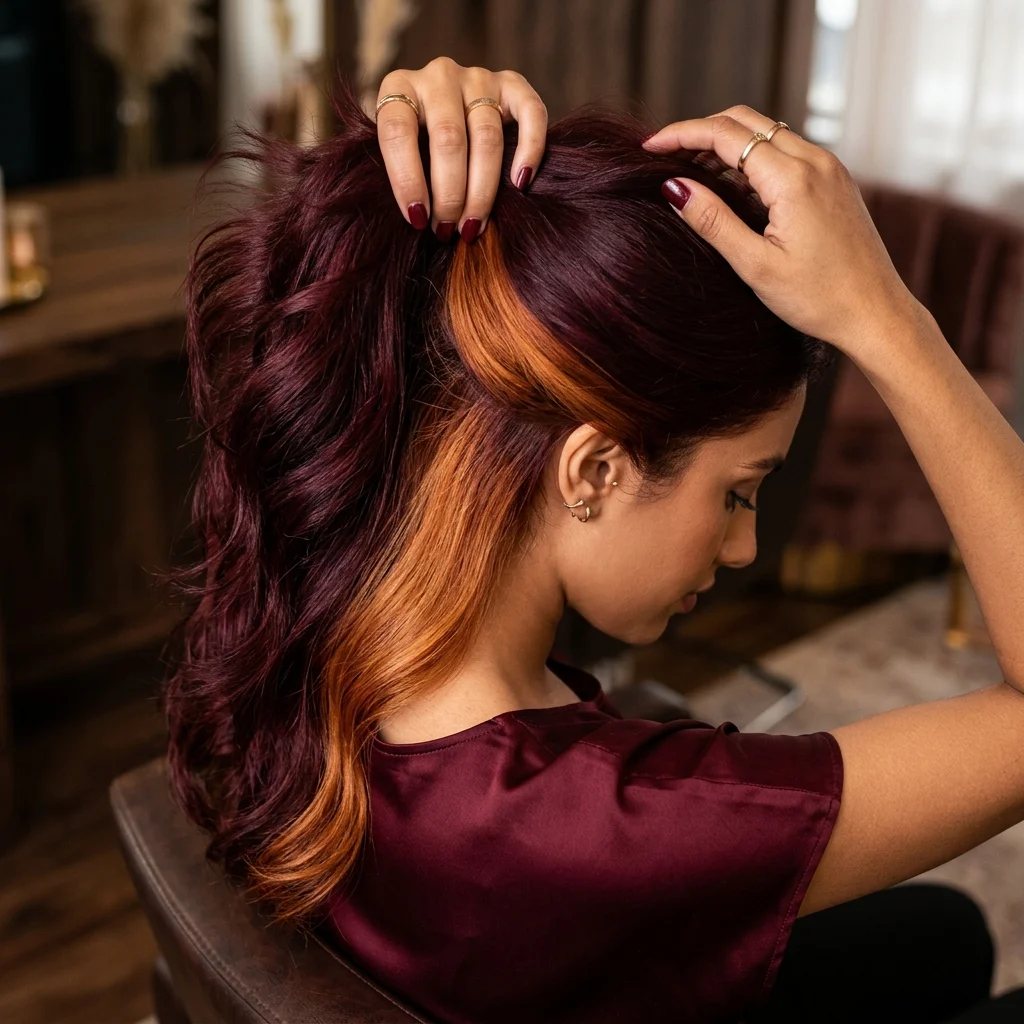
Vibe: Rich. Deep jewel tones paired for depth rather than contrast.
Why it works: Peekaboo panels place the copper tone in thin horizontal sections underneath the burgundy top layer, so the two colors layer rather than compete for the same visual space. This technique lets both saturated tones read clearly instead of blending into a muddy third color.
How to get it: Section hair horizontally at the crown and color only the underneath sections in copper, leaving the top layer burgundy. Style with loose curls occasionally to let the copper peek through naturally.
Shop The Look
| Product |
| Red toning color depositing mask |
| Sectioning clips for horizontal layering |
| Color safe shampoo for vivid red tones |
| Curling wand for loose curl reveal styling |
| UV protectant spray for red color longevity |
9. Budget Friendly Two Tone With a Single Toning Gloss
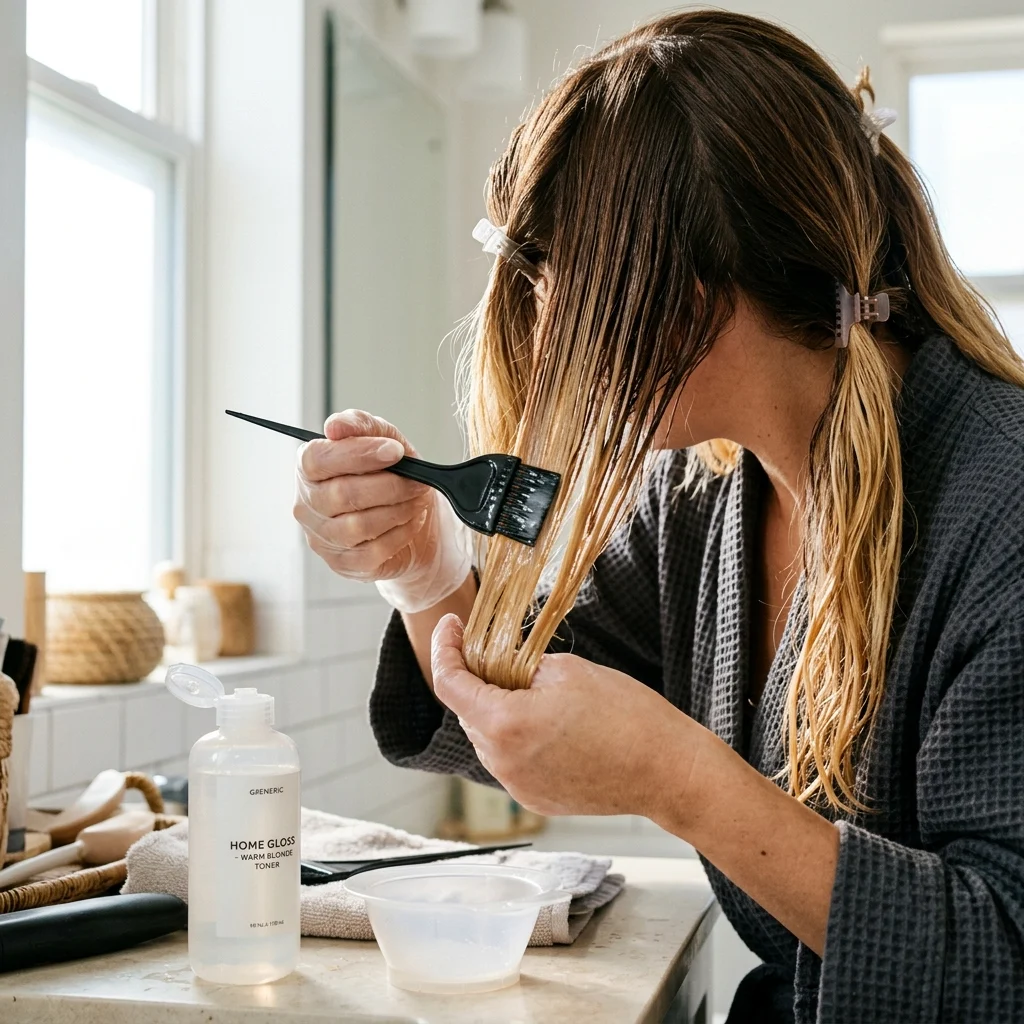
Vibe: Practical. Proof that a two tone effect does not require a full salon color service.
Why it works: A single toning gloss applied only to pre lightened ends creates a two tone effect using tonal deposit rather than a full lightening process, which keeps the cost and commitment low. The natural root color stays untouched as the first tone.
How to get it: Lighten only the bottom three to four inches with a drugstore lightening kit, then apply a semi permanent toning gloss in your chosen shade over those ends. Reapply the gloss every four to six washes as it fades gradually.
💡 Quick Win: This entire look can be done for under 30 dollars using a boxed lightening kit and a single gloss bottle.
Shop The Look
| Product |
| At home hair lightening kit for ends |
| Semi permanent toning gloss treatment |
| Tint application brush and bowl set |
| Color safe shampoo for glossed ends |
| Deep conditioning mask for lightened ends |
10. Compact Two Tone for Short Bobs and Pixies
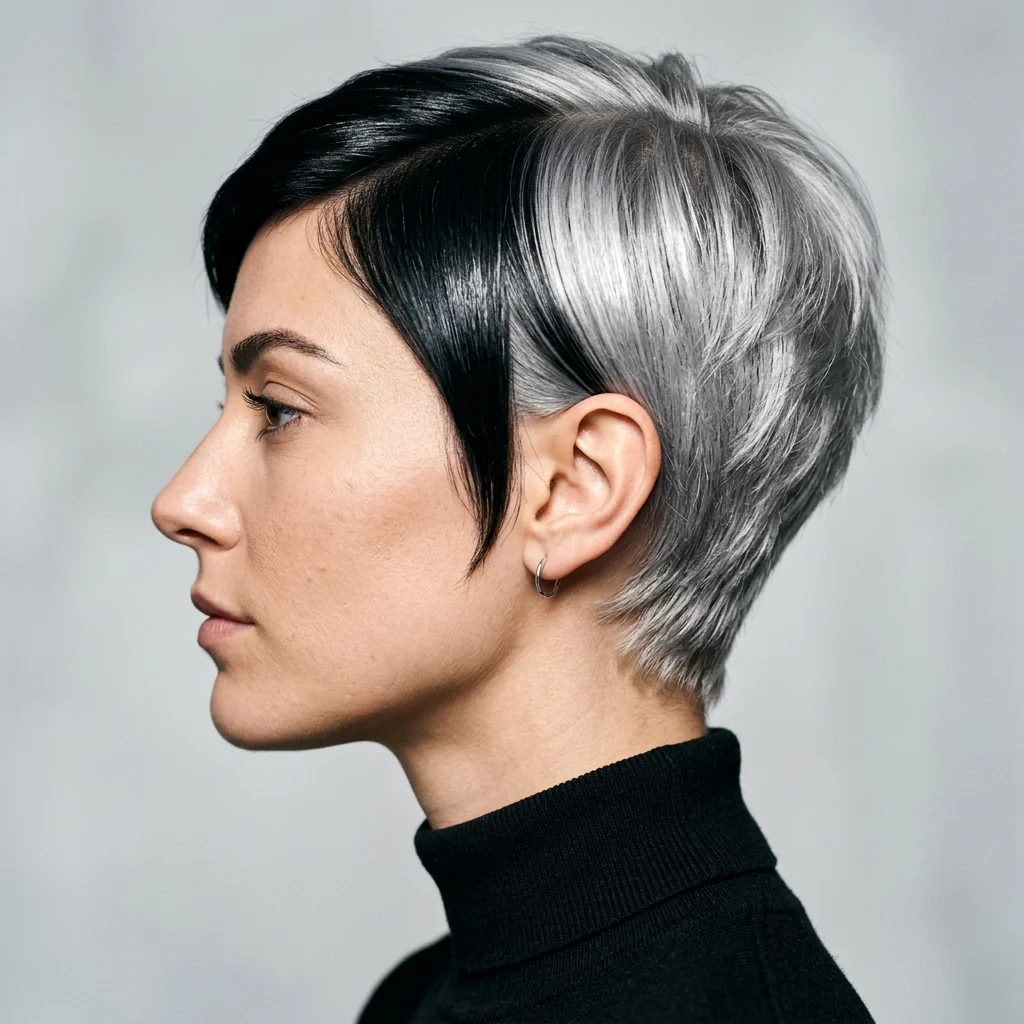
Vibe: Crisp. Short hair shows the two tone division at close range, making it read bolder with less length.
Why it works: On short cuts, the color transition sits closer to the eye, so even a small color shift reads as a defined statement rather than needing several inches to display the effect. Scale here works differently than on long hair, less length means the contrast reads immediately.
How to get it: Ask for the second tone placed only at the crown or nape, the two areas most visible on a pixie or short bob. Choose a high contrast pairing since short hair needs boldness to register at that scale.
Shop The Look
| Product |
| Small root touch up brush for precision |
| Texturizing paste for short hair styling |
| Color safe shampoo for two tone short hair |
| Compact travel size color depositing mask |
| Fine tooth comb for precise short hair parting |
How to Start Your Two Tone Hair Color Transformation
The single first move is booking a consultation and bringing two reference photos, one for each tone you want, so your colorist can assess whether your current base can reach both shades in one session or needs a gradual lightening process first.
The most common mistake is choosing two tones with clashing undertones, like a warm caramel paired with an ash cool blonde, which creates a muddy transition instead of a clean one. Fix it by picking two shades from the same undertone family, both warm or both cool.
Three items under 50 dollars that create immediate impact: a semi permanent toning gloss in your chosen accent shade, a purple or blue toning shampoo matched to your lighter tone, and a silk pillowcase to slow color fade from friction.
A full two tone transformation ranges from a single 90 minute session for low contrast blends to multiple sessions over several weeks for high contrast pairings starting from dark hair. Budget runs 100 to 300 dollars for a starter version and up to 500 dollars for a full head transformation with lightening.
Frequently Asked Questions About Two Tone Hair Color
What is the difference between two tone hair color and balayage?
Two tone hair color uses exactly two defined shades, either blended at one point or split with a visible line, while balayage creates a gradual, multi tonal gradient across the whole head. Balayage often uses several shades to build depth, while two tone intentionally limits the palette to a clear duality.
What two tone color combinations look best on warm skin tones?
Warm skin tones pair well with combinations that share warm undertones, like chocolate brown with copper or auburn with honey blonde. Avoiding cool ash tones next to warm skin prevents the contrast from looking washed out rather than complementary.
How much does two tone hair color typically cost?
A low contrast blend, like a money piece or face framing highlight, runs 100 to 200 dollars at a mid range salon. A high contrast split, like black to platinum, can run 250 to 500 dollars due to the multiple lightening sessions often required to reach platinum safely.
Does two tone color work on natural, unprocessed hair?
Yes, especially low contrast blends like auburn with copper or chestnut with honey, which need minimal or no lightening since both tones sit close together naturally. High contrast pairings like black to platinum require more processing regardless of starting from virgin hair.
How do I maintain two tone hair color between salon visits?
Use a color safe, sulfate free shampoo and a toning treatment matched to your lighter shade, applying it every one to two weeks to prevent brassiness or fading. A UV protectant spray also helps preserve color vibrancy when hair is exposed to sun regularly.
Ready to Try Your Own Two Tone Hair Color?
From soft blended money pieces to bold vertical splits, these 10 ideas cover the contrast levels, placements, and undertone pairings that shape how a two tone color reads day to day. You do not need to commit to the boldest option first, starting with a low contrast blend is a completely valid way to test the effect.
Today, the one concrete step is booking a consultation and bringing two reference photos so your colorist can map out the right path for your base. Once it is done, this is the kind of color that makes your hair feel like it has movement built in, shifting and catching light in ways a single shade never could. Save your favorite pairing now, before your next appointment, so you can walk in with the exact combination instead of trying to describe it.