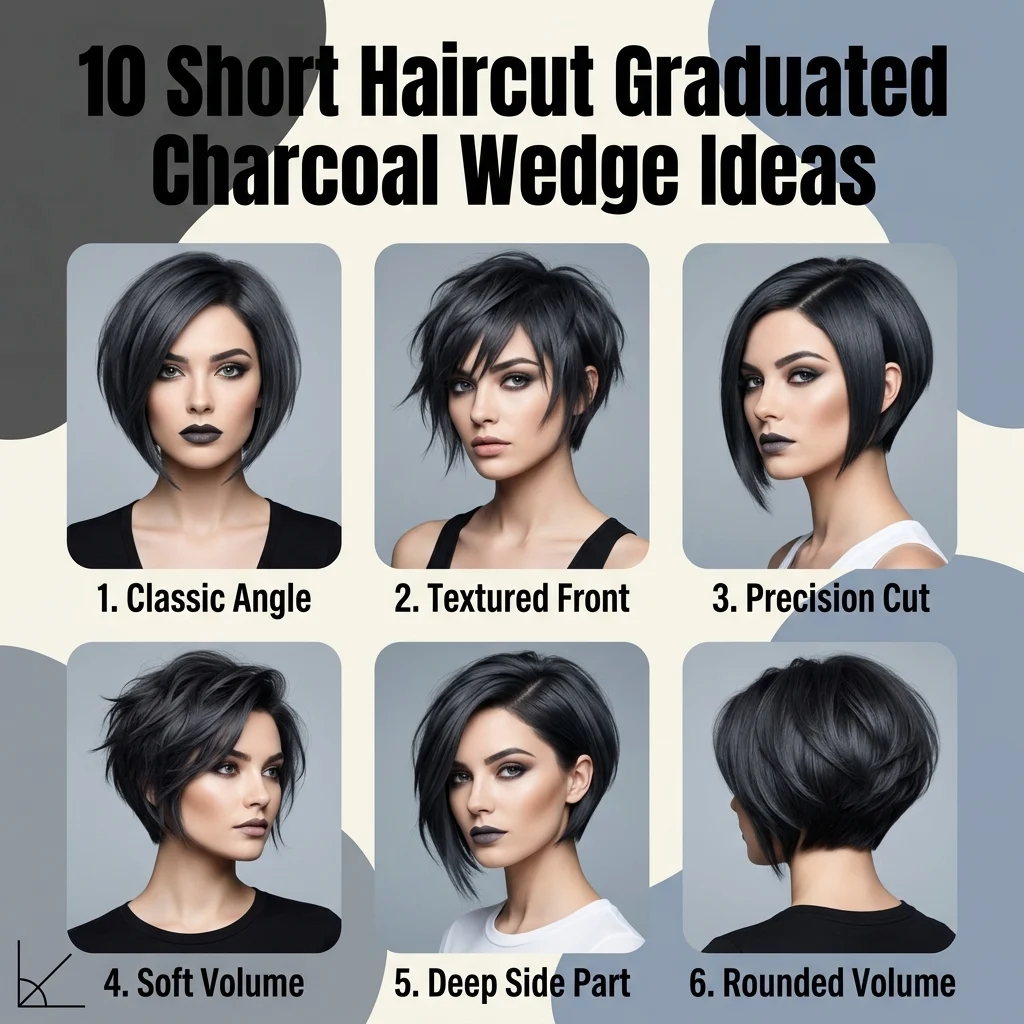
10 Short Haircut Graduated Charcoal Wedge Ideas

A graduated wedge is a short haircut built on stacked layers that get progressively shorter toward the nape, creating a rounded, angled silhouette. This roundup gives you 10 graduated charcoal wedge ideas, each pairing that structural cut with a deep smoky charcoal tone.
There is a quiet confidence in hair with real architecture. Charcoal tone reads deep and cool under most lighting, while the graduated shape keeps every angle sharp without daily maintenance. It feels grounded, a little edgy, and entirely put together the moment it dries.
Here are 10 ideas worth saving, and stealing.
Why the Graduated Charcoal Wedge Works So Well
The wedge cut originated in the 1970s through Vidal Sassoon’s geometric precision cutting, built on the principle of graduated layers that stack shortest at the nape and lengthen toward the crown. Charcoal is a cool, near-black tone with soft ash undertones rather than pure black or brown, which gives the color depth without flatness. Together they form a cut defined as much by its structural angle as by its tone.
Core materials for this style rely on precision cutting tools and cool-toned color formulas. A stylist typically uses point cutting shears at the perimeter and a straight razor along the graduated stack to maintain sharp lines. Colorists reach for ash-based demi-permanent formulas like Wella Illumina or Redken Shades EQ in cool brown-black bases to avoid warm red tones bleeding through the charcoal.
Style at a Glance
| Element | Detail |
| Philosophy | Structural graduation, low daily effort |
| Materials | Point-cut perimeter, razor-stacked layers |
| Color palette | Charcoal, ash brown-black, cool espresso |
10 Short Haircut Ideas
1. Classic Graduated Wedge in Deep Charcoal (COLOR)

Vibe: Grounded and sharp, like hair cut with a straight edge.
Why it works: The charcoal base uses a cool ash formula that neutralizes red undertones common in natural dark hair, keeping the color reading true black-brown under indoor light. Graduated layers stack shortest at the nape and lengthen toward the crown, which builds visible angle at the perimeter. This combination of cool tone and structural cut is what makes the wedge read as deliberate rather than simply short.
How to get it: Ask your colorist for a demi-permanent ash brown-black formula like Wella Illumina 4/71 to avoid warm undertones showing through. Request the graduation be cut with a straight razor at the nape for the sharpest possible stack line. Redken Shades EQ 3NA is another cool-toned option stylists commonly reach for on charcoal bases.
Shop the Look
| Product |
| Purple toning shampoo for cool brunette |
| Flat iron for sleek short hair styling |
| Wide tooth comb for detangling wet hair |
| Shine serum for dark hair color |
| Silk pillowcase for color-treated hair |
Also view: Related Hairstyle Guide Title Here
2. Razor-Textured Wedge with Feathered Ends (TEXTURE)

Vibe: Feathered and light, like hair that moves with a turn of the head.
Why it works: Razor texturizing removes weight from the ends without shortening overall length, which softens the wedge’s otherwise blunt structural line. This technique works especially well on charcoal tones since the thinned ends catch more directional light, creating subtle dimension without added highlights. The feathering also reduces bulk at the perimeter, preventing the graduated stack from looking heavy.
How to get it: Request point cutting or razor texturizing concentrated only on the outer half-inch of hair, not deep into the layers. A lightweight texturizing spray like Oribe Dry Texturizing Spray adds grip without weighing down the feathered ends. Avoid heavy oils on this style since they can flatten the feathered movement the razor work creates.
💡 Quick Win: Run a small amount of texturizing spray through damp ends before air drying to enhance the feathered separation with zero heat styling.
Shop the Look
| Product |
| Texturizing spray for fine to medium hair |
| Round boar bristle brush small barrel |
| Diffuser attachment for curly blow drying |
| Anti-frizz pomade lightweight formula |
| Travel size hairspray flexible hold |
3. Undercut Wedge with Sharp Nape Line (STRUCTURE)
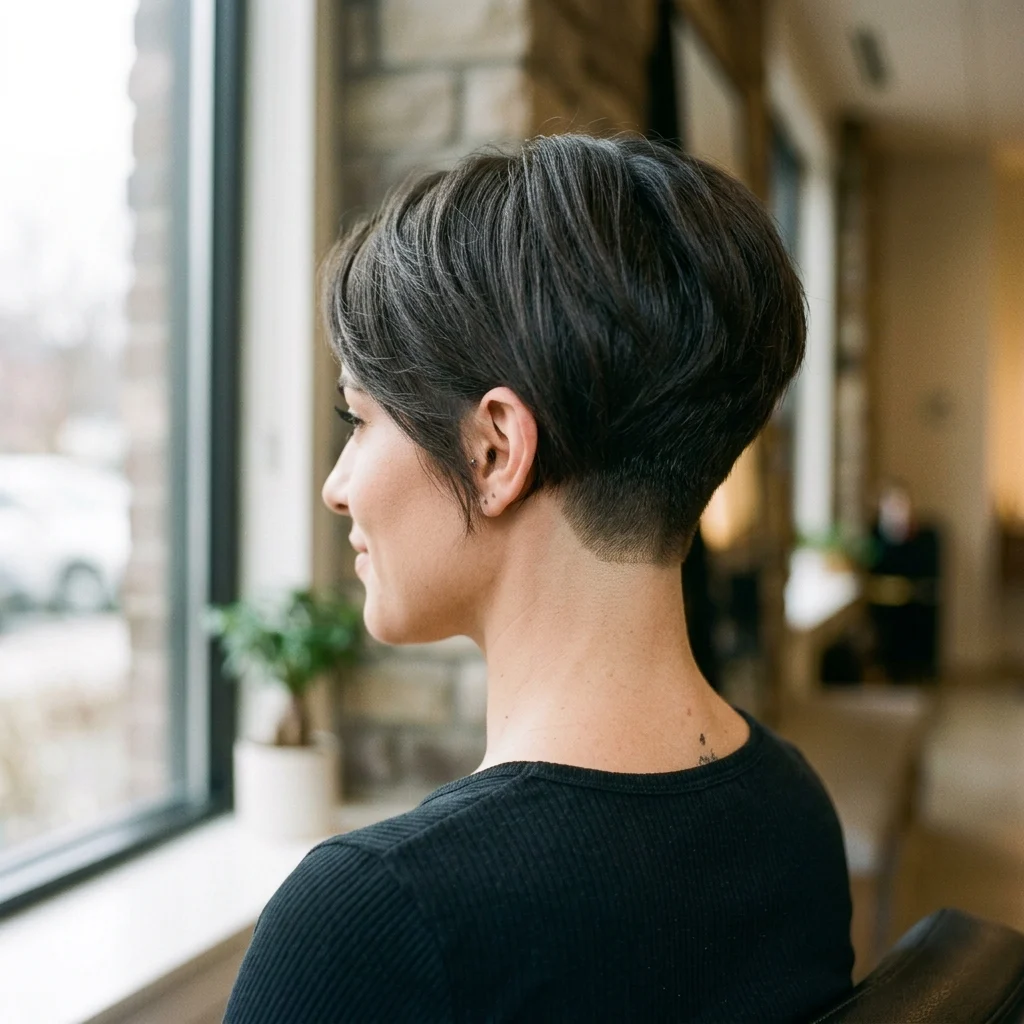
Vibe: Precise and controlled, like a line drawn with a ruler.
Why it works: The undercut removes bulk beneath the graduated stack using clippers set to a number 1 or 2 guard, which sharpens the visual contrast between the short nape and the longer crown layers. This structural choice is what separates a true undercut wedge from a standard graduated bob, since the clipper line adds a hard architectural edge the scissors alone cannot create. The charcoal tone amplifies this contrast because the closely cropped section reads darker and denser than the feathered top.
How to get it: Ask your stylist to clipper the nape to a number 1 or 2 guard, blended just enough to avoid a harsh visible line at the transition point. Keep the top graduated layers long enough to fall over the undercut for versatility between sharp and soft looks. A matte pomade like Aveda Control Paste helps define the top section without adding shine that competes with the charcoal tone.
Shop the Look
| Product |
| Matte pomade for short hair definition |
| Neck duster brush for at-home trims |
| Handheld mirror dual sided for nape checks |
| Edge control gel for baby hairs |
| Wide brim comb for sectioning |
4. Glossy Charcoal Wedge Under Studio Light (LIGHTING)
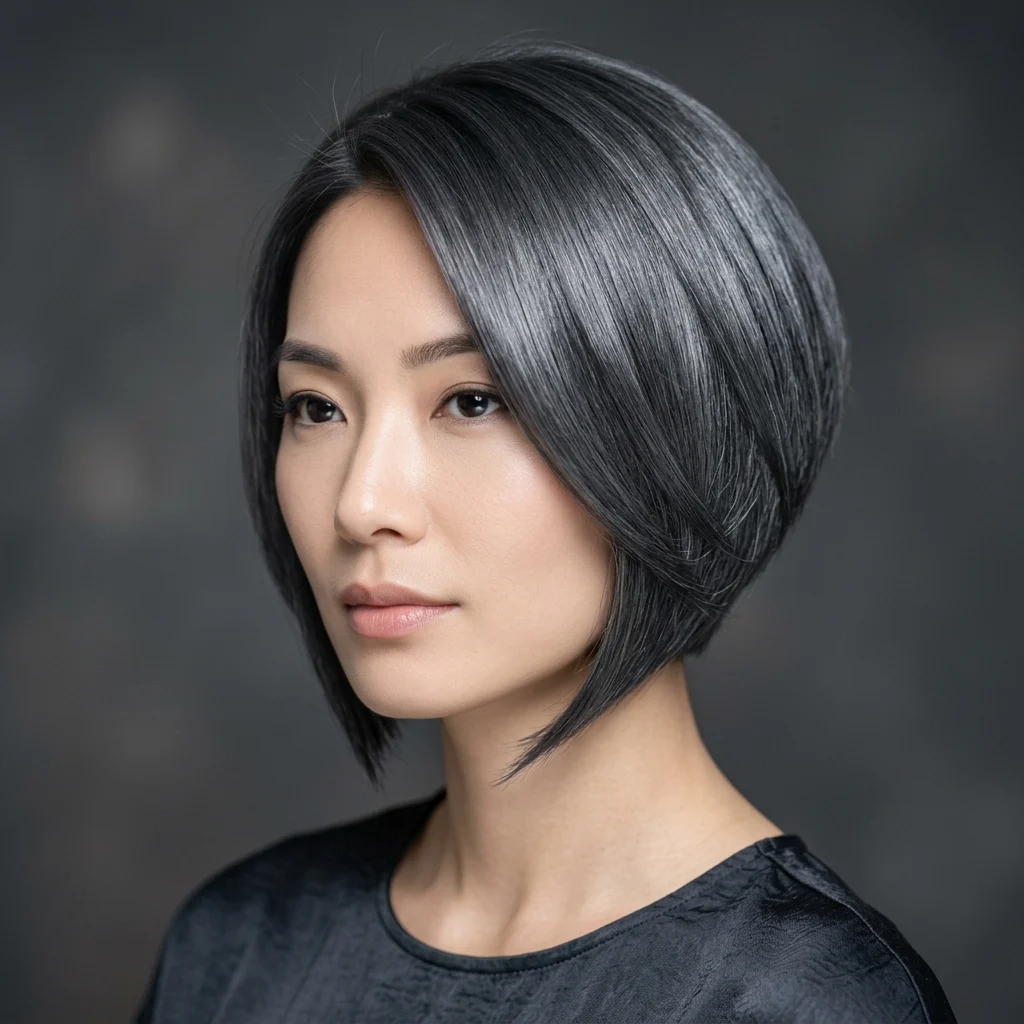
Vibe: Polished and cool, like hair with a glass-like finish.
Why it works: A glossing treatment seals the hair cuticle flat, which is what allows charcoal tones to reflect light in a cool, almost metallic way rather than absorbing it into a flat matte black. This technique is especially effective on graduated cuts since the smooth sealed surface highlights the stacked layer lines more clearly than dull, porous hair. Stylists typically apply the gloss immediately after color to lock in the ash undertone before it has a chance to oxidize warm.
How to get it: Request an in-salon clear or cool-toned gloss every four to six weeks to maintain the metallic sheen without altering the base charcoal shade. A silicone-free shine serum like Moroccanoil Glimmer Shine Spray adds polish at home without dulling the cool tone. Blow-dry with a round brush pointed downward along the graduated layers to smooth the cuticle and maximize shine.
Shop the Look
| Product |
| Cool toned shine spray silicone free |
| Round brush for smoothing short layers |
| Ionic hair dryer with concentrator nozzle |
| Glossing treatment kit at home |
| Heat protectant spray for color-treated hair |
5. Piece-y Charcoal Crop with Matte Clay (TEXTURE)

Vibe: Raw and undone, like hair styled with fingers instead of a brush.
Why it works: Matte clay has a heavier hold than lightweight paste, which lets the graduated layers stay separated in visible pieces rather than falling into one smooth mass. This technique pairs well with charcoal specifically because the matte finish keeps the cool tone from reading shiny or metallic, giving it a more textured, urban edge instead. The clay’s grip also helps control the shorter nape layers so they do not flip out unpredictably through the day.
How to get it: Warm a small amount of clay between your palms before applying, working from mid-length to ends rather than starting at the root. American Crew Fiber or Baxter of California Clay Pomade both deliver matte separation without shine. Twist small sections of the crown between two fingers while the clay is still workable to define individual pieces.
💡 Quick Win: Apply clay to towel-dried hair rather than fully dry hair for stronger, longer-lasting piece definition through the day.
Shop the Look
| Product |
| Matte clay pomade strong hold |
| Texturizing powder for root lift |
| Microfiber hair towel quick dry |
| Wide tooth detangling comb travel size |
| Travel size dry shampoo tinted formula |
6. Asymmetrical Wedge with Longer Front Pieces (FACE SHAPE)

Vibe: Angular and soft at once, like a cut with two moods.
Why it works: Asymmetry extends the front pieces past the jawline while the back stays in the standard graduated stack, which draws the eye downward and elongates rounder or wider face shapes. The longer front sections also soften the wedge’s otherwise sharp geometric back, creating balance between structure and movement. This technique works because the length differential is planned at the cutting stage, not achieved through styling alone.
How to get it: Request the front pieces be left one to two inches longer than the back graduation, cut on a diagonal line toward the chin. A flat iron with a quarter-inch barrel helps smooth and angle the longer front pieces toward the face. Keep the back graduation as originally cut since over-thinning it disrupts the asymmetrical balance the front length is meant to create.
Shop the Look
| Product |
| Small barrel flat iron for face-framing pieces |
| Heat protectant serum lightweight formula |
| Boar bristle paddle brush for smoothing |
| Bobby pins matte finish set |
| Precision styling comb fine tooth |
7. Charcoal Wedge with Statement Drop Earrings (ACCESSORIES)
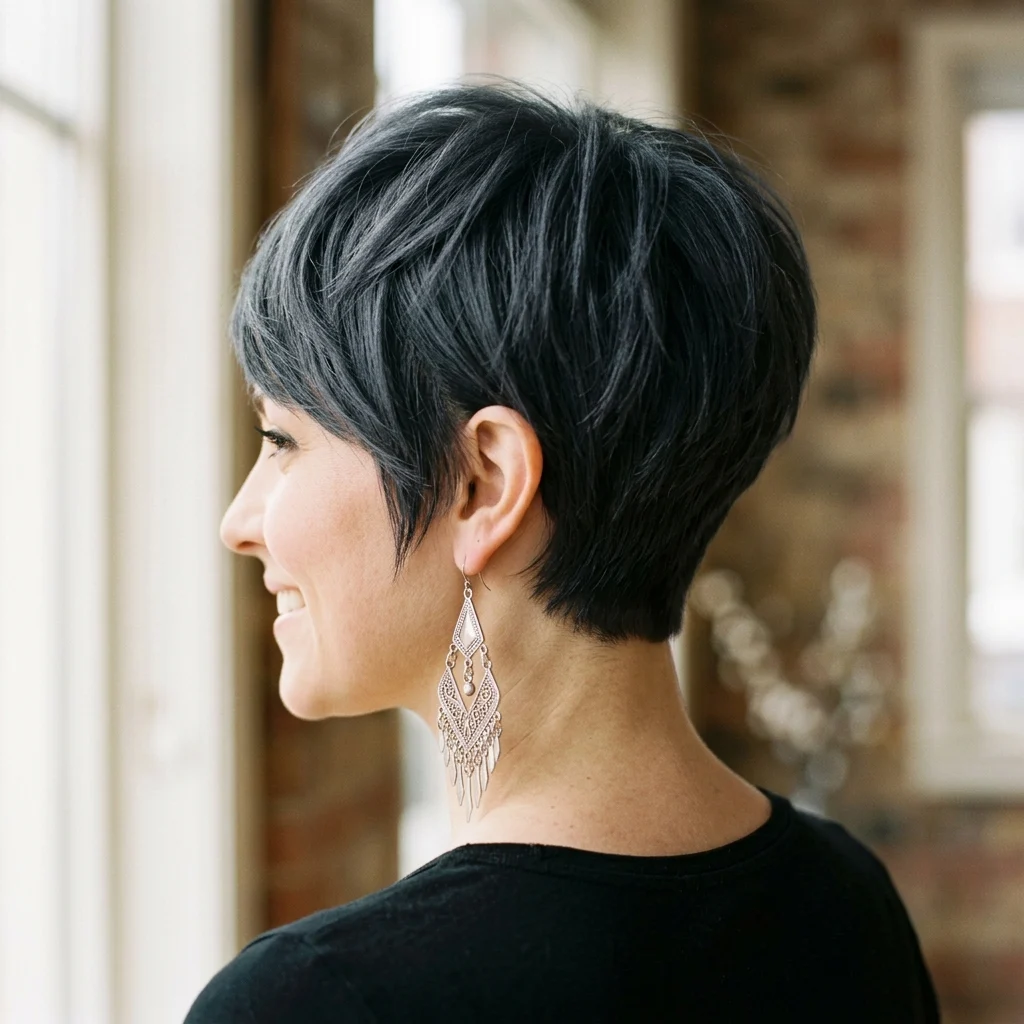
Vibe: Bold and exposed, like a cut made to show off jewelry.
Why it works: Because the graduated wedge tapers shorter at the nape and exposes the neckline, ears and jaw stay visible in a way longer hairstyles rarely allow, which turns the cut into a natural frame for statement earrings. The deep charcoal tone also provides high contrast against silver or gold jewelry, making the accessories read more vivid than they would against lighter hair. This is a pairing decision made at the styling stage, not something built into the cut itself.
How to get it: Tuck the shorter graduated layers behind the ears using a light-hold pomade so the earrings stay visible throughout the day. Choose silver or gunmetal tones for jewelry since they echo the cool ash undertone in the charcoal color rather than clashing with it. A single statement drop earring paired with a plain stud on the other ear also works well with this length.
Shop the Look
| Product |
| Silver drop earrings statement style |
| Light hold pomade for tucking pieces |
| Small compact mirror for on-the-go checks |
| Hair tucking comb fine tooth |
| Ear cuff set no piercing needed |
8. Voluminous Charcoal Wedge with Root Lift (FURNITURE)
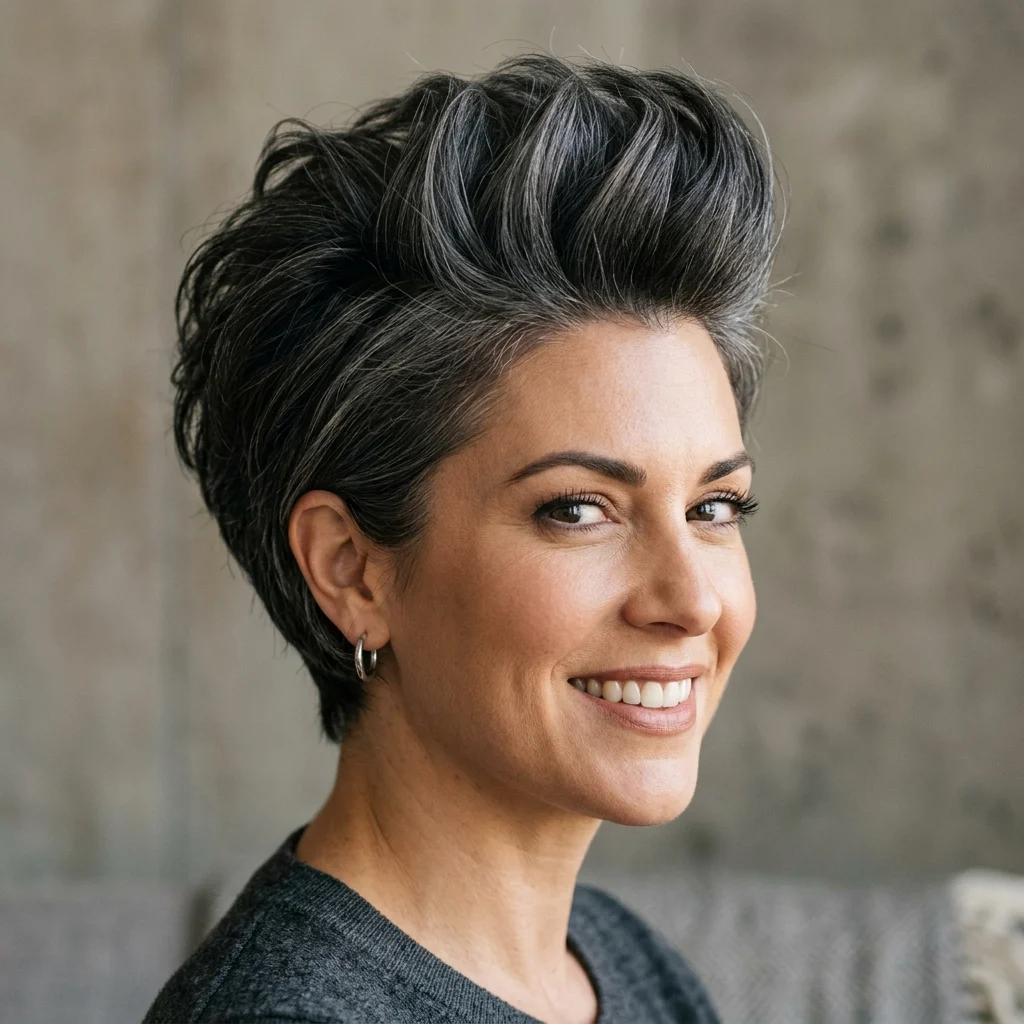
Vibe: Full and structured, like hair with real lift at the root.
Why it works: Root-lifted volume shifts the graduated wedge’s visual weight upward, which counters the naturally heavy, blunt appearance the stacked back layers can create on thicker hair textures. Blow-drying against the natural fall direction at the roots opens the hair shaft slightly, adding lasting lift that charcoal tone makes more visible against the scalp’s lighter undertone. This technique works best when combined with a light mousse rather than heavier styling creams that weigh volume back down.
How to get it: Blow-dry the roots in the opposite direction of your natural part first, then brush hair back into place once mostly dry to lock in the lift. A root-lifting mousse like Bumble and bumble Thickening Full Form applied only at the roots avoids adding weight to the graduated ends. Clip the crown section up with duckbill clips while the rest of the hair finishes drying for maximum hold.
💡 Quick Win: Flip your head upside down for the last thirty seconds of blow-drying to add instant root volume with no extra product.
Shop the Look
| Product |
| Root lifting mousse volumizing formula |
| Duckbill hair clips for volume setting |
| Teasing comb for root lift |
| Volumizing dry shampoo tinted formula |
| Paddle brush for smooth blowouts |
9. Low Maintenance Wash-and-Go Charcoal Wedge (LOW-MAINTENANCE)

Vibe: Loose and unbothered, like hair that skipped the blow dryer entirely.
Why it works: This version relies on the graduated cut’s built-in shape rather than heat styling, since the stacked layers already create structure as hair dries naturally. A lightweight texture cream applied to damp hair enhances the cut’s natural fall instead of forcing a new shape onto it. This is the lowest effort version of the wedge because it skips blow-drying almost entirely while still holding the graduated silhouette.
How to get it: Apply a texture cream like Living Proof Curl Definer to towel-dried hair, then let it air dry without touching it further to avoid frizz. Avoid brushing while damp since disturbing the graduated layers mid-dry can flatten the stacked shape. Set a diffuser on low if you need faster drying without disrupting the natural texture.
Shop the Look
| Product |
| Curl and texture defining cream |
| Microfiber scrunching towel for waves |
| Wide tooth comb for wet detangling |
| Lightweight leave-in conditioner spray |
| Anti-frizz serum for humid days |
10. Compact Charcoal Wedge for Petite Frames (SMALL SPACE)
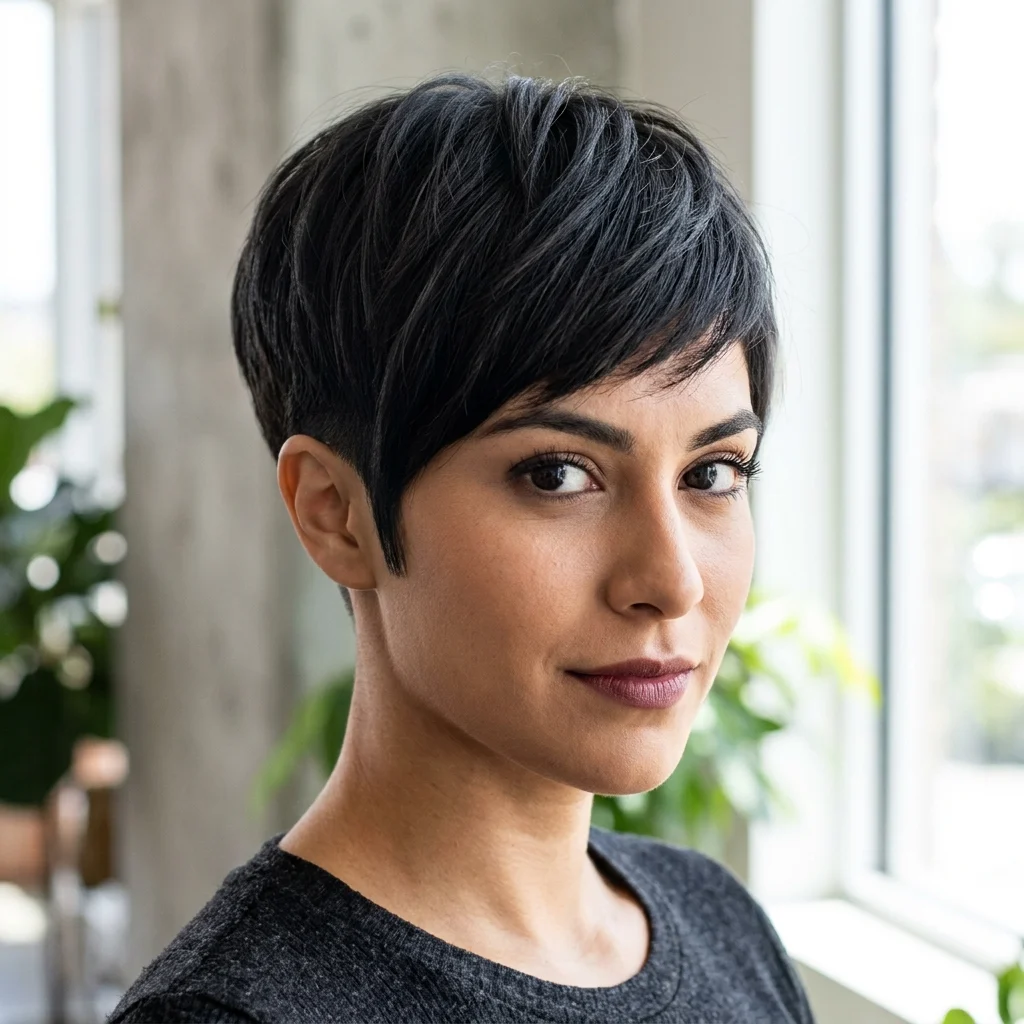
Vibe: Tight and sculpted, like hair with no excess to manage.
Why it works: This compact version shortens the overall graduation closer to chin length while keeping the wedge’s signature stacked structure at the nape. Shorter overall length means less daily styling time and less product needed to maintain shape, which suits petite frames and shorter necklines particularly well since the cut avoids overwhelming a smaller frame with excess volume. The charcoal tone stays consistent throughout since there is minimal length for color to fade unevenly.
How to get it: Request length no longer than chin-grazing at the front, with the graduation cut close using clippers over comb at the nape. A small amount of matte wax like Aveda Control Paste keeps the shortest pieces controlled without adding bulk. Trims every four to five weeks keep this compact shape from growing out into an in-between, shapeless stage.
Shop the Look
| Product |
| Matte finishing wax small tube |
| Compact travel hairbrush for short hair |
| Precision styling comb fine tooth |
| Travel size dry shampoo for touch-ups |
| Small clip for sectioning front pieces |
How to Start Your Graduated Charcoal Wedge Transformation
Book a consultation specifically requesting a graduated wedge cut with an ash-based charcoal color, since naming both the structural cut and the cool-toned formula together prevents miscommunication about either element. This first move matters because a stylist working from only “short haircut” or only “dark hair” as direction may deliver a blunt bob or a warm brunette instead of the specific structure and tone this style depends on.
The most common mistake is choosing a warm-based dark color instead of an ash-based one, which causes the hair to read brassy or reddish under warm indoor lighting instead of the intended cool charcoal. Fix this by explicitly requesting a cool or ash-toned formula and asking your colorist to test a strand before full application. A purple or blue toning shampoo used weekly also helps maintain the cool tone between salon visits.
Three items under $50 create immediate impact: a purple toning shampoo under $20, a matte clay pomade under $15, and a small barrel flat iron under $35. Each supports either the color’s cool tone or the cut’s structural definition without requiring a full styling routine overhaul.
A full transformation from longer or lighter hair typically takes one salon visit for the cut and color, plus a follow-up gloss appointment four to six weeks later to refresh the tone. Budget $90 to $220 depending on your area for the initial cut and color combined, with maintenance trims and glosses running $50 to $100. A weekend is enough to learn the wash-and-go routine; keeping the ash tone from warming up typically takes two or three toning treatments to fully settle.
Frequently Asked Questions About Graduated Charcoal Wedge Haircuts
What is the difference between a graduated wedge and a regular bob?
A graduated wedge is cut with layers that stack progressively shorter toward the nape, creating a rounded, angled silhouette, while a regular bob is typically cut at one consistent length with a blunt perimeter line. The graduation adds visible structure and movement that a one-length bob does not have. Wedge cuts also tend to sit shorter at the back and can be left longer at the front for an asymmetrical option. Stylists often describe the wedge as the more architectural, dimensional cousin of the classic bob.
Does charcoal hair color work on all skin tones?
Charcoal generally flatters cool and neutral skin undertones best since its ash base echoes cooler undertones in the skin, though it can work on warm undertones when balanced with a warmer lip or blush color. Very fair skin may find charcoal creates high contrast that reads dramatic rather than natural, while deeper skin tones often see the cool tone as complementary rather than harsh. A colorist can test the shade against your skin using a swatch before committing to full application. Adjusting the depth slightly warmer or cooler during formulation can also soften the contrast for any skin tone.
How much does a graduated charcoal wedge cost to maintain?
Initial cut and color services typically range from $90 to $220 depending on salon tier and location, with the color portion often costing more than the cut alone due to the precision needed for an even ash tone. Maintenance trims every four to five weeks usually run $40 to $70 to keep the graduated shape sharp. A gloss or toning refresh every four to six weeks adds another $40 to $80 to maintain the cool charcoal tone. At-home purple shampoo and styling products typically add $20 to $35 monthly to the total upkeep cost.
Does the graduated charcoal wedge work with curly or wavy hair texture?
Yes, though curly and wavy textures need extra thinning at the graduated layers to prevent the stacked shape from reading as bulky triangles rather than a smooth wedge silhouette. Stylists typically cut curly hair dry to see how each curl falls before removing weight with a razor or thinning shears. Wavy hair benefits from a lightweight curl cream rather than heavy gel to maintain the graduated structure without flattening natural movement. Type 2 and 3 curl patterns both work with this cut, though tighter curls may need slightly more length allowance to account for shrinkage.
What is the most requested version of the graduated charcoal wedge right now?
The razor-textured wedge with feathered ends is currently the most requested version, based on salon booking trends and search interest in softer takes on structural short cuts. This version keeps the graduated silhouette while softening the perimeter with razor work, appealing to clients who want definition without a fully blunt, sharp finish. Clients often bring reference photos showing this specific feathered texture to consultations. It remains popular because it balances the wedge’s low maintenance structure with a slightly more relaxed, wearable finish.
Ready to Create Your Dream Graduated Charcoal Wedge?
From the classic stacked structure to razor-textured feathering and an undercut with a sharp nape line, these 10 ideas cover a wide range of color depth, cutting technique, and everyday styling approaches. Starting small, even with just a consultation to test the ash-based charcoal formula on a strand, is a legitimate way to ease into this transformation. Book that consultation this week and bring at least two reference photos showing both the graduation angle and the exact charcoal depth you want.
Once the cut and color settle into your routine, that combination of low daily effort and sharp, intentional structure becomes the thing you notice most, less time styling, more confidence walking out the door. Save your favorite two or three looks now so you walk into your next appointment ready to point and show, not explain.