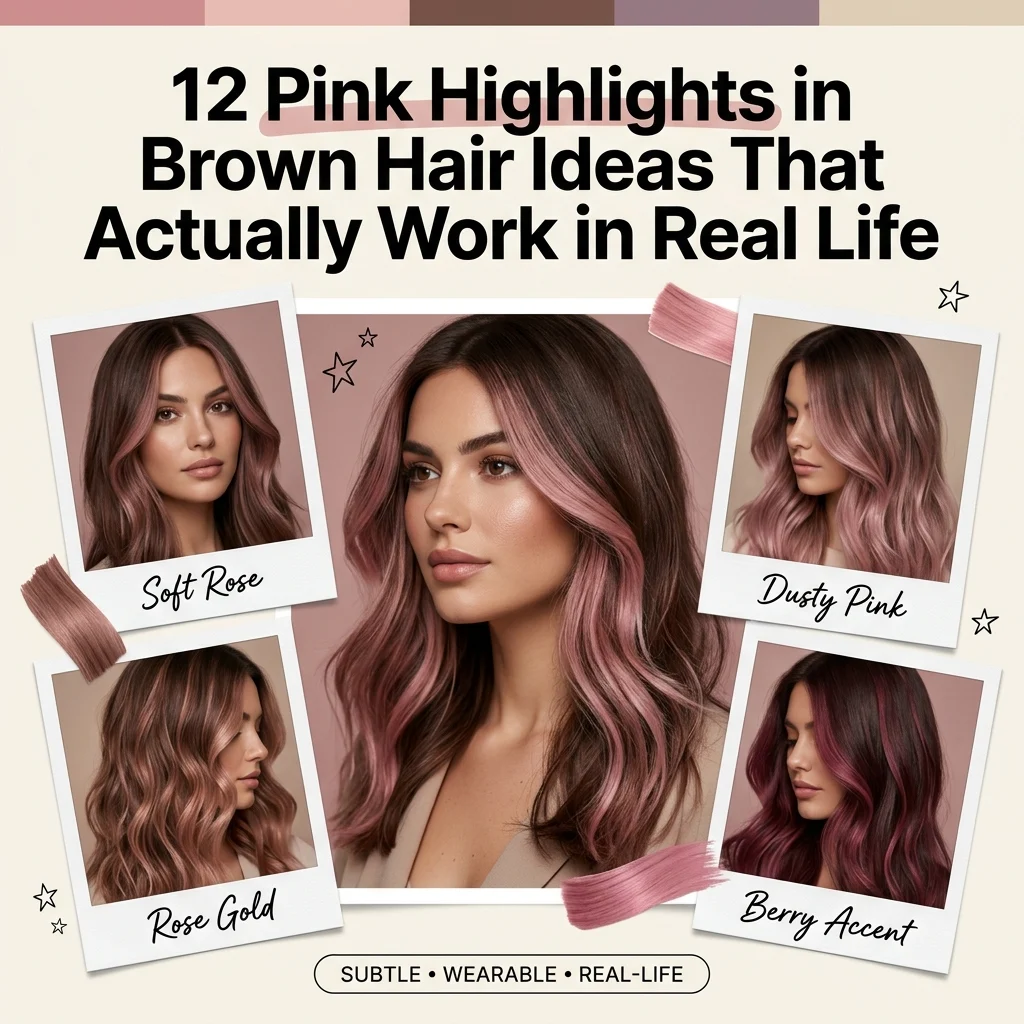
12 Pink Highlights in Brown Hair Ideas That Actually Work in Real Life

Pink highlights in brown hair are thin-to-medium ribbons of rose, magenta, or pastel color woven through a brunette base, usually placed around the face or underneath for a peekaboo effect. This guide gives you 12 ways to wear it, from subtle rose-gold money pieces to bold magenta ribbons, plus the techniques and upkeep that make each one last.
Done right, this look feels like a secret you get to keep and reveal on your own terms. It’s soft when your hair falls naturally and unmistakable the second you tuck it behind an ear or catch the light. Brown hair gives pink color something to push against. The contrast is what makes it read as intentional instead of accidental. It’s warm, a little rebellious, and endlessly adjustable to your comfort level.
Here are 12 ideas worth saving, and stealing.
Why Pink Highlights in Brown Hair Works So Well
Pink highlights in brown hair draw on the same colorist logic as classic balayage and dip-dye: a natural or richly pigmented base left mostly intact, with color introduced in controlled sections rather than all-over. Unlike full fantasy-color transformations popularized in the 2010s emo and scene-hair movements, this approach treats pink as an accent, not a base, closer to how colorists use face-framing highlights on blondes, just with a fashion-color twist.
The base is typically a warm or neutral brown (chestnut, chocolate, or espresso) left untouched to keep the color low-maintenance at the roots. The pink itself ranges from muted rose gold and dusty mauve to saturated magenta and cotton-candy pastel, usually achieved with direct dyes like Pulp Riot, Manic Panic, or Arctic Fox layered over pre-lightened sections. Foils, balayage, or babylights control exactly how much pink shows and how it blends back into the brunette.
This look is trending because it splits the difference between two things people actually want: commitment-light color experimentation and a face-framing feature that photographs well. Search interest in “money piece” and “peekaboo highlights” has climbed alongside a broader shift toward color that’s easy to hide for work and easy to show off outside it: a direct response to more flexible, hybrid dress codes and the rise of semi-permanent, damage-conscious formulas.
Small, low-commitment placements work well no matter your hair length or texture. Prioritize a few face-framing pieces or an underneath section before considering a full head of ribbons. It’s the fastest way to test the look without a major bleach investment, and it grows out gracefully instead of leaving an obvious demarcation line.
Style at a Glance
| Element | Detail |
| Philosophy | Color as accent, not overhaul. Pink is introduced in controlled sections against an intact brown base |
| Key Techniques | Balayage, foilyage, babylights, peekaboo placement |
| Key Colors | Rose gold, dusty rose, magenta, bubblegum pastel |
12 Ways to Wear Pink Highlights in Brown Hair
1. The Rose Gold Money Piece
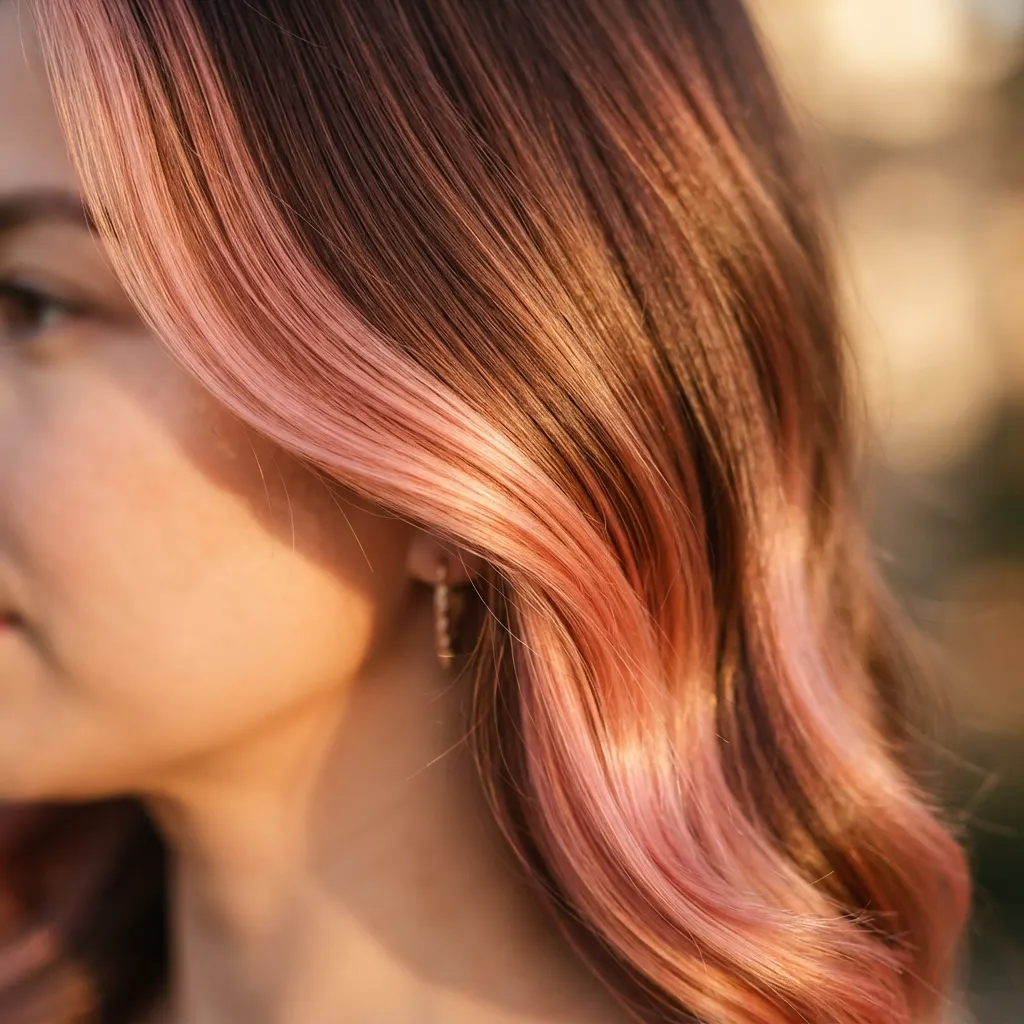
Vibe: Warm and sun-kissed, like the color grew there naturally.
Why it works: A money piece places color only on the two face-framing sections, which sit closest to your skin and catch the most light. Because rose gold has warm copper undertones, it reads as an extension of the brown base rather than a contrast, a low-risk entry point that still brightens the face the way traditional balayage does.
How to get it: Ask your colorist to lighten just the front two-inch sections to a pale gold base before toning with a rose-gold direct dye like Pulp Riot Rose Gold or a diluted Overtone Rose Gold conditioner. This section-only approach keeps the rest of your color virgin, so touch-ups only involve two small pieces.
💡 Quick Win: Skip the salon lightening step entirely and use a color-depositing rose-gold gloss (like dpHUE Gloss+ in a warm shade) over naturally light-brown ends for a temporary, no-commitment version that fades in 4–6 washes.
Shop the Look
| Product |
| Rose gold direct dye semi-permanent hair color |
| Color-depositing toning gloss warm rose shade |
| Sulfate-free color-safe shampoo for treated hair |
| Bond-building hair treatment mask |
| Heat protectant spray for color-treated hair |
2. Babylights Blend for a Barely-There Blush
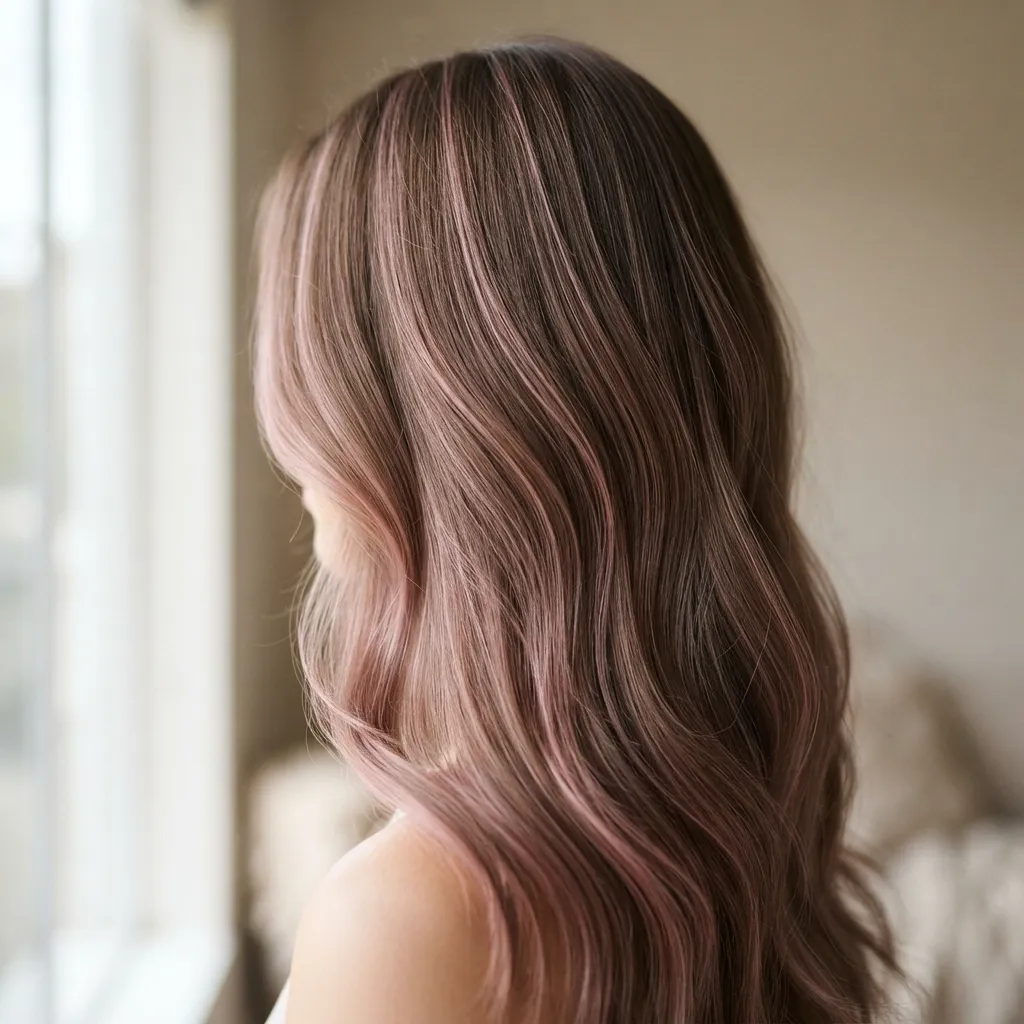
Vibe: Hushed and soft, more suggestion than statement.
Why it works: Babylights use extremely fine sections, often no wider than a strand or two, which dilutes the visual weight of the color. This technique relies on repetition rather than saturation: dozens of whisper-thin pink strands scattered through the mid-lengths create a soft blush cast in certain light without ever reading as “pink hair” from a distance.
How to get it: Request the same fine-foil technique used for traditional blonde babylights, but tone with a pastel pink instead of a blonde toner. The sections should be sparse and scattered rather than clustered, so the color blends into the brown at a glance and only fully reveals itself up close or in direct light.
Shop the Look
| Product |
| Pastel pink semi-permanent toner |
| Fine-tooth rat-tail sectioning comb |
| Purple-pink color-refreshing shampoo |
| Silk pillowcase for color preservation |
| Leave-in detangling spray for fine highlights |
3. Peekaboo Underlights Hidden Beneath the Top Layer
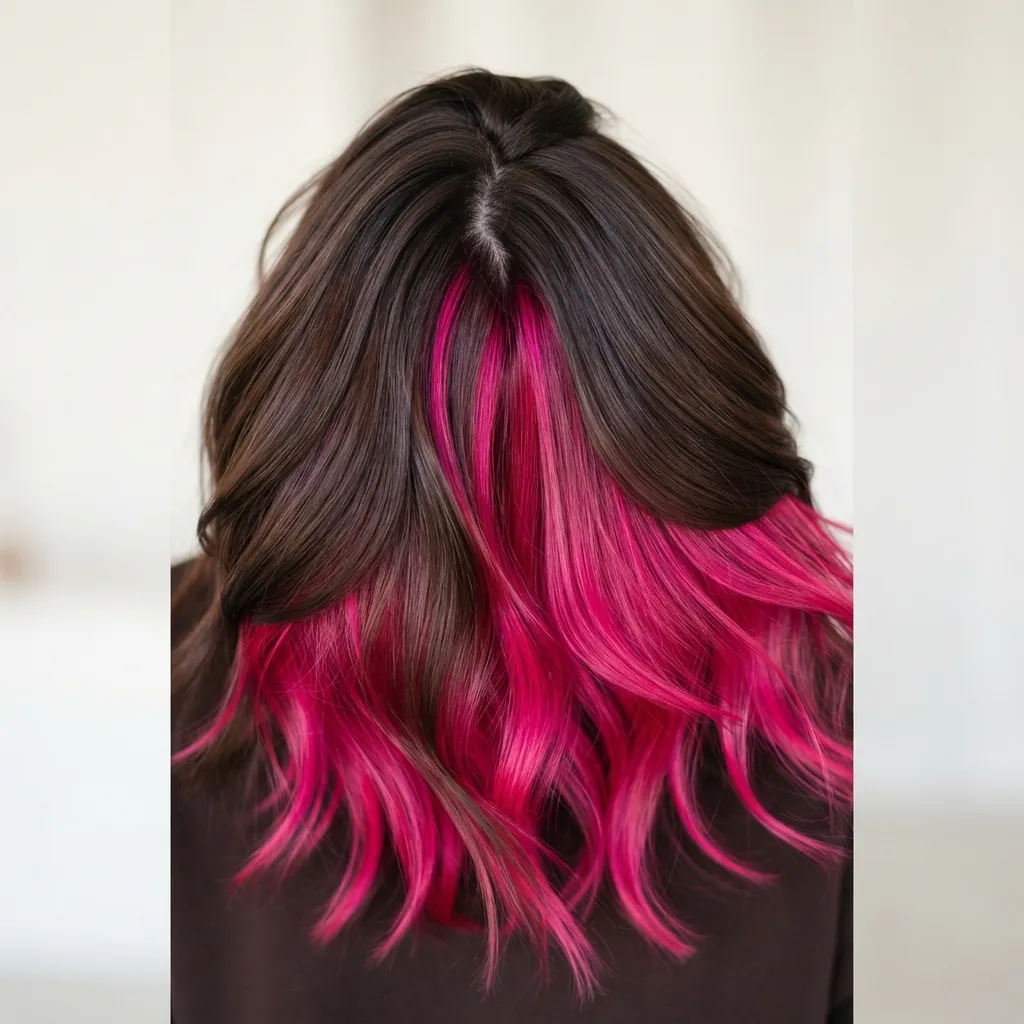
Vibe: Playful and a little mischievous, a color you control who sees.
Why it works: This placement relies on layering. The top section of hair stays fully brown and falls over the underneath section, creating a visual “reveal” mechanic when you tie your hair up, tuck it behind your ears, or let it move. The design principle here is concealment and contrast: because the pink is saturated rather than blended, it reads as bold the moment it’s exposed.
How to get it: Have your colorist section your hair horizontally at ear level, lightening and coloring only the bottom section while leaving the crown untouched. This works especially well with one-length or long layered cuts where the top hair has enough coverage to hide the color completely when worn down.
💡 Quick Win: If you’re not ready to commit to lightening, clip-in colored extensions matched to a vivid pink can be layered underneath your natural hair for special occasions, then removed the next day.
Shop the Look
| Product |
| Magenta or hot pink direct dye color |
| Sectioning clips for horizontal layering |
| Clip-in pink hair extensions set |
| Bleach-free color depositing conditioner |
| Wide-tooth detangling brush for color-treated hair |
4. Dusty Rose Balayage Through the Mid-Lengths
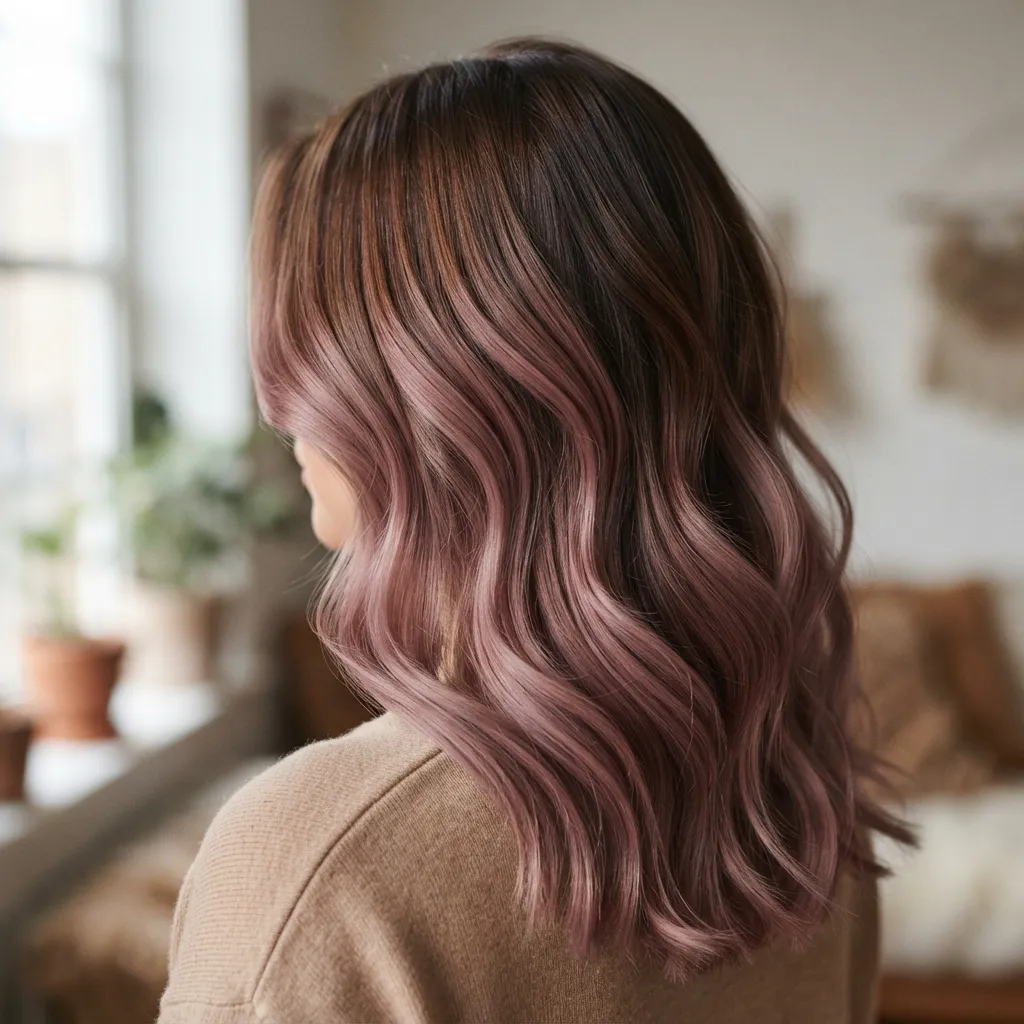
Vibe: Grounded and muted, closer to a dried flower than a candy shade.
Why it works: Dusty rose sits lower on the saturation scale than true pink, which means it behaves more like a tonal shift than a color statement. The hand-painted balayage technique places lightener in sweeping, freehand strokes rather than uniform foils, which softens the line between brown and pink into a gradient instead of a hard edge.
How to get it: Ask specifically for a “muted” or “dusty” rose toner rather than a bright pink, colorists often mix in small amounts of ash or brown toner into the pink formula to mute the saturation. This shade also fades more gracefully than vivid pinks, shifting toward a soft beige-pink rather than yellow.
Shop the Look
| Product |
| Muted dusty rose toning gloss |
| Balayage lightening kit for at-home touch-ups |
| Color-safe purple shampoo for brunettes |
| Argan oil hair serum for shine |
| Wide-brim sun hat for UV color protection |
5. Deep Espresso Base for Maximum Pink Contrast
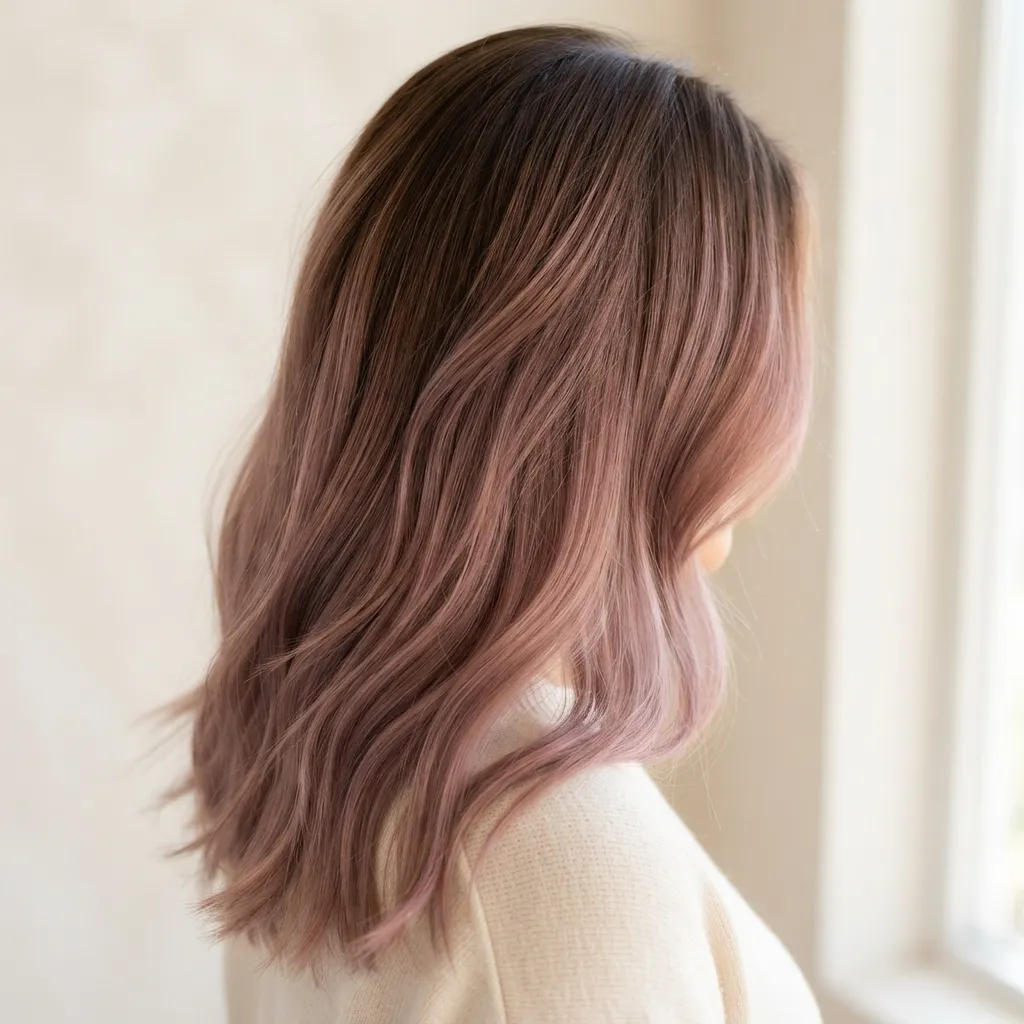
Vibe: Bold and grounded, the pink reads loud precisely because the base is so dark.
Why it works: Contrast is a design principle as much in hair color as in any visual medium: the darker and cooler the base, the more saturated and visible the pink appears, even in small quantities. Espresso and near-black bases require less lightener volume per strand to achieve visible pink, since dark hair already absorbs less reflected light, making the color pop rather than blend.
How to get it: If your natural base is lighter than espresso, ask your colorist to deposit a cool, ash-brown gloss over your whole head first to darken and neutralize warmth, then place pink highlights afterward. This two-step approach (darken, then highlight) creates sharper contrast than highlighting alone.
💡 Quick Win: A single-process brown gloss (no lightener) can darken your base in one salon visit for under an hour, setting up future pink highlights to show up more vividly without needing more bleach later.
Shop the Look
| Product |
| Cool ash brown demi-permanent gloss |
| Espresso brown root touch-up spray |
| Color-safe clarifying shampoo |
| Deep conditioning hair mask for dark hair |
| Anti-frizz smoothing serum |
6. Letting Pink Highlights Catch Golden Hour Light
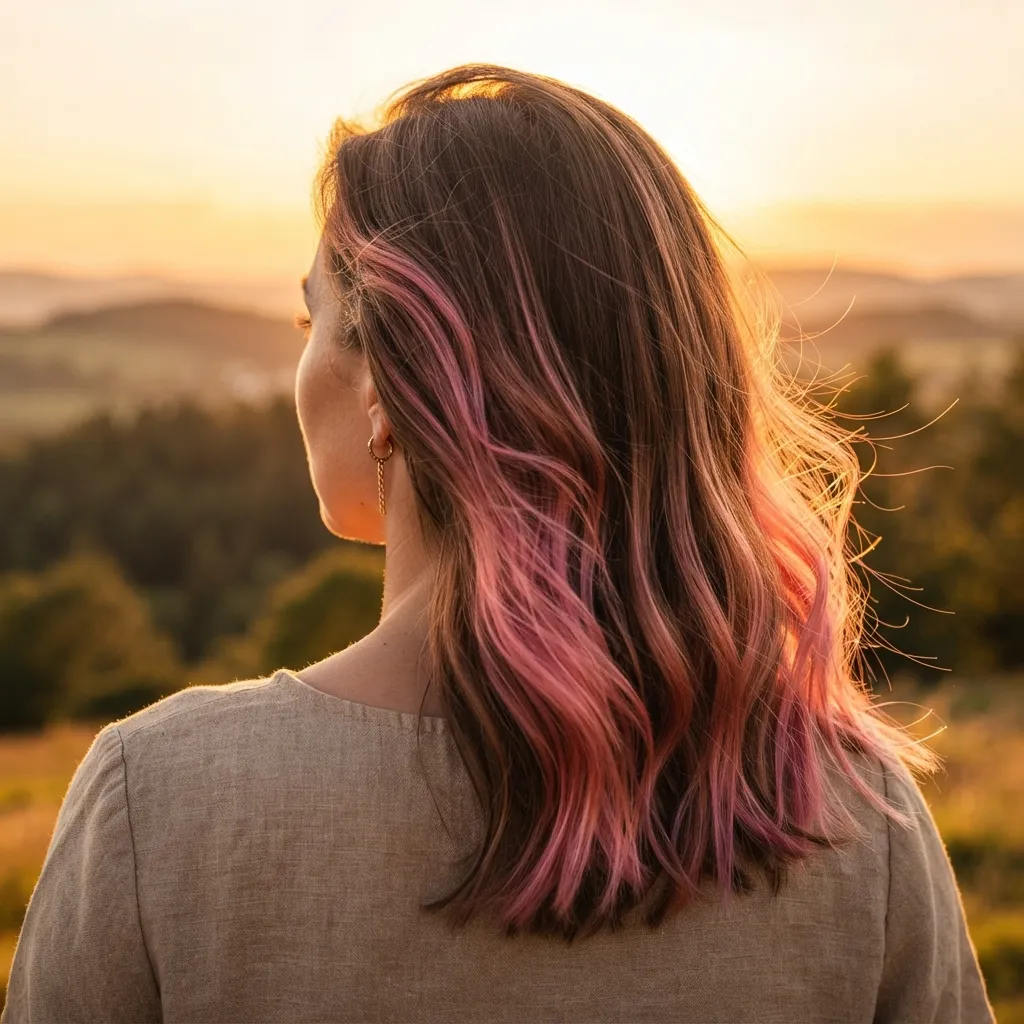
Vibe: Luminous, the kind of color that looks different every hour of the day.
Why it works: Warm direct dyes are semi-translucent, which means light passes through the strand rather than just bouncing off the surface. This is why pink highlights often look brighter in backlight than in flat indoor lighting. Placing the highlights toward the perimeter of the head, where strands are more likely to be lifted and lit from behind, maximizes this effect.
How to get it: Choose a rose or coral-leaning pink over a blue-based magenta. Warmer pinks have more light-reflective qualities under golden-hour and incandescent light. If you’re testing shades in-store or online, hold swatches up to a warm lamp rather than fluorescent light to judge how they’ll actually look outdoors.
Shop the Look
| Product |
| Warm coral-pink direct dye |
| UV protectant hair spray for color longevity |
| Texturizing sea salt spray |
| Boar bristle brush for shine distribution |
| Travel-size color-safe conditioner |
7. A Color-Depositing Shampoo Routine That Keeps Pink Vivid
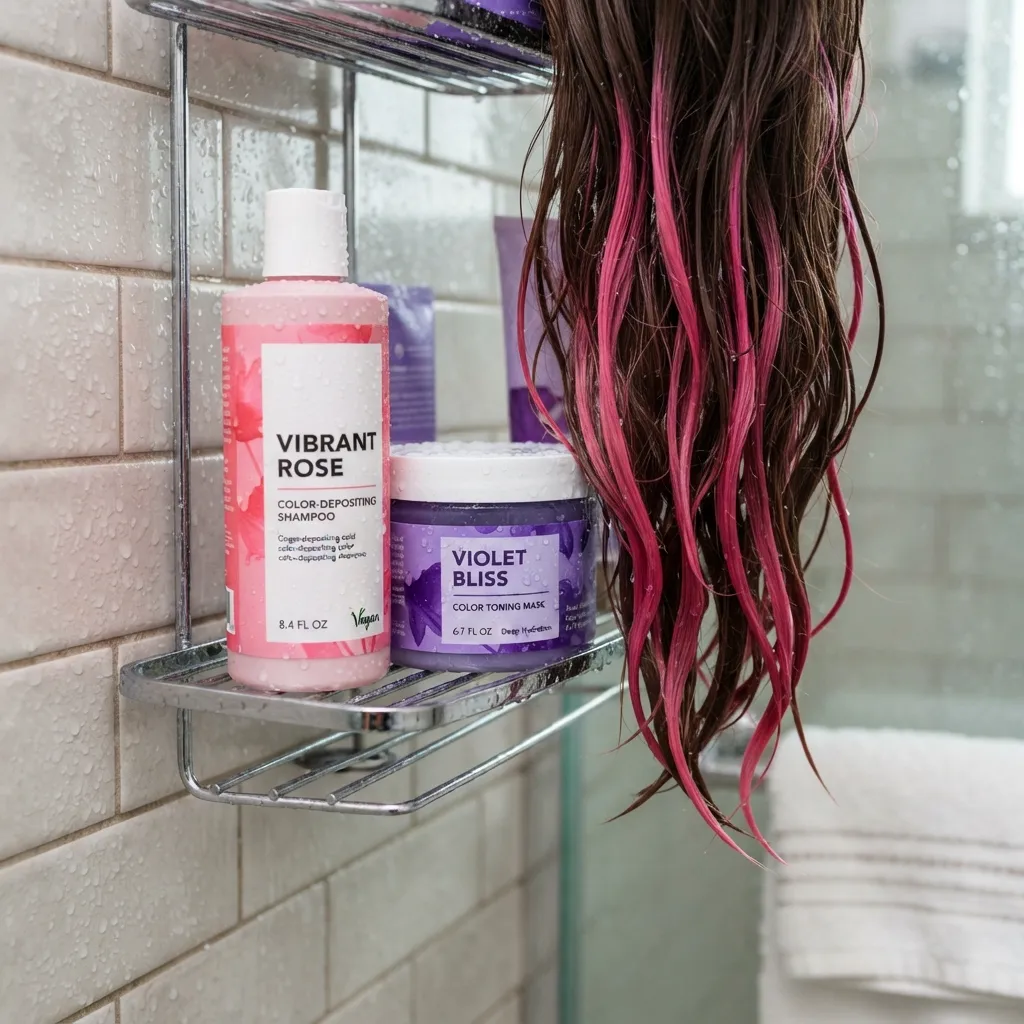
Vibe: Fresh and grounded, the everyday ritual that keeps the color from washing away.
Why it works: Direct dyes and semi-permanent pinks fade with every wash because they sit on top of the hair shaft rather than penetrating it, unlike permanent color. Color-depositing shampoos and conditioners redeposit small amounts of pink pigment each time you wash, slowing the fade instead of stripping it, which is a maintenance principle unique to fashion-color upkeep.
How to get it: Alternate a clarifying shampoo once every two weeks with a color-depositing pink or purple shampoo for the days in between. Clarifying prevents pigment buildup that can turn the pink muddy, while the tinted formula keeps the color from washing out too fast. Always wash in cool water, since heat accelerates pigment loss.
💡 Quick Win: Diluting a small amount of your semi-permanent dye into your regular conditioner and using it as a monthly “refresh mask” is a near-free way to extend vibrancy between salon visits.
Shop the Look
| Product |
| Color-depositing pink toning shampoo |
| Clarifying shampoo for pigment buildup |
| Cool-water shower filter attachment |
| Pink-tinted leave-in conditioner spray |
| Microfiber hair towel for gentle drying |
8. Foilyage for Sharper, More Defined Face-Framing Pieces
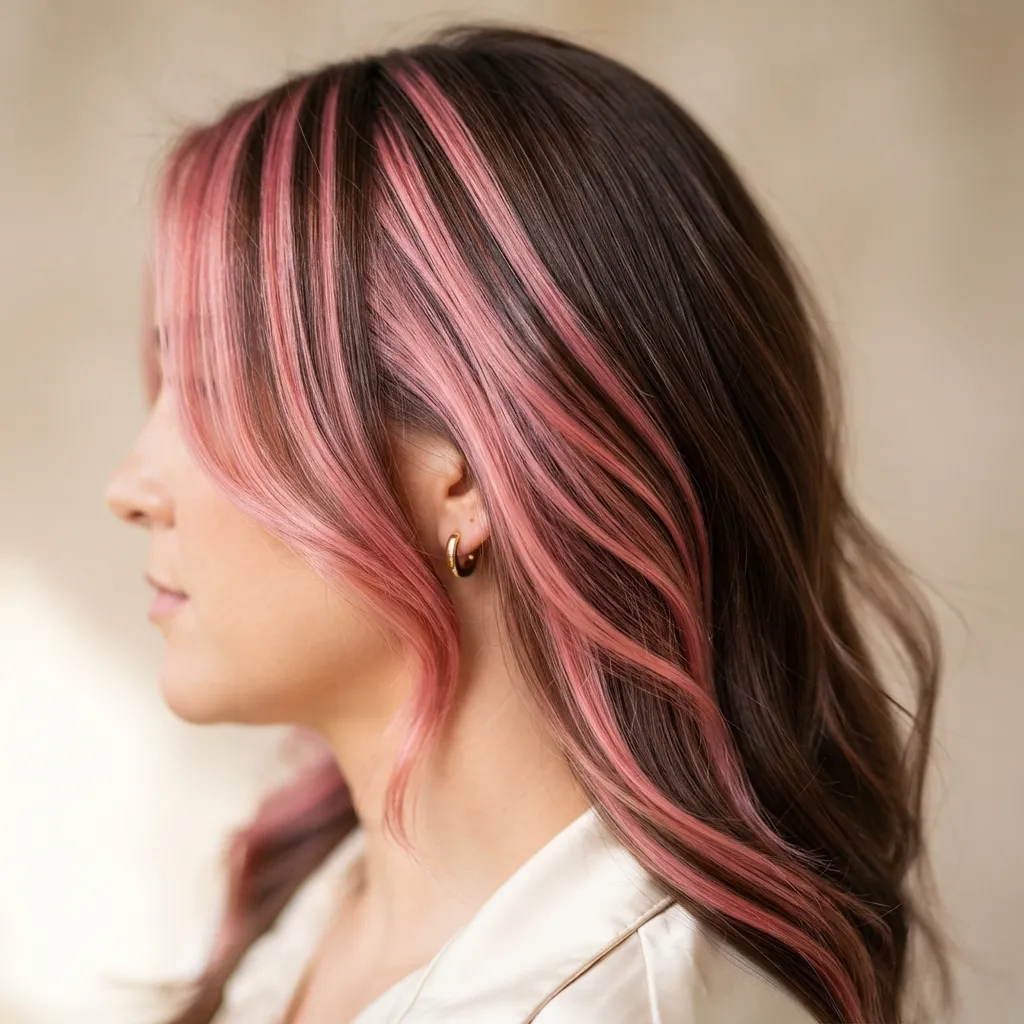
Vibe: Polished and deliberate, color with a clean, salon-fresh edge.
Why it works: Foilyage combines the freehand painting of balayage with the processing control of foils, which allows the colorist to lift hair further and place pigment with sharper definition than balayage alone. This technique produces more saturated, clearly defined pink pieces rather than the softer gradient balayage creates. Better suited to face-framing sections you want to read clearly, not just suggest.
How to get it: Request foilyage specifically by name when booking, since it’s a distinct technique from standard balayage and typically takes longer in the chair. It’s worth the extra time if your goal is two or three crisp, visible pink pieces rather than an all-over soft wash of color.
Shop the Look
| Product |
| Vivid rose pink permanent-style dye |
| Professional foil sheets for at-home coloring |
| Tint brush and mixing bowl set |
| Bond-protecting hair treatment ampoules |
| Color-safe flat iron for finishing |
9. Pink Highlights on a Short Bob
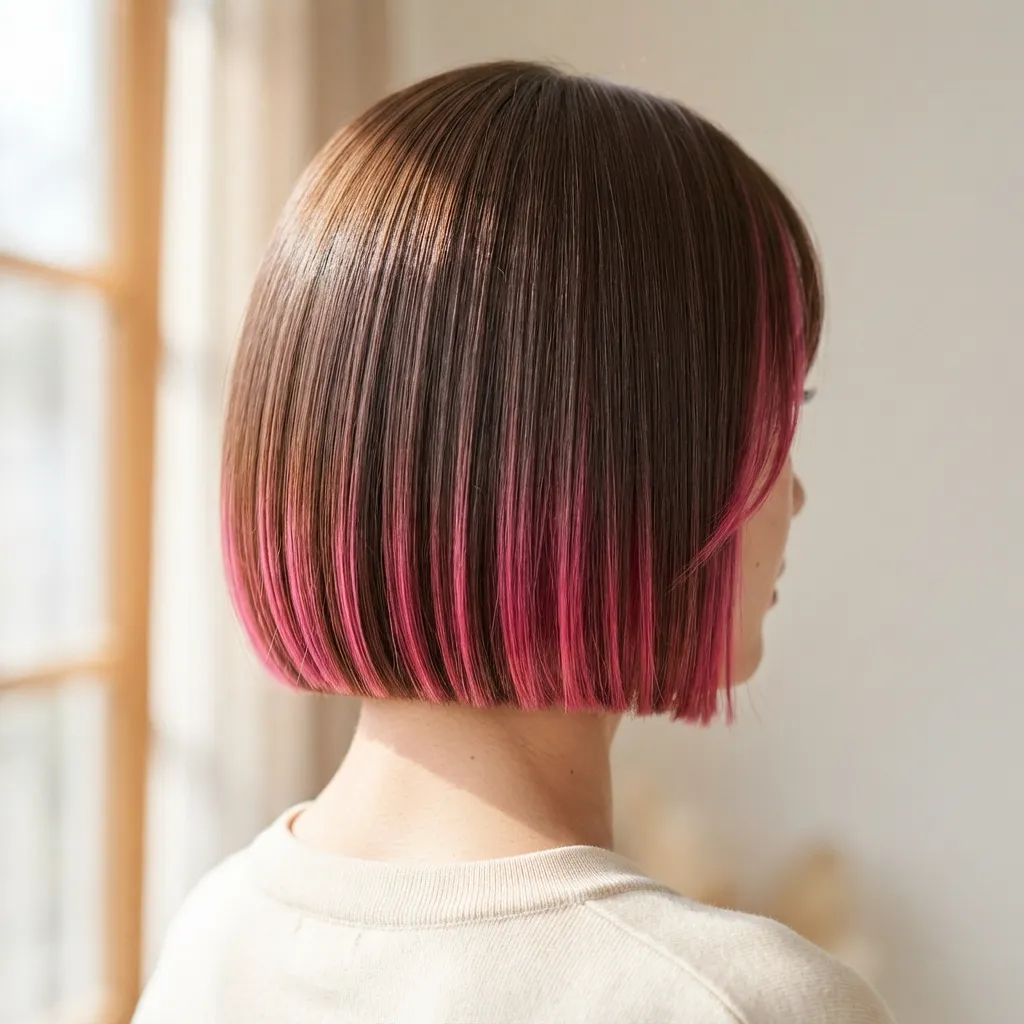
Vibe: Fresh and compact, color that reads immediately because there’s less hair to carry it.
Why it works: On shorter cuts, there’s less length for color to gradually build into, so placement matters more than on long hair. The same technique that looks subtle on waist-length hair can look concentrated and bold on a bob simply because the color occupies a larger percentage of the visible hair. This is the short-hair equivalent of a small-space design challenge: fewer inches means every choice reads at higher intensity.
How to get it: On a bob or lob, ask for pink at the ends only rather than starting highlights near the root. This keeps the color from overwhelming the cut and lets it act more like a dip-dye that grows out cleanly. Two to four face-framing pieces plus the perimeter ends is usually enough on shorter lengths.
💡 Quick Win: A temporary pink hair chalk or root touch-up spray applied only to the ends lets you test how pink looks on a bob for a single day or event before booking anything permanent.
Shop the Look
| Product |
| Temporary pink hair color chalk stick |
| Root touch-up spray in pink shade |
| Curling wand for bob styling |
| Lightweight texturizing spray for short hair |
| Small precision sectioning clips |
10. Magenta Ribbon Highlights for Maximum Statement
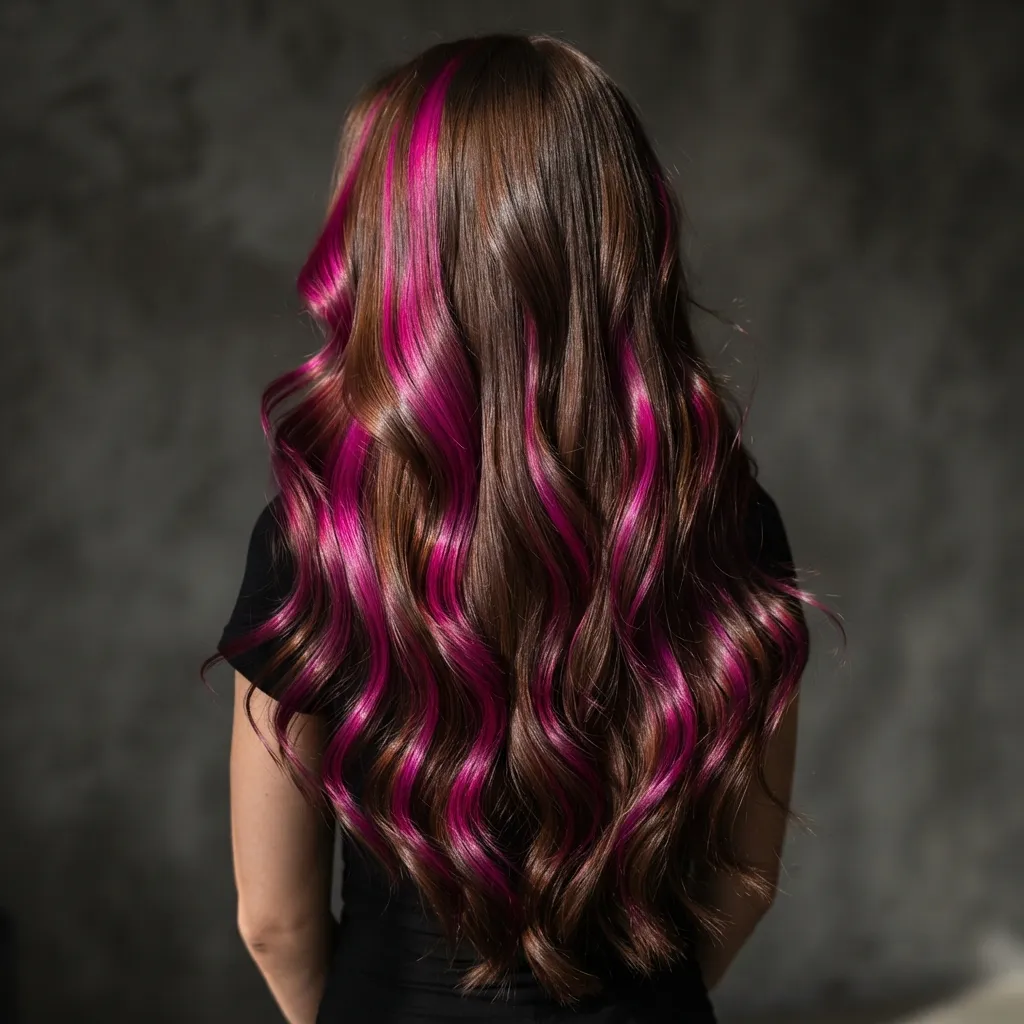
Vibe: Bold and unapologetic, this one isn’t trying to blend in.
Why it works: Where most placements on this list rely on thin sections or muted tones to keep pink understated, magenta ribbons do the opposite: they use wider sections and a saturated, blue-based pink to maximize visual weight. This is a deliberate departure from subtlety: the design principle here is emphasis through scale and saturation rather than restraint.
How to get it: Ask for ribbon sections roughly half an inch wide, evenly spaced through the crown and sides, lightened to a pale yellow base before toning with a true, undiluted magenta dye. Because magenta dyes fade toward purple rather than orange, they tend to hold their vibrancy longer than warmer pinks.
Shop the Look
| Product |
| True magenta vivid permanent-style dye |
| High-lift bleach powder for vivid color prep |
| Purple-based color-refreshing conditioner |
| Wide-tooth wide-section coloring comb |
| Silicone tint application brush set |
11. Warm Caramel-Brown Base Paired with Soft Pink
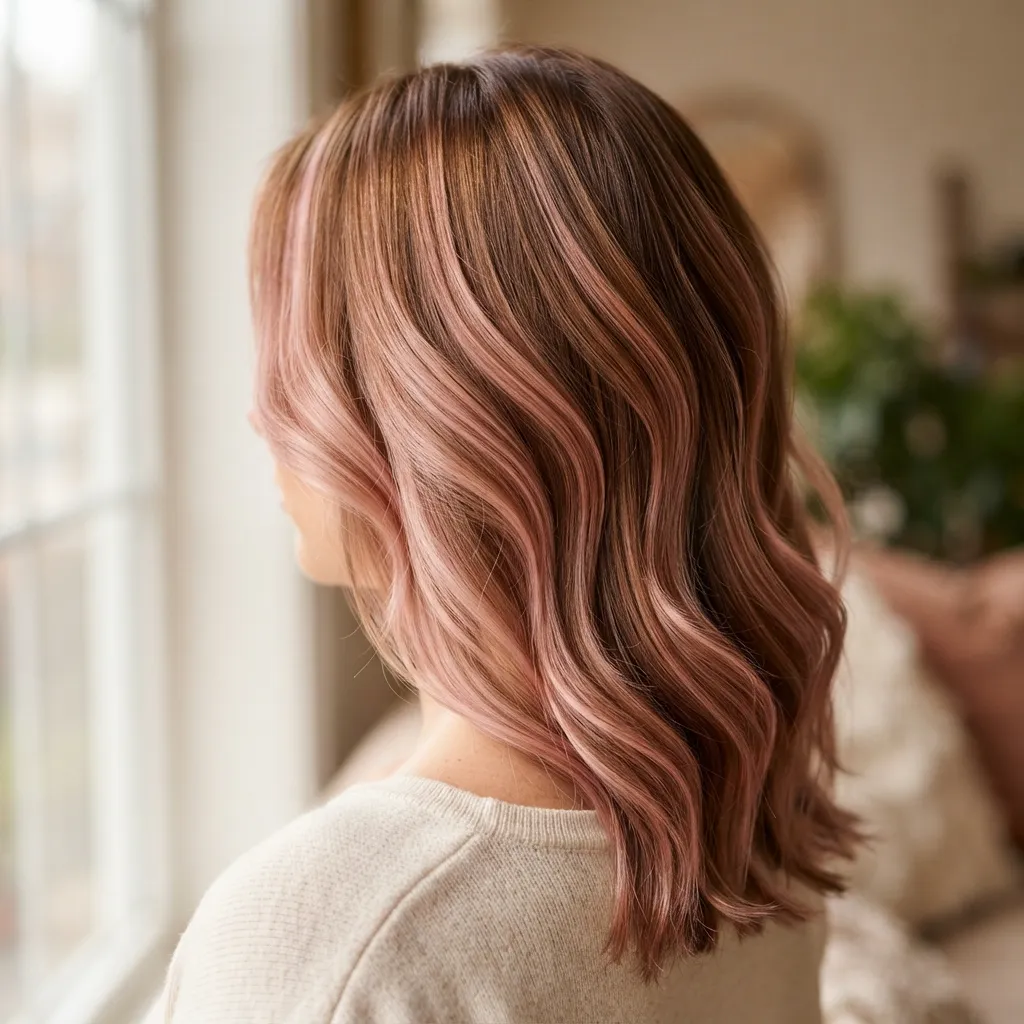
Vibe: Warm and romantic, softer than the espresso-and-magenta pairing but still dimensional.
Why it works: Where a dark base maximizes contrast, a caramel or honey-brown base works on the opposite principle, harmony. Warm undertones in both the brown and the pink allow the two colors to sit closer together on the color wheel, producing a blended, cohesive look rather than a high-contrast statement, which suits anyone who wants dimension without a stark line between base and highlight.
How to get it: Choose a pink with visible peach or coral undertones rather than a cool, blue-based magenta, and ask your colorist to tone the caramel base slightly warmer than usual so the two shades share an undertone family. This pairing also grows out more gently since warm-on-warm transitions are less noticeable at the root line.
Shop the Look
| Product |
| Warm caramel brown demi-permanent color |
| Peach-toned pink direct dye |
| Honey-infused hair gloss treatment |
| Warm-toned root concealer powder |
| Shine-enhancing finishing hair oil |
12. Diffusing Curly Hair to Let Pink Highlights Show Through the Coils
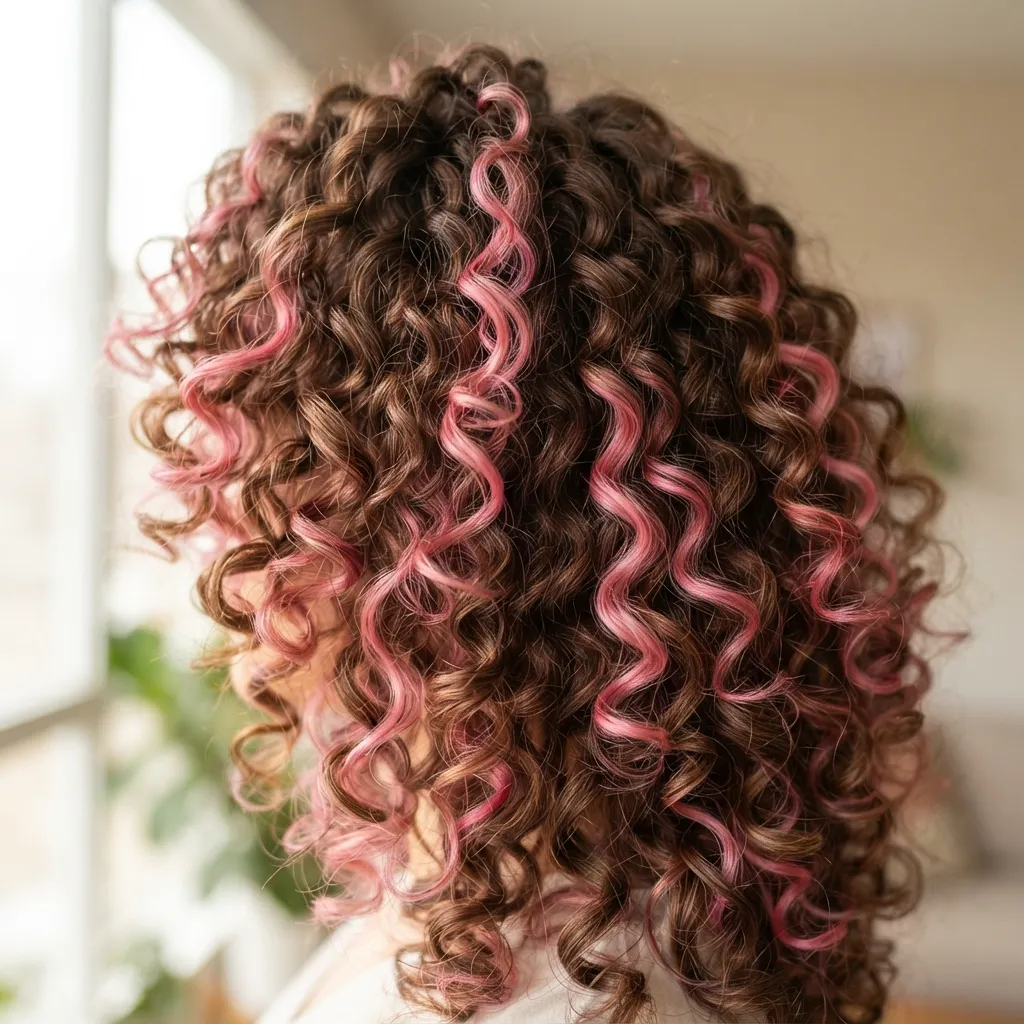
Vibe: Airy and textured, pink peeking through instead of lying flat.
Why it works: On curly and coily textures, highlights don’t fall in flat sheets the way they do on straight hair, they wrap around the curl pattern, so a single colored strand can appear multiple times within one coil as it twists. This means fewer highlighted sections are needed to achieve visible color throughout curly hair compared to straight hair, since the curl itself does some of the distribution work.
How to get it: Place pink highlights in slightly thicker sections than you would for straight hair, since curl shrinkage can make thin highlights disappear into the coil once dry. Diffuse hair upside down on a low heat setting to encourage curl clumping, which helps separate and reveal the colored strands rather than letting them blend invisibly into the mass of curls.
💡 Quick Win: A curl-defining gel applied to sections with the pink highlights specifically (rather than all over) can help those pieces clump separately and stand out more from the surrounding brown curls.
Shop the Look
| Product |
| Curl-defining styling gel |
| Diffuser attachment for blow dryer |
| Leave-in curl cream for coily hair |
| Pink-toned curl refresh spray |
| Wide-tooth comb for detangling curls |
How to Start Your Pink Highlights in Brown Hair Transformation
The single best first move is booking a consultation specifically for a money piece or two face-framing pink pieces, not a full head of highlights. This keeps your first investment small, lets you and your colorist test how your particular base brown lifts and holds pink, and gives you a low-stakes preview of the maintenance routine before committing further.
The most common mistake is skipping the bleach step and applying pink dye directly over dark brown hair, expecting it to show up. Direct dyes only deposit color visibly on hair that’s been lightened to a pale yellow or white-blonde base first: applied straight to brown, most pinks will barely tint the hair or wash out within a wash or two, leaving people disappointed and assuming the color “didn’t work” when it was never given the right canvas.
Three items under $50 that create immediate impact: a bottle of dpHUE Gloss+ in a rose or blush shade for testing color without commitment, a single pack of temporary pink hair chalk for a one-day trial, and a bottle of purple-pink color-depositing shampoo to extend whatever pink you already have.
A few money-piece highlights take roughly one to two hours in the salon and $75–$150 depending on your area, while a full head of foilyage or vivid ribbons can run $200–$400 and take three to five hours. A subtle version is achievable in a single weekend appointment; a bold, all-over transformation with pre-lightening often needs two separate salon visits spaced a few weeks apart to protect hair health.
Frequently Asked Questions About Pink Highlights in Brown Hair
Are pink highlights different from a full pink dye job?
Yes. Pink highlights place color in specific, controlled sections, often just the face-framing pieces or underneath layer, while leaving most of the brown base intact, whereas a full dye job lightens and colors the entire head. Highlights are also significantly less damaging and less expensive, since less hair requires bleaching, and they grow out far less noticeably than an all-over color change.
What shade of pink works best with brown hair?
It depends on your base: warm chestnut or caramel brown pairs well with rose gold or coral-pink, while cooler or darker espresso brown provides the sharpest contrast with true magenta or fuchsia. Dusty rose is the most universally flattering muted option, since it’s designed to sit closer to the brown on the color spectrum rather than clash with it.
How much do pink highlights cost?
A few money-piece highlights typically run $75–$150, while a fuller foilyage or balayage treatment with pre-lightening runs $200–$400, depending on your salon’s location and your colorist’s experience level. At-home kits using a boxed bleach and a direct dye like Arctic Fox cost roughly $20–$35 total but carry more risk of uneven results without professional guidance.
Can pink highlights work on any hair length or texture?
Yes, though placement should adjust. Short bobs do best with ends-only color to avoid overwhelming the cut, curly and coily textures benefit from slightly thicker sections since curl shrinkage hides thin highlights, and long hair has the most flexibility for gradients like balayage or peekaboo underlights. The core technique stays the same across textures; only the sectioning width and placement shift.
How long do pink highlights last before fading?
Semi-permanent pink dyes typically hold noticeable color for 4–8 weeks, with the most vivid shades like magenta lasting slightly longer than warm rose-golds because they fade toward purple rather than a duller orange-brown. Using a color-depositing shampoo, washing in cool water, and limiting heat styling can extend visible pink by several additional weeks.
Ready to Create Your Dream Pink Highlights in Brown air Look?
Between shade choices, placement techniques, base contrast, and upkeep routines, there’s a version of pink highlights in brown hair that fits nearly any comfort level, from a two-piece money piece to a full magenta ribbon transformation. Starting small (one consultation, one or two test pieces) isn’t a compromise; it’s the smartest way into a color that can always grow bolder later.
Today, that can mean nothing more than booking a consultation or picking up a color-depositing gloss to test the shade on a few strands at home. Once it’s in, you’ll likely notice the color shift with you all day, quiet under office light and bright the second you step outside. Save your favorite placement here now, so you’re not searching for it again the morning of your appointment.