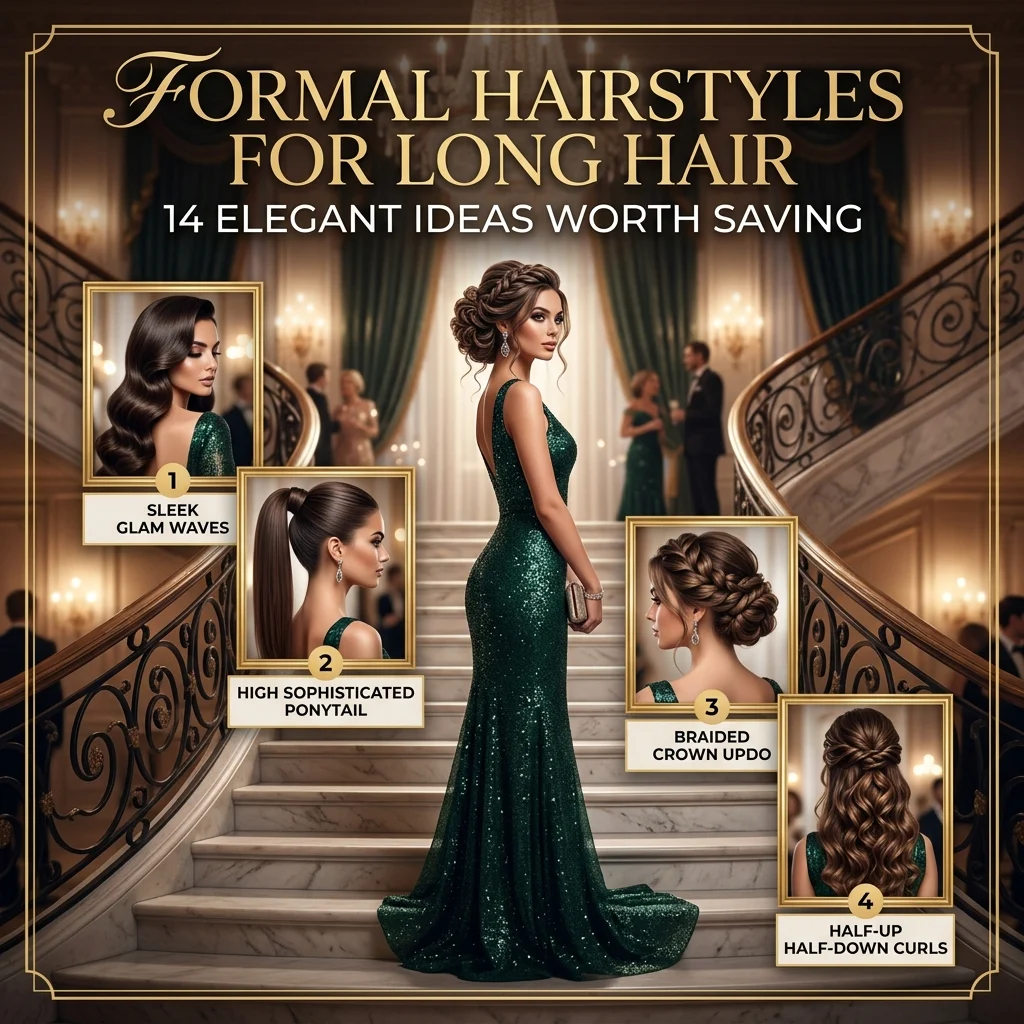
Formal Hairstyles for Long Hair: 14 Elegant Ideas Worth Saving

Formal hairstyles for long hair are updos, half-up styles, and sleek finished looks built specifically to hold through hours of movement, dancing, sitting, and photographs while reading as intentional and polished rather than casually undone. This article gives you 14 genuinely wearable formal hairstyle ideas for long hair, covering color, texture, silhouette, and finishing technique, so you can find the version that suits your event, your hair type, and how much time you actually have to get ready.
It feels like the difference between hair that’s simply long and hair that’s been considered. Every strand sits with intention: smooth where it should catch light, textured where it should hold shape, and secured in a way that survives a receiving line and a dance floor equally. There’s a stillness to it, a sense that nothing will shift no matter how the evening moves. Here are 14 ideas worth saving and stealing.
Why Formal Hairstyles for Long Hair Work So Well
Formal hairstyling as a distinct discipline traces back to 19th-century European court dressing, when elaborate upswept hair signaled social occasion and status at a glance, long before it became a bridal or red-carpet convention. What separates a genuinely formal style from an everyday updo is structural intent: formal styles are built with pins, backcombing, and setting agents specifically engineered to survive four to eight hours without a single touch-up, whereas a casual updo is built to look good for photos taken in the first twenty minutes.
The materials of formal hairstyling are less about visible textiles and more about finishing agents and structural tools: a strong-hold, humidity-resistant hairspray such as Oribe Superfine Strong or L’Oréal Elnett is the industry standard for locking a style through an evening event, while pomades like Bumble and bumble Sumogrip or R+ Co Sunset Blvd. controls flyaways without adding visible shine that would compete with hair jewelry.
Color-wise, formal styling favors depth and gloss over texture-forward tones. A rich chocolate gloss, deep espresso, or warm caramel reads as intentional under evening lighting in a way that heavily lived-in balayage sometimes doesn’t, because formal lighting (candlelight or low ambient venue lighting) flattens subtle dimension and rewards a more unified base tone instead.
Interest in formal hairstyling has shifted noticeably over the past few Pinterest search cycles toward “undone elegance”: deliberately imperfect low buns, face-framing pieces left loose, and texture that looks touched rather than sprayed rigid, a reaction against the highly structured, competition-style updos that dominated formal hair a decade ago.
Style at a Glance
| Element | Detail |
|---|---|
| Philosophy | Structural durability First, a formal style must survive hours of movement, not just the first photo |
| Key Techniques | Backcombing for root support, strong-hold humidity-resistant hairspray, strategic pin placement at tension points |
| Best For | Weddings, galas, proms, and any event lasting longer than three hours |
14 Formal Hairstyle Ideas for Long Hair
1. The Undone Low Bun
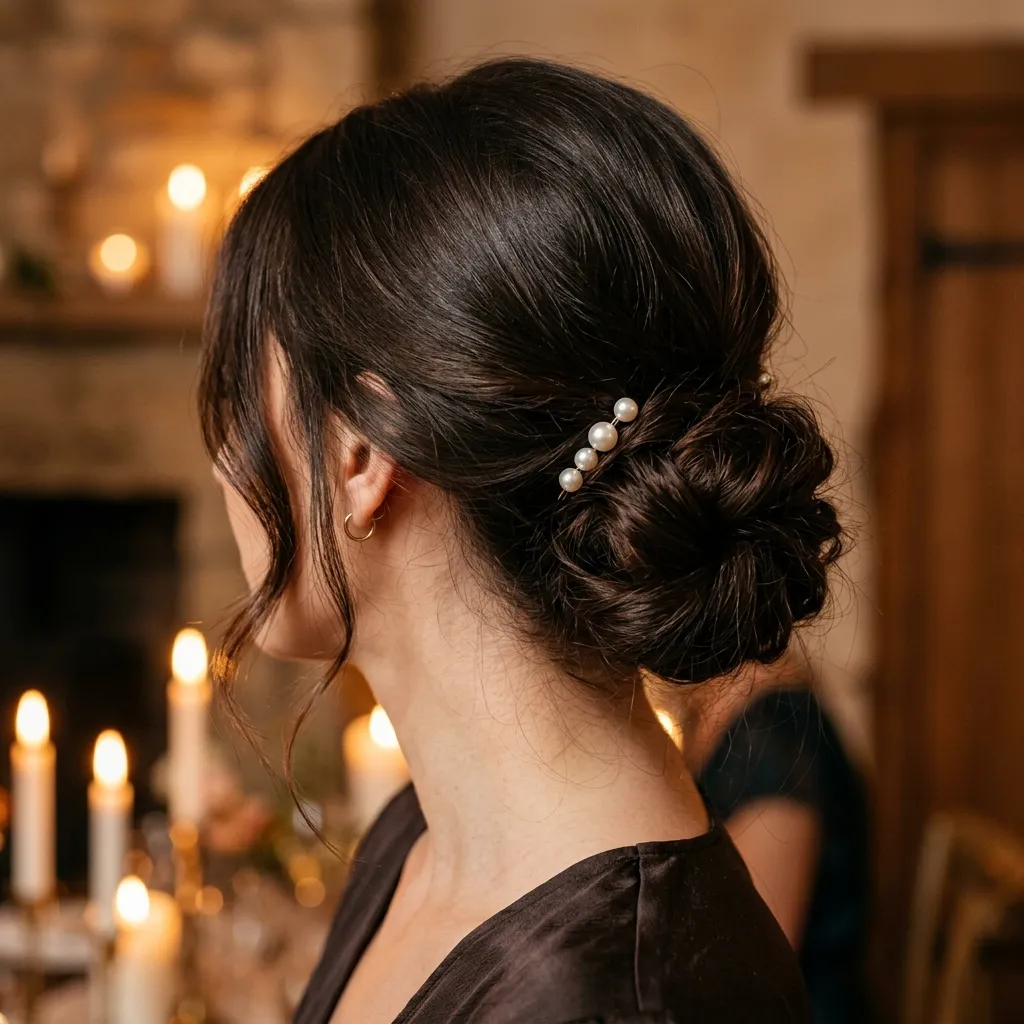
Vibe: Hushed, elegant without looking like it took two hours.
Why it works: The undone low bun works because it separates two things that get conflated in formal styling: polish and rigidity. Backcombing the crown before gathering hair into the bun creates lift and structure at the root the actual load-bearing point of any updo, while leaving the bun itself loosely pulled rather than glass-smooth, which reads as considered rather than careless. This is a texture-layering principle: structured underneath, relaxed on the surface.
How to get it: Backcomb a one-inch section at the crown before gathering hair into a low ponytail, then wrap the ponytail around its base loosely, securing with U-pins angled downward into the previous pin rather than straight in, which is what actually holds weight through hours of movement rather than a single pin pushed straight down.
Shop The Look
| Product |
|---|
| Small pearl hairpin set, decorative |
| U-pin bobby pin set, matte finish |
| Volumizing root mousse |
| Strong-hold humidity-resistant hairspray |
| Fine-tooth rat-tail comb for backcombing |
Also view: 13 Low-Maintenance Updos You Can Do in Under Five Minutes
2. Rich Chocolate Gloss for Evening-Light Shine
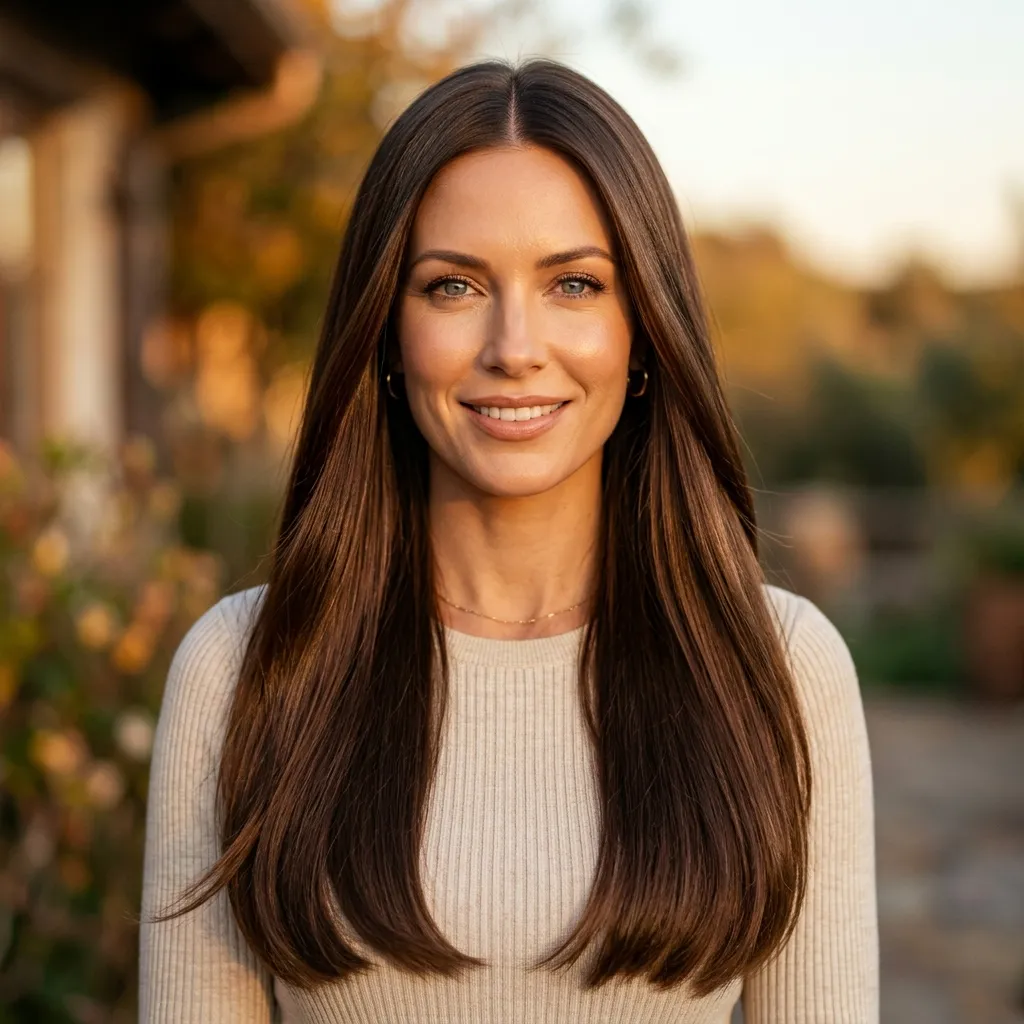
Vibe: Luminous. The kind of shine that reads across a room.
Why it works: This is a color decision rather than a styling one: a single-process gloss in rich chocolate reflects evening and candlelight far more consistently than heavily highlighted or balayaged hair, because dimensional color scatters light unevenly under low, warm venue lighting, while a unified tone reflects it as one continuous surface. Colorists specifically recommend a gloss service like Redken Shades EQ or Wella Color Charm in the two weeks before a major formal event for exactly this reason.
How to get it: Book a glossing appointment 5 to 7 days before your event rather than the day before. Gloss needs a few days to fully settle and stop transferring onto pillowcases and collars, and booking too close to the date risks a shine that looks wet rather than polished in early photos.
Shop The Look
| Product |
|---|
| Glass-hair finishing serum |
| Silicone-free shine spray |
| Heat protectant spray for gloss-treated hair |
| Ceramic flat iron for smooth styling |
| Silk pillowcase to protect fresh color |
3. Sleek Low Ponytail with a Wrapped Base
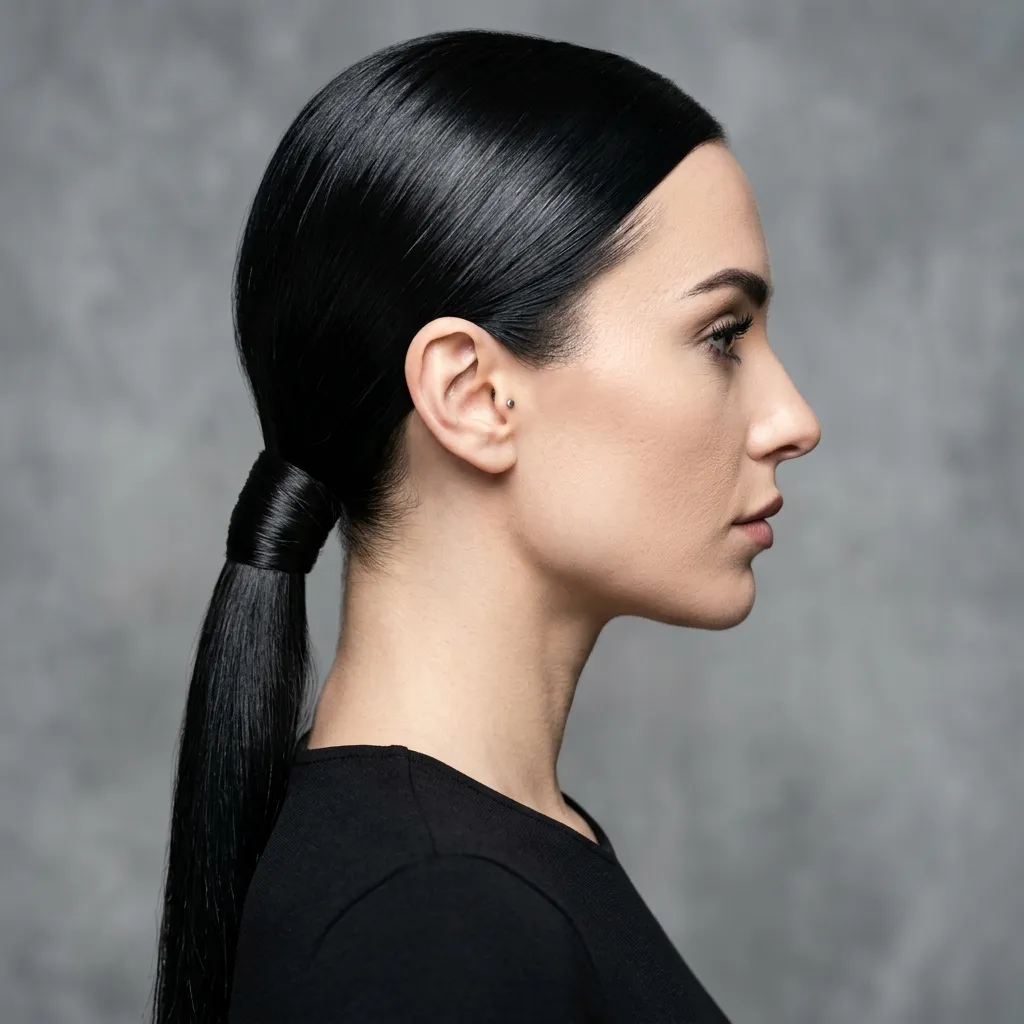
Vibe: Sharp: minimal, confident, and precise.
Why it works: This is a silhouette and proportion decision: a low, sleek ponytail relies entirely on the absence of visible hardware to read as formal rather than sporty, since a visible elastic immediately shifts the same silhouette into casual territory. Wrapping a one-inch section of the ponytail’s own hair around the base and pinning it underneath is the specific technique that removes that visual break, creating one continuous, uninterrupted line from crown to ends.
How to get it: Take a thin section (roughly one inch) from underneath the ponytail before securing it, wrap it around the elastic base, and pin the tail flat against the scalp using a single bobby pin placed underneath the wrap where it won’t show. This single detail is what separates a formal ponytail from a gym ponytail.
💡 Quick Win: Run a flat iron very lightly over the ponytail’s wrapped section only. This keeps the wrap smooth and glass-like without needing to fully re-straighten the entire ponytail.
Shop The Look
| Product |
|---|
| Elastic-free ponytail wrap tie |
| Strong-hold slicking gel |
| Boar bristle smoothing brush |
| Fine-mist shine spray |
| Small bobby pins for concealed wrapping |
4. Half-Up Braided Crown
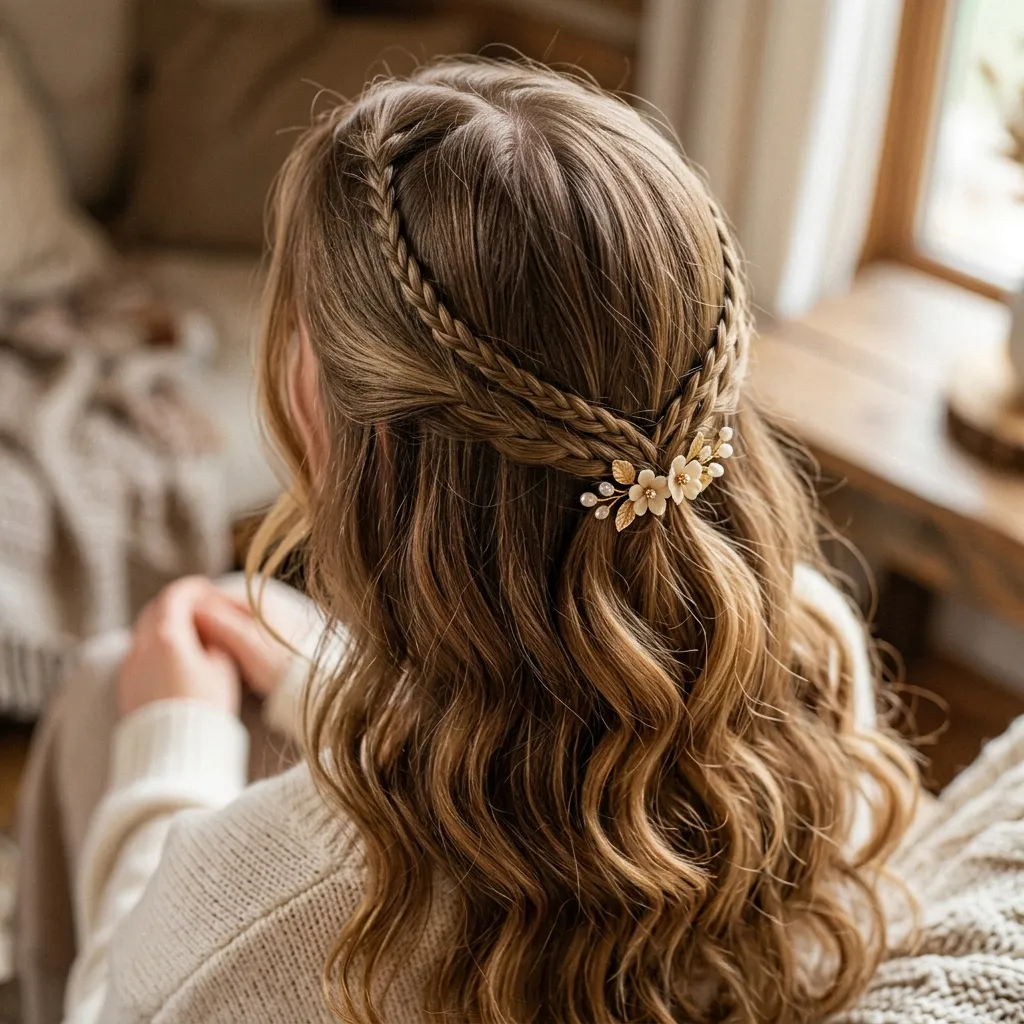
Vibe: Romantic, structured at the crown, soft everywhere else.
Why it works: This idea layers two textures deliberately: the tight, structured texture of a braid against the loose movement of waves below it creates dimension through contrast, the same principle used in high-end bridal styling to avoid a look that’s either entirely structured (too stiff) or entirely loose (too casual). The braided crown also does functional work. It holds hair off the face for hours without a single clip showing.
How to get it: French braid two thin one-inch sections starting above each ear, cross them at the back of the crown, and pin them flat against the scalp before letting the remaining length fall loose in soft waves the braids should sit close enough to the scalp that they read as woven texture, not raised loops.
Shop The Look
| Product |
|---|
| Small floral or pearl hairpin set |
| Texturizing spray for braid grip |
| 1.5-inch curling wand for soft waves |
| Light-hold flexible hairspray |
| Bobby pins in a matching hair-tone finish |
5. Deep Espresso Base for High-Contrast Updos
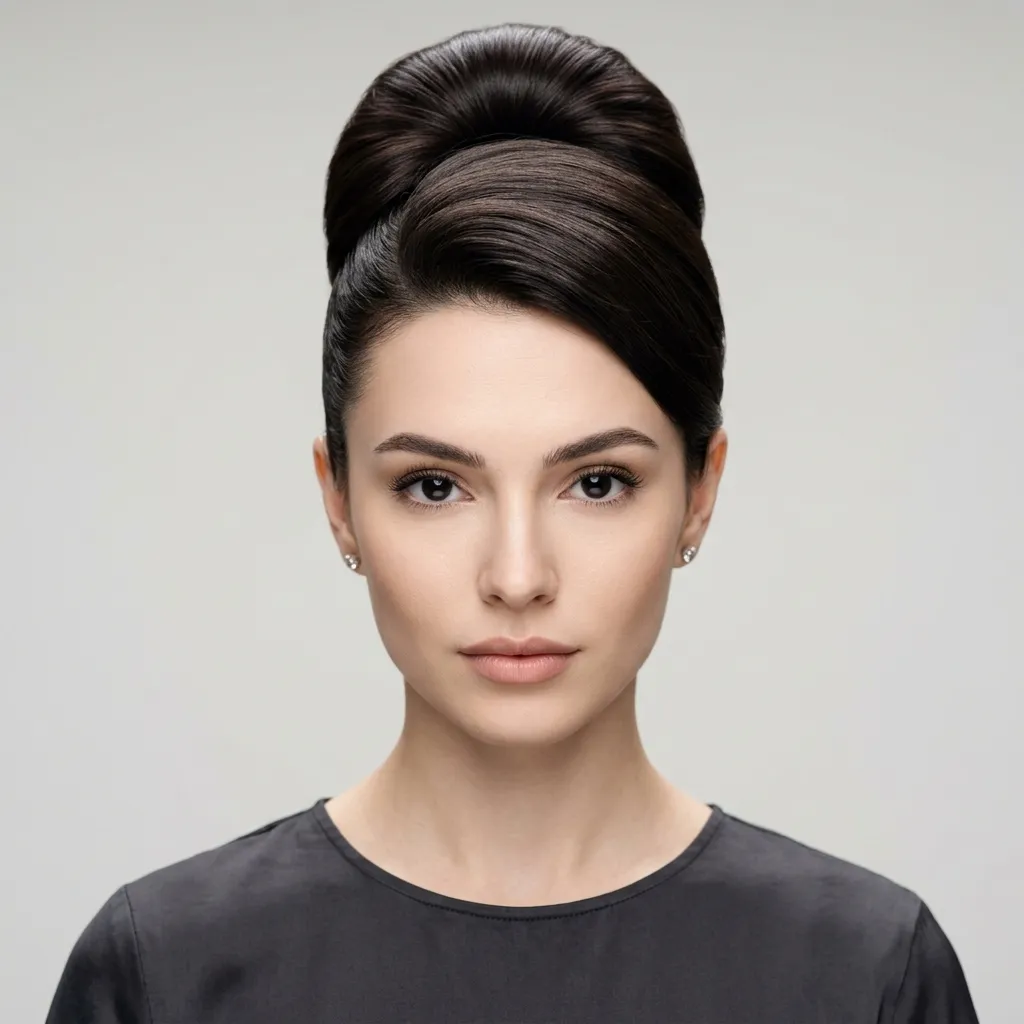
Vibe: Striking, the darkest, most defined color option on this list.
Why it works: Deep espresso is the color choice formal stylists reach for when the updo itself needs to read as sculptural: a very dark, unified base tone reads as one solid architectural shape from across a room, whereas lighter or more dimensional color breaks that silhouette into visible strands and highlights, softening the structured effect an updo is often built to achieve. This is a visual-weight principle: darker, unified tones concentrate weight and definition.
How to get it: If your natural color isn’t already this deep, ask your colorist for a single-process espresso gloss rather than a permanent color change. Glosses are lower-commitment and specifically formulated to boost depth and shine simultaneously, which is exactly what an updo needs to photograph with definition rather than flatness.
Shop The Look
| Product |
|---|
| Deep-tone glossing treatment for dark hair |
| Strong-hold anti-flyaway hairspray |
| Edge control gel for smooth baby hairs |
| Fine-tooth teasing comb |
| Shine-boosting hair oil, lightweight |
6. Face-Framing Balayage for Soft Formal Elegance
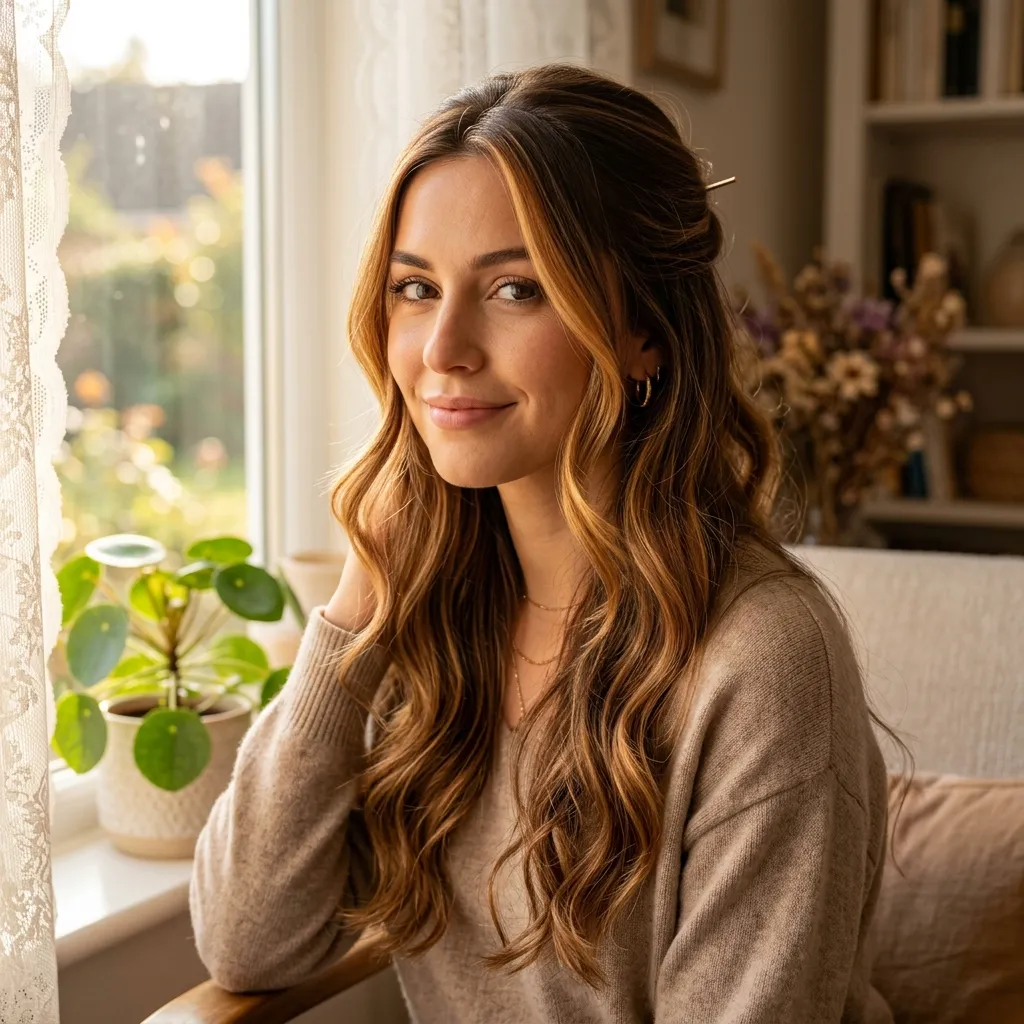
Vibe: Warm, the softest color option for a daytime or garden formal event.
Why it works: Unlike the deep, unified tones favored for structured updos, face-framing balayage is a deliberate choice for half-up and loose formal styles, where the goal is dimension and movement rather than sculptural weight. Concentrating the lightest pieces specifically around the face uses a lighting principle: brightness near the face draws the eye upward and creates a natural, flattering glow under both daylight and warm venue lighting.
How to get it: Ask your colorist to place the balayage specifically in a “money piece” pattern, concentrated at the two face-framing sections rather than distributed evenly throughout, since this placement gives maximum visual benefit in half-up and down styles without requiring a full-head lightening service.
💡 Quick Win: A clip-in balayage-toned hair extension piece, color-matched to your natural balayage, can simulate this face-framing effect for a single event without any color commitment.
Shop The Look
| Product |
|---|
| Color-matched clip-in hair extension pieces |
| Purple toning shampoo for warm blonde tones |
| Lightweight curling wand for soft waves |
| Argan oil shine serum |
| Thin gold decorative hairpin |
7. The Classic French Twist

Vibe: Architectural, a vertical line that elongates the whole silhouette.
Why it works: The French twist is a proportion and silhouette decision: its vertical seam draws the eye upward along the back of the neck, visually elongating both the neck and the overall silhouette, which is why it remains a default choice for structured black-tie events where a strong, formal profile matters more than movement or texture. It’s also one of the most durable formal styles structurally, since the twist itself locks tension along its full length rather than relying on a single pinned point.
How to get it: Smooth all hair back into a low ponytail position without securing it, then twist the length upward and pin the seam vertically from bottom to top using three to five pins spaced evenly. The twist should feel taut but not painfully tight, since too much tension is what causes French twists to loosen mid-evening.
Shop The Look
| Product |
|---|
| Long bobby pins for securing twists |
| Strong-hold smoothing gel |
| Fine-tooth comb for sleek prep |
| Setting spray for all-day hold |
| Decorative hairpin for the twist seam |
8. Soft Vintage Waves with a Deep Side Part
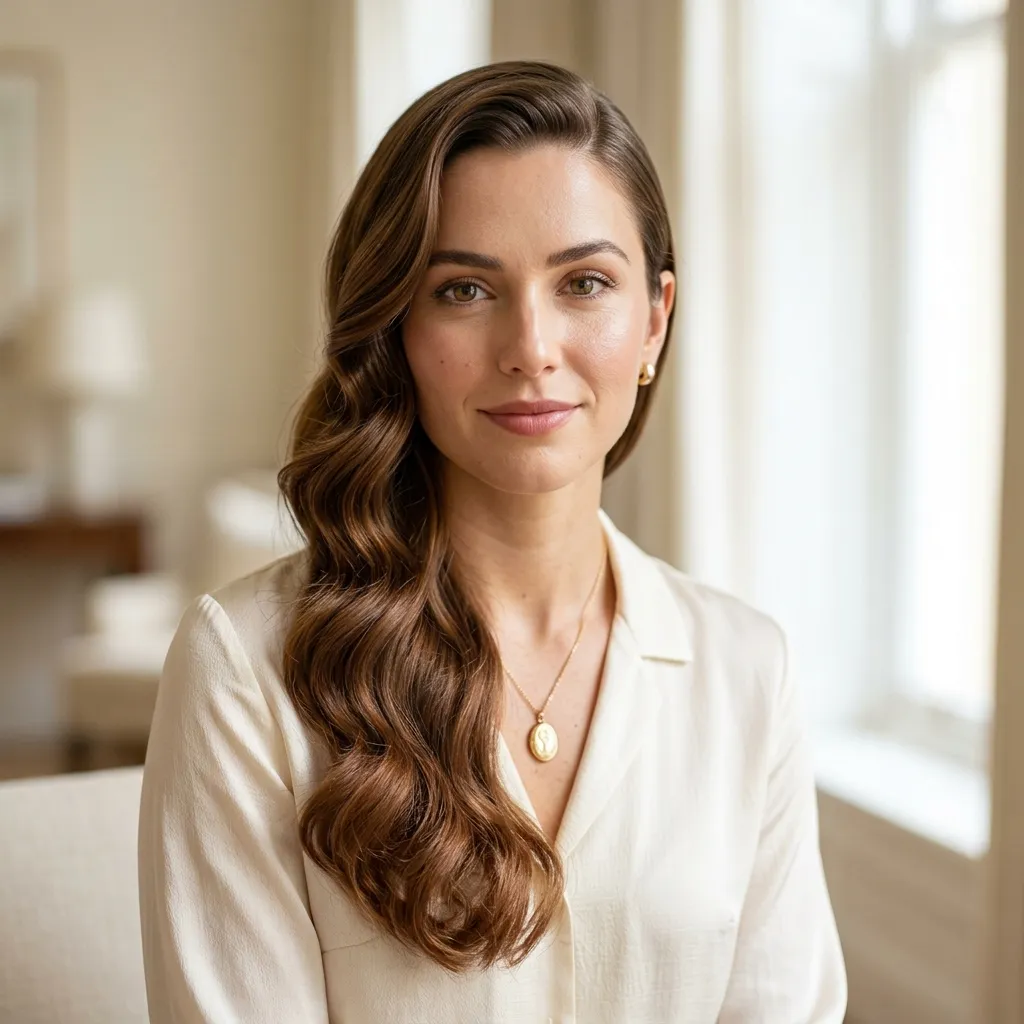
Vibe: Timeless, waves with defined shape rather than loose, undone texture.
Why it works: This is a layout decision built on asymmetry: shifting the part to a deep 80/20 ratio creates a heavier, more dramatic drape of hair on one side, which is what gives vintage-style waves their characteristic movement and visual weight compared to a centered part, which tends to read as more casual and symmetrical.
How to get it: Set waves using a 1-inch curling iron, curling away from the face in alternating directions per section, then brush through gently with a wide-tooth comb once cooled to soften the curls into a defined S-pattern rather than tight ringlets. This brushing-out step is what separates vintage waves from a simple curled style.
Shop The Look
| Product |
|---|
| 1-inch curling iron for defined waves |
| Wide-tooth comb for softening curls |
| Firm-hold setting spray |
| Shine serum for glossy finish |
| Deep-part-friendly fine-tooth comb |
9. Embellished Comb Accent on a Simple Low Bun
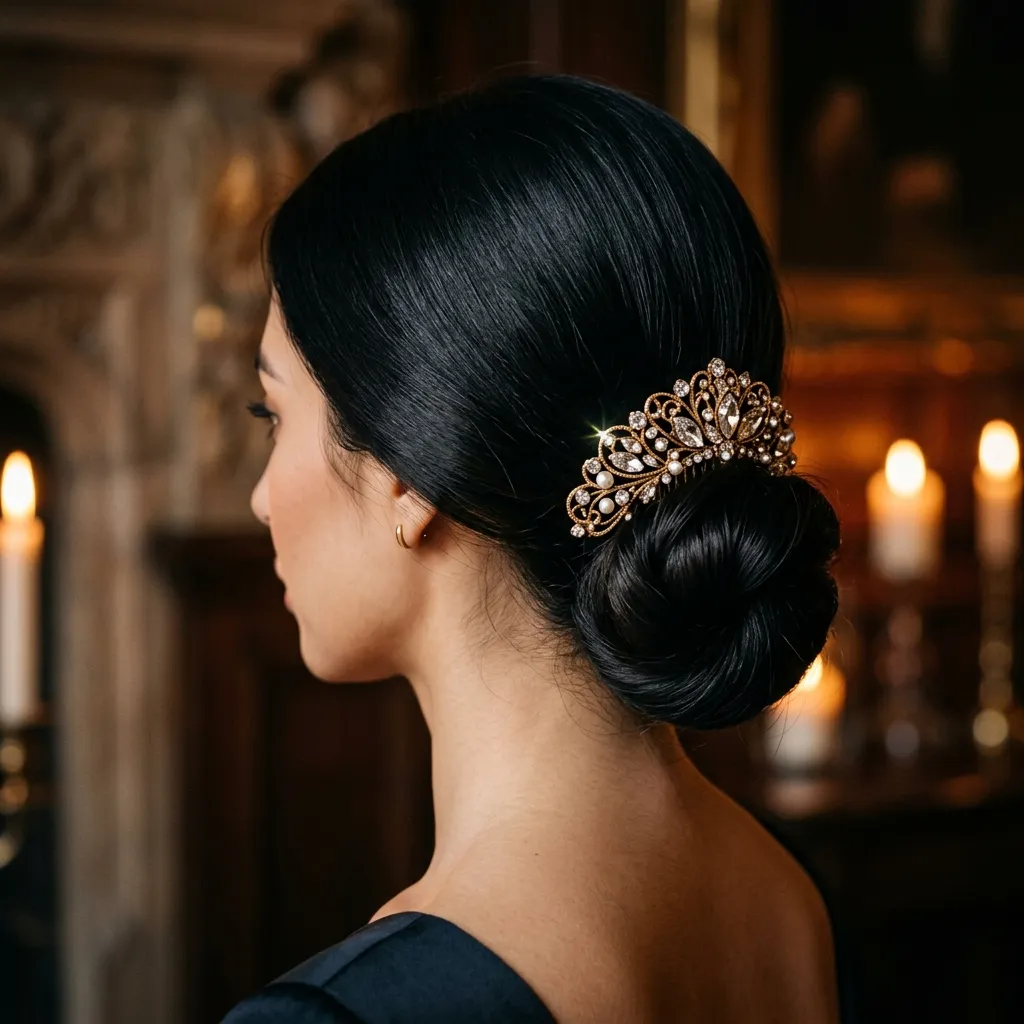
Vibe: Refined, a plain silhouette elevated by one considered detail.
Why it works: This accessories-focused idea relies on restraint: a genuinely simple, smooth bun with no visible texture becomes a formal statement specifically because of the single jeweled comb placed at the side, using the design principle of a focal point against negative space. One embellishment reads as intentional, while multiple accents on the same style start to compete and read as cluttered.
How to get it: Slide the decorative comb in at a 45-degree angle just above the ear, anchoring it into the bun’s base rather than the loose hair near the crown, which is what keeps it secure through hours of movement rather than sliding out after the first hour.
Shop The Look
| Product |
|---|
| Jeweled decorative hair comb |
| Smoothing pomade for sleek bun styling |
| Fine-mist shine spray |
| Long bobby pins for bun anchoring |
| Setting spray for all-day hold |
10. Voluminous Blowout with Soft Bend
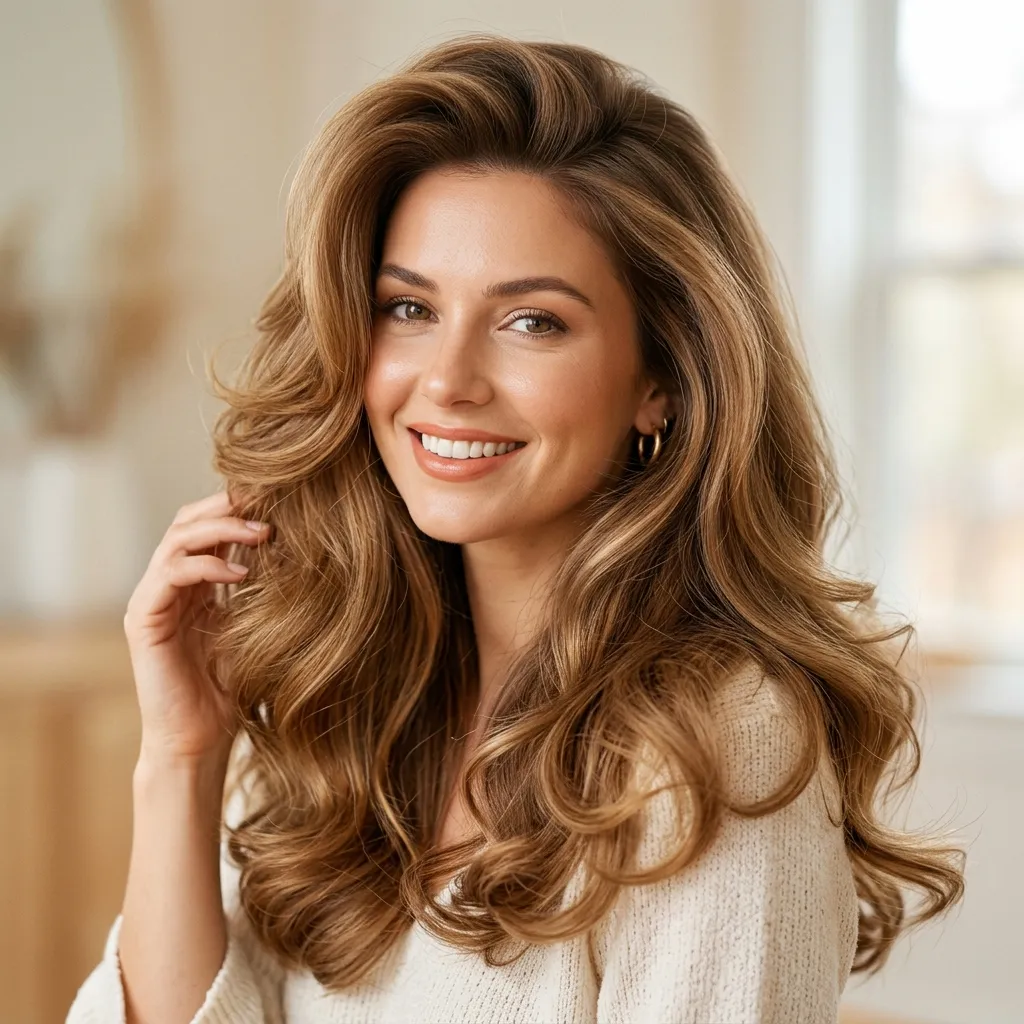
Vibe: Full, the formal option for hair worn completely down.
Why it works: This is a material and texture decision built around volume as the primary structural element: a round-brush blowout that lifts significantly at the root creates enough visual body that hair worn fully down still reads as formal rather than casual, since the volume itself does the “structured” work that an updo would otherwise provide. Salons specifically use a large round brush (2.5 to 3 inches) and high-heat, low-airflow drying to maximize this root lift without over-drying the mid-lengths.
How to get it: Dry hair with a large round brush lifting sections straight up from the root before directing them down and back, then set the finished blowout with a light mist of firm-hold spray while it’s still slightly warm, spraying warm hair, rather than fully cooled hair, is what locks in the volume for the full length of an event.
Shop The Look
| Product |
|---|
| Large round brush, 2.5 to 3 inch |
| Volumizing root spray |
| Firm-hold finishing spray |
| Heat protectant blowout spray |
| Ceramic paddle brush for smoothing |
11. Low-Maintenance Ten-Minute Formal Twist
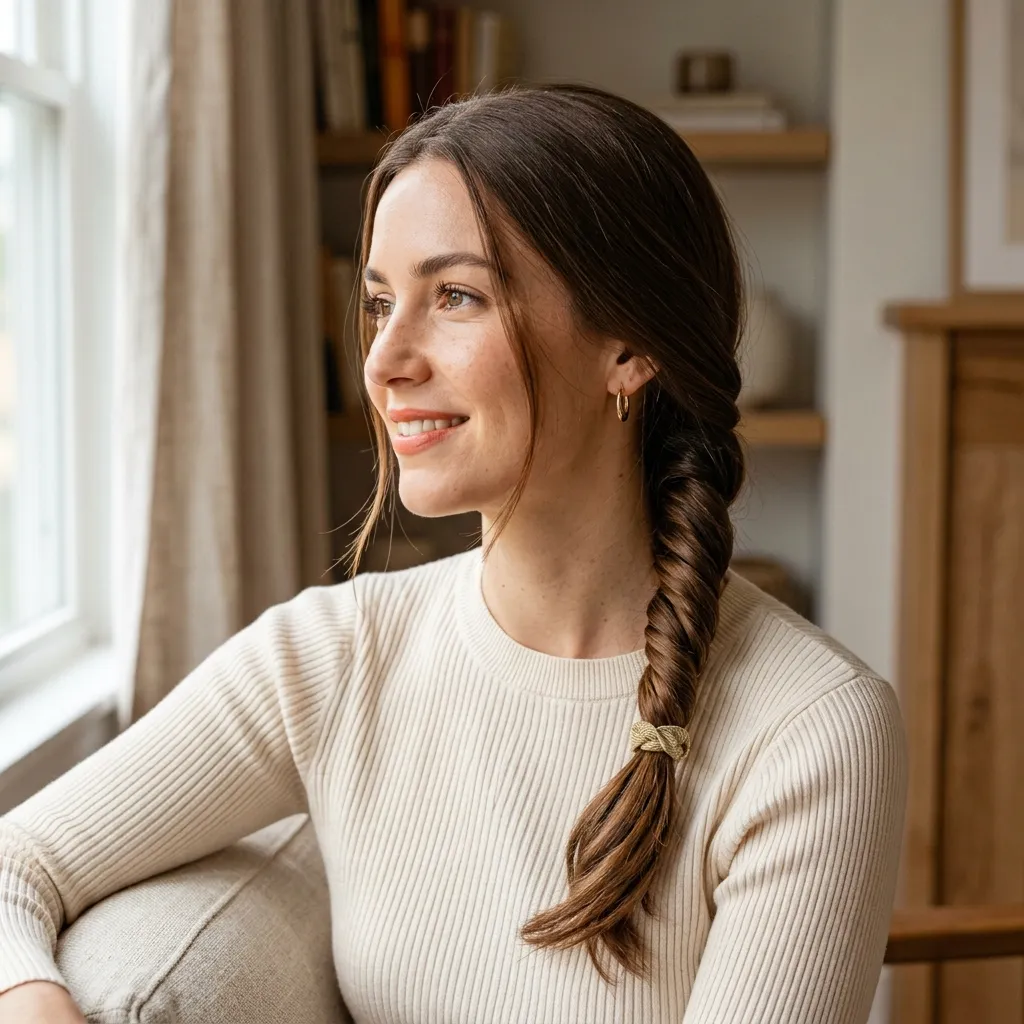
Vibe: Easy, genuinely fast without looking rushed.
Why it works: This idea addresses a real limitation of formal styling: most updos on this list take 30 to 60 minutes and often require a second set of hands, which isn’t realistic for every event or every morning. A simple rope twist secured low at the neck uses one continuous twisting motion rather than multiple sectioned braids or pinned layers, which is what makes it achievable solo in under ten minutes while still reading as deliberately styled rather than thrown together.
How to get it: Split hair into two sections, twist each section individually in the same direction, then twist the two sections around each other in the opposite direction and secure with a single elastic: this two-step twist locks itself in place structurally, requiring far fewer pins than a braided or wrapped style.
Shop The Look
| Product |
|---|
| Small fabric-covered elastic hair ties |
| Texturizing spray for twist grip |
| Light-hold flexible hairspray |
| Compact travel-size hairbrush |
| Bobby pins for securing loose ends |
Also view: 15 Long Layered Haircuts That Photograph Beautifully From Every Angle
12. Structured Chignon with a Sculpted Side Part
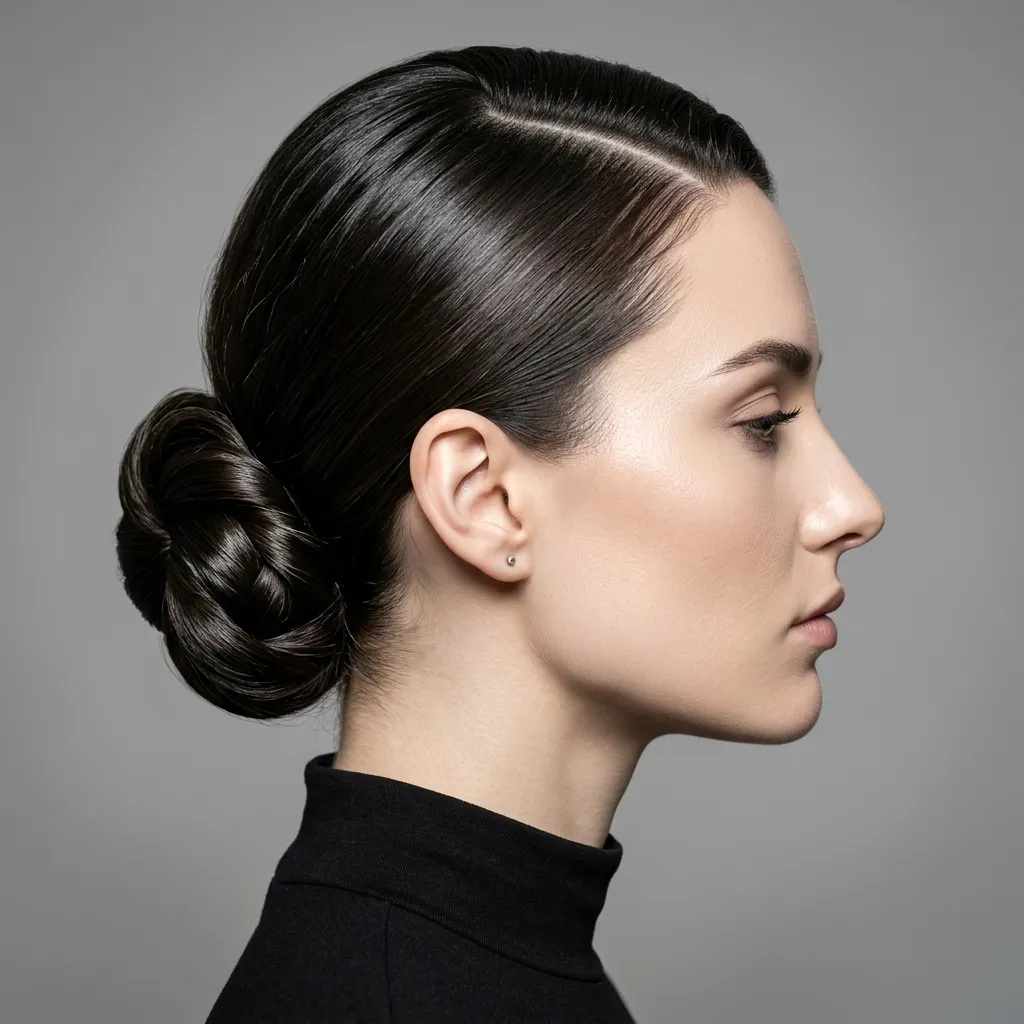
Vibe: Sculptural, the most architectural silhouette on this list.
Why it works: This furniture-equivalent idea is entirely about arrangement and negative space: a sharp side part combined with a compact, structured chignon creates strong asymmetry on one plane and a tight, controlled shape on the other, a deliberate contrast that reads as sophisticated rather than fussy specifically because there are only two design decisions at play, not five competing ones.
How to get it: Part hair sharply to one side using a fine-tooth comb, smooth all hair back with a strong-hold gel, then twist the gathered length into a tight knot at the nape and pin flat against the head. The chignon should sit close to the scalp rather than sitting away from it, which is what gives it the sculptural, architectural quality.
Shop The Look
| Product |
|---|
| Strong-hold smoothing gel |
| Fine-tooth comb for sharp parting |
| Long bobby pins for chignon anchoring |
| Edge control brush for baby hairs |
| Setting spray for all-day hold |
13. Loose Braid Wrapped Around a Low Ponytail
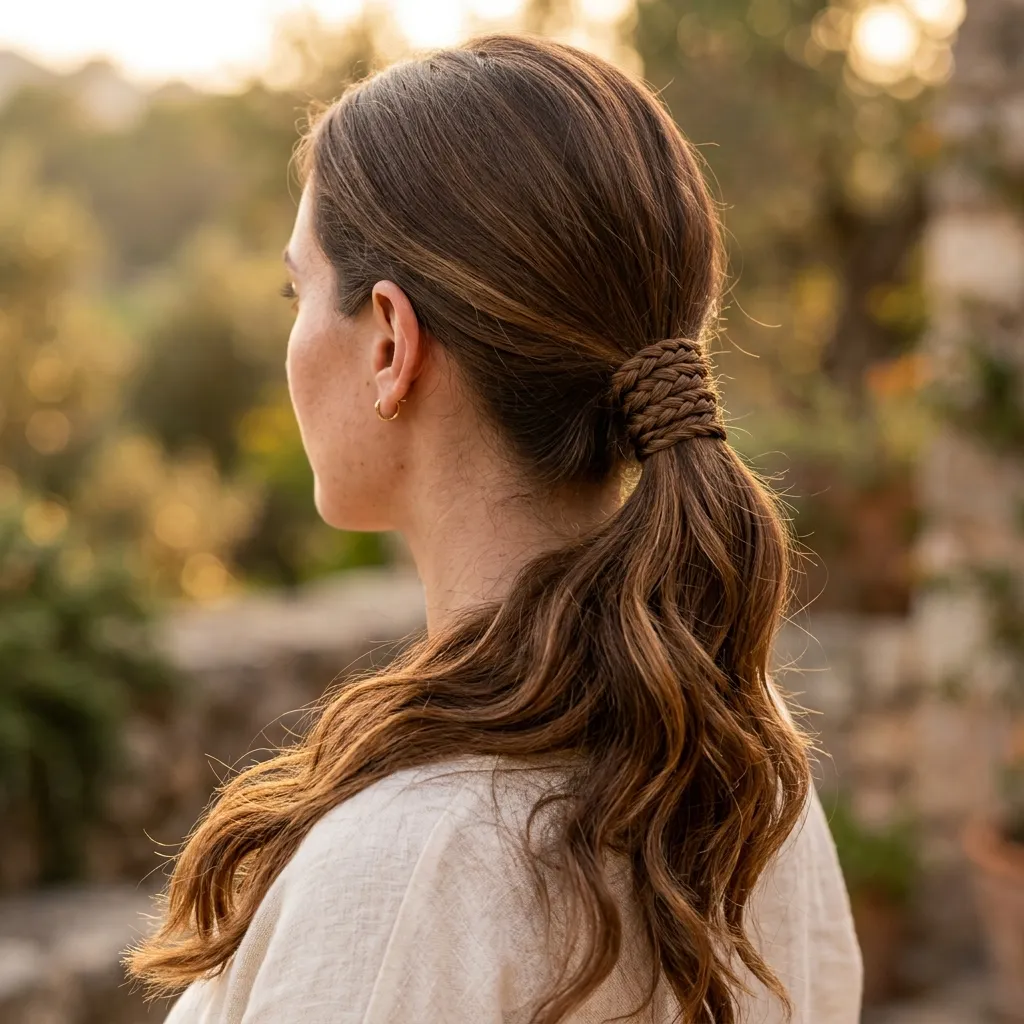
Vibe: Layered, a small textural detail that upgrades a simple silhouette.
Why it works: This accessories-adjacent idea uses the hair itself, rather than a purchased accent, as the decorative element, a thin braid wrapped around a ponytail base achieves the same visual function as a hair accessory (concealing the elastic, adding a focal detail) without needing a separate purchased piece, which is why editorial stylists often reach for this technique on shoots with a minimal-prop brief.
How to get it: Braid a half-inch section from underneath the ponytail before securing the rest, then wrap the finished braid around the base of the ponytail and pin the end underneath. Keep the braid loose rather than tight, since a tightly braided wrap looks noticeably different in texture from the soft waves it’s meant to complement.
Shop The Look
| Product |
|---|
| Bobby pins in matching hair tone |
| Texturizing spray for soft braid texture |
| Lightweight curling wand for loose waves |
| Flexible-hold finishing spray |
| Shine serum for a soft glossy finish |
14. Sleek Center-Part Straight Style for Minimalist Formal Wear
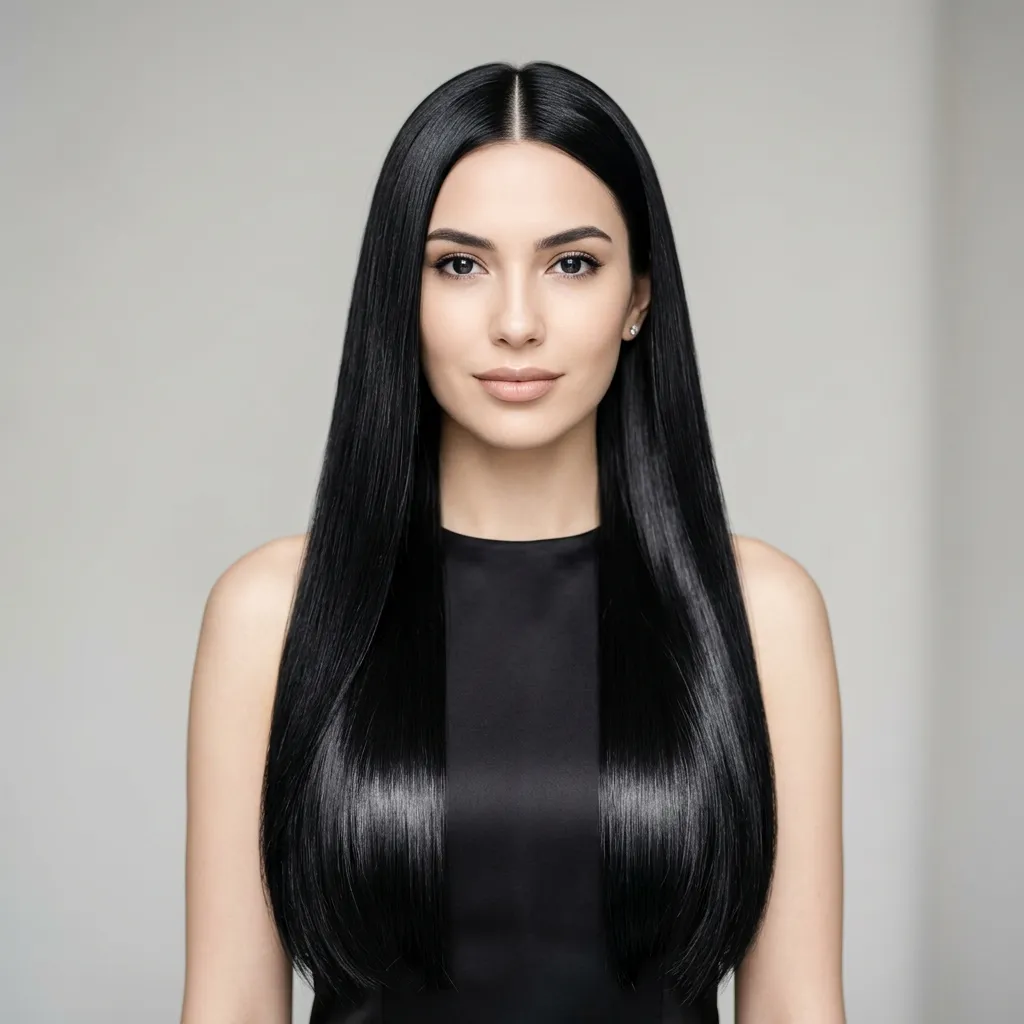
Vibe: Minimal, formality through precision rather than structure.
Why it works: This layout decision inverts the deep-side-part logic used earlier in this list: a perfectly centered part creates strict bilateral symmetry, which reads as formal specifically because of its precision and restraint rather than through volume, braiding, or pinning, a favored choice for minimalist black-tie and modern formal dress codes where the styling should feel architectural rather than decorative.
How to get it: Part hair centrally using a fine-tooth comb along the natural growth pattern at the crown, then flat-iron in small one-inch sections directly downward without any outward flick at the ends, which is what keeps the silhouette perfectly straight and symmetrical rather than subtly flipped to one side.
Shop The Look
| Product |
|---|
| Ceramic flat iron for glass-hair styling |
| Fine-tooth comb for precise center parting |
| Anti-frizz smoothing serum |
| Silicone-free shine spray |
| Silk pillowcase for overnight smoothness |
How to Start Your Formal Hairstyle Transformation
Your single first move should be a trial run at least two weeks before your event, not the week of, booking one hour with your stylist (or setting aside that time yourself) to test your chosen style under conditions that match the actual event as closely as possible: same hair-wash timing, same accessories, same approximate lighting. This single step anchors everything else, because it’s the only way to know whether a style that looks right in a photo will actually hold on your specific hair texture and density for the number of hours your event requires.
The most common mistake is choosing a style based purely on a reference photo without accounting for hair density and length compatibility. A French twist that looks structured and full on thick hair can look thin and strained on fine hair without extension support, and a loose undone bun that looks intentional on long layers can look genuinely undone on one-length hair. The fix is simple: bring your reference photo to a trial appointment specifically to ask whether your hair type needs adjustment, added volume, or a different but visually similar style.
Three items under $50 that build formal-ready hair immediately: a strong-hold, humidity-resistant hairspray such as a travel-size Oribe Superfine Strong ($18–24), a set of long U-pins in a matte finish ($8–12), and a single jeweled decorative hair comb ($15–35) that upgrades a simple bun or half-up style without requiring any additional styling skill.
Realistically, a full formal updo takes 45 to 90 minutes at a salon and costs $65–150 depending on your region and the complexity of the style; a trial run typically costs half that. A DIY version of a simpler style, like the ten-minute twist or the wrapped ponytail, can be learned and executed in under fifteen minutes once practiced twice beforehand. Budget one practice session at least a week out. The morning of your event is not the time to attempt a technique for the first time.
Frequently Asked Questions About Formal Hairstyles for Long Hair
What’s the difference between a formal hairstyle and a regular updo?
A formal hairstyle is specifically engineered for durability (using backcombing for root support, strong-hold humidity-resistant products, and strategic pin placement), so it survives four to eight hours of movement without touch-ups, while a regular or casual updo is typically built to look good for a shorter window, often just the first hour or two. The visible silhouette can be identical between the two; the difference lies almost entirely in the underlying construction, which is why the same low bun style can serve either purpose depending on how it’s actually built.
What hair colors work best for formal events?
Deep, unified tones like rich chocolate or deep espresso photograph best under evening and candlelit venue lighting because they reflect light as one continuous surface rather than scattering it unevenly the way heavily highlighted hair can. For daytime or garden formal events, softer dimensional color like caramel balayage concentrated at the face-framing pieces works well since natural daylight rewards subtle movement and warmth. Most colorists recommend a single-process gloss service, rather than a full color change, five to seven days before a formal event for the most reliable, low-risk shine.
How much does professional formal hairstyling typically cost?
A full formal updo at a mid-range salon typically costs $65–150 depending on your region, the complexity of the style, and whether extensions or hairpieces are involved. A trial run booked separately usually costs about half the full service price, often $35–75. Bridal formal styling tends to run higher, frequently $150–300, due to additional consultation time and the higher stakes of getting the style exactly right on a single, non-repeatable day.
Do formal hairstyles work on curly or textured hair?
Yes, though the technique shifts significantly. Curly and textured hair often holds formal styles like braided crowns and structured buns with less product and fewer pins than straight hair, since the natural texture itself creates grip and hold. Stylists experienced with textured hair typically recommend embracing the natural pattern within a style (a curly half-up rather than a fully straightened blowout) rather than fighting it, both because it holds longer and because it avoids the heat damage that comes from repeated straightening for formal events.
How long before an event should I get my hair colored for a formal look?
Color services, especially glosses meant to boost shine and depth, are best done five to seven days before a formal event. This window allows the color to fully settle and stop transferring onto fabric and pillowcases while still looking fresh rather than faded. Avoid same-week color changes for anything beyond a gloss, since chemical services close to an event carry a higher risk of an unexpected result with no time to correct it. If a bigger change is planned, schedule it at least three to four weeks out with a follow-up gloss the week of the event.
Ready to Create Your Formal Hairstyle for Long Hair?
From the deeply structural French twist in idea 7 to the ten-minute rope twist in idea 11, and from color-forward choices like the face-framing balayage in idea 6 to accessory-led looks like the jeweled comb in idea 9, these 14 ideas cover the real range of what a formal hairstyle for long hair can look like: structured or soft, elaborate or genuinely fast. You don’t need to master the most complex updo first; starting with a simpler, durable style like the wrapped low ponytail is a completely legitimate way to build confidence before attempting something more elaborate for a bigger event.
Today’s concrete step is booking a trial appointment at least two weeks out, or if you’re going the DIY route, practicing your chosen twist or braid once this week with time pressure removed. There’s a particular kind of ease in knowing your hair will hold exactly as intended through every hour of an event, freeing you to actually be present in it rather than checking a mirror. Save whichever ideas matched your hair’s natural texture and your event’s specific formality. Those are the ones that will hold up, literally, when it matters most.