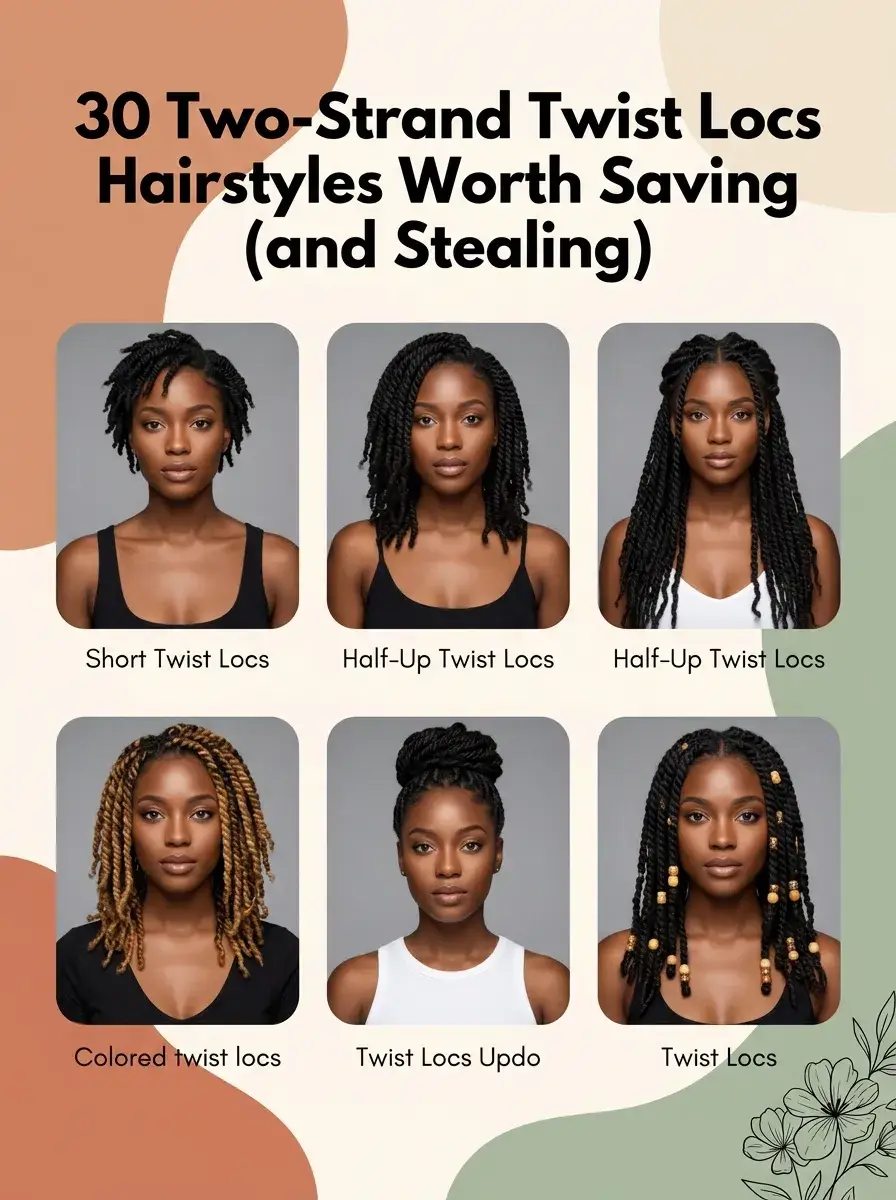
30 Two-Strand Twist Locs Hairstyles Worth Saving (and Stealing)

Two-strand twist locs are a loc style formed by twisting two sections of hair around each other until friction and natural coiling lock the rope permanently over several months, distinct from interlocking or freeform methods in both texture and starting cost. This article gives you exactly 30 two-strand twist locs hairstyles spanning color, jewelry, styling technique, parting pattern, and protective maintenance, so every hair length, budget, and occasion has a specific, buildable option.
There’s a quiet confidence to well-kept twist locs, a rhythm in the coil that feels earned rather than styled. Light behaves differently on a twisted rope than on loose hair, catching warmer and moving slower, and a loc journey documented over months reads as considered rather than accidental. Whether yours are two weeks old and still soft, or five years in and swinging free, the two-strand method carries a specific, recognizable structure that other loc techniques don’t replicate. Here are 30 ideas worth saving, and stealing.
Why Two-Strand Twist Locs Hairstyles Work So Well
Two-strand twist locs are made by twisting two sections of hair around each other until natural coiling locks the rope permanently, usually over 12 to 18 months. This sits between interlocking, which produces a thinner, smoother texture, and freeform locs, which skip directional twisting entirely, giving two-strand twists more shape control while still locking faster than interlocking on most textures.
Partition size, set at the very first twist, permanently determines the loc’s thickness, while a light aloe or flaxseed gel avoids the flaking heavier waxes can cause. Warm finishing tones like copper, honey blonde, and burgundy photograph well against the rope texture and are best applied through gloss rather than repeated bleaching, which can weaken the coil at the root over time.
The style’s renewed popularity tracks a broader shift toward low-manipulation natural hair care and visible texture, with loc jewelry and multi-year “loc journey” documentation both seeing steady search growth. Shorter, thinner sections lock faster than long, thick ones, making the method realistic even on a tight schedule, though the rope-like uniformity it’s known for only appears after months of consistent retwisting.
Style at a Glance
| Element | Starting Locs (0–6 months) | Mature Locs (1+ years) |
| Philosophy | Patience, consistent maintenance, correct partition size | Low manipulation, embracing texture and length |
| Materials | Locking gel, rat-tail comb, edge control, sectioning clips | Loc butter, satin wrap, loc jewelry, gloss treatments |
| Color palette | Natural black, deep brown, espresso | Copper, honey blonde, burgundy, two-tone underlayers |
The 30 Two-Strand Twist Locs Hairstyles
1. Freeform Draping Length
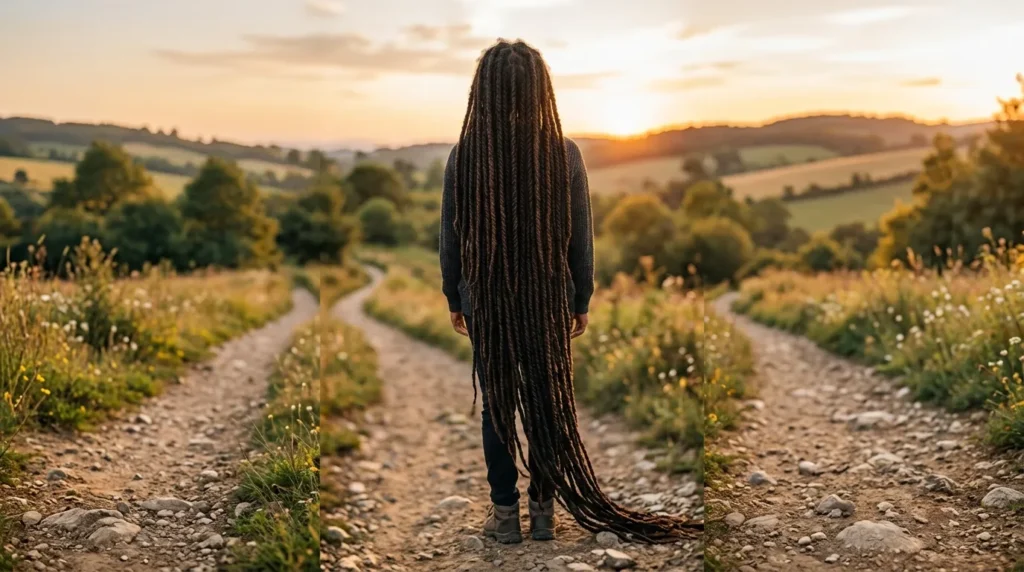
Vibe: Grounded and unhurried, like hair that’s been allowed to simply grow.
Why it works: This applies the visual weight principle. Length relies on gravity and volume rather than styling tricks, so loose, uneven ropes read as intentional. Negative space between locs lets each rope read as its own shape. On finer locs this effect is even more pronounced.
How to get it: Retwist only the new root growth every 6 to 8 weeks and leave the rest untouched; a small tub of aloe-based locking gel ($8–15) is the only product this look requires.
Shop The Look
| Product |
| Locking gel with aloe vera, travel size |
| Wide-tooth detangling comb for locs |
| Satin-lined bonnet for overnight protection |
| Loc and twist styling butter, shea-based |
| Wooden-handle rat-tail parting comb |
2. Copper Gloss Color Melt
Vibe: Warm and sun-touched, like hair that’s spent a season outdoors.
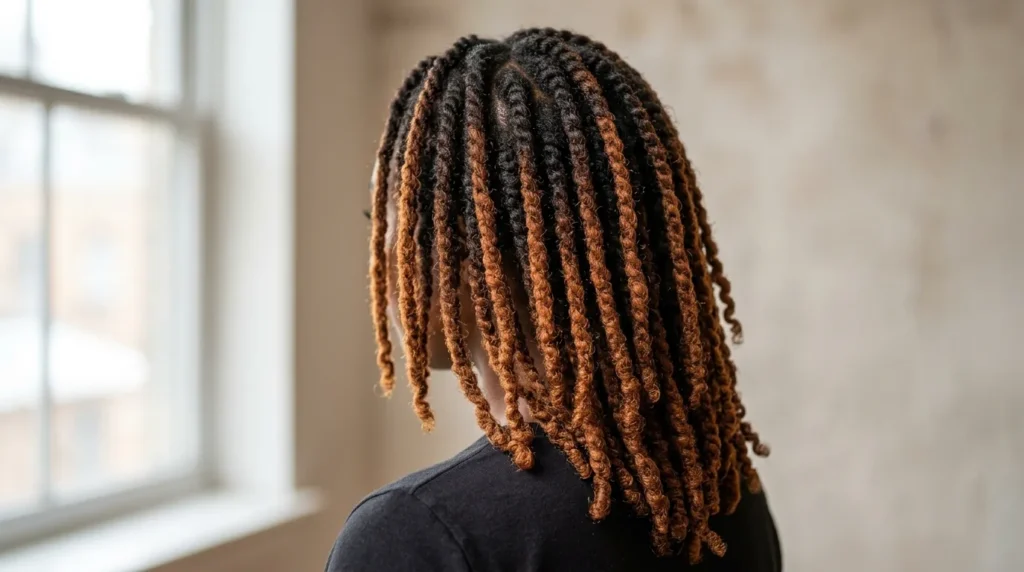
Why it works: This applies the gradual transition principle from balayage. A hard color line reads as an obvious dye job; a root-to-tip gradient reads as sun-earned. The darker root anchors the style while lighter ends pull the eye downward. Copper reads warmer than ash against most skin undertones.
How to get it: Apply a semi-permanent gloss or henna rinse to only the bottom third of each loc, reapplying every 4 to 6 weeks; a full gloss kit runs $15–30.
💡 Quick Win: A single bottle of color-depositing loc gloss in “copper” can refresh faded ends in one at-home session without a salon visit.
Shop The Look
| Product |
| Semi-permanent color-depositing hair gloss |
| Tint brush applicator for precise color melt |
| Color-safe loc shampoo, sulfate-free |
| Disposable tinting cape |
| Deep conditioning mask for color-treated locs |
3. Gold Cuff Jewelry Accent
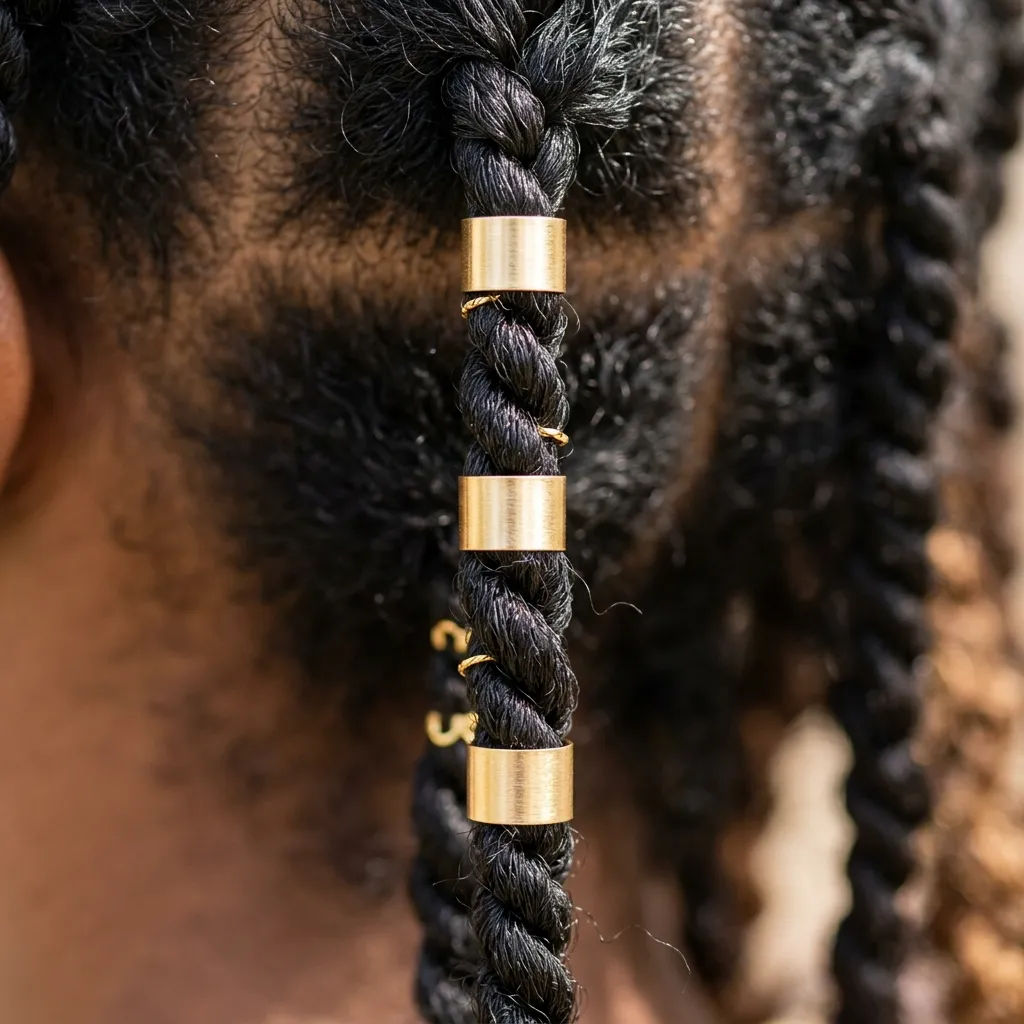
Vibe: Luminous, the way a single accent can make an entire look feel finished.
Why it works: This uses the visual weight distribution principle. A few metal accents draw the eye without overwhelming the head, while cuffing every loc reads as noise. Brushed gold reflects light more softly than polished gold. Uneven cuff heights on only a few locs read as styled, not assembled.
How to get it: Slide 2 to 4 cuffs onto 3 to 5 face-framing locs at staggered heights; a set of six adjustable cuffs typically costs $12–25.
Shop The Look
| Product |
| Brushed gold adjustable loc cuffs, set of 6 |
| Small gold hair rings for locs |
| Loc jewelry storage pouch |
| Silicone-lined cuffs to prevent slipping |
| Mixed-metal cuff set, gold and copper |
4. High Bun with Wrapped Base
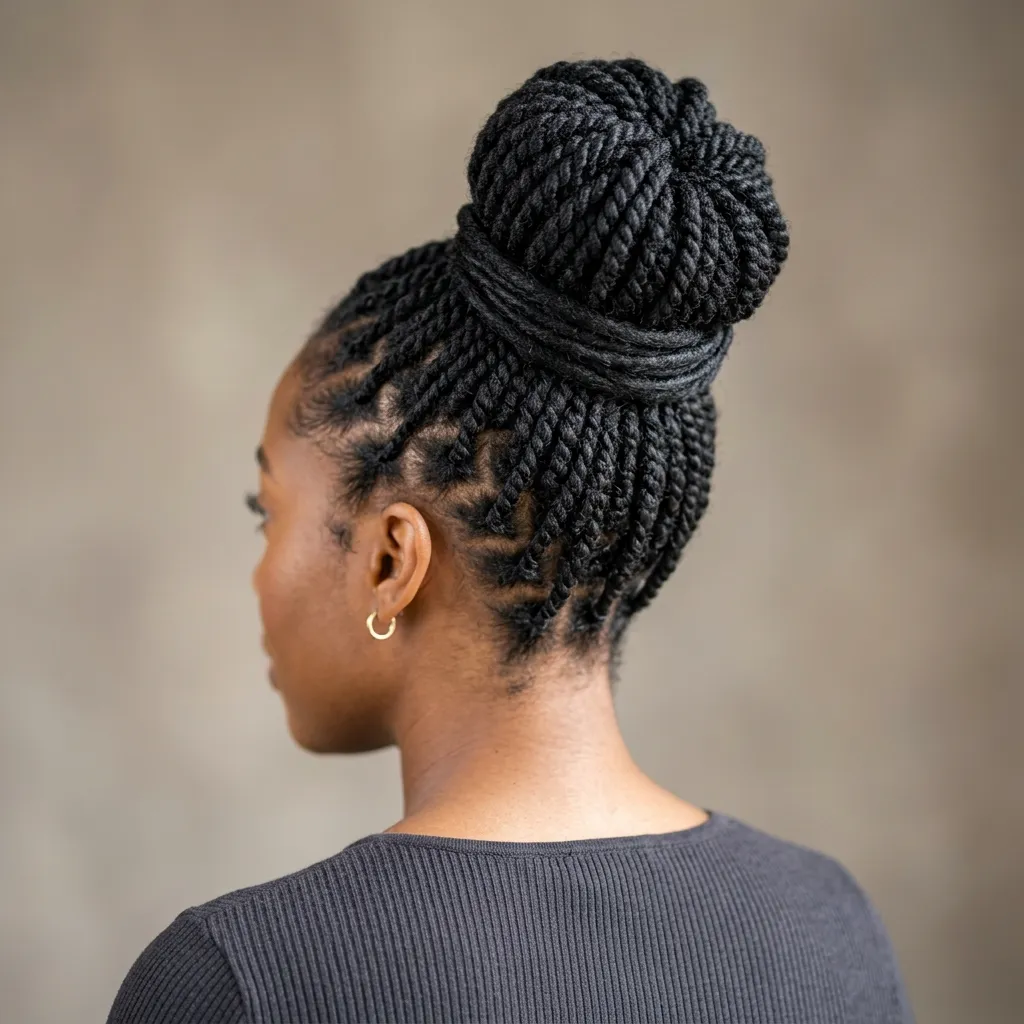
Vibe: Polished, the kind of updo that reads finished from every angle.
Why it works: Wrapping a loc around the bun’s base applies the concealment principle used in formal updos. Hiding the elastic shifts attention to the bun’s clean silhouette. The added height also opens the neckline, balancing the weight of longer locs above it.
How to get it: Gather locs into a low ponytail, twist once, coil into a bun, then wrap the longest loc clockwise around the base and pin it flat.
💡 Quick Win: A single flat, snag-free elastic matching your loc color is enough if you skip the wrap and just tuck the tail under.
Shop The Look
| Product |
| Snag-free elastic hair ties, black, pack of 20 |
| U-shaped bun pins for locs |
| Edge control gel, strong hold |
| Boar bristle edge brush |
| Silk hair scarf for smoothing edges |
5. Beaded Ends for Special Occasions
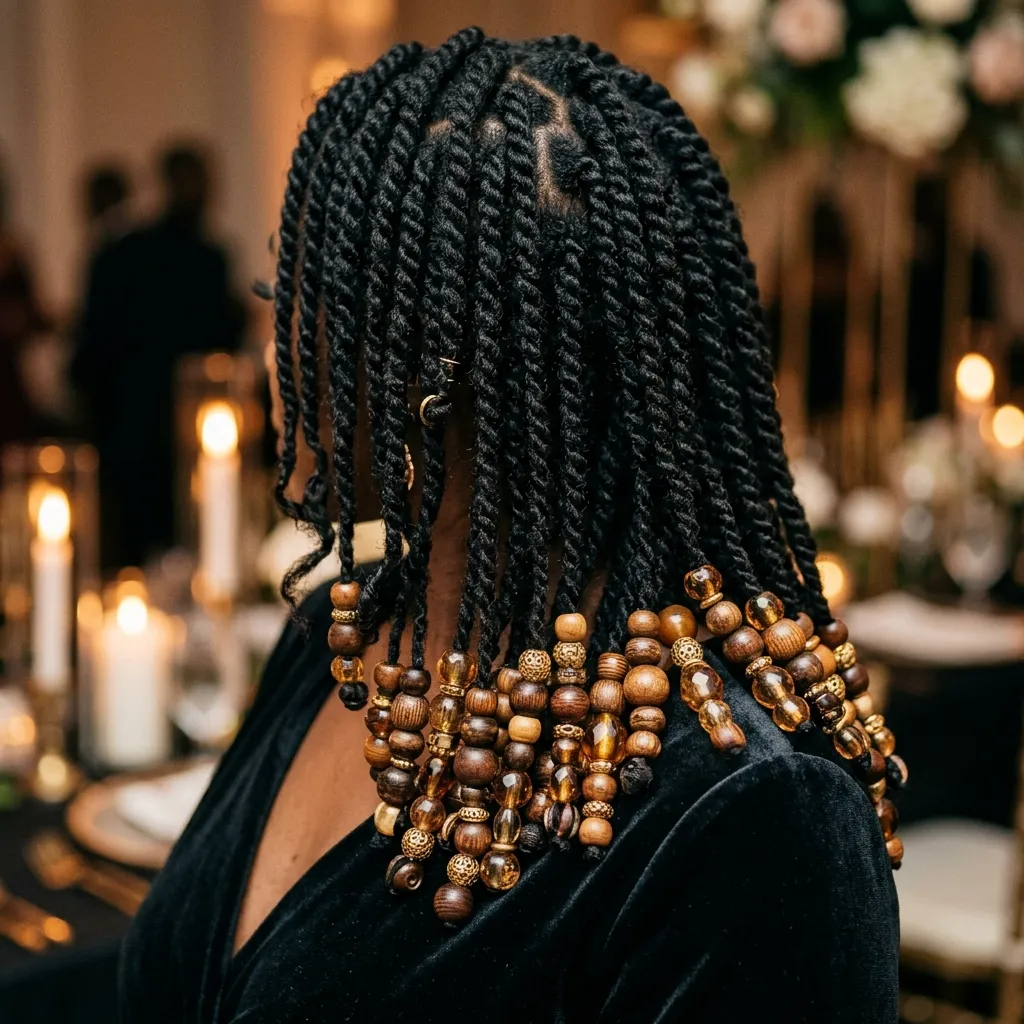
Vibe: Romantic and layered, like hair dressed for an evening it knows is important.
Why it works: Occasion beading applies a scale-variation principle. Mixing larger wooden beads with smaller glass ones creates rhythm instead of a static line. The added weight from multiple beads per loc creates a slight downward drape. Formal beading almost always mixes at least two materials.
How to get it: Thread 2 to 3 beads per loc onto front-facing sections, securing each with a rubber-band knot; a full bead kit runs $10–20.
Shop The Look
| Product |
| Natural wood hair beads, assorted sizes |
| Amber glass hair beads for locs |
| Small clear rubber bands for bead security |
| Bead threading tool for locs |
| Lightweight hair beads travel case |
6. Half-Up Twisted Crown
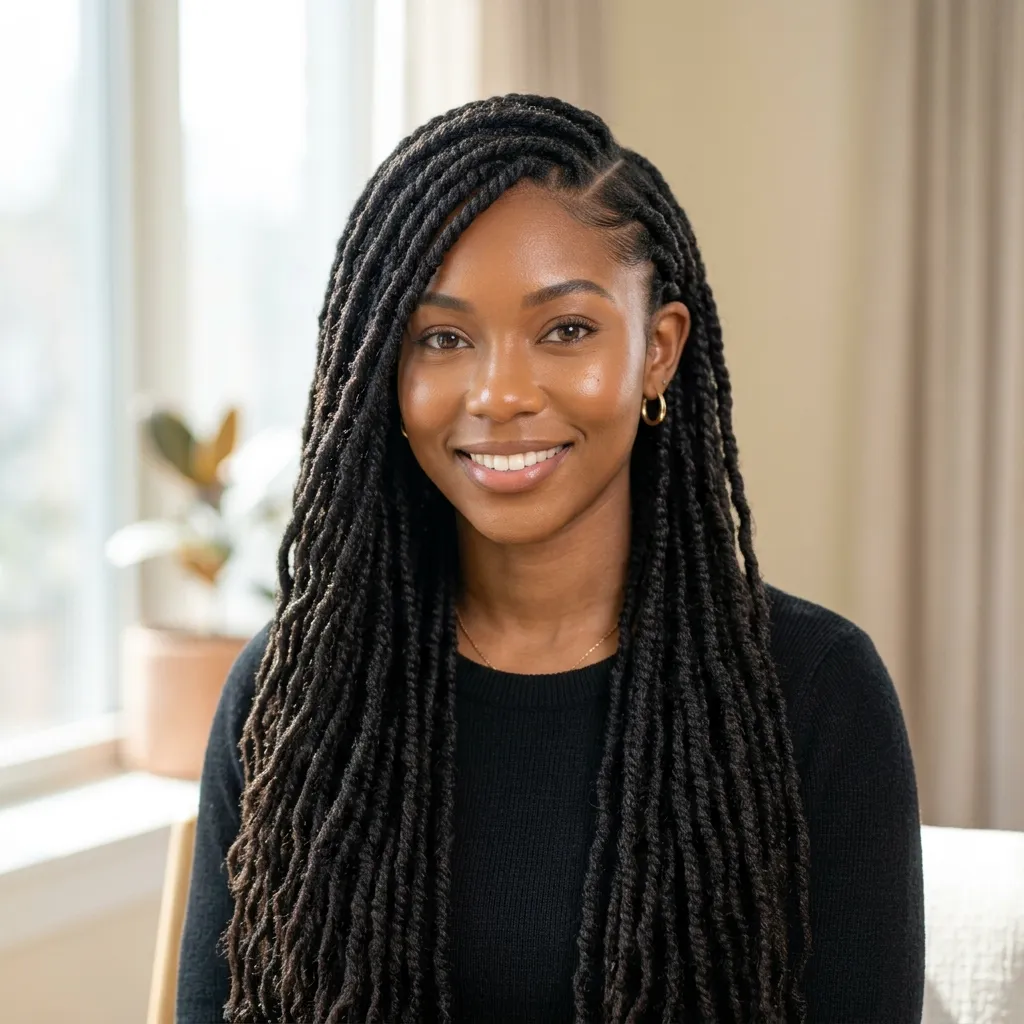
Vibe: Airy, a look that keeps hair off the face without committing to a full updo.
Why it works: The half-up shape balances negative space at the neck against volume at the crown. Twisting the top section, rather than pulling it back plain, gives it texture that echoes the locs below. The two halves read as connected rather than separately styled.
How to get it: Section the top third ear-to-ear, twist it around itself twice, pin flat, and let the rest fall loose.
💡 Quick Win: Two bobby pins crossed in an X under the crown section hold the shape all day without product.
Shop The Look
| Product |
| Fine bobby pins, matte black, pack of 60 |
| Lightweight loc hold spray, alcohol-free |
| Sectioning clips for hair parting |
| Shine serum for locs, silicone-free |
| Small decorative hairpin, gold |
7. Deep Side Part with Sweep
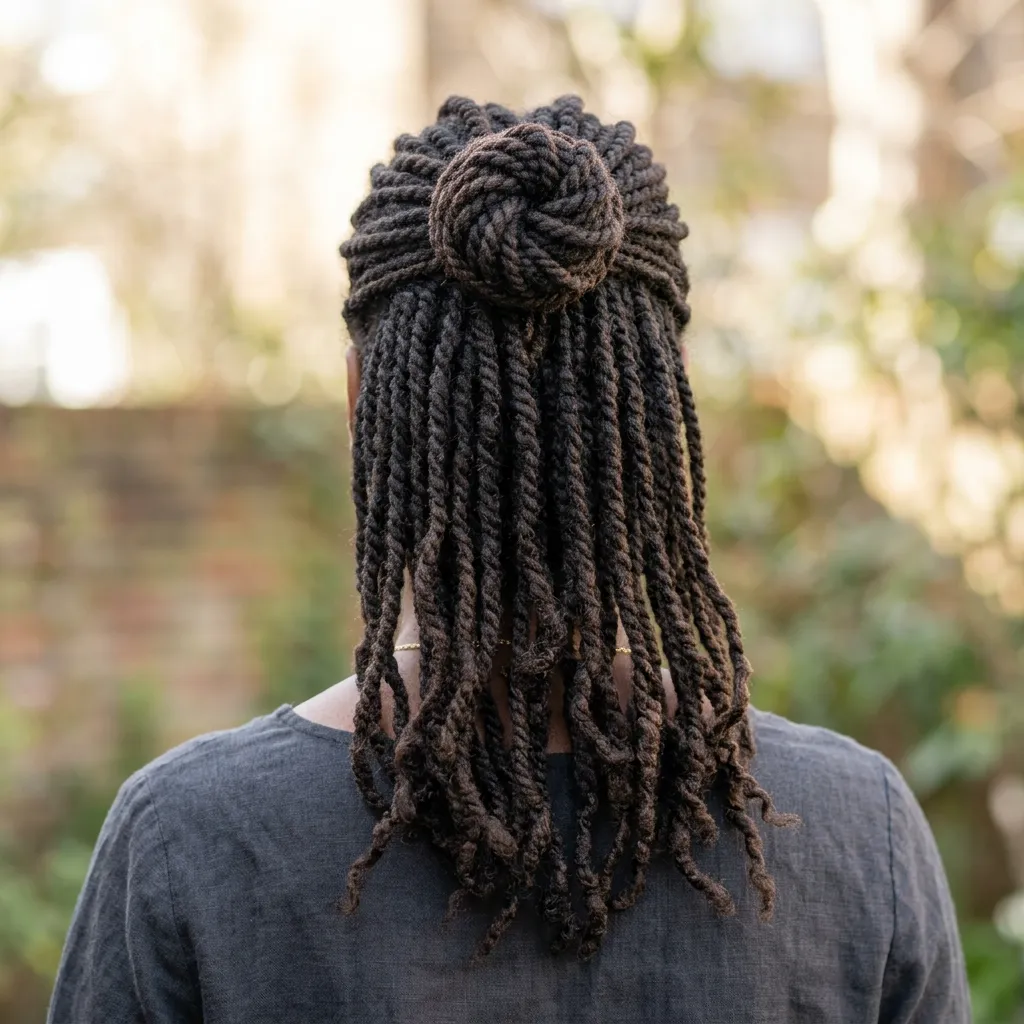
Vibe: Sleek, a small change that shifts the whole face shape.
Why it works: A deep side part applies a proportion rule from classic cutting theory. Shifting the hairline’s visual center can soften a square jaw or elongate a round face. Sweeping locs diagonally reads as more considered than a centered part, the way a diagonal line reads more dynamic than a static one.
How to get it: Part roughly two inches from the temple with a rat-tail comb, then press the front locs flat with edge control in the direction of the sweep.
Shop The Look
| Product |
| Rat-tail comb with fine metal tip |
| Strong-hold edge control gel |
| Soft-bristle edge brush, mini |
| Loc shine spray, lightweight |
| Silk pillowcase to preserve the part overnight |
8. Two-Tone Underlayer Color
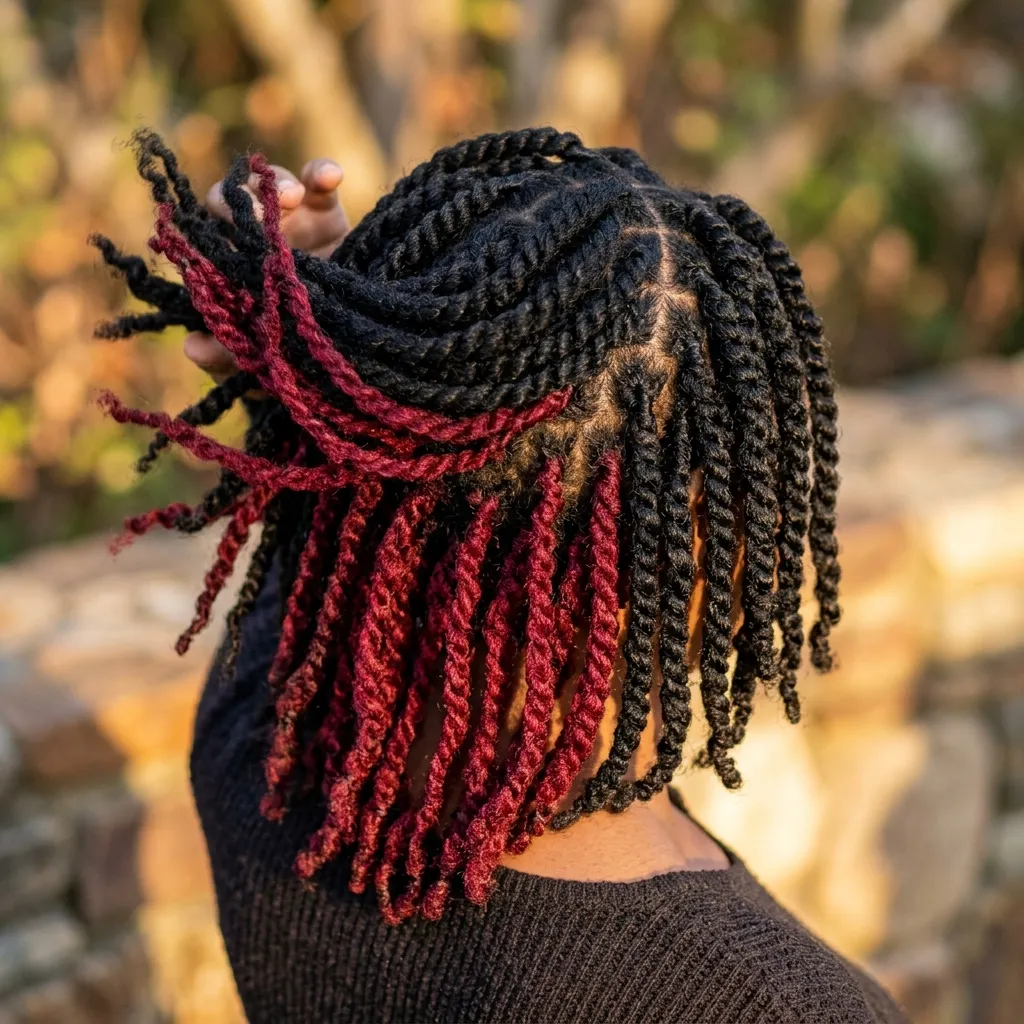
Vibe: Bold in a way that only shows itself in motion.
Why it works: A hidden underlayer applies a concealment-and-reveal principle. The bright color stays tucked beneath the natural top layer at rest, appearing only when the head tilts. This lets a wearer keep a dramatic tone in conservative settings without it reading as loud on first glance.
How to get it: Section off the bottom two inches of the underneath layer before coloring, leaving the crown natural so the color stays concealed until moved.
Shop The Look
| Product |
| Semi-permanent vivid hair color, burgundy |
| Sectioning clips for underlayer coloring |
| Color-protecting loc conditioner |
| Disposable gloves for at-home color application |
| Wide-tooth comb for even color saturation |
9. Locs with Face-Framing Micro Twists
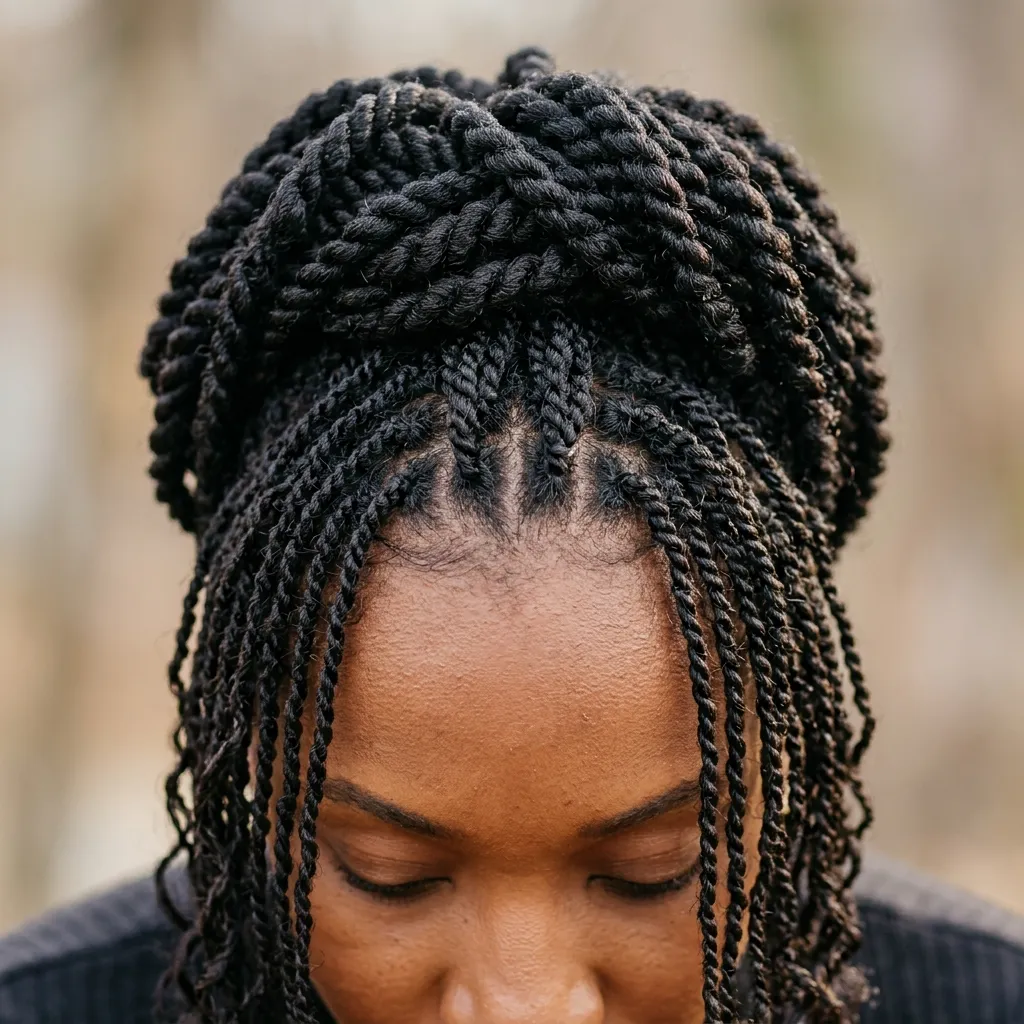
Vibe: Delicate around the face while staying substantial everywhere else.
Why it works: Mixing two loc thicknesses applies a scale-contrast principle. Thinner face-framing sections soften a strong jawline, while thicker crown locs keep the style from reading sparse. It’s the same logic as face-framing layers in cut hair, applied to loc partition size instead.
How to get it: Section four to six thinner strands at the hairline and twist those with smaller partitions than the rest of the head.
💡 Quick Win: Clip-in micro twist extensions in a matching shade ($20–35) let you test this look before committing permanently.
Shop The Look
| Product |
| Clip-in micro twist hair extensions |
| Fine-tooth parting comb |
| Twisting butter for smaller sections |
| Edge control brush, extra small |
| Matching-shade synthetic twist hair for blending |
10. Loose, Open-Concept Look
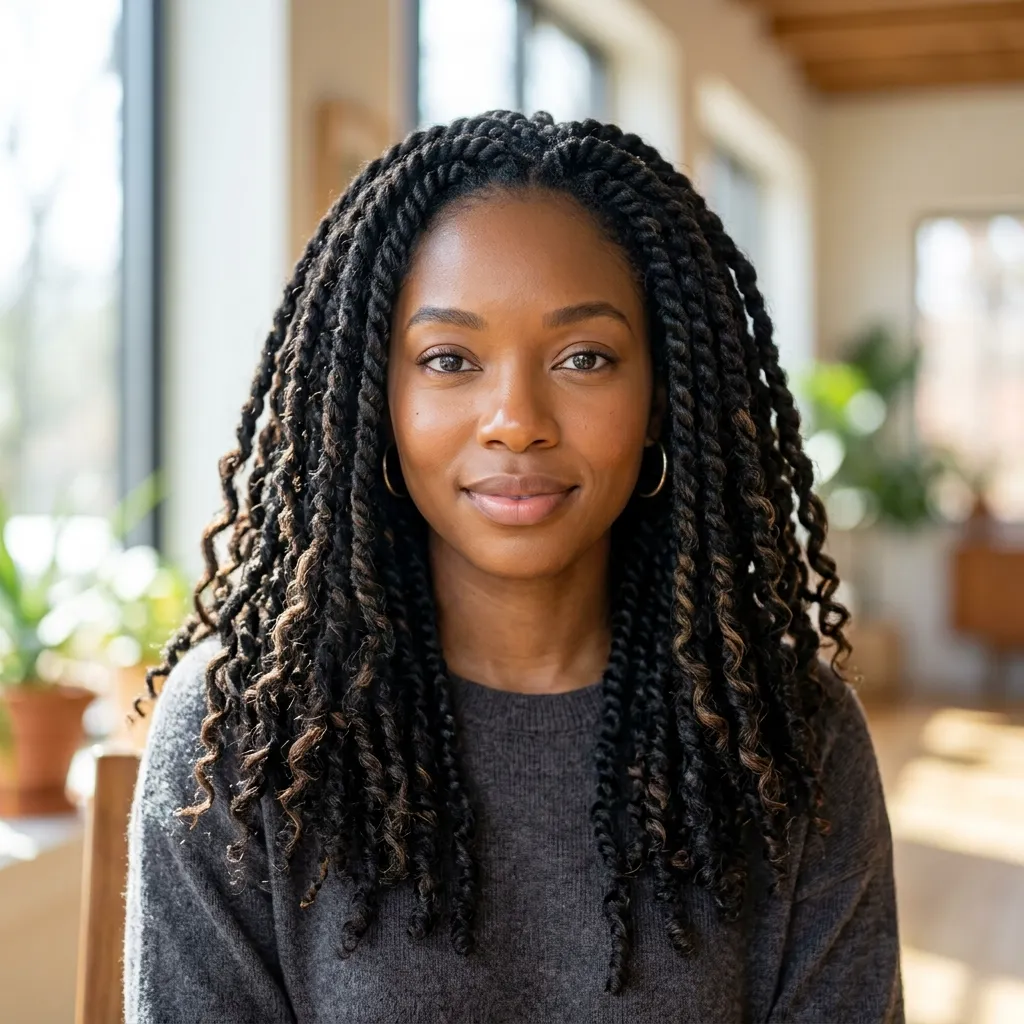
Vibe: Open, a style with no hard lines pulling the eye in one direction.
Why it works: Removing a defined part applies an even-distribution principle. With no single line breaking the field, no section pulls more visual weight than another. This depends on locs being roughly uniform in thickness, since uneven sizing becomes obvious without a part to organize it.
How to get it: At your next retwist, part your natural growth in a staggered zigzag rather than straight rows.
Shop The Look
| Product |
| Zigzag parting comb |
| Lightweight locking gel, matte finish |
| Wide detangling brush for locs |
| Leave-in conditioner spray for locs |
| Microfiber towel for gentle drying |
11. Compact Pineapple Updo for Short Locs
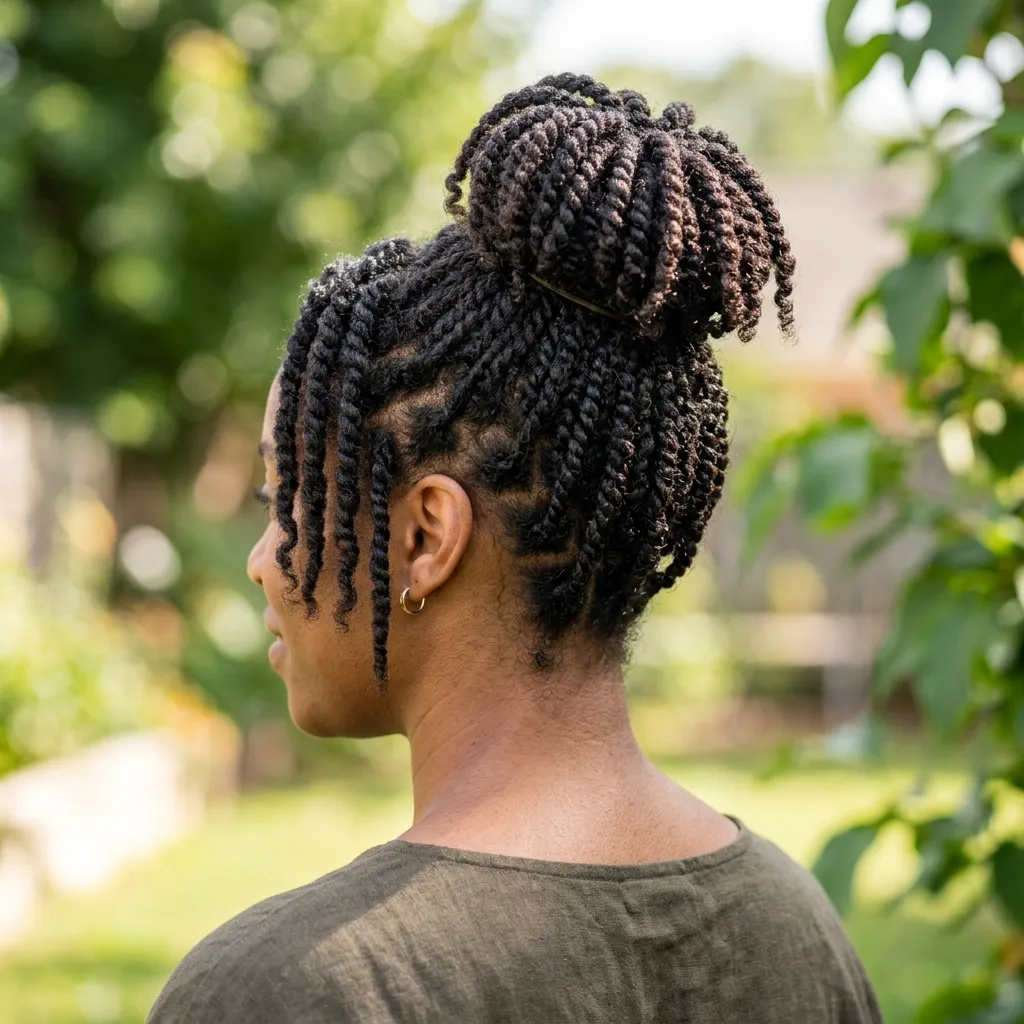
Vibe: Playful, a shortcut style that still looks deliberate.
Why it works: With shorter locs there’s less length to gather, so this applies a vertical-compensation principle. Placing the gathered section at the crown, not the nape, maximizes visible height. It’s the same logic used to make a small room look taller by drawing the eye upward.
How to get it: Gather all locs at the very top of the crown with a soft, wide elastic, leaving the ends loose to fan out.
💡 Quick Win: A stretchy fabric-covered elastic, not a thin rubber band, prevents shorter loc ends from snapping.
Shop The Look
| Product |
| Fabric-covered stretch elastics, pack of 10 |
| Small round hair tie for pineapple updos |
| Lightweight edge gel for baby hairs |
| Compact detangling comb, travel size |
| Scalp massage brush for shorter locs |
12. Satin Wrap for Overnight Protection
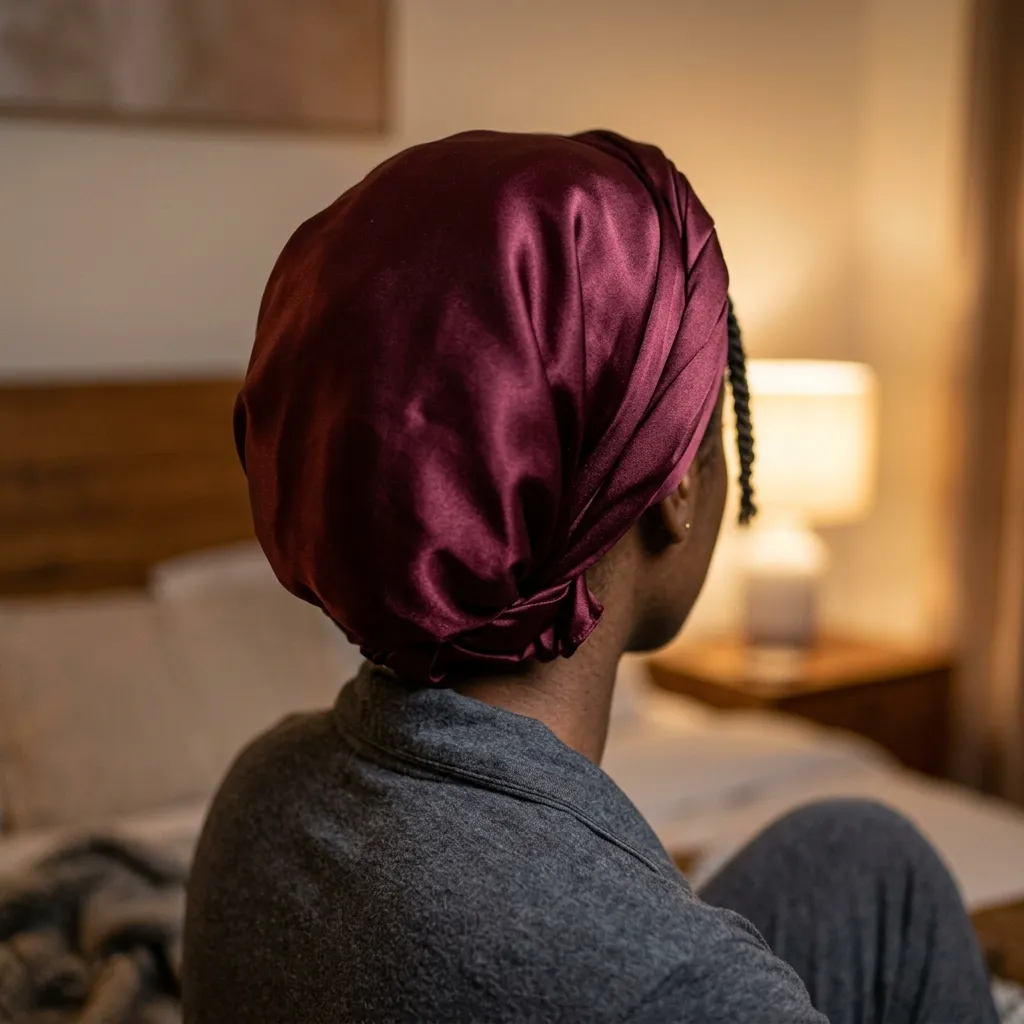
Vibe: Calm, the quiet maintenance step most of these looks depend on.
Why it works: This applies the friction-reduction principle behind almost every protective style here. Cotton pulls moisture through friction, while satin lets locs glide instead of catching. Tucking ends fully inside protects the driest, oldest part of each loc from repeated contact.
How to get it: Fold a satin scarf into a triangle, tie the point at the nape and ends at the front hairline, tucking loose ends fully inside before bed.
Shop The Look
| Product |
| Large satin hair wrap scarf |
| Satin-lined sleep bonnet, adjustable |
| Satin pillowcase, standard size |
| Leave-in moisturizing spray for overnight use |
| Small satin scrunchie for securing loose ends |
13. Wedding-Ready Loc Updo with Trailing Pieces
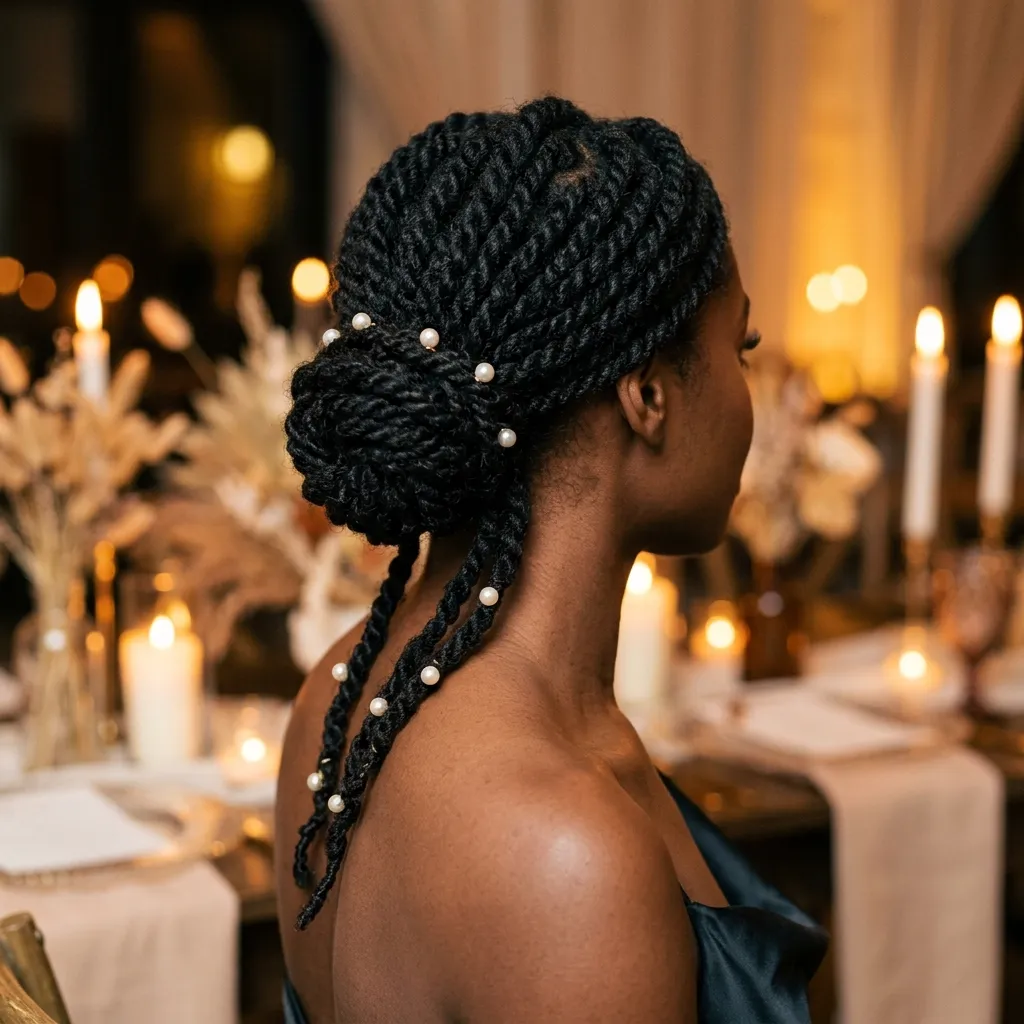
Vibe: Romantic, styled with just enough movement to feel undone on purpose.
Why it works: Leaving two locs trailing loose applies a formality-softening principle borrowed from bridal styling. Full structure alone can read as too stiff for an emotional event. Pearl accents diffuse candlelight rather than throwing sharp reflections the way polished metal does.
How to get it: Gather locs into a low, secure bun, then pull two of the longest back out to drape over one shoulder, pinning pearls only at the base.
Shop The Look
| Product |
| Small pearl hairpins, set of 8 |
| Bridal-hold strong finishing spray |
| Decorative pearl hair comb |
| Low-bun foam donut for volume |
| Fine hairnet for securing the bun base |
14. Root-Tap Color Refresh for Regrowth
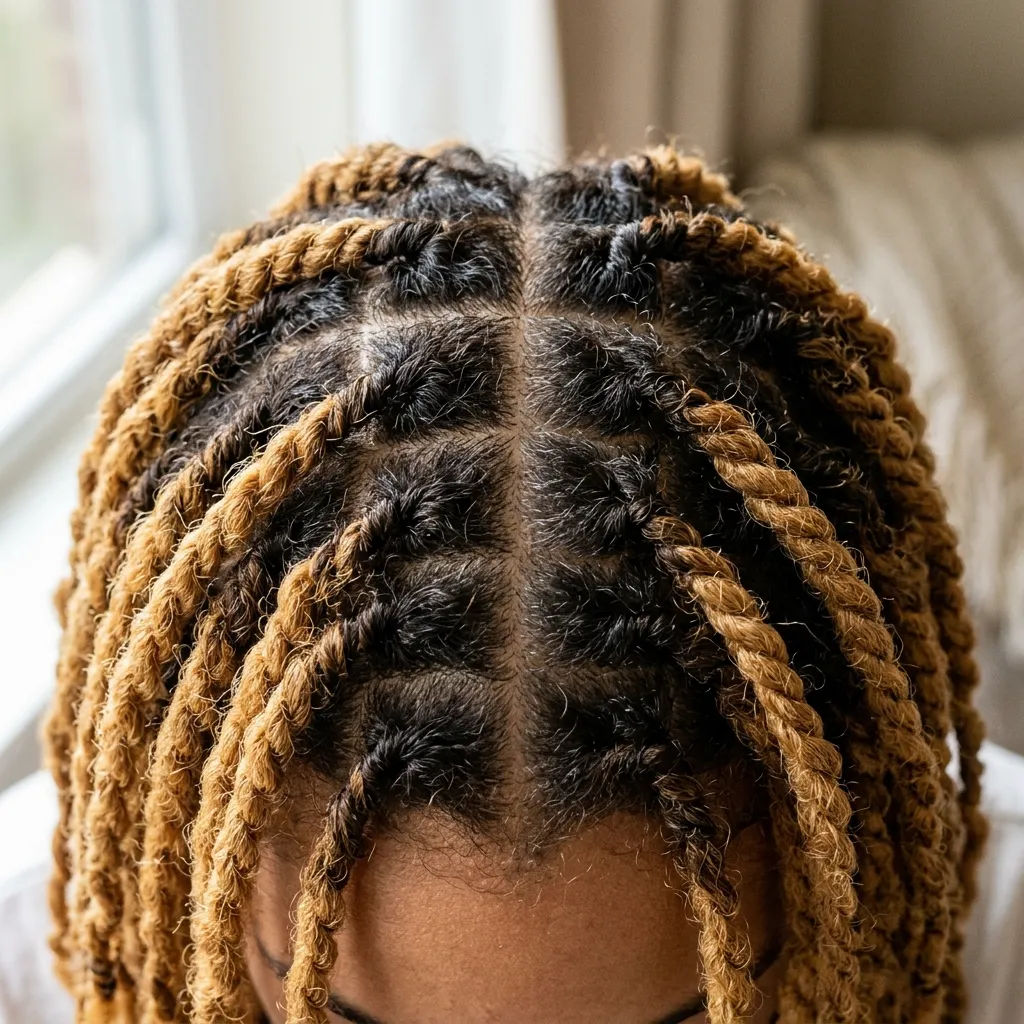
Vibe: Honest, the maintenance reality behind every colored loc photo.
Why it works: Root regrowth behaves differently on locs since the twist locks color permanently into the rope’s shape. A root-only touch-up must blend into an already-set twist, which is why colorists use a gloss rather than reapplying bleach near the scalp. A slightly darker root than the lengths reads as more natural.
How to get it: Apply a demi-permanent gloss to the first inch of new growth every 6 weeks, blending downward with a tint brush.
💡 Quick Win: A root touch-up spray in a matching shade ($10–18) can visually blend regrowth between color appointments.
Shop The Look
| Product |
| Root touch-up spray, honey blonde shade |
| Demi-permanent gloss kit for locs |
| Tint brush for precise root blending |
| Bond-repair treatment for lightened locs |
| Purple-toning spray to prevent brassiness |
15. Compact Two-Strand Starter Locs
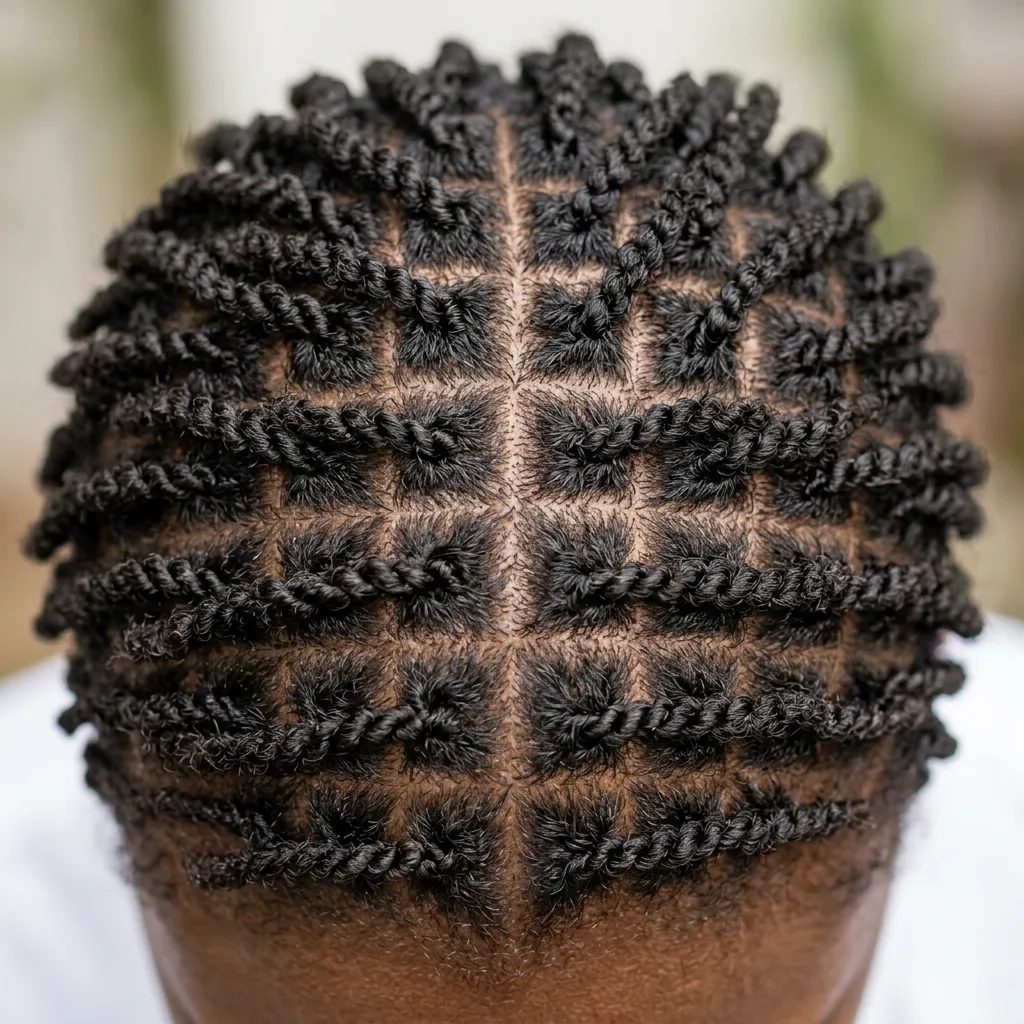
Vibe: Fresh, the very first version of a look that will change for years.
Why it works: Starter locs rely entirely on a partition-consistency principle. Every twist made in the first session determines the mature loc’s final look, a small early decision with a long-term payoff. Keeping partitions smaller at the start allows more shrinkage room as hair coils tighter over time.
How to get it: Section the entire head into even, palm-sized squares before twisting, working from the nape upward.
Shop The Look
| Product |
| Sectioning clips, full head set |
| Starter locking gel, medium hold |
| Rat-tail comb for even partitions |
| Loc palm rolling gel |
| Satin bonnet for first-week protection |
16. Chunky Twist Locs for Maximum Volume
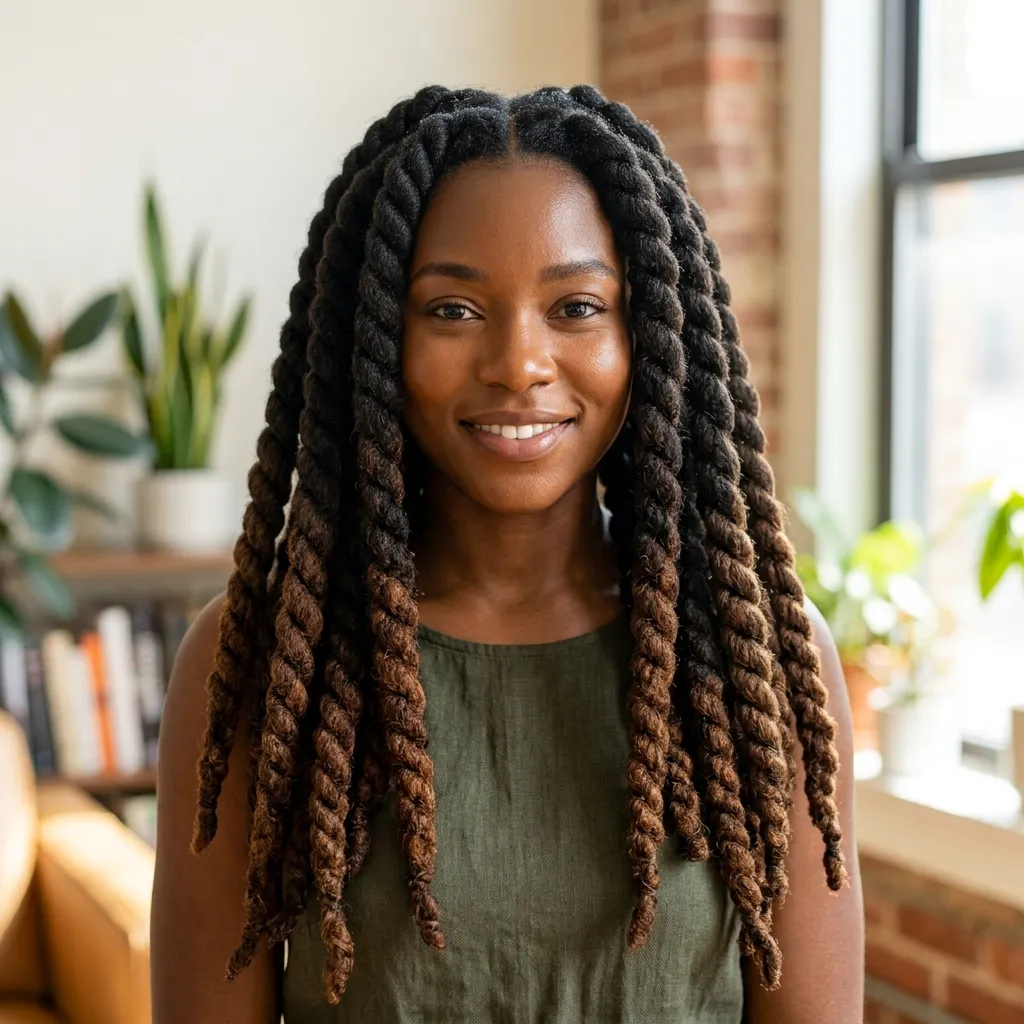
Vibe: Bold, hair that takes up space with confidence rather than volume tricks.
Why it works: Chunky partitions apply a scale-maximization principle. Fewer, thicker locs create stronger shapes that read clearly from a distance. Because each loc carries more visual weight alone, styling needs less manipulation to look finished, making it genuinely lower-maintenance day to day.
How to get it: Start with two-inch or larger partitions at the first twist; request this size explicitly from a loctician.
Shop The Look
| Product |
| Large-tooth sectioning comb |
| Heavy-hold locking gel for thick partitions |
| Wide-barrel loc clip for styling |
| Deep-penetrating loc conditioner |
| Extra-large satin bonnet for full coverage |
17. Ashy Gray Loc Coloring
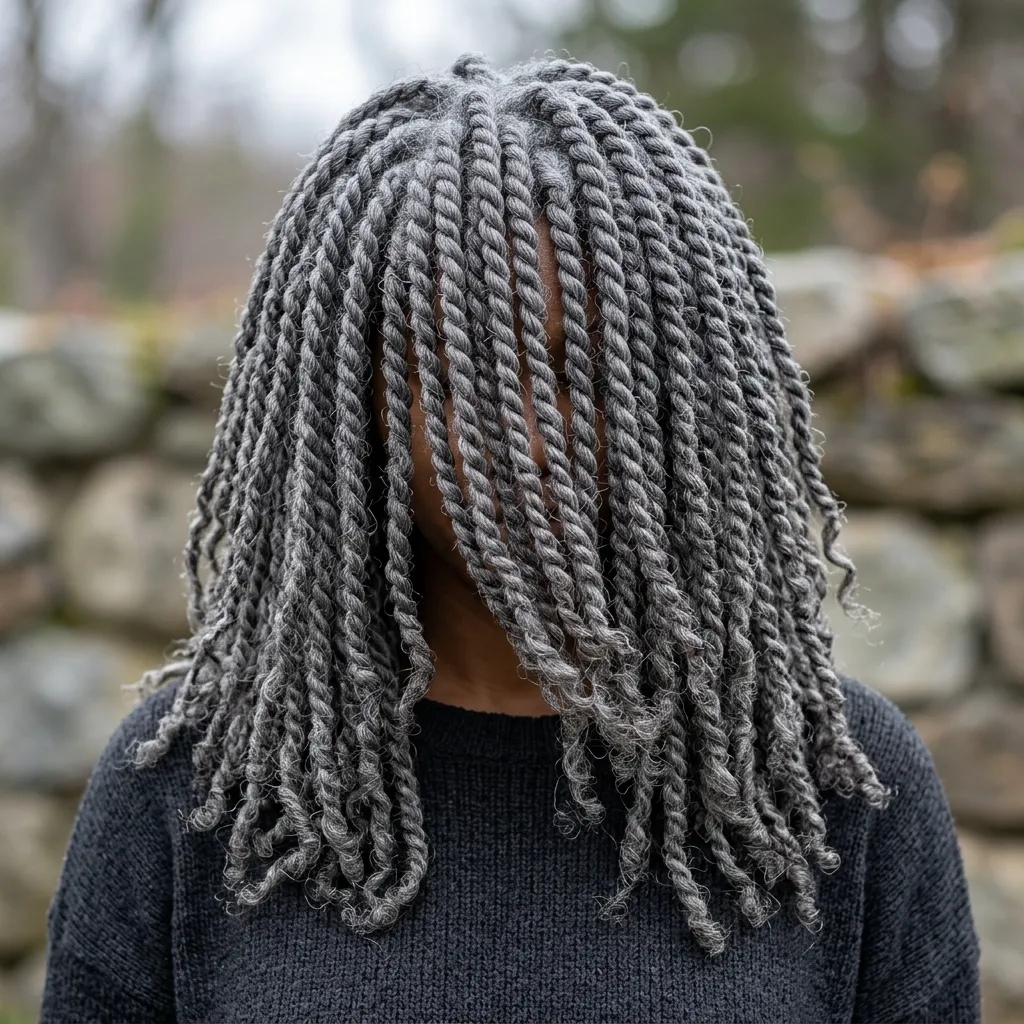
Vibe: Cool and modern, a deliberate departure from the warm tones most locs wear.
Why it works: A full gray tone applies a contrast-with-expectation principle. Since copper and honey dominate loc color trends, gray reads as distinct precisely by breaking the pattern. It requires regular toning to prevent yellow shift, the specific tradeoff of choosing cool over warm on this hair type.
How to get it: This look needs professional lightening before toning, so it’s best started in a salon; expect $150–300 for the initial process.
Shop The Look
| Product |
| Purple-toning shampoo for gray hair |
| Silver-toning gloss treatment |
| Bond-repair mask for lightened locs |
| Color-safe leave-in conditioner |
| Wide-tooth comb for gentle detangling |
18. Zigzag Part Loc Updo
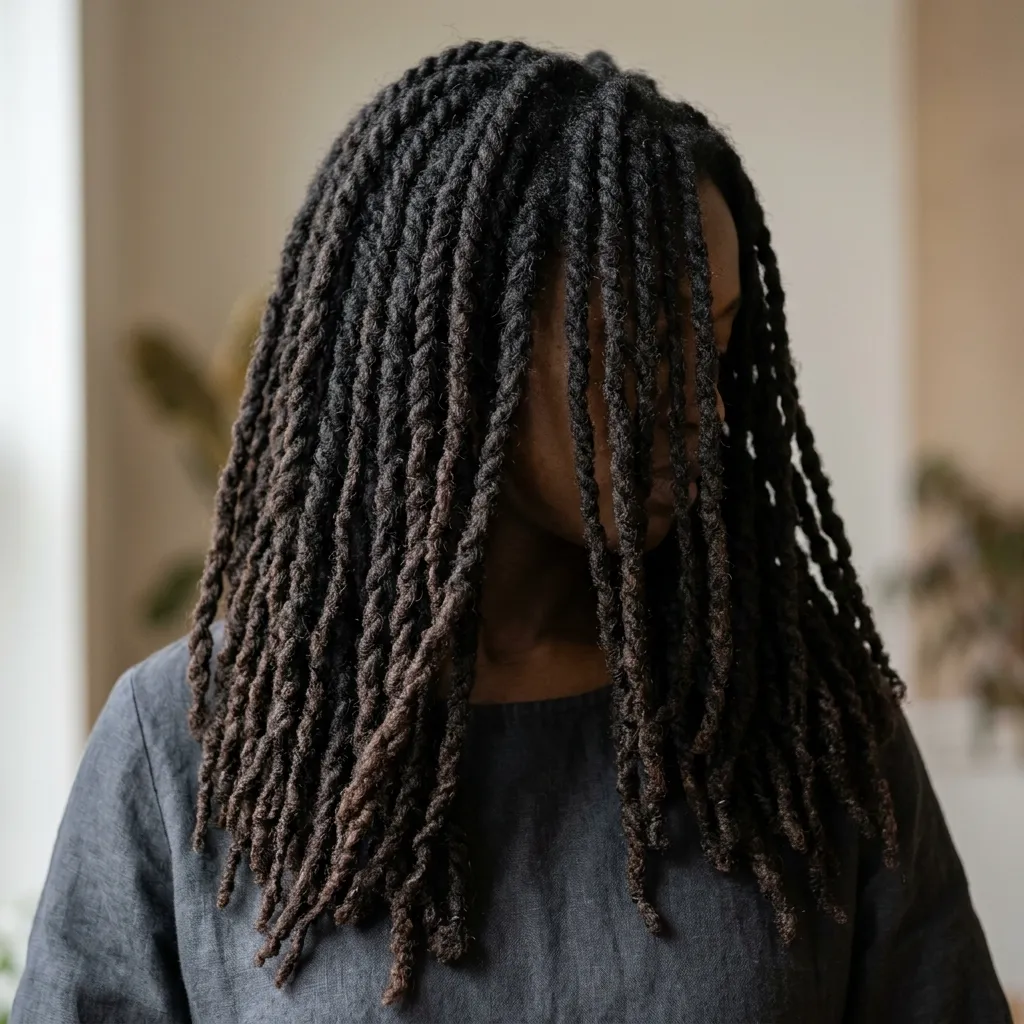
Vibe: Graphic, a small geometric detail that elevates a simple gathered style.
Why it works: A visible zigzag part applies a pattern-interest principle. A straight part reads as purely functional, while a zigzag adds a repeating geometric line that reads deliberate, similar to a herringbone floor elevating a plain material. It’s only visible at the crown, so it adds interest with no extra product.
How to get it: Create a zigzag part from ear to ear with a rat-tail comb before gathering into your usual updo, peaks about an inch apart.
💡 Quick Win: Practicing the zigzag on dry, un-gathered hair first keeps the peaks even.
Shop The Look
| Product |
| Fine-point rat-tail parting comb |
| Edge control gel for clean part lines |
| Snag-free elastic for gathering |
| Shine spray for finished part definition |
| Small mirror for checking part symmetry |
19. Matte Finish, No-Shine Styling
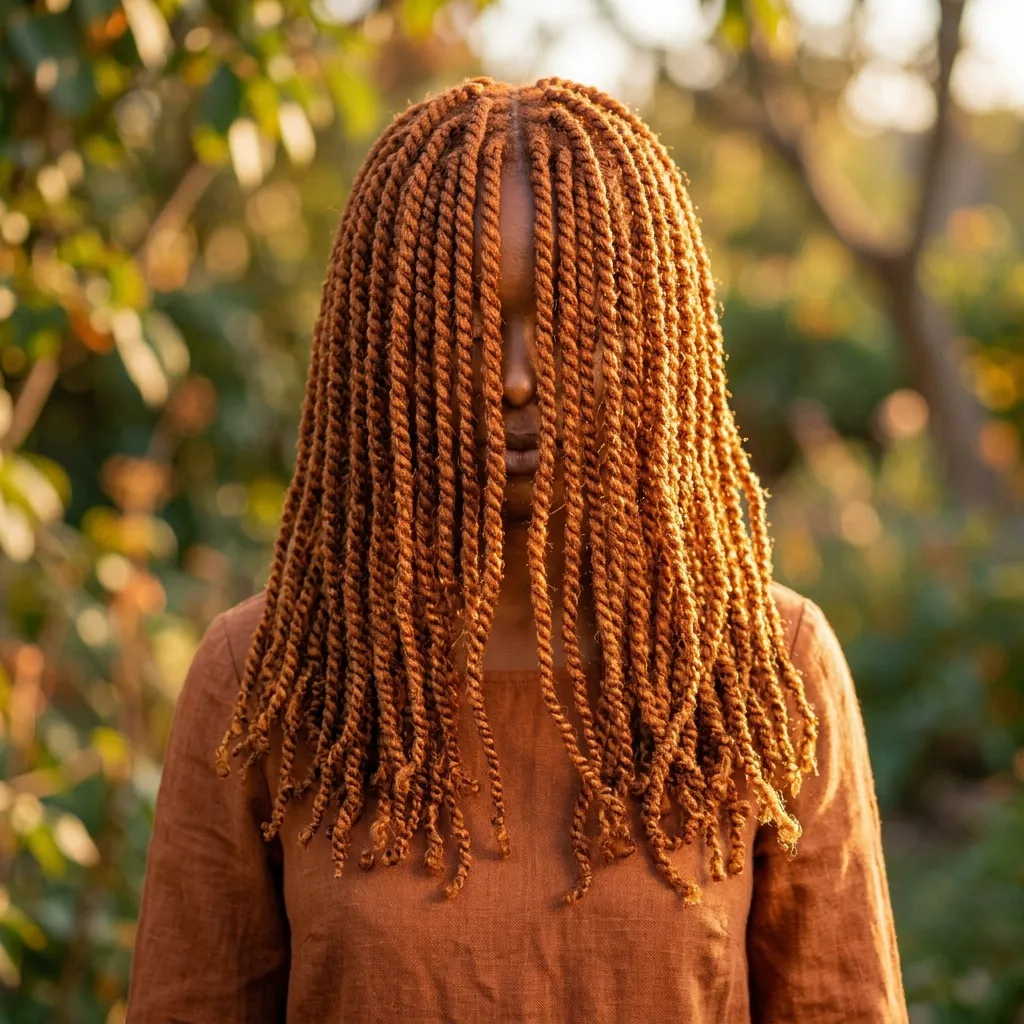
Vibe: Understated, hair that reads as texture rather than polish.
Why it works: Choosing matte over glossy applies a finish-consistency principle. Silicone shine creates a reflective surface at odds with a rope’s textural nature, while matte butter keeps focus on shape and pattern. This finish also photographs more evenly under mixed or harsh lighting.
How to get it: Replace silicone gel or spray with a whipped shea or mango butter without dimethicone, applied lightly to the surface.
Shop The Look
| Product |
| Whipped shea butter, silicone-free |
| Matte-finish loc styling cream |
| Wide-tooth detangling comb |
| Silicone-free leave-in conditioner |
| Boar bristle brush for even distribution |
20. Bright Copper All-Over Color
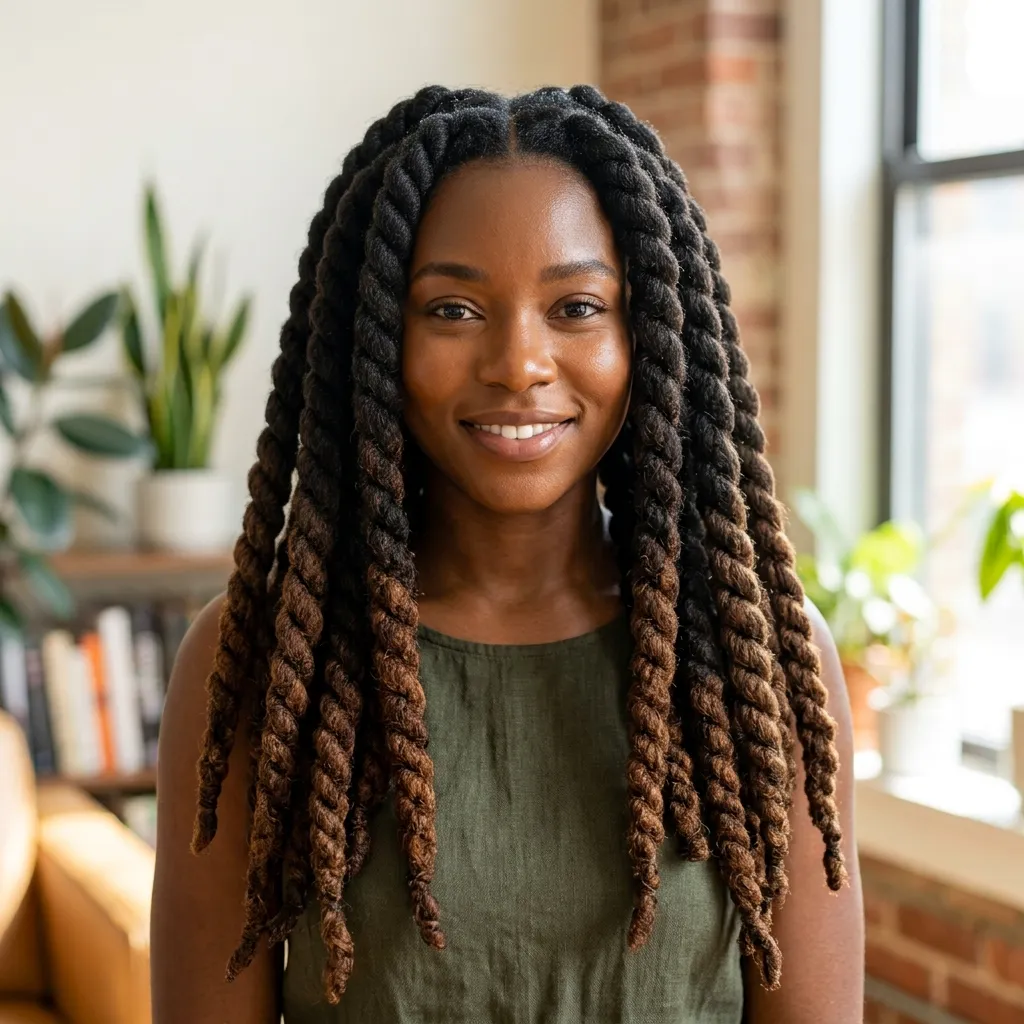
Vibe: Vibrant, a full color commitment rather than a subtle accent.
Why it works: Applying one saturated tone all over rather than a melt applies a full-commitment principle. It reads more confident than a partial application but demands more consistent upkeep, since fading shows everywhere rather than just at the ends, roughly a monthly gloss refresh.
How to get it: Lighten professionally first if starting dark, apply vivid copper root to tip, and refresh the gloss monthly.
Shop The Look
| Product |
| Vivid semi-permanent hair color, copper |
| Color-depositing conditioner, copper tone |
| Bond-repair treatment for lightened hair |
| Color-safe sulfate-free shampoo |
| UV-protectant spray to prevent fading |
21. Loc Extensions for Instant Length
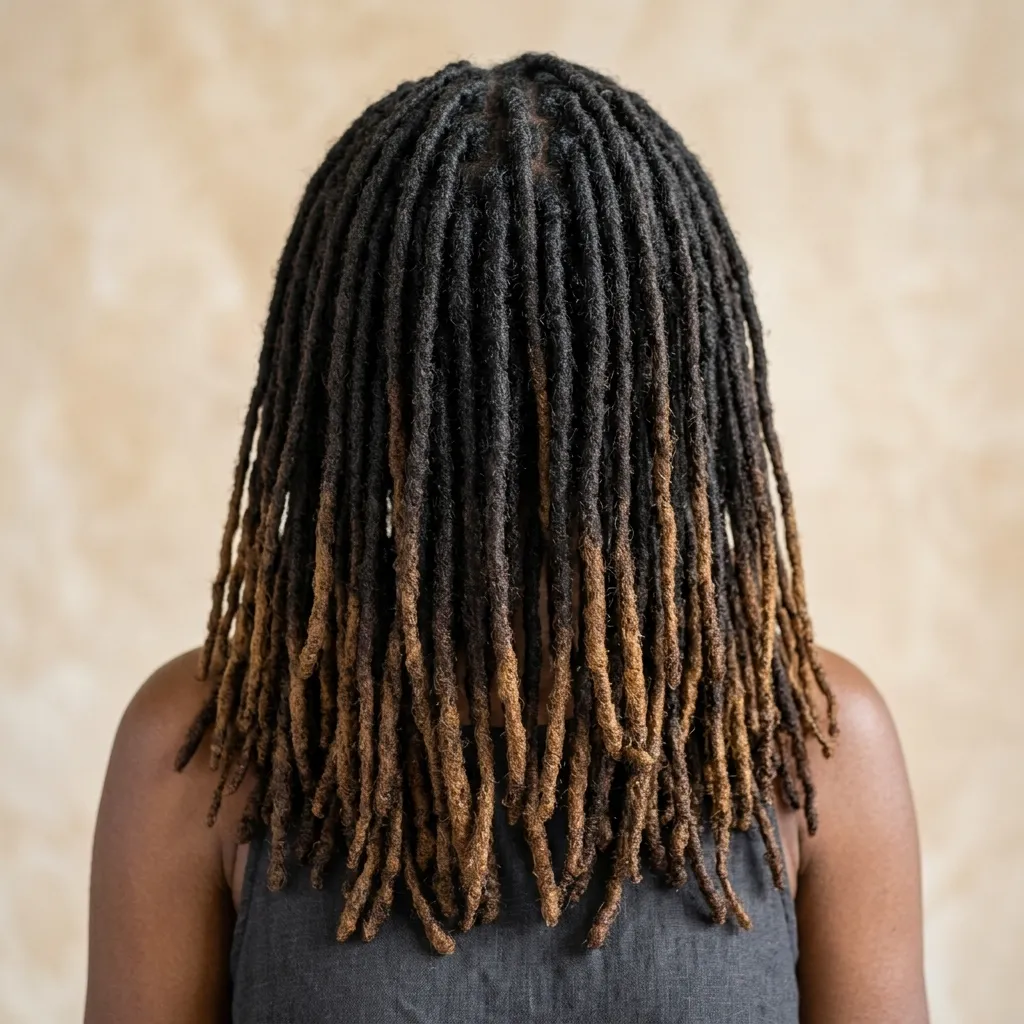
Vibe: Seamless, length that looks earned even when it isn’t yet.
Why it works: Loc extensions apply a proportion-matching principle. Extension thickness must closely match the natural partition size, or the blend point shows as a thickness change rather than color change. This detail matters more than the extension hair’s quality itself.
How to get it: Have a loctician measure your partition width before ordering the closest matching thickness; expect $200–500 depending on length.
💡 Quick Win: Requesting extensions one shade warmer than natural tends to blend more convincingly indoors.
Shop The Look
| Product |
| Human-hair loc extensions, matching thickness |
| Loc extension bonding adhesive |
| Fine-tooth comb for blend-point styling |
| Shine serum for extension and natural blend |
| Wide-tooth detangler for extended locs |
22. Side-Swept Ponytail
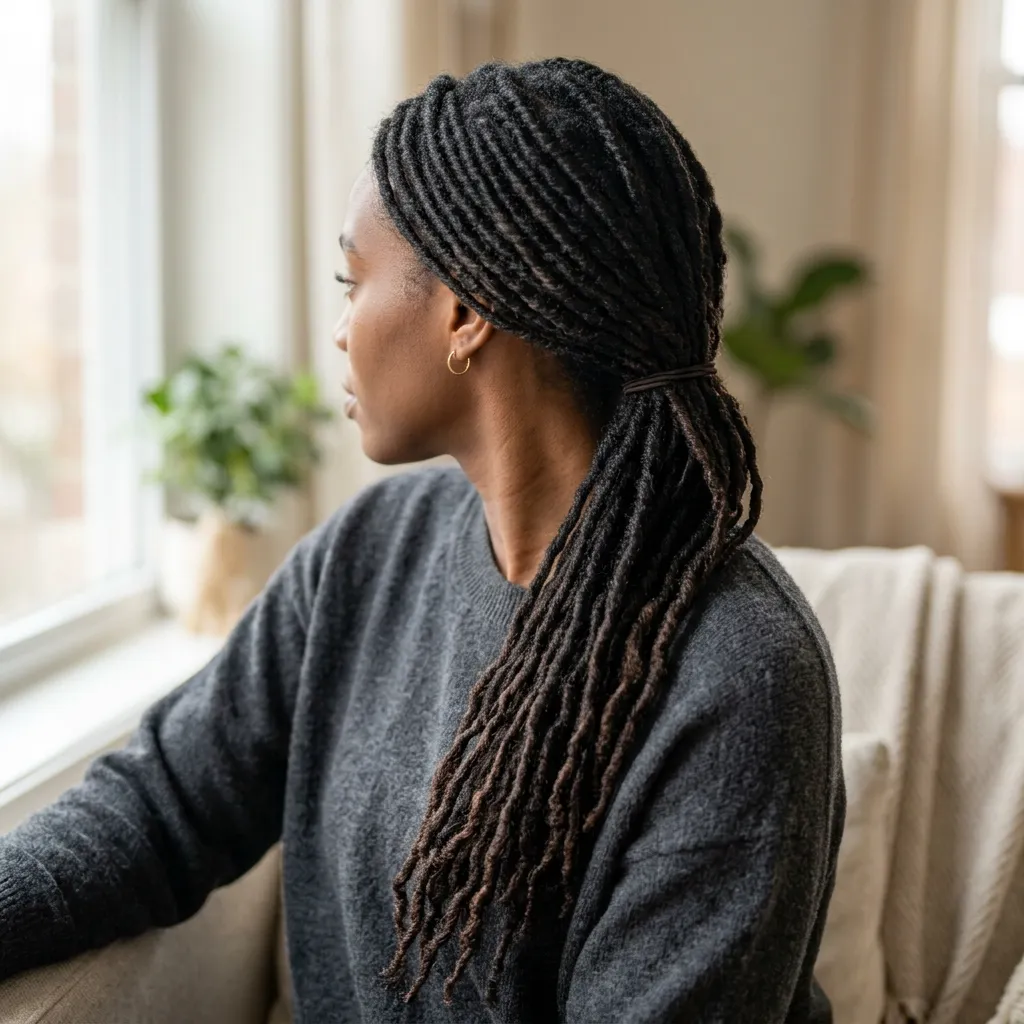
Vibe: Relaxed, an asymmetrical shift that feels more intentional than a centered ponytail.
Why it works: Gathering to one side applies an asymmetry principle, since asymmetrical compositions generally hold visual interest longer than symmetrical ones. Draping the length over the front of one shoulder keeps it visible, unlike a centered ponytail that hides it entirely.
How to get it: Gather all locs low, just behind one ear, secure with a snag-free elastic, and drape forward over that shoulder.
Shop The Look
| Product |
| Snag-free elastic hair ties |
| Small decorative hair clip for the gather point |
| Lightweight shine spray |
| Boar bristle smoothing brush |
| Silk scrunchie for a soft finish |
23. Loc Mohawk for Bold Occasions
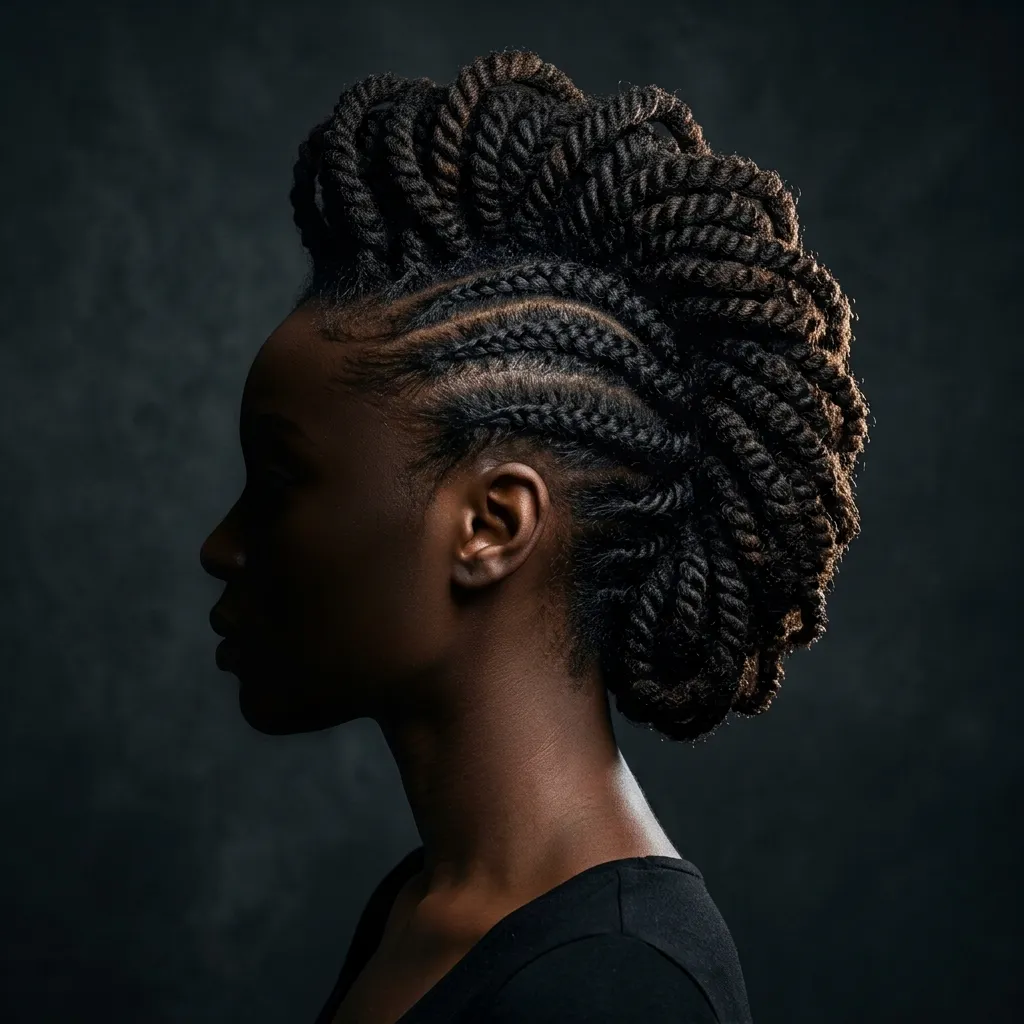
Vibe: Dramatic, a structural silhouette rather than a soft one.
Why it works: This applies a silhouette-contrast principle. Flattening the sides while raising the center creates a graphic outline that reads from a distance, similar to a roofline drawing the eye upward at one point. Since drama comes from shape, this pairs well with unadorned natural color.
How to get it: Gather the center third into a raised, secured section from forehead to nape, flattening the sides with strong-hold gel.
Shop The Look
| Product |
| Extra-strong-hold edge control gel |
| Wide-tooth sectioning comb |
| Small elastics for securing the raised section |
| Edge brush, firm bristle |
| Finishing spray for hold through the day |
24. Loc Bantu Knots for Texture Break
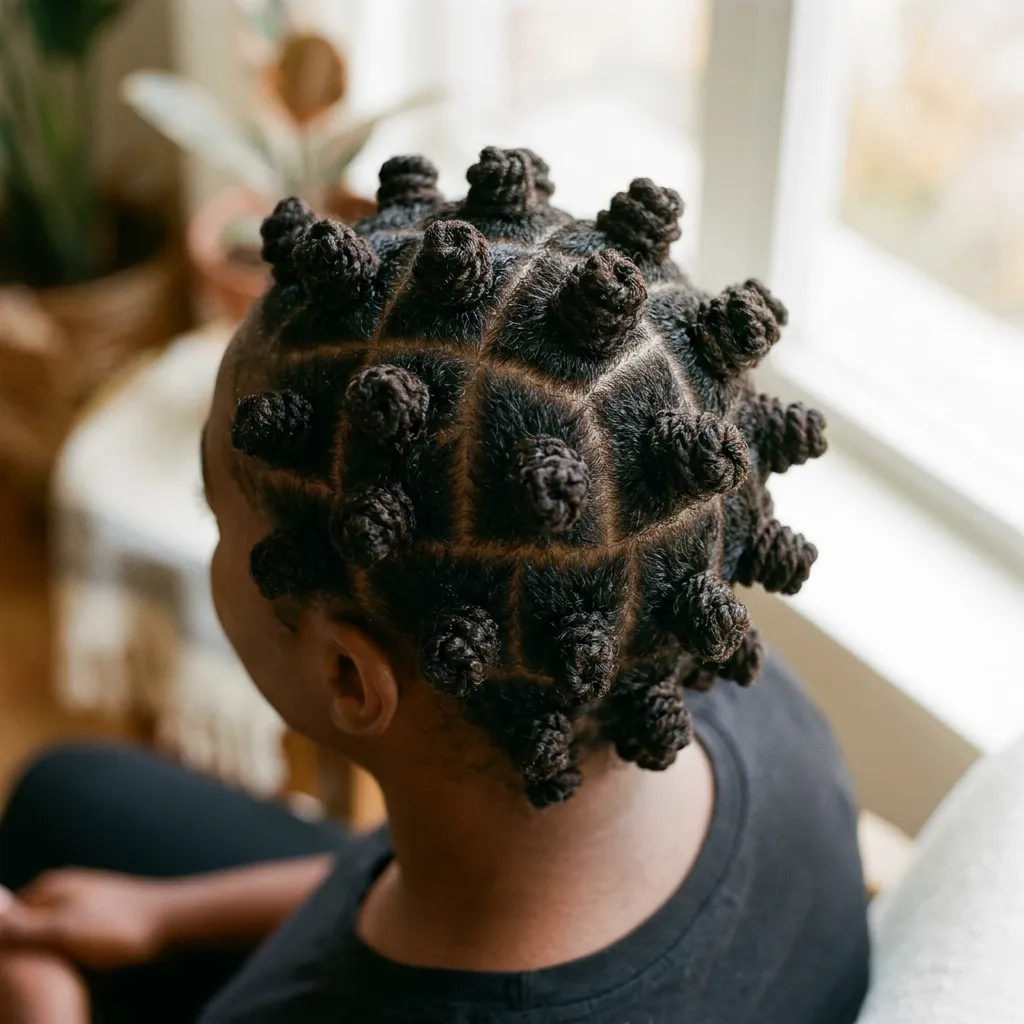
Vibe: Playful, a temporary texture break from the usual rope shape.
Why it works: Coiling locs into Bantu knots applies a temporary-transformation principle. The underlying loc structure stays intact while the surface silhouette changes completely for a day, giving variety without permanent commitment or any change in product.
How to get it: Section into 6 to 10 even parts, coil each into a flat spiral against the scalp, and secure with a bobby pin through the center.
💡 Quick Win: Knots left in overnight and released the next morning double as a heatless waving technique.
Shop The Look
| Product |
| Sectioning clips, full head set |
| Small bobby pins for securing knots |
| Lightweight edge gel |
| Satin bonnet for overnight knots |
| Wide-tooth comb for sectioning |
25. Accent Headwrap Styling
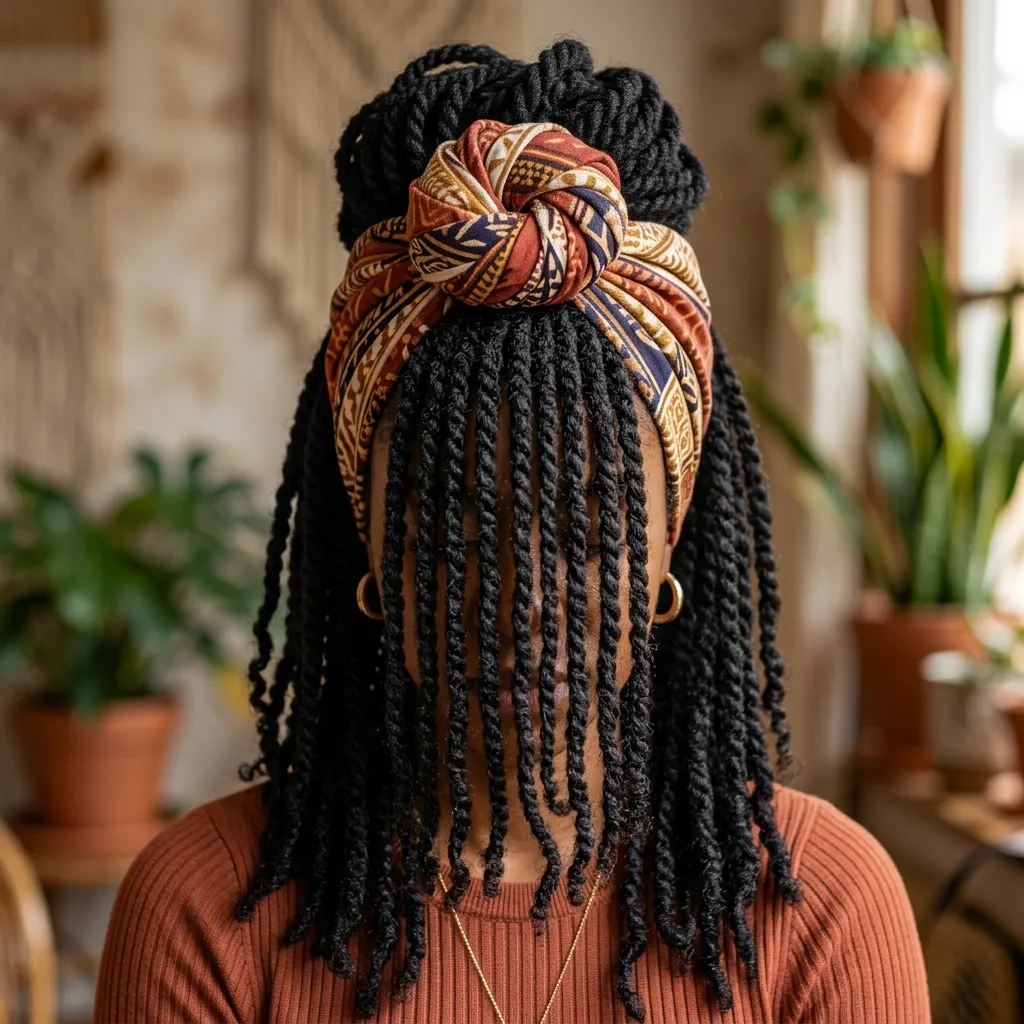
Vibe: Expressive, a single fabric accent that changes the entire tone of the style.
Why it works: A headwrap applies a framing principle similar to a picture frame around artwork. The fabric creates a clean edge that draws attention to the face first, while locs below add movement as a secondary layer. A warm, saturated wrap tone adds color without touching the hair itself.
How to get it: Fold a square scarf into a wide band, tie at the nape or crown, and leave all locs loose beneath it.
Shop The Look
| Product |
| Patterned cotton headwrap scarf |
| Satin-lined headwrap for slip-free hold |
| Decorative fabric knot accessory |
| Lightweight edge gel for a clean hairline |
| Shine spray for the visible loc sections |
26. Loc Ponytail with Wrapped Sections
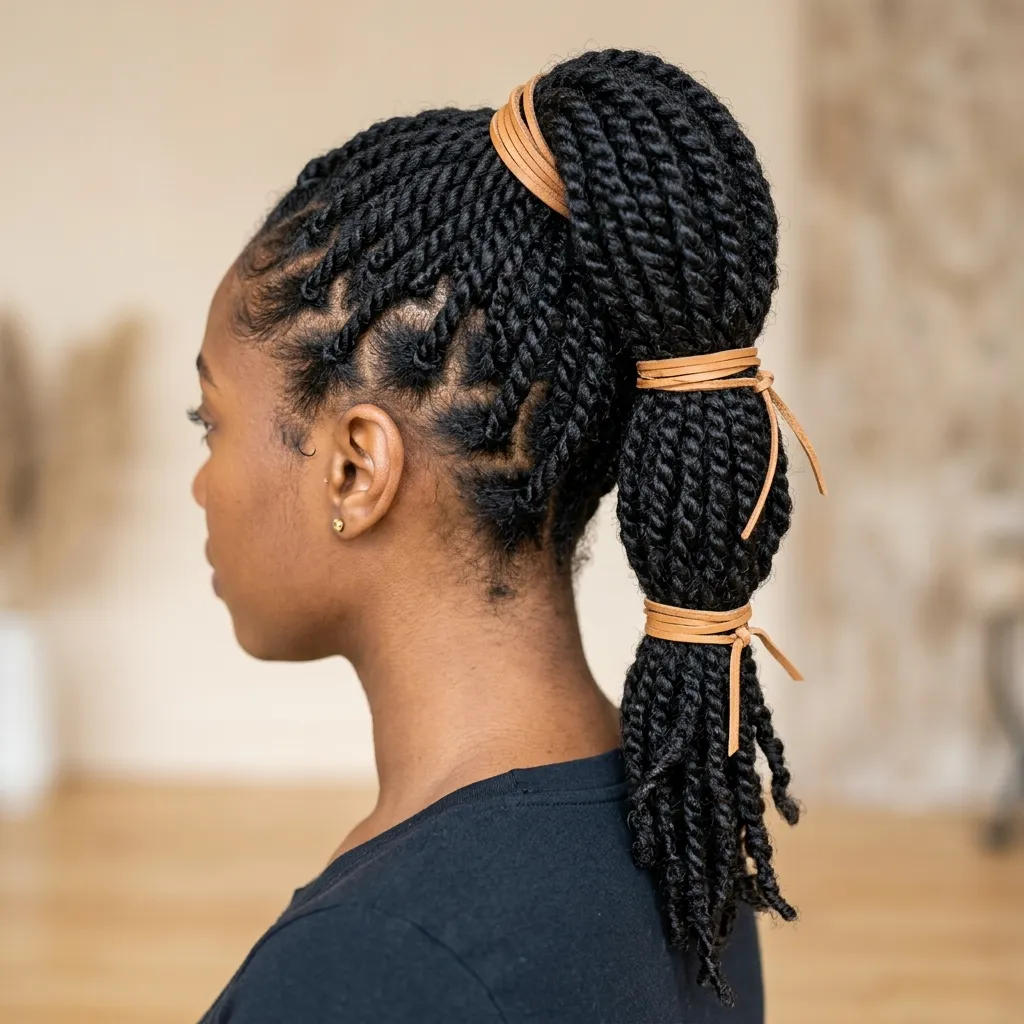
Vibe: Structured, a ponytail with its own internal rhythm.
Why it works: Wrapping cord at even intervals applies a repetition principle, the same logic as a striped pattern where a repeated element at consistent spacing reads intentional. It also breaks one long mass of hair into distinct segments without any color change.
How to get it: Gather into a high ponytail and wrap thin cord tightly around three evenly spaced sections, securing ends with a dot of glue.
Shop The Look
| Product |
| Thin waxed cotton or leather cord |
| High-hold ponytail elastic |
| Small fabric glue for securing cord ends |
| Shine spray for the ponytail length |
| Edge control for a smooth base |
27. Loc Shrinkage Embrace for Curls-Adjacent Texture
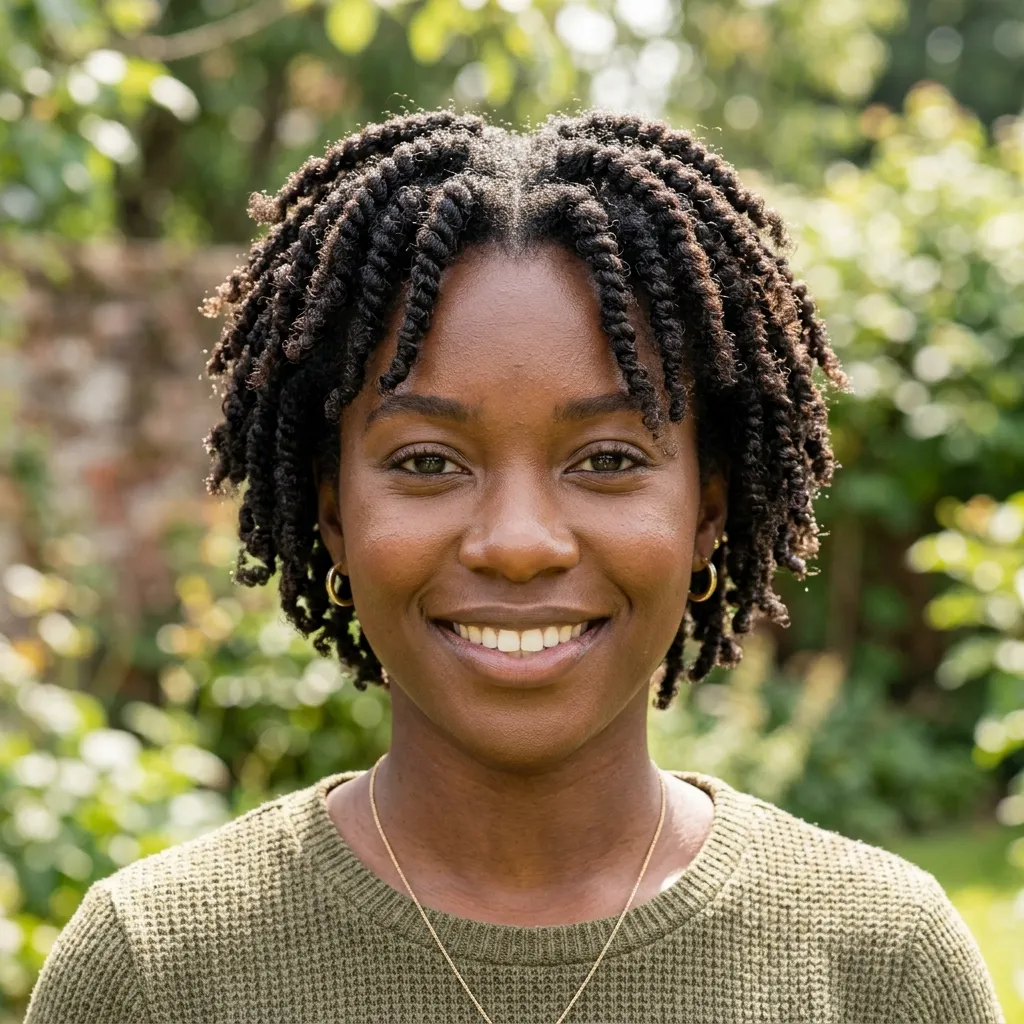
Vibe: Authentic, hair shown at the length it actually sits at.
Why it works: This applies a texture-first principle. Rather than fighting shrinkage with heat or stretching, letting locs sit at their true coiled length shows off the tightness of the twist pattern itself, often the most technically impressive part of a well-maintained set.
How to get it: Skip stretching techniques after wash day and let locs air-dry and coil naturally, applying only a light leave-in.
Shop The Look
| Product |
| Lightweight leave-in conditioner spray |
| Microfiber towel for gentle air-drying |
| Wide-tooth comb for shrinkage-friendly detangling |
| Moisturizing loc oil, jojoba-based |
| Satin bonnet for overnight moisture retention |
28. Compact Two-Row Cornrow Base with Locs
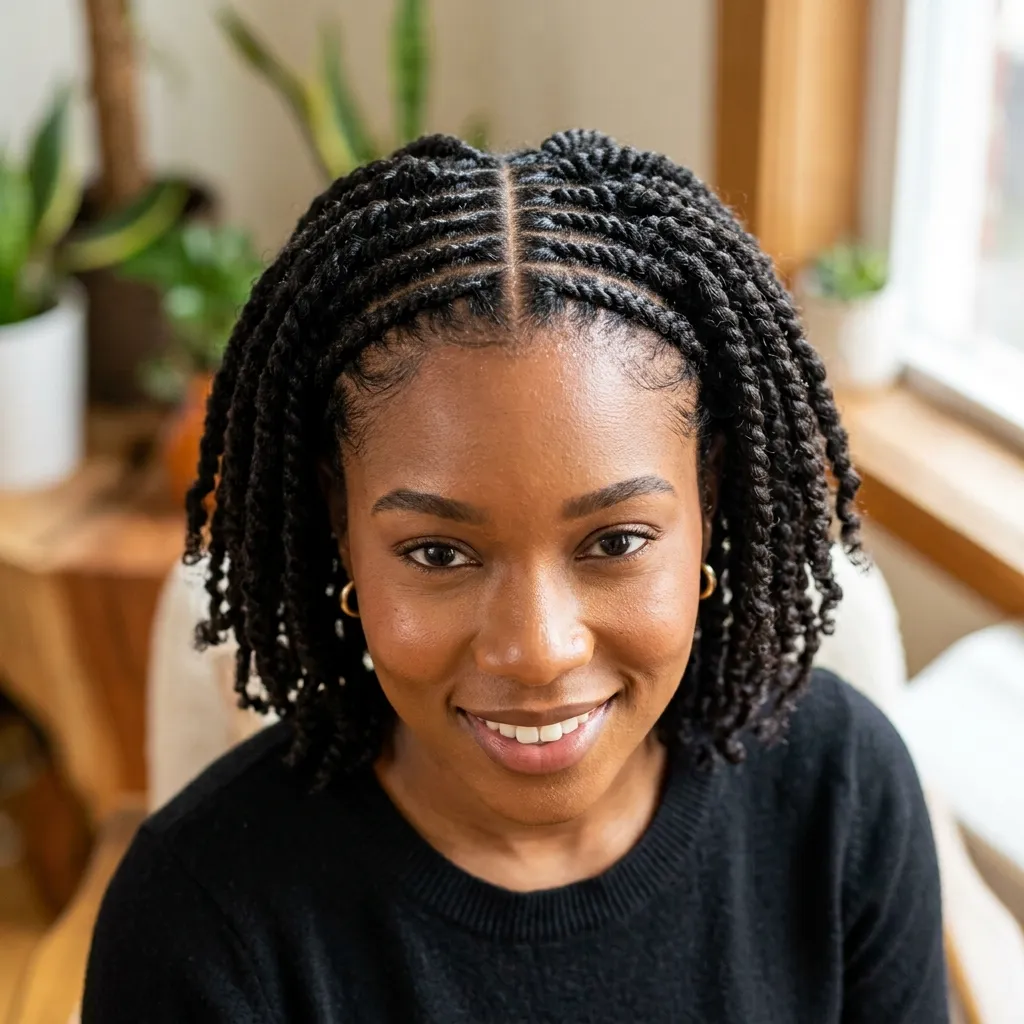
Vibe: Neat, a compact solution for shorter locs that can’t yet be gathered into a full updo.
Why it works: Cornrowing only the front two rows applies a partial-structure principle for shorter locs. Rather than forcing a full updo the length can’t support, structuring the hairline keeps the most visible part neat while the rest moves freely, the hair equivalent of a fold-down desk in a small room.
How to get it: Cornrow the front two rows flat toward the crown using your existing locs, securing ends with a small elastic.
Shop The Look
| Product |
| Rat-tail comb for straight cornrow parts |
| Edge control gel for a smooth cornrow base |
| Small elastics for securing cornrow ends |
| Scalp oil for the exposed cornrow parts |
| Satin scarf for protecting the style overnight |
29. Loc Updo with Hidden Elastic and Pin Curl Finish
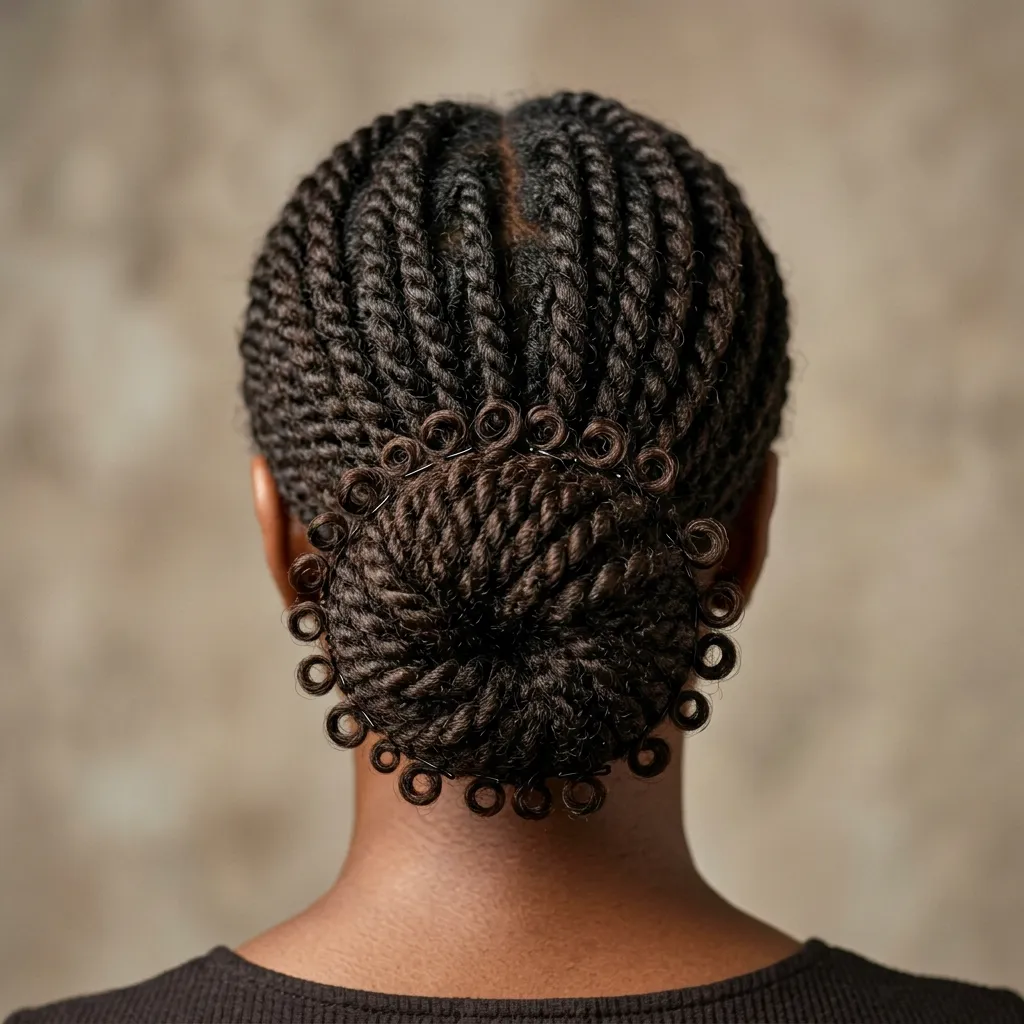
Vibe: Refined, an updo with finished detail at every edge.
Why it works: Curling ends into pinned loops around the bun applies a finishing-detail principle. Most loc updos leave ends flat or loose, but looped edges add a decorative border, similar to a piped edge finishing a plain cake surface. It holds for hours without touch-ups.
How to get it: Gather into a low bun, curl 4 to 6 of the longest locs into loops, and pin each flat against the bun’s outer edge.
💡 Quick Win: Practicing the loop-and-pin technique on two locs first makes the spacing more even.
Shop The Look
| Product |
| Fine bobby pins for securing loops |
| Low-bun foam donut for volume |
| Strong-hold finishing spray |
| Fine-tooth comb for a smooth base |
| Small decorative pin for the finished edge |
30. Natural Black, No-Color Signature Look
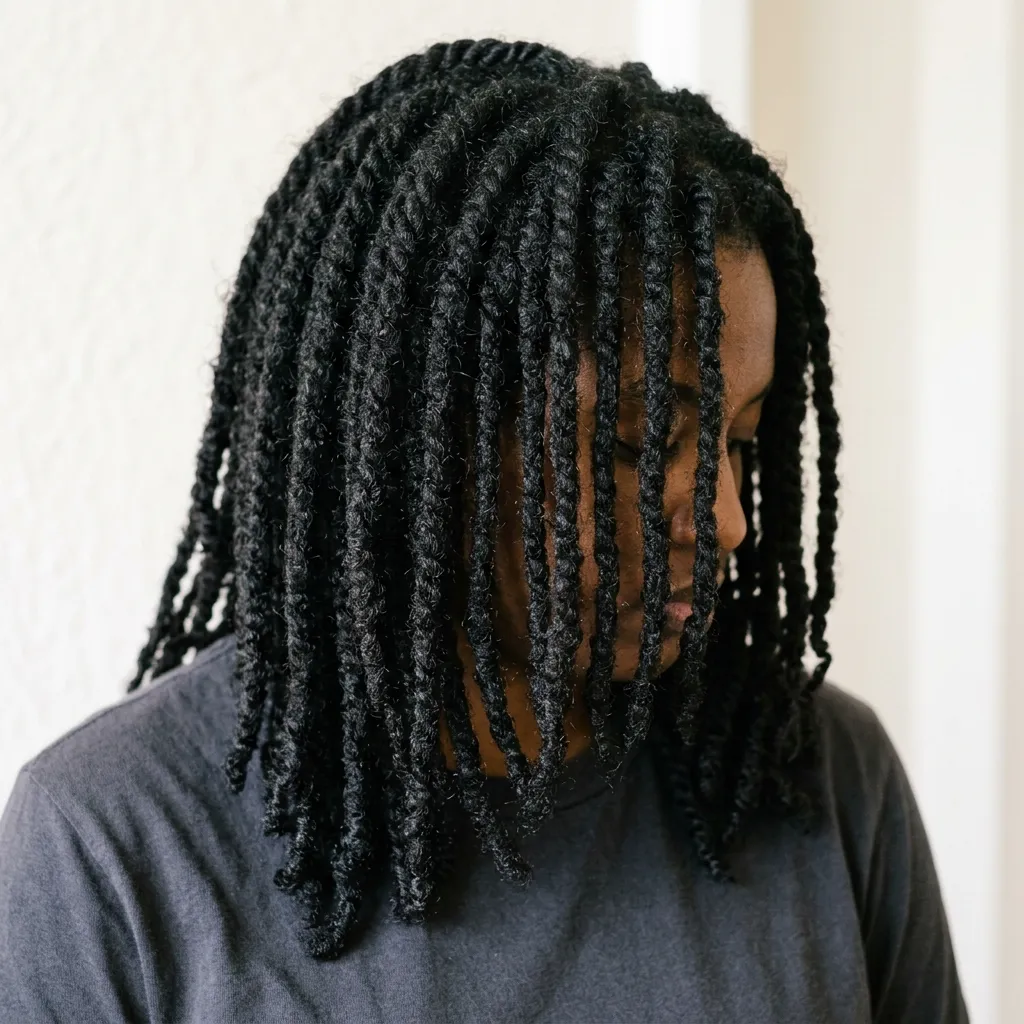
Vibe: Clean, a look that needs no color story to feel finished.
Why it works: Keeping locs fully natural applies a low-intervention principle. With no lightening or dye, structural integrity stays strongest, since color processing is the biggest stressor on a mature loc. Undamaged hair cuticle also reflects light more evenly than processed color can replicate.
How to get it: Focus product on shine and moisture, using a lightweight oil like jojoba applied sparingly to smooth the surface.
Shop The Look
| Product |
| Lightweight jojoba hair oil |
| Shine spray, silicone-free |
| Moisturizing leave-in conditioner |
| Wide-tooth detangling comb |
| Satin bonnet for overnight shine retention |
How to Start Your Two-Strand Twist Locs Journey
The single first move, before touching any product, is choosing your starting partition size, since this decision determines your loc’s final thickness for the entire life of the style and can’t be undone without cutting the locs out and starting over. Medium, palm-sized sections are the safest default for most first-timers, since they lock reasonably quickly while still leaving room for versatile styling once mature; readers set on either the chunky or the micro-thin extreme should request that size explicitly from a loctician rather than accepting whatever partition a stylist defaults to, since the standard default tends to land in the middle regardless of what a client actually wants long-term.
The most common beginner mistake is applying too much gel at the first twist, which dries into a hard, flaky cast that actually prevents the strands underneath from locking properly, since the twist itself does the locking work, not the product coating it. The fix is a light, even layer, just enough to smooth flyaways and hold the twist’s shape for the first few days, with any heavier product reserved for retwist sessions further down the strand rather than at the fresh root.
Three items under $50 that create immediate styling range across this entire list: a travel-size jar of aloe-based locking gel ($8–15), a set of six brushed-gold adjustable loc cuffs ($12–25), and a large satin wrap scarf in a solid jewel tone ($10–20). Together these three cover daily maintenance, jewelry-based styling, and overnight protection, the three categories every idea above draws from.
A full transformation to mature, fully locked hair realistically takes 12 to 18 months, though the initial twist session itself can be completed in a single weekend, typically 2 to 6 hours depending on hair length and partition count. A starter budget of $30 to $60 covers basic gel and a comb for an at-home start, while a professional starter session runs $150 to $400, and ongoing retwist appointments every 6 to 8 weeks generally cost $40 to $80 each, the real long-term cost to plan around.
Frequently Asked Questions About Two-Strand Twist Locs Hairstyles
What is the difference between two-strand twist locs and interlocking locs?
Two-strand twist locs are formed by twisting two sections of hair around each other, which creates a rope-like texture, while interlocking locs use a tool to pull the loc’s own hair through its base in a knot, producing a smoother but sometimes thinner-looking result. Two-strand twists tend to shrink and lock faster in the first several months, which is one reason they remain the more common starting method. Both lead to permanent locs over time, so the choice mostly comes down to texture preference, starting cost, and how quickly a wearer wants visible locking to begin.
What color works best on two-strand twist locs?
Warm tones like copper, honey blonde, and burgundy tend to show up well against the twisted rope texture because they catch light along the raised twist pattern rather than sitting flat, while a cooler ash-gray tone (idea 17 above) reads as more distinct precisely because it breaks from that warm-toned trend. A semi-permanent gloss applied only to the ends, refreshed every 4 to 6 weeks, is a lower-commitment way to test color before a full dye job costing $150 to $300 at a salon. Full bleaching directly on mature locs is generally discouraged since it can weaken the strand at the point where it’s already tightly coiled.
How much does it cost to start and maintain two-strand twist locs?
A first-time professional starter session typically runs $150 to $400 depending on hair length and partition size, while an at-home start only costs the price of gel and a comb, roughly $30 to $60. Ongoing retwist maintenance every 6 to 8 weeks usually costs $40 to $80 per salon session, and loc extensions for added length run an additional $200 to $500. Jewelry, color, and specialty products are separate, optional costs layered on top of that baseline maintenance schedule.
Can two-strand twist locs work with a busy schedule or short hair?
Yes, shorter locs actually lock faster than longer hair since there’s less length for the twist to loosen from, making them a reasonable option for a low-maintenance schedule, and retwist frequency can often be stretched to 8 to 10 weeks on shorter styles without the roots looking overly grown out. The main tradeoff at shorter lengths is fewer full-updo options until the hair reaches at least shoulder length, though partial styles like the compact pineapple updo (idea 11) or the cornrow-base look (idea 28) work specifically because they’re designed for shorter length.
How do you protect two-strand twist locs overnight?
A satin or silk wrap, either a scarf or a fitted bonnet, is the standard overnight protection method since it reduces the friction that causes frizz and breakage compared to a cotton pillowcase, and tucking loose ends fully inside the wrap protects the oldest, driest part of each loc from the most repeated contact. A satin pillowcase ($15–30) is a lower-effort alternative for anyone who finds a full wrap uncomfortable to sleep in, though it protects the surface of the hair more than the ends specifically. Either option should be replaced roughly every 6 to 12 months as the fabric’s smoothness wears down with regular washing.
Ready to Create Your Two-Strand Twist Locs Look?
These 30 two-strand twist locs hairstyles move through color, jewelry, updos, parting patterns, and the protective maintenance that keeps every other idea on this list actually wearable long-term. You don’t need to attempt more than one at a time, starting with a single small change, a new part, a few beads, a better nightly wrap, is genuinely the right way in, and it’s how most of the styles above were designed to be tried.
Today, that might simply mean picking up a satin wrap scarf or trying the deep side part with what you already have. As the locs settle into their own rhythm over the coming months, the style starts to feel less like something you’re maintaining and more like something that’s simply yours. Save your favorites now, especially the ones involving beads, cuffs, or color, since those are the details easiest to forget by the time you’re actually ready to try them.