
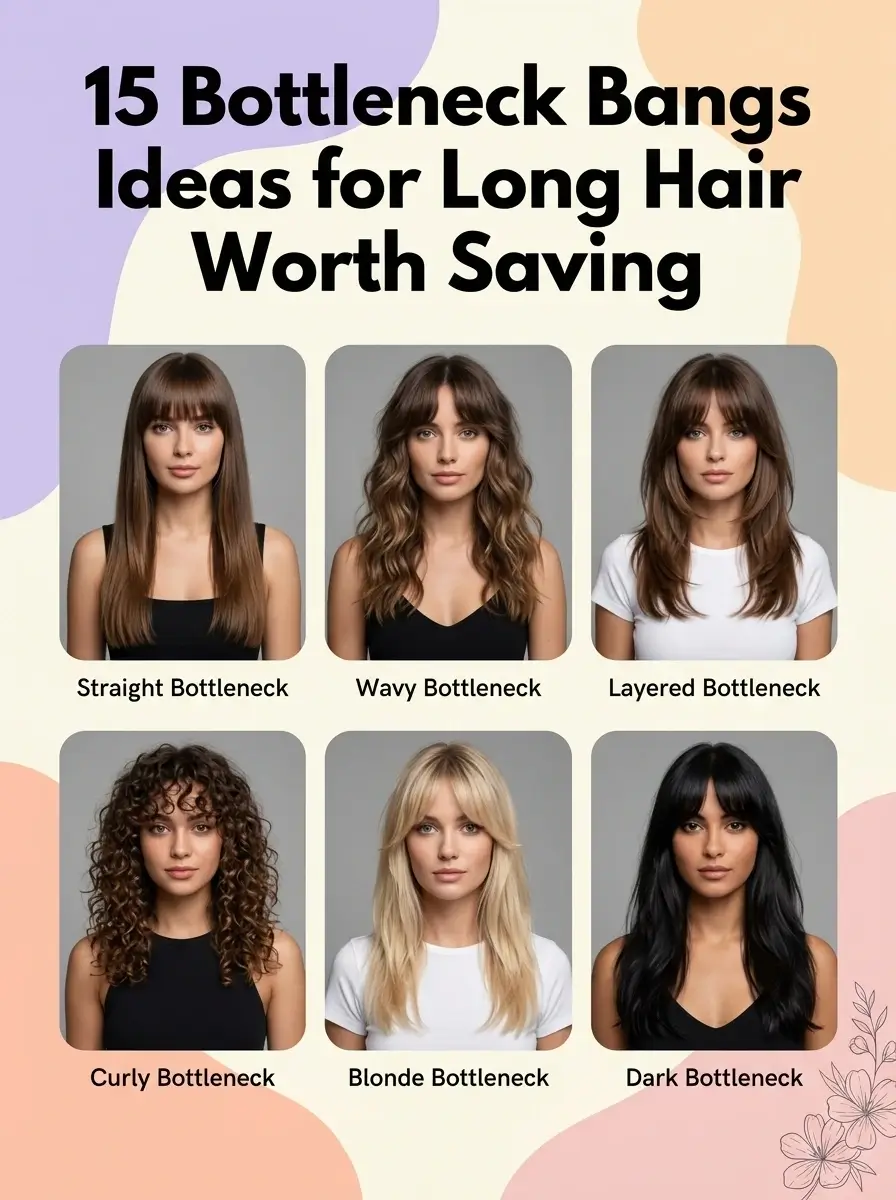
15 Bottleneck Bangs Ideas for Long Hair Worth Saving

Bottleneck bangs are a narrow, feathered cluster of face-framing pieces, usually one to two inches wide at the crown, that taper gradually into the surrounding length of long, uncut hair rather than sitting as a separate, defined fringe. This article gives you 15 bottleneck bangs ideas for long hair, covering exact color placement, texture technique, styling method, and adaptations for fine, wavy, and thick hair types.
There is a quiet confidence to this cut that a full fringe rarely has. It softens a face instantly without asking for a six-week trim commitment. The narrow section catches light differently than the length behind it, giving the whole head movement even on the second or third day without a wash. It reads as unplanned, but every version worth copying has a specific technique sitting underneath it.
Here are 15 ideas worth saving, and stealing.
Why Bottleneck Bangs Work So Well
Bottleneck bangs take their name from the narrow, bottle-neck shaped section they occupy at the crown before flaring outward into longer, face-framing pieces around the cheekbone and jaw. The cut descends from the face-framing layer trends of the 1990s and early 2000s, refined more recently through Korean salon styling and the 2023 to 2024 TikTok “fringe alternative” wave, where stylists needed an answer for people who wanted the softness of curtain bangs without recommitting to the maintenance that a true fringe demands as it grows past the brow line.
The technique relies on razored or point-cut ends rather than a blunt line, since a blunt edge on a section this narrow reads as an accidental gap rather than a deliberate cut. Pieces are typically cut between two and four inches longer than a standard curtain fringe, landing somewhere between the cheekbone and jaw depending on face shape, and finished in the same natural tone as the rest of the hair or lifted one to two shades with a money-piece highlight for added dimension.
Fine or thin hair can wear this style well, but only with adjustment. The bottleneck section needs to stay under one and a half inches wide and the ends need point-cutting rather than blunt-cutting, since a wider section on fine hair collapses into a stringy, separated look by midday.
| Element | Trait 1 | Trait 2 |
| Philosophy | Face-framing softness without full commitment | Grows out into the length instead of against it |
| Key Materials | Flexible-hold texture spray, 8-10 hold | Lightweight, silicone-light heat protectant |
| Key Colors | Natural base tone match | One to two shade money-piece highlight |
15 Bottleneck Bangs Ideas for Long Hair
1. Money-Piece Framing Around the Bangs

Vibe: Luminous, like the face itself is lit from within.
Why it works: A money-piece highlight on just two or three front strands creates contrast exactly where the eye lands first. Against a darker base, roughly two shades lighter, the effect still reads even when the bangs are tucked back, since the color itself does the framing work.
How to get it: Ask your colorist for two to three foils placed only on the front-facing bottleneck pieces, lifted two shades lighter than your base using a balayage or foilyage technique so the regrowth line stays soft over eight to ten weeks rather than showing a hard demarcation at four weeks the way a full foil highlight would.
💡 Quick Win: A root-tinted temporary highlight spray in a shade close to caramel, applied only to the bottleneck section, fakes this placement for a single event without any commitment.
Shop the Look
| Product |
| Root touch up temporary highlight spray, honey blonde |
| Boar bristle round brush, 25mm barrel, for blowout styling |
| Olaplex No. 7 bonding oil or equivalent lightweight heat protectant mist |
| Fine tooth rat tail comb for precise sectioning |
| Flexible hold texturizing spray, matte finish, medium hold |
2. Feathered, Wispy Ends

Vibe: Airy, like each piece moves on its own instead of as one clump.
Why it works: Razoring the ends removes roughly 30 to 40 percent of the weight along the last half-inch, letting pieces separate instead of falling as one solid line. Thinning only at the edges, while keeping density near the root, is what gives the section its signature broken-up movement.
How to get it: Request a point-cut or razor finish on the last half-inch of the bangs only, keeping the upper two-thirds of the section fully weighted and untouched, since removing texture too high up the strand causes the section to look thin at the root rather than feathered at the tip.
Shop the Look
| Product |
| Texturizing hair powder for fine, feathered ends |
| Sea salt spray for beach wave texture |
| Diffuser attachment for blow dryer |
| Small round brush, 25mm barrel |
| Anti-frizz serum, lightweight, silicone-free formula |
3. Butterfly Clip Half-Up Styling
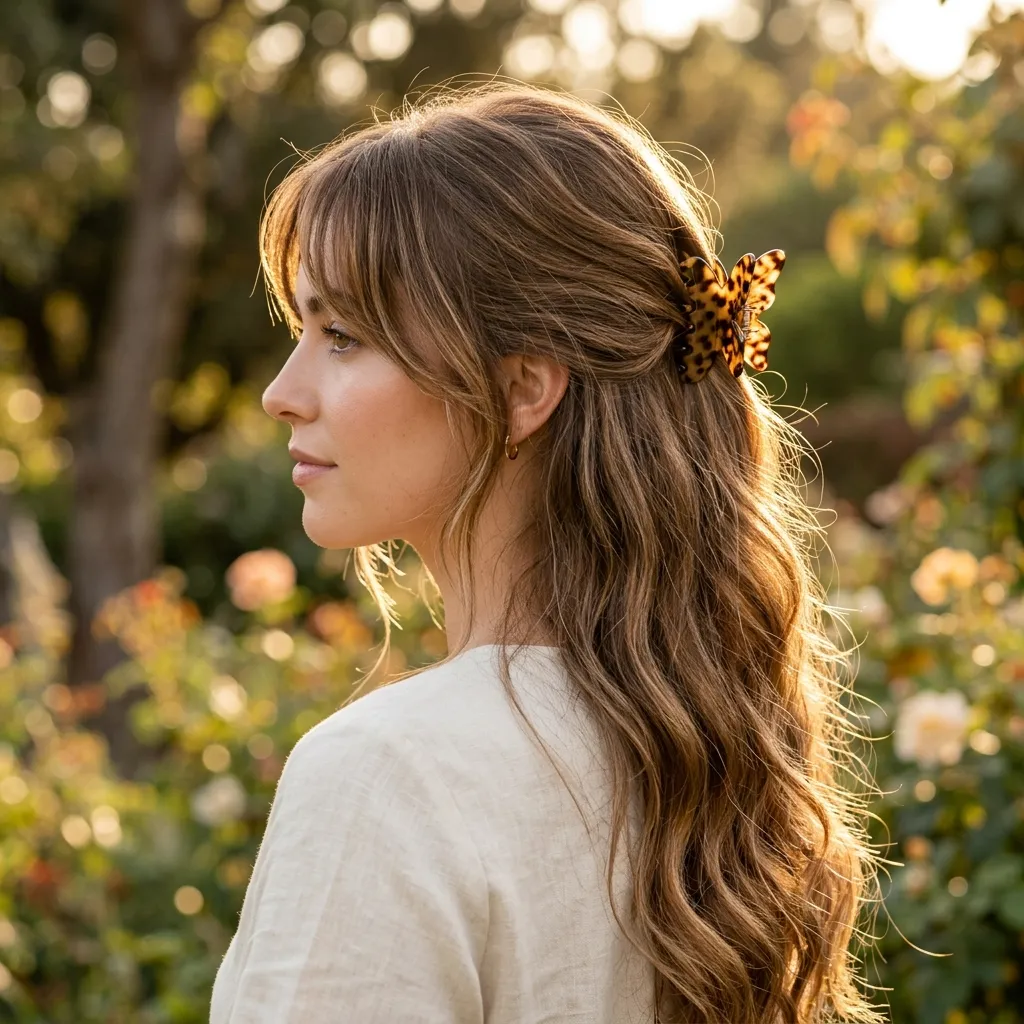
Vibe: Relaxed, like a Sunday you did not have to plan.
Why it works: Pulling the crown up while leaving the bangs down creates contrast between a gathered section and a loose one. That negative space around the face is what keeps the look from reading as either too polished or too undone.
How to get it: Gather hair starting about an inch behind each temple, twist once toward the crown, and secure with a medium tortoiseshell claw clip roughly two inches above the nape, leaving the entire bottleneck section untouched at the front.
💡 Quick Win: A single bobby pin crossed behind each ear, angled slightly upward, keeps stray bang pieces from sliding sideways into the clip by midafternoon.
Shop the Look
| Product |
| Tortoiseshell butterfly hair clip, medium size |
| Matte bobby pins, bronze tone, box of 60 |
| Wide tooth detangling comb, wood handle |
| Argan oil hair shine drops |
| Claw clip, non-slip strong grip, 4 inch |
4. Round-Brush Blowout Bend
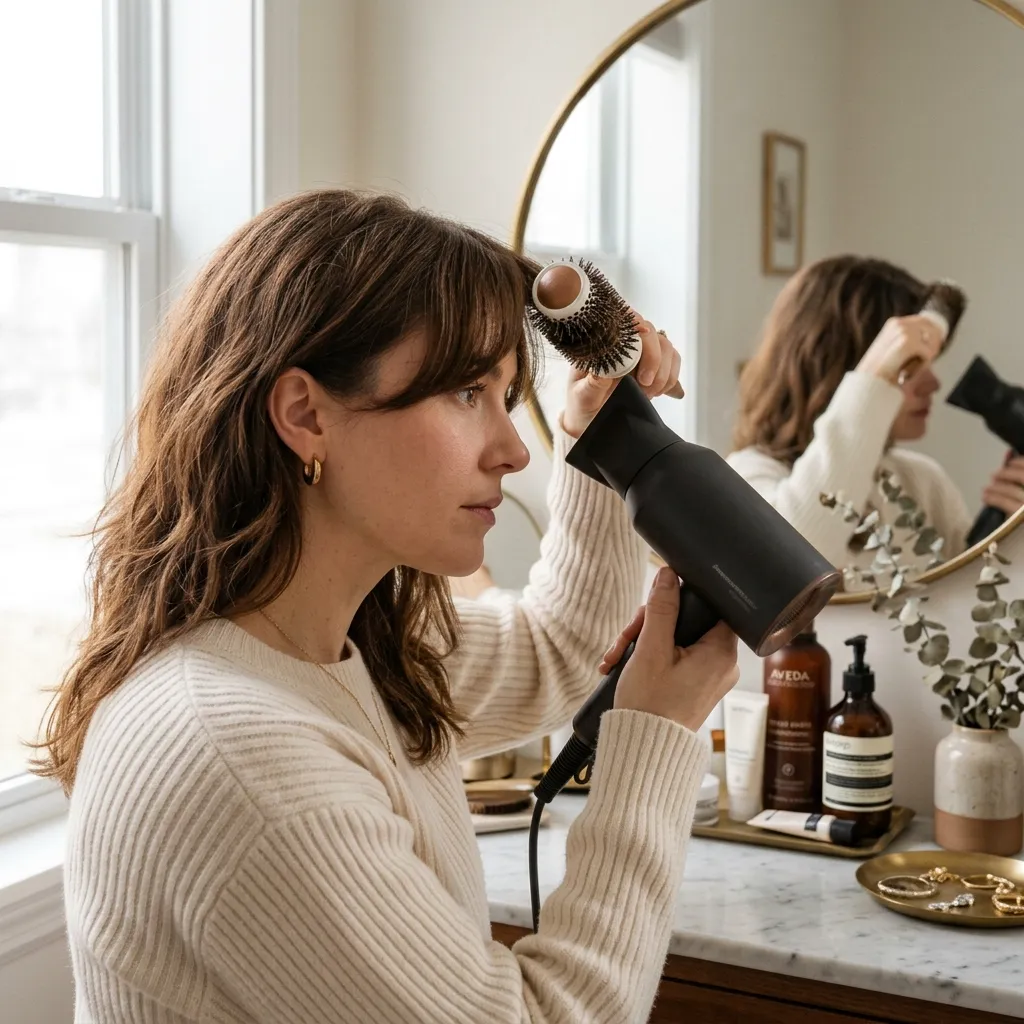
Vibe: Warm, like the finishing touch before walking out the door.
Why it works: Rolling the bangs inward while blow-drying curves the ends toward the face instead of outward. This bend is what stops the section from splitting apart or sticking out as it passes the chin line during grow-out.
How to get it: Use a 25mm ceramic round brush, roll the bangs under light tension toward your cheekbone, hold the dryer six inches away on medium heat for fifteen seconds, then hit the section with the cool shot button for ten seconds before releasing to lock the bend in place.
Shop the Look
| Product |
| 25mm round brush, ceramic barrel |
| Ionic hair dryer with cool shot button, 1875 watt |
| Heat protectant spray formulated for blow drying |
| Small hair clips for sectioning during styling |
| Finishing hairspray, flexible hold, medium mist |
5. Deep Side Part Blend

Vibe: Grounded, like the style has one clear direction instead of pulling every way at once.
Why it works: A deep side part, two to two and a half inches off-center, shifts the visual weight to one side, letting pieces sweep diagonally instead of hanging straight down. That asymmetry reads as more deliberate and more flattering on round or square faces.
How to get it: Part hair roughly two to two and a half inches off-center at the highest point of the crown, then use a flat iron or round brush to sweep the front bang pieces outward in a gentle C-shape across the brow bone on the heavier side, pinning the sparse side flat against the head if it separates.
Shop the Look
| Product |
| Fine tooth parting comb, metal tip |
| Volumizing root powder, translucent, travel size |
| Shine spray, lightweight, non-greasy formula |
| Small hair pins for pinning back the sparse side |
| Boar bristle paddle brush, medium size |
6. Face-Framing Balayage Melt
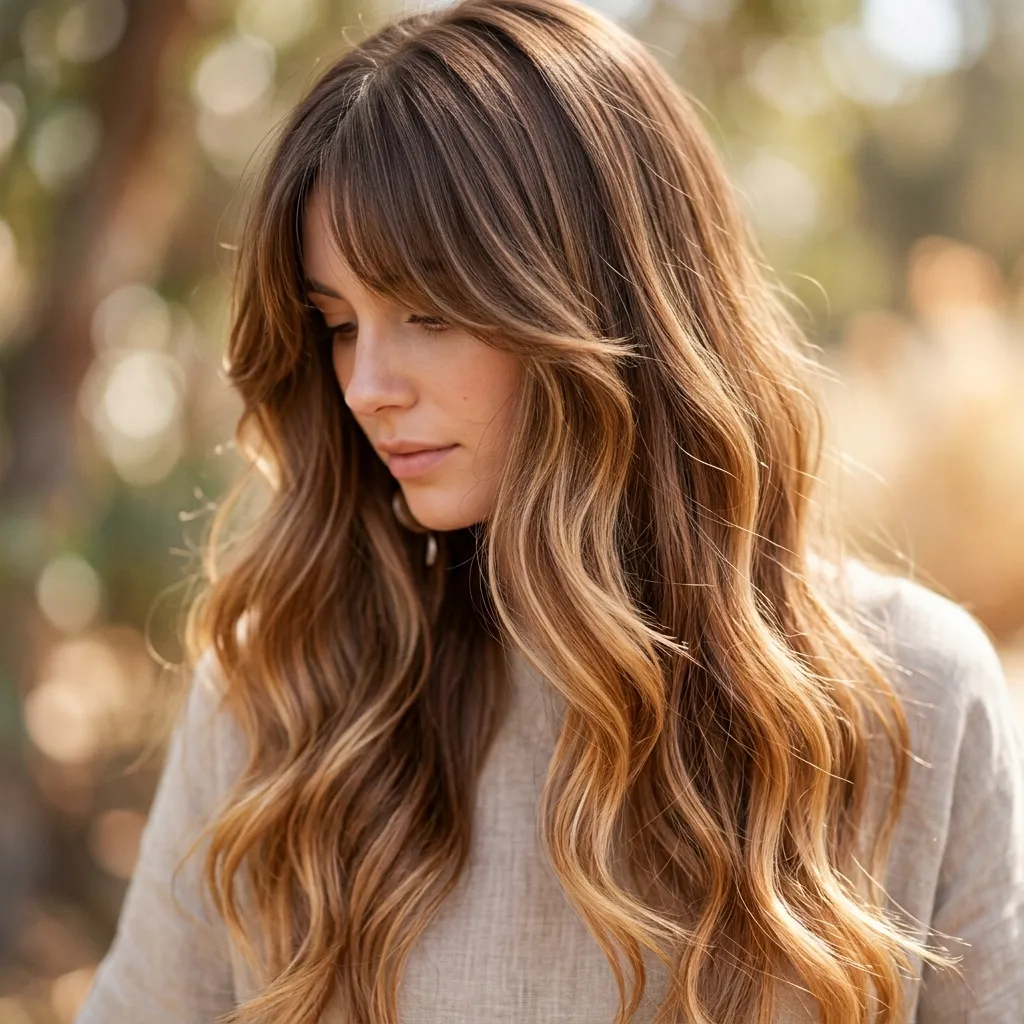
Vibe: Sun-warmed, like it grew that way on its own.
Why it works: A hand-painted balayage melt avoids the harsh line a foil highlight leaves at the root, keeping color deepest near the scalp and lightening gradually through the bottleneck section. That gradual shift, not an abrupt change, is what allows eight to twelve weeks between appointments.
How to get it: Ask for a low-maintenance balayage that starts about two inches below the root, concentrating extra lightening specifically on the bottleneck pieces since they sit closest to the face and catch the most direct light throughout the day.
💡 Quick Win: A tinted dry shampoo in a shade matching your base color keeps the root area from reading flat and mismatched between color refreshes.
Shop the Look
| Product |
| Tinted dry shampoo formulated for brunettes |
| Color-safe shampoo and conditioner, sulfate-free set |
| Leave-in conditioner for color-treated hair |
| Glossing hair serum for added shine |
| Purple shampoo for brassiness control, once weekly use |
7. Natural Wave Bottleneck Bangs

Vibe: Relaxed, like the hair did the work itself.
Why it works: Wavy hair naturally breaks the section into separated pieces without any cutting technique forcing it, since the existing bend already prevents the flat look straight hair needs razoring to avoid. Leaving the wave intact respects the hair’s own movement.
How to get it: Apply a curl-defining cream to damp bangs only, scrunch upward toward the root for ten to fifteen seconds, and let them air dry separately from the rest of the hair for the first twenty minutes so the section is not weighed down by the surrounding length while it sets.
Shop the Look
| Product |
| Curl defining cream for wavy hair |
| Microfiber hair towel for wave definition |
| Sea salt texture spray |
| Diffuser attachment, hair dryer |
| Anti-frizz leave-in cream, lightweight formula |
8. Copper and Warm Tone Money Piece

Vibe: Rich, like autumn light caught in the strands.
Why it works: Warm copper and auburn tones reflect more light than cool ash shades, so placing copper on just the bottleneck section makes those pieces the brightest, most eye-catching detail on the head. It works like a spotlight, directing attention to one focal area.
How to get it: Request a copper glaze applied only to the bottleneck pieces after your base color is finished, and plan to refresh it every four to six weeks specifically, since warm copper tones fade roughly twice as fast as cool ash or neutral brunette tones under normal wash frequency.
Shop the Look
| Product |
| Color depositing conditioner, copper tone |
| At-home glaze treatment for warm hair tones |
| Sulfate-free shampoo for color-treated hair |
| Hair gloss kit, semi-permanent, at home |
| UV protectant hair spray for color fade prevention |
9. Heatless Curl Overnight Method
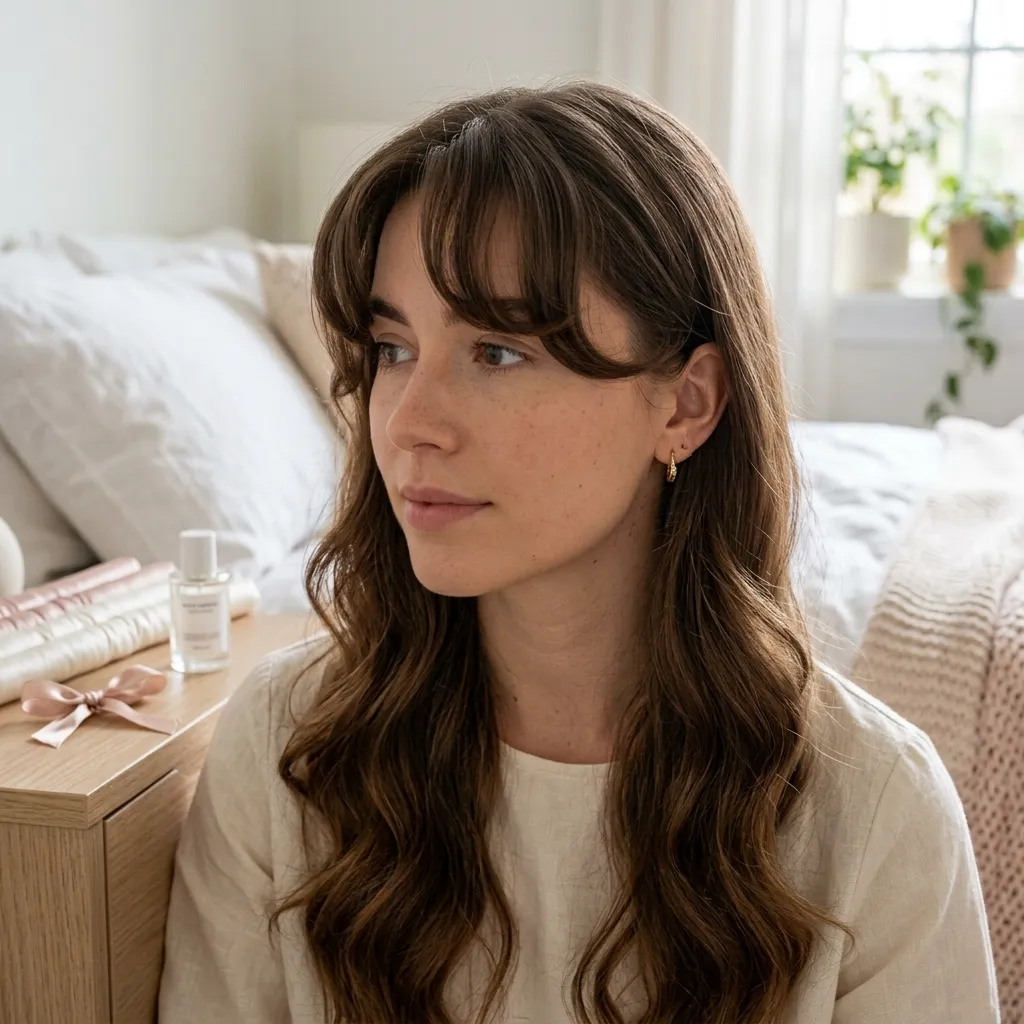
Vibe: Soft, like the curl was never forced into shape.
Why it works: Overnight heatless curling relies on tension and six to eight hours of set time instead of heat to reshape the strand. That’s considerably gentler on the bottleneck section, which is usually the finest, most damage-prone part of the head.
How to get it: Dampen the bangs slightly with a spray bottle, wrap each piece around a silk heatless curling rod at a consistent tension, and secure with the attached ribbon before sleeping, releasing in the morning to a soft, uniform bend without any heat tool involved.
💡 Quick Win: A light spritz of texturizing spray on the finished curl, focused at the root, keeps it from falling flat by early afternoon.
Shop the Look
| Product |
| Silk heatless curling rod set |
| Satin pillowcase for hair protection |
| Texturizing spray for curl hold |
| Silk hair scrunchie set |
| Curl refreshing spray, travel size |
10. Center Part Curtain Blend
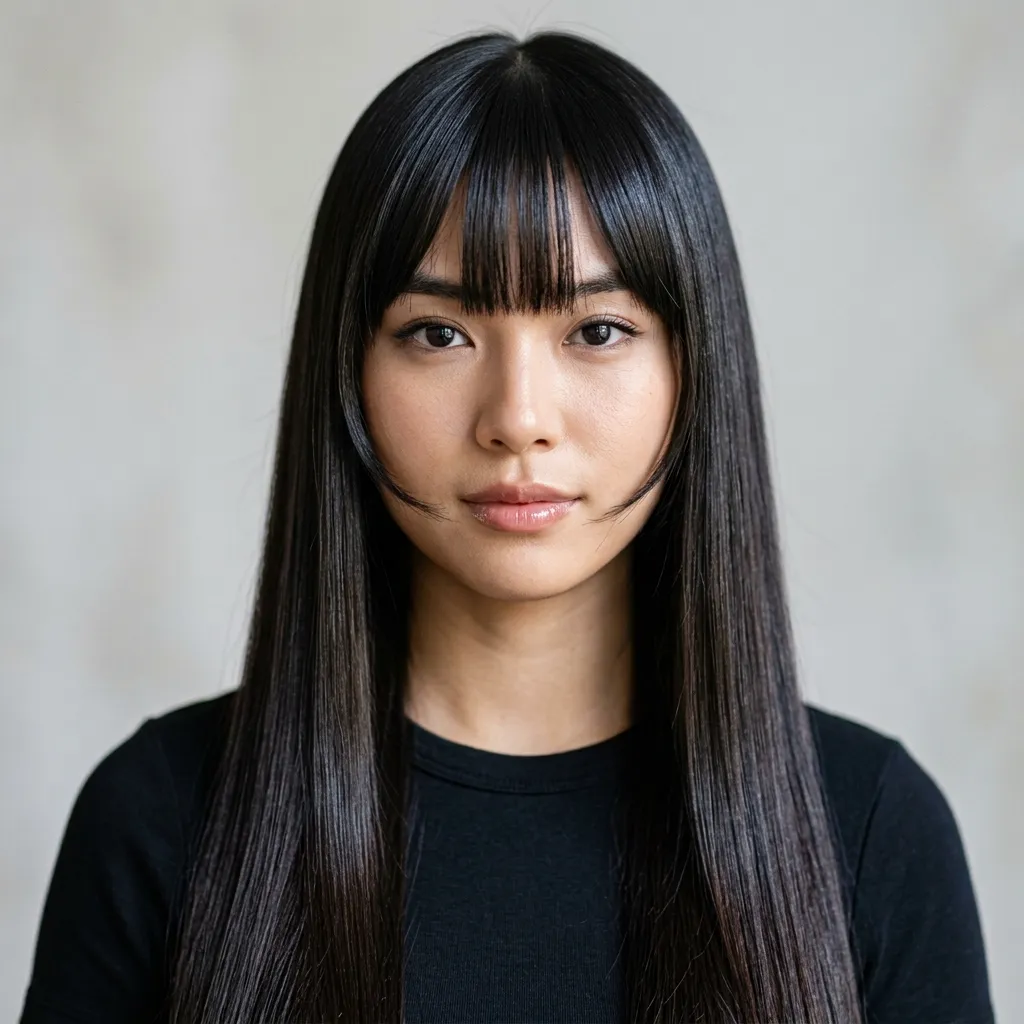
Vibe: Serene, like nothing is pulling in one direction.
Why it works: A center part distributes the bang pieces evenly across both sides of the face, creating balance rather than the asymmetry a deep side part produces. That symmetry reads as calm rather than dramatic, suiting rounder or heart-shaped faces well.
How to get it: Part hair straight down the center starting exactly at the highest point of the forehead, then use a flat iron or round brush to sweep each side of the bottleneck section outward in a gentle C-shape at roughly a 30-degree angle from the part.
Shop the Look
| Product |
| Ceramic flat iron for smooth bends |
| Center part sectioning clips, set of 4 |
| Smoothing hair serum, anti-frizz formula |
| Small teasing comb for root lift |
| Light hold hairspray, flexible finish |
11. Straight Sleek Bottleneck Bangs

Vibe: Sleek, like glass catching the light.
Why it works: Flat-ironing the bangs completely straight removes any bend from the cuticle, which maximizes shine since light reflects evenly off a smooth surface. It also sharpens the contrast between the short section and the longer hair behind it.
How to get it: Run a ceramic flat iron set to 300 to 320 degrees Fahrenheit over the bangs in one slow, single pass, then finish with a single drop of glossing serum smoothed only over the top layer, never applied at the root where it can cause visible grease.
Shop the Look
| Product |
| Ceramic flat iron, adjustable heat up to 450F |
| Glossing hair serum, shine drops |
| Heat protectant spray for flat ironing |
| Anti-static hair brush |
| Frizz control cream, lightweight formula |
12. Texturizing Spray and Flat Iron Kit
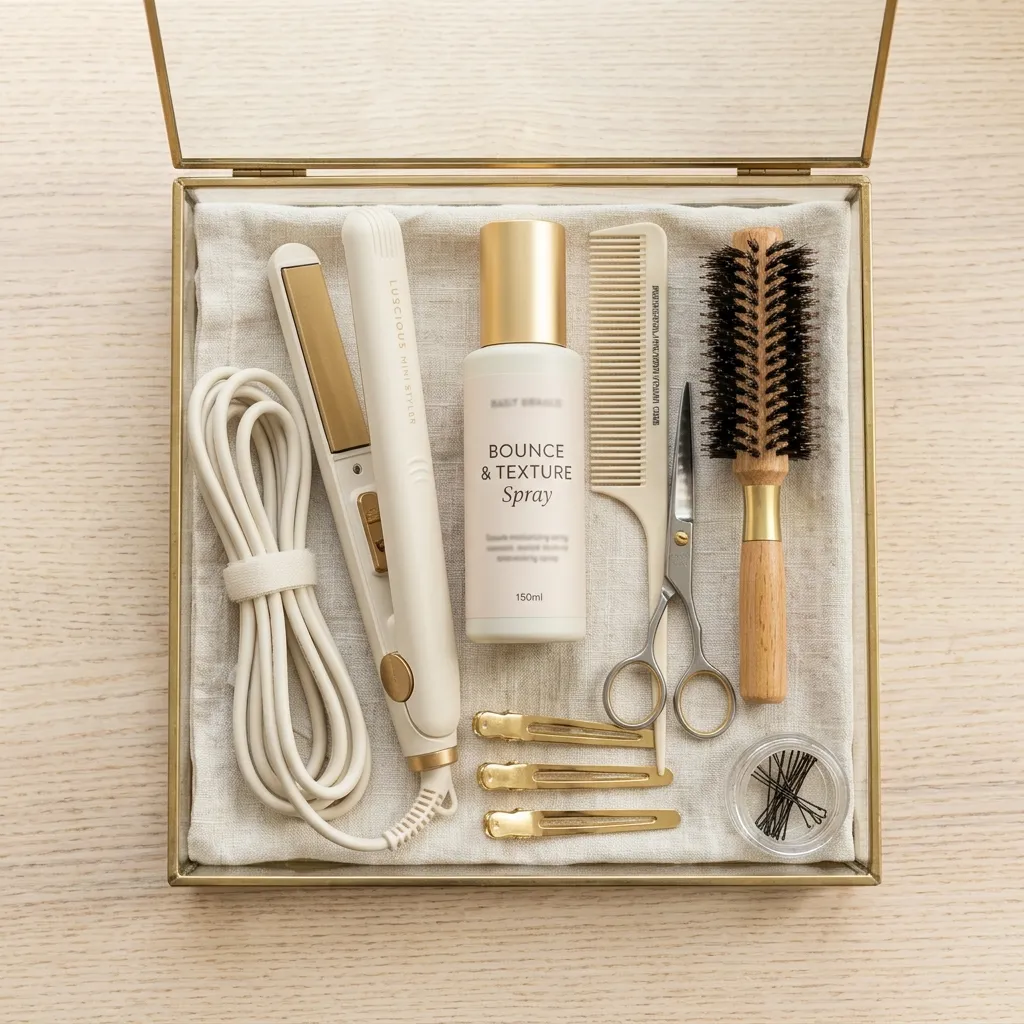
Vibe: Functional, like everything has its place.
Why it works: Bottleneck bangs need daily touch-ups more than the rest of the hair, since this section sits closest to the face and shows oil or flatness first. A small, dedicated kit cuts the touch-up routine to under two minutes and spares the strands from over-styling.
How to get it: Store a mini flat iron under half an inch wide, a travel-size texturizing spray, and a small round brush together in one drawer or pouch specifically reserved for quick bang refreshes between full styling sessions.
💡 Quick Win: A mini flat iron under half an inch wide fits the narrow bottleneck section far more precisely than a full-size, one-inch iron ever will.
Shop the Look
| Product |
| Mini flat iron, narrow barrel, travel size |
| Travel size texturizing spray |
| Small round brush for bangs only |
| Compact hair styling pouch |
| Dry shampoo, travel size |
13. Symmetrical Versus Asymmetrical Placement
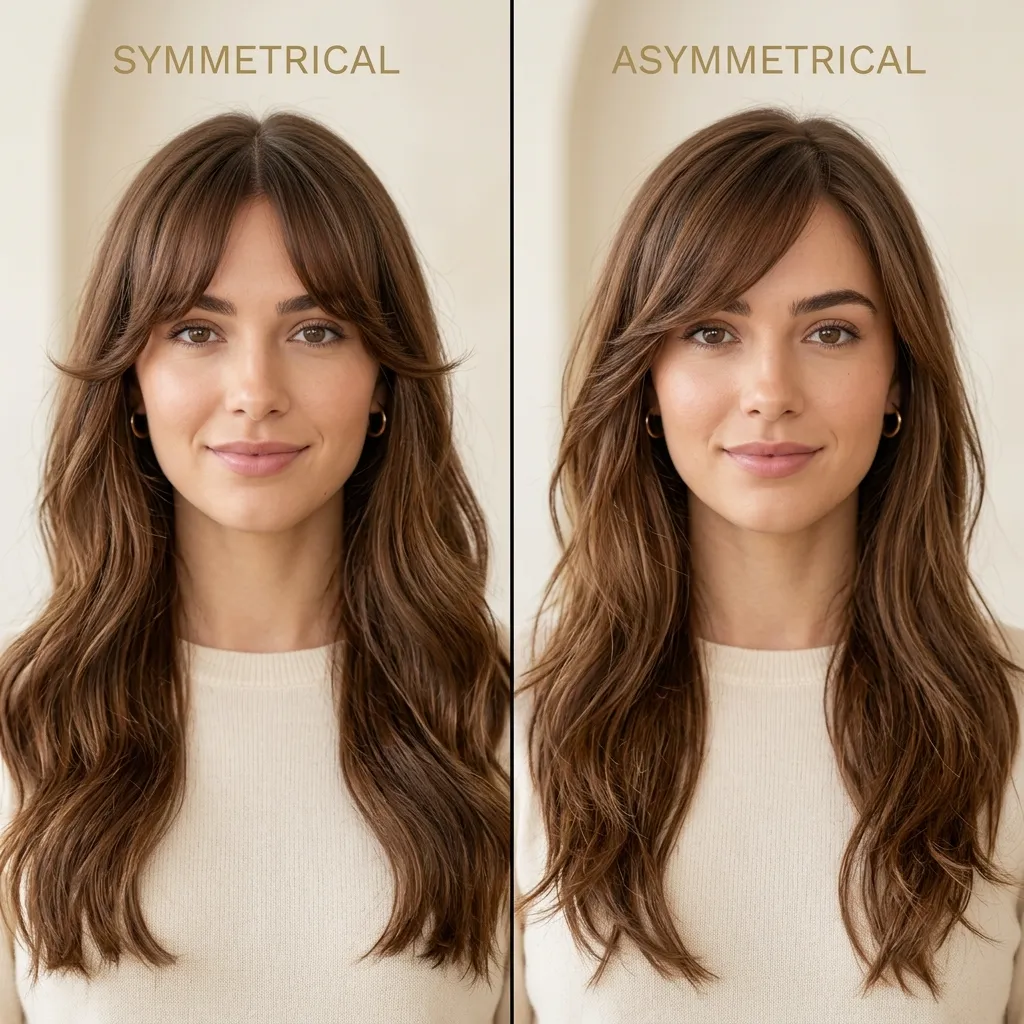
Vibe: Instructional, like a before-and-after captured in a single frame.
Why it works: Face shape determines which placement actually serves the wearer. Center-parted bangs distribute width evenly, softening angular faces, while side-swept bangs elongate rounder faces by breaking the horizontal line across the brow.
How to get it: Stand in front of a mirror in natural daylight and hold the bangs first straight down in a center part, then swept to one side at roughly a 45-degree angle, choosing whichever placement visibly narrows the widest part of your face.
Shop the Look
| Product |
| Handheld mirror for styling comparison |
| Sectioning clips, set of 6 |
| Flexible hold hairspray, medium mist |
| Wide tooth comb for parting |
| Volumizing mousse, light hold |
14. Fine and Thin Hair Adaptation

Vibe: Lifted, like there is more hair than there actually is.
Why it works: Fine hair carries roughly 30 to 40 percent less density than medium or coarse hair, so a full two-inch section can look stringy rather than face-framing. Narrowing it to under one and a quarter inches keeps the illusion of thickness intact.
How to get it: Ask your stylist to keep the bottleneck section under one and a quarter inches wide and slightly shorter than average, then apply a volumizing root spray at the crown and blow-dry with the head tipped forward for the first thirty seconds to lift the base before styling the rest.
💡 Quick Win: Backcombing just the root of the bottleneck section with a fine-tooth comb for three or four light strokes adds instant lift without any extra product.
Shop the Look
| Product |
| Volumizing root spray for fine hair |
| Fine tooth teasing comb |
| Lightweight volumizing mousse |
| Clip-in fringe piece for added density |
| Dry texturizing powder for root lift |
15. Diffuser Wave Finish

Vibe: Unhurried, like the last five minutes of getting ready.
Why it works: A diffuser spreads airflow across a wider area than a standard nozzle, cutting frizz roughly in half and preserving natural texture instead of blasting it flat. It softens the bangs’ shape without pressing them flat against the forehead.
How to get it: Cup the diffuser under the bang section on low heat and low speed, scrunching gently upward toward the root for about thirty seconds before moving on to diffuse the rest of the length.
Shop the Look
| Product |
| Diffuser attachment for hair dryer |
| Curl enhancing mousse, light hold |
| Anti-frizz hair oil |
| Wide tooth comb for wet detangling |
| Silk scrunchie set, neutral tones |
How to Start Your Bottleneck Bangs Transformation
Your single best first move is booking a consultation and bringing a reference photo while specifically asking for a bottleneck section, not a full fringe. Naming the exact technique, a narrow one to two inch face-framing piece rather than a blunt cut spanning the whole forehead, keeps the stylist from defaulting to a heavier curtain bang cut that demands a stricter four to six week trim schedule to grow out gracefully.
The most common mistake is cutting the section too wide, pulling it from ear to ear instead of keeping it within one to two inches of the center part. A section this wide behaves exactly like a full fringe and requires the same daily upkeep the style was meant to avoid in the first place. The fix is simple: request the narrowest version first, since it is easy to widen a section at a follow-up appointment but impossible to grow one back once it has been cut too broad.
Three specific items under $50 that create immediate impact: a travel-size flexible-hold texturizing spray ($9 to $14), a 25mm ceramic round brush ($12 to $22), and a silk heatless curling rod set for overnight texture without any heat tool involved ($15 to $25).
A first cut and an initial styling routine can be dialed in within a single weekend, though the pieces take about six to eight weeks to reach full face-framing length and blend seamlessly into the length behind them. A starter version, one cut plus two or three core products, typically runs $50 to $90 total, while adding a money-piece highlight or balayage refresh brings the full initial investment to roughly $120 to $220 depending on your salon’s regional pricing.
Frequently Asked Questions About Bottleneck Bangs and Long Hair
What is the difference between bottleneck bangs and curtain bangs?
Bottleneck bangs occupy a narrower section, usually one to two inches wide at the crown, while curtain bangs span the full width of the forehead and part down the center from ear to ear. Bottleneck bangs blend more subtly into long layers and typically need a trim every eight to ten weeks, while curtain bangs generally need attention every three to four weeks once they pass the brow line. The narrower section is also the reason bottleneck bangs grow out into the rest of the length rather than needing a defined split down the middle.
What hair color works best with bottleneck bangs?
A color close to your natural base with a subtle money-piece highlight one to two shades lighter tends to work best, since it frames the face without demanding the frequent root touch-ups a full head of highlights would require. Warm tones like caramel or copper reflect more light around the face than cool ash shades, making the bottleneck section stand out even at a lower contrast level, and a single balayage refresh every eight to twelve weeks is usually enough to maintain it.
How much does it cost to get bottleneck bangs?
A cut alone typically runs $30 to $60 depending on your salon and region, with an added highlight or balayage refresh running another $75 to $150 if you choose color placement around the section. A full starter kit of styling products, including a texturizing spray, heat protectant, and a small round brush, adds roughly $30 to $50 on top of the cut and color.
Do bottleneck bangs work with curly or wavy hair?
Yes, wavy and curly textures often need less daily styling effort than straight hair, since the natural bend already breaks the section into separated, feathered-looking pieces without heat involved. The main adjustment is keeping the bottleneck section slightly shorter than a straight-hair version, since curls shrink upward as they dry and can end up two to three inches shorter than they measured while wet.
How often do bottleneck bangs need to be trimmed?
Because the section blends into longer layers rather than standing alone as a full fringe, bottleneck bangs typically need a trim every eight to ten weeks, noticeably less often than a full fringe, which usually needs a trim every three to four weeks to stay in shape. A quick point-cut refresh at the ends, often done in five minutes at the start of a regular haircut appointment, is usually enough to maintain the feathered shape between full trims.
Ready to Try Bottleneck Bangs on Your Long Hair?
These 15 bottleneck bangs ideas cover far more ground than a single haircut photo ever could, from money-piece color placement and copper glazing to round-brush technique, heatless overnight curls, and specific adaptations for fine and wavy hair. Starting small, with just a narrow trial section and one new styling tool like a 25mm round brush, is genuinely the smarter way to test this cut before committing further, and there is no shame in growing out a first attempt that came in a shade too wide.
Today, book a consultation and bring one reference photo showing the exact narrow width you want framing your face, the single conversation that determines whether you end up with a bottleneck section or an accidental full fringe. Done well, this style gives long hair the softness and light-catching movement of a fringe without sacrificing any of its length or the low-maintenance routine that made you want to grow it out in the first place. Save your favorite version now, especially the money-piece framing and the fine-hair adaptation, and bring both to your next salon visit so your stylist can see exactly where you want the section to start and stop.



One Comment