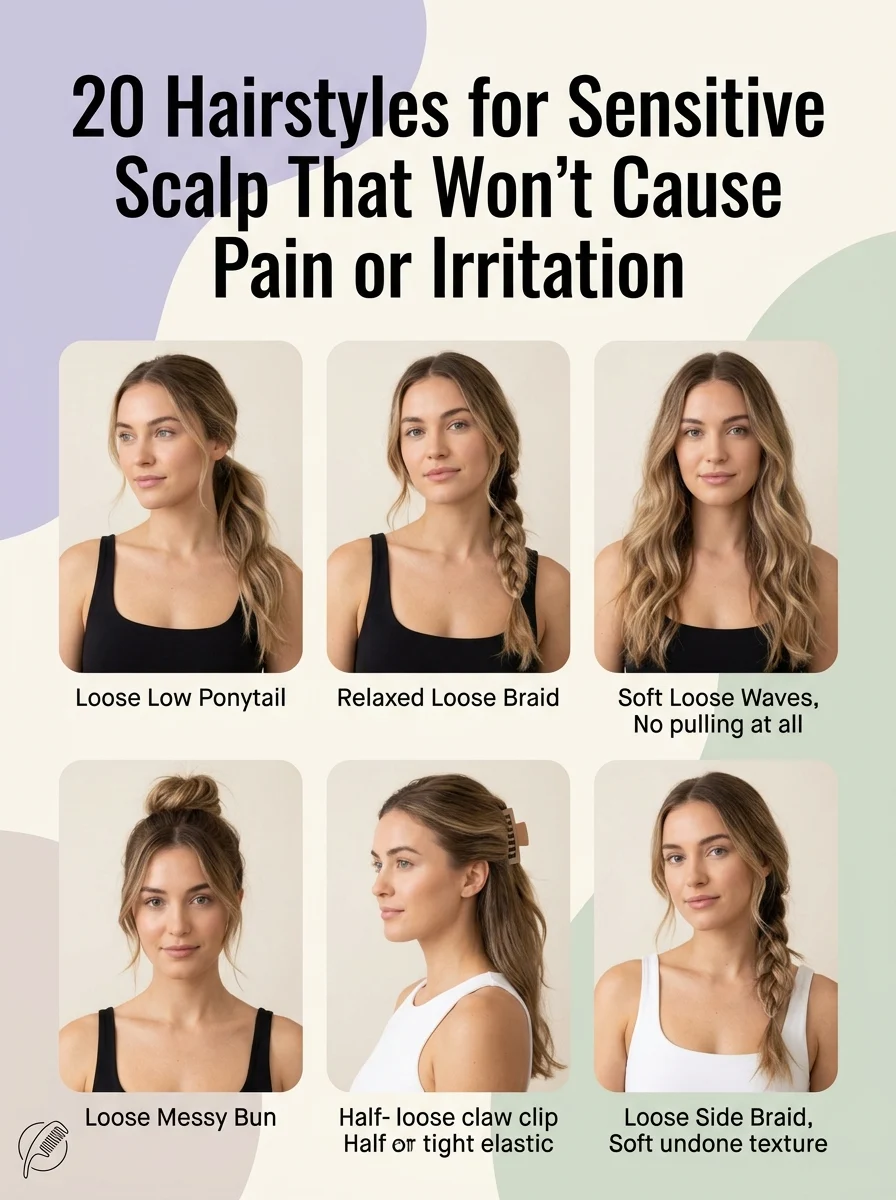
20 Hairstyles for Sensitive Scalp That Won’t Cause Pain or Irritation

Hairstyles for sensitive scalp are looks built around low tension, gentle sectioning, and minimal pulling, so styling never triggers pain, tightness, or that dull throb at your temples by 3 pm. This guide walks through 20 gentle, genuinely wearable hairstyles for sensitive scalps, each one chosen to protect tender roots while still looking finished and intentional.
A comfortable scalp feels light, almost forgettable, in the best way. There’s no tugging at the hairline, no tender spot where a parting used to be, no headache creeping in by evening. The hair moves instead of fighting you, and every style here is built around ease rather than tension. Here are 20 ideas worth saving and stealing.
Why These Hairstyles Work So Well for a Sensitive Scalp
A sensitive scalp, whether from psoriasis, eczema, traction alopecia, dermatitis, or simple nerve sensitivity, reacts to tight elastics, sharp partings, and repeated pulling in the same spot. Low-tension styling isn’t a trend born from nowhere; it draws directly from protective styling traditions in natural hair care and from dermatology-informed advice for trichodynia (scalp pain without visible cause). The goal is always the same: distribute weight evenly and avoid friction at the root.
In my experience, the tools matter as much as the technique. Snag-free silicone-coated elastics, satin-lined claw clips, wide-tooth combs, and rounded-tip bobby pins reduce the micro-tugging that a plain rubber band or metal clip causes. Loose three-strand braids, soft twists, and gently gathered ponytails let hair settle instead of clamping down on one line across the crown.
This approach is trending now partly because of “scalp cycling,” a routine that’s gained huge traction on social platforms, and partly because more people are openly discussing scalp psoriasis, postpartum shedding, and traction alopecia, conditions that make traditional tight buns and slicked ponytails genuinely painful. Search interest in gentle hairstyles for tender scalps and satin hair accessories has climbed steadily over the past two years.
| Element | Low-Tension Braids | Loose Updos |
|---|---|---|
| Philosophy | Distribute tension across strands, not the root | Gather weight loosely, avoid one pull point |
| Techniques | Three-strand plaits, fishtails, loose Dutch braids | Low buns, half-up twists, pineapple wraps |
| Best For | Sensitive hairlines, traction-prone edges | Tender crowns, all-day comfort styles |
The 20 Ideas
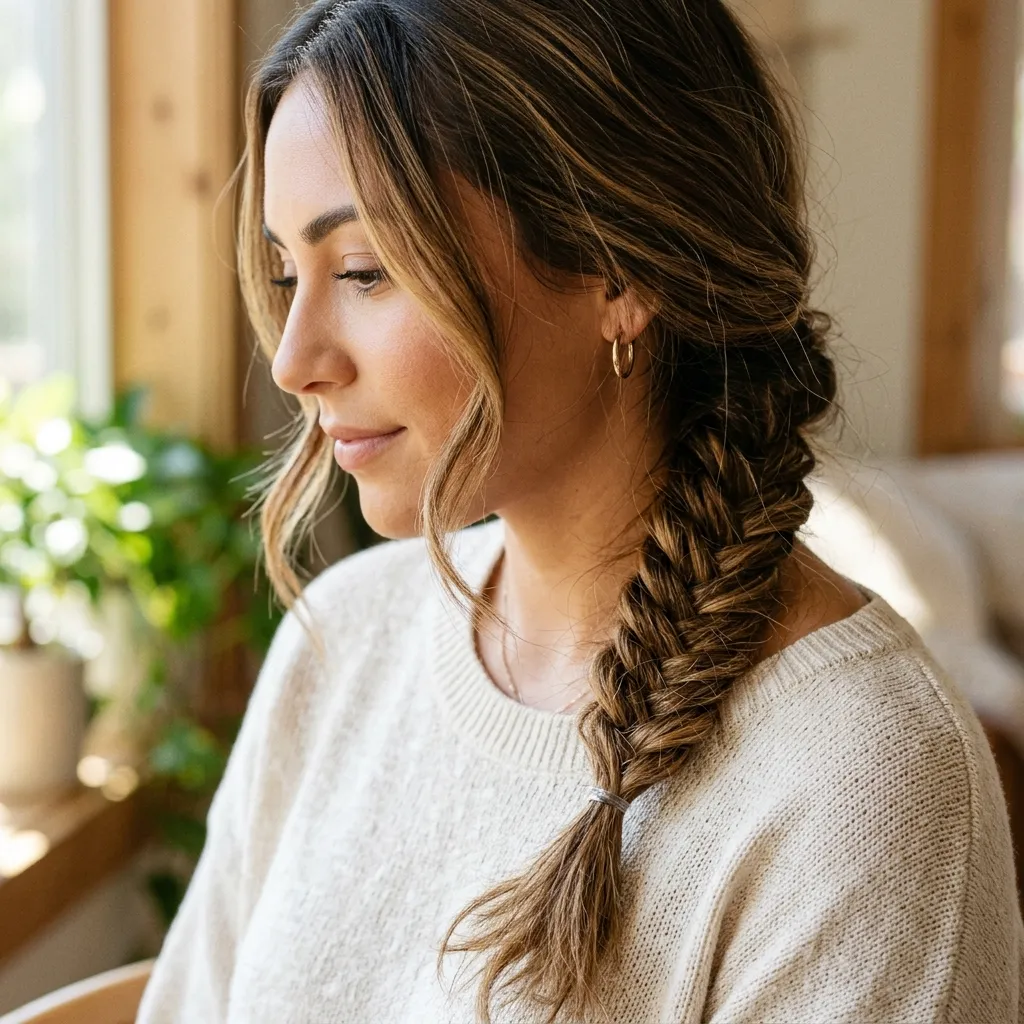
1. Loose Fishtail Braid Over One Shoulder
Quick Benefits:
- Zero tight elastic pressure at the nape
- Distributes weight across the whole braid, not one root
- Works on second-day or third-day hair
- Takes under five minutes once you know the pattern
Vibe: unhurried, almost undone in the best way.
Why it works: A fishtail braid only uses two loose sections instead of three tightly crossed strands, which means far less friction against the scalp as you work. I’ve noticed that pulling each piece gently, rather than cinching it, keeps the braid soft without sacrificing shape. The weight sits along the length of the hair rather than pressing down at the crown, which is exactly what a tender scalp needs.
How to get it: Start the braid an inch below the crown instead of right at the root, and secure the end with a snag-free silicone elastic rather than a standard rubber band. This one adjustment, starting lower, is the single biggest difference between a fishtail that irritates and one that doesn’t, making it one of the more comfortable hairstyles for a sensitive scalp.
💡 Quick Win: A texturizing sea-salt spray on dry hair makes the braid grip itself without needing it pulled tight.
Shop the Look
| Product |
|---|
| Silicone-coated snag-free hair elastics, small |
| Sea salt texturizing spray for braids |
| Wide-tooth detangling comb, wood handle |
| Satin-lined claw clip, medium |
| Boar bristle smoothing brush |
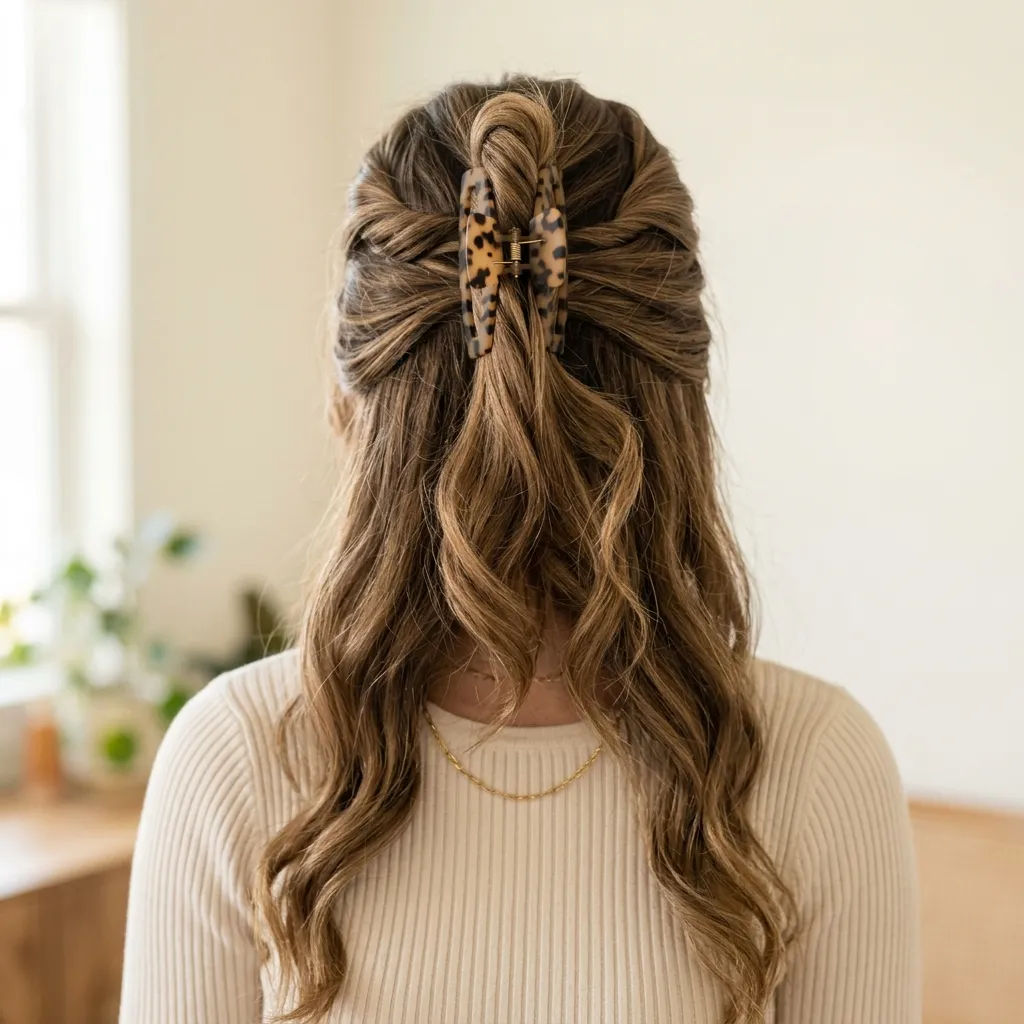
2. Half-Up Claw Clip Twist
Quick Benefits:
- No parting pressure across the scalp
- Adjustable tightness in seconds
- Removable without pulling hair
- Flattering for round, oval, and heart-shaped faces
Vibe: light and undone, like it took no effort at all.
Why it works: A claw clip distributes clamping pressure along its full length instead of concentrating it at one root, unlike a ponytail elastic wrapped repeatedly around the same strands. In my experience, twisting the section loosely before clipping, rather than gathering it flat, adds volume without adding grip strength, so the clip doesn’t need to bite down hard to hold.
How to get it: Section only the top third of hair, twist it once loosely away from the face, and clamp with a large satin-lined claw clip positioned vertically rather than horizontal across the crown. Vertical placement means the teeth rest along the hair shaft instead of pressing straight into the scalp, a small change that makes this one of the easiest low-effort hairstyles for sensitive scalp to repeat daily.
Shop the Look
| Product |
|---|
| Large matte tortoiseshell claw clip |
| Satin-lined jaw clip, medium size |
| Volumizing dry texture spray |
| Round boar bristle brush for lift |
| Edge-friendly smoothing balm |
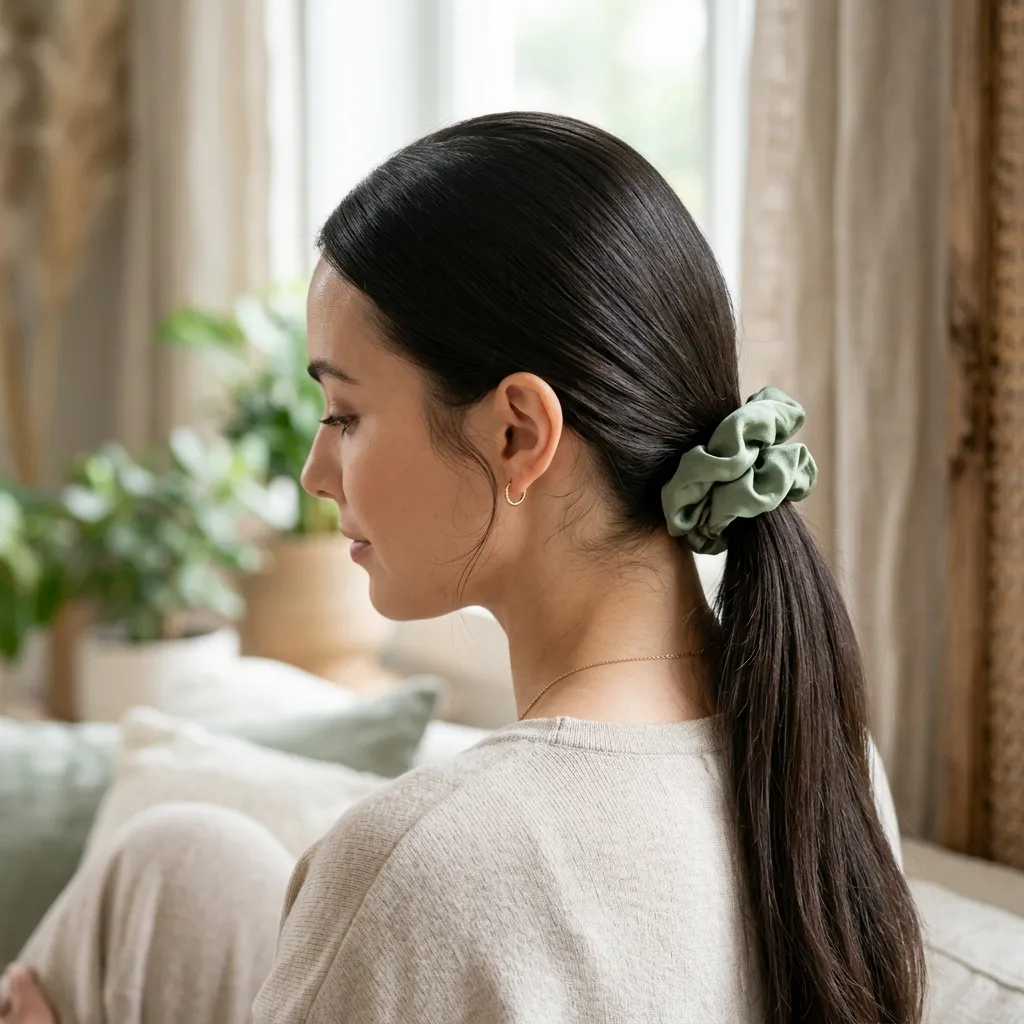
3. Low Ponytail with Silk Scrunchie
Quick Benefits:
- Silk fabric eliminates elastic snag and pull
- Sits low, avoiding crown tension entirely
- Ideal for daily wear and workouts
- Easy to loosen without hair breakage
Vibe: quiet and put-together, the kind of style you forget you’re wearing.
Why it works: Traditional rubber-band ponytail holders twist tightly around the same section of hair, creating a concentrated pressure ring right at the root, often the exact spot that triggers pain on a sensitive scalp. A silk scrunchie spreads that same holding pressure across a much wider, softer surface, so there’s no single pinch point.
How to get it: Gather hair low at the nape rather than high on the crown, brush through gently with a wide-tooth comb first to avoid catching knots mid-wrap, and wind a silk scrunchie only twice instead of the usual three or four times. I’ve found two wraps hold just as securely while cutting root tension nearly in half, which is why this stays one of the most requested hairstyles for sensitive scalp among my clients with psoriasis flare-ups.
💡 Quick Win: Keep two or three silk scrunchies in rotation, cotton and elastic-core versions dry out and grip harder over time.
Shop the Look
| Product |
|---|
| Pure silk scrunchie set, assorted colors |
| Wide-tooth comb for wet detangling |
| Leave-in detangling spray, sulfate-free |
| Silk hair wrap for smoothing flyaways |
| Nourishing scalp oil roller |
4. Soft No-Heat Rag Curls

Quick Benefits:
- Zero heat and zero tight rolling near the scalp
- No overnight tension on tender roots
- Adds volume without added product weight
- Works on all hair lengths past the chin
Vibe: soft and unstructured, like waves that happened on their own.
Why it works: Heat tools and tight foam rollers both apply sustained pressure directly at the root while the curl sets, which is often where sensitivity is worst. Rag curling wraps hair loosely around strips of soft fabric, so the curl forms along the length of the hair rather than clamping the base. In my experience, this is the gentlest way to add texture without a single point of scalp contact under tension.
How to get it: Section damp hair into four to six pieces, wrap each around a strip of soft cotton fabric starting an inch from the root, and tie loosely, never tight enough to feel it pull. Sleep on it or let it air-dry for a few hours, then unwrap and finger-comb rather than brushing through, which keeps both the curl and the scalp undisturbed.
Shop the Look
| Product |
|---|
| Cotton rag curling strips, reusable set |
| Curl-defining cream, lightweight formula |
| Wide-tooth detangling comb |
| Satin pillowcase, standard size |
| Diffuser-safe finishing mist |
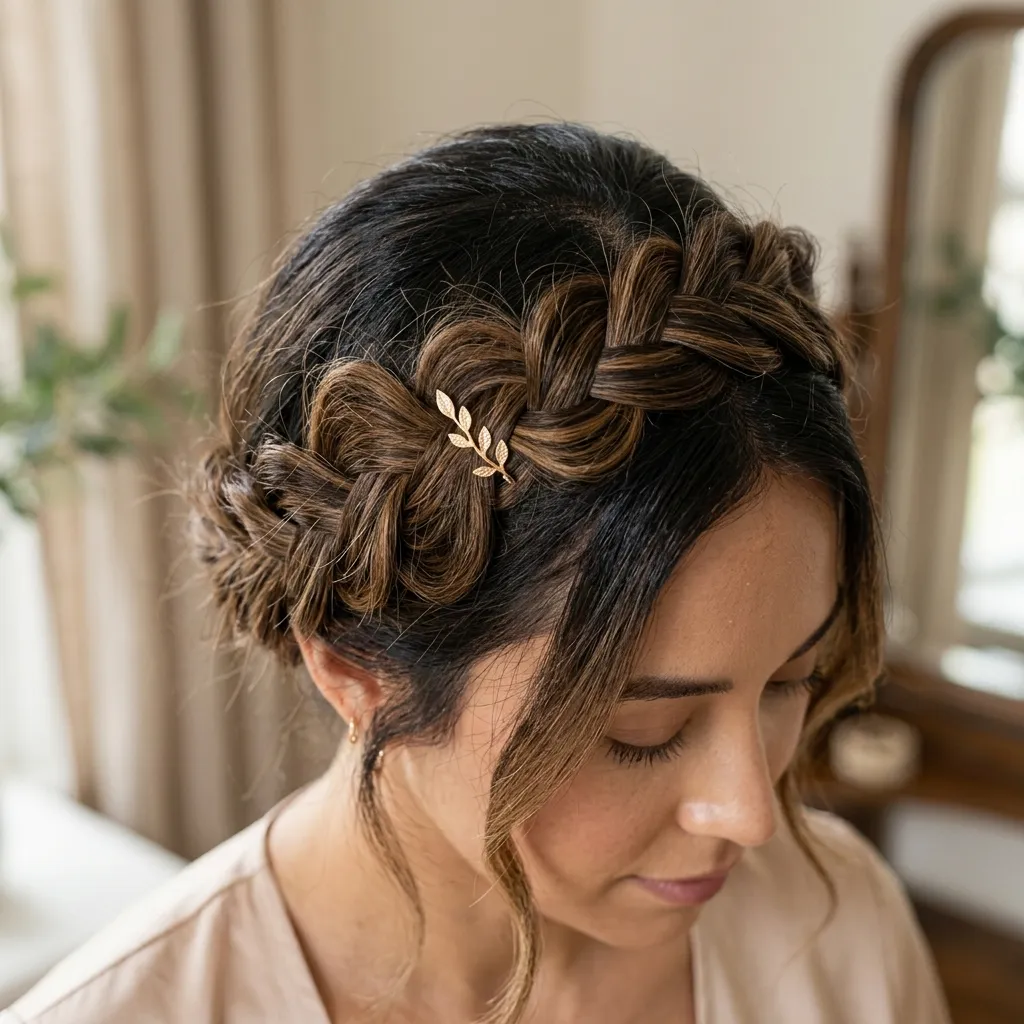
5. Loose Dutch Braid Crown
Quick Benefits:
- Keeps hair fully off the face without tight pulling
- Distributes tension around the whole crown, not one line
- Lasts through a full workday or workout
- Doubles as heatless waves once undone
Vibe: structured but never severe.
Why it works: A tight Dutch braid pulled flush against the scalp is one of the most common causes of styling-induced headaches, because the braid presses continuously along a single curved line. Loosening the tension at each cross, pulling the sections apart slightly rather than cinching, spreads that same pressure over a wider surface area, similar to how a wide belt is more comfortable than a thin one carrying the same weight.
How to get it: Braid loosely from the hairline back, gently tugging each plaited section outward with your fingers as you go to widen it, and tuck the end under rather than sealing it with a tight elastic. This deliberately “messy” pull is what keeps it from becoming just another one of the tension-heavy hairstyles for sensitive scalp need to avoid.
💡 Quick Win: A single decorative hairpin at the nape secures the tail without any elastic at all.
Shop the Look
| Product |
|---|
| Thin gold decorative hairpins, set of 6 |
| Lightweight braiding gel, alcohol-free |
| Rounded-tip bobby pins, no-slip grip |
| Detangling brush with flexible bristles |
| Shine-boosting hair serum |
6. Satin Bonnet Pineapple Updo
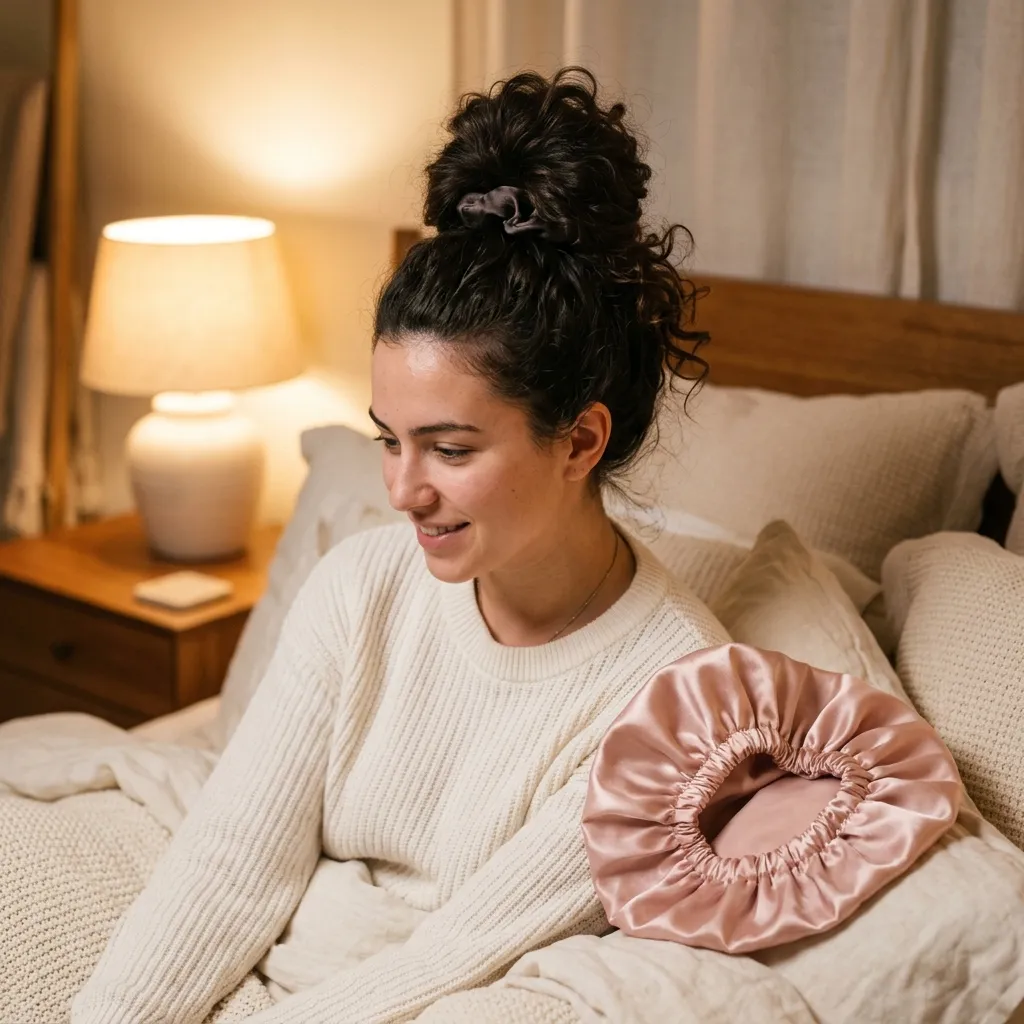
Quick Benefits:
- Protects curls and waves overnight without friction
- Loose gather avoids crown pressure while sleeping
- Reduces morning tangles and breakage
- Pairs with any curl or wave pattern
Vibe: soft and settled, built entirely for overnight comfort.
Why it works: Most nighttime hair damage and scalp irritation comes from friction against a cotton pillowcase combined with a too-tight overnight tie. Gathering hair loosely at the very top of the head, rather than a standard high ponytail, lets curls fall away from the scalp instead of being pinned against it for eight hours. I’ve noticed clients with eczema-prone scalps see a real difference within a week of switching.
How to get it: Flip your head forward, gather hair loosely at the crown with a silk scrunchie (never a rubber band), and cover with a satin or silk bonnet before bed. The loose gather combined with satin fabric means no dragging friction all night, making this one of the more overlooked hairstyles for sensitive scalp for anyone styling curly or textured hair.
Shop the Look
| Product |
|---|
| Adjustable satin sleep bonnet |
| Silk scrunchie for overnight wear |
| Satin pillowcase, queen size |
| Leave-in curl refresher spray |
| Wide-tooth comb for morning detangling |
7. Half Up Half Down with Ribbon Bow
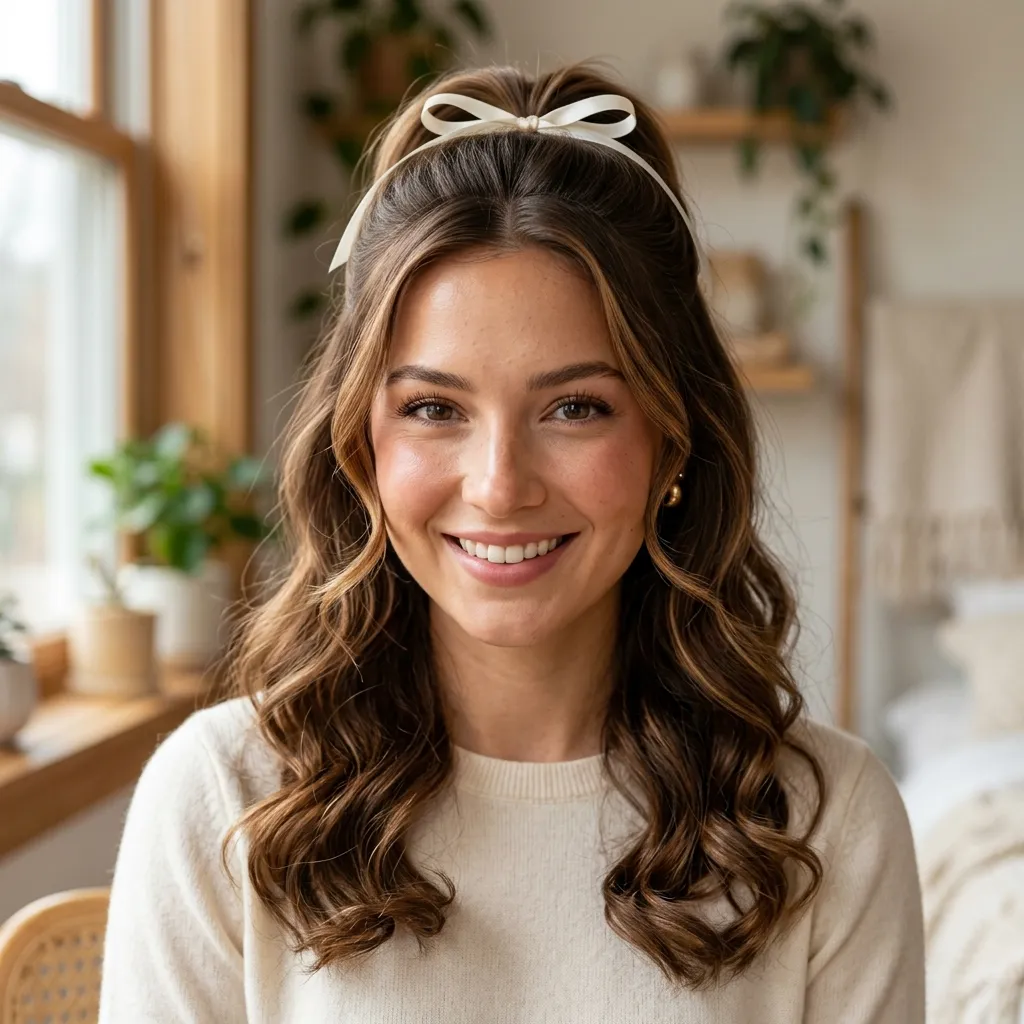
Quick Benefits:
- Lifts hair off the face without a tight elastic
- Ribbon ties looser than standard bands
- Flatters most face shapes and hair lengths
- Easy to adjust height for comfort
Vibe: soft and gathered, never pulled taut.
Why it works: The standard half-up style often fails sensitive scalps because the small elastic at the crown is wound tightly to keep a small section secure, a small band on a small amount of hair actually concentrates pressure more, not less. Swapping the elastic for a ribbon tied in a simple bow spreads the same hold across a wider band of fabric instead of a thin rubber loop.
How to get it: Section only the crown, twist it once, and tie a thin satin ribbon in a loose double bow rather than winding an elastic multiple times. In my experience, leaving a finger’s width of slack between the ribbon and the scalp is the difference between all-day comfort and a headache by lunchtime, a simple fix for one of the prettiest hairstyles for sensitive scalp on this list.
💡 Quick Win: Curl only the ends with a one-inch wand for soft movement without adding heat near the root.
Shop the Look
| Product |
|---|
| Thin satin ribbon, ivory, 1-yard length |
| One-inch curling wand |
| Heat protectant spray, lightweight |
| Rounded-tip bobby pins |
| Shine mist finishing spray |
8. Two Loose Twin Braids

Quick Benefits:
- Splits weight evenly across two sections instead of one
- No center-part pulling if parted off-center
- Comfortable for all-day and travel wear
- Works well on second-day hair with texture
Vibe: playful and easy, nothing pulling anywhere.
Why it works: A single center braid places the entire weight of the hair along one line straight down the back of the head, which can aggravate a sensitive part line. Splitting hair into two braids halves that weight on each side and, more importantly, lets you part slightly off-center so the divide doesn’t sit on the same sensitive strip of scalp every single day.
How to get it: Part hair off-center rather than dead-center, braid each side loosely using only light tension on the outer strands, and secure with silicone-coated elastics. Alternating which side is thicker from day to day, a trick I share often, keeps pressure from building in the same spot repeatedly, which matters more for hairstyles for sensitive scalp than most people realize.
Shop the Look
| Product |
|---|
| Silicone-coated hair elastics, mini size |
| Detangling brush with flexible bristles |
| Lightweight braid-defining cream |
| Wide-tooth comb, travel size |
| Edge control gel, gentle formula |
9. Textured Low Bun with Padded Pins
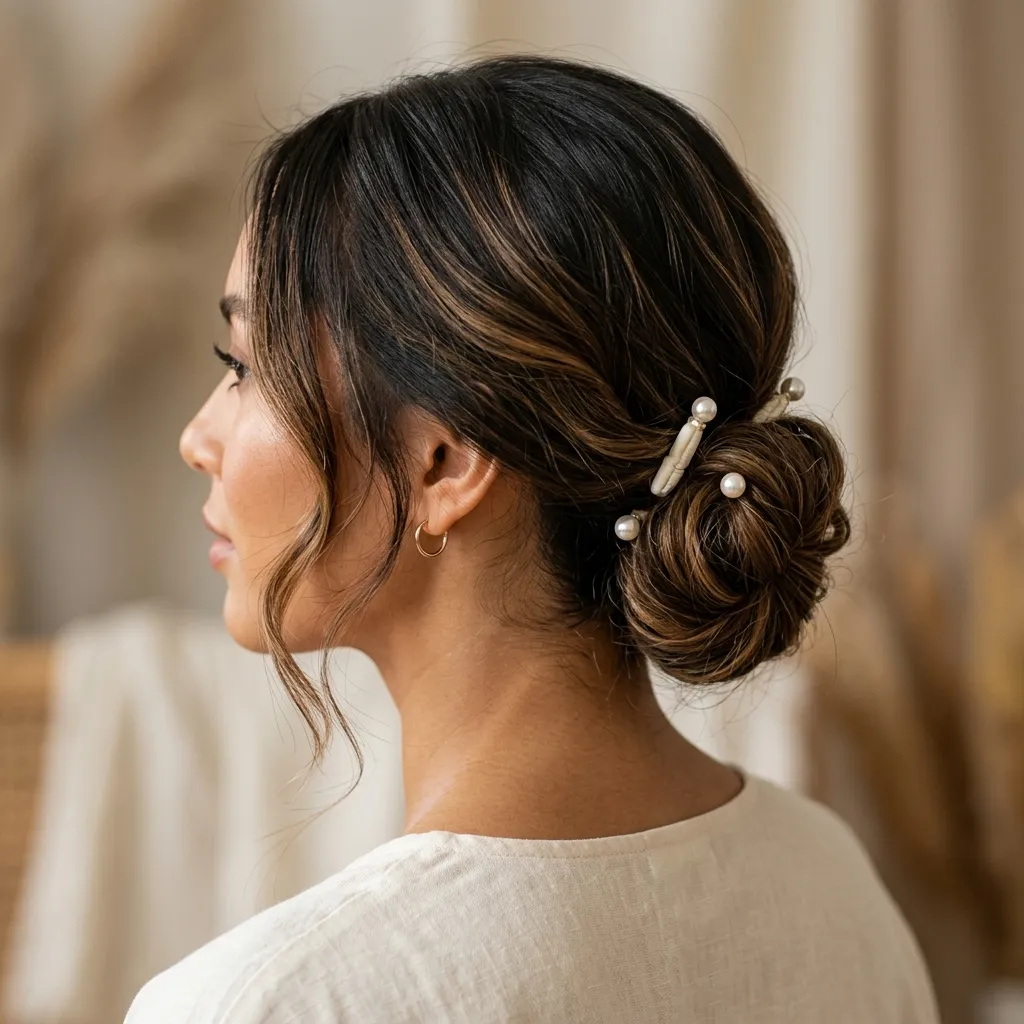
Quick Benefits:
- Padded pins avoid the scalp-scraping of metal bobby pins
- Low placement removes crown tension entirely
- Polished enough for work or formal events
- Adjustable looseness throughout the day
Vibe: grounded and finished, without a single tight point.
Why it works: Most buns fail sensitive scalps for two reasons, they sit too high on the crown, and they’re pinned with sharp metal clips that press directly against skin. Moving the bun down to the nape removes tension from the most sensitive part of the head, and padded pins distribute their hold across a cushioned surface instead of a bare metal edge.
How to get it: Gather hair loosely at the nape, twist rather than wrap it tightly, and coil it into a soft bun secured with two or three padded pins angled diagonally rather than straight in. I always tell clients that a bun with visible texture, not a slicked one, needs far less pinning tension to stay put, which is exactly what makes it one of the more comfortable hairstyles for sensitive scalp for long days.
💡 Quick Win: Pull a few face-framing pieces loose before pinning, it reduces how tightly the bun itself needs to hold.
Shop the Look
| Product |
|---|
| Pearl-topped padded hairpins, set of 8 |
| Texturizing sea salt spray |
| Satin-lined donut bun maker, small |
| Shine-boosting finishing serum |
| Rounded-tip hair fork, decorative |
10. Simple Middle Part, Left Down
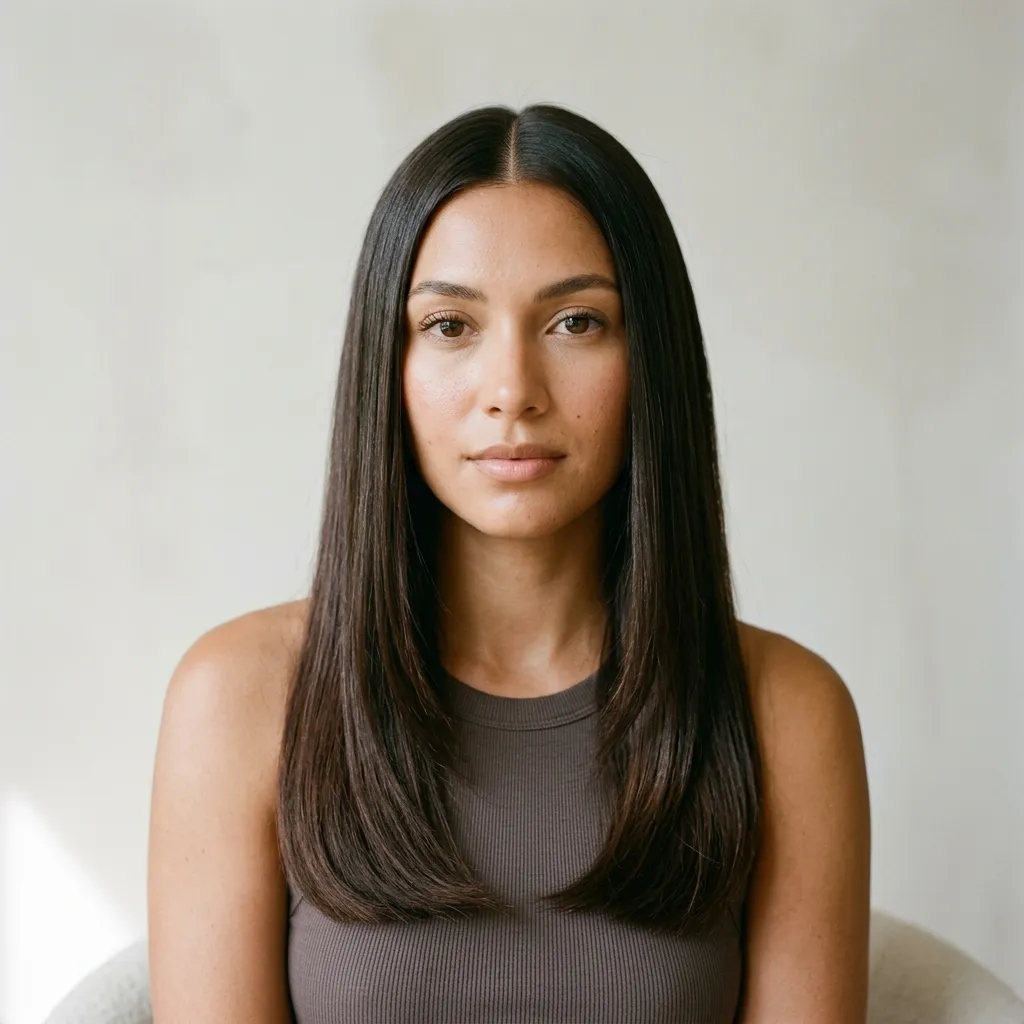
Quick Benefits:
- Zero styling tension anywhere on the scalp
- Fastest option on flare-up days
- Alternates part placement to prevent repeated stress
- Pairs with any hair length or texture
Vibe: quiet and unbothered, the lowest-effort option on the list.
Why it works: On days when even a soft braid or scrunchie feels like too much, leaving hair fully down with a gently placed part is the most scalp-neutral option available. Alternating the part from center to a soft side part every few days, rather than parting in the exact same line daily, prevents the kind of repeated-pressure sensitivity that develops along one habitual line.
How to get it: Brush hair back gently with a wide-tooth comb, let the part fall naturally rather than combing it into a sharp, precise line, and finish with a lightweight shine serum instead of a heavy styling product that would require extra brushing to distribute. This remains the simplest of all hairstyles for sensitive scalp for genuinely bad flare days.
Shop the Look
| Product |
|---|
| Lightweight shine serum, silicone-free |
| Wide-tooth wooden comb |
| Sulfate-free clarifying shampoo |
| Cooling scalp mist for irritation |
| Soft-bristle scalp massage brush |
11. Loose Waterfall Braid
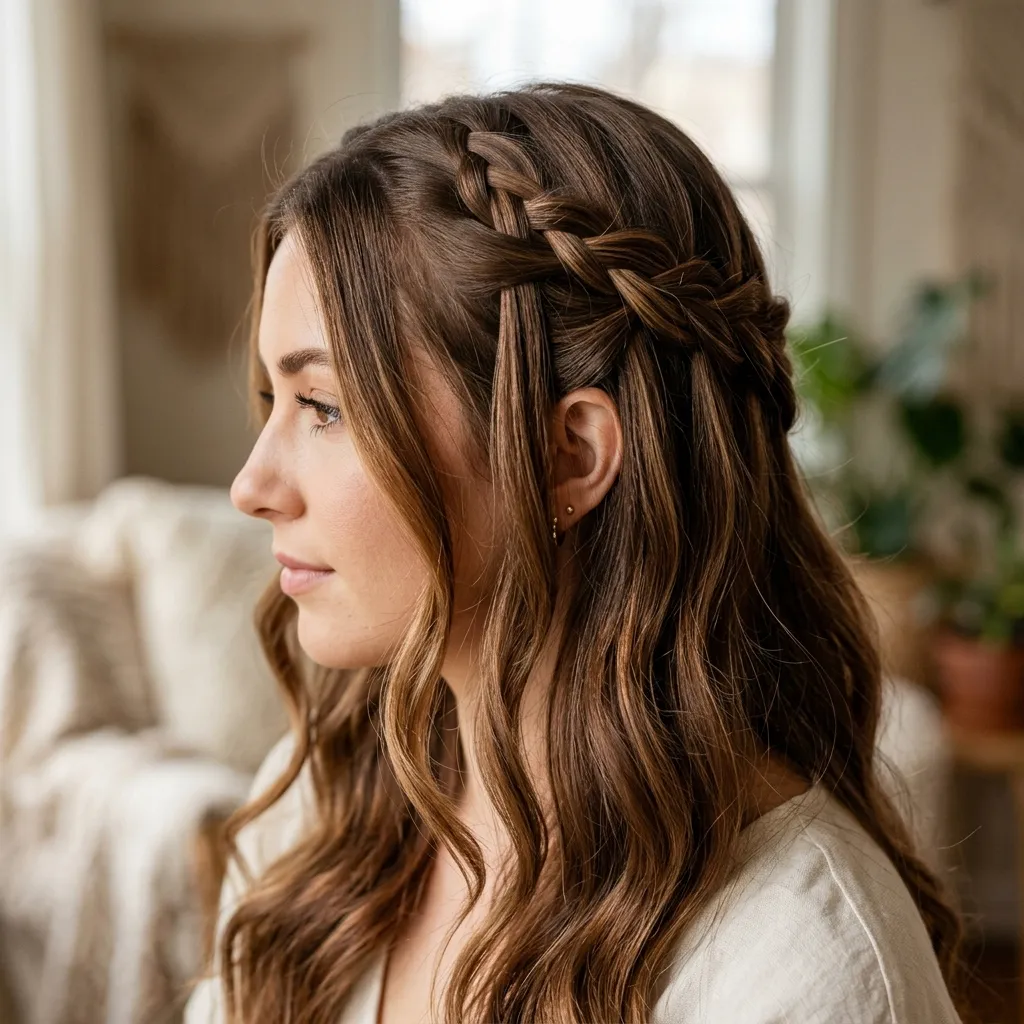
Quick Benefits:
- Releases new sections instead of pulling everything tight
- Zero elastic needed at the end if tucked
- Ideal for warm weather and half-up wear
- Frames the face without pinning at the temple
Vibe: airy and cascading, barely there at all.
Why it works: A waterfall braid continuously drops strands rather than gathering all the hair into one held section, which naturally limits how much tension can build at any single point. I’ve noticed this makes it one of the few braided styles that stays comfortable for a full eight-hour day without needing to be loosened at lunchtime.
How to get it: Braid horizontally across the head, dropping the bottom strand each time instead of crossing it, and keep every cross loose enough to see a little daylight through the plait. Tuck the tail behind the ear rather than pinning it, which avoids adding a second point of tension to this otherwise gentle style, another reason it ranks among the calmer hairstyles for sensitive scalp.
Shop the Look
| Product |
|---|
| Lightweight braiding spray, non-sticky |
| Rounded-tip bobby pins for tucking |
| Detangling brush, flexible bristle |
| Soft-hold finishing spray |
| Mini decorative flower clips |
12. Soft Twisted Space Buns
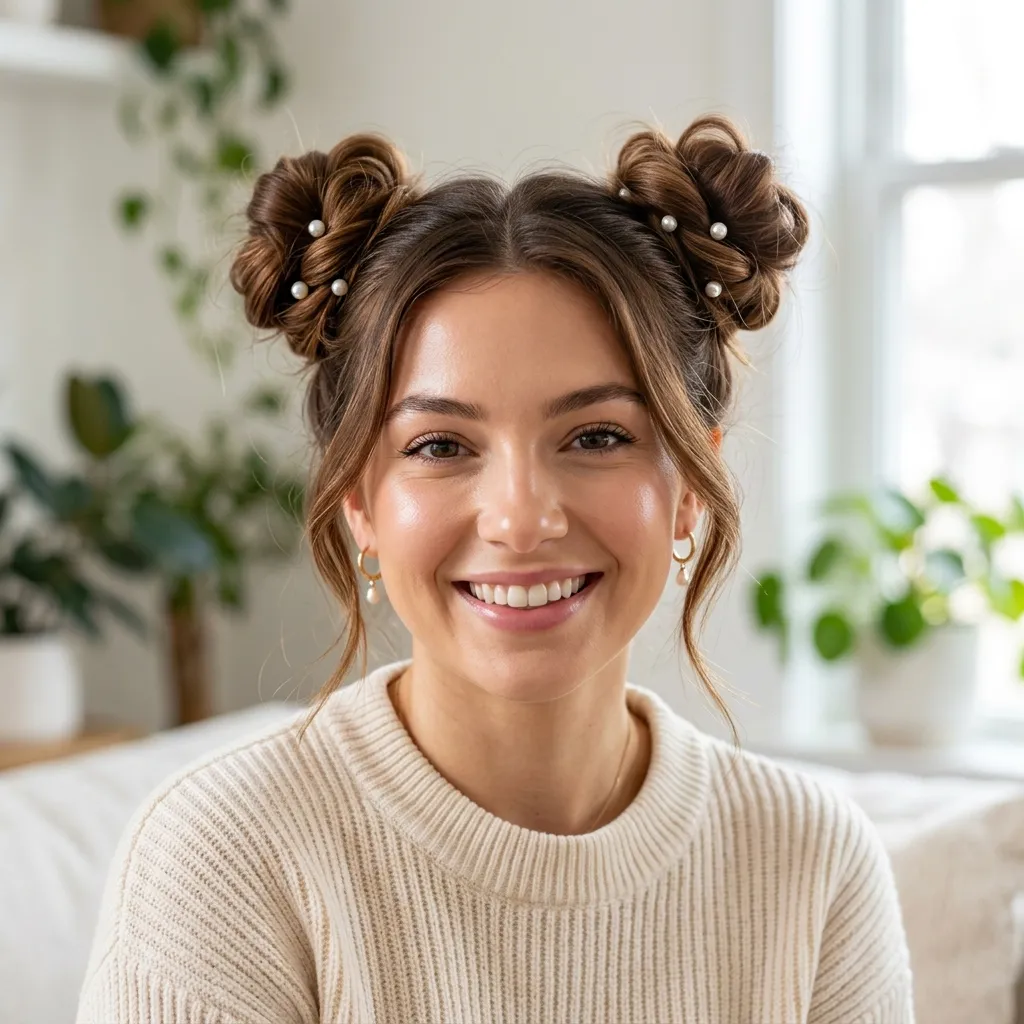
Quick Benefits:
- Splits tension across two smaller sections
- Positioned away from the most sensitive crown area
- Fun, low-maintenance styling for casual days
- Easy to loosen individually if one side pulls
Vibe: light and youthful, easy to shake loose.
Why it works: Traditional space buns are often wound tightly right at the crown seam, doubling up on tension exactly where a center part already sits. Moving the buns slightly forward, above the ears, shifts the pull away from that seam entirely, and twisting instead of wrapping tightly keeps each bun soft rather than compact.
How to get it: Section hair into two above-the-ear sections, twist loosely rather than braiding, and coil into a soft bun secured with a silicone elastic and one small pin. In my experience, leaving the twist slightly loose before coiling is what keeps this playful look from tipping into one of the tighter hairstyles for sensitive scalp people usually associate with buns.
💡 Quick Win: Use two different-sized clips if one ear area is more sensitive than the other, buns don’t need to match exactly.
Shop the Look
| Product |
|---|
| Small pearl hairpins, set of 10 |
| Silicone-coated hair elastics |
| Texturizing spray for grip |
| Detangling comb, compact size |
| Lightweight edge smoothing gel |
13. Side-Swept Braid with Silk Ribbon

Quick Benefits:
- No elastic needed at the braid’s end
- Off-center weight avoids the usual center-part strain
- Dressy enough for evenings, simple enough for daytime
- Adjustable ribbon length for comfort
Vibe: soft and romantic, gathered to one side.
Why it works: Sweeping a braid to one side shifts its entire weight away from the central crown seam, which is often the most tension-sensitive line on the head. Tying it off with ribbon instead of an elastic also means there’s no elastic sitting directly against the last few inches of scalp-adjacent hair.
How to get it: Gather hair loosely to one side before braiding, keep the braid itself soft rather than tight, and finish with a silk ribbon tied in a simple knot rather than a bow that requires extra pulling to secure. I often suggest this to clients who find every other hairstyles for sensitive scalp on this list still feels slightly too centered.
Shop the Look
| Product |
|---|
| Dusty rose silk ribbon, thin cut |
| Lightweight detangling brush |
| Braid-smoothing pomade, small amount |
| Shine serum for finishing |
| Soft bobby pins for stray pieces |
14. Loose Low Side Ponytail
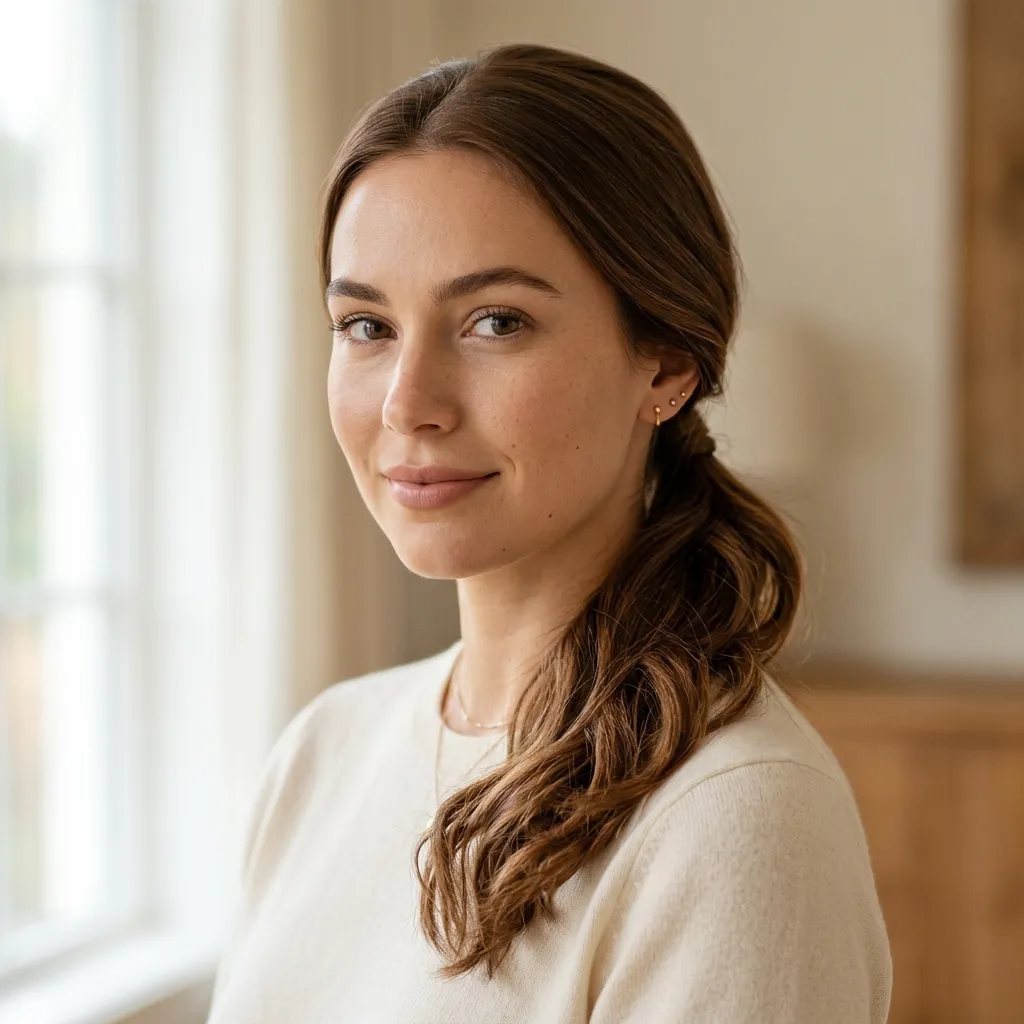
Quick Benefits:
- Off-center gather avoids the main pull line
- Fastest style on this entire list to execute
- Comfortable for extended wear and travel
- Easily loosened one-handed if it feels tight
Vibe: unfussy and relaxed, done in under a minute.
Why it works: A standard centered ponytail concentrates its pull directly along the crown seam, but shifting the gather to one side redirects that same tension diagonally, spreading it across a wider area of the scalp rather than one straight line. It’s a small positional shift with a surprisingly large comfort payoff.
How to get it: Gather hair loosely toward one side at ear level, secure with a silicone-coated elastic wound only twice, and leave a few face-framing pieces out to soften the pull near the temple. This remains one of the fastest hairstyles for sensitive scalp to reach for on busy mornings.
💡 Quick Win: Spritz a little dry shampoo at the root before gathering, it adds grip so the elastic doesn’t need to be wound as tightly.
Shop the Look
| Product |
|---|
| Silicone-coated elastics, medium size |
| Volumizing dry shampoo |
| Wide-tooth detangling comb |
| Shine mist finishing spray |
| Satin-lined hair tie pouch for storage |
15. Air-Dried Beach Waves
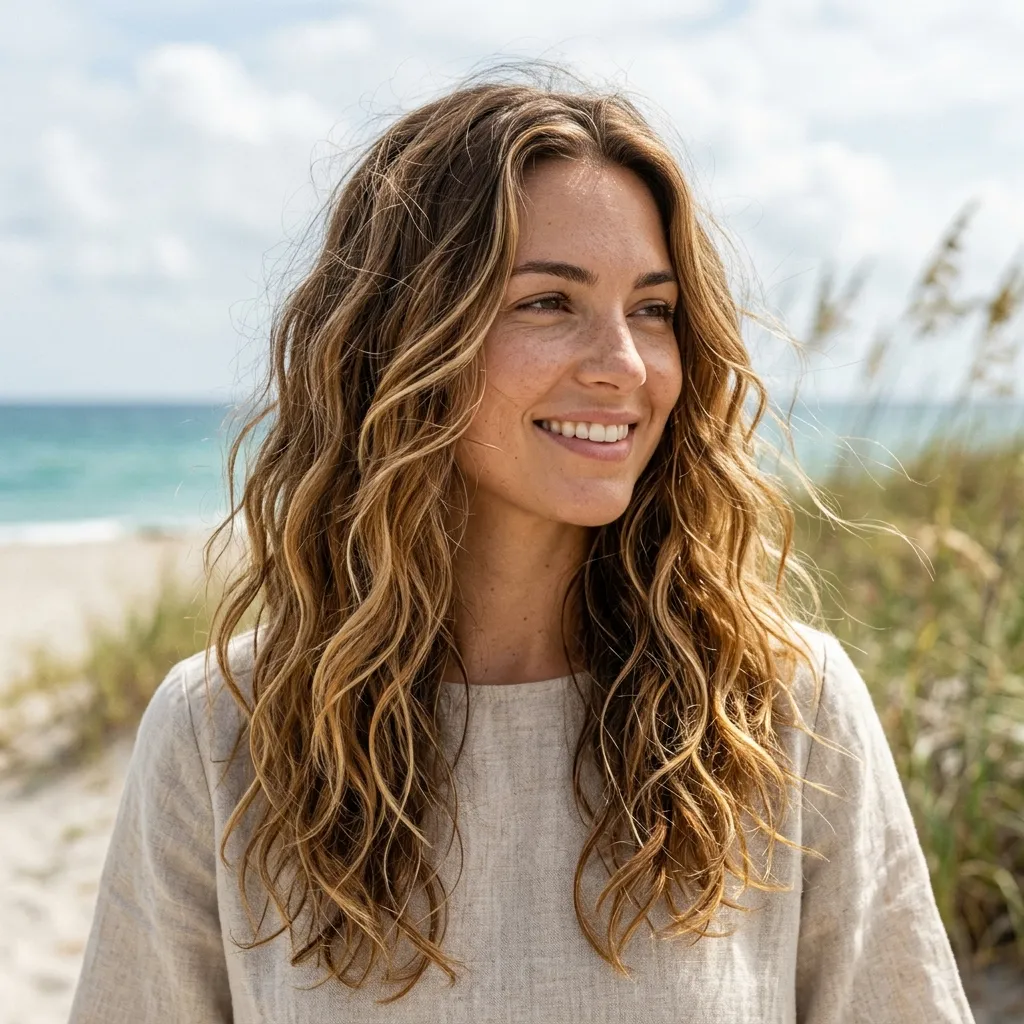
Quick Benefits:
- No tools or tension touch the scalp at all
- Zero styling time beyond product application
- Naturally forgiving on flare-up or bad-scalp days
- Works with any natural texture, straight to curly
Vibe: breezy and unbothered, styled by nothing but air.
Why it works: This is the only style on the list requiring zero contact with the scalp beyond washing, which makes it the default choice on days when even a soft scrunchie feels like too much. Letting hair dry naturally also avoids the repeated heat and brush tension that daily styling adds up to over a week.
How to get it: Apply a lightweight wave-enhancing cream to damp hair, scrunch gently from the ends upward without touching the roots, and let it air-dry completely undisturbed. I remind clients that resisting the urge to brush it once dry is what keeps this one of the truly zero-tension hairstyles for sensitive scalp available.
Shop the Look
| Product |
|---|
| Wave-enhancing cream, lightweight formula |
| Microfiber hair towel for gentle drying |
| Leave-in conditioner spray |
| Sulfate-free shampoo for natural texture |
| Silk hair scarf for touch-ups on the go |
16. Wrapped Silk Headscarf Half-Up
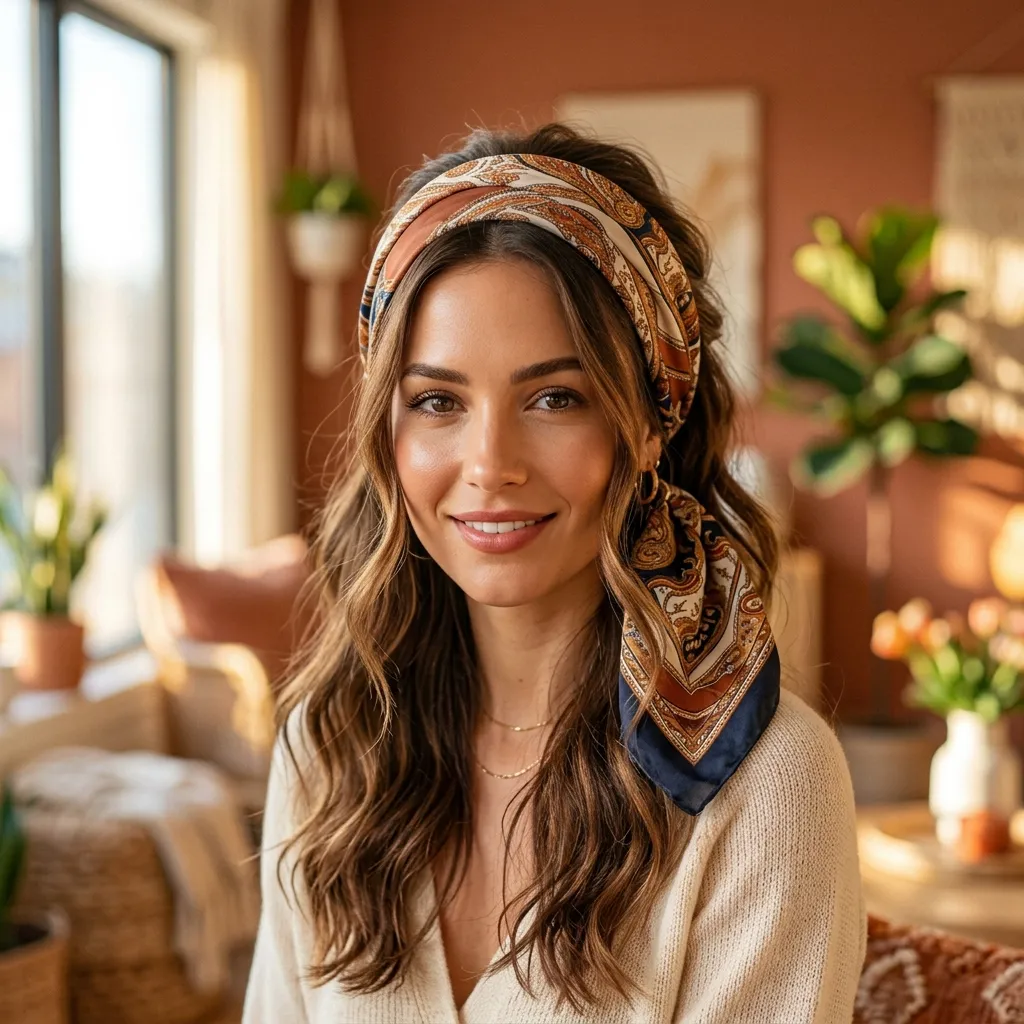
Quick Benefits:
- No elastics or clips touch the scalp directly
- Instantly covers regrowth or flare-up areas
- Adds color and pattern without any added tension
- Works on wash days when hair needs a break
Vibe: chic and covered, effortlessly finished.
Why it works: A headscarf wrapped loosely around the crown holds hair in place through fabric tension spread across a wide band, rather than a single clip or elastic pressing into one spot. This also makes it genuinely useful on days when the scalp is visibly irritated and needs to be shielded rather than touched.
How to get it: Fold a square silk scarf into a long strip, lay it across the hairline, and tie it loosely at the nape or crown rather than knotting it tightly, leaving the rest of the hair down and undisturbed. This has become one of my go-to hairstyles for sensitive scalp recommendations for clients managing visible flare-ups.
💡 Quick Win: Choose a printed silk scarf to double as a styling accessory on days when hair itself needs minimal handling.
Shop the Look
| Product |
|---|
| Printed silk headscarf, square cut |
| Soft-hold finishing spray |
| Wide-tooth comb for gentle prep |
| Scalp-soothing leave-in mist |
| Small fabric-covered elastic, optional |
17. Loose Three-Strand Pigtail Braids
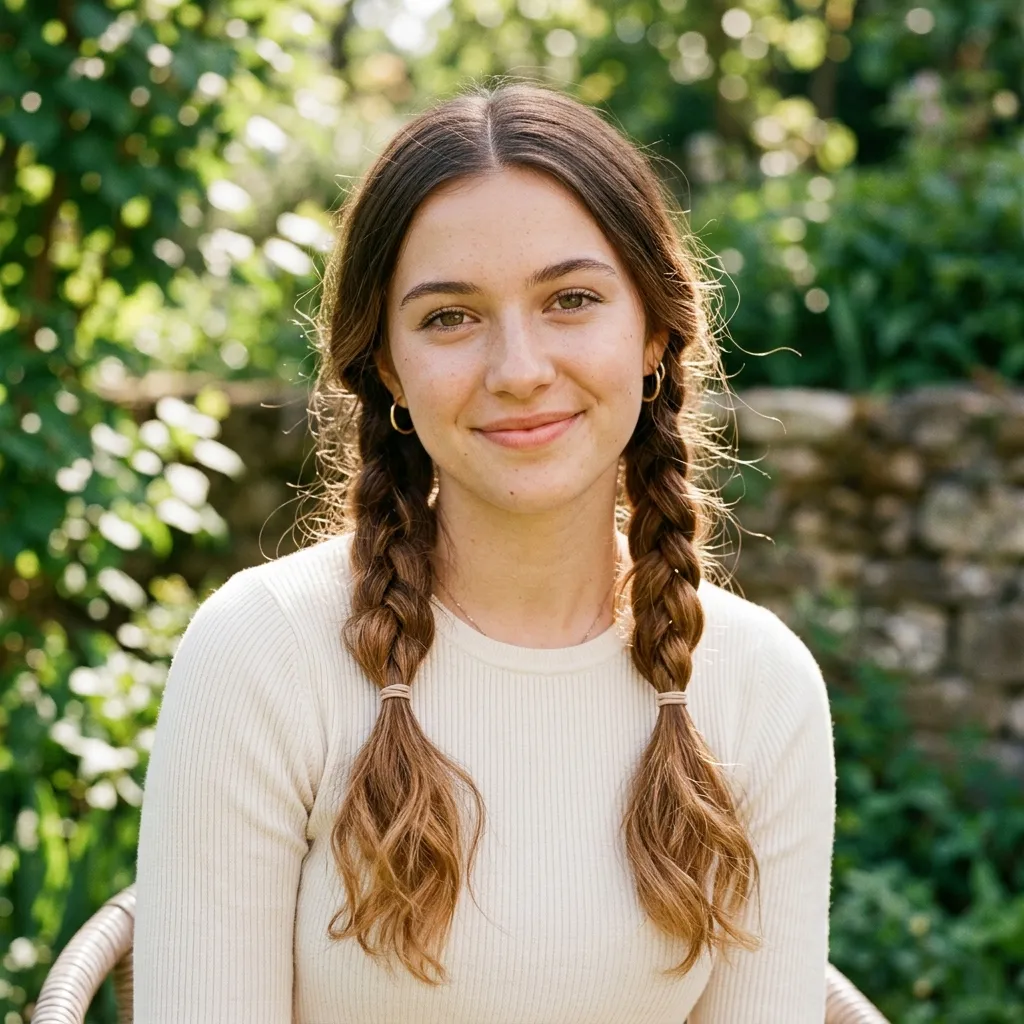
Quick Benefits:
- Classic three-strand technique with intentionally loose tension
- Even weight distribution on both sides of the head
- Stays neat through a full workout or busy day
- Simple enough to do without a mirror
Vibe: nostalgic and easy, softened from its usual tight form.
Why it works: The classic pigtail braid is often taught tight, close to the scalp, which is precisely what makes it uncomfortable for sensitive scalps. Loosening the initial gather and each subsequent cross keeps the same recognizable shape while removing almost all of the root-level pull.
How to get it: Part hair evenly down the middle, gather each side loosely before braiding, and cross strands with minimal pull at each pass, finishing with a soft silicone elastic instead of a tight rubber band. This adjustment alone turns a childhood-tight style into one of the more surprisingly comfortable hairstyles for sensitive scalp for adults to revisit.
Shop the Look
| Product |
|---|
| Fabric-covered thin elastics, neutral tones |
| Lightweight detangling spray |
| Soft-bristle brush for even parting |
| Shine-boosting finishing oil |
| Travel-size wide-tooth comb |
18. Soft Chignon with Silk-Wrapped Pins
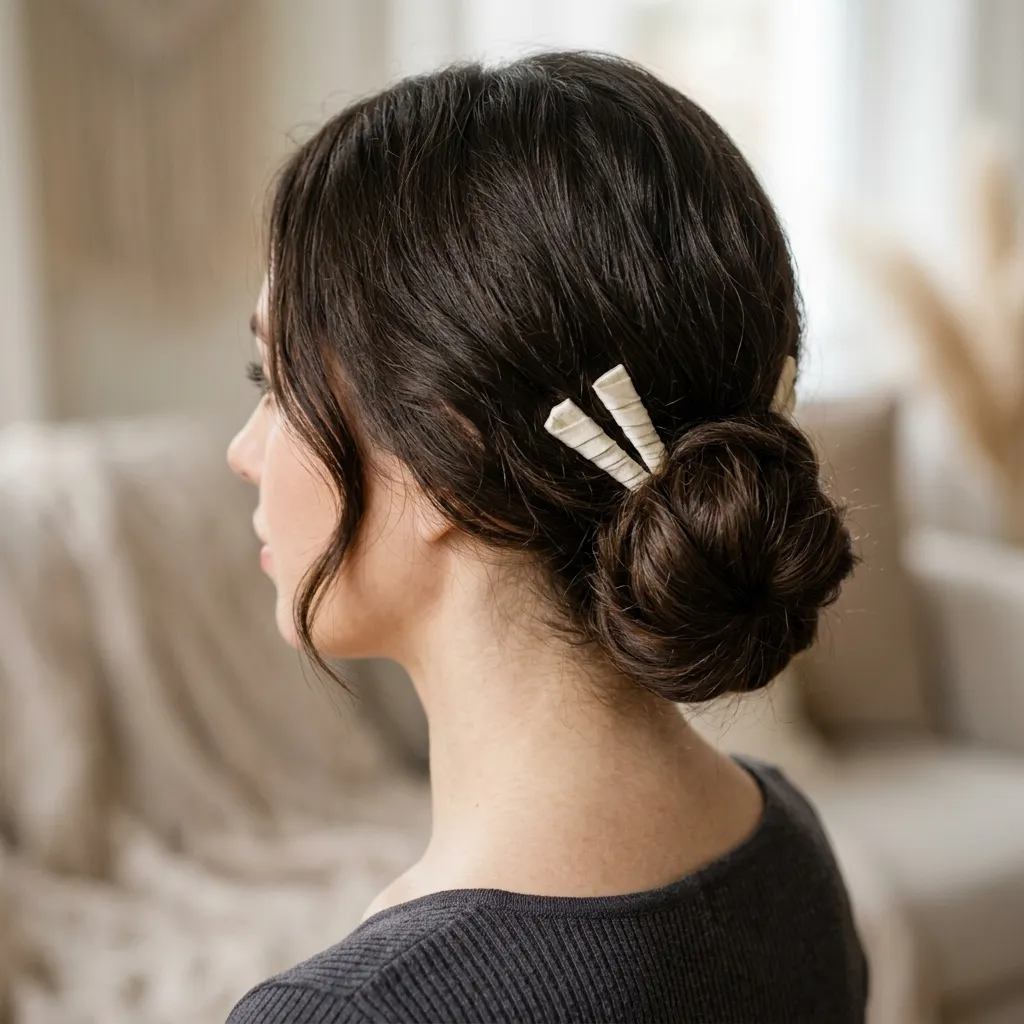
Quick Benefits:
- Elegant enough for formal events without tight pinning
- Silk-wrapped pins avoid metal-on-scalp contact
- Low placement keeps pressure off the crown
- Holds securely without repeated re-pinning
Vibe: polished and calm, formal without feeling stiff.
Why it works: A chignon typically fails sensitive scalps when it’s folded tightly and pinned directly against the head with bare metal. Wrapping pins in silk cushions every point of contact, and folding the hair loosely rather than compressing it keeps the shape without the usual clamped-down feeling.
How to get it: Gather hair low, fold it once into a loose loop rather than a tight roll, and secure with silk-wrapped pins angled along the fold rather than straight into the scalp. I recommend this to clients who need one of the more formal hairstyles for sensitive scalp for weddings or events without paying for it with a headache afterward.
💡 Quick Win: Loosen the chignon slightly with your fingers after pinning, a little looseness looks intentional and reduces pressure further.
Shop the Look
| Product |
|---|
| Silk-wrapped hairpins, ivory, set of 10 |
| Smoothing pomade for a soft finish |
| Shine spray for polish |
| Soft-hold bobby pins |
| Satin-lined hair pin case |
19. Front Twist Half-Up, Rest Down
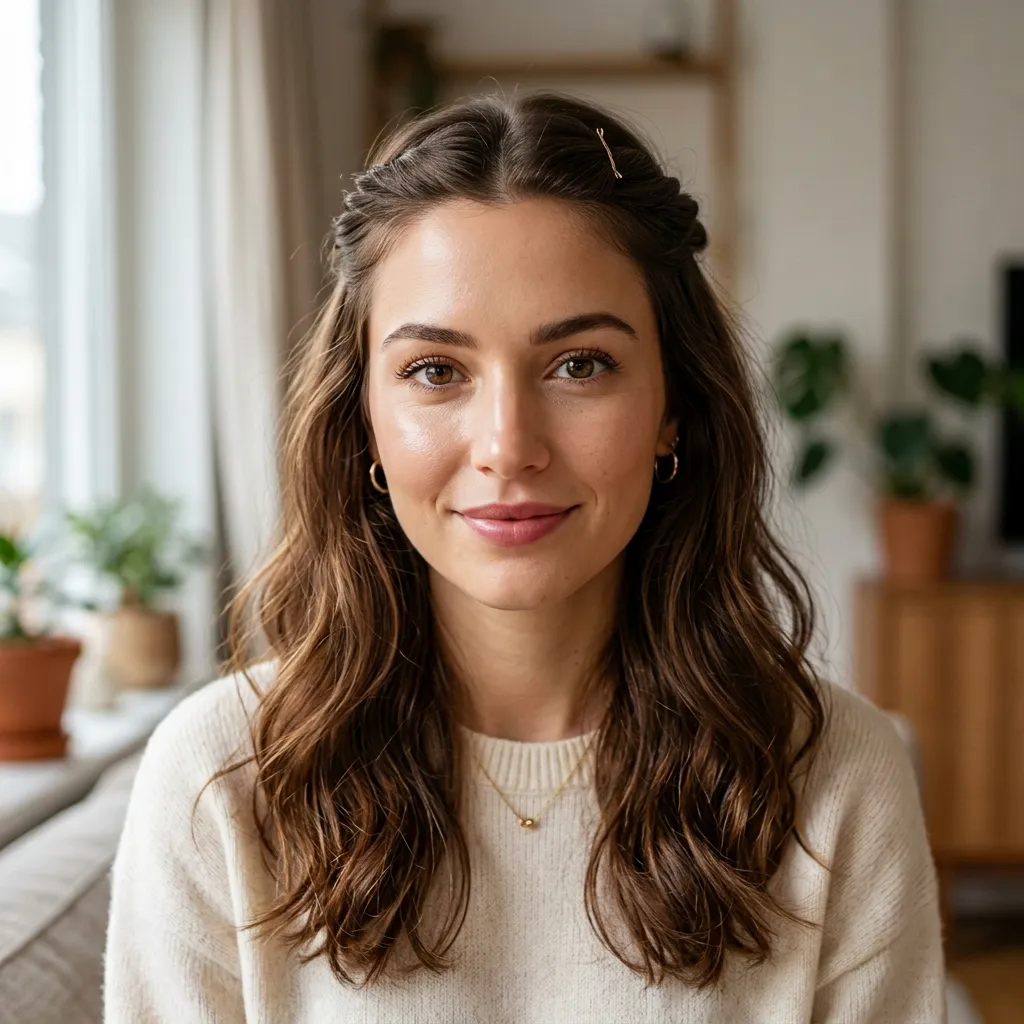
Quick Benefits:
- Minimal hair involved means minimal tension overall
- Keeps face-framing pieces out of the way
- Works well on days when a full updo feels like too much
- Quick to undo if any pulling is felt
Vibe: soft and unfinished, barely a style at all.
Why it works: Because only two small front sections are involved, there’s very little hair, and therefore very little weight, creating any pull at all. The rest of the hair stays completely untouched, which makes this one of the lowest-tension options for someone easing back into styling after a flare-up.
How to get it: Twist a small section from each side of the hairline loosely, cross them at the back of the head, and secure with a single small pin rather than an elastic. This is often the first style I suggest to clients returning to styling after time spent avoiding hairstyles for sensitive scalp altogether.
Shop the Look
| Product |
|---|
| Tiny gold decorative pins, set of 6 |
| Lightweight smoothing serum |
| Soft-bristle edge brush |
| Detangling spray, leave-in |
| Small rounded-tip clips for touch-ups |
20. Loose Braided Halo Crown
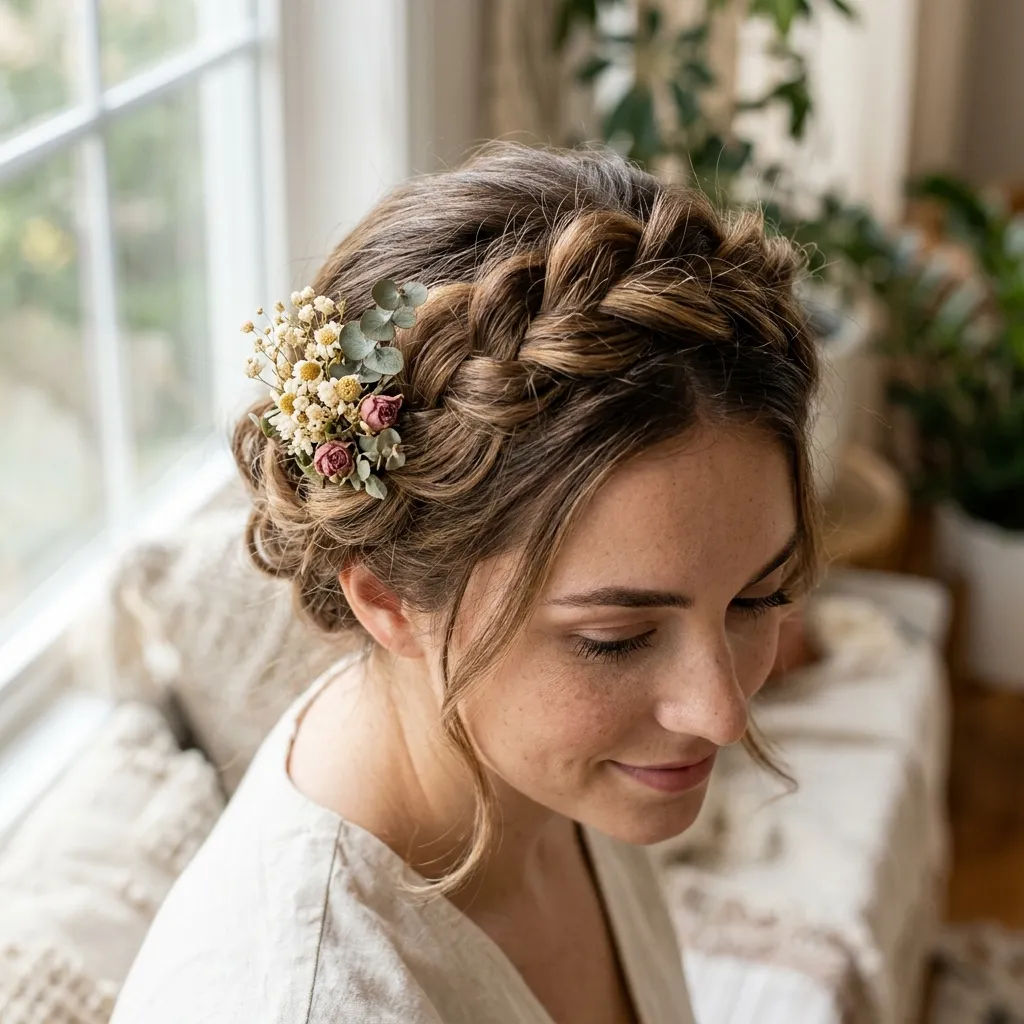
Quick Benefits:
- Weight distributed evenly in a full circle, not one line
- Keeps all hair off the neck and shoulders
- Dressy enough for special occasions
- No single point of the braid holds more tension than another
Vibe: ethereal and soft, like a finished, considered look.
Why it works: A halo braid wraps tension in a complete loop rather than a straight line, meaning no single section of the scalp bears more pressure than any other, the load is genuinely shared all the way around. This structural difference is why halo styles, done loosely, are often more comfortable over a full day than a single low braid holding the same amount of hair.
How to get it: Braid two loose sections starting at the nape, cross them up and over the crown, and pin the ends under the opposite side with soft, padded pins rather than metal grips. I’ve found that leaving the braid visibly loose, rather than pulling it snug against the head, is what keeps this from becoming, ironically, one of the more punishing hairstyles for sensitive scalp despite how elegant it looks finished.
💡 Quick Win: Tuck a single small dried or silk flower into the braid instead of adding more pins for hold.
Shop the Look
| Product |
|---|
| Padded soft-grip hairpins, set of 8 |
| Lightweight braiding gel |
| Small silk or dried flower hair pick |
| Shine-boosting finishing mist |
| Wide-tooth comb for pre-braid prep |
How to Start Your Sensitive-Scalp Hairstyle Routine
The single best first move is swapping every rubber-core elastic in your drawer for silicone-coated or silk versions, nothing else on this list works as well until the tools stop causing damage in the first place. A $6 elastic swap does more for daily comfort than any technique change.
The most common mistake is parting hair in the exact same line every single day. Repeated pressure and repeated pulling along one habitual part is often what turns a mildly sensitive scalp into a genuinely painful one over a few months. The fix is simple: alternate between a center part, a soft side part, and no defined part at all across the week.
Three items under $50 that make an immediate difference: a pure silk scrunchie three-pack, a satin sleep bonnet, and a wide-tooth wooden detangling comb. Each addresses a different pressure point, daytime holding, overnight friction, and detangling snag, without requiring any new skill.
A full routine shift takes about two to three weeks to feel automatic, and a starter kit of tools runs $30–$60. Learning four or five of these styles well enough to do them quickly is realistic within a single weekend; building genuine comfort with your scalp again is more of a two-month process.
Frequently Asked Questions About Hairstyles for Sensitive Scalp
What’s the difference between a sensitive scalp and a normal scalp when it comes to styling?
A sensitive scalp reacts to tension, friction, or tight elastics with pain, tightness, or a dull ache, often at the temples or crown, while a typical scalp tolerates standard ponytails and buns without discomfort. Conditions like psoriasis, seborrheic dermatitis, and traction alopecia all heighten this sensitivity. The main styling difference is tension: sensitive scalps need weight distributed loosely rather than gathered and pulled tight.
Are there specific hair colors or dye choices that help a sensitive scalp?
Ammonia-free and low-peroxide color formulas cause noticeably less scalp stinging than traditional permanent dye, and semi-permanent glosses skip the harsh lift step entirely. Root touch-ups should be spaced further apart, every eight to ten weeks rather than four, to reduce repeated chemical contact at the same spot. A patch test 48 hours before any new color is worth doing regardless of past use.
How much does it cost to build a sensitive-scalp-friendly hair kit?
A starter kit, silk scrunchies, a satin bonnet, a wide-tooth comb, and snag-free elastics, typically runs $30 to $60 total. Adding a soft-bristle scalp massage brush and a sulfate-free shampoo brings a fuller kit closer to $80 to $100. Most of these items last six months to a year with regular use, so the cost amortizes quickly.
Do these hairstyles work with hair extensions or wigs?
Loose braids and low buns both work well over extensions, but the extension’s own attachment points (clips, tape, or beads) need to sit away from any sensitive area, not the style itself. Wigs should use a soft, adjustable wig grip band rather than combs sewn directly into the cap, since combs dig into the scalp under a wig’s weight. Ask a stylist to fit extensions loosely on the first application if scalp sensitivity is a known issue.
What’s the most important hair accessory for someone with a sensitive scalp?
The silk or satin scrunchie is consistently the single highest-impact swap, since standard elastics are the most common daily cause of root-level irritation. A satin sleep bonnet comes second, addressing overnight friction that undoes daytime comfort. Together, these two items solve the majority of complaints people bring to a stylist about hairstyles for sensitive scalp.
Ready to Find Your Go-To Sensitive-Scalp Hairstyle?
From loose fishtail braids to a fully wrapped silk headscarf, these 20 ideas cover braids, updos, overnight protection, and no-effort everyday looks so there’s a comfortable option for every kind of day, mood, and flare-up level. Starting with just one, a silk scrunchie swap, a looser braid, a lower bun, is genuinely enough, and it’s the right way to begin.
Today, try moving your ponytail an inch lower and switching to a silk scrunchie before you do anything else. Over time, this shift isn’t just about avoiding pain, it’s about feeling settled and unbothered in your own hair again, every single day. Save the styles that caught your eye, and start with whichever one felt like the biggest relief just reading it.